

If you’re familiar with Remake, you’ll hit the ground running. Same fluid action RPG as before. The most obvious departure from Remake is the scale.
Rebirth picks up at a point where a smooth fake-out happened in the original FFVII. Put simply: lots of classic JRPGs were not open-world, according to the modern standard.
One notable exception was Final Fantasy VI. The first half is pretty linear, then an apocalyptic disaster happens. Not even the geography remains the same. You start with one player character. You can proceed to the final dungeon if you want but it probably won’t go well unless you did a CRAZY amount of grinding. The rest of your party is out there, surviving as best they can. Some are trapped or lost, waiting for a second chance. Some have different commitments. You’ll probably get at least some of the old band back together.
I don’t think any other mainline Final Fantasy has pulled off open-world as successfully as VI. XV made a noble effort but the plot didn’t always agree with the open-world structure. In terms of the simple joy of wandering around doing whatever you want, XV will get you there. It has my favorite fishing mini-game, there’s a neat balance between spell-crafting and money management and you are rewarded for going off the beaten path. The chocobos are plain compared to other Final Fantasy entries but they’re a fun way to cover off-road distances. I also loved the photography and how camping and cooking figure into character-building. Even if the story doesn’t always line up with such openness.
The original Final Fantasy VII was no more open-world than any other JRPG of the era. Leaving Midgar for the overworld definitely feels liberating, though. What actually happens is that traditional, one-scenario-following-another linearity is switched out for more procedural linearity. Your progress is directed by obstacles on the world map which require solutions and vehicles unlocked during story events.
Much of that same structuring remains. We are in the post-Midgar story juncture which means we’re not gonna have access to everything until you’re in the right place at the right time. Even then, though…
Final Fantasy VII: Rebirth may be the most successful open-world game in the series.
May be.
Even with XV’s occasionally awkward writing…the photography, fishing, camping and cool discoveries in the wiliwags give savor to the free-roaming gameplay.
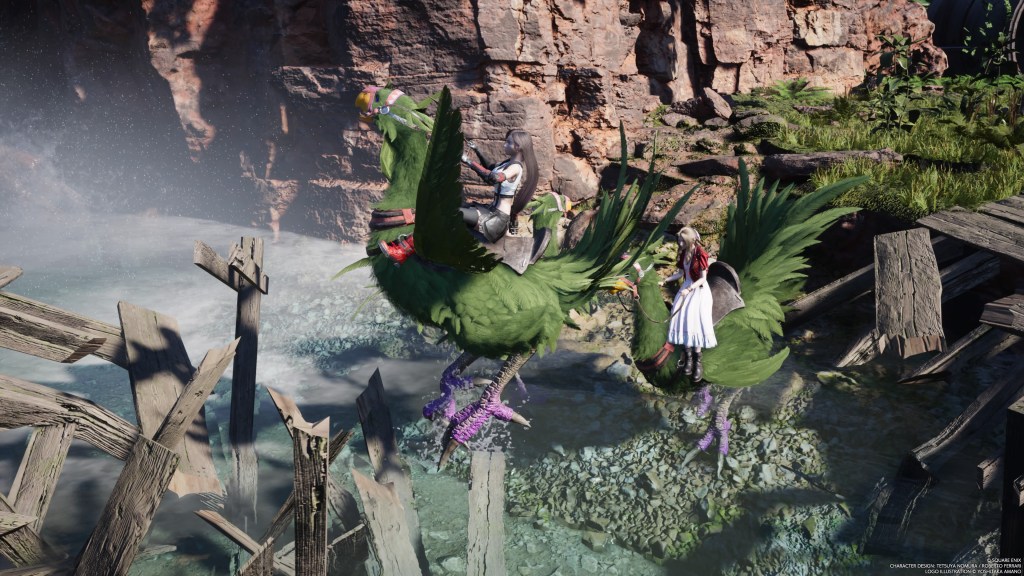
Rebirth keeps up in a few regards. The chocobo interactions are easily the best of modern Final Fantasy. In keeping with the demands of the marshlands, the party soon finds themselves at Chocobo Bill’s ranch. A locally available chocobo is usually just one favor away. In the less technocratic days of the Junon Republic, chocobos were the most universal means of transportation. Since the fall of the historic nation-states and the rise of Shinra, mounted travel networks have fallen into disrepair. Lots of domestic chocobos know where home is but- not having a lot to do, there -don’t feel particularly bound to it. Once you help track down a runaway for a local ranch, they normally allow you access to their birds.
I always thought the chocobo treasure-hunting concept from IX was a good, under-utilized idea (I’m talking more about the chocographs on the overworld but even the “hot & cold” minigame in the forests plays a role with that). I’m glad to see a similar mechanic in Rebirth as well as that mechanic being one of the main ways you obtain both crafting resources and recipes.
If you like either tabletop or video game RPGs, then your suspension of disbelief can usually work alongside some symbolic thinking. An in-world system of crafting or character building may not need to make direct, literal sense but it needs to be a suitable rule-set for a game.
There’s nothing wrong with keeping things basic. An exp system, money and item drops after random battles and villages with places to spend money are easy to pick up. But innovation can open ways for things to be more fun as well as make more sense.
Crafting spices things up without adding a bunch of complexity. If, as in most RPGs, monster battles generate resources, it doesn’t take a lot of imagination to just ask why they generate resources. Gathering materials for crafting can make things like that more explicable while giving another way of directly interacting with the environment rather than running around killing monsters.
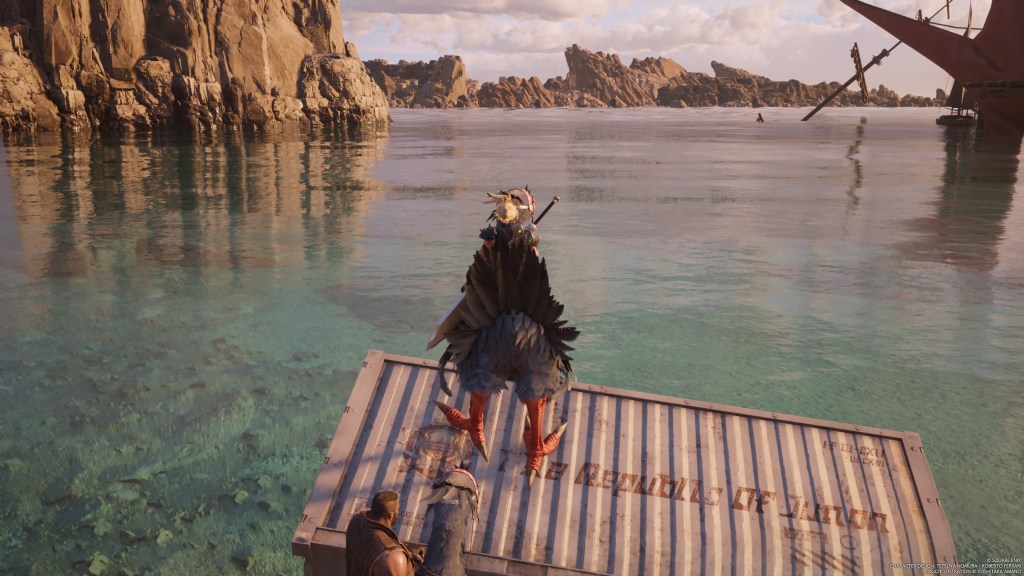
In Final Fantasy VII: Rebirth, chocobo-riding is key to that level of immersion. Different breeds of chocobos evolve in different regions with different terrain aptitudes. Bringing in the runaway chocobos is worth it just to see how much the landscape in each territory opens up. With greater mobility comes more places for the chocobo to nose out crafting resources, which means better gear.
Speaking of gear- summon materia can only level up by uncovering ancient alters to the various summoned beings. Throughout the history of Gaia (according to Chadley), each one was revered as the totem of a different region. It’s interesting to know that, say, the praries of the eastern continent were once inhabited by a people who would propitiate Titan to withold his wrath. With the super-urban Midgar being the biggest and loudest population center in the area, it’s interesting to get glimpses of what the culture was once like without it. Corel was once an expansionist force to be reckoned with, their army led by Alexander like Bahamut and Odin in XVI. Speaking of Odin- he’s revered in the Nibel region as a death god. Makes sense, really, but more on that later.
Exploration is also incentivized with a new in-world card game called Queen’s Blood. Dueling players throughout the world is the only way to build a deck. JRPGs (both those trying to be open and in general) always benefit from having something that you can do, among NPCs, other than killing. The design philosophy is simple enough for Pokemon to spin a game at any given moment: different places have different encounters and different things to collect. Thus it is with Queen’s Blood.
My only complaint about Queen’s Blood is…well…
Sometimes I only get into the “swing” of Queen’s Blood when I’m just spazzing out and doing whatever I want, without attention paid to story progression. If I’m getting into the story (as I inevitably do), I sometimes gloss over the card game altogether. What I’m saying is that my Queen’s Blood switch is either on or off, with no in-between. It’s also easier to challenge an NPC with a Queen’s Blood player ranking when I’ve mostly been gathering “assess” data for Chadley and digging up crafting resources.
The best of Queen’s Blood depends on the ability to take your time. As far as I can tell, this is the only way in which the “openness” of Rebirth tempts you away from the plot. That was what happened so often in XV as to make me think that the game design was out of step with the writing. Rebirth obviously has other reasons to take things slow but none of them are as ever-present as Queen’s Blood (you can expect to find players almost everywhere you find anyone). Given the massive plot point sitting just beside the ending, I wonder if this was meant to create an overall effect of anxious hesitation.
Speaking of- this is the sense in which I think Rebirth may be the most successful open-world Final Fantasy of recent history. The open-world mechanics make circumstantial sense at every level. Even the predominating emphasis on foot-travel and chocobo-riding tracks with the party’s outlaw status.

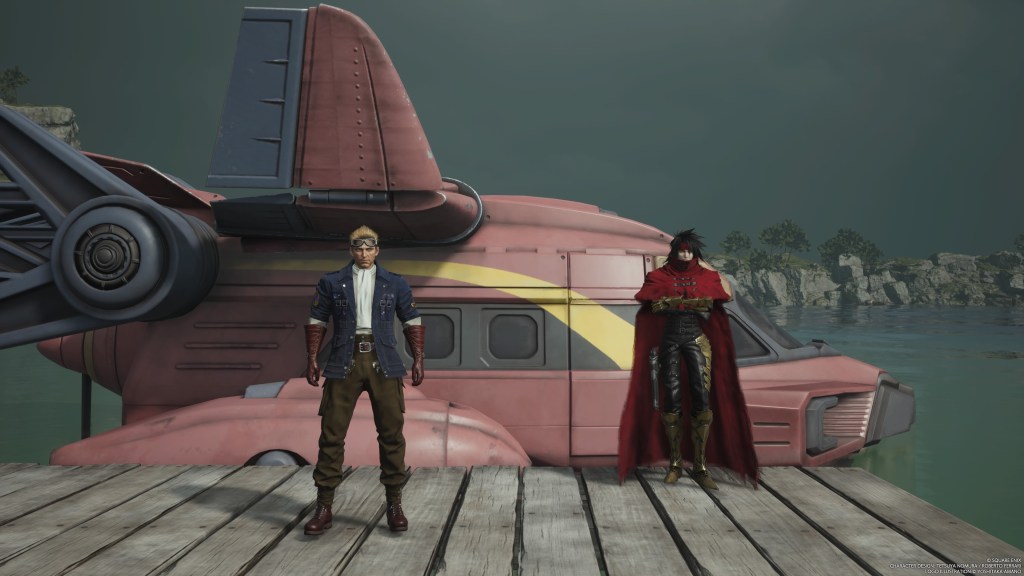
This is also the sense in which Rebirth is most obviously not open-world, though. It has no vehicular obstacle-transcendance opportunity that is not accomodated by the script. Personally, I think the world feels the most “open” once Cid and the party get the Tiny Bronco working as a boat. Part of the payoff of the cumulative protorelic subquests includes dramatic new horizons only possible with the Tiny Bronco on the water which has got to be intetional.
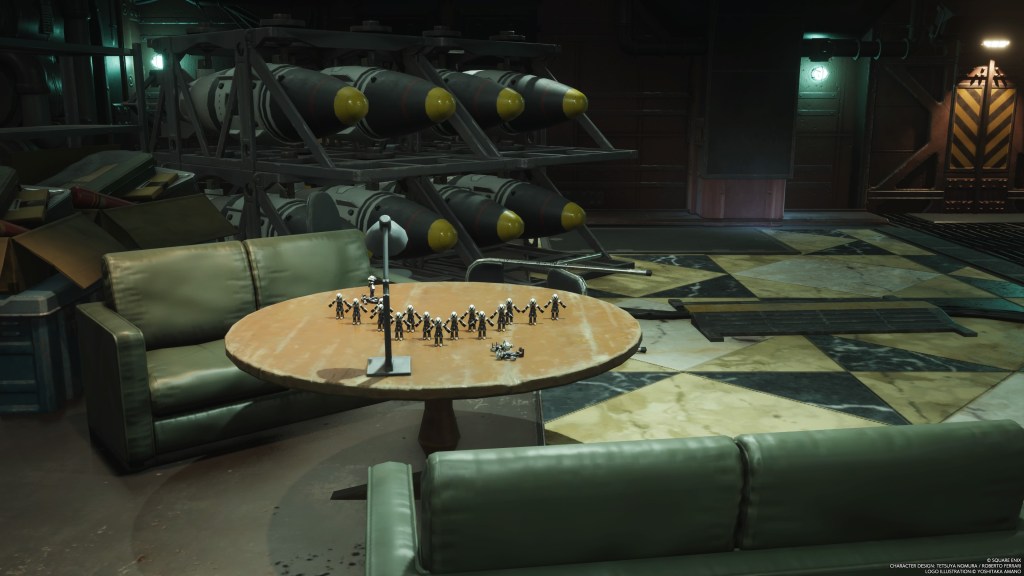
While we’re on the minigames and side content- it was a mistake to relegate the Fort Condor tabletop game from the Remake DLC to a single, Junon-specific quest and some Chadley-related simulations afterward. In Yuffie’s INTERmission story, defeating different Fort Condor players could actually win you new pieces, which could have been spread throughout Gaia like the Queen’s Blood cards were.
About Chadley- he’s an even more fundamental part of the game than he was last time. I know I’m focusing more on gameplay at this point than story (I’ll get to that, soon enough) but if Chadley gets any more prominant, he’ll need a bigger place in the story.
I get that, from a design standpoint, he’s useful for keeping a few mechanics rolled into one character that is always nearby. This could also be cleared up with a greater understanding of Shinra. For example: how prevalent is high-level sabotage and negligence?
Palmer and Scarlet take charge of things directly, personally and- at least once for both -emotionally. The updated Corel prison scene includes a beat where Palmer could very well have died, on the watch of the Turks. If he did, Rude and Elena would probably giggle and move on with their day. Heidegger and Reeves are the ones with their hands (normally) on Shinra military and law enforcement. It’s conceivable that Reeves may care enough to launch a follow-up investigation…if he’s not too bogged down with fires to put out on his own end.
Then again, this portrayal of Shinra could be segmented to a fault. At least a few members of Shinra’s leadership seem like they would be micromanagers from hell. Hojo at least looks like he’d be one of them. In a cut scene, though, we see that there are several different Chadleys. Are each and every one of them free and autonomous when Hojo doesn’t need them? Our Chadley is at least a little special- he managed to leave Midgar.

Near the end of the Nibelheim protorelic search, something in Chadley’s AI brain trips an alarm on Hojo’s end: recognition of the varghidpolis specimens that latch onto the black-robed cell-carriers. Hojo checks six other Chadleys, which are either non-functioning or wherever he left them last. Number seven seems to have gone rogue, though, so he does something. As he’s speaking to Cloud, Chadley winces and grabs the top of his head.
This happened close enough to the end to leave the answers for part three but not much further than that. For Hojo, it’s not just a quesiton of a buggy drone: it’s a buggy drone that can supply high-end materia to Shinra’s enemies and reactivate old information networks for their benefit. Because (as Chadley says at the end of Remake) of a grudge.
Those questions are going to need answers in the third act. (I have a theory on that which involves the INTERmisison DLC and Hojo, but there’s more than enough time for that to be proven wrong)
Whatever those answers are, though, Chadley is holding the keys to a good chunk of the total available materia in Rebirth. I’m a blue magic lover which- in Final Fantasy VII -means the Enemy Skill materia. In Remake, it works a lot like how it did in the original: just equip the materia and wait to be hit with something on the short list (Rebirth has seven) of skills you can acquire. In Rebirth, the Enemy Skill materia is dependant on Chadley’s exploration reports and the data you gather with the Assess materia. With the central role that Chadley plays in the party, this lines up perfectly. However, it means that acquiring the Enemy Skills are less of a search and more like dedicated sidequests with objectives.
It’s worth the effort, especially early on. Just make sure you do Chadley’s ‘know thy enemy’ combat simulation to get the ball rolling. With effort, you can have Sonic Boom, Plasma Discharge and Soothing Breeze before arriving in Junon. With Cloud holding the Enemy Skill materia, I keep Sonic Boom assigned to X and Plasma Discharge assigned to square in combat settings.

Sonic Boom is a quick long-range, normal / wind element attack that also bestows bravery (physical attack buff) and faith (magic attack buff). Plasma Discharge is passive electric damage (kinda like the passive ice damage Enemy Skill from Remake). Between those two and a sword ability called Firebolt Blade, that leaves Cloud with three MP-free elemental attacks. Each of which hit harder than the 0-MP elemental attacks unlocked by the Maghnata skill tree. Oh, and Plasma Discharge? It completely neutralizes any speed-based, electric-vulnerable foe. Elena will never stand a chance against you again and it comes in handy during an annoying Rufus fight.
I should probably get that out of my system (light spoilers ahead)- Palmer’s involvement in the Corel prison scene was distracting but admissable. But the only part of this game that I wish I could skip is Rufus Shinra at the Gold Saucer.
On one level, it flows. Rufus is absolutely singleminded in his desire to find the Promised Land of the Cetra. If he heard the big loud idiot at the Gold Saucer had the Keystone in his personal museum, Rufus would probably just send the Turks to grab the thing. That is, pretty much, what he does in the end.
Obviously the plot won’t diverge too much from the original and Cait-Sith swipes the Keystone anyway. In the end, Rufus isn’t doing anything as stupid as betting his lifelong ambition on single combat with Cloud.
It was grating to me but I know why it’s in there.
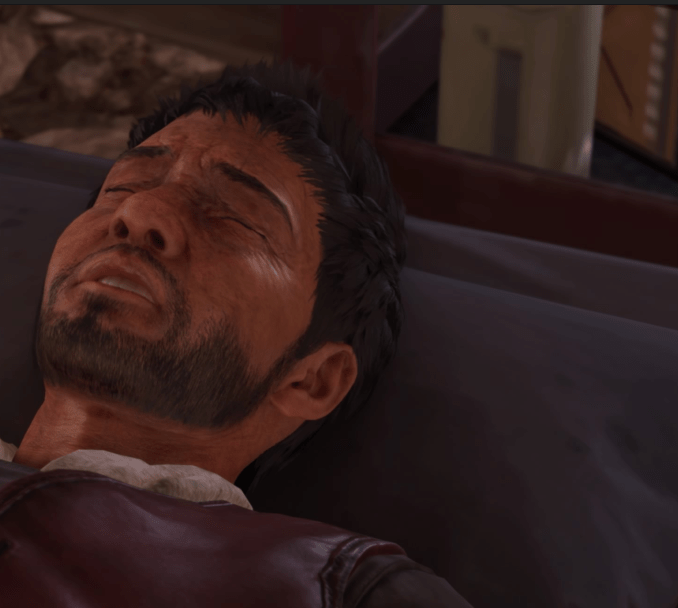
In spite of the triple A scaling of the VIIR games, Square-Enix clearly wants to honor as many points of faithfulness as possible. Consider the sheer variety of minutia that made it into both Remake and Rebirth. We even got the guy sleeping on a cot, in a cave, outside of Junon. The one that eventually gives Aerith the mythril key item in the original, which is then traded for the Great Gospel limit break.
This level of care can lead to some idiosyncratic commitments. My head-canon pre-VIIR (potentially still, depending) was that Don Corneo was from Wutai. I know lots of people keep kitschy, cartoony Asian swag in their place for lots of reasons. But in the original, Don Corneo’s Wall Market mansion (Wall Market mansion sounds like the FFVII version of a McMansion) was the only place besides Wutai with specifically Asian visual cues. He also flees to Wutai after the party forces him to reveal the plan for the Sector 7 plate.
Rebirth’s portrayal of the Gold Saucer colliseum made me wonder if Corneo would, perhaps, not have any Wutai association in the VIIR games.
In case I’m jumping around too much-
Consider the reinterpretation of the crossdressing scene in Remake. It does not happen exactly like it did in the original; the use of AAA graphics puts the scale of the game on the same human-sized scale as a film. The graphics of the original had a tonal flexibility that’s less easily achieved with realistic, human proportions. (I have one or two entries on this blog about how the graphics of the original effected tone and proportion) According to the necessary rescaling to AAA graphics, certain things could not be the same as the PS1 Final Fantasy VII.
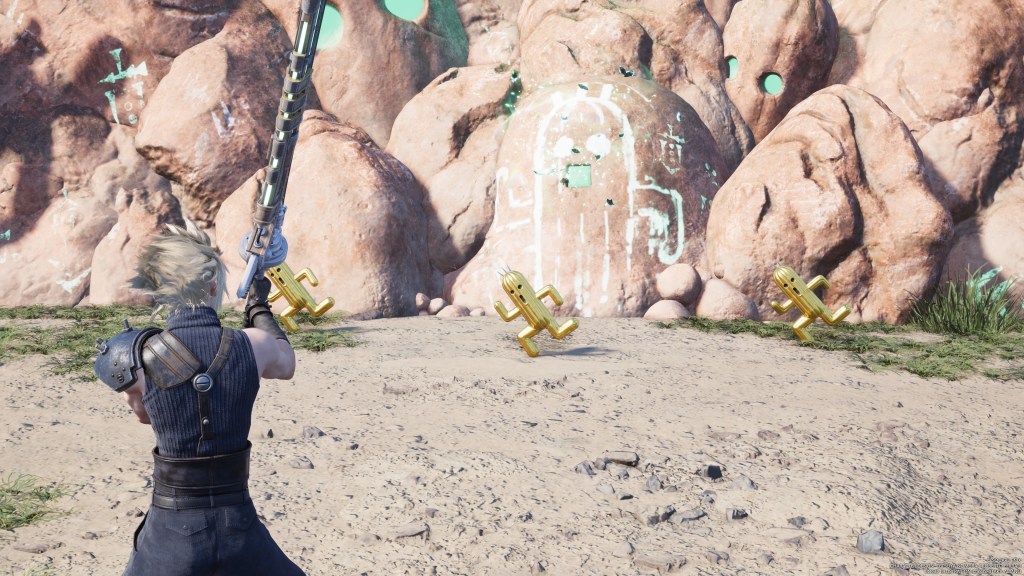
With those allowances, consider the things that do stay the same. Even if the Wall Market crossdressing does not unfold exactly as before, you can still do the majority of the same stuff you could in the original. (the vending machine, the depressed dressmaker, etc) Even if those similar things have different occassions. There’s no Mog House minigame in the Gold Saucer but a particular Mog House does appear in Rebirth.
Don Corneo’s colliseum appearance in Rebirth made me wonder about something similar, with similar allowances, in the final VIIR game.
Wutai, obviously, plays a far different role in VIIR than in the original. We know this from the Wutai shinobi reaction to Avalanche in INTERmission, things Yuffie says about recent Wutai history in Rebirth and, of course, “Glenn Lodbrok’s” rapport with Rufus and his father.
It seems to be the kind of detail that the developers would take pains to make room for. If, for whatever reason, their plans for Wutai in part 3 have no room for Don Corneo’s continued search for a bride…maybe they thought they should at least make an effort, like with the Wall Market crossdressing subquests.
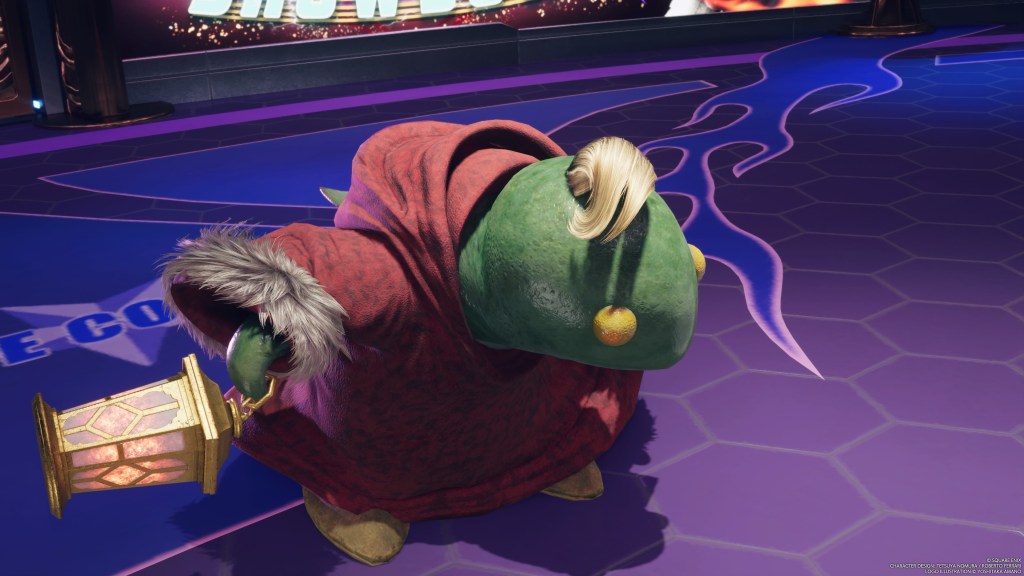
Maybe there was no room for Don Corneo’s second appearance in Wutai…so maybe they felt the need to give him a second appearance, if not the same one. And, if they do it in Rebirth, they don’t have to worry about it in the final chapter.
That, of course, could all be wrong. Don Corneo might be in the Gold Saucer colliseum for several reasons or none. But that possibility loomed large in my mind for some reason.
Even in the original, though, I didn’t think Don Corneo brought anything in particular that I wanted more of. His apparent connection to Wutai added a little intrigue but it’s not like that’s a hugely consequential nuance.
If I were in charge of VIIR and I had a plan for Wutai that did not involve Don Corneo…I don’t know if I’d feel obligated to give him a new second act.

Again, that can all be absolutely wrong. But during my first play-through, I couldn’t help thinking “If there’s no room for him to come back in the new story, then does he necessarily need to?”
(That may have been the motivation behind the Palmer-mech fight, if the script for the third story doesn’t have an opportunity for Palmer to show up in Rocket Town)
Even with those changes, though, the VIIR devs are determined to preserve as much as they can within the new framework. The main issue is that the graphics in the original were more symbolic than literal, which means more freedom for tone and scale.
In VIIR, that tonal range is preserved by a stylistic blending of film and anime with little flourishes of surreal comedy. Nanaki riding a chocobo is a quiet indicator. Just like the original, the more experimental tone variations of VIIR are borne up by the use of psychological imagery.
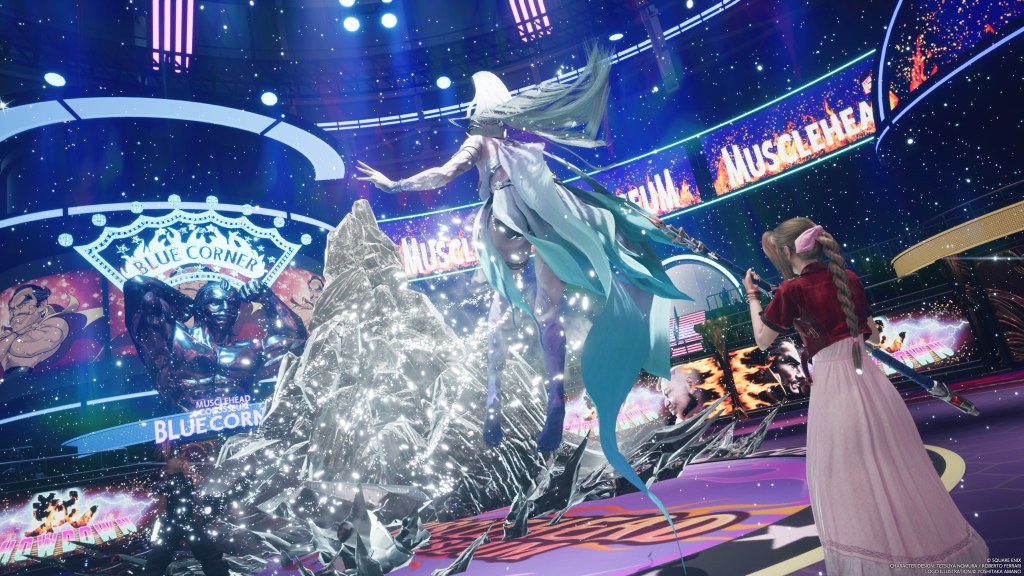
Another example would be Nanaki on the Shinra 8, during the Queen’s Blood tournemant. The original had simple polygons that were more illustrative than literal. Nanaki in a Shinra trooper uniform is easier to swallow with non-literal graphics. The first step was to create a hint of a subplot- Nanaki wanting to join the Queen’s Blood tournement, despite being a non-human quadroped.
It feels like a weird, understated punchline at first and the payoff is also like a punchline. Not only does Nanaki participate, he becomes an end-game finalist and break dances. The cinematic proportions remain intact, though, so Nanaki looks like a wildcat-sized mammal awkwardly bound in human clothing. Like dogs that are uniquely skilled at walking upright, the hind legs take ginger, little steps while Nanaki’s forelegs hang in front of his chest, like animal forelegs usually do when they’re laying on their back or standing upright.
The crowd that cheers him on shows no apparent awareness that he isn’t human. Based on their outward expressions, the crowd has been captivated by a card-playing, break-dancing Shinra trooper that shuffles everywhere with his upheld hands and wrists drooping in front of his chest.
Stuff like that isn’t exactly common in Rebirth but it happens enough for the different tone shifts to balance.
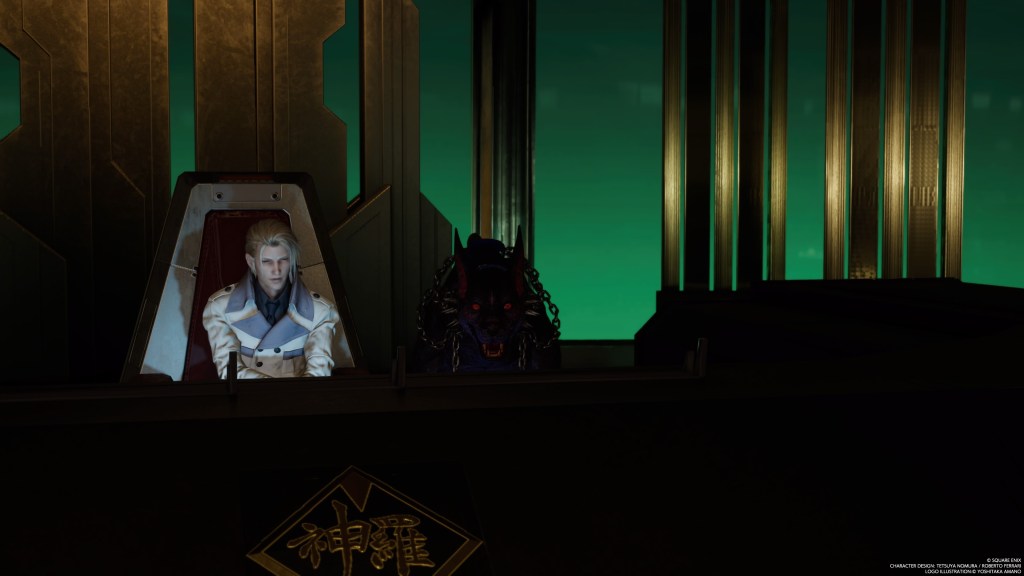
Rufus appearing in the Gold Saucer colliseum fits in with these patterns. It fits in on other levels, as well. Rufus has an Ahab-like drive for the Promised Land. He’s not gonna let someone at the Golden Saucer just snatch up the Keystone because they enlisted at the right prize fight at the right time.
It also attests to a “bread and circuses” philosophy at work within Shinra. They dropped one of Midgar’s upper plates, sacrificing what looks like hundreds of lives to stamp out one Avalanche cell (and even then, they only got two out of the six members). Shinra promptly blamed the plate-collapse on Avalanche and was more or less believed by most people. This, at least, attests to the lengths that Shinra will go to for psychological theater. “Bread and circuses” may be a less sinister means of control but it still depends on public spectacle and group-think.

It’s also consistent with the cultural hallmarks of fascism: tinny music, fetishization of both military might and brute strength, cults of personality surrounding leadership, etc.
I guess Rufus entering a high-profile prize fight also resembles recent pop culture touchstones, like The Hunger Games and the Running Man-esque sort of movies it inspired in Japan.
Strictly speaking…it tracks for Rufus to enter a prize fight. But it’s annoying. Especially since Rufus believes his father’s governance was weighed down with bloated redundancies. His dad seems like a “bread and circuses” guy. At a glance, you’d think Rufus himself would find the practice stupid and exhausting.
So that’s my one big complaint.
In general, the tonal adjustments for the cinematic proportions are one of the major successes of Rebirth.
The tonal flexibility comes together particularly well in the party’s present-day return to Nibelheim. Cloud and Tifa do not return to a blackened ruin. The village appears to have been rebuilt and maintained diligently by people who all moved there recently. Shinra has made it a center of care and study of those afflicted with mako poisoning. The majority of which appear to be black-robed cell-carriers.
Yuffie suffers her own destabilizing blow when she finds her own kind- shinobi of Wutai -dead outside of the Nibelheim reactor. Killed, apparently, with Shinra artillery during a mako reactor inspection. These inspections were an agreed-upon term of a recent ceasefire between Shinra and Wutai. Shinra also agreed to never fire a major WMD- the Sister Ray, angled at Junon in the direction Wutai. During Rufus Shinra’s inauguration, the Sister Ray was fired with much ceremony. The dead inspectors make the rejection of the ceasefire official.
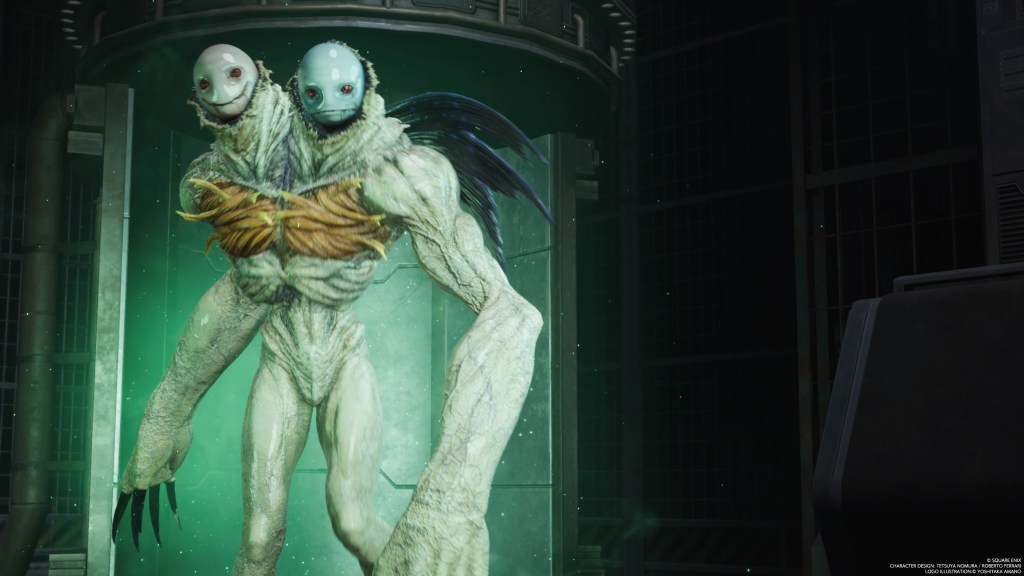
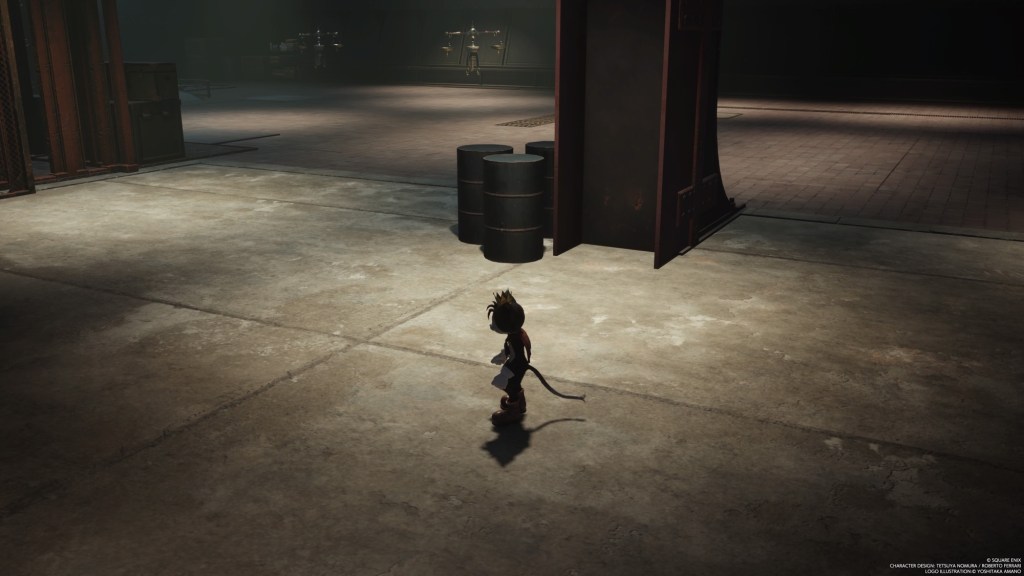
If the Shinra Mansion segment wanted to go for full seriousness, it could have. An apparently abandoned Shinra research and administrative center controlled by a security AI modeled on Hojo. It goes serious enough; just so we’re clear. But I thought the segment in the basement, when you play as Cait-Sith, was a cool and creative way to balance out the tone.

Once you figure out the angling in the box-throws, the real problem is figuring out how to get Cait-Sith through a few solo fights. Then Cloud, Tifa and Yuffie rejoin everyone in the basement for some dramatic story beats and a beautiful character introduction.

My other huge break with fan-consensus-
I liked the piano minigame. As a rhythm game, it’s as unique as the fishing in XV. It was a neat way to outdo the music-collecting in Remake. I can’t help but wonder if the piano minigame will play a role in the final third entry in unlocking Tifa’s Final Heaven limit break (in the original, Final Heaven is unlocked by playing the main theme of FFVII on Tifa’s piano).
The only minigames I specifically did not like were the toad kids in Junon and the robot thingy in Cosmo Canyon. That last one irks me, since some interesting lore is tucked behind it.
If they’re gonna keep throwing minigames at the wall to see what sticks for the third one, I hope they get around to a FFXV-quality fishing game. The photography quests were fun but it would have been more fun with some kind of in-game photography, or else more of a dynamic integration with the PS5 screen cap feature.
The Gold Saucer has an updated version of everything it had in the original. Including a G-Bike arcade cabinet that recreates the motorcycle minigme from Remake. Chocobo racing receives a neat update that still keeps it pretty retro. Turning / handling matters way more than it did in the original and you can buy stat-effecting equipment for the loaner chocobos.
While I didn’t feel tempted to spend a lot of time in the Gold Saucer, I do like the idea of using it to preserve minigames from Remake and Rebirth. The only changes I would put on a wishlist would be to make Queen’s Blood harder and loosen up Fort Condor (The former is a distinct possibility since some of the devs have lately said Queen’s Blood would be expanded and updated for the final entry in the trilogy).
From here, I’ll be shifting into story analysis.

If the crazy lore explorations afterward aren’t your thing, I want to leave you with at least this much: Cloud and Zack.
Rebirth starts with Cloud’s psychologically-filtered telling of the Nibleheim event. And, when approached in a vacuum, the third of the story represented by Rebirth favors Aerith’s place in a potential love triangle between herself, Cloud and Tifa. Then again, that could be incidental to her visibility growing in proportion to her narrative influence. Her connection to Holy, through both her heritage and the White Materia, puts Aerith at the center of the plot.
In other words, it is really, really easy for us to walk Cloud directly into one of his deepest wish-fulfillment patterns: emulation of Zack.
In Remake and the original, we have already seen Cloud (as an adolescent) promising a girl he liked (Tifa) that he would follow in the footsteps of his hero, Sephiroth, and join the SOLDIER program. Later, Sephiroth becomes the worst thing in his world. That’s a wide range of emotions projected onto a particular identity model. In comparison, what does the example of Zack mean in Cloud’s mind?

In Rebirth, flashback-Cloud gives Tifa a firm pro-Shinra lecture on Mount Nibel, beside the natural materia formation (I could have swore that a similar scene happened in Crisis Core with Zack delivering the same speech but I could be wrong). In any event, the post-PS1 perspective assumes that this is something that Zack said and Cloud latched onto.
So, without getting into the truth or falsity of his portrayal: Cloud is portraying himself as passionately and obnoxiously wrong, relative to his current position. Even if you bring in the post-PS1 perspective with the knowldge that he did not do that…it at least means that he heard Zack say those things and wished it was him. Given the nature of Cloud’s hero-worship of Sephiroth, Cloud would only wish for such a thing so he could be seen as defending Sephiroth by proxy.
Cloud’s prior defense(?) of Shinra is tinged with bitterness by the present. Although there could well be some blending between Zack and Sephiroth in Cloud’s mind, I do not think that they are equal for Cloud.
If you’ve ever wondered about how the memory of Zack sits in Cloud’s mind, beside his (post-PS1) knowledge of how much he was used by Sephiroth…Rebirth entertains some answers. And if you ever worried that that the answer might be complete pathology and completely morbid emulation…you may be interested to know that it is not, according to Rebirth.

That’s all.
And now, full steam ahead on the weirdness-

I’ll venture a theory on the White Materia- no matter what crazy timeline stuff happens, there can only be one of them. The White Materia channels Holy which is a manifestation of the collective will of the souls that make up the Lifestream. Almost like a lizard-brain for the planet and it’s transmigration cycle.
There can only be one White Materia because the planet has only one Lifestream. One intersection for every transmigrating soul. Available evidence suggests this bond can only be broken by moving the White Materia to a different timeline.

Next, there is the additional lore of the Gi, remembered in the folklore of Cosmo Canyon as historical foes of both Nanaki’s people and the Cetra. In Rebirth, the shade of Gi Nattak (a mere poltergeist boss-fight in the original FFVII) himself tells the party that his people came from another world.
Bugenhagen remarks on the similarity between the statues and the Gi themselves: significantly larger than most humans with dark purple skin and pointed, elfen ears.
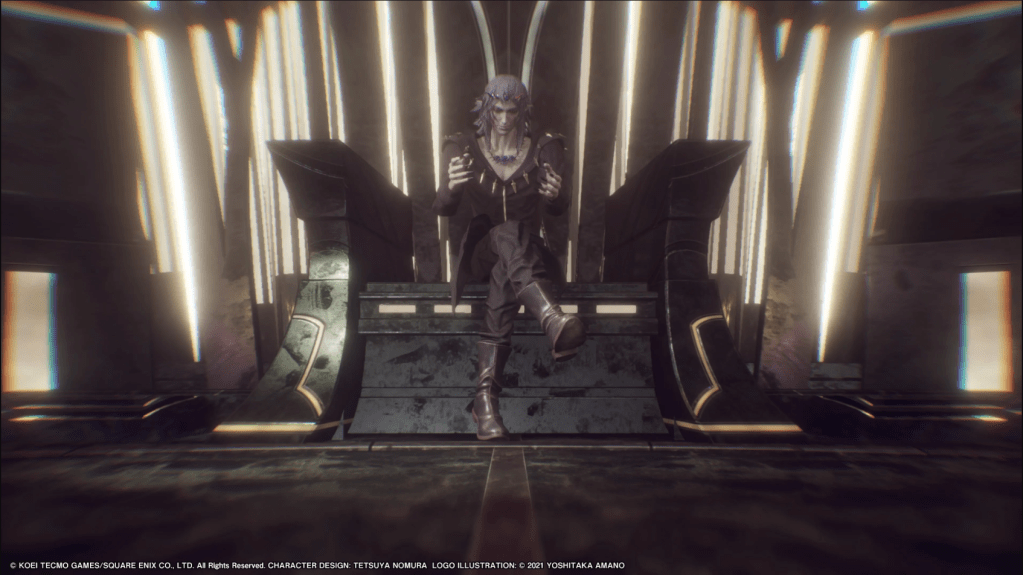
The Gi resemble Dark Elves, as portrayed in a few different Final Fantasy games. That would certainly fit in the world moogles and chocobos and tonberries. There are other clues about their origins, though.
Maybe, when we hear that the Gi came from another world, that means another planet or something just as literal. What kind of world-crossings have we seen so far, though?
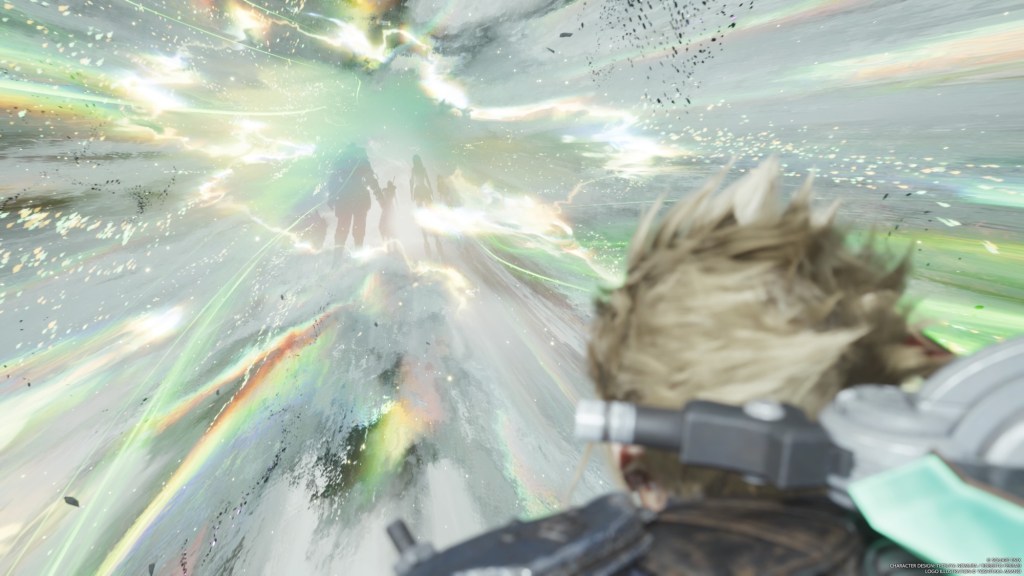
We do hear (eventually) about multiple planets…but only in the sense of multiple timelines with their own versions of the same planet. To say nothing of what the party and Zack both go through in Remake and Rebirth.
Two things are apparent after the crossing outside of Midgar: the first is the unique connection between the White Materia and Lifestream. The second: that the connection can only be subverted by the removal of the White Materia since it’s a roughly pocket-sized object.
After the crossing at the edge of Midgar, Aerith makes a disconcerting discovery.

She shows Nanaki that the White Materia she carries in her hair is now translucent. On Zack’s side of the dimensional barrier, though, neither Aerith nor the White Materia have left the timeline.
The cut scene at the end of the first Zack segment lingers on the White Materia falling out of Aerith’s hair as he cradled her on his lap. It is glowing pale green: according to the original PS1 FFVII, this means that Holy has been summoned.

To keep everything in context: Holy was summoned in the timeline where we find Zack. Background visual cues in Remake showed us two different timeline clusters. They are nearly identical with a few light deviations. One of which is Stamp.
I say “clusters” because each timeline springs from a range of probabilities. Each one of those probabilities within has the potential to happen differently and break off into other timelines.
‘Timeline’ or ‘universe’ works fine but…terrier Stamp and beagle Stamp stay the same for both the party and Zack. There are, evidently, different branching timelines in both the Beagle Cluster and Terrier Cluster.
So. The Remake timeline occurs in one where Stamp is a beagle. Zack, meanwhile, originated in a branch of the timeline in which Stamp is a terrier.
In both the Terrier Cluster and the Beagle Cluster, Midgar was ravaged by something widely perceived as a tornado.
The ending of Remake implies that this tornado was a three-dimensional manifestation of a multi-dimensional event. Those who could see the Whispers saw them blanketing Midgar moments before the party walked through the wall of destiny, into Remake’s final battles.
This was visible in both the Beagle and Terrier clusters, attesting to the multi-dimensional nature of the event.
Back to the White Materia, though-
In the Terrier Cluster, both Aerith and Cloud have terminal mako poisoning. Also in the Terrier Cluster: the White Materia is glowing the pale green color which indicates the summoning of Holy.
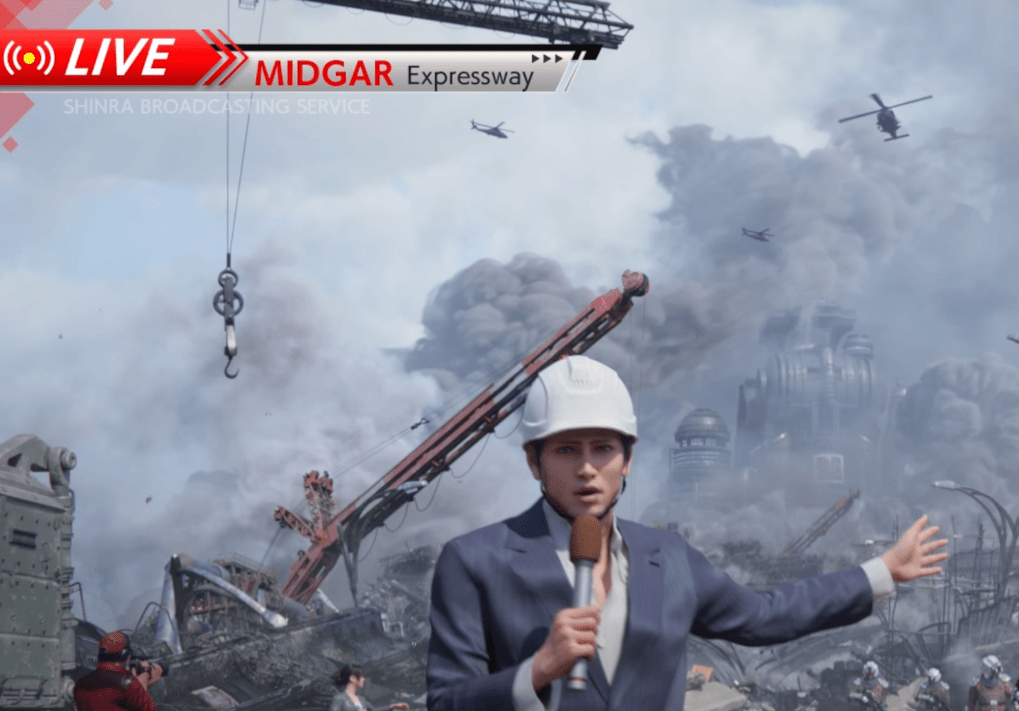
When Zack enters Midgar with Cloud, the slums are crawling with first responders and Shinra law enforcement and a news story plays on a giant public screen. A talking head says that, after the destruction of some mako reactors and the collapse of the Sector 7 plate, a third disaster has followed: the tornado.
The journalist’s references to totaled mako reactors and a collapsed plate strongly imply a similarity between the Beagle and Terrier timelines. At the same time, there appears to be a time differential between them. As the party is fighting Sephiroth and the Whisper conglomerate, Zack is making his famous last stand in his own timeline.
Zack’s last stand, as portrayed in the PS1 original, took place some time before Cloud joined Avalanche. Thus far, the Beagle Cluster has hewed close to the original plot. Which means that the perspective of Beagleverse Cloud is at least a few days (if not months or whatever) ahead of Zack in the Terrierverse.
The timeline of Zack appears “slower” than the other…but when Zack survives, he walks into a Midgar that seems very contemporary. The talking head on TV referred to things that make it look and sound like Zack’s Terrierverse has caught up with the Beagleverse. Later, when Zack encounters Marlene and Biggs, we hear of a recent past that also seems to match the version of things we saw in Remake.
This apparent jump in Zack’s timeline appears, at first, to be attributable to the path of Zack crossing the path of the party.
For now, it makes sense to assume that both Zack and the party passed through the same wall of destiny. It also follows that they both passed through the same gateway in opposite directions. As the party departed Midgar, Zack entered.
If they were crossing the same boundary at opposite directions…then Zack entering Midgar post-Whisper-tornado feels consistent. Might it also follow that the party has now gone back in time to the same extent that Zack went forward?
Many of these early intuitions turn out to be mistaken. When the game starts in Kalm, background chatter indicates that current events look (pretty much) the same in both timelines. The apparent simultaneity implies that, if the party somehow re-entered Midgar, they might find Zack.
In spite of this implied simultaneity, though, there are obvious differences. The divergent paths of Cloud and Aerith are foregrounded in both timelines. The Terrierverse also has jagged streaks of light in the sky, vaguely reminescent of the electric-atmospheric phenomenon seen in the Whirlwind Maze in the PS1 original.


Similarities on both sides of the wall of destiny can reveal as much as the differences.
Fair warning: I did put ‘heavy spoilers’ in the title.
So… you may have heard- even without playing Final Fantasy VII: Rebirth -that the plot ends at the Forgotten Capital. If you know the story of the original, you know that two things happen there: Aerith dies and Holy is summoned.
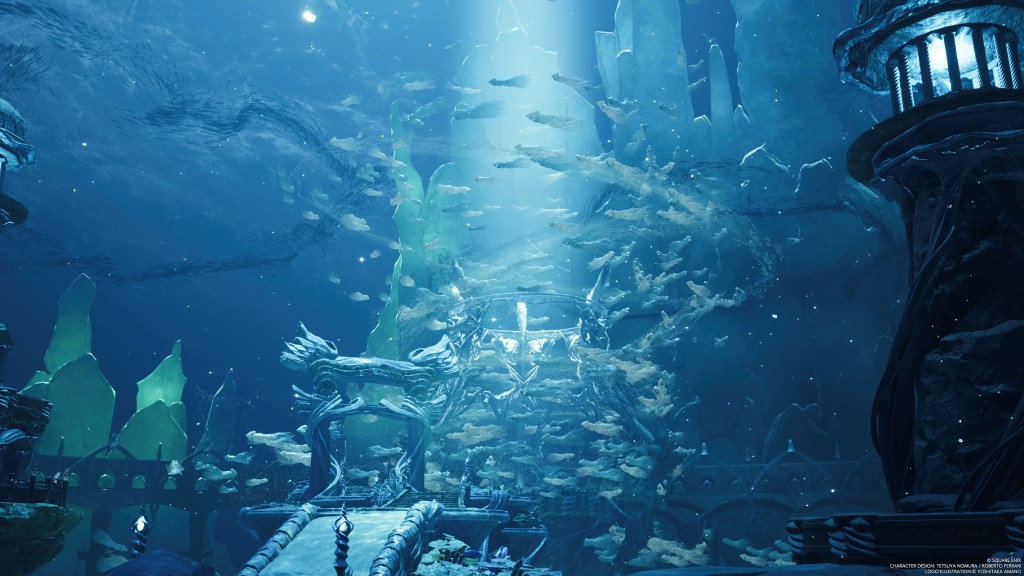
These details remain consistent in Rebirth (even if other things happen at the same time). Shortly before the fatal moment in the Cetra capital, another wall of destiny appears.
Given what we know about the beginning…when did the wall of destiny appear outside of Midgar? Late night-early morning, in the Beagle Cluster. Zack, in the Terrier Cluster, perceived and passed through the wall of destiny at what might have been a completely unrelated time. Once he crossed over, though, things on both sides appear to sync up. The last shots in Remake show both Zack and Aerith passing through same place, simultaneously, on their respective sides of the wall. Not long after, Zack is cradling Aerith’s inert (but living) body while the White Materia glows the green of Holy.
In both situations, the permeable wall of destiny appears shortly before the summoning of Holy. Sephiroth plays a role in both instances. At the Forgotten Capital, he kills Aerith immediately before Holy is summoned. At the edge of Midgar, in Remake…Sephiroth appears to summon the wall of destiny on his own.

I’m tempted to wonder what happened in the Terrier Cluster when Sephiroth conjured the wall of destiny in the Beagle Cluster. Could it have caused some sort of reflected event during the tornado? Maybe something that gave both Aerith and Cloud debilitating and near-fatal mako poisoning?

Aerith also did something to the Beagleside wall of destiny, apparently making it approachable to the party. The answer to Sephiroth’s mirror question can help a little, here. Is the breach-phenomena that causes the wall of destiny dependant on the summoning of Holy?
Sephiroth only appears to do a mental / magical summoning, with a small accompanying gesture. If we take that apperance on its face, for now- does summoning the wall of destiny cause Holy to be summoned in another timeline? Maybe the one you want to open a portal to?
The walls of destiny in both Midgar and the Fogotten Capital have these common factors: Holy, the White Materia, Aerith and Sephiroth. The summoning of Holy appears key which could explain three of the four. Aerith’s maternal line are the historic Cetra caretakers of the White Materia. The matrilineal bearer of the White Materia probably (before the fall of the Cetra) occupied a hereditery prophet-like role.
If the wall of destiny depends on the summoning of Holy, then that nails down three of the four common denominators. We also know that the White Materia needs to be in it’s white, lumenescant state in order to summon Holy, based on the summonings at both the edge of Midgar (Holy summoned on the Terrierside) and the Forgotten Capital (Holy summoned on the Beagleside).
When the bearer takes the White Materia into another timeline, though, it goes clear. Both Cloud and Nanaki describe the post-Midgar materia as a “glass marble”.
Now, we have learned that the Gi came from another world. Our only established context for world-crossing in this continuity are crossings over timelines, back and forth from different versions of the same planet. These crossings, in at least two instances, require the bearer of the White Materia to summon Holy.
If the Gi are the “Dark Elves” of Final Fantasy VII…that can mean anything or nothing. On their side of the dimensional wall, maybe the bearers of the White Materia evolved differently. Maybe they just happen to be slightly taller than us, with purple skin and pointy ears and call themselves Gi. On the Gaia side, the White Materia bearers look human and call themselves Cetra.
Of course, at this point in the story, we don’t know that the summoning of Holy is necessary for the wall of destiny…but we have seen two walls of destiny appear before Aerith invokes Holy. That kind of analogueing and doubling is usually intentional.
Timeline-crossings may only be possible with the White Materia. Meanwhile, if a few different White Materia bearers all travel to the same place, where they are met by the local White Materia bearer…there will be a handful of glass marbles and one White Materia. (Provided the local bearer and their White Materia are both still around, anyway)
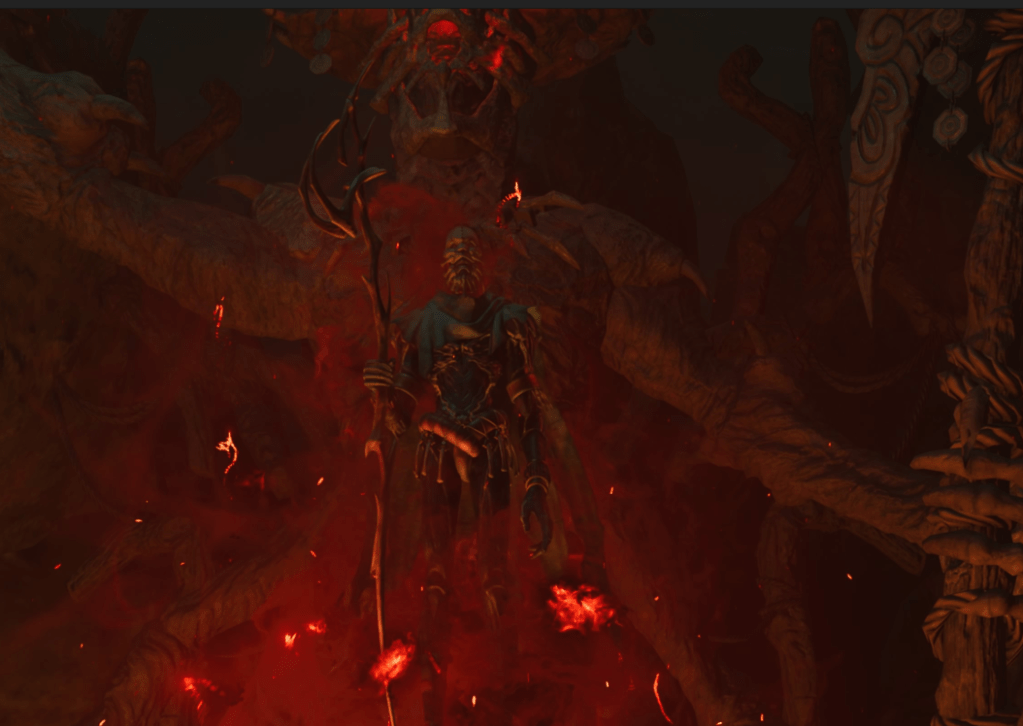
Gi Nattak also tells us that his people created the Black Materia, after crossing over to Gaia.
This happened through an experimental process. The Gi were in an unusual situation- stranded in an alien world where their souls could not transmigrate through the Lifestream. None of their souls ever died on Gaia before, so the Lifestream resists them as much as it resists Jenova. After the crossing, the Gi can only linger in a ghostly state after their death, since the door to reincarnation and renewal is closed to them. That eventually becomes a more pressing concern and soon all of the Gi are focused, single-mindedly, on solving the reincarnation problem.
The problem, as Gi Nattak articulates it to the party, looks nearly insoluble. Their original Lifestream from their original world isn’t there any more.
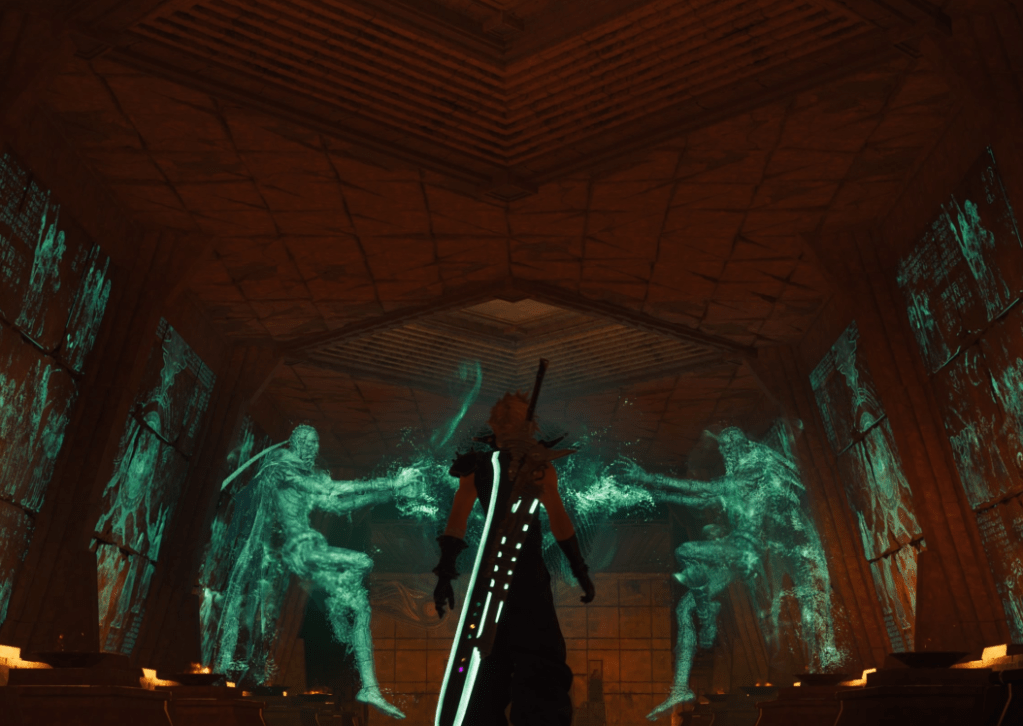
If, like the Cetra, the Gi typically interacted with their own Lifestream through their own White Materia, it makes sense that they would start the search for answers there.
The objective nature of the problem, for both sides, is that one Lifestream doesn’t know what to do with several souls so it keeps booting them back to the physical world. For the Gi, the solution is to either integrate into the Gaia Lifestream or to regain their own, original Lifestream.
A White Materia in a different timeline turns clear because it’s cut off from its own Lifestream. Connecting with another isn’t likely. All a White Materia will want to do is find it’s old home. The only frame of reference are the travellers (like the Gi) who came with it. They’re not going to connect with the current Lifestream…so maybe the problem is the current Lifestream.
In a binary, zero-sum situation, this is a choice between the foreign Lifestream and the few souls it traveled with. If pressed beyond its means for a solution, maybe a clear materia would try to destroy the anchor of the present Lifestream (the planet) and wrap it around the only souls from its own timeline (or whoever the summoner is).
In both the original FFVII and Advent Children, isn’t Meteor described as a spell that kills planets and absorbs their Lifestream, to be taken in a single firey mass to wherever the next target is?
Here, we have to mention Rebirth’s final scene.
Aerith manages to obtain a White Materia capable of summoning Holy. She then gives Cloud the clear materia, urging him to protect it. On a hill in the Northern Continent, Cloud is turning the glass marble around in his hands. He moves to put it back in his pocket when something suddenly feels different: it became the Black Materia.
This suggests that a Black Materia is nowhere near as unique as a White Materia. You could generate as many Black Materias as you could pull White ones from different timelines. Unless there was some awful historic precedent for why that’s a bad idea (like the Gi). The whole prospect of crossing different timelines could have become taboo specifically because of the likelihood of creating a Black Materia in the process.
Let’s take Aerith at her word, though: does she really want to stop Sephiroth and the summoning of Meteor?
No reason to doubt that, right?
Let’s just assume so, for now. I can’t imagine that leaving Gaia with two Black Materias could serve that end.
However, what if Black Materias are unique? What if the historic Black Materia, created by the Gi and kept in the Temple of The Ancients, could disappear in a shell game of clear materias? Literally magicked right out of Sephiroth’s hands and into Cloud’s?
That could be a gambit worth planning for.

To make things messier, we have two Sephiroths, simultaneously active in the plot of the new trilogy. We have normal Sephiroth, who originated within the original plot. The “local” Sephiroth professes ethno-historical grievances. The way in which his god-complex first expresses itself in the Nibelheim flashback is the attachment to Jenova. During the Nibelheim investigation, Sephiroth latches onto Jenova, as the source of everything in himself that he values. His latching was also accompanied by Professor Gast’s erroneous conclusion that Jenova was a Cetra fossil. The god-complex of local Sephiroth turns on the supremacy of the Cetra and the messianic justice that will restore them to their proper place over humanity.
The other Sephiroth espouses different motives, can manifest a black wing and is heralded by psychic-hallucinatory black feathers see-sawing through the air.
Hints of the differences between local Sephiroth and extra-dimensional Sephiroth have been present since Remake. It was local Sephiroth who stormed the Shinra Building at the end of the last game. Presumably by possessing Jenova cell-carriers within the building, as in the original. When local Sephiroth removes the torso of Jenova from Hojo’s “drum” lab, Hojo watches him on a series of cameras. Local Sephiroth also shows little to no awareness of extra-dimensional Sephiroth, since he skewers Barrett with no obvious foreknowledge of how the conglomerate-Whispers would intervene. He barely manages to escape the Shinra Building ahead of the party.

As strange as it may sound in relation to Sephiroth…the local Sephiroth shows more signs of human fallibility. Hojo is watching Sephiroth at the same time that he is watching the party, and the party is making a slow, systematic escape effort. Local Sephiroth can’t just withdraw his astral self from his current channeler because he is now taking the physical artefact of Jenova’s body with him (in Rebirth, as in the second act of the original, it looks as if different cell-carriers are tasked with carrying different parts of Jenova’s dismembered body, as seen on the ocean crossing between Junon and Costa Del Sol).
Because he is saddled with a physical escort, the local Sephiroth still has to make a gradual, systematic effort at escaping the drum. Obviously he is doing it with certain advantages: counting research specimens and SOLDIERs, there are several Jenova cell-carriers within the Shinra Building to whom he is telepathically linked. Even if he can’t shift to another body just then, he can still direct them all simultaneously. For all that, though, local Sephiroth can’t just magic himself out of whatever. Extra-dimensional Sephiroth appears much less limited.
The biggest difference is that extra-dimensional Sephiroth has been absorbing Gaia in different timelines for awhile and has been using the Black Materia long enough to have a detailed knowledge of it. He’s wrapped several fallen Lifestreams around himself, which I imagine is where the Whisper-conglomerate comes from.
Non-local Sephiroth is a bit more present in Rebirth, though, and some consolidation and streamlining of some original plot threads have specific relevance to him.
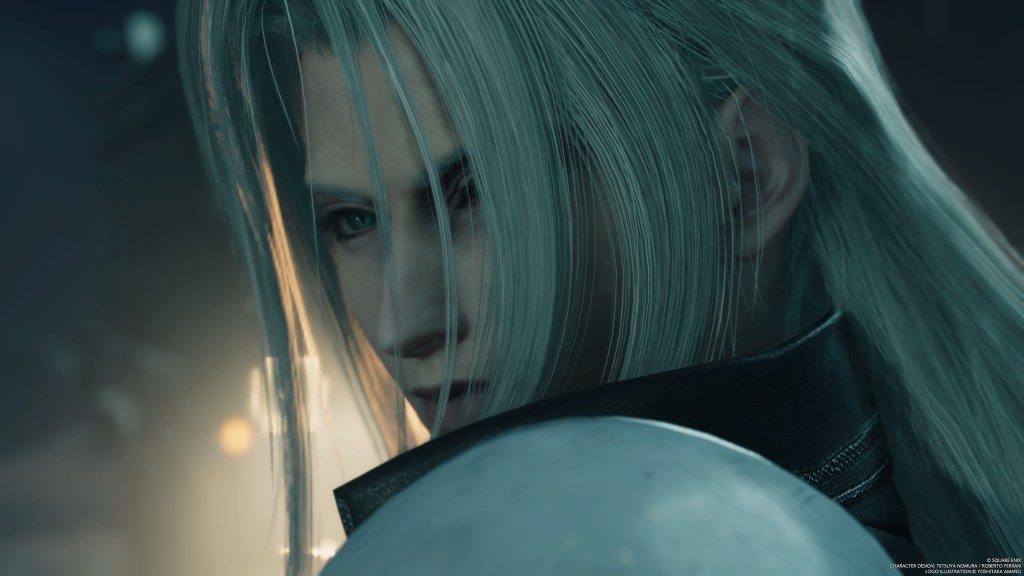
In both the original and Rebirth, Sephiroth wears his father-wounds on his sleeve. He takes every opportunity to denigrate Hojo as a scientist and a father (as any of us would, with a childhood like his). Sephiroth’s stated admiration of Professor Gast stems simply from Gast being a more successful scientist than Hojo. Not unlike how Cloud’s hero-worship of Sephiroth stems from his own beliefs about his inadequacy. Cloud admires Sephiroth because he’s everything he doesn’t see in himself and Sephiroth admires Gast because he is not Hojo.
From the beginning of Rebirth’s Nibelheim flashback, an additional piece of lore is revealed: the Nibelheim mako reactor was the first ever made. The second was the Gongaga reactor, which famously melted down due to bad design. We can only assume that the Nibelheim reactor was even more experimental, even if it didn’t catastrophically explode.
The implications rely on a lot of understatement. Before setting foot in the Nibelheim reactor, Sephiroth says that his mother is Jenova. At that point, it is not clear what he means by that. We, the players, have a few ideas, what with the original and Remake but we have no idea what that statement means to Sephiroth himself. We may be tempted to make some assumptions: Jenova, to English language speakers, at least sounds like a feminine name for a human being. At the same time, we have no way of knowing if Sephiroth had even laid eyes on this person.
Anyway: an investigation of the first mako reactor ever made implies that the SOLDIER cohort is dealing with a unique, possibly sensitive situation. This is cofirmed when we enter the reactor and Sephiroth specifically points out how outdated the equipment is. Both Cloud and Sephiroth agree that Shinra probably avoided informing the nearby villagers as a matter of course.
These details matter because they clarify the gray areas in Sephiroth’s original chain of reasoning. Newer models become safer, more efficent and more standardized. If the Nibelheim reactor is the first and most experimental, then it necessarily has the greater human fingerprint. Without the standardization, everything would have the intention of a human being behind it.

Not that the gray areas in the original Final Fantasy VII were completely inexplicable. I’ve usually assumed that Sephiroth’s revelation in the Nibelheim reactor was largely a telepathic event. In Rebirth, Sephiroth still has telepathic interactions with Jenova…but not before seeing her name in giant metal letters, over a sealed door, in a room filled with imprisoned human research specimens.
Sephiroth’s frame of reference tells him that Hojo is behind this. As far as Sephiroth knows, at this point, these are humans who were sealed in tanks and subjected to the same mako-compression that creates materia. In other words, it looks like someone tried to make human materia.
Remember, though, that this is the first mako reactor ever made. The Shinra Mansion is also just outside of Nibelheim and is the largest and oldest structure in the area. With mako-infused prisoners and the mystery of Jenova cells looming on the horizon, it becomes possible that the Nibelheim reactor is the birthplace of SOLDIER. Seeing that Sephiroth is the most celebrated warrior in the program, the reasons for him to pay special attention continue to add up.

Then he puts his hand on the sealed ‘JENOVA’ door. A silent beat passes and he informs Cloud that the mako leak which prompted the investigation is caused by a loose valve. Cloud tightens the valve with minimal effort, while Sephiroth is both connecting dots and receiving telepathic messages.
It makes intuitive sense that Hojo would manipulate his son as casually as he would anyone else. It is entirely possible that Sephiroth, as a child, was simply told that his mother was someone named Jenova, with no additional context. Then, late in his career as a first class SOLDIER, he investigates an outdated mako reactor, filled with research specimens and a locked door marked ‘JENOVA’. This could be the very first mention of his mother that he ever encountered in his life, outside childhood. At the same time, Jenova begins sending thoughts into his head from beyond the door.

The implications about the origins of SOLDIER go straight to the self-image of both Sephiroth and Cloud. It’s been Sephiroth’s world since birth and both the institution and the man were early identity models for Cloud.
It’s a neat way to streamline things that were less obvious in the original but it also plays into something that wasn’t updated. In both original and Rebirth, the last open and rational communication from Sephiroth is that he was “created” by Professor Gast. After this, he tells Cloud to leave him alone and the rest is history.
In the beginning, Sephiroth hates his father and knows nothing of his mother. He admires Professor Gast for making his father look inferior by comparison. Cloud, meanwhile, adores Sephiroth out of avoidance. It is enough for Sephiroth to simply not be Cloud.
Next, the Nibelheim reactor. Sephiroth assumes that his father Hojo is behind the materia-people locked up in front of the JENOVA room. Considering Hojo’s patterns, this is likely. But it cannot be the whole truth.

We learn that it can’t be under the Shinra Mansion. Sephiroth reads that Gast discovered an unusual corpse during an archeological dig which he named Jenova. Sephiroth reads of Gast’s mistaken conclusion that Jenova was a Cetra and that the point of the Jenova Project was to resurrect the Cetra.
In the absence of any other knowledge of his mother, all of this is a mind-bending blindside. Sephiroth knows that he grew up in a lab, raised by an unethical scientist…and has now learned that his “mother” is an ancient, fossilized corpse.
He concludes that Gast “created” him. Sephiroth’s escapist identity model is reduced, in his mind, to the level of his father.
Cloud also had an escapist identity model that was shortly discredited.
This whole dynamic was present in the original. In the original, it’s a poignant, understated character nuance. It connects Cloud and Sephiroth through the same sadness and adds to the bitterness of the betrayal. It does so in Rebirth, to.
But we’re dealing with a different continuity, now. In the original, Jenova has a psychic presence in Cloud’s mind due to an eventual cell-infusion. Cloud’s trauma and neurosis create a projection for the psychic colony organism to latch onto. This also appears true in Rebirth but it is not all that’s happening.
It is also worth mentioning that the cover of Final Fantasy VII: Rebirth shows Cloud, Zack and Sephiroth at the edge of creation from Remake. We know, already, that Zack and Cloud crossed over into other continuities. We also know that a version of Sephiroth has been active outside of the different timelines for awhile, now.

At the end of Remake, this version of Sephiroth tells Cloud that he will never die and that he doesn’t want Cloud to die, either. His last words to Cloud in that scene is that “the future depends only on you.”
Close to the end of Rebirth, we see a familiar glimpse of a black-robed cell-carrier in the Whirlwind Maze. This time, when the cell-carrier says “(r)eunion”, the subtitles attribute it to Cloud. His hair and cheekbones also look like Cloud.
If extra-dimensional Sephiroth has been active for awhile and has already absorbed a few worlds into his Whisper-conglomerate, it may feel pointless to wonder about the world that extra-dimensional Sephiroth originally came from. But what if we are meant to be aware of it? Wouldn’t extra-dimensional Sephiroth be aware of (and motivated by) it?
We saw the flash of the cell-carrier in the Whirlwind Maze way back in the beginning of Remake, before we have any reason to think it is Cloud in another continuity.

In the original timeline, Sephiroth was the author of the worst trauma in Cloud’s life. He also broke Cloud’s heart by letting him down as a hero. Sephiroth has also learned that one of his heroes is not what he originally thought he was. Even if Cloud was traumatized and resisted Sephiroth at first…maybe he stopped resisting, at some point in another timeline. A reconciliation would provide the chance for them to find empathy in one another, however cult-like and non-consensual the foundations may be.
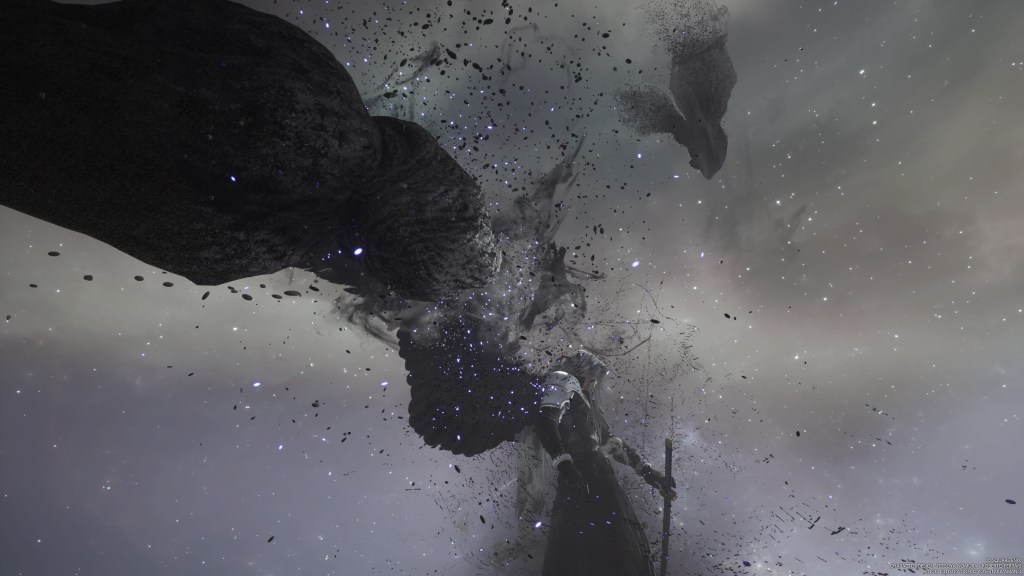
What if extra-dimensional Sephiroth wants to preserve Cloud forever because, in his original timeline, Cloud became an essential ally?
Oh, and wasn’t the Nibelheim investigation prompted by a mako leak, that was mutating the local wildlife?
Both Remake and the original open with Aerith having a brief encounter with a leaking mako pipe. There are implications that, throughout Remake, this brief gasp of mako has something to do with Aerith’s awareness of the other timelines.
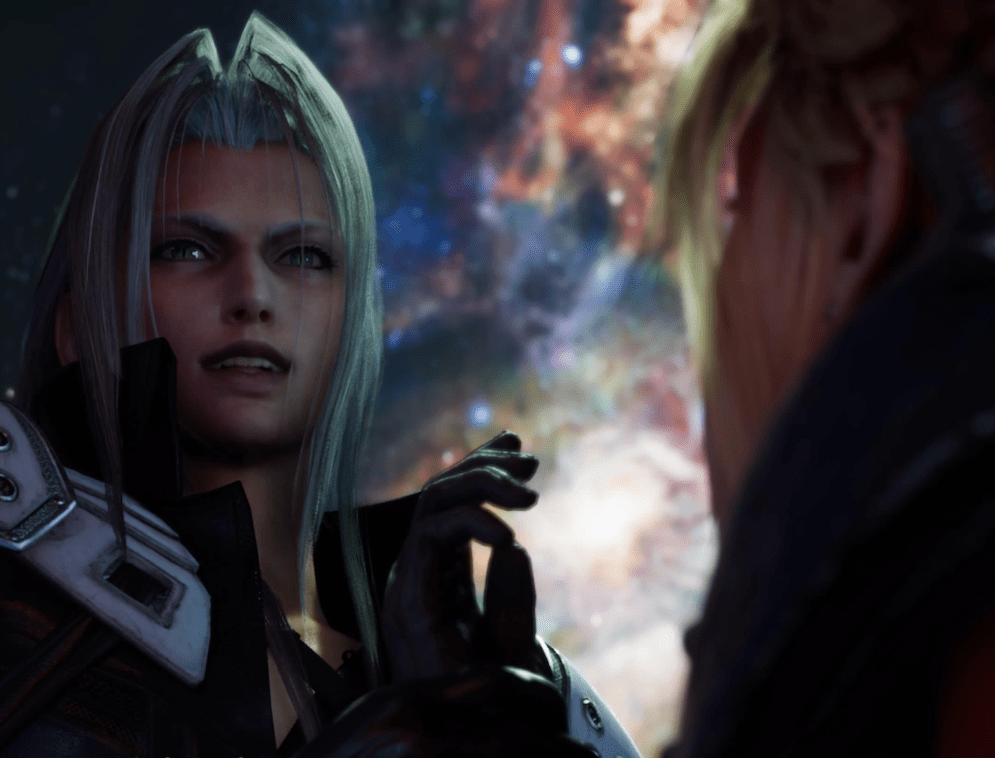
If the Nibelheim reactor was the oldest one ever made, then it could have been leaking for awhile. What if Cloud got a whiff of mako, say, in childhood? One that showed him a vision of his personal hero, Sephiroth, side by side with Cloud? It could inform his hero-worship but that doesn’t mean that what he saw doesn’t exist elsewhere in the multiverse, just like Aerith’s visions.
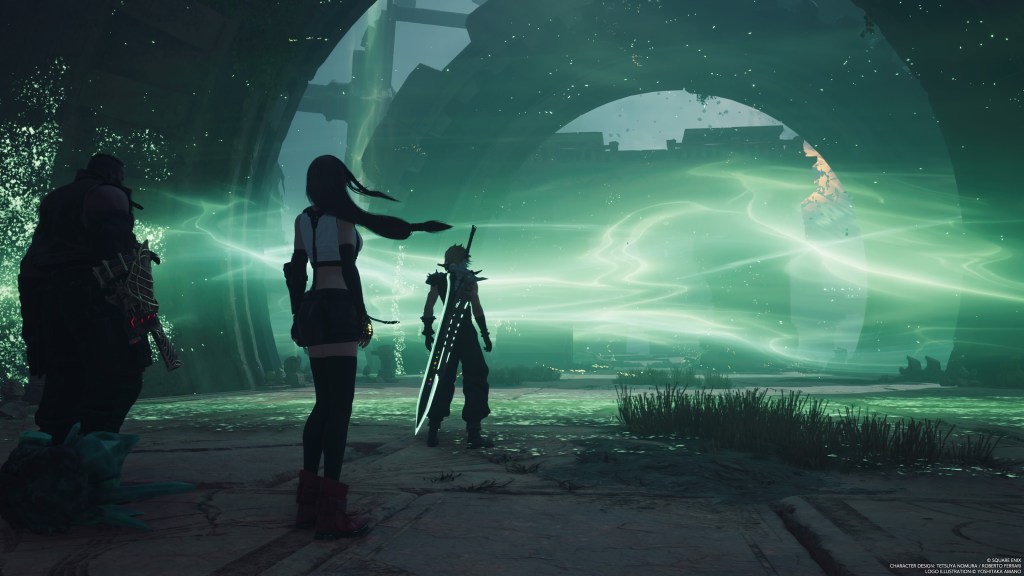
In Rebirth, Cloud’s memory differs from the Nibelheim incident narrative we know in two ways: the death of Zack (fallen into rapids on Mount Nibel) and the death of Tifa (murdered by Sephiroth in the Nibelheim reactor, right after he killed her father). Some sort of psychic rapport across timelines would accomodate those things.
Perhaps those two deaths, in another timeline, played a role in Cloud’s eventual submission to Sephiroth. In that case, the psychic communications from extra-dimensional Sephiroth begin to make sense. His intent is, of course, psychological torture or maybe to trigger reactions for other reasons. But his words simply reflect the circumstances of his own world. Basically saying: “You were cool earlier, back when I killed Tifa, remember?” It would then make sense for extra-dimensional Sephiroth to exert a psychic influence toward convincing Cloud that Tifa’s dead and the woman beside him is a Jenova cell-carrier. Who knows: maybe psychologically triggering parallel traumas could do something like establish a psychic bridge between our Cloud and the Cloud inside of the Whisper-conglomerate.
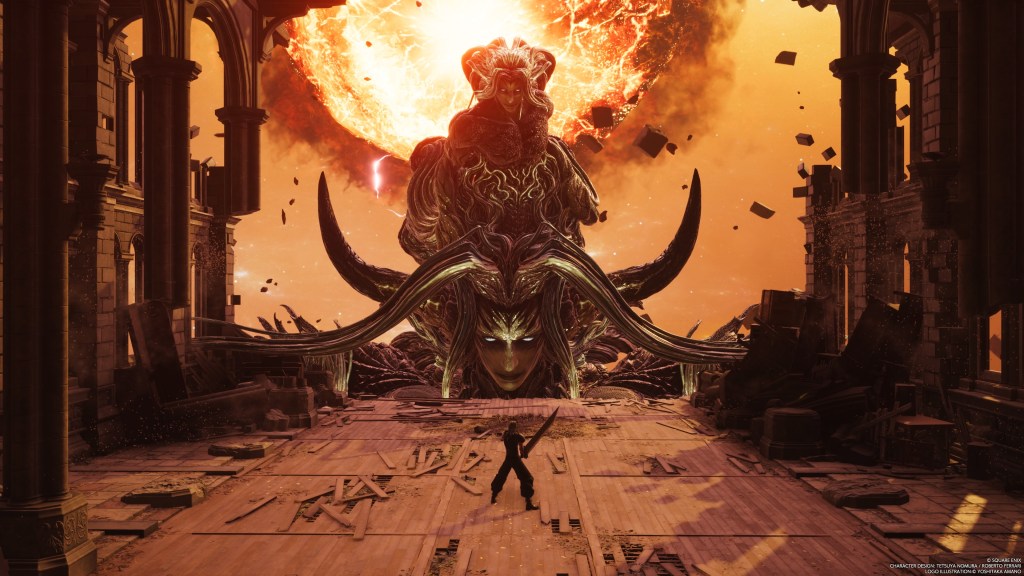
Obvoiusly those last parts are totally speculative but the overall consistency is interesting. A third timeline, outside of either the Beagleverse or the Terrierverse, would accomodate the unfamiliar memories of Zack and Tifa dying. A drive to bring the Cloud in the closest universe in line with his Cloud would also explain some of the behavior of extra-dimensional Sephiroth.
 AilixChaerea