There are two particular posts on this blog: one from last year and another from further back. Both ‘A perfectly good abstraction’ and ‘Me and American Patriotism’ are retrospectives on dialectics that have played out in my mind and my life.
Both of them also discuss ethics; distinct from philosophy. A philosophy can be a thought experiement, a belief or a way of life. Ethics are relatively simple: how we should behave toward one another. An ‘ethic’ is also a well-used way of denoting how people treat each other right now. Modes of behavior shared by large groups can denote the presence of ideas too diaphonous for meaning but thin enough to stretch far and connect much.
A widespread, unconscious attitude would match those proportions. While a given ‘ethic’ can also be an ideological commitment, they are often psychological. The mind of a given person may or may not make any connection between ideology and an unconscious attitude.
Speaking of all that: remember when I posted about Biden withdrawing from Afghanistan? I worried that I was being too critical of Biden and that I should be more willing to give points fairly.
I suspect I’ll continue writing about politics here but I don’t know that I will.
I’m not a sore loser and I don’t mind being wrong…but I may have been seriously wrong about some of the things I mentioned in those two posts.
I’m an American so I can’t help thinking about American politics and society in a provincial way. I took it for granted that Americans generally value the ethical enshrinement of the individual in the American Constitution. Consider many of the assumptions we make as we write: anyone is allowed to have any reaction to what I say but I am still allowed to say it. To call for someone to be deplatformed or for their message to be lumped into an ideological generalization is to discredit oneself. It testifies to a fear of ideas under discussion that can only be assuaged by throwing out the discussion.
Many Americans probably do value those things. But I made assumptions about scale.
(spoiler warning for original FFVII, FFVII Remake & Rebirth)
So, I was wrong about something-
My only firm prediction for Rebirth didn’t pan out.
It did not end at the Whirlwind Maze, in the Northern Crater. It seemed obvious, at the end of Remake, that the second leg of the story would begin almost exactly at Kalm and Cloud’s first telling of the Nibelheim incident. I figured, since the story would begin with Cloud’s recall-narrative…that the Whirlwind Maze would make for the perfect dramatic ending. Cloud’s memory is challenged directly by Sephiroth with the full force of Jenova’s ability to shape-shift and spell-bind.
Cloud seems almost suspiciously vulnerable to Sephiroth’s psychic duress. He soon becomes convinced that he was a failed Sephiroth clone, made in the aftermath of the Nibelheim incident, with DNA samples from Sephiroth in his post-Jenova state (that, I imagine, is what Cloud recalled Hojo keeping in the tanks in the Shinra Mansion, what with the skin and the hair and blood, most of which could probably have been taken forensically after the Nibelheim incident- skewered leg, other tussles during his rampage, etc).
I thought it was a great opportunity for a cliff-hanger that would, at a convenient narrative stopping point, add maximum drama while expanding the scope of the story, boosting the set-up to the third act.
Cloud’s psychic glimpse, early in Remake, upon meeting a robed cell-carrier for the first time. That background was also a reason I thought the Whirlwind Maze would play a significant role soon
Nonetheless…Lifestream-tinged wind-storms made their appearance in the final act of Rebirth, even if it wasn’t in the Whirlwind Maze. Similar looking phenomena dominates the horizon in the Terrierverse, where we find Zack.
One wonders if these visual cues will come together when the final third of VIIR does portray the Northern Crater and the Whirlwind Maze. If they will mean what they meant in Rebirth but within the Whirlwind Maze, nestled against the edge of the crater.
Before going that far, let’s review what they actually were in Rebirth. They manifested in the sky in a certain cluster of worlds. These include the part of the Terrieverse that Zack wanders into at the end of Remake and the beginning of Rebirth. Elmyra tells Zack that some people think that it heralds the end of the world. Shinra appears completely galvanized around it, in spite of other recent blows to Midgar like the fall of the Sector 7 plate, the bombing of mako reactors and something that was widely perceived as a tornado.
It seems obvious to me that this is because of the interdimensional nature of what happened at the end of Remake. Rather: what usually happens when Sephiroth conjures a wall of destiny. Sure enough, at the end of Rebirth: Sephiroth manifests the wall of destiny on the outside of the Forgotten Capital of the Cetra. The last time this happened, someone (Zack) ended up in a cluster of worlds where the sky is covered with the same Lifestream-like glow as the whirlwinds in the Northern Crater.
One possible reading is that the Whirlwind Maze in the Northern Crater is dimensionally-unique space. The cluster of worlds containing whirlwind-green horizons may be distinguished by the fact that their entireworld(s) are covered with the dimensional uniqueness of the crater, rather than a discrete location within a world.
What if: the Northern Crater is where it all came together for extra-dimensional Sephiroth. The event that broke the Sephiroth/Jenova/Whisper-conglomerate out of the first timeline also set them on the rampage that leads to the other two timelines. An interdimensional phenomena arising from a certain place may express itself in the same place across timelines. In a few different worlds, it looks as if a particular location is haunted by interdimensional weirdness. This could be an outside view.
In the world where we spend the most time with Zack, the whirlwind-glow is commonly called the rift in the sky. That looks like an inside view.
From the ease with which extra-dimensional Sephiroth omnipotentally manifests in the worlds with the sky rifts…it seems to follow that those are the worlds that are under the pressure of extra-dimensional Sephiroth’s Whisper-conglomerate. Directly against it, maybe.
How far out can Sephiroth go, exactly? How far out was extra-dimensional Sephiroth during his appearance in Remake and then in Rebirth?
Speaking of him-
Near the end of Remake and throughout Rebirth, the story can be divided between the timeline containing the party and the timeline containing Zack. At the end of my Rebirth review, I considered the relevance of a third timeline, where the extra-dimensional menace originated.
Before now, I’ve assumed that extra-dimensional Sephiroth originated from the “first” possible timeline that we, as gamers, are aware of: that which begins with the first Crisis Core and ends with Advent Children and Dirge Of Cerberus. That, of course, would go with the assumption that Jenova ultimately “won” in that timeline- either at a future date not portrayed or subtly “winning” in the present. Jenova (and, presumably, Sephiroth) won and turned Gaia into another flaming vessel for Meteor, from which to proceed to new planets and timelines to conquer. Maybe the mysterious fate of Genesis (post-Crisis Core and throughout the Deepground program in DoC) had some bearing on Jenova’s apparent victory in that timeline.
The theory has a ring of truth, considering the tone of the ending of the original Final Fantasy VII. Yes, it left room for some hope. Life, post OG VII, continued after the apparent fall of both Jenova and Shinra. Nanaki, at least, fills out the typical lifespan of his kind and begets a family along the way. Midgar, however, suffered damage from both Meteor’s approach and the abrupt, last-minute intervention of Holy. Some hundreds of years later, Nanaki and his cubs unexpectedly find themselves on a cliff, affording a panoramic view of Midgar, completely overgrown with wildlife and greenery.
Yet Midgar is only one human city-state: it’s downfall can only relate to the downfall of Shinra. Maybe humanity isn’t on top, just then, but wasn’t the whole story about humanity’s growing pains anyway?
The tone of the ending is tough on humanity but it is also fair, considering events up until then. A new planet-threatening crisis derived from human meddling (Genesis, post DoC) would cut against any possibility of a positive arc for humanity…but if Sephiroth and Jenova somehow came out on top “in the end”, then maybe it wasn’t looking good for humanity anyway.
Or, if Genesis didn’t “cause” it, then maybe Genesis was the one who brought Sephiroth’s extra-dimensional Whisper-conglomerate over the veil. Maybe the circumstances need to be the same to make contact with other Gaias, hence the insistence of “enforcing” the original timeline (Nanaki’s flash of the original ending near the end of Remake, i.e. “[t]his is what will happen if we fail here, today [sic]”).
Given some lore introduced in Rebirth, though, I’m not sure if extra-dimensional Sephiroth did come from the original timeline. The behavior of the black Whispers in Remake were clearly interested in enforcing the original timeline. We now know that the intentions of the black conglomerate-Whispers are not just enforcement of its creation, though: maybe enforcement of a temporal entry point? One that depends on the unfolding of the original timeline?
The enforcement of that timeline matters at least a little; the ‘analysis’ blurbs for the Whisper Harbinger’s three lesser Whispers say that they are protecting their timeline of origin. In a recent Ultimania guide, some of the creators of Remake effectively told the interviewer that the three end boss Whispers are Kadaj, Loz and Yazoo from Advent Children. The Ultimania statement, the ‘analysis’ blurb in Remake and the behavior of the Whispers in that game all attest to the enforcement of the original timeline. If not for origin, than for an entry-exit causality juncture which (presumably) enabled them to survive the original timeline.
This would also necessarily mean that extra-dimensional Sephrioth did not come from the original timeline, though.
Jenova-facilitated contact from a third timeline would explain some of Cloud’s memory-flashes in Rebirth. One of them dates back to the beginning of Remake, when Cloud encountered a robed cell-carrier living next door in an apartment building. Lots of robed figures, against a windy, rocky background, with some jagged peaks that I find reminiscent of a location from the original. More recent memory-flashes include the deaths of Zack and Tifa.
Strictly speaking, the original Final Fantasy VII furnishes some intuitive answers. By the end of that game, we knew that Cloud was harboring Jenova cells ever since Hojo experimented on him and Zack in the Shinra Mansion. It’s commonly interpreted that the psychic sensitivity and shape-shifiting potential of Jenova caused Cloud’s personal cell colony to fabricate memories, such as the ones demonstrated in his telling of the Nibelheim incident in Kalm.
We also know, from the original, that Sephiroth will use any psychic pressure that could possibly help him. If its helpful for him that Cloud start believing that he’s a Sephiroth clone, Sephiroth will see it through. If Jenova and Sephiroth in Rebirth have that much in common with the original story, then artificial memories of Tifa and Zack dying are definitely something that they might try. The vision of Cloud in the cell-carrier robe, seemingly shuffling around the Whirlwind Maze muttering “reunion”, could also be a whole-cloth fabrication, for that matter.
How many whole-cloth lies have we seen from Sephiroth, though?
The frozen, crystalized heart of the Northern Crater, as seen from the scale of viewpoint characters (PS1, obvs)
The biggest candidate would be the idea that Cloud is a Sephiroth clone. Yet, considering that Hojo likely dosed Zack and Cloud with Jenova cells from biomatter left by Sephiroth, it isn’t entirely off base either. Sephiroth and Jenova will control the framing of apparent information and elimate information but they don’t appear to add information, except in a blunt, copy-paste way. Cloud’s delusions of “being” Zack are crafted around his observations of Zack. Cloud can’t even leave out the traits he doesn’t want idealized- those are given to a random Shinra trooper, who just happens to be in all of the situations Cloud himself actually would have.
The telepathic pressure of Jenova seems to lie more in misrepresentation and projection than outright fabrication.
Obviously, if you think that Jenova can do fabrication, then you can sweep those recent memory-flashes into the ‘deception’ category.
I’m inclined to think that the memory-flashes of Cloud in the robe, the death of Zack and the death of Tifa are probably based on something, even if the source and the meaning isn’t direct. A third timeline accomodates this, especially considering that it was probably a timeline in which Cloud turned as ugly as Sephiroth (to say nothing of the role played by the loss of Zack and Tifa).
In the version of this theory that I arrived at during the end of my Rebirth review…this timeline makes itself known to Cloud (potentially from a young age) for very specific reasons. A very specific reason that can hide in the shadow of existing world-building.
Remember how much the VIIR devs have emphasized their attachment to faithfulness. Any new cosmology innovations will not likely edge out existing cosmology.
Narrative changes have been made, of course, but I think the majority of those arise from the modern graphics, which tie the scale of the perspective to human physical proportions. Things that happened in the overall plot of the original game find their way into comparable places, if they can’t be in the same place (Fort Condor-related sub quest in Junon, even if the actual Fort Condor location isn’t there, etc).
Dramatic changes have also been made with extra-dimensional Sephiroth and the Whisper-conglomerate. But I think those changes are more likely to rhyme with the original cosmology than contradict it.
This rhymes with Cloud’s mental wounds.
The dude has had a painful relationship with self worth. His last commuincation with Tifa, before her childhood accident on Mount Nibel, was urging her not approach the rope bridge because there was nothing to find; the local folklore about Mount Nibel is folklore only and the land of the dead is not there. Cloud only made his presence known once Emilio and others left Tifa alone on the mountain. He accompanied her to the rope bridge and brought her back to Nibelheim. In the original, Cloud was smeared by Emilio and the others- stemming, apparently, from the shame of their abandonment.
His first experience sticking his neck out for someone ended with at least a temporary bad reputation and isolation from Tifa. After that, the quiet anger and resentment of Cloud’s early adulthood began to sink through. At age thirteen, he tells Tifa that he plans to join SOLDIER, in emulation of Sephiroth.
Here, it becomes helpful to remember the beginning of Remake: something happened, with a leaky mako pipe, that had some connection with Aerith’s awareness of the other timelines.
Nibelheim is also the site of the first mako reactor. And it’s known to leak. And early-teen Cloud is nurturing his indignance with power fantasies.
The original story accomodated this with the relationship between Cloud’s inferiority complex and his eventual dosing with Jenova cells. Obviously, both of those things are still present and active in VIIR.
Jenova is known to shape-shift and use psychic manipulation. All she needs is a psychological exploit. But this is a world where Jenova is connected, across timelines, to extra-dimensional Sephiroth. One of the trickier parts of differentiating between extra-dimensional Sephiroth and local Sephiroth is that both rely on Jenova which means telepathic influence could be coming from one, the other or all of the above.
What if Jenova had reference material to use on Cloud, from the Whisper-conglomerate? Say, a timeline in which Cloud became a famous 1st Class SOLDIER alongside Sephiroth? Feeling small can create big dreams.
This timeline, as far as we’re concerned, would look completely random unless it was built up beforehand (Cloud in the robe, Tifa and Zack, etc).
The death of Zack (in the rapids of Mount Nibel instead of outside Midgar) is also clearly not meant to be a throwaway memory-flash. When it happens, Cloud says to Tifa that they need to tell Aerith, for her closure. Tifa tells him that she will take care of it, later, in privacy.
Later, if you end up with Aerith during the second Gold Saucer visit, Aerith delivers a combination of familiar and unfamiliar dialogue. She comments on Cloud’s uncanny resemblance to Zack in his mannerisms and bearing. Cloud assumes that she is beginning to grieve because Tifa told her how Zack died. He says (pretty much) “Tifa told you, huh?”
We then get a brief flashback to that conversation and Tifa apparently choked: she only managed to say that “Cloud remembers Zack now” before losing her nerve.
Aerith, therefore, has no obvious reason to know what Cloud was talking about.
To address some concerns of Aerith’s awareness:
Before now, Aerith had revelatory little memory-flashes about the “original” timeline. Throughout Rebirth, those visions are less available to her. She tells Tifa, in Kalm, that she lost a lot of those memories (presumably when they crossed the wall of destiny on their way out of Midgar). Aerith tells Nanaki that she managed to regain some of them and gain further insights. In spite of that, Aerith doesn’t appear to have the whole, intact, extra-dimensional awareness that she did in Remake. When Aerith touches other people in Remake, they get flashes of the original CC-DoC timeline. That touch-effect isn’t present in Rebirth.
What all that means is: Aerith doesn’t necessarily know how things turned out “first time around.” Meaning, she may or may not have any awareness of how Zack died outside of Midgar, much less Cloud’s memory-flash of him falling into rapids on Mount Nibel.
So. Back to Aerith and Cloud, during their Gold Saucer date. Aerith might be unaware of any subtext that would let her know what Tifa was driving at. Aerith may have no idea what Cloud was talking about with the “Tifa finally told you” line. In any event, Tifa did not tell Aerith what she said she would and Aerith says nothing to imply any contextual knowledge of this.
(Not to stray too far from the Gold Saucer date…but consider what Tifa probably thought of Cloud’s dead-Zack-in-the-rapids flash. Cloud has already voiced the idea that Tifa herself appeared to die after Sephiroth slashed her open. Maybe it’s manipulation from the third timeline but Tifa seems to think it’s psychosis. She has also sat through a telling of the Nibelheim incident by Cloud, with Cloud doing all the Zack stuff. Tifa likely assumed that the memory of Zack’s death on Mount Nibel was purely delusional. In that case, she wouldn’t want to freak Aerith out over Cloud’s problem and therefore froze)
If someone starts with the VIIR games with no knowledge of the original, the vision of the Mount Nibel rapids might appear even more significant.
Another reason I find the possibility of a third timeline compelling: in the original, Sapphire Weapon goes down after taking a mako cannon shell at point-blank range, never to be seen again. If that was meant to be the death of Sapphire, then I wonder if the ending of Remake may have included another hint at the third universe.
Basically, I think the Whisper Harbinger in Remake looks like Sapphire Weapon.
In the original, Sephiroth’s organic body- from which he psychically projects into cell-carriers -is suspended directly above Sapphire Weapon’s head in the Northern Crater.
Dunno about this next comparison exactly but I couldn’t help but notice the narrowed eyes-
This always stood out in my memory as one of the few times we see Sapphire Weapon’s eyelids move in the same way they did before (you know, like they did behind the frozen wall within the Northern Crater)
To say nothing of the one obvious deviation from Sapphire’s traditional design-
I think the arms might be the only thing that PS1 Sapphire DOESN’T have, yet allowances must be made- Sapphire Weapon wasn’t originally suffused with an excised Lifestream dominated by Jenova and Sephiroth, so…
These similarities feel even more significant after seing how Rebirth depicted the Lifestream-view of the interdimensional incursions of Sephiroth between worlds.
VIIR features a new Weapon-being, known to come and go from mako reservoirs in at least two ruined reactors: first in Corel and then Gongaga.
After everyone’s first evening in Gongaga, they wake up to disturbing news. Shinra is fast approaching the mako reactor ruin and Whispers are preventing members of the militia from approaching. The party encounters them on their way to the reactor but they seem far less interested in them then they were in Remake. Cloud sees one of them assume the shape of Sephiroth, which I suspect was simply extra-dimensional Sephiroth making his presence known to him.
At the reservoir (which is still somehow drawing mako despite being non-functional), the Whispers are swarming in a spiral overhead. Cloud is overwhelmed by Shinra troopers when extra-dimensional Sephiroth manifests, telling Cloud that he needs to embrace his anger without reservation. Cloud then becomes an unstoppable BEAST, brutally and efficiently cutting down all in his path.
Tifa is alarmed at this sudden change and approaches him. Sephiroth repeats his assertion that Tifa is dead and that this person is a Jenova cell-carrier. Cloud mumbles this as it’s relayed to him and Tifa is flabbergasted: she already showed Cloud her surgical scar, how could he still be on about this?
The Whispers in the sky disappear and Cloud attacks Tifa, who dodges his blade only to fall backwards into the reservoir. As she falls, extra-dimensional Sephiroth and the Whisper-conglomerate (worst band name ever) withdraw from Cloud and he realizes what he’s done.
Tifa, meanwhile, gets swallowed by the Weapon. This Weapon, by the way, has a Huge Materia socketed into its body. Rufus, earlier, told his cabinet that Weapons appear when the planet is in danger and contain their own Huge Materias. This, apparently, pertains to Weapons in general and not just this specific whale-like one.
Next, we are rooted in Tifa’s perspective, inside the Weapon. The environment has at least a passing resemblance to the Lifestream astral plane from the original- the one Tifa and Cloud end up in after a Lifestream swell erupts in Mideel, where she psychically helped Cloud separate his own memories from the cell-colony illusions.
Here, like Mideel in the original, Tifa concludes that she is within the Lifestream. On this plane, the Weapons are not just defenders of the planet: they are her avatars.
To everyone’s awestruck relief, the Weapon surfaces from the reservoir again, to return Tifa in a flash of green light.
Tifa later tells everyone (after a therapuetic debriefing with Cloud) that she saw the planet in conflict with an outside menace. This maps onto Tifa’s vision of the Corel-Gongaga Weapon fighting against the Whisper-conglomerate. For part of this, Tifa is looking outward at the Lifestream from within the Huge Materia in the Weapon’s belly. After going a few rounds with the Whispers, the conglomerate parts, revealing extra-dimensional Sephiroth, who lunges through the Lifestream and cuts open the Huge Materia, ending the vision.
Immediately before gouging the Huge Materia that Tifa is looking out from
Speaking of Cloud and Tifa’s Lifestream adventures…they still have a distinctly psychological structure, even with their significance beyond the individual. Weapons represent the will of the planet, much like Holy. The planet contains the Lifestream. Yet Weapons can interact with other continuities from within it, both inside and out like a Russian nesting doll. As if the Lifestream contains avatars from different timelines, like multiple personalities within the same mind.
If Sephiroth and the Whisper-conglomerate are going from timeline to timeline absorbing different Lifestreams, an avatar through which to travel to other timelines would be important. Also: if Jenova’s ultimate goal (perhaps her life cycle) depends on subjugating entire Lifestreams, that could be expressed as bending the planet to her will. The will of the planet would become her own, perhaps capturing the local Holy and the local Weapons.
Meanwhile, in a certain timeline, Sephiroth is suspended in the Northern Crater, directly over Sapphire. Just sayin’.
If you’re familiar with Remake, you’ll hit the ground running. Same fluid action RPG as before. The most obvious departure from Remake is the scale.
Rebirth picks up at a point where a smooth fake-out happened in the original FFVII. Put simply: lots of classic JRPGs were not open-world, according to the modern standard.
One notable exception was Final Fantasy VI. The first half is pretty linear, then an apocalyptic disaster happens. Not even the geography remains the same. You start with one player character. You can proceed to the final dungeon if you want but it probably won’t go well unless you did a CRAZY amount of grinding. The rest of your party is out there, surviving as best they can. Some are trapped or lost, waiting for a second chance. Some have different commitments. You’ll probably get at least some of the old band back together.
I don’t think any other mainline Final Fantasy has pulled off open-world as successfully as VI. XV made a noble effort but the plot didn’t always agree with the open-world structure. In terms of the simple joy of wandering around doing whatever you want, XV will get you there. It has my favorite fishing mini-game, there’s a neat balance between spell-crafting and money management and you are rewarded for going off the beaten path. The chocobos are plain compared to other Final Fantasy entries but they’re a fun way to cover off-road distances. I also loved the photography and how camping and cooking figure into character-building. Even if the story doesn’t always line up with such openness.
The original Final Fantasy VII was no more open-world than any other JRPG of the era. Leaving Midgar for the overworld definitely feels liberating, though. What actually happens is that traditional, one-scenario-following-another linearity is switched out for more procedural linearity. Your progress is directed by obstacles on the world map which require solutions and vehicles unlocked during story events.
Much of that same structuring remains. We are in the post-Midgar story juncture which means we’re not gonna have access to everything until you’re in the right place at the right time. Even then, though…
Final Fantasy VII: Rebirth may be the most successful open-world game in the series.
May be.
Even with XV’s occasionally awkward writing…the photography, fishing, camping and cool discoveries in the wiliwags give savor to the free-roaming gameplay.
Rebirth keeps up in a few regards. The chocobo interactions are easily the best of modern Final Fantasy. In keeping with the demands of the marshlands, the party soon finds themselves at Chocobo Bill’s ranch. A locally available chocobo is usually just one favor away. In the less technocratic days of the Junon Republic, chocobos were the most universal means of transportation. Since the fall of the historic nation-states and the rise of Shinra, mounted travel networks have fallen into disrepair. Lots of domestic chocobos know where home is but- not having a lot to do, there -don’t feel particularly bound to it. Once you help track down a runaway for a local ranch, they normally allow you access to their birds.
I always thought the chocobo treasure-hunting concept from IX was a good, under-utilized idea (I’m talking more about the chocographs on the overworld but even the “hot & cold” minigame in the forests plays a role with that). I’m glad to see a similar mechanic in Rebirth as well as that mechanic being one of the main ways you obtain both crafting resources and recipes.
If you like either tabletop or video game RPGs, then your suspension of disbelief can usually work alongside some symbolic thinking. An in-world system of crafting or character building may not need to make direct, literal sense but it needs to be a suitable rule-set for a game.
There’s nothing wrong with keeping things basic. An exp system, money and item drops after random battles and villages with places to spend money are easy to pick up. But innovation can open ways for things to be more fun as well as make more sense.
Crafting spices things up without adding a bunch of complexity. If, as in most RPGs, monster battles generate resources, it doesn’t take a lot of imagination to just ask why they generate resources. Gathering materials for crafting can make things like that more explicable while giving another way of directly interacting with the environment rather than running around killing monsters.
In Final Fantasy VII: Rebirth, chocobo-riding is key to that level of immersion. Different breeds of chocobos evolve in different regions with different terrain aptitudes. Bringing in the runaway chocobos is worth it just to see how much the landscape in each territory opens up. With greater mobility comes more places for the chocobo to nose out crafting resources, which means better gear.
Speaking of gear- summon materia can only level up by uncovering ancient alters to the various summoned beings. Throughout the history of Gaia (according to Chadley), each one was revered as the totem of a different region. It’s interesting to know that, say, the praries of the eastern continent were once inhabited by a people who would propitiate Titan to withold his wrath. With the super-urban Midgar being the biggest and loudest population center in the area, it’s interesting to get glimpses of what the culture was once like without it. Corel was once an expansionist force to be reckoned with, their army led by Alexander like Bahamut and Odin in XVI. Speaking of Odin- he’s revered in the Nibel region as a death god. Makes sense, really, but more on that later.
Exploration is also incentivized with a new in-world card game called Queen’s Blood. Dueling players throughout the world is the only way to build a deck. JRPGs (both those trying to be open and in general) always benefit from having something that you can do, among NPCs, other than killing. The design philosophy is simple enough for Pokemon to spin a game at any given moment: different places have different encounters and different things to collect. Thus it is with Queen’s Blood.
My only complaint about Queen’s Blood is…well…
Sometimes I only get into the “swing” of Queen’s Blood when I’m just spazzing out and doing whatever I want, without attention paid to story progression. If I’m getting into the story (as I inevitably do), I sometimes gloss over the card game altogether. What I’m saying is that my Queen’s Blood switch is either on or off, with no in-between. It’s also easier to challenge an NPC with a Queen’s Blood player ranking when I’ve mostly been gathering “assess” data for Chadley and digging up crafting resources.
The best of Queen’s Blood depends on the ability to take your time. As far as I can tell, this is the only way in which the “openness” of Rebirth tempts you away from the plot. That was what happened so often in XV as to make me think that the game design was out of step with the writing. Rebirth obviously has other reasons to take things slow but none of them are as ever-present as Queen’s Blood (you can expect to find players almost everywhere you find anyone). Given the massive plot point sitting just beside the ending, I wonder if this was meant to create an overall effect of anxious hesitation.
Speaking of- this is the sense in which I think Rebirth may be the most successful open-world Final Fantasy of recent history. The open-world mechanics make circumstantial sense at every level. Even the predominating emphasis on foot-travel and chocobo-riding tracks with the party’s outlaw status.
This is also the sense in which Rebirth is most obviously not open-world, though. It has no vehicular obstacle-transcendance opportunity that is not accomodated by the script. Personally, I think the world feels the most “open” once Cid and the party get the Tiny Bronco working as a boat. Part of the payoff of the cumulative protorelic subquests includes dramatic new horizons only possible with the Tiny Bronco on the water which has got to be intetional.
These reminded me of the 1/35 SOLDIERs from the original
While we’re on the minigames and side content- it was a mistake to relegate the Fort Condor tabletop game from the Remake DLC to a single, Junon-specific quest and some Chadley-related simulations afterward. In Yuffie’s INTERmission story, defeating different Fort Condor players could actually win you new pieces, which could have been spread throughout Gaia like the Queen’s Blood cards were.
About Chadley- he’s an even more fundamental part of the game than he was last time. I know I’m focusing more on gameplay at this point than story (I’ll get to that, soon enough) but if Chadley gets any more prominant, he’ll need a bigger place in the story.
I get that, from a design standpoint, he’s useful for keeping a few mechanics rolled into one character that is always nearby. This could also be cleared up with a greater understanding of Shinra. For example: how prevalent is high-level sabotage and negligence?
Palmer and Scarlet take charge of things directly, personally and- at least once for both -emotionally. The updated Corel prison scene includes a beat where Palmer could very well have died, on the watch of the Turks. If he did, Rude and Elena would probably giggle and move on with their day. Heidegger and Reeves are the ones with their hands (normally) on Shinra military and law enforcement. It’s conceivable that Reeves may care enough to launch a follow-up investigation…if he’s not too bogged down with fires to put out on his own end.
Then again, this portrayal of Shinra could be segmented to a fault. At least a few members of Shinra’s leadership seem like they would be micromanagers from hell. Hojo at least looks like he’d be one of them. In a cut scene, though, we see that there are several different Chadleys. Are each and every one of them free and autonomous when Hojo doesn’t need them? Our Chadley is at least a little special- he managed to leave Midgar.
Near the end of the Nibelheim protorelic search, something in Chadley’s AI brain trips an alarm on Hojo’s end: recognition of the varghidpolis specimens that latch onto the black-robed cell-carriers. Hojo checks six other Chadleys, which are either non-functioning or wherever he left them last. Number seven seems to have gone rogue, though, so he does something. As he’s speaking to Cloud, Chadley winces and grabs the top of his head.
This happened close enough to the end to leave the answers for part three but not much further than that. For Hojo, it’s not just a quesiton of a buggy drone: it’s a buggy drone that can supply high-end materia to Shinra’s enemies and reactivate old information networks for their benefit. Because (as Chadley says at the end of Remake) of a grudge.
Those questions are going to need answers in the third act. (I have a theory on that which involves the INTERmisison DLC and Hojo, but there’s more than enough time for that to be proven wrong)
Whatever those answers are, though, Chadley is holding the keys to a good chunk of the total available materia in Rebirth. I’m a blue magic lover which- in Final Fantasy VII -means the Enemy Skill materia. In Remake, it works a lot like how it did in the original: just equip the materia and wait to be hit with something on the short list (Rebirth has seven) of skills you can acquire. In Rebirth, the Enemy Skill materia is dependant on Chadley’s exploration reports and the data you gather with the Assess materia. With the central role that Chadley plays in the party, this lines up perfectly. However, it means that acquiring the Enemy Skills are less of a search and more like dedicated sidequests with objectives.
It’s worth the effort, especially early on. Just make sure you do Chadley’s ‘know thy enemy’ combat simulation to get the ball rolling. With effort, you can have Sonic Boom, Plasma Discharge and Soothing Breeze before arriving in Junon. With Cloud holding the Enemy Skill materia, I keep Sonic Boom assigned to X and Plasma Discharge assigned to square in combat settings.
Sonic Boom is a quick long-range, normal / wind element attack that also bestows bravery (physical attack buff) and faith (magic attack buff). Plasma Discharge is passive electric damage (kinda like the passive ice damage Enemy Skill from Remake). Between those two and a sword ability called Firebolt Blade, that leaves Cloud with three MP-free elemental attacks. Each of which hit harder than the 0-MP elemental attacks unlocked by the Maghnata skill tree. Oh, and Plasma Discharge? It completely neutralizes any speed-based, electric-vulnerable foe. Elena will never stand a chance against you again and it comes in handy during an annoying Rufus fight.
I should probably get that out of my system (light spoilers ahead)- Palmer’s involvement in the Corel prison scene was distracting but admissable. But the only part of this game that I wish I could skip is Rufus Shinra at the Gold Saucer.
On one level, it flows. Rufus is absolutely singleminded in his desire to find the Promised Land of the Cetra. If he heard the big loud idiot at the Gold Saucer had the Keystone in his personal museum, Rufus would probably just send the Turks to grab the thing. That is, pretty much, what he does in the end.
Obviously the plot won’t diverge too much from the original and Cait-Sith swipes the Keystone anyway. In the end, Rufus isn’t doing anything as stupid as betting his lifelong ambition on single combat with Cloud.
It was grating to me but I know why it’s in there.
In spite of the triple A scaling of the VIIR games, Square-Enix clearly wants to honor as many points of faithfulness as possible. Consider the sheer variety of minutia that made it into both Remake and Rebirth. We even got the guy sleeping on a cot, in a cave, outside of Junon. The one that eventually gives Aerith the mythril key item in the original, which is then traded for the Great Gospel limit break.
This level of care can lead to some idiosyncratic commitments. My head-canon pre-VIIR (potentially still, depending) was that Don Corneo was from Wutai. I know lots of people keep kitschy, cartoony Asian swag in their place for lots of reasons. But in the original, Don Corneo’s Wall Market mansion (Wall Market mansion sounds like the FFVII version of a McMansion) was the only place besides Wutai with specifically Asian visual cues. He also flees to Wutai after the party forces him to reveal the plan for the Sector 7 plate.
Rebirth’s portrayal of the Gold Saucer colliseum made me wonder if Corneo would, perhaps, not have any Wutai association in the VIIR games.
In case I’m jumping around too much-
Consider the reinterpretation of the crossdressing scene in Remake. It does not happen exactly like it did in the original; the use of AAA graphics puts the scale of the game on the same human-sized scale as a film. The graphics of the original had a tonal flexibility that’s less easily achieved with realistic, human proportions. (I have one or two entries on this blog about how the graphics of the original effected tone and proportion) According to the necessary rescaling to AAA graphics, certain things could not be the same as the PS1 Final Fantasy VII.
With those allowances, consider the things that do stay the same. Even if the Wall Market crossdressing does not unfold exactly as before, you can still do the majority of the same stuff you could in the original. (the vending machine, the depressed dressmaker, etc) Even if those similar things have different occassions. There’s no Mog House minigame in the Gold Saucer but a particular Mog House does appear in Rebirth.
Don Corneo’s colliseum appearance in Rebirth made me wonder about something similar, with similar allowances, in the final VIIR game.
Wutai, obviously, plays a far different role in VIIR than in the original. We know this from the Wutai shinobi reaction to Avalanche in INTERmission, things Yuffie says about recent Wutai history in Rebirth and, of course, “Glenn Lodbrok’s” rapport with Rufus and his father.
It seems to be the kind of detail that the developers would take pains to make room for. If, for whatever reason, their plans for Wutai in part 3 have no room for Don Corneo’s continued search for a bride…maybe they thought they should at least make an effort, like with the Wall Market crossdressing subquests.
Maybe there was no room for Don Corneo’s second appearance in Wutai…so maybe they felt the need to give him a second appearance, if not the same one. And, if they do it in Rebirth, they don’t have to worry about it in the final chapter.
That, of course, could all be wrong. Don Corneo might be in the Gold Saucer colliseum for several reasons or none. But that possibility loomed large in my mind for some reason.
Even in the original, though, I didn’t think Don Corneo brought anything in particular that I wanted more of. His apparent connection to Wutai added a little intrigue but it’s not like that’s a hugely consequential nuance.
If I were in charge of VIIR and I had a plan for Wutai that did not involve Don Corneo…I don’t know if I’d feel obligated to give him a new second act.
Again, that can all be absolutely wrong. But during my first play-through, I couldn’t help thinking “If there’s no room for him to come back in the new story, then does he necessarily need to?”
(That may have been the motivation behind the Palmer-mech fight, if the script for the third story doesn’t have an opportunity for Palmer to show up in Rocket Town)
Even with those changes, though, the VIIR devs are determined to preserve as much as they can within the new framework. The main issue is that the graphics in the original were more symbolic than literal, which means more freedom for tone and scale.
In VIIR, that tonal range is preserved by a stylistic blending of film and anime with little flourishes of surreal comedy. Nanaki riding a chocobo is a quiet indicator. Just like the original, the more experimental tone variations of VIIR are borne up by the use of psychological imagery.
Another example would be Nanaki on the Shinra 8, during the Queen’s Blood tournemant. The original had simple polygons that were more illustrative than literal. Nanaki in a Shinra trooper uniform is easier to swallow with non-literal graphics. The first step was to create a hint of a subplot- Nanaki wanting to join the Queen’s Blood tournement, despite being a non-human quadroped.
It feels like a weird, understated punchline at first and the payoff is also like a punchline. Not only does Nanaki participate, he becomes an end-game finalist and break dances. The cinematic proportions remain intact, though, so Nanaki looks like a wildcat-sized mammal awkwardly bound in human clothing. Like dogs that are uniquely skilled at walking upright, the hind legs take ginger, little steps while Nanaki’s forelegs hang in front of his chest, like animal forelegs usually do when they’re laying on their back or standing upright.
The crowd that cheers him on shows no apparent awareness that he isn’t human. Based on their outward expressions, the crowd has been captivated by a card-playing, break-dancing Shinra trooper that shuffles everywhere with his upheld hands and wrists drooping in front of his chest.
Stuff like that isn’t exactly common in Rebirth but it happens enough for the different tone shifts to balance.
Rufus appearing in the Gold Saucer colliseum fits in with these patterns. It fits in on other levels, as well. Rufus has an Ahab-like drive for the Promised Land. He’s not gonna let someone at the Golden Saucer just snatch up the Keystone because they enlisted at the right prize fight at the right time.
It also attests to a “bread and circuses” philosophy at work within Shinra. They dropped one of Midgar’s upper plates, sacrificing what looks like hundreds of lives to stamp out one Avalanche cell (and even then, they only got two out of the six members). Shinra promptly blamed the plate-collapse on Avalanche and was more or less believed by most people. This, at least, attests to the lengths that Shinra will go to for psychological theater. “Bread and circuses” may be a less sinister means of control but it still depends on public spectacle and group-think.
It’s also consistent with the cultural hallmarks of fascism: tinny music, fetishization of both military might and brute strength, cults of personality surrounding leadership, etc.
I guess Rufus entering a high-profile prize fight also resembles recent pop culture touchstones, like The Hunger Games and the Running Man-esque sort of movies it inspired in Japan.
Strictly speaking…it tracks for Rufus to enter a prize fight. But it’s annoying. Especially since Rufus believes his father’s governance was weighed down with bloated redundancies. His dad seems like a “bread and circuses” guy. At a glance, you’d think Rufus himself would find the practice stupid and exhausting.
So that’s my one big complaint.
In general, the tonal adjustments for the cinematic proportions are one of the major successes of Rebirth.
The tonal flexibility comes together particularly well in the party’s present-day return to Nibelheim. Cloud and Tifa do not return to a blackened ruin. The village appears to have been rebuilt and maintained diligently by people who all moved there recently. Shinra has made it a center of care and study of those afflicted with mako poisoning. The majority of which appear to be black-robed cell-carriers.
Yuffie suffers her own destabilizing blow when she finds her own kind- shinobi of Wutai -dead outside of the Nibelheim reactor. Killed, apparently, with Shinra artillery during a mako reactor inspection. These inspections were an agreed-upon term of a recent ceasefire between Shinra and Wutai. Shinra also agreed to never fire a major WMD- the Sister Ray, angled at Junon in the direction Wutai. During Rufus Shinra’s inauguration, the Sister Ray was fired with much ceremony. The dead inspectors make the rejection of the ceasefire official.
If the Shinra Mansion segment wanted to go for full seriousness, it could have. An apparently abandoned Shinra research and administrative center controlled by a security AI modeled on Hojo. It goes serious enough; just so we’re clear. But I thought the segment in the basement, when you play as Cait-Sith, was a cool and creative way to balance out the tone.
Once you figure out the angling in the box-throws, the real problem is figuring out how to get Cait-Sith through a few solo fights. Then Cloud, Tifa and Yuffie rejoin everyone in the basement for some dramatic story beats and a beautiful character introduction.
My other huge break with fan-consensus-
I liked the piano minigame. As a rhythm game, it’s as unique as the fishing in XV. It was a neat way to outdo the music-collecting in Remake. I can’t help but wonder if the piano minigame will play a role in the final third entry in unlocking Tifa’s Final Heaven limit break (in the original, Final Heaven is unlocked by playing the main theme of FFVII on Tifa’s piano).
The only minigames I specifically did not like were the toad kids in Junon and the robot thingy in Cosmo Canyon. That last one irks me, since some interesting lore is tucked behind it.
If they’re gonna keep throwing minigames at the wall to see what sticks for the third one, I hope they get around to a FFXV-quality fishing game. The photography quests were fun but it would have been more fun with some kind of in-game photography, or else more of a dynamic integration with the PS5 screen cap feature.
The Gold Saucer has an updated version of everything it had in the original. Including a G-Bike arcade cabinet that recreates the motorcycle minigme from Remake. Chocobo racing receives a neat update that still keeps it pretty retro. Turning / handling matters way more than it did in the original and you can buy stat-effecting equipment for the loaner chocobos.
While I didn’t feel tempted to spend a lot of time in the Gold Saucer, I do like the idea of using it to preserve minigames from Remake and Rebirth. The only changes I would put on a wishlist would be to make Queen’s Blood harder and loosen up Fort Condor (The former is a distinct possibility since some of the devs have lately said Queen’s Blood would be expanded and updated for the final entry in the trilogy).
From here, I’ll be shifting into story analysis.
If the crazy lore explorations afterward aren’t your thing, I want to leave you with at least this much: Cloud and Zack.
Rebirth starts with Cloud’s psychologically-filtered telling of the Nibleheim event. And, when approached in a vacuum, the third of the story represented by Rebirth favors Aerith’s place in a potential love triangle between herself, Cloud and Tifa. Then again, that could be incidental to her visibility growing in proportion to her narrative influence. Her connection to Holy, through both her heritage and the White Materia, puts Aerith at the center of the plot.
In other words, it is really, really easy for us to walk Cloud directly into one of his deepest wish-fulfillment patterns: emulation of Zack.
In Remake and the original, we have already seen Cloud (as an adolescent) promising a girl he liked (Tifa) that he would follow in the footsteps of his hero, Sephiroth, and join the SOLDIER program. Later, Sephiroth becomes the worst thing in his world. That’s a wide range of emotions projected onto a particular identity model. In comparison, what does the example of Zack mean in Cloud’s mind?
In Rebirth, flashback-Cloud gives Tifa a firm pro-Shinra lecture on Mount Nibel, beside the natural materia formation (I could have swore that a similar scene happened in Crisis Core with Zack delivering the same speech but I could be wrong). In any event, the post-PS1 perspective assumes that this is something that Zack said and Cloud latched onto.
So, without getting into the truth or falsity of his portrayal: Cloud is portraying himself as passionately and obnoxiously wrong, relative to his current position. Even if you bring in the post-PS1 perspective with the knowldge that he did not do that…it at least means that he heard Zack say those things and wished it was him. Given the nature of Cloud’s hero-worship of Sephiroth, Cloud would only wish for such a thing so he could be seen as defending Sephiroth by proxy.
Cloud’s prior defense(?) of Shinra is tinged with bitterness by the present. Although there could well be some blending between Zack and Sephiroth in Cloud’s mind, I do not think that they are equal for Cloud.
If you’ve ever wondered about how the memory of Zack sits in Cloud’s mind, beside his (post-PS1) knowledge of how much he was used by Sephiroth…Rebirth entertains some answers. And if you ever worried that that the answer might be complete pathology and completely morbid emulation…you may be interested to know that it is not, according to Rebirth.
That’s all.
And now, full steam ahead on the weirdness-
I’ll venture a theory on the White Materia- no matter what crazy timeline stuff happens, there can only be one of them. The White Materia channels Holy which is a manifestation of the collective will of the souls that make up the Lifestream. Almost like a lizard-brain for the planet and it’s transmigration cycle.
There can only be one White Materia because the planet has only one Lifestream. One intersection for every transmigrating soul. Available evidence suggests this bond can only be broken by moving the White Materia to a different timeline.
Next, there is the additional lore of the Gi, remembered in the folklore of Cosmo Canyon as historical foes of both Nanaki’s people and the Cetra. In Rebirth, the shade of Gi Nattak (a mere poltergeist boss-fight in the original FFVII) himself tells the party that his people came from another world.
Bugenhagen remarks on the similarity between the statues and the Gi themselves: significantly larger than most humans with dark purple skin and pointed, elfen ears.
A Dark Elf from ‘Final Fantasy: Stranger of Paradise’
The Gi resemble Dark Elves, as portrayed in a few different Final Fantasy games. That would certainly fit in the world moogles and chocobos and tonberries. There are other clues about their origins, though.
Maybe, when we hear that the Gi came from another world, that means another planet or something just as literal. What kind of world-crossings have we seen so far, though?
We do hear (eventually) about multiple planets…but only in the sense of multiple timelines with their own versions of the same planet. To say nothing of what the party and Zack both go through in Remake and Rebirth.
Two things are apparent after the crossing outside of Midgar: the first is the unique connection between the White Materia and Lifestream. The second: that the connection can only be subverted by the removal of the White Materia since it’s a roughly pocket-sized object.
After the crossing at the edge of Midgar, Aerith makes a disconcerting discovery.
She shows Nanaki that the White Materia she carries in her hair is now translucent. On Zack’s side of the dimensional barrier, though, neither Aerith nor the White Materia have left the timeline.
The cut scene at the end of the first Zack segment lingers on the White Materia falling out of Aerith’s hair as he cradled her on his lap. It is glowing pale green: according to the original PS1 FFVII, this means that Holy has been summoned.
To keep everything in context: Holy was summoned in the timeline where we find Zack. Background visual cues in Remake showed us two different timeline clusters. They are nearly identical with a few light deviations. One of which is Stamp.
I say “clusters” because each timeline springs from a range of probabilities. Each one of those probabilities within has the potential to happen differently and break off into other timelines.
‘Timeline’ or ‘universe’ works fine but…terrier Stamp and beagle Stamp stay the same for both the party and Zack. There are, evidently, different branching timelines in both the Beagle Cluster and Terrier Cluster.
So. The Remake timeline occurs in one where Stamp is a beagle. Zack, meanwhile, originated in a branch of the timeline in which Stamp is a terrier.
In both the Terrier Cluster and the Beagle Cluster, Midgar was ravaged by something widely perceived as a tornado.
The ending of Remake implies that this tornado was a three-dimensional manifestation of a multi-dimensional event. Those who could see the Whispers saw them blanketing Midgar moments before the party walked through the wall of destiny, into Remake’s final battles.
This was visible in both the Beagle and Terrier clusters, attesting to the multi-dimensional nature of the event.
Back to the White Materia, though-
In the Terrier Cluster, both Aerith and Cloud have terminal mako poisoning. Also in the Terrier Cluster: the White Materia is glowing the pale green color which indicates the summoning of Holy.
When Zack enters Midgar with Cloud, the slums are crawling with first responders and Shinra law enforcement and a news story plays on a giant public screen. A talking head says that, after the destruction of some mako reactors and the collapse of the Sector 7 plate, a third disaster has followed: the tornado.
The journalist’s references to totaled mako reactors and a collapsed plate strongly imply a similarity between the Beagle and Terrier timelines. At the same time, there appears to be a time differential between them. As the party is fighting Sephiroth and the Whisper conglomerate, Zack is making his famous last stand in his own timeline.
Zack’s last stand, as portrayed in the PS1 original, took place some time before Cloud joined Avalanche. Thus far, the Beagle Cluster has hewed close to the original plot. Which means that the perspective of Beagleverse Cloud is at least a few days (if not months or whatever) ahead of Zack in the Terrierverse.
The timeline of Zack appears “slower” than the other…but when Zack survives, he walks into a Midgar that seems very contemporary. The talking head on TV referred to things that make it look and sound like Zack’s Terrierverse has caught up with the Beagleverse. Later, when Zack encounters Marlene and Biggs, we hear of a recent past that also seems to match the version of things we saw in Remake.
This apparent jump in Zack’s timeline appears, at first, to be attributable to the path of Zack crossing the path of the party.
For now, it makes sense to assume that both Zack and the party passed through the same wall of destiny. It also follows that they both passed through the same gateway in opposite directions. As the party departed Midgar, Zack entered.
If they were crossing the same boundary at opposite directions…then Zack entering Midgar post-Whisper-tornado feels consistent. Might it also follow that the party has now gone back in time to the same extent that Zack went forward?
Many of these early intuitions turn out to be mistaken. When the game starts in Kalm, background chatter indicates that current events look (pretty much) the same in both timelines. The apparent simultaneity implies that, if the party somehow re-entered Midgar, they might find Zack.
In spite of this implied simultaneity, though, there are obvious differences. The divergent paths of Cloud and Aerith are foregrounded in both timelines. The Terrierverse also has jagged streaks of light in the sky, vaguely reminescent of the electric-atmospheric phenomenon seen in the Whirlwind Maze in the PS1 original.
Similarities on both sides of the wall of destiny can reveal as much as the differences.
Fair warning: I did put ‘heavy spoilers’ in the title.
So… you may have heard- evenwithout playing Final Fantasy VII: Rebirth -that the plot ends at the Forgotten Capital. If you know the story of the original, you know that two things happen there: Aerith dies and Holy is summoned.
These details remain consistent in Rebirth (even if other things happen at the same time). Shortly before the fatal moment in the Cetra capital, another wall of destiny appears.
Given what we know about the beginning…when did the wall of destiny appear outside of Midgar? Late night-early morning, in the Beagle Cluster. Zack, in the Terrier Cluster, perceived and passed through the wall of destiny at what might have been a completely unrelated time. Once he crossed over, though, things on both sides appear to sync up. The last shots in Remake show both Zack and Aerith passing through same place, simultaneously, on their respective sides of the wall. Not long after, Zack is cradling Aerith’s inert (but living) body while the White Materia glows the green of Holy.
In both situations, the permeable wall of destiny appears shortly before the summoning of Holy. Sephiroth plays a role in both instances. At the Forgotten Capital, he kills Aerith immediately before Holy is summoned. At the edge of Midgar, in Remake…Sephiroth appears to summon the wall of destiny on his own.
I’m tempted to wonder what happened in the Terrier Cluster when Sephiroth conjured the wall of destiny in the Beagle Cluster. Could it have caused some sort of reflected event during the tornado? Maybe something that gave both Aerith and Cloud debilitating and near-fatal mako poisoning?
Aerith also did something to the Beagleside wall of destiny, apparently making it approachable to the party. The answer to Sephiroth’s mirror question can help a little, here. Is the breach-phenomena that causes the wall of destiny dependant on the summoning of Holy?
Sephiroth only appears to do a mental / magical summoning, with a small accompanying gesture. If we take that apperance on its face, for now- does summoning the wall of destiny cause Holy to be summoned in another timeline? Maybe the one you want to open a portal to?
The walls of destiny in both Midgar and the Fogotten Capital have these common factors: Holy, the White Materia, Aerith and Sephiroth. The summoning of Holy appears key which could explain three of the four. Aerith’s maternal line are the historic Cetra caretakers of the White Materia. The matrilineal bearer of the White Materia probably (before the fall of the Cetra) occupied a hereditery prophet-like role.
If the wall of destiny depends on the summoning of Holy, then that nails down three of the four common denominators. We also know that the White Materia needs to be in it’s white, lumenescant state in order to summon Holy, based on the summonings at both the edge of Midgar (Holy summoned on the Terrierside) and the Forgotten Capital (Holy summoned on the Beagleside).
When the bearer takes the White Materia into another timeline, though, it goes clear. Both Cloud and Nanaki describe the post-Midgar materia as a “glass marble”.
Now, we have learned that the Gi came from another world. Our only established context for world-crossing in this continuity are crossings over timelines, back and forth from different versions of the same planet. These crossings, in at least two instances, require the bearer of the White Materia to summon Holy.
If the Gi are the “Dark Elves” of Final Fantasy VII…that can mean anything or nothing. On their side of the dimensional wall, maybe the bearers of the White Materia evolved differently. Maybe they just happen to be slightly taller than us, with purple skin and pointy ears and call themselves Gi. On the Gaia side, the White Materia bearers look human and call themselves Cetra.
Of course, at this point in the story, we don’t know that the summoning of Holy is necessary for the wall of destiny…but we have seen two walls of destiny appear before Aerith invokes Holy. That kind of analogueing and doubling is usually intentional.
Timeline-crossings may only be possible with the White Materia. Meanwhile, if a few different White Materia bearers all travel to the same place, where they are met by the local White Materia bearer…there will be a handful of glass marbles and one White Materia. (Provided the local bearer and their White Materia are both still around, anyway)
Gi Nattak also tells us that his people created the Black Materia, after crossing over to Gaia.
This happened through an experimental process. The Gi were in an unusual situation- stranded in an alien world where their souls could not transmigrate through the Lifestream. None of their souls ever died on Gaia before, so the Lifestream resists them as much as it resists Jenova. After the crossing, the Gi can only linger in a ghostly state after their death, since the door to reincarnation and renewal is closed to them. That eventually becomes a more pressing concern and soon all of the Gi are focused, single-mindedly, on solving the reincarnation problem.
The problem, as Gi Nattak articulates it to the party, looks nearly insoluble. Their original Lifestream from their original world isn’t there any more.
If, like the Cetra, the Gi typically interacted with their own Lifestream through their own White Materia, it makes sense that they would start the search for answers there.
The objective nature of the problem, for both sides, is that one Lifestream doesn’t know what to do with several souls so it keeps booting them back to the physical world. For the Gi, the solution is to either integrate into the Gaia Lifestream or to regain their own, original Lifestream.
A White Materia in a different timeline turns clear because it’s cut off from its own Lifestream. Connecting with another isn’t likely. All a White Materia will want to do is find it’s old home. The only frame of reference are the travellers (like the Gi) who came with it. They’re not going to connect with the current Lifestream…so maybe the problem is the current Lifestream.
In a binary, zero-sum situation, this is a choice between the foreign Lifestream and the few souls it traveled with. If pressed beyond its means for a solution, maybe a clear materia would try to destroy the anchor of the present Lifestream (the planet) and wrap it around the only souls from its own timeline (or whoever the summoner is).
In both the original FFVII and Advent Children, isn’t Meteor described as a spell that kills planets and absorbs their Lifestream, to be taken in a single firey mass to wherever the next target is?
Here, we have to mention Rebirth’s final scene.
Aerith manages to obtain a White Materia capable of summoning Holy. She then gives Cloud the clear materia, urging him to protect it. On a hill in the Northern Continent, Cloud is turning the glass marble around in his hands. He moves to put it back in his pocket when something suddenly feels different: it became the Black Materia.
This suggests that a Black Materia is nowhere near as unique as a White Materia. You could generate as many Black Materias as you could pull White ones from different timelines. Unless there was some awful historic precedent for why that’s a bad idea (like the Gi). The whole prospect of crossing different timelines could have become taboo specifically because of the likelihood of creating a Black Materia in the process.
Let’s take Aerith at her word, though: does she really want to stop Sephiroth and the summoning of Meteor?
No reason to doubt that, right?
Let’s just assume so, for now. I can’t imagine that leaving Gaia with two Black Materias could serve that end.
However, what if Black Materias are unique? What if the historic Black Materia, created by the Gi and kept in the Temple of The Ancients, could disappear in a shell game of clear materias? Literally magicked right out of Sephiroth’s hands and into Cloud’s?
That could be a gambit worth planning for.
To make things messier, we have two Sephiroths, simultaneously active in the plot of the new trilogy. We have normal Sephiroth, who originated within the original plot. The “local” Sephiroth professes ethno-historical grievances. The way in which his god-complex first expresses itself in the Nibelheim flashback is the attachment to Jenova. During the Nibelheim investigation, Sephiroth latches onto Jenova, as the source of everything in himself that he values. His latching was also accompanied by Professor Gast’s erroneous conclusion that Jenova was a Cetra fossil. The god-complex of local Sephiroth turns on the supremacy of the Cetra and the messianic justice that will restore them to their proper place over humanity.
The other Sephiroth espouses different motives, can manifest a black wing and is heralded by psychic-hallucinatory black feathers see-sawing through the air.
Hints of the differences between local Sephiroth and extra-dimensional Sephiroth have been present since Remake. It was local Sephiroth who stormed the Shinra Building at the end of the last game. Presumably by possessing Jenova cell-carriers within the building, as in the original. When local Sephiroth removes the torso of Jenova from Hojo’s “drum” lab, Hojo watches him on a series of cameras. Local Sephiroth also shows little to no awareness of extra-dimensional Sephiroth, since he skewers Barrett with no obvious foreknowledge of how the conglomerate-Whispers would intervene. He barely manages to escape the Shinra Building ahead of the party.
As strange as it may sound in relation to Sephiroth…the local Sephiroth shows more signs of human fallibility. Hojo is watching Sephiroth at the same time that he is watching the party, and the party is making a slow, systematic escape effort. Local Sephiroth can’t just withdraw his astral self from his current channeler because he is now taking the physical artefact of Jenova’s body with him (in Rebirth, as in the second act of the original, it looks as if different cell-carriers are tasked with carrying different parts of Jenova’s dismembered body, as seen on the ocean crossing between Junon and Costa Del Sol).
Because he is saddled with a physical escort, the local Sephiroth still has to make a gradual, systematic effort at escaping the drum. Obviously he is doing it with certain advantages: counting research specimens and SOLDIERs, there are several Jenova cell-carriers within the Shinra Building to whom he is telepathically linked. Even if he can’t shift to another body just then, he can still direct them all simultaneously. For all that, though, local Sephiroth can’t just magic himself out of whatever. Extra-dimensional Sephiroth appears much less limited.
The biggest difference is that extra-dimensional Sephiroth has been absorbing Gaia in different timelines for awhile and has been using the Black Materia long enough to have a detailed knowledge of it. He’s wrapped several fallen Lifestreams around himself, which I imagine is where the Whisper-conglomerate comes from.
Non-local Sephiroth is a bit more present in Rebirth, though, and some consolidation and streamlining of some original plot threads have specific relevance to him.
In both the original and Rebirth, Sephiroth wears his father-wounds on his sleeve. He takes every opportunity to denigrate Hojo as a scientist and a father (as any of us would, with a childhood like his). Sephiroth’s stated admiration of Professor Gast stems simply from Gast being a more successful scientist than Hojo. Not unlike how Cloud’s hero-worship of Sephiroth stems from his own beliefs about his inadequacy. Cloud admires Sephiroth because he’s everything he doesn’t see in himself and Sephiroth admires Gast because he is not Hojo.
From the beginning of Rebirth’s Nibelheim flashback, an additional piece of lore is revealed: the Nibelheim mako reactor was the first ever made. The second was the Gongaga reactor, which famously melted down due to bad design. We can only assume that the Nibelheim reactor was even more experimental, even if it didn’t catastrophically explode.
The implications rely on a lot of understatement. Before setting foot in the Nibelheim reactor, Sephiroth says that his mother is Jenova. At that point, it is not clear what he means by that. We, the players, have a few ideas, what with the original and Remake but we have no idea what that statement means to Sephiroth himself. We may be tempted to make some assumptions: Jenova, to English language speakers, at least sounds like a feminine name for a human being. At the same time, we have no way of knowing if Sephiroth had even laid eyes on this person.
Anyway: an investigation of the first mako reactor ever made implies that the SOLDIER cohort is dealing with a unique, possibly sensitive situation. This is cofirmed when we enter the reactor and Sephiroth specifically points out how outdated the equipment is. Both Cloud and Sephiroth agree that Shinra probably avoided informing the nearby villagers as a matter of course.
These details matter because they clarify the gray areas in Sephiroth’s original chain of reasoning. Newer models become safer, more efficent and more standardized. If the Nibelheim reactor is the first and most experimental, then it necessarily has the greater human fingerprint. Without the standardization, everything would have the intention of a human being behind it.
Not that the gray areas in the original Final Fantasy VII were completely inexplicable. I’ve usually assumed that Sephiroth’s revelation in the Nibelheim reactor was largely a telepathic event. In Rebirth, Sephiroth still has telepathic interactions with Jenova…but not before seeing her name in giant metal letters, over a sealed door, in a room filled with imprisoned human research specimens.
Sephiroth’s frame of reference tells him that Hojo is behind this. As far as Sephiroth knows, at this point, these are humans who were sealed in tanks and subjected to the same mako-compression that creates materia. In other words, it looks like someone tried to make human materia.
Remember, though, that this is the first mako reactor ever made. The Shinra Mansion is also just outside of Nibelheim and is the largest and oldest structure in the area. With mako-infused prisoners and the mystery of Jenova cells looming on the horizon, it becomes possible that the Nibelheim reactor is the birthplace of SOLDIER. Seeing that Sephiroth is the most celebrated warrior in the program, the reasons for him to pay special attention continue to add up.
Then he puts his hand on the sealed ‘JENOVA’ door. A silent beat passes and he informs Cloud that the mako leak which prompted the investigation is caused by a loose valve. Cloud tightens the valve with minimal effort, while Sephiroth is both connecting dots and receiving telepathic messages.
It makes intuitive sense that Hojo would manipulate his son as casually as he would anyone else. It is entirely possible that Sephiroth, as a child, was simply told that his mother was someone named Jenova, with no additional context. Then, late in his career as a first class SOLDIER, he investigates an outdated mako reactor, filled with research specimens and a locked door marked ‘JENOVA’. This could be the very first mention of his mother that he ever encountered in his life, outside childhood. At the same time, Jenova begins sending thoughts into his head from beyond the door.
The implications about the origins of SOLDIER go straight to the self-image of both Sephiroth and Cloud. It’s been Sephiroth’s world since birth and both the institution and the man were early identity models for Cloud.
It’s a neat way to streamline things that were less obvious in the original but it also plays into something that wasn’t updated. In both original and Rebirth, the last open and rational communication from Sephiroth is that he was “created” by Professor Gast. After this, he tells Cloud to leave him alone and the rest is history.
In the beginning, Sephiroth hates his father and knows nothing of his mother. He admires Professor Gast for making his father look inferior by comparison. Cloud, meanwhile, adores Sephiroth out of avoidance. It is enough for Sephiroth to simply not be Cloud.
Next, the Nibelheim reactor. Sephiroth assumes that his father Hojo is behind the materia-people locked up in front of the JENOVA room. Considering Hojo’s patterns, this is likely. But it cannot be the whole truth.
We learn that it can’t be under the Shinra Mansion. Sephiroth reads that Gast discovered an unusual corpse during an archeological dig which he named Jenova. Sephiroth reads of Gast’s mistaken conclusion that Jenova was a Cetra and that the point of the Jenova Project was to resurrect the Cetra.
In the absence of any other knowledge of his mother, all of this is a mind-bending blindside. Sephiroth knows that he grew up in a lab, raised by an unethical scientist…and has now learned that his “mother” is an ancient, fossilized corpse.
He concludes that Gast “created” him. Sephiroth’s escapist identity model is reduced, in his mind, to the level of his father.
Cloud also had an escapist identity model that was shortly discredited.
This whole dynamic was present in the original. In the original, it’s a poignant, understated character nuance. It connects Cloud and Sephiroth through the same sadness and adds to the bitterness of the betrayal. It does so in Rebirth, to.
But we’re dealing with a different continuity, now. In the original, Jenova has a psychic presence in Cloud’s mind due to an eventual cell-infusion. Cloud’s trauma and neurosis create a projection for the psychic colony organism to latch onto. This also appears true in Rebirth but it is not all that’s happening.
It is also worth mentioning that the cover of Final Fantasy VII: Rebirth shows Cloud, Zack and Sephiroth at the edge of creation from Remake. We know, already, that Zack and Cloud crossed over into other continuities. We also know that a version of Sephiroth has been active outside of the different timelines for awhile, now.
At the end of Remake, this version of Sephiroth tells Cloud that he will never die and that he doesn’t want Cloud to die, either. His last words to Cloud in that scene is that “the future depends only on you.”
Close to the end of Rebirth, we see a familiar glimpse of a black-robed cell-carrier in the Whirlwind Maze. This time, when the cell-carrier says “(r)eunion”, the subtitles attribute it to Cloud. His hair and cheekbones also look like Cloud.
If extra-dimensional Sephiroth has been active for awhile and has already absorbed a few worlds into his Whisper-conglomerate, it may feel pointless to wonder about the world that extra-dimensional Sephiroth originally came from. But what if we are meant to be aware of it? Wouldn’t extra-dimensional Sephiroth be aware of (and motivated by) it?
We saw the flash of the cell-carrier in the Whirlwind Maze way back in the beginning of Remake, before we have any reason to think it is Cloud in another continuity.
In the original timeline, Sephiroth was the author of the worst trauma in Cloud’s life. He also broke Cloud’s heart by letting him down as a hero. Sephiroth has also learned that one of his heroes is not what he originally thought he was. Even if Cloud was traumatized and resisted Sephiroth at first…maybe he stopped resisting, at some point in another timeline. A reconciliation would provide the chance for them to find empathy in one another, however cult-like and non-consensual the foundations may be.
What if extra-dimensional Sephiroth wants to preserve Cloud forever because, in his original timeline, Cloud became an essential ally?
Oh, and wasn’t the Nibelheim investigation prompted by a mako leak, that was mutating the local wildlife?
Both Remake and the original open with Aerith having a brief encounter with a leaking mako pipe. There are implications that, throughout Remake, this brief gasp of mako has something to do with Aerith’s awareness of the other timelines.
If the Nibelheim reactor was the oldest one ever made, then it could have been leaking for awhile. What if Cloud got a whiff of mako, say, in childhood? One that showed him a vision of his personal hero, Sephiroth, side by side with Cloud? It could inform his hero-worship but that doesn’t mean that what he saw doesn’t exist elsewhere in the multiverse, just like Aerith’s visions.
Dimensionally-unique places in the Temple of the Ancients, where Lifestream-filled winds blow between crevices like the Whirlwind Maze
In Rebirth, Cloud’s memory differs from the Nibelheim incident narrative we know in two ways: the death of Zack (fallen into rapids on Mount Nibel) and the death of Tifa (murdered by Sephiroth in the Nibelheim reactor, right after he killed her father). Some sort of psychic rapport across timelines would accomodate those things.
Perhaps those two deaths, in another timeline, played a role in Cloud’s eventual submission to Sephiroth. In that case, the psychic communications from extra-dimensional Sephiroth begin to make sense. His intent is, of course, psychological torture or maybe to trigger reactions for other reasons. But his words simply reflect the circumstances of his own world. Basically saying: “You were cool earlier, back when I killed Tifa, remember?” It would then make sense for extra-dimensional Sephiroth to exert a psychic influence toward convincing Cloud that Tifa’s dead and the woman beside him is a Jenova cell-carrier. Who knows: maybe psychologically triggering parallel traumas could do something like establish a psychic bridge between our Cloud and the Cloud inside of the Whisper-conglomerate.
Extra-dimensional Sephiroth, as seen from Zack’s side of the veil, note the similarity with Bizarro-Sephiroth from the original (actual in-game name: Sephiroth Reborn). This manifestation of extra-dimensional Sephiroth is also suffused with the Whisper-conglomerate. Interestingly- his body appears permeable by both the conglomerate Whispers (black) and the actual enforcers of destiny (white Whispers). This mutual tangibility appears to play a role in his defeat
Obvoiusly those last parts are totally speculative but the overall consistency is interesting. A third timeline, outside of either the Beagleverse or the Terrierverse, would accomodate the unfamiliar memories of Zack and Tifa dying. A drive to bring the Cloud in the closest universe in line with his Cloud would also explain some of the behavior of extra-dimensional Sephiroth.
As the cover art and the name suggests, this is about Aerith and Tifa. If you’re looking for a character study of the two FFVII heroines, you’ll get what you came for. An unfamiliar reader would look at this and probably infer that this is a kind of flashback anthology about two women talking and bonding. Just as advertised.
The stories have substance but rely strongly on the source material. It’s nowhere near as self-sufficient as the FFXV novel.
For a fan of the original story, though, the beginning is awkward. This may be a consequence of the centrality of Cloud’s story about his past and the reality behind it. A reader approaching this story in isolation might not have this problem. A lot could turn on how much the final vignette reconciles with the loose ends…which is more suggestive than explicit. The cover of the book says it’s a novel, and since the bulk of the story is dominated by one single narrative theme (Aerith and Tifa reminiscing), it’s as much of a novel as any. But the frequent use of suggestion, rather than directly connected plot points, could make it feel a bit more like an anthology.
The first vignette is about Tifa’s past, which is enmeshed in Cloud’s past. Kazushige Nojima even solidified the connection.
To get some basics out of the way: two of our Final Fantasy VII main characters, Tifa and Cloud, come from the same sleepy village nestled in the foot of a mountain, called Nibelheim. Something happened there that left it’s mark on their minds and bodies. Nojima decided not to depict this event, which is understandable if not satisfying. A central plot thread of the base game depends on both the event itself and Cloud’s first flawed telling of it.
There are a number of late-game character beats that depend on Cloud’s misrepresentation being exposed. Since Square is retelling the story with the Remake trilogy…and because Final Fantasy VII is such a reliable cash cow…they are probably hesitant to draw too much attention to the Nibelheim incident. Especially since FFVII Rebirth covers the part of the story with Cloud’s first garbled telling of the Nibelheim event.
Anyone who has played the original PS1 game knows what parts of his story are not accurate and why. But the Remake trilogy is reimagining this with an eye toward updated social dynamics. If Cloud’s first telling is meant to come off as “true” so it could be contradicted and corrected later…I don’t know how that would shape out. Maybe they’ll make it obvious that Cloud didn’t tell the whole truth and they’ll repeatedly draw attention to little things that reveal the falsity of his version.
It’s hard to read the first half of Traces Of Two Pasts and not think about this. Obviously, Nojima didn’t want to talk about the Nibelheim incident in detail so as to avoid stealing the thunder of the recent game (Rebirth).
At the same time…the event is central to the story of Tifa’s youth and early adulthood, which is the first half of this book. The vignette is divided between her younger years in Nibelheim and her early adulthood in Midgar. The Nibelheim incident connects both of these halves, which Nojima made even more explicit.
If I were reading Traces Of Two Pasts as a standalone novel, the beginning of Tifa’s story would feel like a normal beginning. The narration cuts between Tifa’s memories and the conversation she is having in the present with Aerith. The past and the present contrast in ways that suggest something important is waiting just around the next corner.
She also discusses the childhood social dynamics of Nibelheim and how being one of the few girls in a one horse town made male friendships uncomfortable. She had three male friends with Cloud lurking on the edge of their periphery. For most of her teenage years, she gets used to the experience of brushing off frequent attempts to flirt. Even her three regular buddies do this off and on. She remarks on how a few of her childhood friends truly wanted to marry her in the long run and her awareness that she wanted nothing of the sort.
Cloud, as a child, made his own earnest-yet-awkward bid for her affections which, to Tifa, felt ambiguously different from all the other passes made by the local boys.
During the subchapters set in the present, it’s clear that adult Cloud is travelling with them. I know that kind of narrative contrasting between a past-version and a present-version of a character doesn’t have to be foreshadowing but a lot of people will read it like that. I would have, if I had no prior knowledge of Final Fantasy VII. Combined with the allusions of some important reunion with Cloud, it starts to feel even more like foreshadowing. She then drops a few hints of some mysterious connection between her reunion with grownup-Cloud and the dark, mysterious Nibelheim incident.
During this connecting event, Tifa sustains a mortal injury. Before that point, the person who injured her has received a lot of ominous build-up. Tifa mentions, very specifically, the look on her assailant’s face. This person, Sephiroth, is referred to by name in Tifa’s vignette but has little to no references outside of it. If you want to treat this character as a fixture of the world-building beyond the narrative, there are ways to do that. But you shouldn’t tie it directly to the central narrative thread. In my opinion, the anthology vibe would have been stronger if there was at least some version of the Nibelheim incident depicted. That would have concluded Sephiroth’s role in Tifa’s story which would allow the reader to move passed it when the next story rolls around. Instead (again, assessing this as a standalone novel) it just feels like a loose end.
What happened at Nibelheim is something that powerful people want to cover up. They go out of their way to hide the deaths that happened. Tifa would have been one more incriminating corpse to worry about, so they rushed her to a clinic in Corel and then for long term physical therapy in Midgar. Everyone in Midgar knows that people who expose secrets don’t live very long. Tifa learns this lesson and keeps quiet about it.
Before moving on to the strengths of Tifa’s story there is another world-building concern I need to mention: cosmology. Especially since it comes up again in Aerith’s part of the book.
In the original Final Fantasy VII, there is a concept called the Promised Land. President Shinra & friends believe it is an actual, physical place with bottomless mako energy to pump. According to Aerith, the Promised Land was a non-literal, metaphysical concept of the Cetra.
This adds a touch of religious fundamentalism to Shinra’s ordinary greed. Especially since President Shinra himself is a vocal believer in the literal existence of the Promised Land. One of the Honeybee Inn sequences in the PS1 original even featured the President dressed as a wizard in a private room conducting a kind of ceremony. His body guards complain about the President’s need to do this and, in his ceremonial recitation, talks about a harbinger of the Promised Land who is covered in black with a long sword. At that point, it almost sounds like there’s some kind of freaky high-roller cult that venerates Sephiroth.
In Tifa’s half of Traces Of Two Pasts, one of the conversations that drew Tifa to Avalanche is depicted. Jesse begins her explanation of the Lifestream by talking about the transmigration of souls. Tifa says that Shinra somehow proved that there is no non-physical state after death which Jesse says is propaganda.
To say nothing of the conflict with prior world-building…only the most far-gone, ideologically-motivated atheist would make a claim like that. No atheist I ever met personally would say something like that. Life after death in laboratory conditions is like God in laboratory conditions. It can’t be falsified and therefore can’t be tested, let alone “proven” one way or another.
Not that history doesn’t have it’s own examples of this. In Eastern Europe and Asia, militantly atheistic fascist governments have suppressed and persecuted religion with inhuman brutality. A historical tally puts events like that in the minority against religious oppression- but atheistic tyranny is still documented. But if you’re writing a story where powerful people are motivated by a literal interpretation of ethno-religious folklore, like Final Fantasy VII, maybe try not to have the source of that power lean into radical atheism. Going straight to see screenings of ideological films after that conversation also gives her induction into Avalanche a hint of cult-recruitment.
Later, in Aerith’s story, Tseng says that Shinra’s inner circle are motivated by their belief in the literal truth of the Cetra scriptures.
Not gonna lie, this annoyed me. First, Shinra is radically atheist, appearing to contradict the source material. Next, they believe Cetra legends are literally true.
Before moving past these weaknesses, I want to emphasize that it’s still internally possible for both portrayals of Shinra in Traces Of Two Pasts to be true. At least, according to an extremely strict reading of the text.
For many people, the concept of life after death is inseparable from religion. On an abstract basis, this association is not necessary. There are sects of Mormonism which believe that the second coming of Christ will usher in a physical, corporeal Kingdom of Heaven. As in, those who are saved will have immortal, physical bodies and unlimited material wealth. There are also strains of Islam and Judaism in which the final, permanent era of creation includes the resurrection of physical bodies. In these cosmologies, the everlasting life of the faithful is not continued existence after death so much as it is a physical reversal of death.
As this is set in the Remake continuity, this concept of a tangible, physical Promised Land might remind us of Shinra’s VR presentation from the first PS4/PS5 game. The VR portrayal of the Cetra definitely emphasizes material comfort and scientific sophistication. Appealing to a belief in an idyllic, lost past or state of grace is a common propaganda angle, and maybe Shinra’s portrayal of the Cetra is that simple. Or maybe the VR presentation is depicting what Shinra actually aspires to be- the Cetra with more technology.
The world-building can be held together by these fine points….but they are fine points that require a careful reading while we’re also dealing with the absent Nibelheim incident (which included the adult reunion with Cloud and Sephiroth’s attack). The rest is an appreciable and reasonably complete short story.
If you saw the cover of this book and are solely interested in character studies of Tifa and Aerith, you will not be disappointed.
Tifa experiences the inability to acknowledge the worst thing that’s ever happened to her. On more than one level. She is trapped in medical debt in a strange place where she is nearly homeless. I don’t think any of these things can be shrugged off as trivial. Least of all the thing that they all have in common: talking doesn’t help.
The people she wakes up to after surgery in Midgar emphasize that, if you go around saying you were mortally wounded by a Shinra icon like Sephiroth, someone will make you disappear. Tifa is then guilt-tripped into an existence of paying off the massive medical bill that resulted from Sephiroth’s assault. All the while making ends meet in a place where abductions and trafficking are common. This may have been what Shinra intended by leaving her in debt-servitude; she’s a loose end of the Nibelheim incident, after all.
Studying the written lessons of Zangan is her only outlet, which narrows her focus to simply existing, from one moment to another. Existing reliably and implacably, with no other resource but her strength.
Perhaps these factors can paint a more humane picture, if equally pessimistic. There is such a thing as truly informed belief leading to belief-driven actions. It’s not all channelling emotion into unrelated things for psychological reasons…but for a lot of us, those messier motives are a big part of things.
Other than whittling her debt away, little by little, this is a period in Tifa’s life where she has relatively little but herself and her belief in her strength. From her point of view, Jesse, Wedge, Biggs and company are probably the first people she met who offered companionship with no obvious strings attached. That’s a powerful thing, if you’ve never encountered it before. Personal loyalties are formed by personal encounters but personal encounters also have a huge impact on bigger, more abstract loyalties.
In other words: Tifa may have joined Avalanche for no better reason than that a few members showed her kindness at the right time and social osmosis. Then again, there are a lot of soldiers in a lot of armies for no other reason than a firm sense of belonging.
Political and religious groups know this dynamic. Religious conversions are common in prison because, when everyone abandons you, it’s easy to end up bonded to the first people who don’t abandon you. Especially during a time when your personal strength is your only assett.
My recent play-through of the original VII reminded me of what strength meant in Cloud’s juvenile mind, as revealed in the Lifestream. If many newcomers to the Final Fantasy VII universe are frustrated with Square’s tendency to leave the context implicit rather than explicit…we can at least be thankful that they err toward consistency in those patterns. If the context is established internally from one multimedia story to another, then the original PS1 game tells us that Cloud and Tifa both had a period of isolation with only the hope of their personal strength. We can assume that this a thematic connection.
If such a connection is both understated and likely to be intentional, then the understatement appears more significant. This is a picture of a time where Cloud was gone from her life, with no apparent reason to expect to see him again. In her recent memory, this early period in Midgar is as ‘Cloudless’ as it gets. At no other point did Cloud’s promise at the water tower appear more broken.
When they feel most distant from one another, they behave similarly.
Aerith’s vignette contains its own analogue of the original story. In the PS1 game, Aerith is hunted because she is the last Cetra. In Traces Of Two Pasts, she is hunted for a more idiosyncratic reason: wrong place, wrong time. Twice.
For better or worse, first impressions are powerful.
Aerith spent her early childhood in the Shinra Building, with her mother, Ifalna, surrounded by Hojo’s medical-laboratory staff. One staff member has a son named Lonny, whom is brought to work, so Aerith has the (ocassional) company of a child her own age.
Then, with the help of a lab tech named Faz, Ifalna and Aerith have the chance to make their escape. Before Ifalna became too ill to walk, the plan was to meet Faz at the Sector 5 church.
Aerith and Elmyra mirror each other in a way that is similar to Tifa and Cloud in the last story. Elmyra’s husband, Clay, was expected home from his Wutai deployment a long time ago and she has been lingering near the Sector 5 train station on a regular basis. There, she eventually finds Aerith, calling out for a doctor while Ifalna lays quietly dying on the platform. They do not live together long before (like Tifa and Cloud) the same problem they both have drives a wedge between them.
Much of the story provides context for the retelling of Aerith’s childhood that Elmyra gave in Remake. Aerith felt the passage of Clay’s soul, as he returned to the planet, bound for his next incarnation as the experiences that made up his prior life nourish the Lifestream. In both Remake and original, this anecdote is tinged with both sorrow and wonder. In Traces Of Two Pasts, Elmyra bristled at this statement. Aerith was less than eight years old and was only speaking frankly: she felt Clay pass and wanted to assure Elmyra that the “self” of Clay’s prior lifetime was everywhere and would be with her forever.
What the original FFVII and Remake do not mention is that Elmyra blew up at Aerith, following this. They eventually reconcile but, afterward, Aerith is wary about mentioning any of her interactions with the Lifestream voices or premonitions with Elmyra.
This thread is understated but important. Aerith rescues the life of a childhood bully by remote-viewing his location after he ran away, later to end up mortally injured. Aerith informs Elmyra and the boy is saved. There are sinister murmurings around the neighborhood about his family and Elmyra’s. Someone eventually starts thinking “Isn’t it funny that Elmyra knew where to find him and gave zero explanation as to how?”
Because of these suspicions, Aerith confides the role of her vision to a friend of the family, Carlo. Long story short, word gets around to Marcellus, the boy at the center of everything. He pays Aerith a visit when they were both around thirteen to express his heartfelt thanks and the spiritual stirrings the event left him with. Marcellus gets a little too chatty and one part of his entourage urges him away. Before they do, though, he manages to let slip to Aerith that Shinra put Sector 5 off limits, as well as the areas between Sector 5 and anywhere else. This happened in response to a gang war that broke out, between the different syndicates that Shinra contracts with in the slums. The consequences of another previously depicted event begin to manifest.
Tseng, of the Turks, made a housecall when Aerith was a child, on behalf of Shinra. Tseng says that Shinra will leave them in peace if Aerith can tell them where the Promised Land is. Aerith insists that she has no idea what he is talking about and he believes her; but she also admits to hearing otherworldly voices. Tseng and Elmyra come to an agreement: Aerith clearly knows nothing that Shinra would want but- if any of those voices do fill her in on anything interesting -Elmyra will let Shinra know. In Elmyra’s telling of this to Aerith, she assures her that she’ll never tell Shinra anything even if she does start hearing voices again.
This is also when we hear that Shinra leadership takes the Cetra scriptures literally, lining up better with the established lore than the philosophical materialism in Tifa’s vignette
And now Marcellus just told her that Shinra locked down Sector 5 and the surrounding areas to keep Aerith out of harm’s way during a long-lasting, intermittent gang war. Aerith, now a teenager, has lately tried to get a job. Before she could take a single step, Elmyra got her hired at an orphanage, immediately outside of their property, as a teaching assisstant / baby-sitter. Aerith cannot avoid connecting the lockdown with the visit from Tseng, all those years ago. Maybe Shinra isn’t kicking Elmyra’s door in, just now, but they are clearly willing to clamp down on the general area even if they’re waiting for Elmyra’s word, which she promised Aerith she would never give.
Aerith, at that age, had developed a relentless sense of responsibility. At least part of this came from Elmyra’s parenting. Elmyra is a single, first-time parent, who never anticipated having kids. That means a lot between her and Aerith was worked out on the fly. To Elmyra’s credit, she did her very best not to be overprotective of Aerith but she also had no illusions of what Shinra was capable of in their pursuit of the Cetra. Her brutal honesty and practical values meant that things were discussed in direct, personal terms. No one had ever before made Aerith feel so independant.
Or valued so independently of anything else, since Ifalna died at the Sector 5 train station. The only time Aerith ever knew Elmyra to direct untoward anger to her was after her vision of Clay. And now, at the age of thirteen, she is wondering why Elmyra has tried so hard to keep her from leaving Sector 5 and Aerith only learned of the lockdown because another preteen told her on accident. Said preteen did this because of how her gifts involved her in his life. At first, she fears that Elmyra is keeping her contained for Shinra’s benefit. But whether Elmyra is playing her or not, Aerith starts to wonder if she’s maybe put Elmyra through enough. It doesn’t help that Aerith is around thirteen and had, in her own words, gone into full “moody teenager mode.”
Although Ifalna’s decision to flee the Shinra Building with her daughter was the biggest transition in Aerith’s living memory, Elmyra was probably the biggest transitional personality. Whenever possible, she tried to prioritize Aerith’s preferences and feelings and wellbeing, which is a new experience. Receiving presents is a new experience. So are decisions like (temporarily) choosing a new name to avoid detection. Along with this new elevated independence, Elmyra is also a hard-bitten veteran of slum life who was spared no emotional barb. She spares none with Aerith and often talks to her in a way more typical of how an adult addresses an adult. She has no apparent awareness of how adults typically mask their vulnerability around children. When Aerith accidentally pushes Elmyra’s personal boundaries, Elmyra responds almost in the same way that she would if an adult had done the same thing on purpose.
At the same time, Aerith’s life with Elmyra cannot be normal. There is a brief experiment with an alias and she spends a lot of time housebound, so she doesn’t get abducted. Tseng makes his agreement with Elmyra, which offers a bit of wiggle room but Aerith herself is hardly inclined to trust it. The specter of Elmyra keeping her contained for Shinra’s eventual benefit is more of an implication in her mind but the thought is so haunting that an implication is enough.
After the blindside of Elmyra’s brand of independence, that implication puts her limits in an uncomfortably familiar light. Betrayal from Elmyra feels plausible. The tension of the mixed messages (“you are your own person” vs “you will never be free”) expesses itself in Aerith’s teenage-brained solution to the problem: running away. If the lessons of helplessness are older than the lessons of responsibility, a developing brain can split the difference as “everything is my fault.”
Especially if all this seems to repeatedly spring from her Cetra inheritance. The very reason Shinra kept her and her mother as captive research specimens.
After guilt-tripping herself into running away from Elmyra’s home in the middle of the night, she makes decent progress for a while. She encounters neither Shinra troopers nor gang members. Instead, she runs into Faz: the lab tech that helped her escape with her mother.
Like Aerith and the boy who was saved by her remote-viewing, Faz is swept up in the “why”s.
See, he’s been hung up on a “true love” kick ever since he helped smuggle Ifalna and Aerith to freedom. He appears capable of distinguishing between Aerith and Ifalna at first. He mentions a house he obtained for she and her mother to use and talks about it in terms of “us”. When Aerith asks for clarification, he starts calling her by her mother’s name and says that he and her (Ifalna) will live their forever.
At first, Aerith wonders if he’s a ghost. She’s seen ghosts before and they often wear clothes that they wore around the time of their death. She wonders if he died while waiting for them at the Sector 5 church, since he’s still wearing lab scrubs (what with the internal guilt trip). She entertains the idea that he was haunting that location because she and her mother never met up with him, as planned (also: guilt trip). When it becomes clear that he’s not a ghost, she realizes what he actually is: a stalker who fell in love over a decade ago due to a chance meeting.
At that time, Aerith thought she was a terrible person who used up and spat out everyone who ever tried to help her. The life-and-death urgency forces a different conclusion, though: she’s cornered by a dangerous adult because she was in the wrong place at the wrong time. Once when she and her mother first met Faz and again when she crossed paths with him as a teenager. Nothing more. Elmyra’s practicality plays a role in this and it involves how Aerith became proficient in polearms.
Obviously, I like Aerith’s vignette a little better than Tifa’s. There’s also a role that Aerith’s sublimated feelings of responsibility play in the last little story in the book: a coda called ‘Picturing The Past’.
When Aerith was still a little girl in the Shinra Building, Hojo relied on her for one talent in particular: remote viewing, which often manifested while she was drawing. The locations that came through the most clearly were selected for others to study and locate in the real world. These remote-viewed places would then be surveyed for mako-accessability. Aerith, evidently, has a gift for detecting mako-rich areas, where Shinra would immediately build a mako reactor. She is so accurate, in fact, that she has a reputation among Shinra surveyors.
Hojo tells her that mako-surveying is a dangerous gig and that- if she is not as accurate as possible -people may die.
This is definitely manipulative, regardless of any amount of truth in it. When she tells this to her friend Lonny, though, he sees it as pure fabrication. Lonny thinks that- if she could only mess up on purpose -she’d wash out of the program and be home free. Aerith is afraid to do anything other than what she is told, though. Lonny therefore takes the lying into his own hands and dictates a drawing for Aerith to make: an image he vaguely remembers from a travel magazine cover. Lonny ends up in possession of at least one copy.
A lab technician, Geddie Bach, eventually pays Lonny for one of them.
Geddie ends up on a mako reactor survey team, on a helicopter bound for Cosmo Canyon coordinates. Once he and the pilot are alone together, Geddie bribes him into taking him to another location: Mideel, which he believes he recognized in the drawing that Lonny and Aerith came up with together.
Also: ‘Picturing The Past’ might be narrated by a Whisper.
For the non-gamers: in this retelling of FFVII, Whispers are beings which, at first glance, appear to be ghostly enforcers of destiny. Later events, such as Whispers having silent narration in the voices of specific characters, imply that these are more like ghosts that originate from other timelines, attempting to sculpt the timeline they find themselves in to create circumstances that will let them incarnate. For example, if a Whisper could orchestrate the events of their own conception and childhood, they would find a way to do it. This drive includes influencing things in their present location to conform to their original timeline. In VIIR, they create physical impediments, resurrect the dead and exert telepathic influence to bring their current timeline closer to the one they came from.
The word ‘Whisper’ is never used in ‘Picturing The Past’. But we do know that the majority of characters were probably all nonconsensually dosed by Hojo.
Dosed with what, you ask? cell-samples from a shape-shifting, alien colony organism. Upon arriving on the planet Gaia, she began to integrate herself with the Cetra. As far as anyone knows, this is the beginning of the usage of the name ‘Jenova’. It is commonly theorized that the name derived from a Cetra woman- perhaps her very first shape-shift on Gaia.
I’m making with the lore bomb because it adds a lot of context that this book takes for granted. We’ve already been over a lot of these problems in the Tifa vignette, I know, but it keeps coming up.
After the fake remote-view, a ghostly figure attempts to strangle Aerith, like a living shadow with a whispy, robed appearance. This apparent ghost soon turns into a woman, whom the other lab techs promptly subdue and sedate, while calling her ‘Lilisa’.
‘Lilisa’, we learn, was a newly-graduated Shinra trooper. Lilisa went through basic training with three friends: Joann, Glen and Geddie (same one from earlier- the amount of overlap with the Shinra military and these lab personnel is never directly commented on).
Joann and the two G’s are placed on a mako-reactor surveying team. Lilisa is not. The night before everyone ships out, Lilisa drunkenly confesses her love for Glen…and both Glen and Lilisa end up with near-fatal, debilitating mako poisoning by the end of the night. Joann and Geddie are safe and are also the only two people who barely ate. The intuitive assumption is that Lilisa attempted a possessive murder-suicide. Claiming that he wants to sacrifice his own career for his lifelong bestie Glen, Geddie then steals his identity. He gains access to Glen’s Cosmo Canyon coordinates, which is at the end of a scheduled list of drops. Once he is alone with the pilot, he tells him to make for a different set of Mideel coordinates.
Geddie, apparently, poisoned the two others. Glen was on his list simply for being the last on a drop schedule. Lilisa was only targeted to make it look less like a coordinated hit on Glen. Lilisa’s drunken confession of love was, for Geddie, a lucky break.
While grown-up Lonny is reeling over what his false remote-view led to, he decides to seek out Aerith, whom he learns regularly sells flowers on the upper plate. Aerith briefly indicates that she knows who he is but never speaks a single word to Lonny as the whole tale spills out of him.
Nearly every main character encounters traumatic mako poisoning. Geddie gets mako poisoning while surveying in Mideel under Glen’s name. Glen himself and Lilisa get it with food mixed with mako-based machine slag.
Joann remains involved with them through her caregiver role with Lilisa. Each of these three sometimes go on long, unpredictable walks and have lately acquired black cloaks. She tells Lonny that, even before then, it wasn’t uncommon for people in the slums to go missing for a while and turn up later, mako-poisoned, incommunicado, numbers tattooed on their shoulders and wearing a black cloak. Lonny remembers, from his childhood, that the numbering scheme was used by Hojo.
The narrative payoff is the revelation of the lengths that Geddie Bach went to in order to survey Mideel because of Aerith’s drawing. But I can’t help but notice that, after Shinra R&D gets ahold of mako-poisoning patients (under the pretense of experimental treatment of a historically terminal condition), they usually end up acting like the robed cell-carriers from the game. If Lilisa, Glen and Geddie manifest the robes, it’s probably because they were injected with Jenova cells. Usually, the robes don’t come out until they’re hearing the voice of someone through the communal telepathic network. Sephiroth and Jenova herself are the only two who ever exercise telepathic dominance.
And Aerith never verbally acknowledges the main character, during their adult reunion. She makes a face, which indicates to him that she recongizes him, but acts as if all she can do is listen. Almost as if she’s communing with a ghost- or a Whisper. This is the upper plate where Aerith sells flowers- we see her surrounded by Whispers there in Remake.
If Aerith sees Lonny as a Whisper, there can be a few reasons. I’ve already entertained the idea that any soul looks like a Whisper if it ends up in a separate timeline. If the cell-carriers only start wearing the robes after they’re summoned, though…where to start, with that?
Maybe one reason why someone might see a Whisper is because someone else in another timeline passed by a dimensionally porous area. At the same time, those summoned by Sephiroth or Jenova emulate the appearance of interdimensional travellers. A few cell-carriers, like Lilisa, can even assume the shape of Whispers.
There’s no place in ‘Picturing The Past’ where Lonny could have been visibly dosed. Then again, most mako-poisoning patients within reach of Shinra R&D are implanted with Jenova cells on principle. Lonny was not simply ‘within reach’: his mother was a staff member and he had regular, extended visits to Shinra R&D to keep a valued research specimen company. Just because he can’t remember being dosed doesn’t mean that he wasn’t.
It adds up: one is a psychic colony organism that can integrate into other bodies. Another is mentally and physically debilitating poisoning from an experimental energy source. Soner or later, someone is going to connect A to B. Especially if there is an established practice of using remote-viewers to find Lifestream swells.
Mideel, in the original FFVII
Then there’s the fact that Geddie encountered mako poisoning from a Lifestream swell in Mideel. Evidently, the fake remote-view led to a real mako-rich area in spite of itself. Dangerously mako-rich.
Mideel is also the site of a huge Lifestream swell in the original Final Fantasy VII. There’s even a paralell figure with a mysterious identity turning up there with traumatic mako poisoning.
Lonny, meanwhile, might resemble a Whisper to Aerith’s eyes because he’s crossing a dimensionally porous zone or Jenova cells or both. Whichever, it seems that Lonny (this Lonny, let’s say) is not from the original continuity. Maybe just one timeline over from the branch the party travels in Rebirth and Remake. Considering how the dialogue at the end of Aerith’s vignette syncs up with dialogue in Rebirth, I don’t know how closely to judge it’s relationship to that specific timeline.
The end of Aerith’s spoken tale matches the Rebirth dialogue but the next few lines seem different. That could easily be just me, though. I consume a lot of media in French to maintain my fluency and, although I am well into a third play-through of Rebirth, I have not yet played Rebirth in English. I read this book in English, though. For all I know, the English voice acting might line up perfectly. In the book, they consider talking about “boys”- just in general -before Cloud and Barret show up. In the French script, Aerith says she wants to talk about her “first love” when the boys interrupt. I don’t know if this is supposed to be an innocently “equivelant” wording or if the difference matters.
This is a rogue-like, such as Diablo. Also like Diablo, it appears to include a small community outside of an apparently unique ladder of progress- leading either up or down. This game also has a first-person perspective, which I don’t think I’ve encountered in an RPG outside of Shin Megami Tensei and Persona.
Subtitles indicate offscreen voices in the opening cutscene. These voices are talking about sedatives and simulations and whether or not someone is conscious. We are left with the impression that the span of time we keep groundhogging over and over again is what they mean by “simulation.”
About that last part-
Baroque has recognizable RPG mechanics. Level-and-EXP-based progression with stat-building, equipment collections, implied “role-play” what with the first-person POV (nineties versions) and our self-named protagonist.
Little of which has any bearing on the player progress data recorded by the game, other than the “suspend” function. Without “suspend” (quicksave) there is no way to maintain progress in the Nerve Tower between sittings. Which places all of the onus on a complete trip without a single death.
There is a separate category of save data called “arise”, which starts you at the beginning of your most recent pass through the loop.
That’s our rogue-ladder, by the way. Diablo has the pit below the cathedral, Azure Dreams has the Tower of Monsters and Baroque has the Nerve Tower.
One of your first acquaintances on the “ground floor” urges you to hurry to the Nerve Tower before saying anything else. A moments’ distraction or idleness is paid with by either HP or VT, so you might decide to hurry up on your own out of a vague sense that doing expected things has positive results.
No one ever says so, in so many words. But it’s an intuitive assumption.
With some effort, it bears out this time. Setting foot in the Nerve Tower, alone, does nothing. Relief is eventually offered by monsters called “grotesques.” Upon death, they turn into little white spheres, along with any other item drops. The spheres are what keep things somewhat comfortable, as killing grotesques for spheres regularly is the only way to keep VT topped off.
To start with the familiar-
HP is, of course, hit points. You want them as far above zero as possible and taking hits make the number go down.
So long as you don’t get poisoned, HP counts slowly toward its upward limit, based on leveling. This slow recovery happens as long as VT is above zero and VT ticks away, roughly, with the seconds. Running out of VT will cause your HP to drain rather than heal. Without a quick infusion of VT, this drain can kill you.
So the solution is killing grotesques whenever possible. While you’re grabbing the VT orbs and trying not to take hits, it also pays to make prompt use of any restoratives you come across. If either HP or VT is full, they usually bump up your upward limit.
Conservation is best saved for after you’ve KO’d a few times. By then, you should be a little more acclimated to how long-term play works.
Speaking of- levels and stats do not carry over between KOs. Neither does your personal inventory but items can be secured in a kind of dead-drop.
A bit of a grind, really. But people who play through the second quest of LoZ Outlands for their blogs don’t get to complain about difficulty.
With care and repetition, it becomes apparent that the tower is only so long. Or…I guess…its successive basements so deep, since that seems to be the direction we’re heading. If you have a few hours and are willing to roll with some trial-and-error, you could, conceivably, clear the whole basement in one sitting.
One must not count their chickens before they hatch. It pays to see through sticky situations. A recent favorite of mine is running low on both VT and HP surrounded by grotesques I couldn’t possibly kill in the time in takes to survive contact. Like many rogue-likes, Baroque has randomly generated floors. Strategizing must therefore happen in somewhat broad strokes.
It is possible to survive those situations but it is also possible to die because of HP/VT. The random level-generation accounts for a lot of stuff like item drops. A little bit of patience can be surprisingly rewarding.
So things get punishing. What’s actually going on, though?
Rather soon, you realize that you begin the same time loop over and over again, with each death. In some loops, there are unpredictable cues and statements about how the particular loop you’re in right now relates to the other loops. Clustering, usually, into A. it’s different this time or B. it’s never different.
My first death occurred in the Coffin Man’s “training ground”. This triggered a cut scene of a coffin-like suspension chamber. With the context of an earlier cut scene, it makes sense to assume that the player character is inside it.
If you managed to talk to the Archangel before that point, he says that, at “this time”, he exists where he stands and, simultaneously, somewhere else. He says that this “is because this is not the real world”. He goes on to say that, eventually, the player character will awaken to a reality where such “illusions do not exist”.
After dying during the training of the Coffin Man, the Archangel treats you as if there is nothing to say or explain. He appears surprised as he notes that you are, apparently, struggling to speak, and have lost your memory.
A background observation slips through before your muteness and memory loss are apparent. The Archangel says that, if that’s the only problem you have than you’ve been lucky. He realizes it is not the only problem when he observes your (somehow) apparent memory loss.
If, at that point, we are truly free of the simulation and have entered the real world for which the sim was a model…it would make sense if things happened suddenly that were not expected to those who appear to be in charge. Accidents happen in real life. It may or may not be relevant to note that this is the first time I’ve encountered one of his most well-known lines: “(t)here is significance in you using it”, as he hands off the Angelic Rifle.
(The Angelic Rifle will level any grotesque you encounter but it only has five shots and I have not seen any ammunition item drops)
At this point, I have a few questions. One of them is how many of these events happened because of something I did, immediately prior? Did I get the second suspension chamber cut scene because I died in the lair of the Coffin Man? That had also been my first death. Could the second suspension chamber cut scene simply be triggered by your first death?
Neck Thing, one of the NPCs clustered outside of the Nerve Tower, says that the Coffin Man makes him sick by profitting off of the catacombs. This tempts me to attribute the recent change of circumstances to dying under the roof of the Coffin Man. During the second suspension chamber cut scene, one of the off-screen voices asks if “he” just died. Two contrary opinions follow: “this one is garbage to” and “it’s off the charts!”, as if two people saw the same thing and had opposite reactions.
Less defensible but I can’t help but wonder: the suspension chamber cut scenes imply that the simulation is created in concert with your unconscious mind. If the oneiric projections are the basis for representations in the simulation, then consider this: there is a figure for whom you feel instinctive discomfort. You have no idea whether he is a human being or not or what his life and thoughts consist of. Regardless of his humanity or lack thereof, he is one of those whom the Archangel calls “distorted ones”.
Their lives and thoughts must consist of something, though: however incomprehensibly “distrorted” they may be, they are obviously sentient.
Yet for no reason that you are aware of, you give this person a wide berth. He carries a coffin on his back. He is both dangerous and duplicitous and appears to enjoy a kind of power. This I think is implicit in his ability to somehow profit from what happens in the catacombs.
One thing your subconscious might be wrestling with is what just happened, immediately before going under. Perhaps you were compelled to step into the suspension chamber yourself. Maybe you volunteered for it. It entailed a degree of risk, which your subconscious would also necessarily be aware of.
The whole notion of what just happened could make a menacing impression on an unconscious and suggestable mind. You may have thought, before losing consciousness, that this suspension chamber could well be your coffin. Something like the Coffin Man would make sense as a projection of your unconscious mind. If that happened, then such a projection might be something that the simulation drapes one of its NPCs in. Especially if this NPC has some sort of direct link to the life-support or a background program for the narcotic sleep control. Something not so different from the renegade programs portrayed in The Matrix: Reloaded and Revolutions.
An association between the second suspension chamber cut scene and the Coffin Man seems likely. A simulation-based one writes itself.
This is not the only possibility but it is easy to dwell on. At this point, you are aware that dying in the Nerve Tower and repeating the loop all over again is the most basic game play experience. Whatever else happens, whatever may be true about the context of your plight, that much has proved reliable. Being locked in a simulation would accomodate this.
As eternal as the time loop may be, though, the locals do not appear unanimous on it.
Repeated passes through the loop will also eventually draw your attention to a number in the lower right corner of the inventory screen, when hovering over the (so far) changeless presence of an item called “myself”. When you start off, the number next to your “self” is -1. With each death in the Nerve Tower or complete passes through it, the number increases to 0 and onward. The opening cutscene features a montage of images including a black screen with a large ‘-1’ in the lower right corner.
On the subject of whether every pass is unique or every pass is the same, this stands out. It is the only thing that is visibly changed with every pass through the loop. The dialogue of the distorted ones change as well but with each fresh loop it’s almost as if the prior loop might not have happened. Each floor below the Nerve Tower is randomly generated. The growing number of “selves” is the only clear evidence of consistent, long term progress on the “arise” memory card data (other than wherever the NPCs are in their dialogue trees).
There are other ways that long term progress can manifest, if one is bold, observant and persistant. With the ability to make multiple passes through the Nerve Tower with no relief but the “suspend” quicksave, you encounter things called Sense Spheres. On the original Sega Saturn version of Baroque, items tossed into Sense Spheres would appear around the last one on the sixteenth basement floor. I am, however, doing this on the PS1.
The PS1 features its own unqiue distorted one: Thing Thing. Thing Thing normally tells us about how he collects things that get spat out of a Sense Sphere just outside the Nerve Tower. Yes, it was always there- but nothing draws your attention to it early on, except its relative closeness to the Archangel (or his projection or bilocated presence). Anyway, deck Thing Thing in the face and he will offer to return up to five articles you previously threw into the lower Sense Spheres.
With a lot of care and maybe some luck, Thing Thing enables a way to add some cumulative progress to successive passes through the Nerve Tower. With adroit judgement of the things you send to the surface, you can leave yourself equipment to start your journey with or power-ups that buff said equipment or even level you up before setting foot in the Nerve Tower.
Nightmare Country – ‘The Glass House #1’ 1:50 variant cover by Yoshitaka Amano Speaking of: as a Final Fantasy fan girl, I’ve always wondered what it would be like if Amano did another full-length Sandman story collaboration, like he did with Dream Hunters
Other Sandman Universe comics have met high qualitative bars close to the original.
Two, at least, in my opinion. The Dan Watters Lucifer comics are some of my favorite stories in the pictures-and-word-balloons format. House of Whispers tells a story set in the same world but with its own catalyzing circumstances. It nonetheless features some familiar sights, like the Dreaming and the Corinthian. Even the rebooted Books of Magic and The Dreaming, with their visible weaknesses, succeed in other areas. The recent Dead Boy Detectives reboot hit some careful notes with subtle, thematic callbacks to the ‘Season of Mists’ arc.
Reiko Murakami, variant cover for ‘Glass House #6’
What distinguishes Nightmare Country is relatively familiar circumstances. Obviously we have classic power players like Desire and Despair, but the plot dynamics and the world building unfold like a 90s Sandman comic. With the usual caveats, of course.
The new Sandman Universe comics are situated, roughly, as one big sequel series to the original. Thessaly and the Corinthian are our central viewpoint characters in NightmareCountry and the plot is a few turns of cause-and-effect removed from the original.
‘Thessaly Special #1’ variant cover by Jasmin Darnell
Thessaly stepped in at the end of the first book and her after-the-fact discoveries keep the relevant data points united in one character’s mind. Flynn, embodied as a dream-kind cat (like Matthew is a dream-kind raven), has a deeper perspective but her agency is limited in the waking world. The Corinthian, tasked with her protection by Dream, is the muscle. Thessaly has more freedom to pursue her own ends.
The Corinthian and Flynn are immediately evocative of his trip with Matthew in ‘The Kindly Ones’. The overall dynamic also fits within the tendency the 90s Sandman had toward “odd couple” plots. Corinthian plus Matthew, Rose plus Fiddler’s Green, Dream plus Delirium, etc.
Speaking of unlikely bedfellows, Nightmare Country book two brings back a character whose only prior appearance was as peculiar as it was short.
The King of Pain: last seen in ‘Three Septembers and a January’, during the competition for Joshua Norton’s soul in the nineteenth century. The contenders were Desire, Despair, Delirium and Dream. Desire attempts to dominate Norton with a supernatural visitation and an offer to fulfill any sexual wish. Her/his envoy in this was a walking corpse, who was once a gambler who committed suicide over his debts. Whoever he was during his lifetime, he now introduces himself as the King of Pain.
‘Three Septembers and a January’
Norton brushes him off and he slinks back outside to a carriage where Desire and Dream wait. The King of Pain then starts slavishly fawning over Desire while the siblings argue over Norton.
I suspected he might show up after the first Nightmare Country collection. From the beginning, we are acquainted with a pair of undead assassins, loyal to Desire, called Mr. Agony and Mr. Ecstasy. It’s easy to forget one character from a massive comic with many short story anthologies…but if you happen to remember him, he is a clear precedent.
Mr. Ecstasy, Mr. Agony and the King of Pain all attest to Desire’s pattern of using undead servants. The similarities may stop there, though: Mr. Agony and Mr. Ecstasy are “bounty hunters, trained at the Unseen Cathedral”. The King of Pain is not a warrior.
He could very well be something, though.
As in the last book, there are ideas that can draw the wrath of Desire’s assassins. Last time, the targets appeared to be people who are inspired (consciously or not) to write books about the Corinthian. In book two, ‘The Glass House’, the deadly ideas include books “about” the King of Pain.
What remains the same: those who have the deadly ideas claim to never dream and regularly hallucinate a fat, naked, smiling man with Corinthian-like eye-mouths.
Our present inspired-uninspirable is Max Lee. Like Flynn and Jamie, Max doesn’t dream. Also like them, Max exists in a state of perpetual, unsatisfied yearning. Flynn’s friends did not respect or acknowledge one of the largest parts of her life: art, inspired by the Smiling Man. The guy she hooked up with in the beginning only listens to her long enough to sleep with her. While he dreams, he expresses contempt for her while talking to the Corinthian. Jamie has perpetual imposter syndrome and is terrified that everyone is barely tolerating him.
Between them, Max has more in common with Jamie. All three of them live as if acceptance is conditional. If all validation necessarily requires compromise and submission from you, it implies that you- on your own terms -would basically just be “in the way” for everyone else. In a scene where Max says he hasn’t dreamt since childhood, the shape of his body is a white void in the panel.
One notable difference with Max: as alienated as he is, he does fall in love with Kells, who is paired with him by Azazel. His unspeakable itch that he needed to go to a demonic nightclub to scratch: to cuddle, talk and exchange earnest affection. Something we haven’t seen any other inspired-uninspirable achieve.
The specific content of the deadly ideas may be less important than (or equal to) the people who have them. Late in the book, Dream mentions an inverse-echo of the regular dream vortex events, such as the one that swept up Unity Kincaid and Rose Walker.
The dream vortex seems to require a sentient anchor to latch onto, at first. In the late stages of a vortex, the initial anchor can be subsumed in the conglomerate of blended souls but it at least starts with one dreamer (Sandman: Overture).
Flynn, Jamie and Max all resemble one another and they all see the Smiling Man. At the same time, the words and behavior of the angel “Morrie” imply that there is a part of this that is less bound to one person.
Each iteration of the deadly idea accumulates from the older versions. In the beginning, the inspired-uninspirables had ideas to write books about the Corinthian.
An oddity about Ecstasy, Agony and the Smiling Man: they all have the word balloons and lettering of Morpheus. The late elder Dream, as opposed to the current Dream that grew from Daniel Hall. Black word balloons, wavy boarders with soft white letters. In the world of The Sandman, the lettering of the Endless is absolutely unique. They only appear for a single character. If the speaker is not the given Endless than the given Endless has either shape-shifted or has invested something/someone with their soul.
In ‘The Glass House’, we learn that the demon Azazel has been carrying the blood of Morpheus ever since he was captured in ‘Season of Mists’. That is, blood shed by Morpheus in their brief fight. With the blood of Morpheus, Azazel had something of a private stash of dream-magic, with which he plies mortals with their most depraved and violent fantasies in exchange for their souls.
Fear and Loathing on the astral plane
Morrie the angel, meanwhile, snorts dream sand, presumably from the same pouch that Morpheus once tracked down with John Constantine.
If this was about a demon and a renegade cousin of the Endless running an infernal fly-by-night operation, the possible uses for dream-magic would be evident. Yet the Morpheus lettering coming from the Smiling Man suggests that the good luck of a few soul-hawkers is not the only reason why we’re finding dream-magic tucked out of the way.
Especially since Dream (Daniel) wipes the memory of the Corinthian when he fails to convince him to abandon the mystery voluntarily. Dream also convinces Max, Kells and Flynn to stay in the Dreaming. After the manner of his predecessor, Daniel is implacable in his duties. To one of the new (potentially permanent, never to reveal any secrets) residents of the Dreaming, Daniel says that he suspects some kind of reverse dream vortex.
Which brings us back to the hidden stashes of dream-magic that seem to keep coming up. Azazel, with his soul-hustling, has a good enough reason to want dream-magic. But what about the Smiling Man and the deadly ideas?
I suspect that the content of the deadly ideas are not completely incidental. Morrie says, at one point, that a story touched by Dream of the Endless is more powerful than any other story.
Now…whatever was initially going on in the first Nightmare Country, with the Smiling Man, Madison Flynn and the fourteen other people who died before her…Dream got dragged in at the end, by the Corinthian. And, as we know, Dream saved Madison Flynn from death by turning her into a dream cat. In other words, the story of Madison Flynn is now touched by Dream of the Endless.
Jamie got involved- in all likelihood -because he was an inspired-uninspirable, who saw the Smiling Man. This, alone, seems to put him on the hit list of Agony and Ecstasy and therefore Desire.
Now, though, it appears writing a screen play about Madison Flynn has the same effect that writing about the Corinthian used to. Ditto the King of Pain. If Morrie’s plans require stories touched by Dream, commissioning a movie about Madison Flynn makes sense.
Yet there were already fifteen dead people (counting Flynn) who were inspired by the Corinthian. The fact that they may all have been interpreting the Smiling Man seems relevant. Thessaly attempts to cut through the obfuscation by pretending to be Jamie with a finished screen play.
Thessaly, “pretending” (artist is Reiko Murakami, variant cover for Thessaly Special #1, roughly in the middle of ‘The Glass House’)
If the inspired-uninspirables all see the Smiling Man, then is the tendency to imagine art/stories/etc. of the Corinthian pure coincidence?
If Morrie requires stories touched by Dream, then one way to make something happen with Dream is to target someone in his neighborhood. Too close a confidant could be a liability. It would have to be someone close to him- someone with Dream’s ear -who is not constantly at his side. It would also help if this person’s feelings are not always in agreement with Dream. The Corinthian wouldn’t be a bad target.
One possibility: the whole point was to make something happen that involves Dream. Once you have a thing that happened, you have something to talk about. Or, in other words, a story.
‘Endless Nights’
In could be that simple. That could explain why Azazel’s demonic playground is called ‘The King of Pain’. Who is that person, in this world, except someone who did something with the Endless, once? If all you needed were scraps of Dream-related history, it’s the kind of thing you might cling to.
The Smiling Man appears to be able to locate an inspired-uninspirable at any given moment. And they, of course, can locate him. But don’t the words of the lesser mouths have the lettering of Dream? Just like Ecstasy and Agony?
If the Smiling Man can find the inspired-uninspirables, perhaps the Smiling Man can consume them. Or consume whatever he detects in them: something to do with Dream.
Could the inspired-uninspirables all be manifestations of the inverse vortex? Unlikely, since Dream is apparently at ease housing two of them (Flynn and Max) in the Dreaming. The vortices are not normally harmless.
If the dream vortex unites dreamers in a voracious psychic mass…maybe the new vortex pulls something toward them? Haven’t we met (a round, naked, smiling) someone who is good at finding and absorbing things?
‘Three Septembers and a January’‘The Glass House’ #1 1:100 variant cover by Jenny Frison- beautiful rendering of the younger Dream but also sort of reminds me of Lestat
Definitely recommended, if you liked ‘Season Of Mists’ from the original Sandman.
While Lucifer may have been the break out character of ‘Season of Mists’, Charles Rowland and Edwin Paine had an equally pivotal role in that story. Neil Gaiman even included Edwin Paine in the epigraph: “You don’t have to stay anywhere forever.” Paine and Rowland are also the ones to bring the self-determination theme into the foreground.
Lucifer, of course, was open about how Dream inspired him to abandon Hell but both of them have their own frames of reference with regard to freedom and duty. Charles Rowland and Edwin Paine systematically “figured out” self-determination due to a lack of any other options.
‘Season Of Mists’ spoilers incoming-
Hell is a separate plane of existence most easily accessed by untethered souls- the dreaming and the dead. When Paine and Rowland end up there, they have uncanny, disturbing experiences that fit in with Hell but undeniably resemble nightmares. At the same time, Hell has its residents and natives, with their own agency. While Dream is trapped on Earth, one of his former captors barters Dream’s helm in exchange for protection. Presumably, there was someone on the other side to barter with. Among the residents, though, are deceased souls that simply feel a sense of belonging to Hell. After Lucifer abandons his throne, many of those souls continue their eternity in the same way: wallowing in the echoes of their mortal suffering and guilt. Then there were the ones like Rowland and Paine, who were trapped by the Hell “insiders”, with no desire to continue business as usual.
The same bullies from 1915 who murdered Edwin get booted out like everyone else. Once they start terrorizing (and eventually killing) Charles, they make him endure a rant: they spent their short lives sacrificing animals and smaller children to Satan, hoping for super powers or whatever. They appear furious that they got nothing in return, other than importing a few unwilling souls to Hell through ritual sacrifice. In the words of one of them, “Nobody in Hell gave a toss!” However cheated they feel, though, they continue behaving the same way they always have.
If Hell attracts Hellions through psychic resonance, then it’s subconscious. When Hell is emptied, many of the ghosts are as conflicted as the dead 1915 bullies. By the end of this chapter, Charles Rowland concludes that this is because they are convinced they have no other choice. When Charles broaches the topic of running away, Edwin is hesitant at first: his bones are still in the attic of the boarding school where the chapter takes place. Charles, who is more recently dead, says “Well, so are mine. Not to mention my flesh and hair and stuff.” Not long after, Edwin comes around with his “(y)ou don’t have to stay anywhere forever” line.
This is the ‘Season Of Mists’ nuance that the new SU Dead Boy Detectives incorporates: the things that others persuade you to believe about yourself.
Also cool: it picks up where volume one of Nighmare Country left off with Thessaly. Like, exactly. We even see the Dead Boys version of Nightmare Country‘s last panel: Thessaly, answering a knock at the door, wearing yellow over white, holding a knife behind her back, with a garbage bag visible on the left. Immediately after she allowed Jamie to ask his one question.
Evidently, Thessaly’s involvement in this story is connected to the Madison Flynn drama.
Beings like dream-kind, who are native to a psychic/astral environment, are sensitive to psychic vibrations. Nightmare Country book one ends with Jamie asking Flynn who killed her. They “feel it” when Flynn squeals from beyond the grave and they notice that Jamie was the one who heard her. Hence the spontaineous combustion. While Thessaly is sweeping up Jamie in a dust pan, she begins to think that the deadly gaze that found Jamie could easily have found her as well. Then there’s a knock at the door.
If the connection is that direct, then the brains behind Ecstasy and Agony empowered an amateur magician to take her off of the playing field.
The “cretin” who knocked on Thessaly’s door wanted to resurrect his daughter. Amateur necromancy is extremely precarious and Thessaly refused. So he gets himself a kumanthong collection (kumanthongs being a Thai spirit embodied in a stillborn male fetus painted with varnish and gold leaf).
Kumanthongs derive their power from the innocence of dead babies. They are powerful but they have limits. Swarming a three-thousand year old witch in broad daylight and kidnapping her should be beyond those limits. In this, Thessaly sees the mysterious force that incinerated Jamie.
The grieving Thai father tries his luck with his imperfect understanding of ceremony and superstition. He starts with a collection of kumanthongs which are far more powerful than expected. He then proceeds to hold Thessaly captive and force her cooperation.
The metaphysics of ghosts happen according to different spiritual practices which means there are cultural differences. With the inherent chaos of amateur necromancy combined with the transplanting of a Thai ghost from one place to another, there is a lot of risk involved. The forces that empowered the father to capture Thessaly are maneuvered into a committed position: Thessaly cannot oppose them directly but she can take advantage of the role they chose, in the father’s necromancy. What’s more: the necromantic spell wants to stay active.
The kumanthongs and the binding circle they form around Thessaly are empowered by outside forces. She effectively harnesses the momentum of those forces.
Variant cover by Alex Eckman Lawn for The Sandman Universe: Dead Boy Detectives #5
The man’s daughter returns as a krasue: a dangerous, nocturnal Thai ghost. The krasue’s head separates from her body at night to hunt victims, organs hanging from the neck. The narration tells us that the krasue is “the most savage, terrifying, and vengeful ghost of all.” During the day, she “lives as normal.” For a grieving parent, half of a reunion is better than none at all.
Because the kumanthongs are compelling Thessaly’s participation and containing her, they are something of a foundation stone for the whole spell. Which means the outside influence that made them stronger also empowers the spell and its consequences.
Since ghosts are shaped by mortal beliefs and practices, Paine and Rowland appear to have a unique asset that they take for granted: the ghost roads.
To the other ghosts, the boys look like they can teleport at will, anywhere they want. This isn’t wrong but it isn’t the whole picture. When Rowland and Paine do their instant-travel trick, they are moving through something that they call the ghost roads. For the boys, this is little more than a brief in-between state while travelling in spirit form. To the Thai ghosts who eventually follow them through it, it’s gruesome to the point that they prefer to close their eyes and be led by Paine and Rowland.
This mode of travel is usually reliable except for a few moments in the new Dead Boy Detectives when they are jerked to a separate destination, without warning.
The ghost roads, for those who linger long enough to take it in, are a panorama of ghosts, melted together into the surrounding landscape, forever monologueing about the memories of their living agony. A longtime Sandman reader may be tempted to compare this to the suicide forest, glimpsed briefly in Hell, until another connection is made plain.
A kumanthong in its “ghost road” state
The faces of the suffering ghosts, embedded in the landscape of the ghost roads, all look something like this. The first time we see such a face separate from the ghost roads, their body shape looks a lot like the kumanthongs. Specifically: the state the kumanthongs were in when they abducted Thessaly. This absolutely matters but consider the word choice in the panel above: among the Endless, isn’t there someone who knows suffering, inside and out? Whose mind frequently returns to the imagery of a pierced eyeball?
If the kumanthongs are the foundation for the botched resurrection spell…and if they can snatch Rowland and Paine directly from the ghost roads…could this tell us anything about the mysterious, external force that caught Thessaly off guard?
If this force was connected with Despair of The Endless, then it would line up with the role Desire played in Nightmare Country. Desire and Despair are frequent collaborators, after all, not to mention twins. If Desire and hir thralls are the “operators” then maybe Despair is the “backup.”
Speaking of Nightmare Country– the Corinthian keeps a notebook filled with his favorite memory-fragments from his first life. One of his favorites involves a mirror, rather like the mirrors that surround Despair in her own realm. If Desire’s servants (Ecstasy and Agony) are systematically killing the would-be authors of works about the Corinthian, it looks even more like the Corinthian is attached to some middle-ground between the machinations of the Endless twins. The Corinthian, by the way, was one of Morpheus’ favorite creations because he functions as a ‘dark mirror’ for humanity.
The Nightmare Country version of a scene glimpsed in one of Despair’s mirrors in ‘Brief Lives’Or not…? This is the image from ‘Brief Lives.’ The hair is different, they’re wearing a shirt and they have a fork. No evidence of Corinthian features either but teeth eyes can slip through in a background detail like this. The figure in this image appears to have gouged one eye out, which has at least a passing resemblance to the boy feeding his fingers to his eyes. Maybe the visual similarities are closer to a reference rather than a direct connection. I wouldn’t be surprised if Nightmare Country was going for an uncanny resemblance
As cool as this is, though, another aspect of Despair is more relevant to the current Dead Boy Detectives story. Whenever anyone looks into a mirror in a state of despair, their reflection is visible in Despair’s realm, who looks back at them. In the total alienation of despair, all you have is yourself and despair has a way of diminishing even that. Despair warps your self-image and her cold gaze is the only one looking out at you from the mirror.
Even the symbolism of the kumanthongs relate to this: stillborn fetuses, painted gold, their innocence ceremonially bottled for later use. They derive their strength, in part, from the pure simplicity of that innocence. Such power, though, is not easy to wield. It is very simple and its momentum is unidirectional. Such is the power of a permanent, unchanging state of being.
Dom, a psychic who briefly cares for the Thai ghosts appearing in the wake of the spell, thinks something similar. He believes that these ghosts are especially vulnerable because they are children. In his mental narration, their innocence was “cut short”, like stunted beings for whom change is death.
Both Rowland and Paine have been children for decades. Paine only recently cleared his first century. When Rowland falls for a living friend, though, he begins to realize what permanent childhood could mean. Paine sees this as well and believes the solution is to narrow the scale of their activities. What Paine and Rowland have always done together was solve mysteries: that must suffice. The prospect of losing Rowland, though, awakened him to his own discontent with the narrow scale.
Similar frustrations with static existence come through in all of the Thai ghosts but Jai and Melvin stuck with me, in particular. Jai believes her parents moved to America to pursue shallow and mistaken values, which she equates with a generalized tendency of adults to accept comfort over thriving. She fears this, more than anything. Melvin, a loud chlid whose short life taught him the defensive value of a big personality, is perpetually haunted by stereotype threat. When faced with his own despair, he protects himself with fury and a drive toward retribution.
Like the kumanthongs, the energy of despair is unidirectional and gravitates toward itself. More than anything else, despair tempts you with the illusion of inevitability. Not unlike the magnetism between Hell and Hellions, in ‘Season Of Mists’. This dynamic and the realizaiton that you don’t have to stay anywhere (or remain in the same state) forever is the emotional core of this book, which is one thing that I do not want to spoil.
Mini-print of Death holding Corinthian’s skull by Jenny Frison ♥️ (packed into the hardcover edition)
The first volume of Nightmare Country riffs on the old enmity between Dream and Desire. The story turns on a struggle between the wealth of dreams and the desires that furnish their creation. Not unlike the wave-breaks against the Corinthian as he wades into the Shores of Night.
Volume one begins and ends with souls who are tortured by thwarted desire, with a strained relationship with dreams (of any kind).
Both of them are presented with mysteries. Madison Flynn is an artist haunted by a persistant hallucination of a large, gelatinous figure with mouths for eyes, which she interprets in various states in her art. Jamie is commissioned to write a screenplay about a mysterious, legendary murder.
Flynn names her mystery the “smiling man” and her interpretations make an impression on one of her flings. Said fling falls asleep at her place and dreams about the pictures. While this is happening, we learn he is a regular victim of the Corinthian in his nightmare state. The usual havoc is about to ensue when the Corinthian notices the pictures.
Jamie’s mystery is a murder victim who turns out to be Flynn. The first one runs its course before our (ahem) eyes. The second mystery is almost immediately noticed by someone else: Thessaly, from the original Sandman, currently living under the name Lamia. Under any name, though, she never suffers obfuscation.
Lamia decides to save Jamie some legwork and channels a necromantic link through which he can speak directly to Flynn. When he asks her how she died, he sees a vision and bursts into flames. A moment before, he saw the eye of Desire bracketed by two uncanny faces: a gimp mask and a mutilated smile that would have been at home in some recent Batman comics. The faces are succeeded by the hook that is Despair’s sigil and a final image of an angel.
Jamie, it seems, is the latest in a number of victims. Taking Lucien’s word for it, Jamie is the sixteenth target in a particular series of attacks.
When Lucien brings it up, though, the body count rests at fourteen. Lucien discovers a book is missing from the Dreaming’s library and tracks it down: in the posession of the Corinthian who is, at that present moment, sitting in a diner with Flynn after finding her in the waking world.
Like a lot of awkward situations, it “wasn’t what it looked like.” The Corinthian was, in fact, talking to Flynn about her paintings and why his face is in them. The activities of the first Corinthian in the waking world, though, give Lucien reason to be vigilent. In his first flawed incarnation, the Corinthian became a menace- a mythic archetype among serial killers who eventually became one. The elder Dream of the Endless, Morpheus, uncreated him. The Corinthian had been a favorite creation of Morpheus, though, so he eventually recreated him- taking pains to ensure that the new Corinthian would not have the weaknesses of the old.
Certain activities in House of Whispers notwithstanding, the younger Corinthian has not pushed boundaries (the boundary around killing humans for fun, anyway). Nonetheless…the whole comic revolves around the fear of his appearance, what with Flynn being our major viewpoint character and her visions of the smiling man. The cover of volume one is the Corinthian’s face with a red filter, all three mouths grinning and bearing their teeth like angry chimps.
In ‘The Kindly Ones’, though, the younger Corinthian goes on a long, eventful fetch-quest that involves rescuing a baby. Morpheus sent Matthew with him but the Corinthian eventually returns alone, bringing the child safely to the Dreaming unsupervised. If this is the nightmare that launched a thousand serial killers, it’s not quite the same nightmare.
As likely as it may have been in the hands of another writer, the Corinthian is not the big bad of this story. Madison Flynn may be the most direct point of empathy for the reader but our perspective is divided largely between Flynn and the Corinthian. They’re basically the two main characters.
A good story does not say everything at once, though, and this is only the first volume. The identity behind the curtain might not even get us very far.
This agency is first seen in the apparent killers of the unwritten Corinthian texts: Mister Ecstasy and Mister Agony, who are quietly followed at all times by the same smiling apparition that haunts Flynn. They are, respectively, also the bearers of the grotesque smile and the gimp mask seen by Jamie before his death.
Although we are never told, explicitly, who is directing Agony and Ecstasy, we do see something happen, after the pair take an early victim. Mister Agony produces a pocket watch, which speaks to him when opened: “Madison Flynn. Age 20. Brooklyn, New York.” Given what we know of Flynn’s inclusion among the unwritten authors of the Corinthian, the equation is clear: Madison is the next author on the list. We know, at least, that the power above Agony and Ecstasy has an awareness of the Dreaming. More specifically- one of its natives.
‘A Hope In Hell’
At first, I thought these were the same characters from ‘A Hope In Hell’. Tiny, fey-like demons can be seen during the challenge for Morpheus’s helm, referred to as “the twins”- Ecstasy and Agony. The appearance of an angel seems to confirm an association with Hell…but not for this reason. Daniel recognizes Agony and Ecstasy as “(b)ounty hunters, trained at the Unseen Cathedral”. Shortly, they’re both seen in the Threshold- the throne of Desire, whom they call their “employer”. In ‘Three Septembers And A January’, Desire employs an undead servant called the King of Pain.
‘Three Septembers And A January’
Also in ‘Three Septembers And A January’, the King of Pain began existence as a gambler that committed suicide over his debts. In his reanimated state, he has a frozen smile like Mister Ecstasy. When Daniel is summoned by the Corinthian, he says that the bounty hunters of the Unseen Cathedral used to be human and may, in some way, remain so. Maybe Desire has a pattern of using undead servants.
Let us not forget their third companion- the same “smiling man” that haunts the restless mind of Flynn. Flynn has not dreamed since childhood, which almost creates an association between the smiling man and a sleep-deprivation hallucination. In the world of The Sandman, dream-kind such as gods and nightmares are known to psychically manifest as hallucinations or entities in one’s dreams. If the smiling man is a nightmare or some other dream-kind, then maybe his resemblance to the Corinthian is more than skin-deep.
Even if he is dream-kind, though, he is obviously more aligned with Desire than Dream. And, presumably, to be aligned with Desire is to be aligned with Despair. Despair’s sigil was emphasized, in Jamie’s fatal vision, equally with Desire, hir servants and an ambiguous angel.
Ambiguity is rather the trouble with identifying angels in the Sandman universe. Angels bound to the Silver City have delicate, cursive lettering. The Silver City’s stewards of Hell are known to acquire similiar lettering to Lucifer but not quite the same.
At least, they do in the new Sandman Universe comics. Remiel kept his cursive writing until the end of Gaiman’s Sandman and even into Mike Carey’s Lucifer comics. During the SU Lucifer reboot with Dan Watters, the angel lettering in general began to resemble Lucifer’s.
‘Endless Nights’
I remember, when I first read the original Sandman comics, thinking that Desire and Lucifer had some of the most interesting lettering. I noticed they were similar but- in my mind, at least -they were impossible to confuse with each other. As an adult, I’m less certain. Possibly because the cursive angel lettering got phased out a long time ago. I suspected there was a vague thematic association going on in the Dan Watters Lucifer. Like, maybe Remiel’s lettering is changing because he is becoming acclimated to being the steward of Hell, and therefore more “of” Hell than the Silver City. For whatever reason, though, Lucifer’s lettering hasn’t been completely unique for years and now here we are. During the original Sandman, the lettering of Desire and Lucifer resembled each other but no one else.
‘A Hope In Hell’
Lucifer’s ‘e’ looks like a crescent moon with a line through the middle. Desire’s ‘e’ looks like a backwards 3. ’h’, ‘t’, ‘f’ ‘y’ and ‘a’ are also different. In general, though, Lucifer’s lettering looks like faux-Hebrew and Desire’s lettering is faux-Hellenist. Desire’s lettering also has more resemblances to the typical comic font.
So it looks like the angel in the pages of Nightmare Country could be said to have the post-Watters lettering. Which means that the lettering alone will not tell you which angel. My guess, right now, is that the Nightmare Country angel is an original character.
‘Nightmare Country’
And while the angels, in the SU, are a homogonous group, Desire is one of the Endless. Maybe the post-Watters SU emphasizes Lucifer’s nature as an angel more than his uniqueness. But the lettering of the Endless is always distinctive. If their voices issue from a source with no apparent connection to them, there almost must necessarily be a hidden connection.
Speaking of: Agony and Ecstasy. I hyperfocused on the lettering because it seemed like an avenue that could either confirm or deny the connection to ‘A Hope In Hell’. At the end of the first volume of Nightmare Country, Agony and Ecstasy are revealed to be former humans. Even before then, though, I overlooked an even more fundamental reason why Ecstasy and Agony cannot be demons: they have the same lettering as Dream. The first Dream, meaning Morpheus.
Dream of the Endless is connected to every dreamer and dream-kind but each singularity is not, necessarily, identical to him. Morpheus was also known to “store” his power in enchanted objects. One such stone, an emerald, ends up in the hands of Daniel Hall. Evidently, Dream put enough of himself into the emerald to regenerate his soul, giving us our second Dream. The undead husks of Agony and Ecstasy could be similarly invested. Sandman: Overture reveals that Desire would go at least as far for infiltration and espionage.
The Corinthian’s internal narration in Nightmare Country touches on his faint memories of his earlier existence; his defeat at the hands of Dream, at the serial killer convention. Mention is made of Morpheus’ parting curse: may none of the attendant serial killers ever succeed in ignoring who they are and what they’ve done. His curse was the withdrawal of a dream, exercised by the power of the Dreaming. Perhaps Ecstasy and Agony were once human serial killers who were somehow shaped by that expenditure of dream magic. One cursed by separation from the Dreaming would probably find the perfect outlet by serving Desire. In his mental narration, the Corinthian is also very aware of the differences between the current Dream and the Dream he once knew.
When Jamie asks Flynn who killed her, she reveals five images. Agony, Ecstasy, Desire and the mystery angel. And the sigil of Despair. Come to think of it, the smiling man resembles Despair almost as much as he resembles the Corinthian.

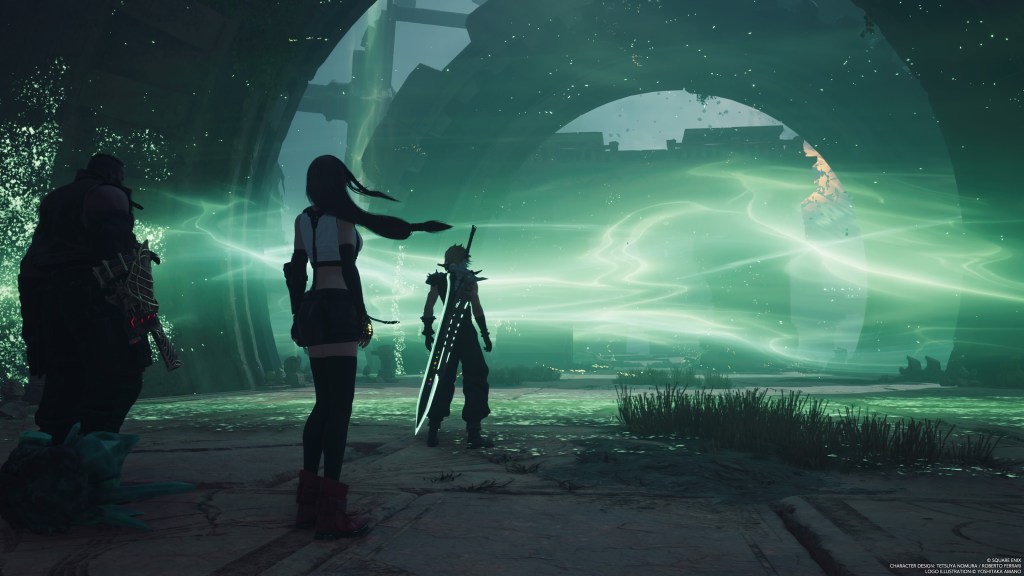


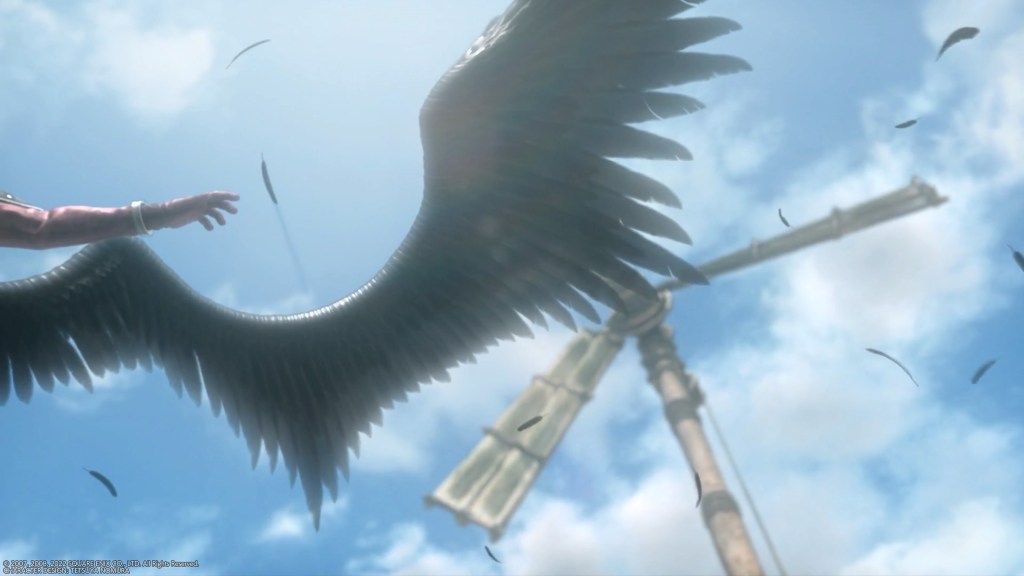
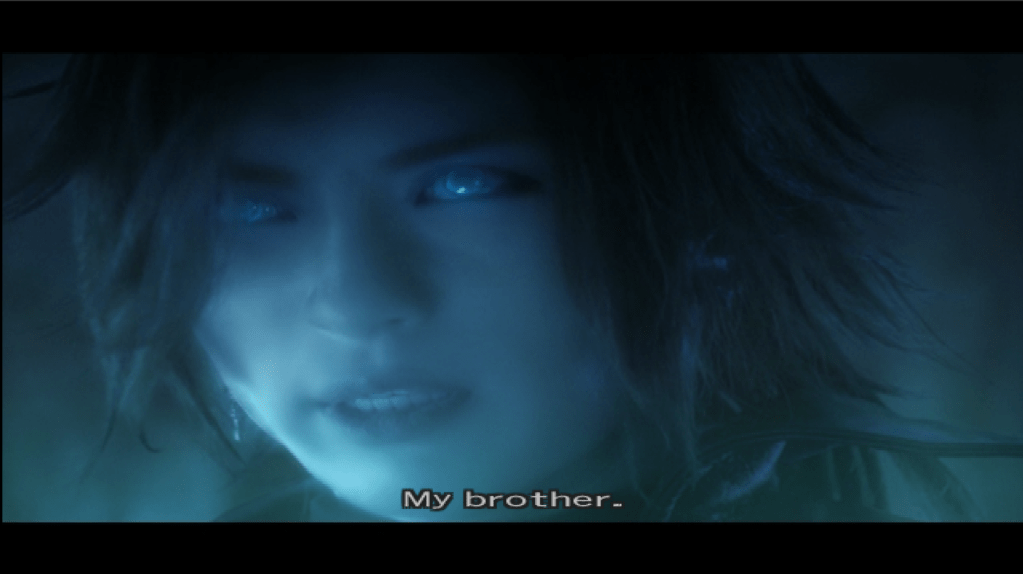
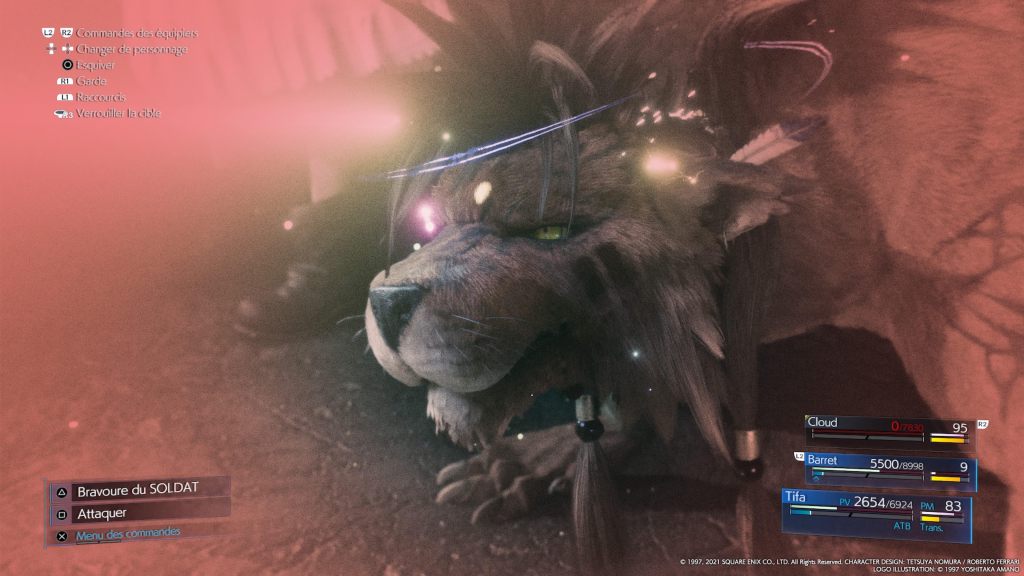
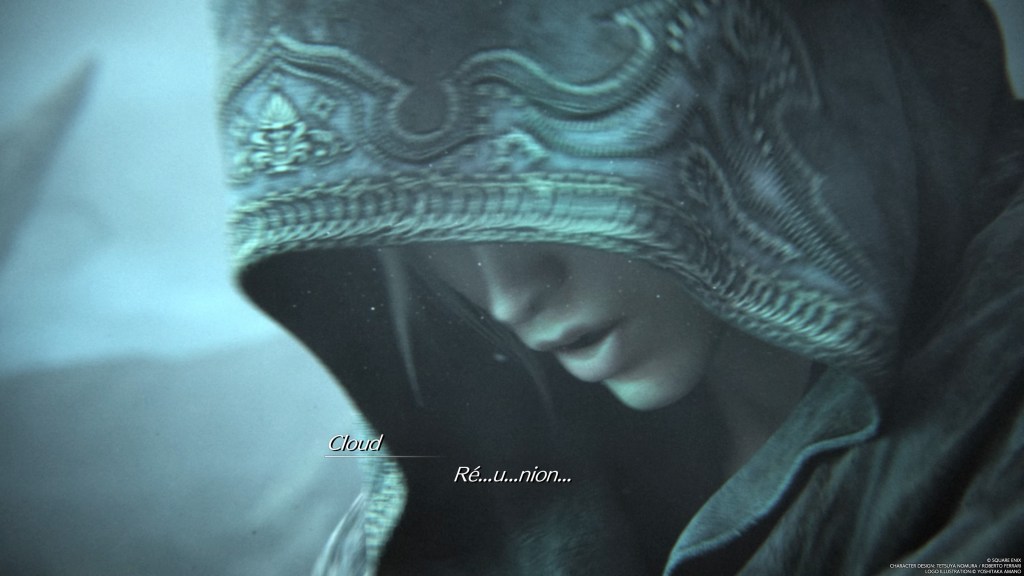




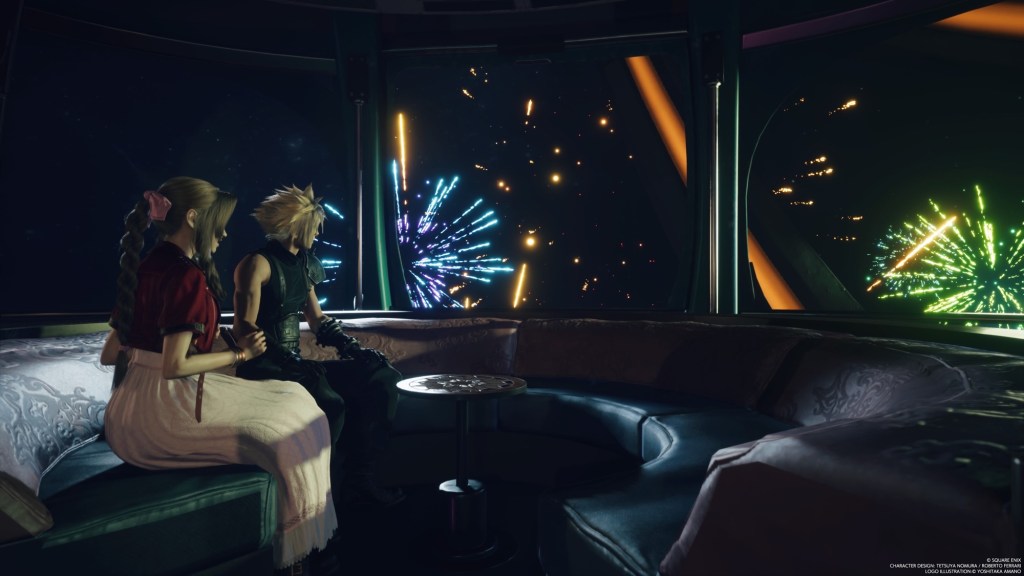

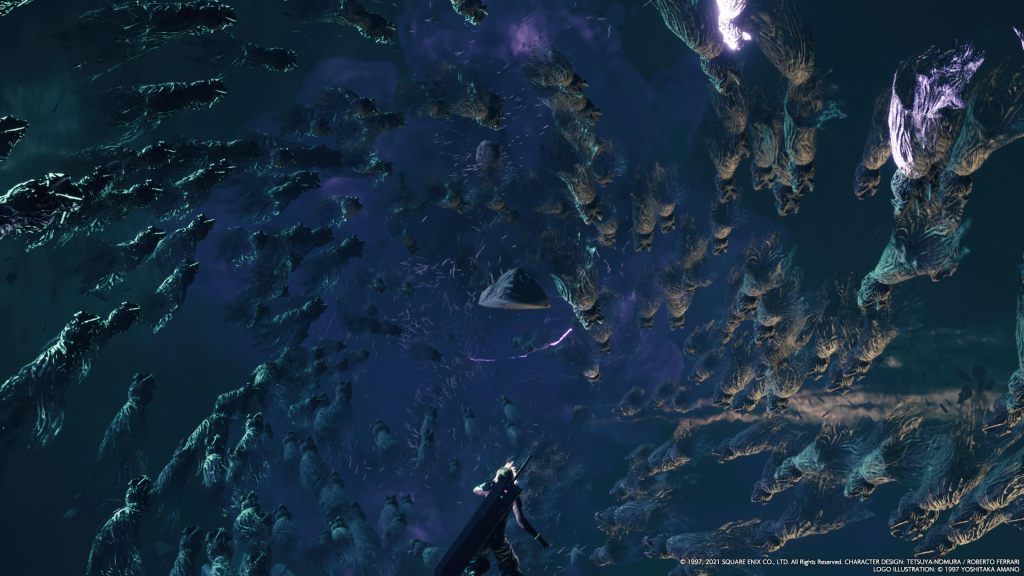
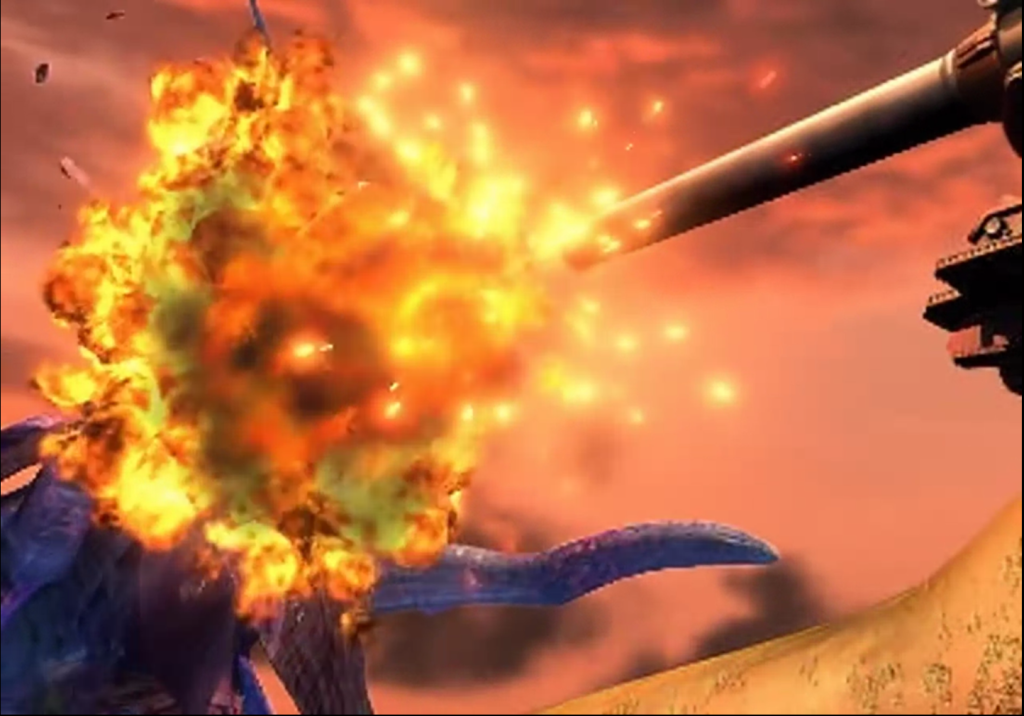

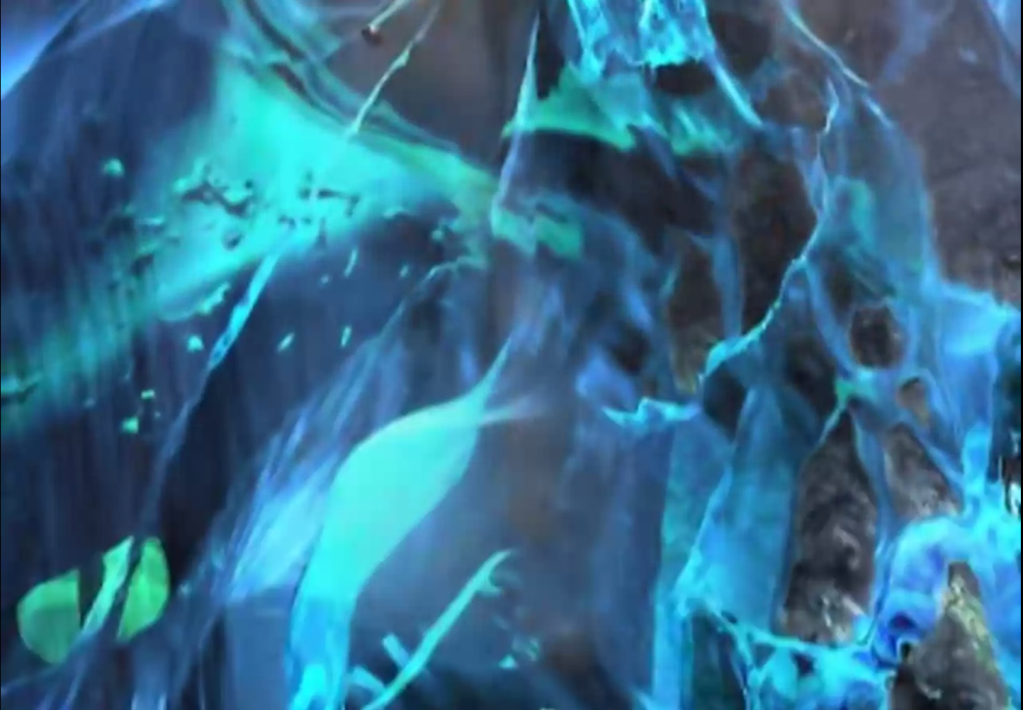


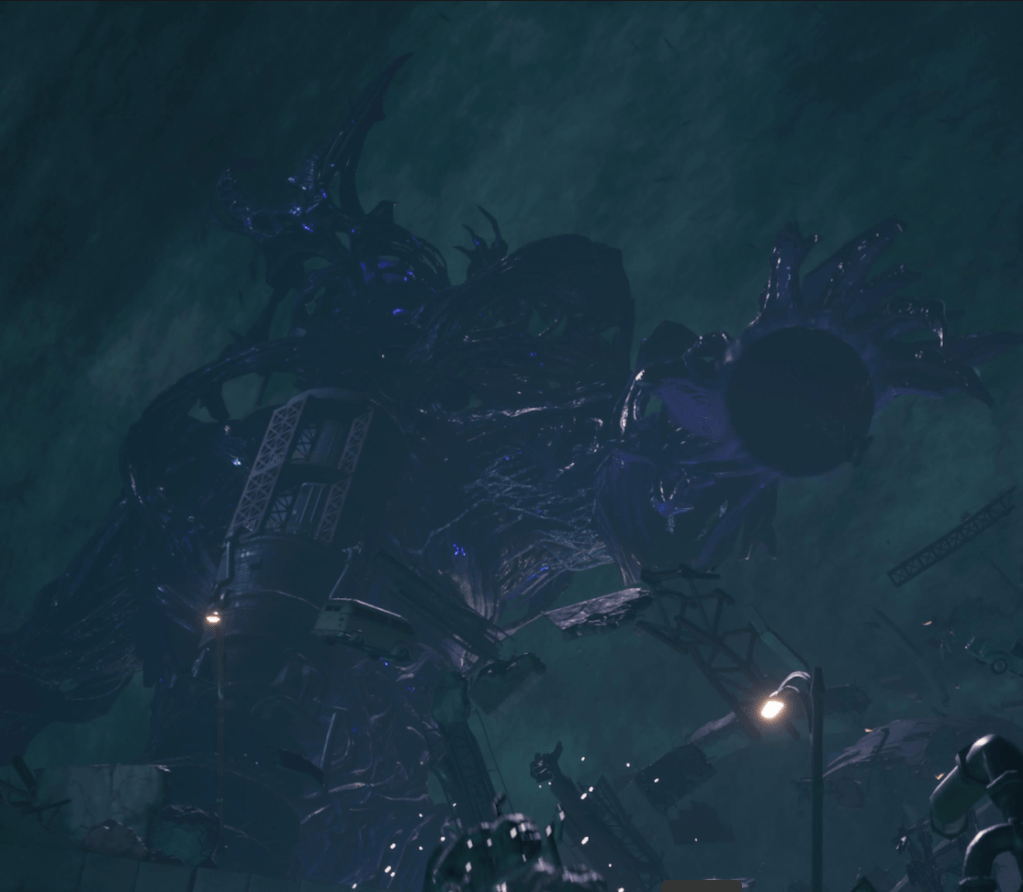

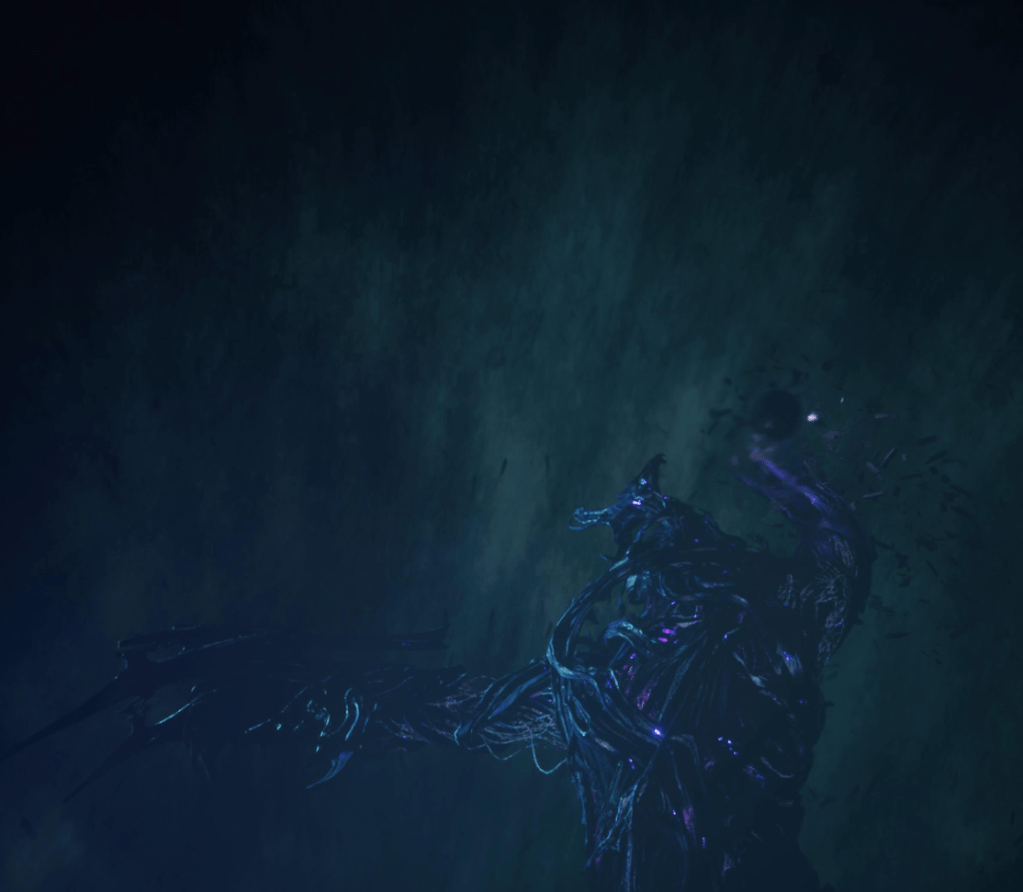
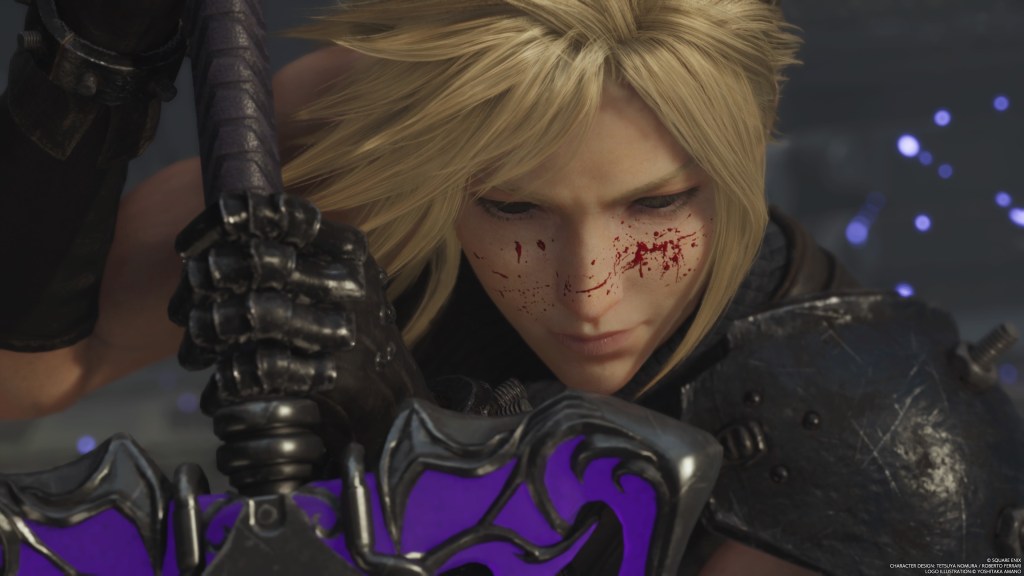


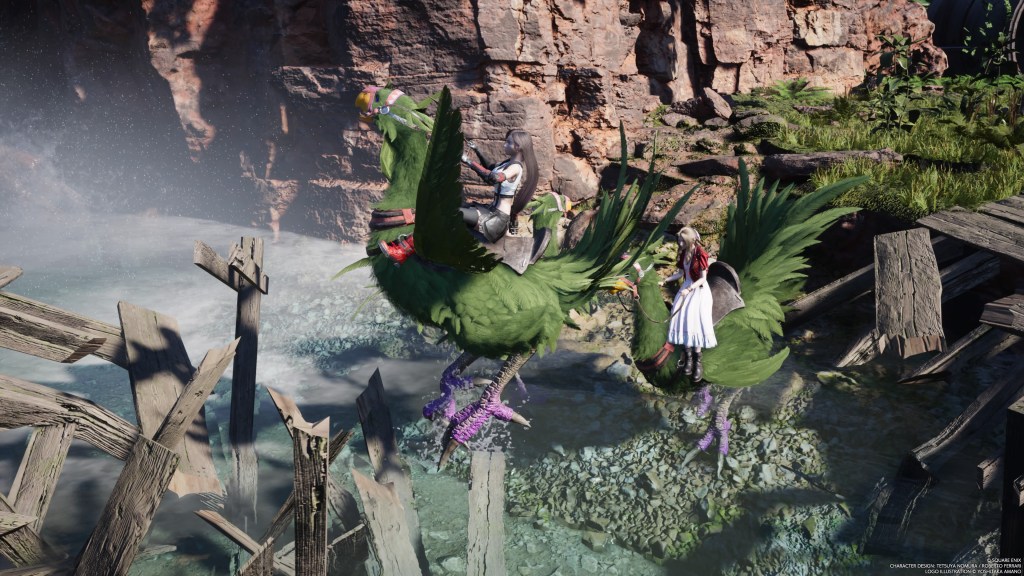
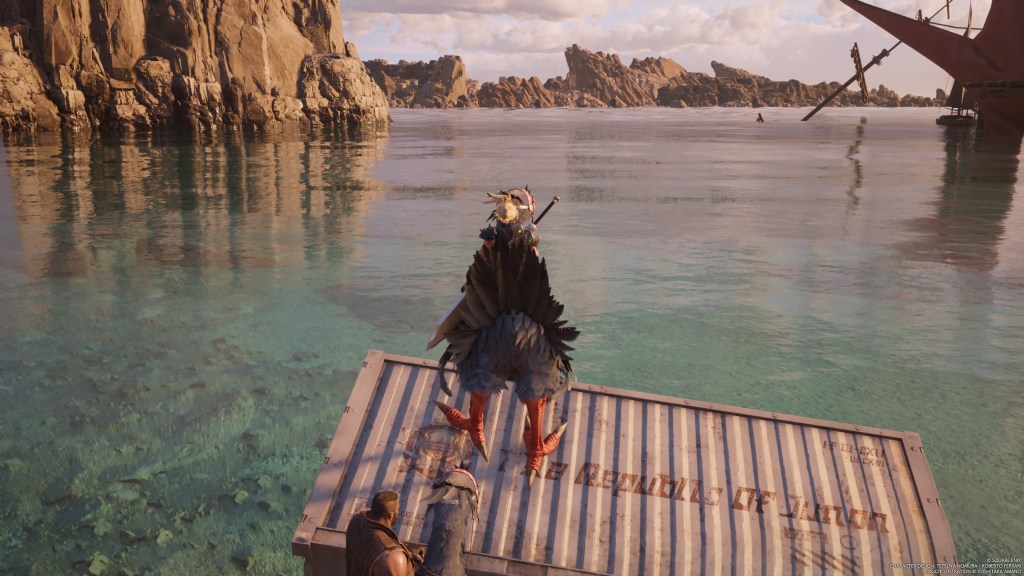
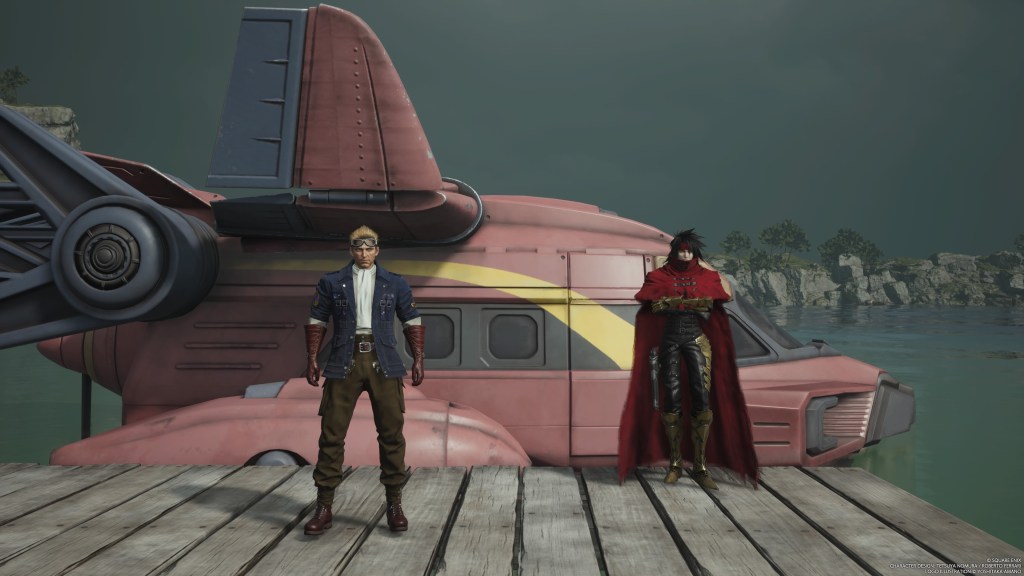

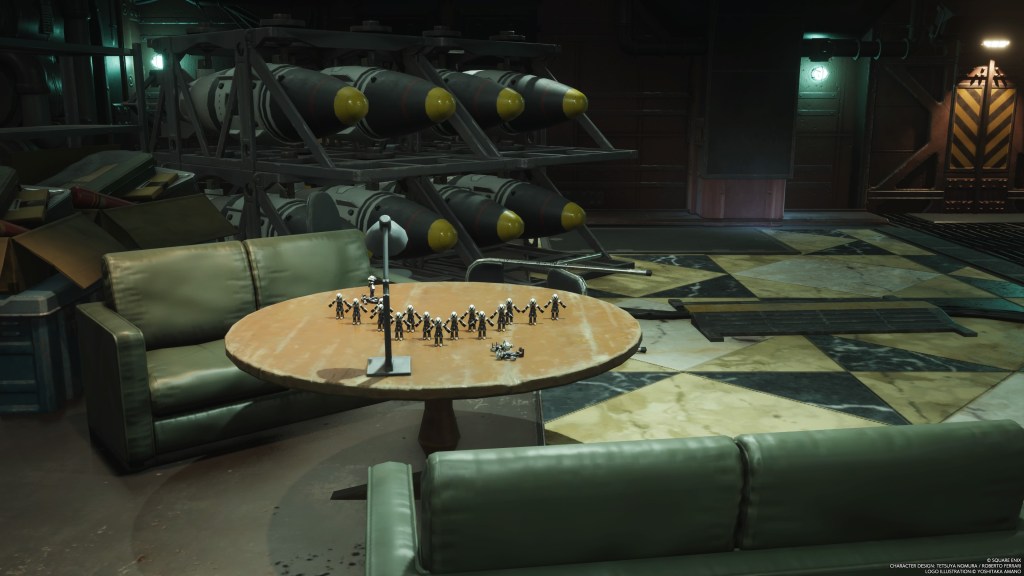

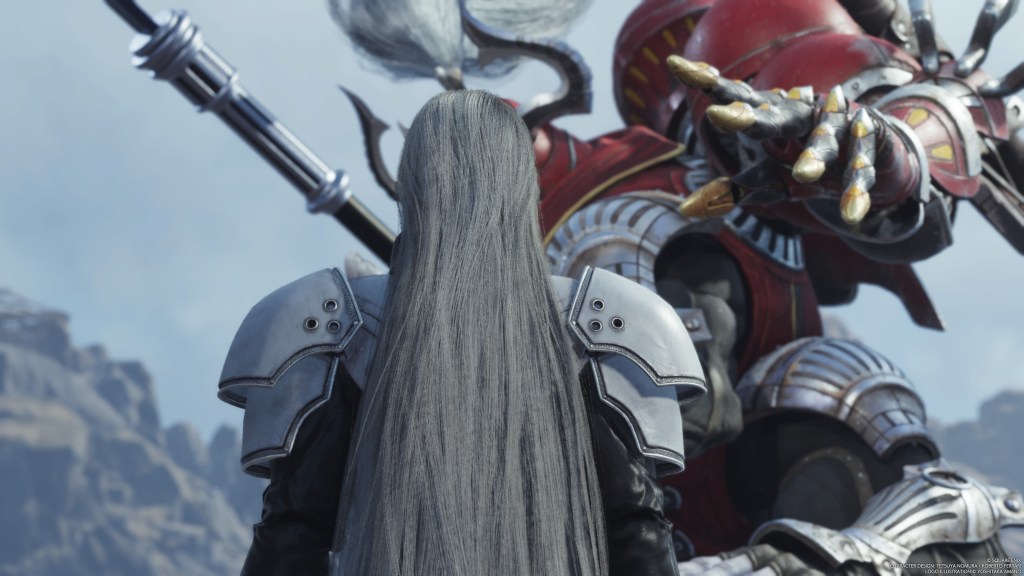

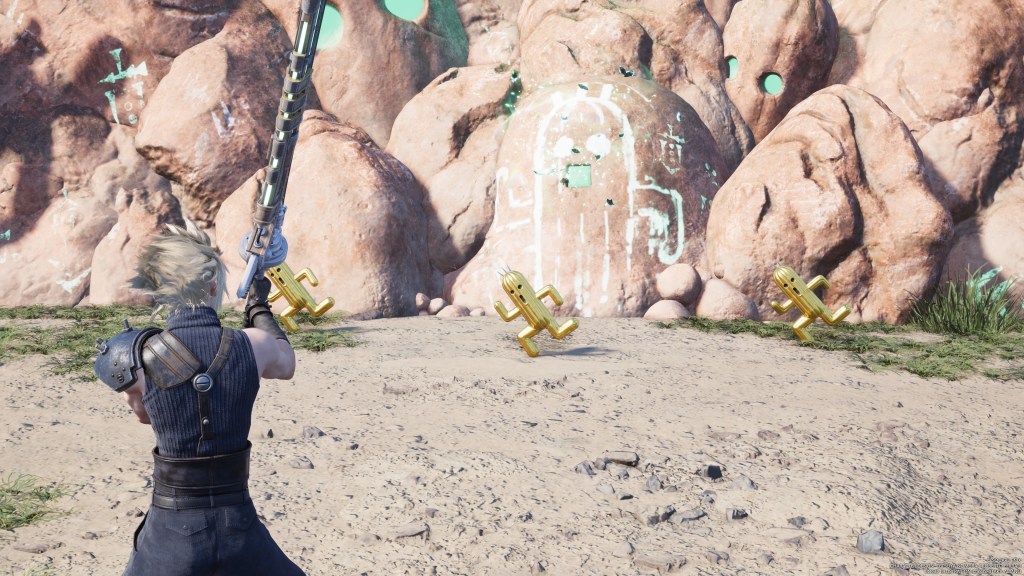
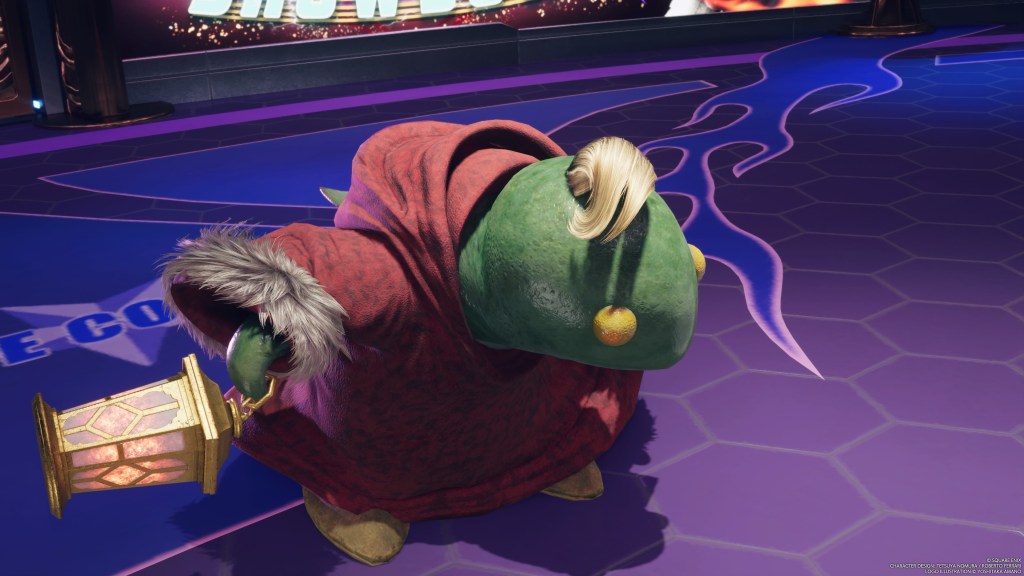

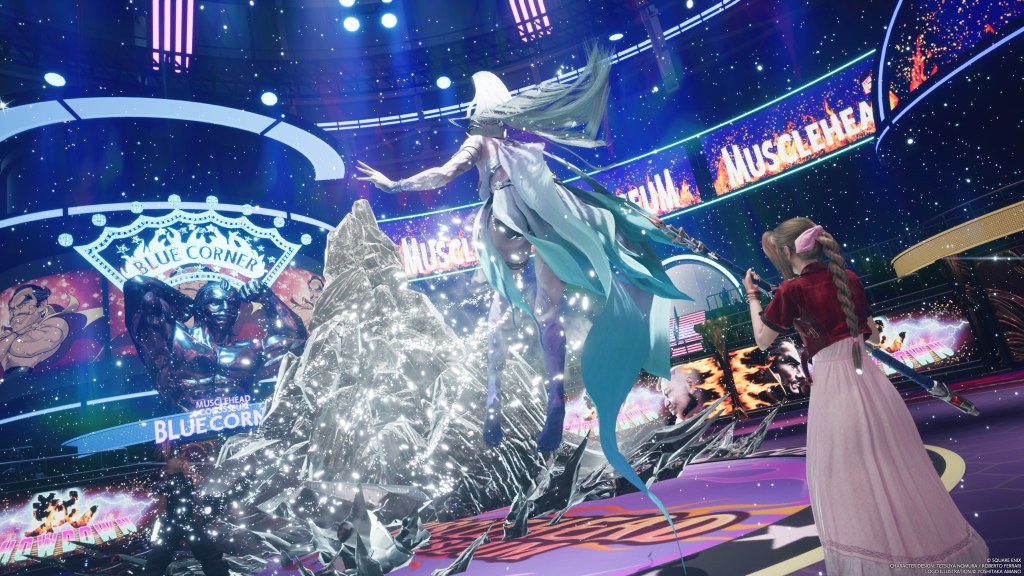
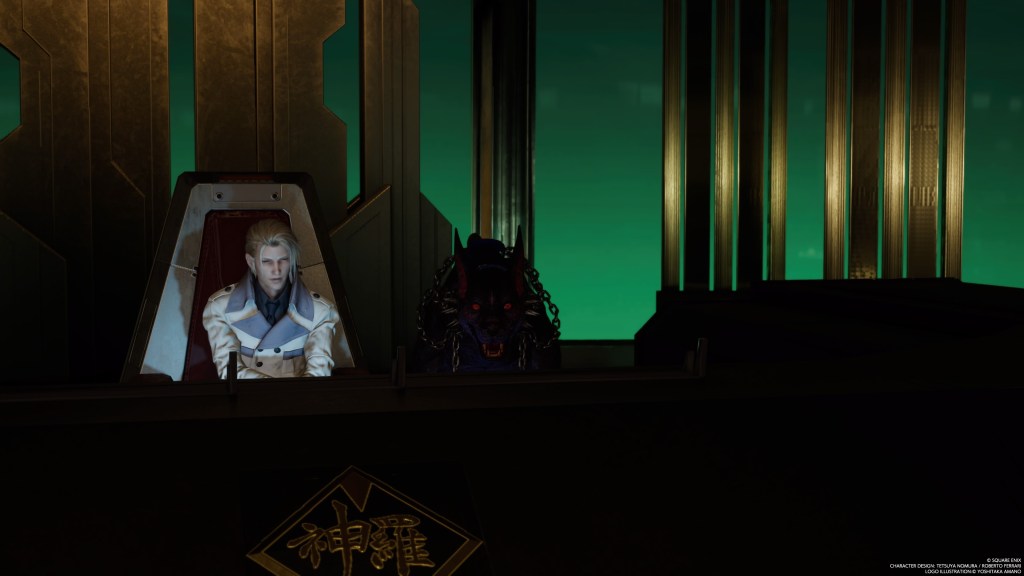

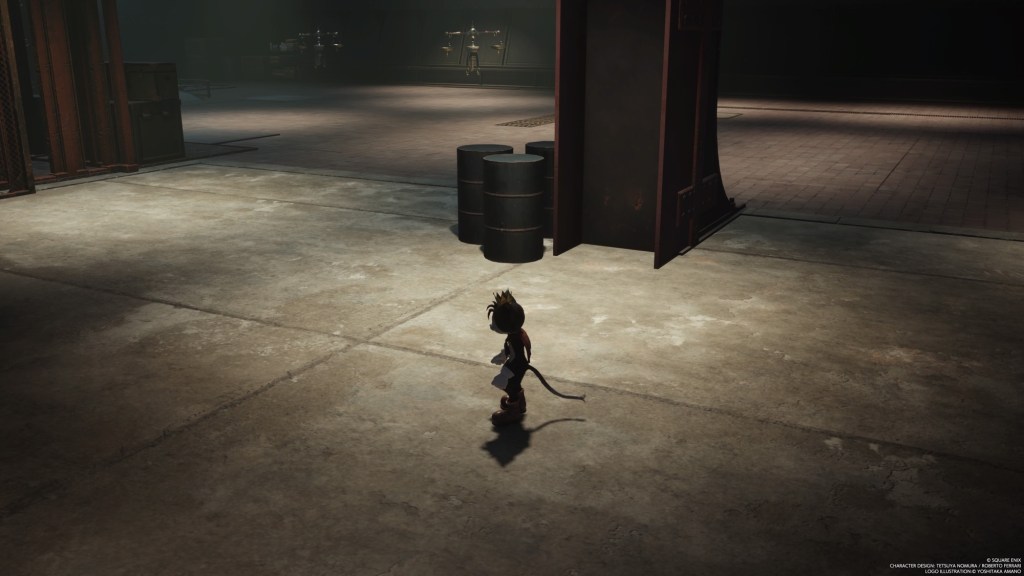
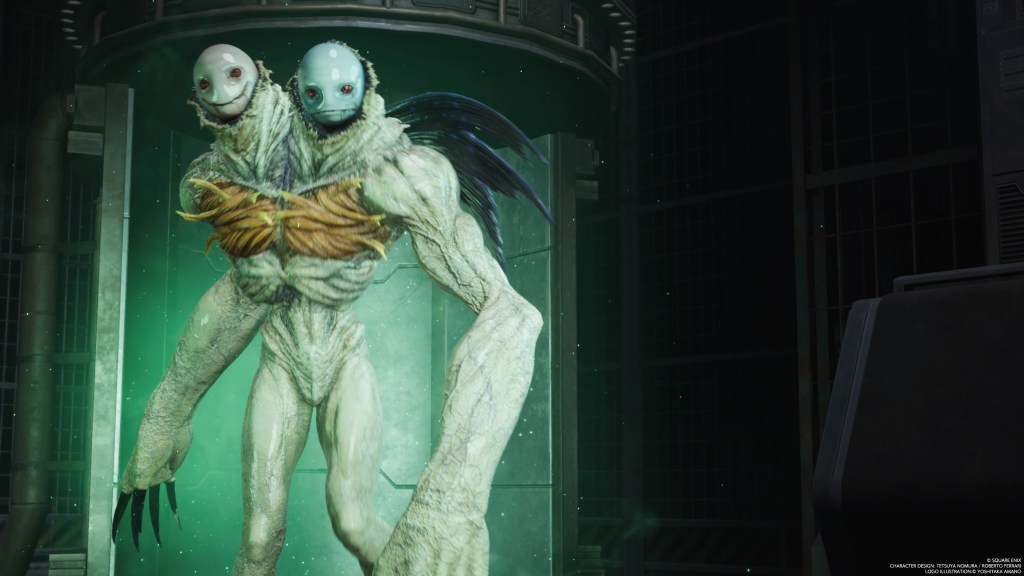


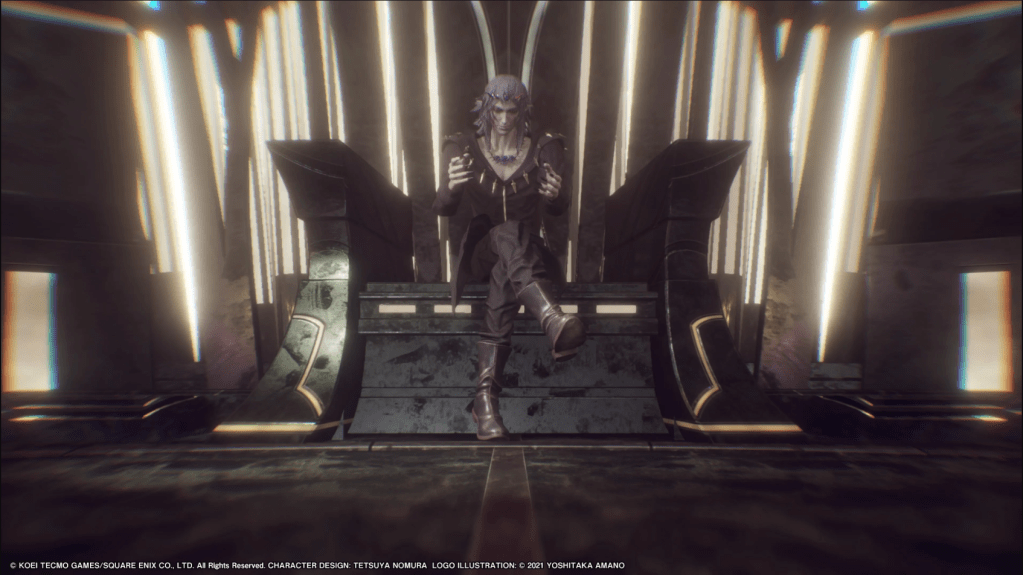
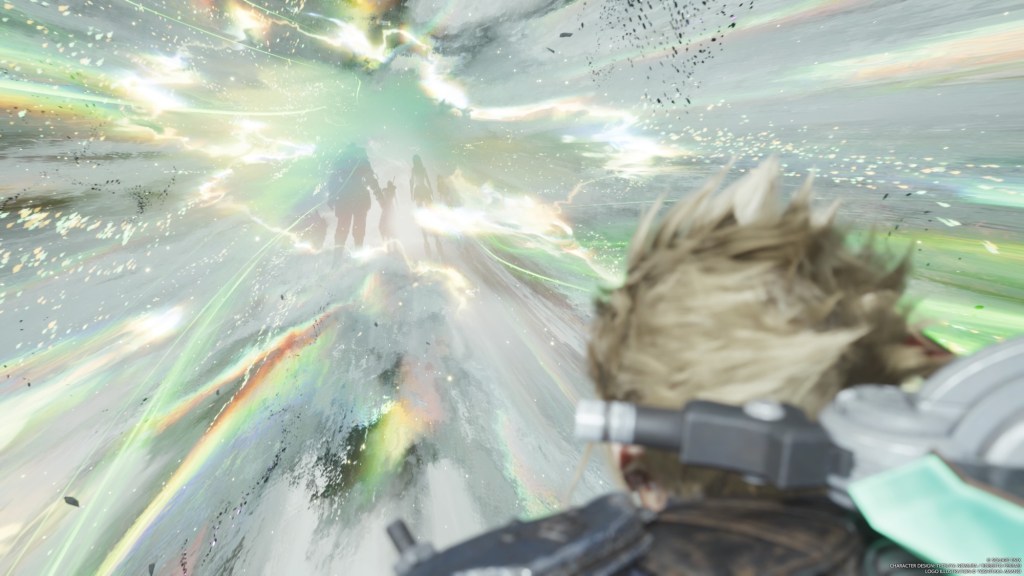


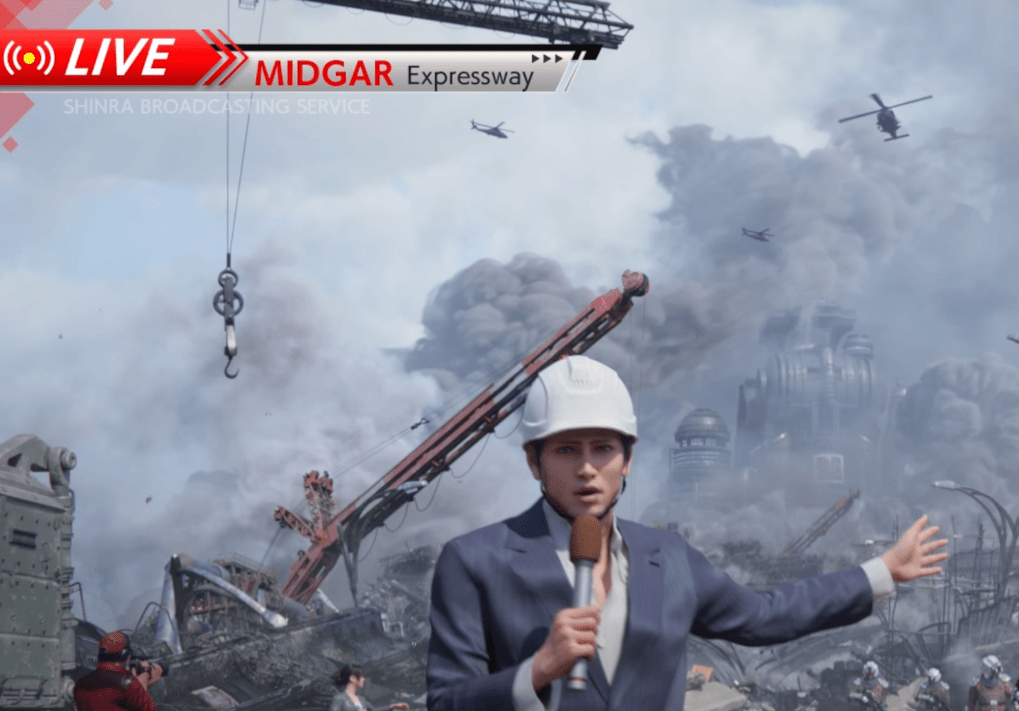



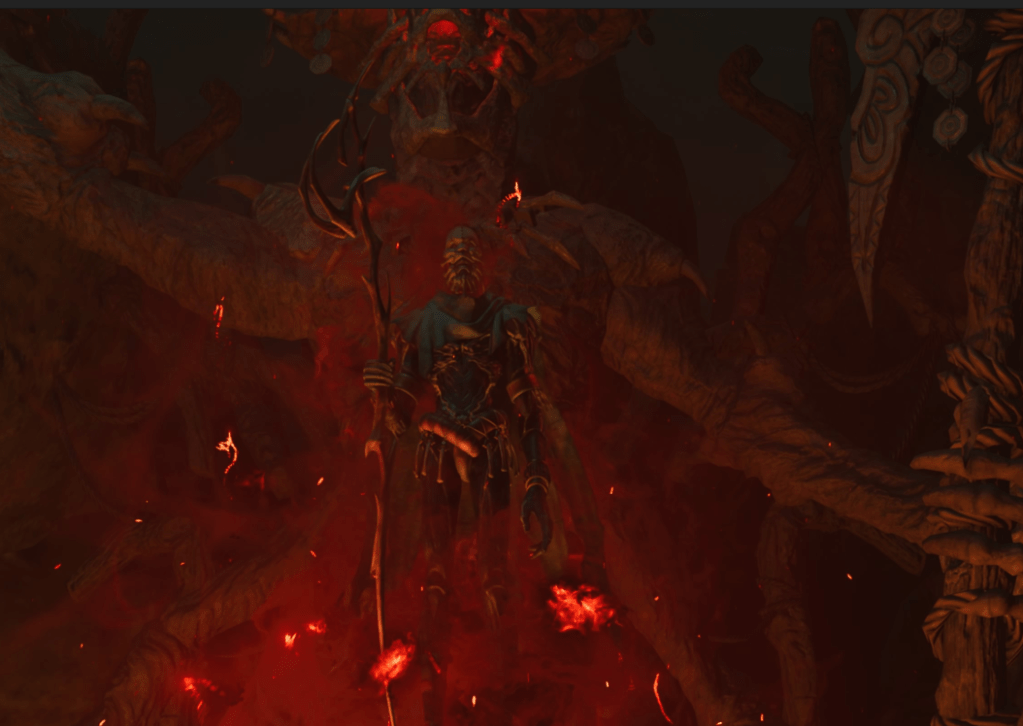
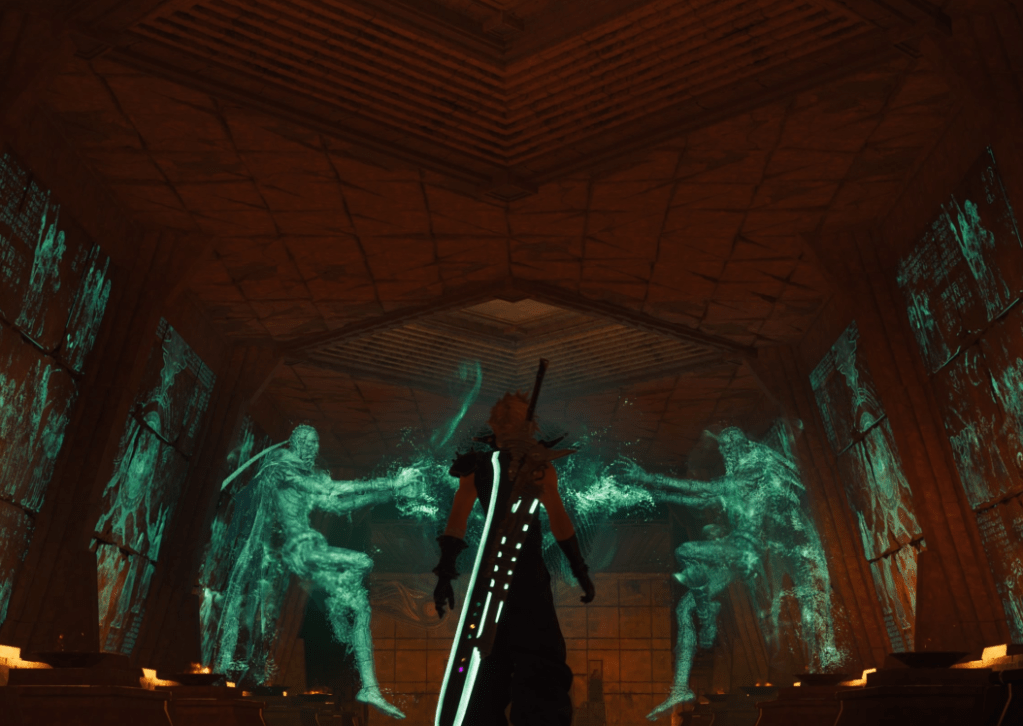


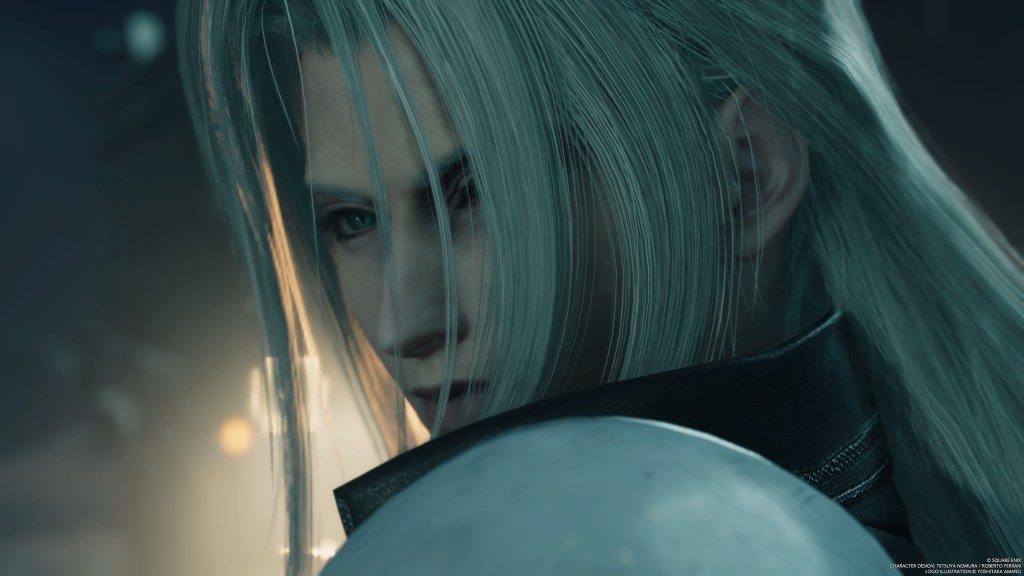


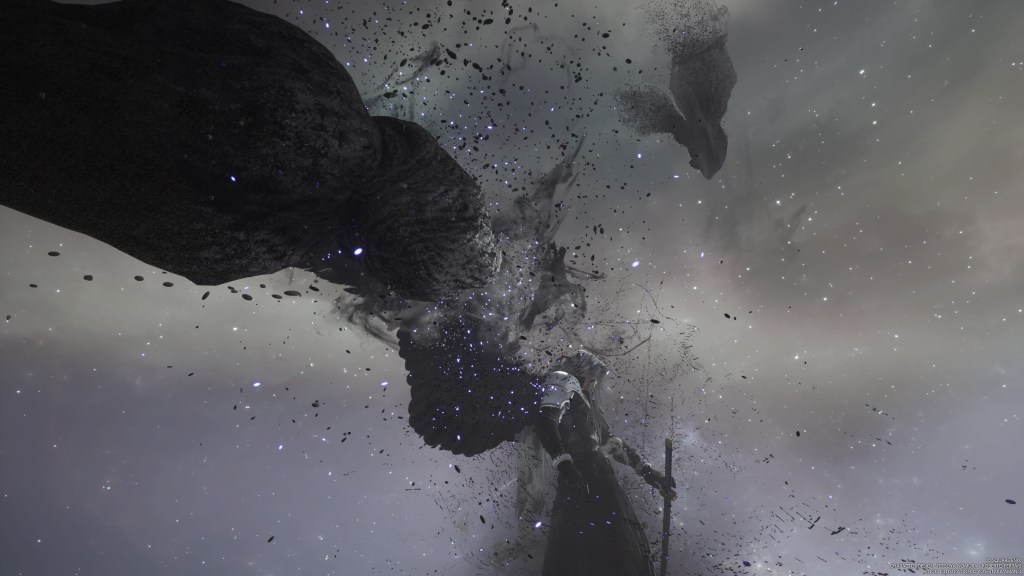
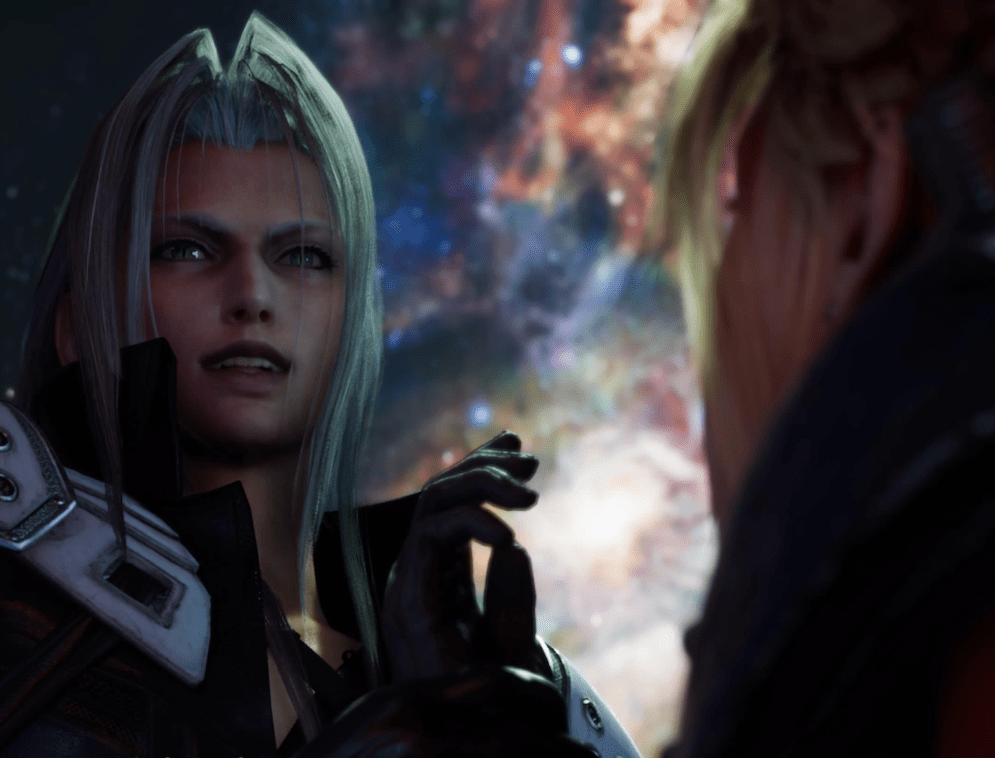
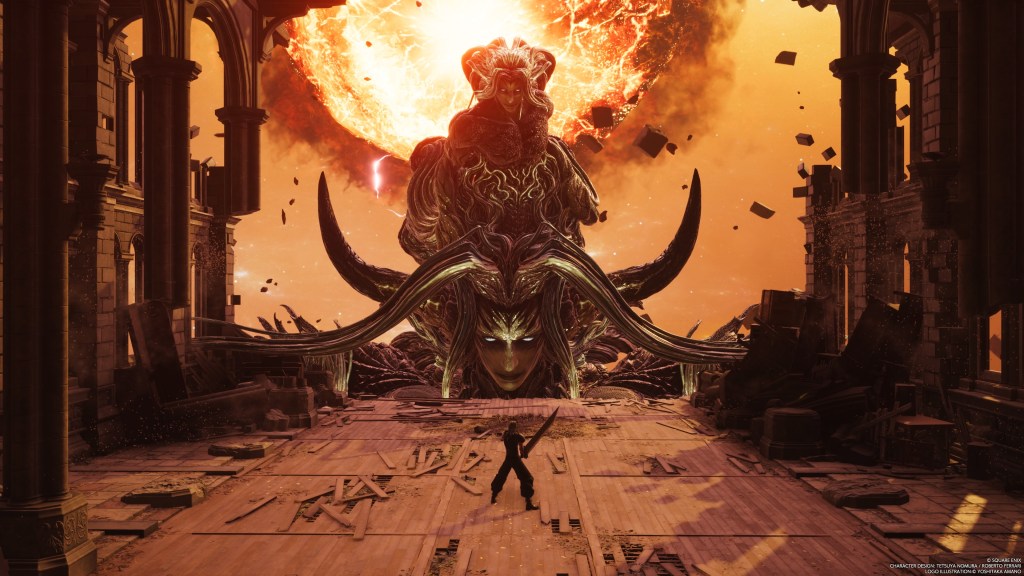


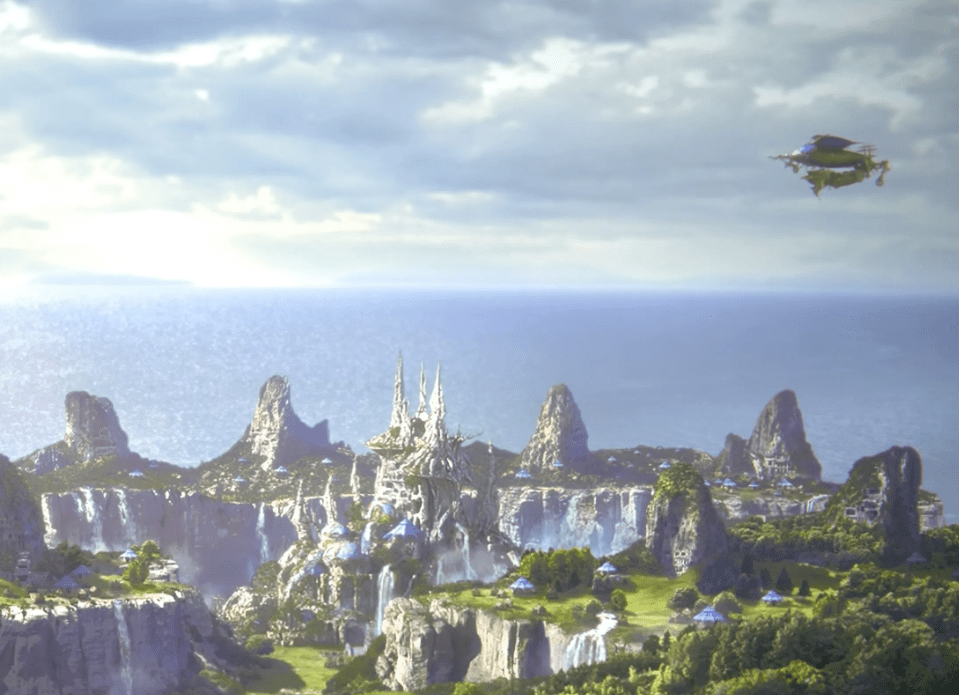


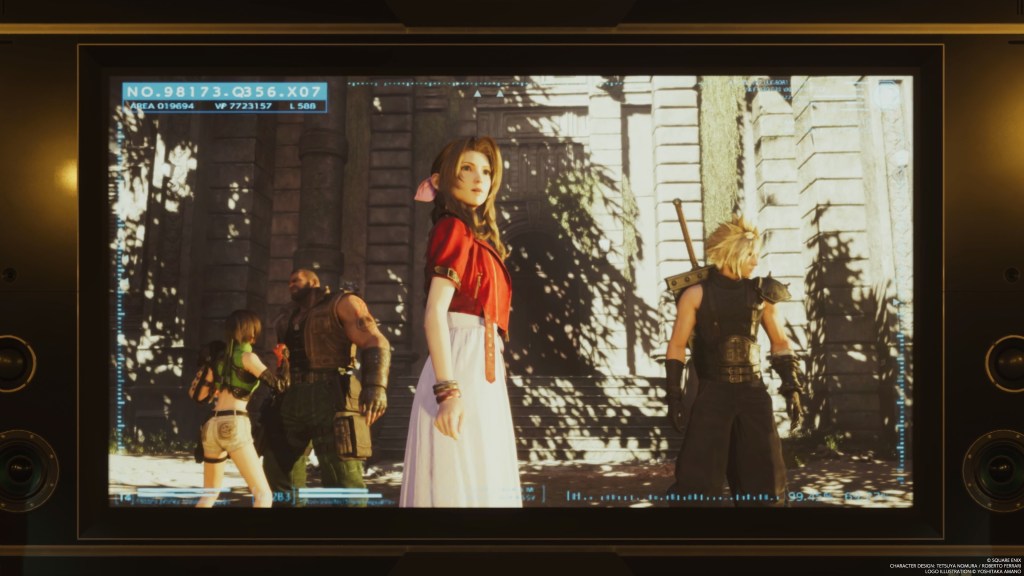

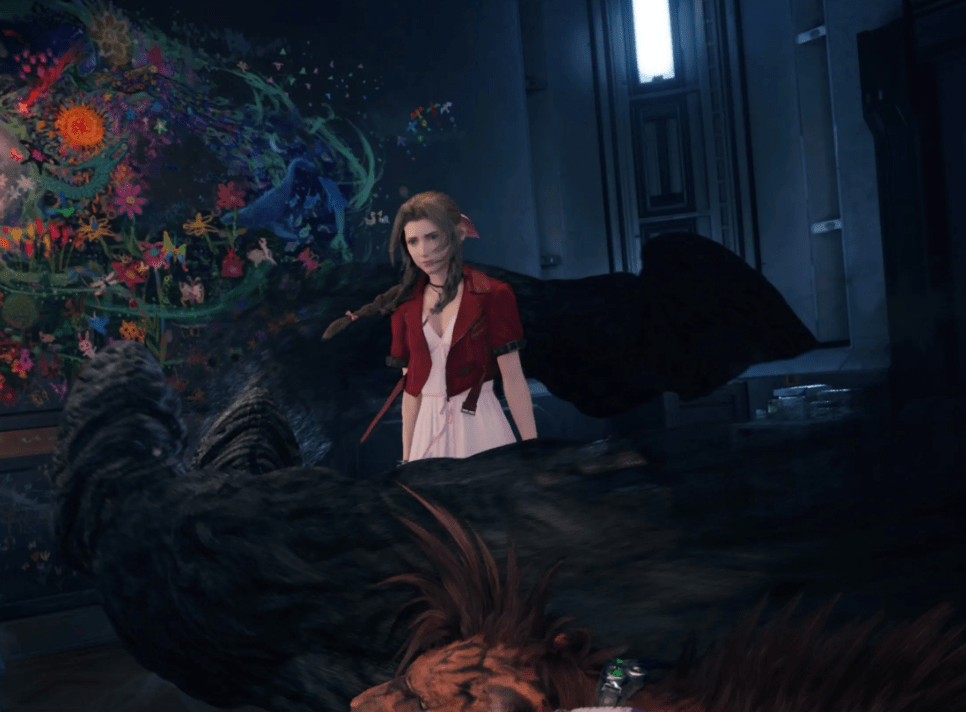


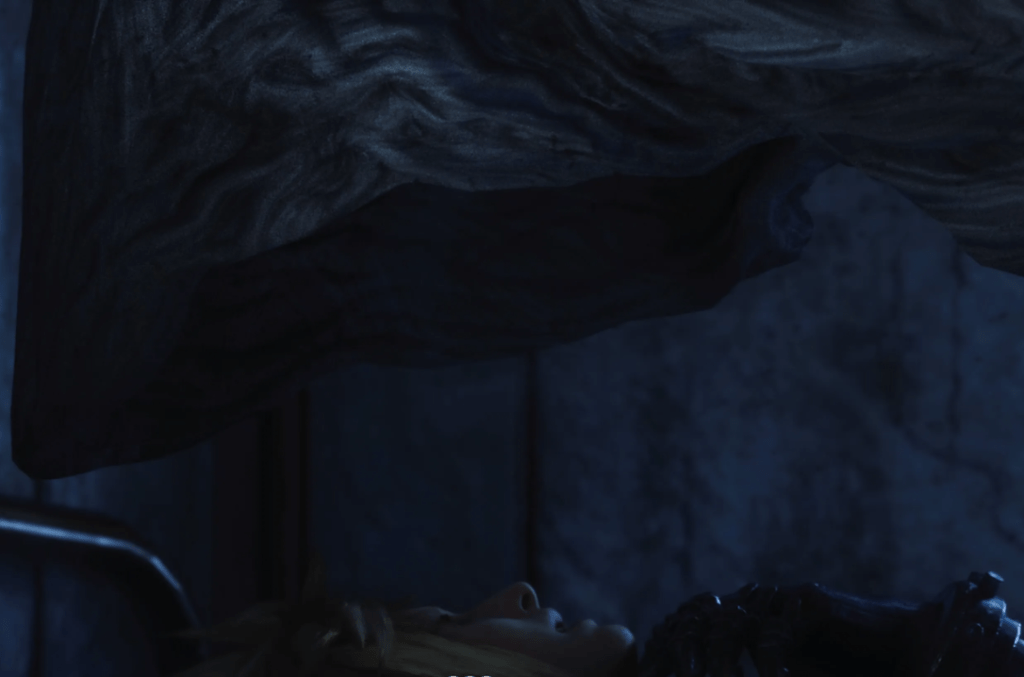
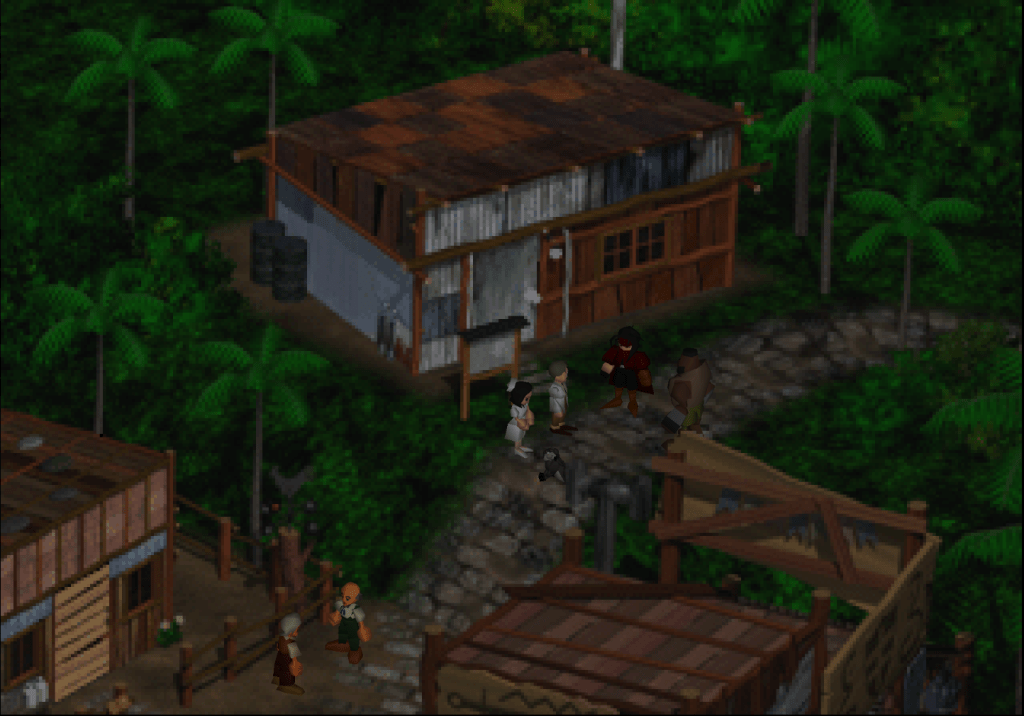


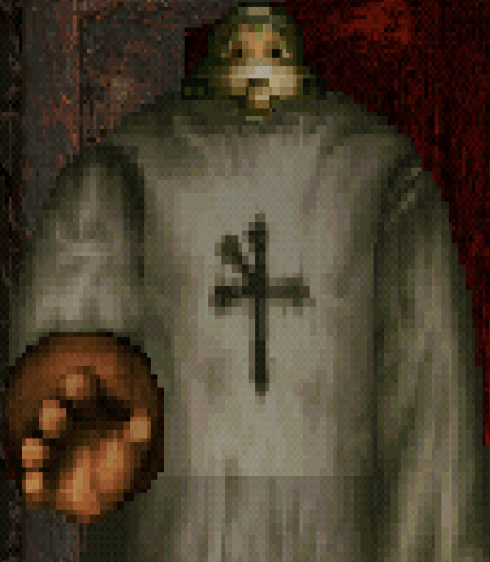

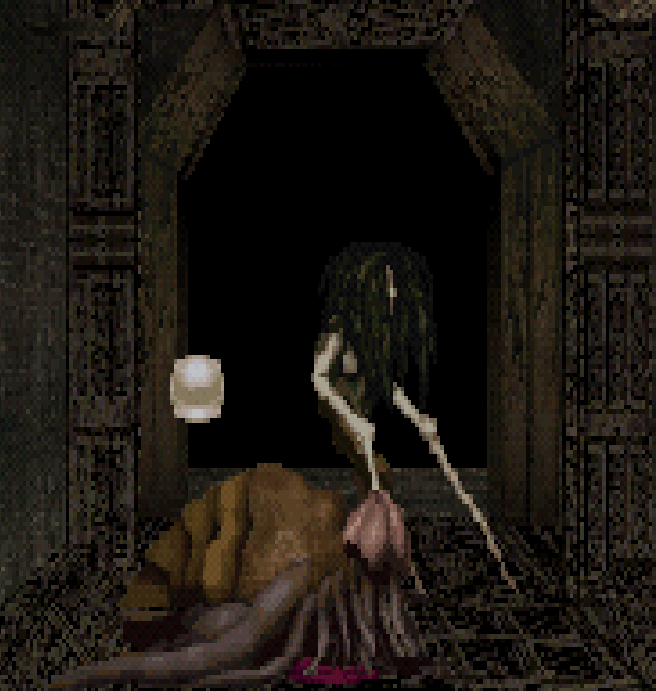


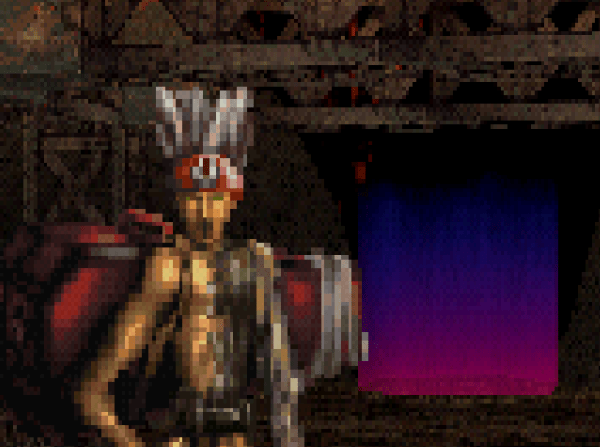





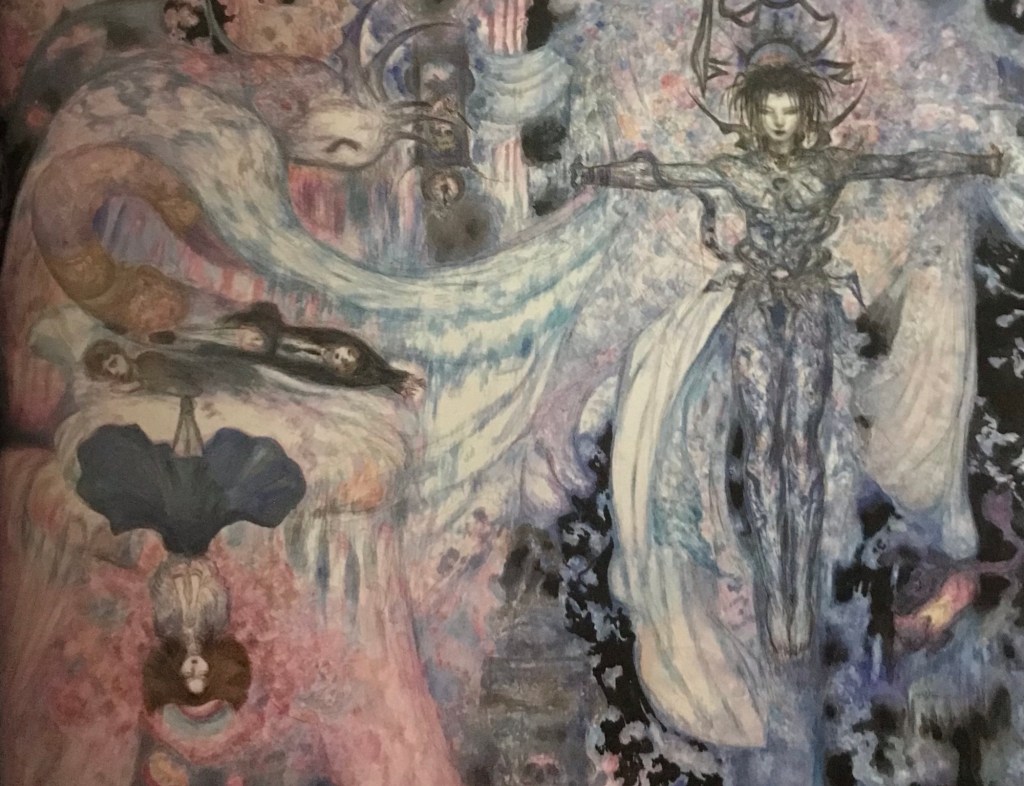












 AilixChaerea