Playing Baroque part 2

The Sense Spheres are an interesting piece of world-building. The Neck Thing says that they came to Earth through outer space and are composed of an extraterrestrial substance. Furthermore, the Sense Spheres appeared simultaneously with a global, destabilizing event called the Great Heat Wave. Also known as God’s Wrath.

Thing Thing didn’t exist in the original version of Baroque, so I don’t know how seriously they figure in the lore. Those sources exist on the internet but I’m doing this blind. Taken at face value, though- the behavior of Thing Thing implies that the practice of grabbing things that emerge from the Sense Sphere has precedent.

This appears to be the main difference on the PS1 version: if you read Thing Thing’s dialogue closely and you connect the right dots in the Nerve Tower…it’s possible to get a clear picture on what the Sense Spheres are useful for. As far as I know, the Sega Saturn version required you to figure out the use of the Sense Spheres on your own. Additionally, the Sense Spheres in the first Baroque only sent items to the sixteenth basement floor.

I dwell on how much Thing Thing matters in the lore because it could effect the world-building. If we accept Thing Thing as canonical, then their behavior implies that the use of Sense Spheres to send stuff back and forth is common knowledge.

Or was common knowledge, anyway. I wonder if the Sense Spheres were used as technology in the final days of civilization as it was known.

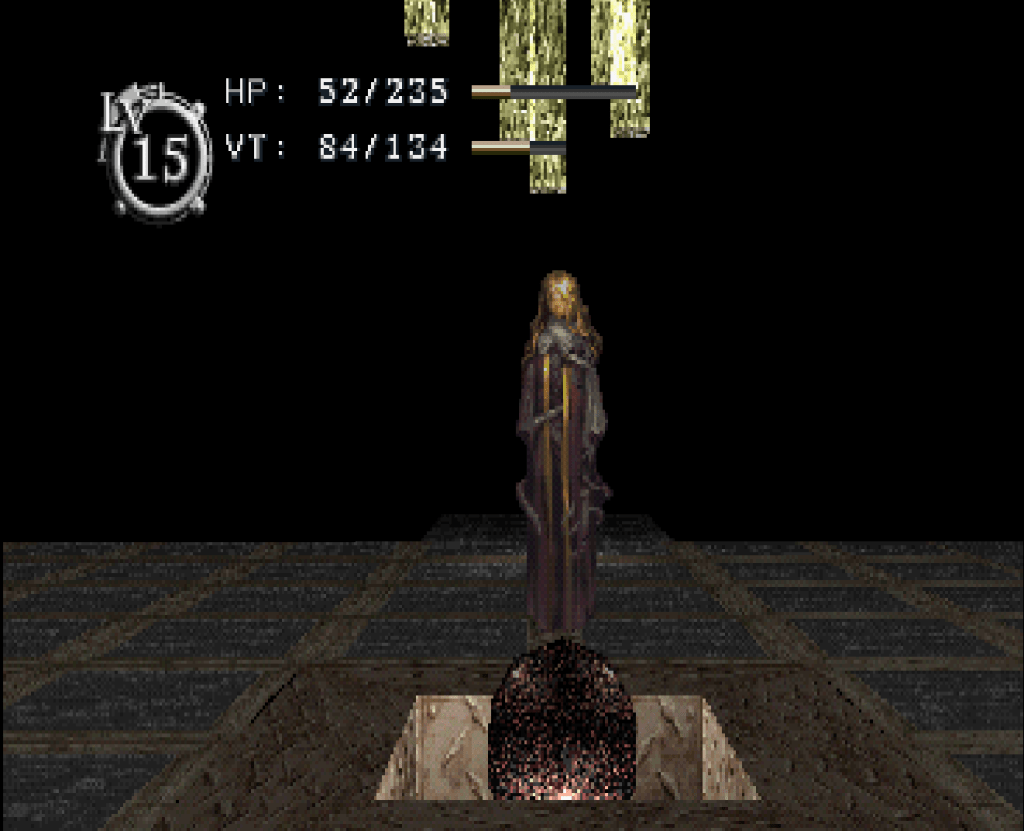
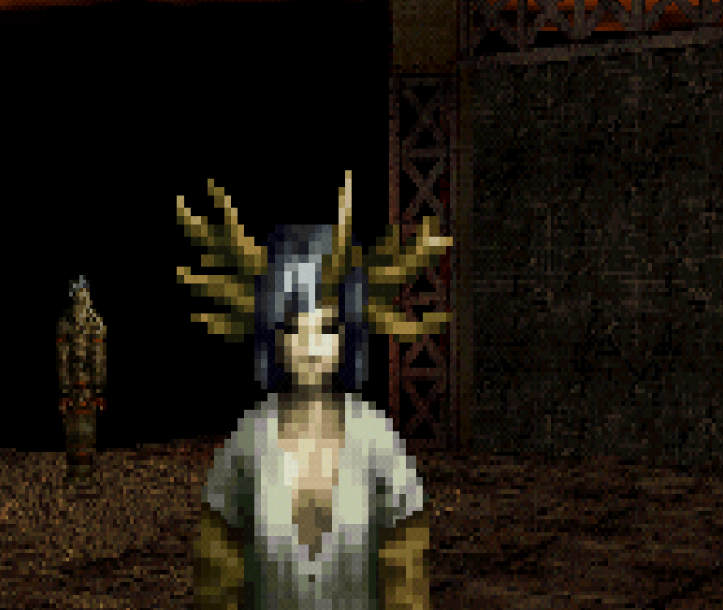
On the fourth level of the labyrinth, there is a ghostly woman named Eliza. In one pass or another, she says that she wants to give birth to a Sense Sphere to restore her insane mother. Above her, things that look like small Sense Spheres float near the ceiling.

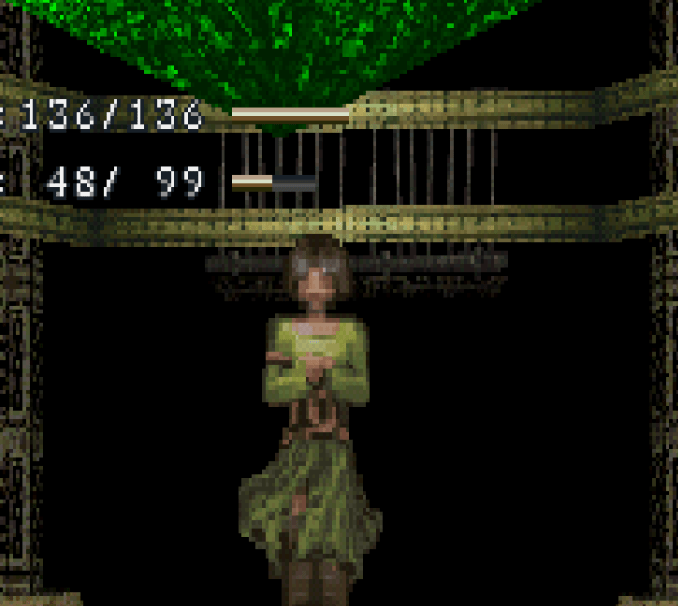
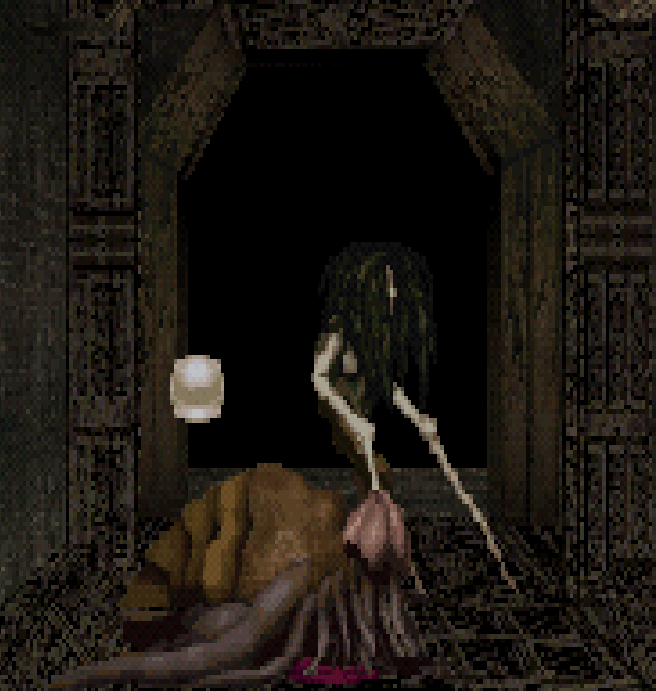
Also on the fourth floor (so far), there seems to usually be another woman called Alice. Like Eliza, Alice floats and vanishes like a ghost.

Alice disappears beneath a green Sense Sphere. To date, I have not encountered the green Sense Sphere outside of the room where the random map generation places Alice. Alice’s Sense Sphere is functional but the many small Sense Spheres of Eliza are not.

Otherwise, Sense Spheres are usually red and fixed to the ground. The contrast this has with the floating Sense Spheres feels relevant to their possible origins, mentioned by Neck Thing. If they came to Earth from elsewhere, it sounds like the kind of thing that humans might tether in order to make use of. The presence of grounded Sense Spheres at the entrance and the deep basement looks like an engineering choice. One might suspect that the grounded Sense Spheres relate to the purpose of the Nerve Tower.

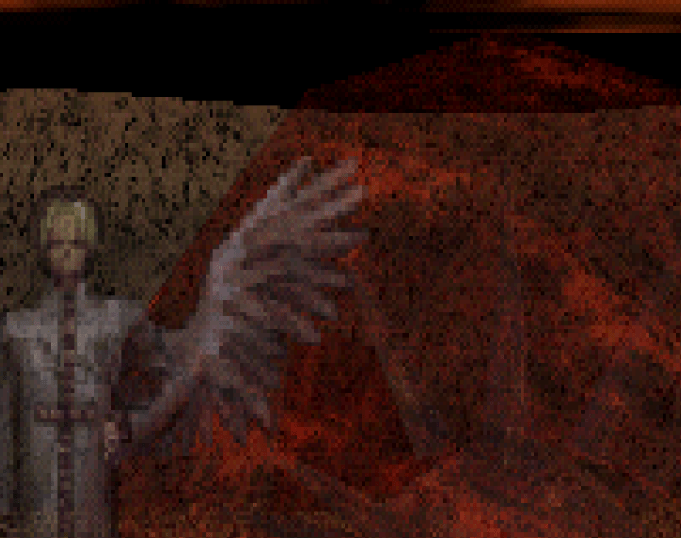
Then…there’s the apparent connection between the player and the Archangel. The Archangel has a projection outside of the Nerve Tower. Inside, you discovered their body impaled on a spike protruding from a Sense Sphere.

So, after another Tower circuit-

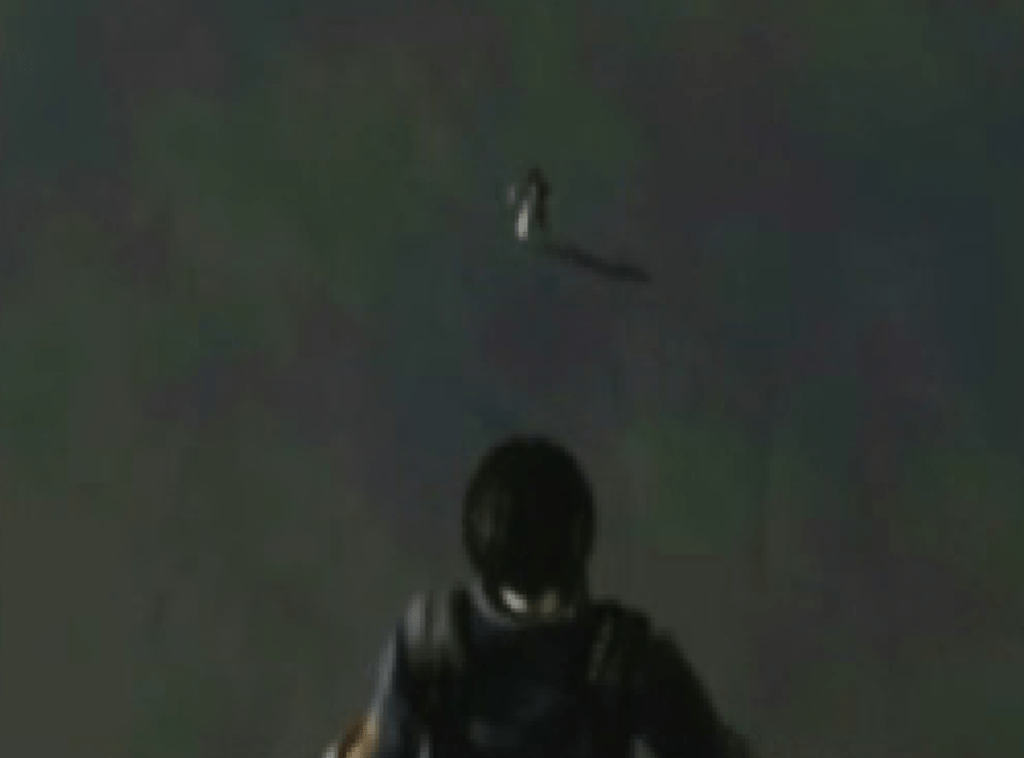
You recover a memory of looking down at another version of yourself from a higher floor in the Nerve Tower. It might also be worth mentioning that the you on the ground watched the upper you fall to your death. At what appears to be the moment of impact, several white feathers flutter by the ground-level you.

If anyone was wondering: I’m not sure what triggered that. At first, I thought it was because I found Koriel, languishing in a biomechanical immortality device, who gave me his Idea Sefirot (i.e asked me to kill him and take it).

While I don’t know exactly how I triggered the “watch yourself fall to your death” ending…it’s possible that it was because I did it with Koriel’s Idea Sefirot in my inventory. Maybe that’s it, but I’m hesitant to make assumptions. Or maybe it has to do with passing through the Nerve Tower roughly three times in a row. Dunno, just now.

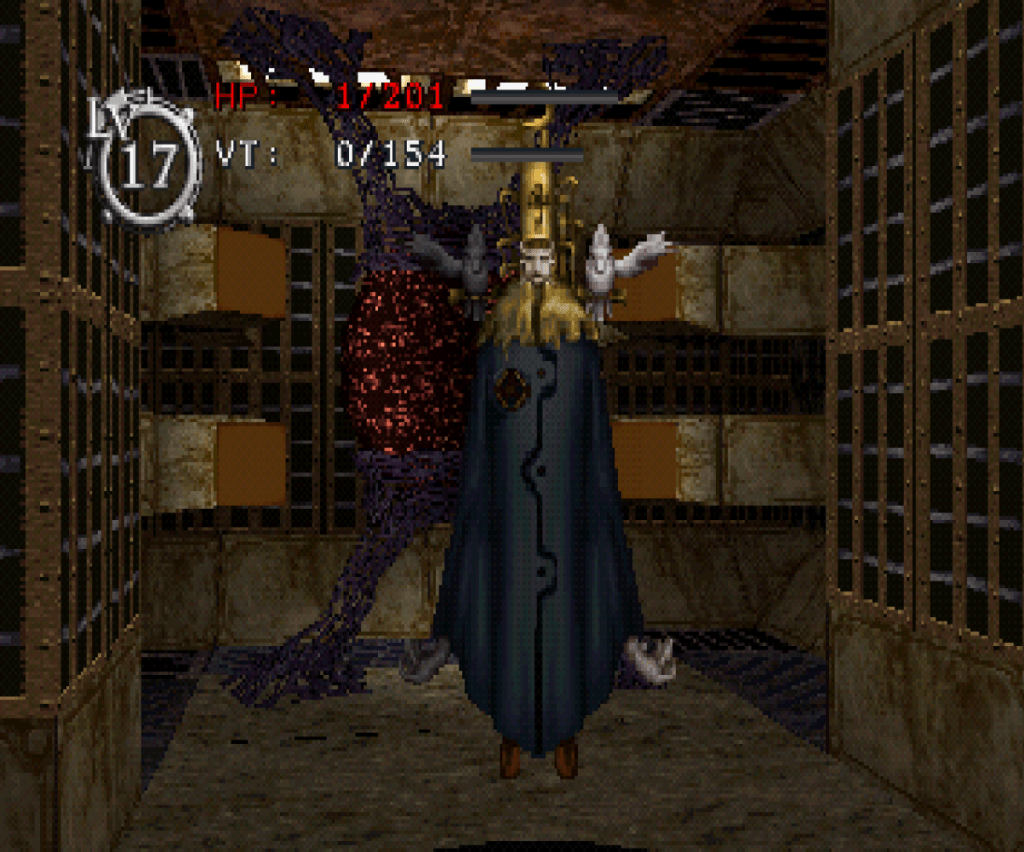
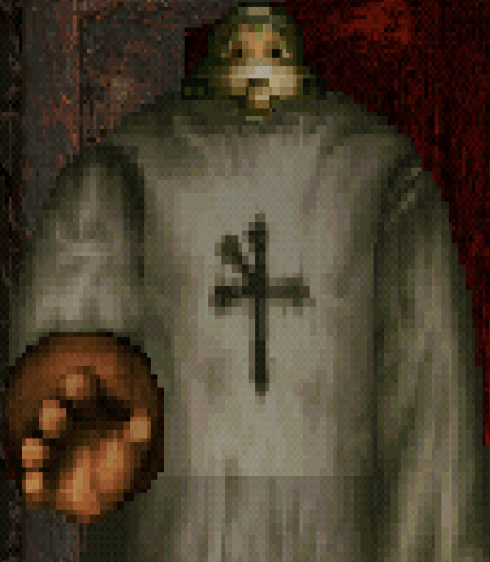
What an ‘Idea Sefirot’ is comes through, of course, by the words of other people and implication. While I was experimentally attempting to give it to various distorted ones, they treated Koriel’s Idea Sefirot with tight-lipped avoidance that seems half emotional repulsion and half propriety. The Coffin Man says that “holding stuff like other people’s Idea Sefirot makes me feel depressed.” Thing Thing, normally happy to hold onto other people’s stuff, wants no part of it. They almost sound prim: “It would be better if you held onto this. I’m fine”. When you try to hand it to the big guy wearing the white robe with the cross…he says he thought he recognized you: “You’re a member of the Koriel, right? I don’t need the crystals of any Koriel”.

Eliza, in the Nerve Tower, likewise spurns the offer: what she needs is your “pure water”. The one you just tried to give her is undesirable, apparently, because it is not “yours”. Idea Sefirot’s are unique for each person and to offer one to another seems to provoke taboo-avoidance. Maybe because Koriel gave this to us while serving a neverending prison sentence. I wonder if an Idea Sefirot is some sort of ephemeral, after-death vessel.

Speaking of: the Archangel delivers some interesting dialogue, after you make your first complete circuit through the Nerve Tower. Feller says that we must learn to survive, even if it takes awhile. As if by way of explanation, he adds that the Sense Spheres are everywhere. He goes on to explain that the whole world is connected and that a piece of your consciousness is “absorbed by the orbs” and fed back into another version of you. The process is reminscent of the Idea Sefirot. I don’t know if it’s possible to run into Koriel before the third circuit but I at least didn’t find him until round three (‘Myself +3’ lingering mysteriously in the inventory screen). If he is off limits until the third pass, then the Archangel’s speech after the first one makes narrative sense. Set-up, y’know.

Yet our situation differs from Koriel’s.

Rather like the Archangel, you are (on one ocassion, anyway) bilocated at two ends of the Nerve Tower.

The distorted ones also have different, successive dialogue. It is from them that we get the earliest overview of the wider chronology: first, there was a global environmental disaster called the Great Heat Wave, which appears to have happened simultaneously with the apparition of the Sense Spheres. Between now and then, the Great Heat Wave turned the world into Baroque.

Between Neck Thing, Alice, Eliza, Thing Thing and the Archangel, we learn that there must have been an intervening period. Human society discovered they could use Sense Spheres for instant travel. Someone eventually builds a complex, Tower-like machine which incorporates multiple grounded Sense Spheres. Two red ones outside of the entrance and one in the deep basement. Having only gotten so far as the middle of a fourth circuit, I’ve usually encountered two additional red Sense Spheres between the surface and the bottom. Lastly, there are the small, non-functioning Sense Spheres of Eliza and the functioning green Sense Sphere of Alice.

(I’m pretty sure that there have always been two red Sense Spheres outside of the Nerve Tower…right? I have this nagging suspicion that there was only one Sense Sphere at the entrance to begin with and a second one appeared later. I’m not sure of it, by any means, but it’s crossed my mind)

However short this intervening era was, many of the present circumstances arose during this period. Neck Thing tells us that the Great Heat Wave is known, to some, as God’s Wrath. Similarly religious language appears even earlier than this: during one of the opening cut scenes, there is a flash of black letters on a white background: “(w)hat must we do to heal our sins?”

Next, consider the discussion of “madness”.

In one of the earliest (if not the first) encounter with Alice, she asks if you remember throwing her mind into chaos. When you do not appear to, she bristles: was it only a game, to you? She sinks into the water below, saying that she is not suffering. Nonetheless, she asks why you didn’t hold on tighter.

On the sixteenth floor, we find the Archangel’s body impaled on a spike, emerging from a gray, metallic Sense Sphere. This he attributes to the Great Heat Wave, “or should I say, the Wrath of God.” He explains that “this” is all your “sin”. What sin, exactly? Driving the God of Creation and Preservation mad, causing the Great Heat Wave.

The purgation of the mad god is the only way to absolution, according to the Archangel. This, it seems, was the reason he gave us the Angelic Rifle outside. In the final, seventeenth floor, the God of Creation and Preservation waits. If you wait long enough, this feminine being will cover the screen with a giant block of dialogue: “Don’t go mad”, over and over again.

During the third pass, Alice asks if we intend to follow the Archangel’s orders. She believes that the Archangel told you to come here, to the fourth floor, and shoot her (Alice) with the Angelic Rifle. She wants to remember the time before she met you, when you both were “melded” together.

If you follow the orders from the sixteenth-floor Archangel and kill the being on the seventeenth, she says that she wanted to be “one with you” again before she dies.

At the beginning of the fourth pass, the Sack Thing says that “(y)ou and the other” screamed during a surgery. According to Sack Thing, the player character said “(w)hy are you tearing us apart? I don’t want to live if it means killing a part of myself.”

On the fourth floor, Alice says that the Archangel tore you both apart. “In order to drive the Creator and Preserver mad. In order to become the Creator and Preserver himself.”
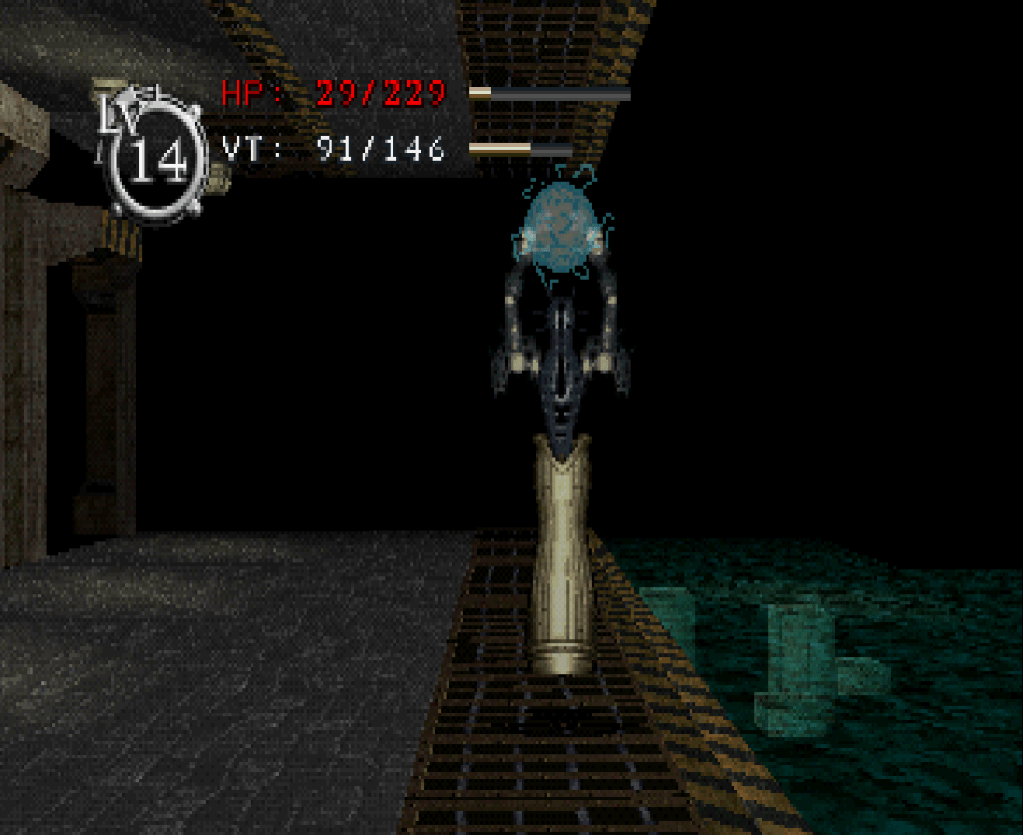
In Baroque, tearing something (or someone) apart could have a few different meanings. For contrast, there is an “angel” worker in the Nerve Tower with a second face growing out of his shoulder. He jokingly refers to himself as a “composite angel”. Alice’s reference to a time when you were both “melded” together could certainly point to a literal meaning: that you were once one being and now you are two. It definitely feels intuitive. But there is another meaning that prior imagery has hinted at.

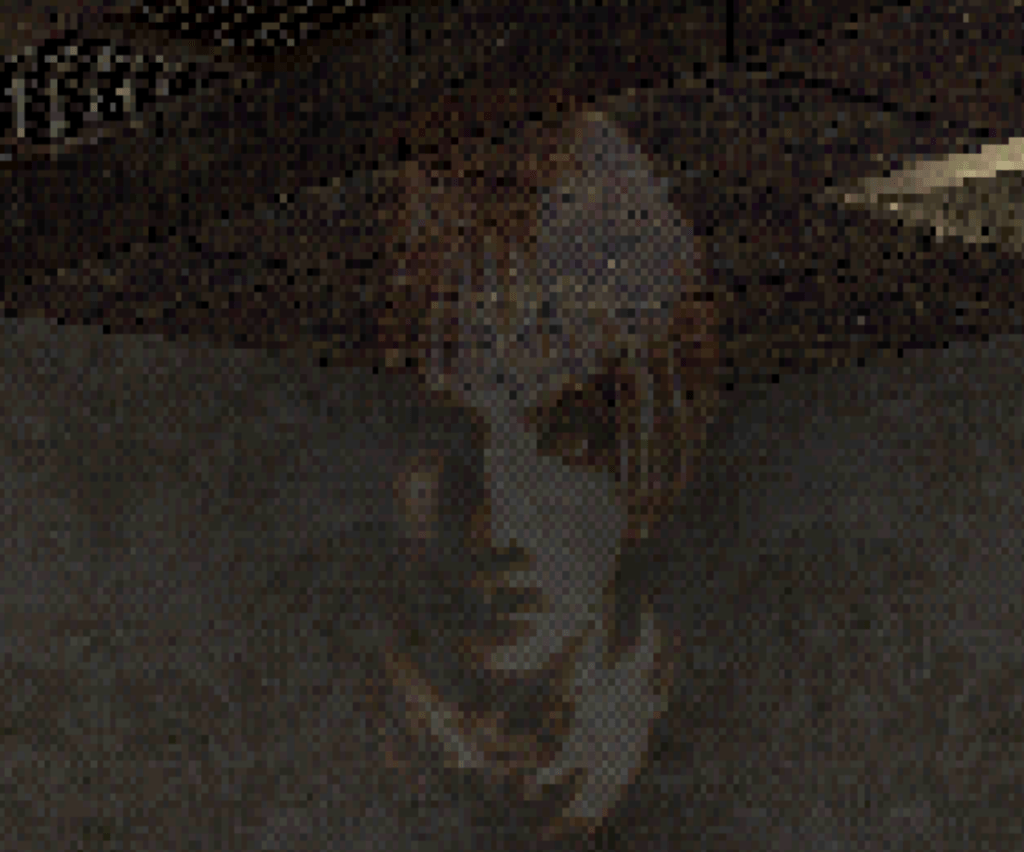
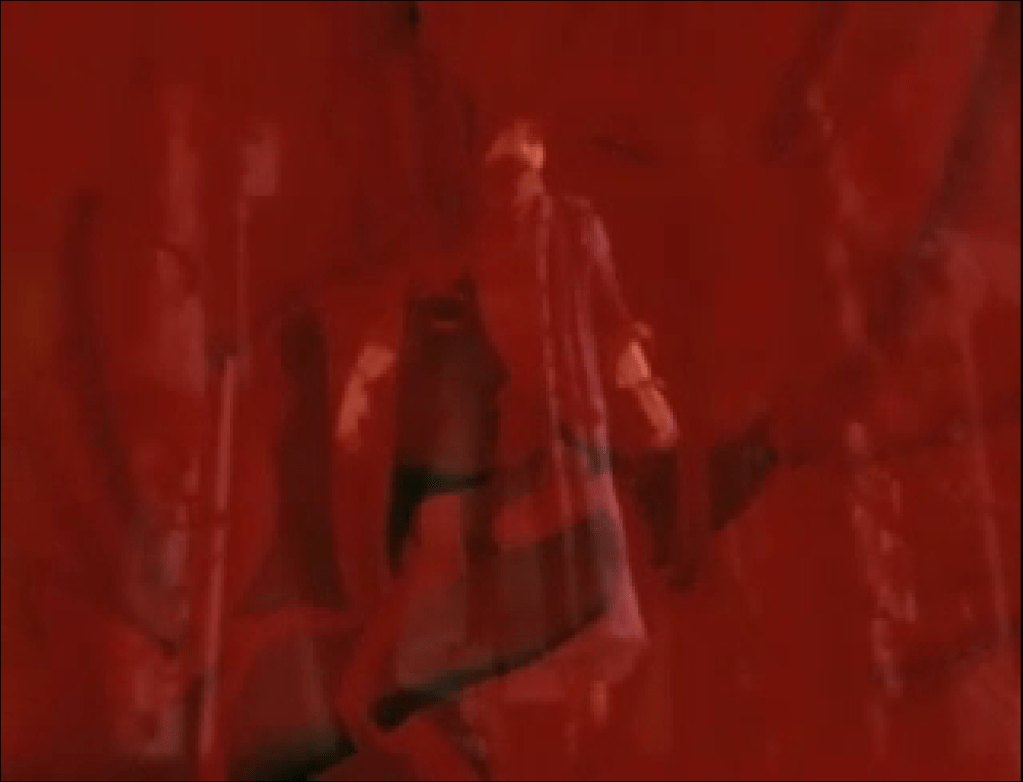
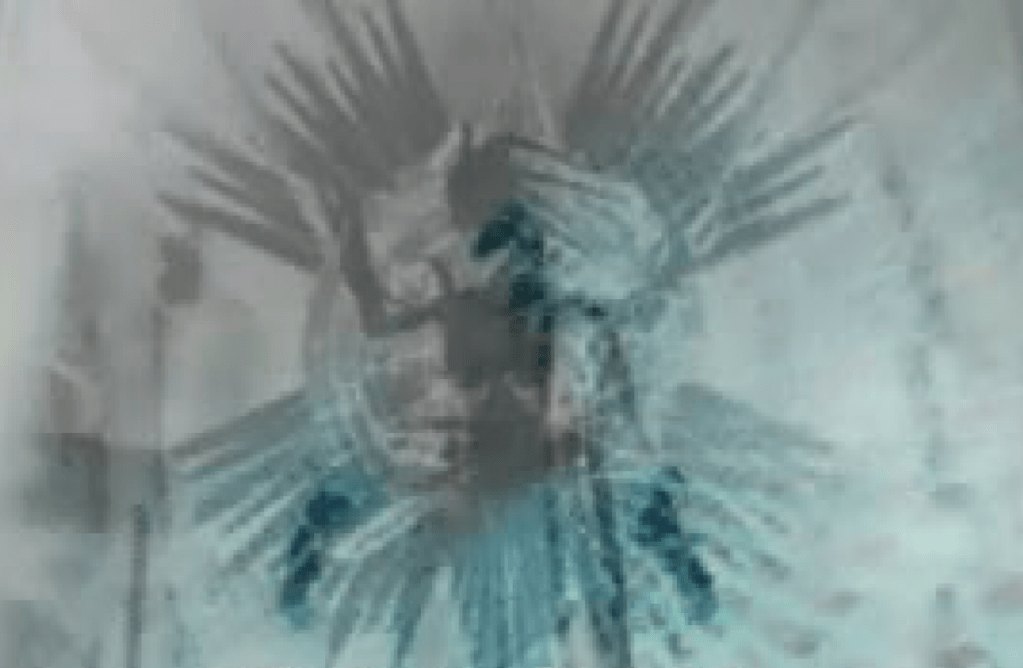
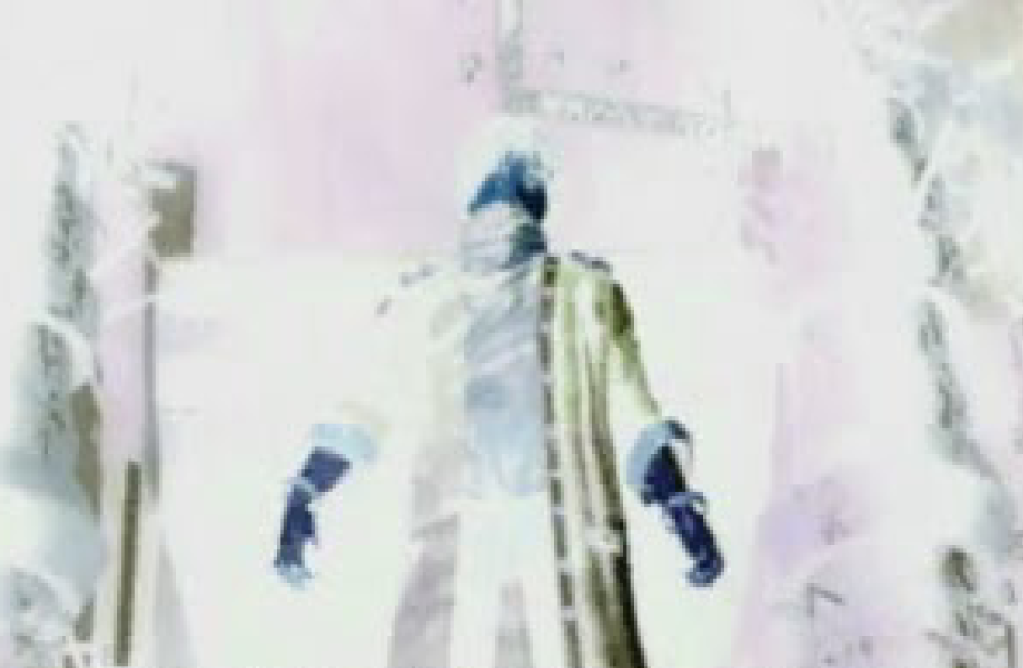
After my first death, this image briefly flashed over the suspension chamber.

After the third pass, the Horned Woman has a surprising realization about “that” face. She recognizes it; says it resembled her own. It may be a mistake to assume that normal social cues apply here. Let’s say, for the sake of argument, that she’s not saying this for a completely abstract or non-existent reason. If the Horned Woman is speaking plainly, it is possible that she is reacting to you. Yours is the familiar face that resembled her own.

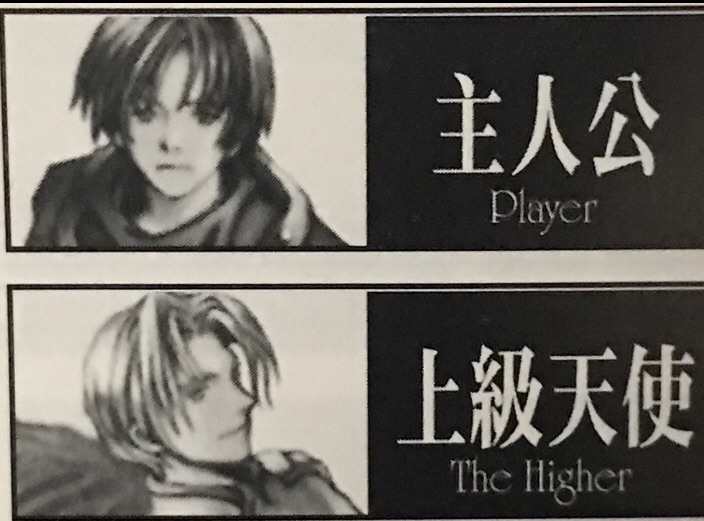
Concerning this…let’s take a look at the instuction manual:

More specifically-

Is it just me, or is there a resemblance between Alice and the player character?

If such a resemblance is intentional, could this tell us anything about the separation they experienced?

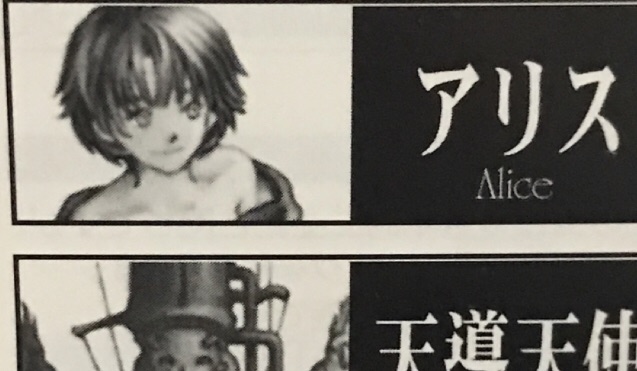
Then there’s this pair-

Maybe I’m giving in to a little pareidolia and/or overthinking it…but I wonder if these two share the same connection as Alice and the player character?

With the Archangel’s (The Higher) place in the sequence of events, they could easily be a kind of alien. They typically influence everything around them and possesses information that they don’t immediately disclose.

Perhaps the Archangel went through a version of the separation before setting foot on Earth? With Eliza being their ‘Alice’?

Contrast that against Baroque’s pre-Heat-Wave human societies. Earth, in general, experienced the Sense Spheres and the Heat Wave as totally unfamiliar, external phenomena. You could say that the Archangel has the contextual knowledge of a non-Earthling.

The resemblance between the names ‘Alice’ and ‘Eliza’ stands out, as well.

Don’t forget the earlier cut scenes with the suspension chamber and the off-screen voices. We are still dealing with the possibility that this is some kind of digital simulation, technologically channeled into the player character’s sleeping mind.

If we keep assuming that the player character is the one in the suspension chamber, whose mind plays host to the simulation…would it then follow that the Creator and Preserver represents a facet of themselves? Such a scenario would readily accomodate the significance of being “torn” from Alice.

Nonetheless…is the resemblance between the Horned Woman, Alice and the player truly innocent?

The prospect that Baroque is occuring in a bio-mechanical simulation leads in the other direction. Dream logic would then be part of the world-building…and uncanny doubling is a common dream phenomenon. The player, Alice, the Archangel and Eliza could be different layers of the oneiric nesting doll.

This also implies that the most common experiences constitute the bulk of the probable design of the simulation. Whatever the simulation is expressing…it is probably doing it through the Nerve Tower and the Archangel. If this is the bulk of what the simulation expresses, then the Nerve Tower and the Archangel are the most direct point of contact between the human host of the simulation and the machine they are connected to in the waking world.

What do nerves do? Connect brains to bodies.

Here’s the first part. Otherwise, to be continued.

Playing Baroque part 1 (first impressions, spoilers)

This is a rogue-like, such as Diablo. Also like Diablo, it appears to include a small community outside of an apparently unique ladder of progress- leading either up or down. This game also has a first-person perspective, which I don’t think I’ve encountered in an RPG outside of Shin Megami Tensei and Persona.

Subtitles indicate offscreen voices in the opening cutscene. These voices are talking about sedatives and simulations and whether or not someone is conscious. We are left with the impression that the span of time we keep groundhogging over and over again is what they mean by “simulation.”

About that last part-

Baroque has recognizable RPG mechanics. Level-and-EXP-based progression with stat-building, equipment collections, implied “role-play” what with the first-person POV (nineties versions) and our self-named protagonist.

Little of which has any bearing on the player progress data recorded by the game, other than the “suspend” function. Without “suspend” (quicksave) there is no way to maintain progress in the Nerve Tower between sittings. Which places all of the onus on a complete trip without a single death.

There is a separate category of save data called “arise”, which starts you at the beginning of your most recent pass through the loop.

That’s our rogue-ladder, by the way. Diablo has the pit below the cathedral, Azure Dreams has the Tower of Monsters and Baroque has the Nerve Tower.

One of your first acquaintances on the “ground floor” urges you to hurry to the Nerve Tower before saying anything else. A moments’ distraction or idleness is paid with by either HP or VT, so you might decide to hurry up on your own out of a vague sense that doing expected things has positive results.

No one ever says so, in so many words. But it’s an intuitive assumption.

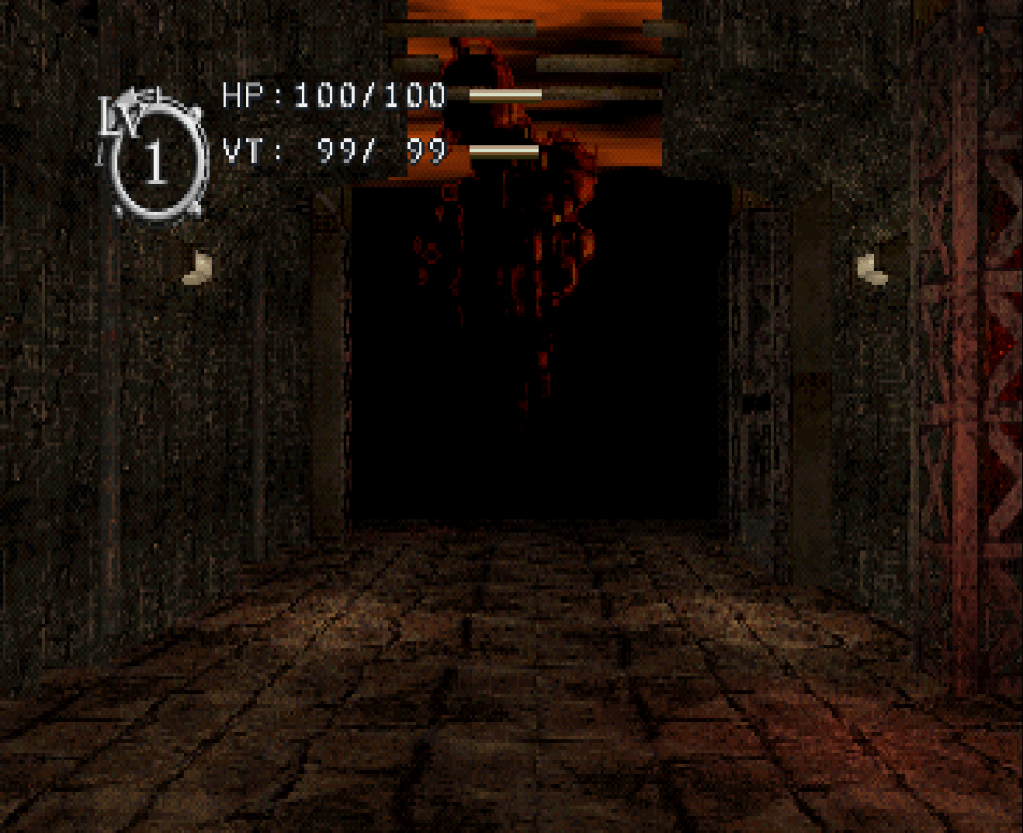
With some effort, it bears out this time. Setting foot in the Nerve Tower, alone, does nothing. Relief is eventually offered by monsters called “grotesques.” Upon death, they turn into little white spheres, along with any other item drops. The spheres are what keep things somewhat comfortable, as killing grotesques for spheres regularly is the only way to keep VT topped off.

To start with the familiar-

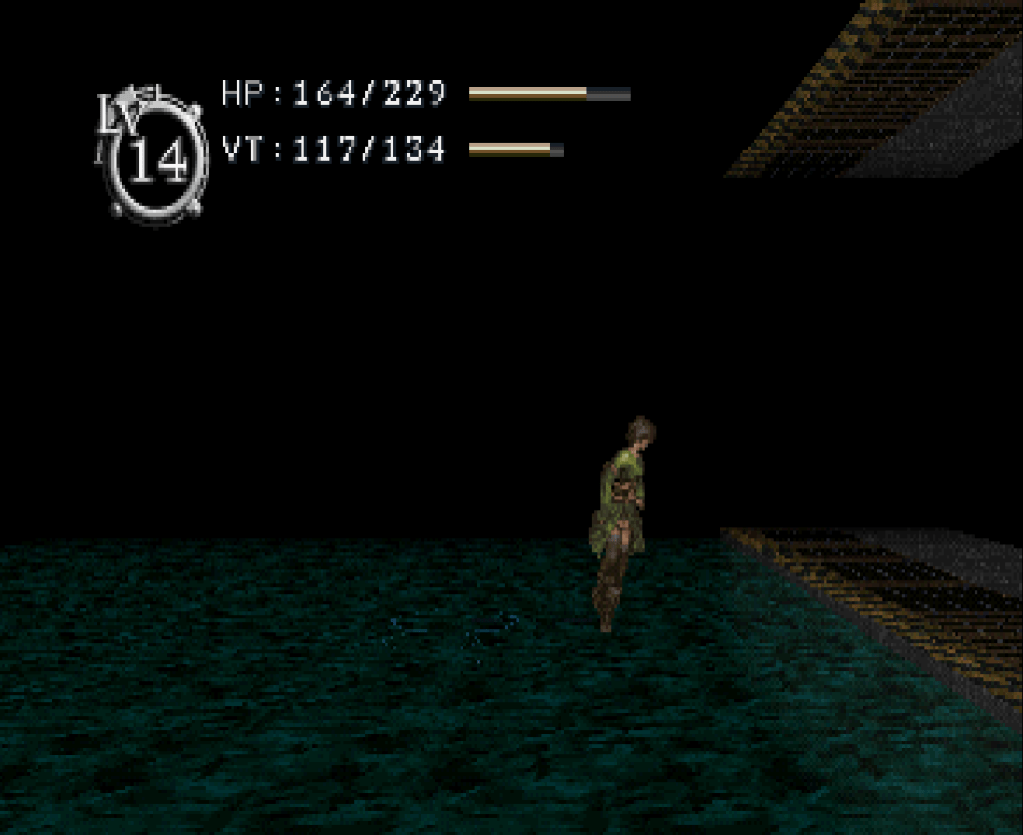
HP is, of course, hit points. You want them as far above zero as possible and taking hits make the number go down.

So long as you don’t get poisoned, HP counts slowly toward its upward limit, based on leveling. This slow recovery happens as long as VT is above zero and VT ticks away, roughly, with the seconds. Running out of VT will cause your HP to drain rather than heal. Without a quick infusion of VT, this drain can kill you.

So the solution is killing grotesques whenever possible. While you’re grabbing the VT orbs and trying not to take hits, it also pays to make prompt use of any restoratives you come across. If either HP or VT is full, they usually bump up your upward limit.

Conservation is best saved for after you’ve KO’d a few times. By then, you should be a little more acclimated to how long-term play works.

Speaking of- levels and stats do not carry over between KOs. Neither does your personal inventory but items can be secured in a kind of dead-drop.

A bit of a grind, really. But people who play through the second quest of LoZ Outlands for their blogs don’t get to complain about difficulty.

With care and repetition, it becomes apparent that the tower is only so long. Or…I guess…its successive basements so deep, since that seems to be the direction we’re heading. If you have a few hours and are willing to roll with some trial-and-error, you could, conceivably, clear the whole basement in one sitting.

One must not count their chickens before they hatch. It pays to see through sticky situations. A recent favorite of mine is running low on both VT and HP surrounded by grotesques I couldn’t possibly kill in the time in takes to survive contact. Like many rogue-likes, Baroque has randomly generated floors. Strategizing must therefore happen in somewhat broad strokes.

It is possible to survive those situations but it is also possible to die because of HP/VT. The random level-generation accounts for a lot of stuff like item drops. A little bit of patience can be surprisingly rewarding.

So things get punishing. What’s actually going on, though?

Rather soon, you realize that you begin the same time loop over and over again, with each death. In some loops, there are unpredictable cues and statements about how the particular loop you’re in right now relates to the other loops. Clustering, usually, into A. it’s different this time or B. it’s never different.

My first death occurred in the Coffin Man’s “training ground”. This triggered a cut scene of a coffin-like suspension chamber. With the context of an earlier cut scene, it makes sense to assume that the player character is inside it.

If you managed to talk to the Archangel before that point, he says that, at “this time”, he exists where he stands and, simultaneously, somewhere else. He says that this “is because this is not the real world”. He goes on to say that, eventually, the player character will awaken to a reality where such “illusions do not exist”.

After dying during the training of the Coffin Man, the Archangel treats you as if there is nothing to say or explain. He appears surprised as he notes that you are, apparently, struggling to speak, and have lost your memory.

A background observation slips through before your muteness and memory loss are apparent. The Archangel says that, if that’s the only problem you have than you’ve been lucky. He realizes it is not the only problem when he observes your (somehow) apparent memory loss.

If, at that point, we are truly free of the simulation and have entered the real world for which the sim was a model…it would make sense if things happened suddenly that were not expected to those who appear to be in charge. Accidents happen in real life. It may or may not be relevant to note that this is the first time I’ve encountered one of his most well-known lines: “(t)here is significance in you using it”, as he hands off the Angelic Rifle.

(The Angelic Rifle will level any grotesque you encounter but it only has five shots and I have not seen any ammunition item drops)

At this point, I have a few questions. One of them is how many of these events happened because of something I did, immediately prior? Did I get the second suspension chamber cut scene because I died in the lair of the Coffin Man? That had also been my first death. Could the second suspension chamber cut scene simply be triggered by your first death?

Neck Thing, one of the NPCs clustered outside of the Nerve Tower, says that the Coffin Man makes him sick by profitting off of the catacombs. This tempts me to attribute the recent change of circumstances to dying under the roof of the Coffin Man. During the second suspension chamber cut scene, one of the off-screen voices asks if “he” just died. Two contrary opinions follow: “this one is garbage to” and “it’s off the charts!”, as if two people saw the same thing and had opposite reactions.

Less defensible but I can’t help but wonder: the suspension chamber cut scenes imply that the simulation is created in concert with your unconscious mind. If the oneiric projections are the basis for representations in the simulation, then consider this: there is a figure for whom you feel instinctive discomfort. You have no idea whether he is a human being or not or what his life and thoughts consist of. Regardless of his humanity or lack thereof, he is one of those whom the Archangel calls “distorted ones”.

Their lives and thoughts must consist of something, though: however incomprehensibly “distrorted” they may be, they are obviously sentient.

Yet for no reason that you are aware of, you give this person a wide berth. He carries a coffin on his back. He is both dangerous and duplicitous and appears to enjoy a kind of power. This I think is implicit in his ability to somehow profit from what happens in the catacombs.

One thing your subconscious might be wrestling with is what just happened, immediately before going under. Perhaps you were compelled to step into the suspension chamber yourself. Maybe you volunteered for it. It entailed a degree of risk, which your subconscious would also necessarily be aware of.

The whole notion of what just happened could make a menacing impression on an unconscious and suggestable mind. You may have thought, before losing consciousness, that this suspension chamber could well be your coffin. Something like the Coffin Man would make sense as a projection of your unconscious mind. If that happened, then such a projection might be something that the simulation drapes one of its NPCs in. Especially if this NPC has some sort of direct link to the life-support or a background program for the narcotic sleep control. Something not so different from the renegade programs portrayed in The Matrix: Reloaded and Revolutions.

An association between the second suspension chamber cut scene and the Coffin Man seems likely. A simulation-based one writes itself.

This is not the only possibility but it is easy to dwell on. At this point, you are aware that dying in the Nerve Tower and repeating the loop all over again is the most basic game play experience. Whatever else happens, whatever may be true about the context of your plight, that much has proved reliable. Being locked in a simulation would accomodate this.

As eternal as the time loop may be, though, the locals do not appear unanimous on it.

Repeated passes through the loop will also eventually draw your attention to a number in the lower right corner of the inventory screen, when hovering over the (so far) changeless presence of an item called “myself”. When you start off, the number next to your “self” is 0. With each death in the Nerve Tower or complete passes through it, the number goes up. The opening cutscene features a montage of images including a black screen with ‘-1’ in the lower right corner.

On the subject of whether every pass is unique or every pass is the same, this stands out. It is the only thing that is visibly changed with every pass through the loop. The dialogue of the distorted ones change as well but with each fresh loop it’s almost as if the prior loop might not have happened. Each floor below the Nerve Tower is randomly generated. The growing number of “selves” is the only clear evidence of consistent, long term progress on the “arise” memory card data (other than wherever the NPCs are in their dialogue trees).

There are other ways that long term progress can manifest, if one is bold, observant and persistant. With the ability to make multiple passes through the Nerve Tower with no relief but the “suspend” quicksave, you encounter things called Sense Spheres. On the original Sega Saturn version of Baroque, items tossed into Sense Spheres would appear around the last one on the sixteenth basement floor. I am, however, doing this on the PS1.

The PS1 features its own unqiue distorted one: Thing Thing. Thing Thing normally tells us about how he collects things that get spat out of a Sense Sphere just outside the Nerve Tower. Yes, it was always there- but nothing draws your attention to it early on, except its relative closeness to the Archangel (or his projection or bilocated presence). Anyway, deck Thing Thing in the face and he will offer to return up to five articles you previously threw into the lower Sense Spheres.

With a lot of care and maybe some luck, Thing Thing enables a way to add some cumulative progress to successive passes through the Nerve Tower. With adroit judgement of the things you send to the surface, you can leave yourself equipment to start your journey with or power-ups that buff said equipment or even level you up before setting foot in the Nerve Tower.

This, however, is juat a first impressions post. More to follow

Onward to part 2