Four volumes in, we know that realms analogous to different planets in a solar system exist in Resurrection. Yet going from planet to planet does not necessarily entail regional departure. At a glance, each named location in Resurrection potentially has its own version of interstellar space. This also seems to be the medium through which different vessels pass. To travel from Necropolis to Lemuria may be equivelant to entering a different galaxy.
As Rebecca intimated in volume one, different transmigrants end up in different places in Resurrection. Rebecca herself went to Lemuria, where we see both variable weather and daylight. Unlike the vampires of Necropolis, who see Resurrection as a shot at eternal life, a vampire hunter in Lemuria looks forward to ending their stint and transmigrating elsewhere. Often, they are assigned a specific vampire or group of them, whose deaths will allow them to trasmigrate beyond Resurrection. Because they look forward to a next step, they have no interest in establishing permanent settlements like the vampires or establishing new, Resurrection-based identities. Lemurians frequently discuss their human lives and bond with other dead people over their shared humanity, which raises questions about the ghouls.
Like vampires, ghouls have settled territory in Resurrection and intend to hold on to it, perhaps explaining in part why the ghoul pirates are historical enemies of Necropolis. Ghouls intend to settle down as permanently as vampires, without the crafting of a secondary identity. They swap stories of their human lives and bond over them, like the Lemurians, but ghouls mostly dwell on how injustices suffered in life made them what they are. Constantly refreshing their anger and bitterness from their human lives seems to give them a parallel edge to the vampires. If combat, to Necropolitan vampires, represents a carnal indulgence- a battlefield packed with victims with new Resurrection bodies circulating perfectly edible blood -then for ghouls it is a cathartic indulgence. Vampires simply enjoy drinking blood and holding on to their territory. Combat has the easy mental access of pleasure-seeking. For ghouls, it has the easy mental access of releasing long-suppressed rage.
When extra-dimensional rifts open in Resurrection, many are happy comb through the Earthling wreckage for technology and then destroy the remaining evidence. Necropolis has a whole professional caste dedicated to this called Archeologists, who understand this as both a duty and a natural law: Resurrection has a backward time flow. There is probably some truth to this, since vampires appear to age backward (unless they die in battle or suffer intrigues at home, in which case their soul may be either annihilated or go back to Earth, potentially to arrive in Resurrection again, like our main character). Cryptos, after all, is a creepy little ancient baby that reminds me of Garlic Jr. from Dragon Ball Z. Vampires worry about suffering the “senility” of becoming a teenager, child or infant again. Another sign that Resurrection stands beside the Earthly time flow is the spectrum of weapons which Necropolis has hoarded and reverse engineered: everything from far-future lasers to firearms to swords and maces.
Despite the ubiquitous fear of growing young and the visibility and power of Cryptos…it’s hard not to wonder about the whole truth. Early in volume one, Otto tells Heinrich that the fragments of Earth that show up through the dimensional rifts are “uncreated” by the backward time flow. That, at least, appears to be a lie, since the duties of the Archeologists include burying all traces of the fragments of Earth from different eras and timelines after looting them. If not a strict lie, than a cultural / institutional construct, since the disappearance of the Earth fragments is enforced.
Then…in the company of a recently transmigrated vampire, Otto says that the same cosmic tide that causes these rifts will also attract demons and dragons all over Resurrection. These cosmic tide / wave events require everyone to barricade themselves and wait it out.
Just like vampires, vampire hunters and ghouls…this usage of ‘demons’ and ‘dragons’ has specific in-world meaning. They are manifestations of negative emotions from sentient beings. Demons and dragons serve beings we’ve heard about a few times but have heard nothing specific about until now: the gods of Limbo. Otto explains further than the gods of Limbo are extra-dimensional beings that cannot be perceived from the third dimension. From the dimensional vantage point of Resurrection, they are some of the most deadly beings in that universe.
Parallels with the collective subconscious emerge and an insinuation that Resurrection is directly adjacent. Close enough for the puncture of one to two barriers to make all the difference. We’ve encountered other claims about the cosmology, though, such as the backward time flow. One wonders how much of the apparent ‘collective subconscious’ is organic and how much may be either misunderstood or institutionally enforced. There seem to be ordinary gaps between perception and understanding, as in real science.
The possibility of a timeline of these discoveries is intriguing: on one hand, Resurrection clearly exists outside of the time flow that contains the three-dimensional point of view. The diversity of the relics taken by the Archeologists indicate that Resurrection is, in fact, independent of any timeline or era. Yet institutional behavior and the intrigues and vendettas of the Necropolitan court tell us that Resurrection must have its own, subjective time line. Once upon a time, when the soul called Thurim had only just transmigrated from a lifetime as Heinrich Barbarossa, the vampire Nero annoyed him with his music. Nero took offense, challenged him to a duel and got his right arm chopped off. Since Nero ranked higher in the court, Barbarossa Thurim was tortured to the point of apparent obliteration by Nero. When the soul of Barbarossa returns as Heinrich Requiem, who became an SS officer and died on the Eastern Front during an attempted rape…memories start returning. Heinrich Requiem realizes it is essential that neither Nero nor Dracula ever learn that he carries the soul of Thurim.
Like the relative differences in progress between institutions in Resurrection, the existence of these vendettas also prove that Resurrection has its own hermetically-sealed time flow (whichever direction it goes in).
During the second half of volume four, Heinrich Requiem experiences his first conflict between duty and conviction. When Requiem was a living Nazi, he hid a Jewish lover in his personal estate. This woman was Rebecca. Eventually, Requiem himself is the one who rats her out to the Gestapo: he simply became a Nazi of conviction after a while.
Yet he is still dwelling on Rebecca’s memory and punishing himself for it just before dying on the Eastern Front. He mourns for the death and destruction he caused but cannot resist renewing his damnation when he encounters a Russian woman who happens to resemble Rebecca. As his soul descends to Hell for the second time, all illusions flee from him: all he ever did was take victims for his own benefit. He is a soul-deep predator and he refuses to look his after-death destiny in the face without accepting that fact. That acceptance made him a vampire in Resurrection (reminder: vampires are souls who were aware of their evil and are unrepentant).
Rebecca, having been dead for some time, is now a Lemurian vampire hunter. She tells him, telepathically, that if he kills his first vampire companion (Otto), then he can leave Resurrection with her when her time comes. He cannot bring himself to do this and once again they are separated by his inequity. All done already, in the past, never to be negotiated with.
Otto informs him that this is the healthy path for a vampire: the destruction of human identity and the establishment of an infernal one. The destruction of one’s mortal self is equated with the authenticity and credibility of their vampiric self. Part of this is black opium, harvested from a world in Resurrection called Atlantis. Black opium is used, by every vampire, to keep memories and feelings from their human lifetimes permenantly suppressed.
After Atlantis is surrounded by anti-Necropolis partisans, Dracula is forced to consider other options. As a temporary stop gap measure, he launches a victim raid on Lemuria to soften the blow with more blood to go around. We are soon in the company of Rebecca and a new Lemurian flame: Sean, who lived and died in a different era. Rebecca and Sean get the jump on a company of vampires and- as Sean is running a massive sword through one of them -says “Let’s see how well his (Dracula’s) vampires fight without opium to help them forget their crimes.”
The regular use of the black opium is a genuine preference for most vampires and maybe most of them do it for the reason Otto said. Yet like the time flow, one wonders if there are other factors beyond the obvious. That early instance of Sean butchering a vampire implies that the black opium has another role that is more functional and less indulgent. I wonder if the whole taboo around suppressing and replacing human identity was engineered specifically to control vampires in the best way possible: leashing them with their own desire.
Throughout all this: Heinrich and Otto are two peas in a pod. Neither one seems to have a closer friend in Necropolis than each other. They even knew each other as humans: both were SS officers. Otto seems to be taking Heinrich in hand as simply a “younger vampire”…yet if their identities are meant to be wholly separate from your human self…maintaining human relationships (even ones that pushed you further toward evil) sounds iffy.
I’m doing my usual thing where I go through a comic / book / video game / whatever at my own pace and post as things occur to me. I like figuring things out and even the twists and turns of misunderstanding have their charm. I get that there’s online lore sources I could easily check this against. From where things stand now, though…it would not surprise me if Otto recognized Thurim for who he was, immediately. In that event, all he would have to do to ingratiate himself to the Necropolitan court would be to hand the soul of Thurim over to Nero and Dracula. What Otto may be doing is maintaining a private confidence between himself and Heinrich, in which one can express disloyal thoughts under the guise of one not knowing any better and the other correcting him. Otto is, by his own standards, undermining Heinrich’s vampire identity while creating a personal channel through which Heinrich may “leak” revealing information to him.
At the end of book four, Heinrich flees Necropolis with Rebecca, who was taken captive after the Lemurian raid. If Otto was surveiling and undermining Heinrich, his success or failure may soon be apparent.
While the absence of Lestat as the narrator makes things less immersive than the Vampire Lestat comic…the original Queen of the Damned easily translates into pictures and word balloons, what with the number and diversity of characters, events connected by vast distances and vampires breaking cover. Anyone looking for a straight-laced adaptation would have little to complain about. To the best of my memory of the book…I think every single scene made it into the comic with varying (but admissible) degrees of faithfullness.
The art is neat to. A few scenes, like Maharet visiting Jesse in the hospital, almost remind me of Dave McKean, who would have been a rising star in comics at the time. The scene below reminds me of McKean’s art in Neil Gaiman’s Black Orchid, which felt equidistant between genre-savvy comic art and photo-realism. And, of course, a ton of shadows and pale lighting (most of Black Orchid happened at night to).
The degree of realism also roots us in the present of the book- 1984. I was a little surprised by Armand’s twentieth century presentation, here. My impression of Armand (as depicted in the books) was of someone who is recognizably non-binary, erring slightly toward femininity.
This is where the diminished immersion became a bit more clear to me. When I first read The Queen of the Damned, the relationship between Armand and Daniel was one of the sweetest and most engaging parts of the whole book. That was probably when he started to become one of my favorite characters.
Armand, on the lower right, in the white shirt. Admissible but I don’t think I ever imagined him with hair like that
One thing they could have done was spend more time in the early stages of the rapport, when it was at its most chaotic. The restaurant encounter- when Armand orders literally everything on the menu because he wanted to order for Daniel but didn’t know what he liked -should be its own scene. It’s depicted here but I would have liked to have spent more time in that moment. It also would have been nice to see more of the early, late-night visitations, when Armand surprises him at one in the morning because he wants to talk about the book he saw on Daniel’s nightstand. Or shaking Daniel awake because he wants to talk history and philosophy. Spending more time in the early, uncomfortable stages would have made the tender moments hit harder. To be fair; all of those moments are depicted in the comic but only briefly.
Not endemic to the comic but Anne Rice in general: a lot of her vampire-human relationships are more interesting for not having the moral framing of recent stories. There’s a huge market out there for people who love morally inoffensive vampires. Anne Rice never made any bones, whatsoever, about vampires being non-human beings with non-human perspectives. If Armand and Daniel are an example of the encounter ending (relatively) well then The Tale of the Body Thief shows us both the delicious and horrific possibilities. A happy ending is possible but it can end a million other ways to.
I wonder if Stephanie Meyer would have triggered the backlash she did if she was less eager to make Edward Cullen morally white. I never read Twilight but I saw parts of the movie and it seemed so determined to make Edward cuddly that his predatory, vampiric behavior was just…a bald inconsistency. So when he started doing predatory things to Bella, it smacked of hypocrisy and Meyer’s determination not to acknowledge that darkness raises the spectre of actual, sublimated misogyny.
This was also neat. I really liked the Stan Rice poetry that Anne used as epigraphs so often. The Cannibal poem is the only Stan Rice epigraph here but its usage establishes a nice, solitary and emotional beat before we see Lestat in the arms of Akasha for the first time.
Only eleven of these comics were commercially released before Innovation Comics went under but the twelfth surfaced online last summer.
As of this writing, the portrayal of the final confrontation is the most faithful out of any adaptation (fingers crossed for some later season of the AMC show?).
The Queen of the Damned film didn’t even make an effort. Just a giant vampire brawl.
See…the confrontation in the novel was a debate. Not a single vampire can resist Akasha on their own so they spend most of their energy trying to talk her out of reducing the male population by ninety-percent and assuming autocratic control over the globe. No film studio at the time was going to portray a supervillain that specifically targets men.
What gets lost in translation are the moral stakes. When Lestat wakes up in the twentieth century, he is delighted by the rise of secular humanism and at least some progress being made in gender equality. Those were things he never would have anticipated happening during his human lifetime. He saw humanity begin- however awkwardly -to graduate from the world he once took for granted. This theme reappears when he finds Marius, who believes that the Enlightenment was the greastest step forward the west had taken thus far.
Confronting Akasha was the first time that we got to see this optimism challenged. Marius had some of his most glorious lines in that battle. To paraphrase: humanity has fucked up a lot in both the ancient and modern world. But look at the new ground that was broken in the twentieth century. Do we really want to take humanity’s destiny from them just as they’re starting to peck out of the shell?
The dignity of humanity versus the belief that humans are stupid and helpless and need a stern parent to keep them in line. Yes it’s a debate. Yes a debate is people talking. But it was one of the best scenes Anne Rice ever wrote. No it is not Helm’s Deep but it is a climactic fantasy battle.
The comic keeps it concise: most of the lines are spoken by Akasha, Maharet and Marius. Objectively, you can’t complain. I missed Louis’s appearance, though. In the book he is silent for most of the debate and then butts in assertively. Louis was the weakest vampire present and Lestat was shitting bricks because he thought Akasha was going to incinerate him on principle. Akasha herself appreciates his bravery even if she’s not convinced by him.
That’s my one note for the ending and I guess its more of a nitpick. Otherwise: wonderful comic
Among the portrayals of the Children of the Millennia, Pandora matched my mental image the closest
Judging from where things went with Nightmare Country, I wonder if G. Willow Wilson was working on a related concept in ‘Waking Hours’. Volume four of The Dreaming came out roughly at the same time as the first two Sandman Universe Hellblazer arcs and I think all of those were out by the time Nightmare Country ramped up. As Nightmare Country has Madison Flynn and the Corinthian, the fourth book of The Dreaming has Heather After and Ruin. Also like Nightmare Country, the main human and the main nightmare have a dynamic that ropes in other more short-lived events.
A Shakespeare scholar called Lindy Morris dreams something at the wrong place at the wrong time.
Ruin is a nightmare who escaped from Dream’s quarantine/prison chest with the help of Dora (remember her? The Night-Hag from the first three arcs? She’s now something of a mover-&-shaker at the World’s End inn). Why? Because he fell in love with the first human he tried to hunt on the astral plane. So after escaping, he breaks into the waking world using Lindy’s recurring Shakespeare dreams as an entry point.
Thing is, crossing dimensional boundaries in both a tangible and autonomous state requires serious magical investment. Ruin pulls it off because he accidently shifted Lindy’s tangible body into the world of her recurring dream.
Our main human character, Heather After, is a magician with the mind of puissant gambler; undaunted by the need to put some skin in the game to get things going. She was mentored by John Constantine though, so maybe that’s to be expected (Constantine’s quite the magical educator, isn’t he? First Timothy Hunter then Heather After).
I love the ‘Promethea’ vibes in this picture. ‘Intermezzo, Part Two’ cover art by Nick Robles
What’s more: she’s handled the transactional nature of sacrifice well in the past. Arguably.
She once attempted a summoning for what she described as a “nice, chill little fire spirit with the intelligence of a goldfish”. Instead she snagged the cherub Jophiel who promptly threatens her in his flaming, lion-headed, multi-winged form. She lets him go when asked and earns a tiny bit of good will.
Around that same time, Jophiel was attempting an astral dialogue with a young Catholic seminarian called Benedict, who had the potential to become the next Pope. Jophiel is channeling various visions and whatnot which- due to Benedict’s human nature -must occur in the theater of dreams. That means that it’s occuring within the Dreaming. Because of this, other dream-kind have enviornomental access which is how Ruin found him and well…you know how Ruin fell in love with his first human victim?
Once Ruin got involved, Jophiel’s intended visions got derailed and Benedict dropped out of seminary. Jophiel is subsequently punished for his failure with temperory banishment to Earth.
The overlooked nail that catches on the sweater is a recurring plot device in this story. Once Ruin makes it to the waking world, he looks for the only person he knows there: Jophiel, who hates him and immediately tries to drop him off on Heather’s doorstep.
Heather hopes to rescue Lindy through an indirect, adjacent entrance to the Dreaming: Faerie. She combs through the ether for a being that’s closer to Faerie than they are and hooks Robin Goodfellow. Being rather less of a negotiator than Jophiel, the Puck swears vengeance for the temporary abduction. Heather, Ruin and Jophiel dodge his immediate wrath but he keeps his word anyway.
In the meantime, we are alternating with Lindy’s advantures in her dream construct. The Lindy arc succeeds as its own story but Sandman readers will wonder about the role of William Shakespeare. Especially since the SU Lucifer also riffed on the in-uinverse relevance of Shakespeare. It essentially depicts the in-universe events that shaped the idea that Dream imparted to Shakespeare, later to become The Tempest.
While we don’t get the kind of detailed flashbacks that SU Lucifer had, Shakespeare’s prior Sandman involvement comes through. Lindy becomes convinced that her dream will end if she solves an ongoing argument in her inescapable dream-house: she’s trapped with a bunch of different Shakespeares who are all convinced they’re the one that derived from the real, historical author. Details from the ‘Midsummer Night’s Dream’ vignette within Dream Country provide a random memory that one of the Shakespeares lets slip. This blurt gives Lindy an early, vital hint.
Like I said, it works fine as its own story. There is another possible association, though: Shakespeare is, potentially, the only one who spoke with Morpheus about the angst that drove him to suicide.
Daniel, the current incarnation of Dream, feels the stirrings of Morpheus-era memories.
Speaking of those: Heather After is the granddaughter of Roderick Burgess- the guy who trapped Dream for eighty years during the early twentieth century. In fact- unless I’m missing something -it seriously looks like Heather is John Dee’s bio-daughter. Like, Doctor Destiny, from ‘Preludes & Nocturnes’; the Justice League villain who tried to claim Morpheus’s Ruby.
We aren’t given the exact details of her origin; save that she grew up in the lap of the Cripps family, whose magical heritage is at least as potent as the Burgesses, considering how a lawyered-up meeting goes between them during the reading of Ethel Cripps’ will.
On her deathbed, Ethel told Heather that she has no reason to be dependant on the Burgess family. Judging how Heather takes this information, I wonder about the kind of relationship the two of them had. Heather is a transwoman and it looks as if Ethel was the only one in the family who accepted her when she first came out. The chosen family dynamic is not spelled out in so many words but Heather’s reaction to Ethel’s death is telling. Ethel appears to have been the only adult that defaulted to her chosen name. She barefaces her way into the will reading, claiming to just want some of her grandmother’s personal effects to remember her by. Heather swipes a grimoire and casts a barrier spell behind her on the way out, leaving the Burgess and Cripps lawyers panicking and slinging spells at each other.
I did say she had a history of successfully managing risk.
Coulda did better with the Puck, though. If you piss off one fairy then it pays to have either fairy allies or negotiation leverage with other fairies. She manages to persuade Auberon to help her out but only in exchange for a favor.
Nuala has deposed Auberon and Titania and they want their throne back. Auberon does, anyway. Titania would like it back but spends most of her time as one of Nuala’s cringing courtiers.
It’s tempting to wonder about the tension that was growing between Nuala and Titania during ‘The Kindly Ones’; buried romantic or sexual jealousy over Morpheus. The Netflix miniseries brought some of that closer to the surface but it was evident in the original comic as well.
I also couldn’t help wondering about Cluracan’s nemesis: the being he created by bumping into some raw creative energy in Dream’s castle. Off the top of my head, I think he eventually refers to himself as either the White Stag, the Wild Hunt or possibly both at different times. I wonder how relevant the second moniker is, since other beings use that name in the third SU Lucifer book. I’d be surprised if Cluracan’s nemesis was the same Wild Hunt that Lucifer crossed paths with. The Wild Hunt in SU Lucifer is an ancient and ineffible cohort, almost reminiscent of the Kindly Ones themselves…whereas Cluracan’s nemesis is relatively young. To say nothing of the possibility that the shape-shifter filled the void of the Hunted God, which Lucifer previously believed to be annihilated.
(I hear that the first run of The Dreaming snipped that loose end but I can’t help being attached to the theory that Cluracan’s nemesis somehow went on to become the Hunted God in SU Lucifer. In ‘The Wild Hunt’, Odin says that Lucifer’s doom was set in motion by one of the Endless)
Anyway, Cluracan’s shape-shifting nemesis gives Nuala almost as much shit as Titania does in ‘The Kindly Ones’. He appears in the shape of Cluracan to threaten Nuala and gloat over her during ‘The Wake’.
We do get Nuala’s version of things eventually but it’s rather short and not very specific. She makes no mention of any party external to herself, Auberon and Titania except the Unseelie. From the context offered here, the Unseelie were always present in Faerie but never rose to the level of visibility as the Seelie characters.
As for the ‘Waking Hours’ characters, everything that has happened so far either dates back to Heather accidentally summoning Jophiel or accidentally summoning Robin Goodfellow. I don’t recall any specific reason to think that Heather’s summoning of Jophiel played a part in Jophiel’s failure to guide Benedict but it feels plausible. In any event, Jophiel blames Ruin exclusively.
I mean, she seemed to accidentally summon Jophiel shortly before Ruin showed up? And Jophiel being who he is, I don’t think he’d be civil and friendly with Heather if he thought she had anything to do with it.
Even if that one is open and shut, though…none of the second half of ‘Waking Hours’ would have happened if Heather had not snagged Robin Goodfellow at the beginning.
There is nothing to be immediately deduced from this just now…except for Dream’s belief that a nightmare (Ruin) wandering different planes “has brought old evils to the waking world.” When he examines the hospital room where the curse from Puck’s blade grew out of control, he says “(t)here is a coalescing in this place…the spiral of time doubling back upon itself…warning us that that which has happened before will happen again”.
We have also known, since the beginning of ‘Waking Hours’, that a descendant of Roderick Burgess is involved. Dream has only lately figured that out which he probably took for confirmation. Since Dream attributes all this to a nightmare outside of the Dreaming, his suspicions probably run closer to Jophiel’s.
It is also evident when Dream decides to take Ruin back to the Dreaming. He sees the localized effects of a localized cause. This part is also interesting because Dream shifts from distant observer to direct participant. His position- relative to the other characters -becomes antagonistic. Possible foreshadowing of later developments in Hellblazer and Nightmare Country (perhaps going as far back as House of Whispers)?
In all fairness…Dream’s role in the later Sandman Universe comics has been closer to strict neutrality rather than antagonism but- considering how ‘The Glass House’ ended -that shade of gray is going darker. His behavior in ‘Dead in America’ also stands out in contrast to Morpheus. Morpheus was a stickler for the rules and had zero compassion for those on the losing side of them…but he didn’t exactly relish flexing on his enemies like Daniel does.
I wonder if ‘Waking Hours’ was the early turning of this corner. I wouldn’t be surprised if the third volume of Nightmare Country sees Dream getting even more cozy on the dark side.
Kudos to my friend Tibbie X for letting me take these off her hands
This is a straight-laced, faithful adaptation. Which does not guarantee success. Worst case scenario (with comics, anyway) is a kind of paraphrasing or summary that is accompanied by pictures rather than taking place within them.
This comic prioritizes the novel’s first person narration and therefore takes heavily from the actual text of the book. To their credit, it looks like Perozich and Gross only wanted to draw the book. Allowances for context between mediums were made but, whenever possible, the text will consist mostly of Anne Rice herself, as Lestat’s internal voice or the various characters.
At the same time, it is not a complete reprint of the book. The first person narration is therefore scaled back whenever the immersion is served better by a purely visual sequence. This is a small thing but it’s a good sign. It says that Perozich and Gross don’t feel like the comic medium is an awkward obstacle that they have to work around rather than with. As good as it is here, though, it wasn’t the visual pacing that won me over.
This is one of the pages that convinced me that Faye Perozich and Daerick Gross were capable of adapting Anne Rice. Or, at least, of conveying one of her vital nuances.
Spoilers ahead, fyi.
There are a few different reasons why The Vampire Lestat is an important lynch pin in The Vampire Chronicles. One of them is that many of the metaphysical basics are established. This includes all the vampiric cryptobiology details as well as other world-building precedents.
The turning of Lestat’s mother is one of these moments. It states explicitly what the relationship dynamics in Interview With The Vampire said implicitly. Transforming into a vampire divests one of the incidentals of human society and makes them relatable as pure individuals.
Or starkly unrelatable and hostile to each other. But when two vampires connect, they connect simply as one soul to another. As he transforms his mother, Lestat feels the baggage of a lifetime of mother-son dynamics fall away and sees Gabrielle for who she truly is, irrespective of her role as a mother or a wife. Ironically, this spiritual nakedness causes new relational roles- that of lovers.
The turning of Nicolas was particularly well done. Earlier, with Gabrielle, the divestment of all human societal roles caused the formation of new roles. For Nicolas, that was exactly what he couldn’t bear.
For comparison, consider how different things were even a short time ago. The panels above depict Lestat’s first reunion with Nicolas after he was transformed by Magnus. Yes, Lestat is a young vampire internally-narrating how living, non-prey humans look. But in the panel with the hug, Lestat feels “a little convulsion of terror”. He’s not hungry because he just fed; he just gorged himself to look more human. One wonders if he was afraid of revealing his otherworldly nature, “and then there was only Nicolas, and I didn’t care.”
The ineffability of such a moment lends credence to the post-vampire awakening, as if there really is a divine spark that shines brightest without the trappings of mortal life.
Once Nicolas is turned, though, he discovers the opposite.
The ineffable sweetness of that reunion only happened because of the love between Nicolas and Lestat as young mortal men. Without that context, the abstraction slowly becomes too much for Nicolas. Gabrielle, meanwhile, luxuriates in the freedom.
None of this is spelled out in as many words; it just unfolds. This, like so much, benefits from the structure of the story.
First, Lestat addresses the reader. In this address, Lestat is in a sustained flashback dialogue with both Gabrielle and Nicolas. Later, the narrative conversation happens between Lestat and Armand who is later replaced with Marius. It ends with a more open and chaotic vignette in the present, like the source material.
The episodic nature of comic releases also worked out for the best. It enables the book to directly foreground things like the tales of Armand and Marius. The usage of color is more stark and contrasting in these stories than in the events set in the narrative “present” of Lestat’s early years in France and Egypt. Armand’s story regularly contrasts bright and dark colors. Marius’s nested stories have eras of vivid colors not typically seen elsewhere. A long, dark blue section is succeeded by purple and black. Both are eventually replaced with vibrant white, orange and yellow. Obviously this is playing on the dramatic immersion in someone’s internal world, with whole chunks of time recalled with distinct and sequential meaning, colored by emotion.
It feels thematically relevant that Marius’s tale in Egypt was- for many vampires -the most eye-catching part of Lestat’s book, music and music videos. With half-formed thoughts of Nicki in the back of his mind, Lestat acts on an impulse to play the violin for Akasha. Akasha offers her blood and Enkil attacks him, yet neither of Those Who Must Be Kept shift out of their white, statue-like torpor. Lestat is now a direct participant in Marius’s tale of the vampiric parents.
The stories of Armand and Marius are colored by the emotions of their narrators yet- because of the meta-narrative in the year 1984 -these stark contrasts add credibility to the reactions of the modern vampires.
When I first read The Vampire Lestat, all of these moments were equally foregrounded for me. Those parts of the story shaped my belief that- no matter what genre people put Anne Rice into -she is fundamentally a fantasy novelist. What is the tale of Akasha and Enkil but a fantasy plot point, framed by world history?
There is a certain kind of reader, though, that will never stop thinking of a digression from the narrative present as non-story material. A visual, episodic medium is an ideal way of making these digressions take up their own space. Lestat’s meta-narrative conversations with Nicolas and Gabrielle happened on a similar basis; it’s just less obvious because those three characters knew each other as both humans and vampires.
What is exemplified in those two earlier pages with Gabrielle (“During all this misery…” & “Hunters of the Savage Garden”) is Lestat’s mental narration contrasted with brief visual digressions. Both of them contain panel arrangements that suggest different events are being referenced. They look like they contain samples of a longer chunk of time but they’re just extremely stark perspectives within the same moment. The “Hunters of the Savage Garden” page shows Lestat and Gabrielle (post-vampire) talking as they leave Magnus’s castle for the night. They are briefly talking on two sides of a metal grate in alternating panels. The starkest contrast with the overall color scheme is the starscape behind Gabrielle when she says “I want to feed.” Nuances like that are tiny but- in a story that’s mostly framed by dialogue -they go a long way toward establishing a balance between the visual nature of comics and the whole ‘neverending interview’ structure.
The SU Locke & Key only lasted for three issues…but they tell a neat little one-shot. It would make a good animated short film about the twins John and Mary Locke and their brother Ian.
It’s interesting to see the post-WWI Roderick Burgess again, with Morpheus in his basement.
One thing a longtime Sandman reader will recognize: metaphysical timelessness. Dream-kind like Fiddler’s Green and Corinthian were not made in the three-dimensional world. The angels of the Silver City and Lucifer are even further from the third dimension.
Another thing that stands out to OG Sandman readers: the third act explains where Lucifer’s key to Hell came from.
Basically, Mary Locke made it with her cousin Chamberlain’s locksmithing kit and forge. She made it specifically to rescue her twin, who lied about his age so he could enlist as a teenager, later to die in WWI and end up in Hell (sounds like a ‘Sleep of the Just’ subplot).
It was made in the forge of universal keys to break the permanence of Hell. In both the Silver City and Hell, all time is simultaneous and an angel manages to place it around the neck of Lucifer before his fall.
Mary Locke, meanwhile, only made her own key to Hell because she heard the gates of Hell were locked. And why wouldn’t she? Lucifer had it when he fell, after all.
Yes it’s paradoxical. I don’t know if this is meant to tie in to the Overture world-building, with the Gemworld and multiple timelines interacting with each other but it would fit in with it.
Unless the “first draft” of the universe had time loops written in from the beginning. That nuance could also leave room for the Gemworld. It also reminds me of some themes from the SU Lucifer (he’s in this as well, looking like nineties Bowie at the turn of the century, roughly eighty years before he looked like late-sixties Bowie in ‘A Hope in Hell’). Lucifer is always himself and nothing else: perhaps because God made him before discovering time loop editing.
I don’t think the ending would have the same pathos if it wasn’t for the first act, though (marked ‘issue 0’ on the cover).
That vignette concerns Ian, who died in childhood. The Locke family patriarch decided to house his soul in a pocket dimension, with other recently deceased family members, inside the moon. Without any broader context from Locke & Key, this could be an ephemeral state, the Locke family ghosts could be “squatting” between worlds or both.
In any event, the shelter seems to depend on its obscurity. The only reason the moon-door held against Lucifer was probably because Mary still had her key. Shortly after seeing Jack home, Mary hears that a pair of angels named Duma and Remiel would like a word. She journeys to the Silver City, followed by Fiddler’s Green, and hands over the key to Hell when asked; just in time for a certain moment in a certain timeless, recurring war of the angels (speaking of SU Lucifer).
Lucifer was only thwarted at the moon-door by a technicality. A technicality that disappeared as soon as Remiel and Duma asked for it. The rescue of Jack is all the sweeter for it being a series of gambles which could easily have failed. The winches and ropes and pulleys behind the moon add a bit of turn of the century romance. A vague association with the silent film A Trip to the Moon, perhaps.
Warning of sweeping spoilers for both the original Sandman and the newer Sandman Universe comics
Morpheus had black word balloons and wavy white letters. Daniel has white word balloons and wavy black letters. Ananse also has white word balloons with wavy black letters. Morpheus had a unique, subjective avatar for each person who interacts with him. Have all the avatars of Dream shifted from Morpheus to Daniel…? Considering Daniel’s role in the fourth Dreaming volume and ‘Dead in America’, there may be some relevance to his overall character arc.
Granted, Daniel/Dream is absent from the Dreaming at that point in the SU chronology. We know, for sure, that Dream takes whatever shape is best depending on who he’s talking to. But what if a bunch of people see the same shape and compare notes? How many myths could spring up in world history, from that? Perhaps Ananse and other storytelling tricksters like him?
If dream-kind deities could spring from this, then maybe a few of Dream’s personal avatars have become less personal and more cultural. Maybe some of them- in their current state -would not necessarily disappear with Dream but continue to reflect and channel him.
The legacy of Morpheus’s psychic infrastructure under Daniel (to say nothing of third parties) is a major plot point in ‘Dead in America’.
Morpheus may not have been a humanitarian but his intensity and seriousness seemed to grow with his closeness to humanity. In ‘Three Septembers and a January’, Morpheus initially looks down on Despair, Desire and Delirium over their wager on Joshua Norton’s soul. It is beneath their dignity, beside their duties and affects innocent people. Despair browbeats Morpheus/Dream into joining them by comparing him to Destruction. Morpheus/Dream wins the game in the end, simply by using Joshua’s dreams to empower him against the others.
I don’t think Daniel/Dream would have the same reactions. Perhaps not even the same strategy.
I was nervous about Daniel when the first volumes of the reboot of The Dreaming came out. It looked as if Daniel was just stepping into the same romantic and emotional rut as his predeccesor. But what if it was more of a recapitulation period? Daniel has a brief and stormy love affair with Ivy Walker which causes him to leave the Dreaming and the whole drama with Judge Gallows and Wan unfolds in his absence.
Then Daniel returns. We still don’t know everything that happened between him and Ivy. What if the relationship had a firm, decisive ending, with no looking back? Perhaps Daniel completely “shook off” his Morpheus baggage after that.
Morpheus grew more stern as he drew closer to humanity. Daniel does not seem stern. Daniel smiles and his smile troubles John Constantine. Both Nightmare Country and the fourth volume of the rebooted Dreaming show Daniel in a more mercurial light. In ‘Dead in America’, Constantine barely manages to talk Daniel down from completely wiping the Kindly Ones from existence (Constantine, as usual, had his own reasons).
If Ananse started out as an aspect of Dream, which then changed when Dream himself did…then maybe Ananse’s eagerness to claim and devour could tell us something about Daniel.
I’ve taken forever to review this part of the Sandman Universe run for two reasons. The first is that I wanted to reread them all, from beginning to end, before doing so, rather than the truncated reaction posts I sometimes do. The second reason is that the story told in the House of Whispers trilogy feels extremely personal to me. While I have no African heritage, I did grow up practicing an ethnically-inherited spirituality. I still do.
This personal resonance also drew my attention to how Neil Gaiman has handled concepts common in both The Sandman and American Gods. I remember, when American Gods the novel was published, the curious lack of dream-kind avatars of currently-practiced religions. Like, where are all the Yawehs and Jesuses and Satans and angels (distinct from Lucifer and the Silver City) that are dream-kind, animated by belief? Emanations of celebrity worship were mentioned in the novel, like Marilyn Monroe and Micky Mouse. Then there’s the modern-day abstractions like Technology and Media and World.
To illustrate this point a bit: The Satanic Verses by Salman Rushdie could easily exist in the world of American Gods…except, you know, occuring mostly in Bombay and Britain, with dream-kind expressions of Arabic and Islamic concepts. Which was enough for a nation-state to sic a million theocratic would-be assassins on him.
The TV adaptation (of American Gods) addressed a few of these oversights. Still, though: you wonder just how busy a fictional universe with these rules would be if every prevalent belief you can think of was accounted for, with zero threats aimed at the author?
The Power Divided
Survivors from antique pantheons are where the action is at in a lot of these stories, yet the internal consistency requires that there be dream-kind that are currently worshipped. House of Whispers not only pulls this off but beings like Erzulie Freda and Ananse feel natural alongside other familiar faces like the Corinthian, Mazikeen and Papa Midnite.
See above
There is also an intersting timelessness in the perspective of the loa characters that reminds me a lot of how Mike Carey characterized Lucifer (speaking of- House of Whispers is co-authored between Nalo Hopkinson and Dan Watters, the latter of whom authored the Sandman Universe Lucifer). Erzulie Freda, her relatives and her husbands hit rock bottom fast, lash out fast and move on fast. Erzulie Freda is also the only character in the world of The Sandman whom we are allowed to follow into annhilation other than Morpheus himself. In Overture, non-existence is a torpor that Morpheus gets shaken out of by Destiny (which may have been possible simply because the multiverse was deteriorating). In House of Whispers, Erzulie Freda experiences personal annhilation as an infuriating, painful problem that needs to be solved.
Both of them get out of it in similar ways. Morpheus gets summoned back into existence by Destiny, who points out a ship, made of dreams, offering escape to those whose worlds are crumbling.
Remember that boat from Sandman: Overture? Made of dream-substance, created by Despair’s twin? This is from Watching the Watchers, btw
Erzulie, meanwhile, relies on the faith of a small handful of believers. Even after her subjective point of view is wiped out and all knowledge of her vanishes from the waking world, there is still at least one worshipper left: Alter Boi. Alter Bois workings enables Erzulie to manifest once more as Marinette of the Dry Bones.
Ananse
This happens in book two, ‘Ananse’, which was when I realized this was one of the best stories in the Sandman Universe run. The appearance of Marinette got me right in the pathos but there’s just as much awesome craft bells and whistles. The Sandman Universe comics haven’t really been big on the anthology books (such as ‘Dream Country’, ‘Fables and Reflections’ and ‘World’s End’ from the original Sandman). Out of the few anthologies that have appeared in the Sandman Universe run, ‘Ananse’ is easily the best. I put it on the same level as ‘World’s End’ or ‘The Wake’.
‘Ananse’ begins with Shakpana (the loa that presides over disease) in the waking world, following up on plot threads from ‘The Power Divided’. These chapters alternate with a nightmare that the Corinthian is torturing a dreamer witih. For awhile, it’s not altogether clear that this person is dreaming and it is way too tempting to think that Shakpana’s psychic disease from ‘The Power Divided’ has gone completely ape shit and unstoppable.
Specifically: bloodshot, terrified, bulging human eyes have spontaineously appeared on animals. There is a wave of veganism, which rebounds when people realize that the eyes, with their concentrated agony, are delicious. This dreamer, who is likely an environmentalist in her waking life, is horrified to see that vegetarianism is now redefined as those who eat normal animal meat minus the eyeballs. Later, everyone realizes that eyes taken from humans taste better than any others. Restaurateurs come to the conclusion that the people have spoken: if society in general loves to eat human eyeballs, who are they to say no? The ethical Overton window shifts a little more and vegetarianism now includes people who eat animal eyes but abstain from human eyes.
The Shakpana chapters are so blinkered that you can’t help wondering if the eyeball restaurants are literally springing up everywhere. We only know that this is a dream when the Swan Prince, at the behest of Erzulie, tracks down the Corinthian.
In ‘The Power Divided’, the loa Agwe (one of Erzulie’s husbands) becomes trapped in the House of Whispers, slowly but surely blending with the vessel itself. Ananse may be able to extract Agwe but he is famously mercurial. In the absence of any other options, though, she rolls the dice. The Swan Prince happens to know that the Corinthian has something of a friendship with Ananse and catches the mouth-eyed gent mid-nightmare.
The Swan Prince sheepishly approaches the Corinthian and informs him that “Mistress Erzulie would like a word.”
Corinthian: “What? I’m nothing but a humble nightmare– and a GOD seeks my help? This I have to –ahem– see.”
Swan Prince: “I must say, that was an amazing nightmare you were pestering that woman with.”
Corinthian: *cheekily grins* “Lord Dream destroyed the last Corinthian for his lack of imagination. I’ve been working on my own.”
I love that exchange. The Swan Prince seems intimidated but also earnestly appreciative. Come to think of it, I don’t know if the Swan Prince had any speaking roles in the original Sandman. Off the top of my head, I can only remember one or two background appearances, usually in the company of the white rabbit from Alice’s Adventures in Wonderland. I think, in ‘The Kindly Ones’, they’re briefly visible sneaking around a staircase. The white rabbit also showed up in ‘Empty Shells’, book two of the Dreaming reboot.
Ananse
Once the Corinthian brings the House of Whispers to Ananse, negotiations develop into a storytelling contest between Ananse and Erzulie.
Like ‘World’s End’, there are a succession of self-contained stories until the final chapter of the wider frame story becomes the final vignette. A disagreement about the rules of the contest pushes Ananse over the edge and he moves in for the kill. Erzulie disappears from the minds of humanity except for the devout Alter Boi, whom had previously served Erzule as her willing horse (one who consents to carry a loa in their body- from what I could find online, such a person is typically called a chwal).
The Power Divided
Alter Boi, in hir grief, recreates the sacrificial working from January first, 1804 in Haiti, that preceded the Battle of Vertières: the slave revolt that won Haiti her independence. The only slave revolt in recorded history known to have led to the founding of a nation.
First, there is only Alter Boi. Then a few of Alter Boi’s house mates. Not unlike the bones of a religion…and bones are more than enough.
The Power Divided. Uncle Monday is both an alligator and a crocodile, which I find evocative of the location of Cécile Fatiman’s 1804 working: Bwa Kayiman, meaning alligator forest.
So. What is left of Erzulie, in Ananse’s web, after her flesh and her spirit are picked clean? Her bones, newly infused with a burnt offering. Her bones begin to stir with the fury of the vanquished and the hapless.
It’s powerful poetry but it also ties back into the timeless simplicity of the loas- and perhaps all beings whose existence does not occur on mortal terms. It even reminds me of a fundamental reality of the Endless, spelled out in ‘Brief Lives’: an Endless embodies both their purpose and its reflection. Even the Corinthian, musing on the prospect of claiming the House of Whispers for himself, echoes this.
Ananse
In all the decades I’ve been reading and rereading Sandman comics, it never occurred to me to look into the linguistic roots of the Corinthian’s name. I figured there was probably something to find there but dream-kind exist according to dream-logic: an explicable cause is not necessarily called for. I finally got around to it, though: one meaning derives from the New Testament epistles, in which the people of Corinth are described as sinful and impulsive. Another possible meaning of corinthian is athletic rigor. The Corinthian does what he wants, whenever he wants and he’s a perfectionist about it. This even sheds some light on the function Morpheus originally envisioned for him: a dark mirror of humanity. Did he not recently craft a nightmare in which ordinary appetites drive people to devour each other’s eyes?
Like all Sandman stories- both original and post-2019 -subjectivity is central. Alienation, of course, puts one directly in touch with subjectivity. Not unlike how Despair crafted the House of Whispers from dreams or Desire used dreams to craft hir own ship in hir brother’s absence. Book one, ‘The Power Divided’, begins with Shakpana’s journal of imaginary diseases going missing in Lucien’s library and ending up in the hands of children, playing a game of telephone. A game of telephone changes a little with each repetition yet this one leaves a uniform mark on each participant: the removal of their soul.
The Power Divided
Just so you know, I’m going to get a little personal here.
In my experience, spiritual events can be perceived on a level close to mental and emotional ones. Getting swept up in something like pain can deafen you to the music you are dancing to. The kind of personal inventory that can reveal these things can also reveal spiritual events within yourself.
While Shakpana is walking around in an escaped convict, he encounters a coat-rack supporting a bunch of bottles. Each one contains a soul killed by Madame LaLaurie- a real, historical serial killer who tortured and murdered her slaves. The convict, having been spiritually aroused by Shakpana, hears their wailing and is unaffected. Like a lot of people, he caught the soul-removal plague. He says he hears the ugly but can’t feel the ugly. This is the kind of personal inventory I was talking about. Simply asking yourself what you are feeling and why. Discrepencies point straight toward things that bear investigating.
Watching the Watchers
Before wrapping this up, I have to mention Papa Midnite, who gets roped into the story by Aesop. In D&D terms, a sorcerer is someone who is born with supernatural powers. A wizard or a witch is someone who acquired them through study and application. John Constantine is a wizard. He relies purely on deduction and prior experience and the patterns he recognizes. This means that he is also usually one push away from total disaster.
Papa Midnite- born Linton, with the difference sometimes split with Linton Minuit -is also a wizard. he exists on the same precarious basis as Constantine but he has also been doing it longer than him. Hundreds of years longer. Also like Constantine, Linton Minuit is dogged by the wrath of those he has wronged in the past. I don’t know if the story of his sister was ever fully told in Hellblazer but it is absolutely central to what happens to him in ‘Watching the Watchers’.
Linton Minuit brings a mercurial counterpoint to the timeless simplicity of the loa characters. There was a time when he was tortured by his immortality and wanted to lift the curse that caused it…until Ananse got him burned at the stake.
See, he cheated some early American anti-slavery guerillas with a fake immortality concoction, leaving them to die in battle. At the moment of their demise, they cursed Linton: he would never be free to die so long as “whites…own(ed) the Earth”.
He of course can’t die but he can burn and regenerate. This is never spelled out in so many words but the insinuation is that this experience- in addition to creating a vendetta with Ananse -cured him of his yearning for death. Remaining corporeal is then both a game and a motivator, which causes a succession of different attitudes toward the curse that made him immortal and the debt on his soul. His debt could be a purpose but his grudge against Ananse has a way of making the idea of purpose a little academic. Immediately after the curse, he wanted to end white supremacy. A plan along those lines was what brought him into contact with Kwaku Ananse. After suffering Ananse’s treachery, he cracks a little more.
His sister Luna, meanwhile, plans to avenge her own murder. Papa Midnite says that he killed his sister to spare her the same fate as him. I detected a vague implication that the curse of the dying freedom fighters was somehow on Linton Minuit’s bloodline…but Nalo Hopkinson used a third person omniscient voice during the prior narration. She referred to Linton in the third person singular “him”. In that omniscient moment, the narration limits the curse to him alone.
Could Linton Minuit (while smoking weed with Aesop with a bong made from his sister’s skull) have been referring to something else? The ambiguity begs questions. I haven’t read any Hellblazer that wasn’t part of the Sandman Universe run but- from what I’ve gathered -his sister’s skull usually represents a magical focus, offering (as she does in ‘Watching the Watchers’) access to other planes. So Linton had a definite functional role for her, after her death. Self-interest muddies the waters even more. To say nothing, of course, of the fact that Luna was affianced to one of the freedom fighters.
Nalo Hopkinson on creating Papa Midnite’s backstory:
There are a handful of factual reasons why this is true. Neil Gaiman grew close to Alan Moore in the early eighties, having recently discovered one of these very comics. Gaiman even worked on supplemental prose in Moore’s Watchmen. The more fun reasons, though, come through within Moore’s ’84-’87 run on Swamp Thing (titled The Saga of The Swamp Thing for the first year, even though the six volume collection of Moore’s four year run is also sold under the same name).
The Bogeyman, from the cereal convention in ‘The Doll’s House’ Sandman story? He started out as a Swamp Thing character. This person believes they killed the actual bogeyman and therefore inherited the chance to fill the role. Swamp Thing kills the successor, in the end. That wouldn’t stop someone from taking up the moniker afterward, though- just like he did.
Before Matthew Cable dies, he manifests the power to make dreams and imaginings real. When he dies, he receives a mysterious reassurance of a purpose waiting for him beyond the veil. Perhaps a cawing, eye-ball-gulping purpose.
Yes, Cain and Abel in their twin Houses of Secrets and Mysteries existed in the world of D.C. comics before then. But a fan of the original Sandman would recognize them exactly in Swamp Thing. Their appearance and behavior are identical…which meshes with something that’s been on my mind since I read Promethea and Sandman: Overture. The mother of the Endless- Night -looks almost exactly like a being called the Lady in Promethea. Considering the role of these figures in both stories and the closeness of Alan Moore and Neil Gaiman, I find it hard to believe that the resemblance is coincidental.
(Speaking of: there is a brief Swamp Thing story about aliens aboard a ship which they named Find The Lady. This usage of the word ‘lady’ refers to a planet)
In Swamp Thing, Cain and Abel dwell in a collective psychic space between worlds. Travellers between different planes sometimes encounter Cain and Abel. Cain and Abel are also capable of perceiving cosmically significant events before they make contact with the material world (even if they bicker over it like a homicidal sit-com duo).
Another piece of relative common ground: the Phantom Stranger, Boston Brand, Etrigan and John Constantine. Constantine and Etrigan are the only direct Sandman links out of those four but Neil Gaiman’s Books of Magic is directly adjacent to The Sandman. Both Constantine and the Phantom Stranger are major characters in Books of Magic. Dr. Occult, Boston Brand / Dead Man, Zatana, Zatara, Baron Winter, Doctor Fate and the Spectre also appeear in both Swamp Thing and Books of Magic.
To say nothing of the importance of John Constantine in both of those and The Sandman. What’s funny: I originally had the desire to read Moore’s Swamp Thing run because I had just finished the SU story Hellblazer: Dead in America. What do I find? The first ever appearance of John Constantine as a fictional character. In a story arc which ‘Dead in America’ echoes very closely.
Alan Moore basically invented Constantine to connect Swamp Thing with the wider plot threads in the American Gothic arc. My wife recently showed me the early nineties TV show. I vaguely remember that my mom used to watch it but nothing about what it was actually like. I also suspect that the TV show was addressing an audience with a broader awareness of the character than mine. I just read the Alan Moore stuff. Before the early eighties, Dr. Arcane was a big enough re-occurring villain for him to be filed away as the obvious big bad. The early nineties show also decided to make Dr. Arcane British and gave him a few lines making vegetible jokes. Swamp Thing and John Constantine have this romantic American / snarky Brit dynamic…which they couldn’t have been trying to shift onto Swamp Thing and Arcane…could they?
Arcane definitely matters in the Alan Moore stuff but mostly by the consequences of previously depicted actions. His pro-active involvement in Moore’s Swamp Thing starts when he manages to rope Abigail Cable into Hell, sending Swamp Thing on a Divine Comedy-like journey. Like Timothy Hunter, Swamp Thing’s quest across dimensions puts him in touch with both Boston Brand (in the realm of the recently dead) and the Phantom Stranger (in Heaven). Etrigan, of course, shows up in Hell.
The long, interdimensional treks are some of the more chaotic and interesting moments in the comic and the Divine Comedy themes are never altogether gone from that point forward.
Like Dante and Beatrice, a lot of the astral travel (at this point and elsewhere) is catalyzed by the romance between Swamp Thing and Abby Cable. It’s interesting to me how often the journey of the Orphic pilgrim is prompted by the need to find someone- usually a lover, even if Hans Christian Andersen did his best to blunt those edges in The Snow Queen.
Alan Moore did a sympathetic version of The Creature from the Black Lagoon decades before The Shape of Water. The Dantean themes add something to this. Regarding the woman whom he modeled Beatrice after, Dante said that he wanted to write about her in a way that no woman had ever been written about.
I just remembered- there are three prolonged journeys across dimensions in Moore’s Swamp Thing. The first is rescuing Abby from Hell, the second is confronting the menace at the heart of the American Gothic story and the last is a long, hard journey toward reunion after a painful separation. Three journeys across worlds, like the Divine Comedy. Also like the Divine Comedy: the last one happens mostly in space.
Or, at least, you could be forgiven for thinking Il Paradisio happens in space. He describes Heaven as a bed of stars, surrounding a central light. Different souls are like planets unto themselves. One travels between stars and planets by looking at them.
Before entering Heaven, Dante must drink from the waters of Lethe, to cleanse himself of his human fallibility, which causes a fundamental shift in his perspective. He romantically loved Beatrice while she was alive but in Heaven spiritual love reaches full maturity and the mortal perspective is removed by Lethe.
Swamp Thing is driven from Earth by a weapon devised by Lex Luthor. Yes, he is a plant elemental with the ability to manifest anywhere that plants live (Swamp Thing, I mean). But what Luthor’s weapon did was separate his subjective point of view from Earth’s plant life, forcing Swamp Thing to look for a manifestation vector outside of Earth.
He makes a few different stops before he is able to manifest long enough to set out for Earth. The love between Swamp Thing and Abby deepens. This is, however, far from pleasurable. Swamp Thing wrestles with the prospect of total separation. Abby goes through the same thing and a mysterious encounter with John Constantine occurs.
I wondered if this related to the entanglement referred to throughout ‘Dead in America.’ That, it turns out, occurred after Moore’s work on Swamp Thing.
Swamp Thing and Abigail both experience an interrogation of their love. Swamp Thing tries to abolish the whole thing from his memory, then tries to embody a museum of nostalgia on another world, including his own lifeless recreation of Abigail.
A demonic echo of Abigail’s uncle- Dr. Anton Arcane -briefly reaches out to her from Hell. Because of his psychic contact with Abby, Arcane turns into a blocky, Frankenstein’s-creature-type-wight embodying Abby’s buried and sublimated feelings toward various masculine figures in her life.
With all the older, male, broad-shouldered remembrances, it is difficult not to notice the subtle resemblance to Swamp Thing. As if Abby is beginning to shake off her “daddy issues” and is now re-evaluating her relationship. In the end, she finds that her love and loyalty are still justified.
This really reminded me of the 2019 Alejandro Jodorowsky comic Angel Claws, which tells a similar story with more dream logic and sex.
Relationship problems were not the only way in which Dream of the Endless echoed Swamp Thing.
I wondered if, given the range of Swamp Thing’s abilities and domain, Dream must necessarily have some connection to him. This is demonstrated in Moore’s run on the Swamp Thing comics but it was made explicit and canon in the recent Hellblazer story ‘Dead in America’.
As expressed in ‘Dead in America’, Dream rules over dreaming sentience (the Dreaming) and Swamp Thing rules over dreaming non-sentience (the Green). The living non-sentience Swamp Thing communes with are (obviously) either plant life or things directly adjacent to it, like mycelial networks.
At the very least, there’s got to be some aspect of the Green that overlaps with the Dreaming and some aspect of the Dreaming that overlaps with the Green. I find it easy to think that they are different emanations of one another, perhaps like how the shape of an Endless depends on who is looking. Swamp Thing may literally be Dream in the plant world.
There are serious differences in perspective, though.
Dream is a monarch, with duties set in stone, as a perpetual condition of his existence. Swamp Thing exists within the same holistic network as all plant life and this connection compels his love and loyalty to the planet. He defends it as a champion and is capable of preventing outside threats. He feels obliged to take a protective stand when necessary but does not identify completely with his custodial authority, as Dream does.
I wonder if a lot of those existential ‘purpose’ questions disappeared with the realization that he is his own being, rather than Alec Holland.
Also on the overlap between Dream and Swamp Thing: Swamp Thing’s protective duty to the planet carries him all the way through the American Gothic arc, leading up to the confrontation with the primordial darkness outside of creation, charging into battle alongside the Phantom Stranger and Etrigan. It is important enough for Swamp Thing to bet his life and his sanity on it.
However, Abby Cable re(?)entered Swamp Thing’s life after he realized he wasn’t Alec Holland. He fell in love with Abby at the same time that he was coming to terms with his true nature. Her love has anchored much of his stability, up until that point. The loss of this anchor is also reminiscent of Dream’s mortal relationships in The Sandman. Swamp Thing is different, though, in that he never flinches from the long, hard road toward reconciliation.
This split in loyalties does not haunt or paralyze Swamp Thing like it did Morphius. What haunts and paralyzes Swamp Thing is losing Abby. Morpheus will agonize over an ex but his priorities are always crystal clear: the Dreaming above all.
The ending of the American Gothic arc also makes me wonder about the cosmological relevance of Lucifer.
This is going to get into the weeds of my interpretation of Mike Carey’s run on Lucifer. The story begins with the Silver City approaching Lucifer with a big payment for a big favor: get rid of an emerging deity.
This being once belonged to a pantheon called the nameless gods. These are divine spirits that respond to non-specific or non-linguistic prayers. The ones who respond to spirits reaching out with no point of linguistic contact.
Later, another group of beings enters the plot: the Jin En Mok, who were the deities that remain from an earlier universe, who typically see our universe as an obstruction or an enemy. One group are the survivors of a defunct pantheon and the other are the gods of those with none in particular. Those sound like two groups that could easily overlap- potentially two societies within the same race.
The latter arc of Mike Carey’s Lucifer concerns a character called Fenris Yggdrasil. Fenris entered existence as the Fenris from Norse mythology. Since Lucifer takes place within the continuity of The Sandman, we can assume that this Fenris is an emergent dream-construct, like the deities throughout both The Sandman and American Gods. In other words, he sprang from the oneiric energy of believers, from when his existence was more widely credited. By the time he shows up in Lucifer, Fenris is trying to tear down the multiverse. If he ever succeeded at doing that, it would make him a refugee from another universe like the Jin En Mok.
The human family that the nameless god from the beginning of Lucifer incarnated into begins and ends Mike Cary’s story, what with Lucifer holding the destiny of the soul of the nameless deity over one of the members of the family he incarnated in (Rachel Begai).
At the culmination of American Gothic, Swamp Thing, Dead Man, Etrigan, Phantom Stranger and other astral combatants meet the darkness outside of creation in battle.
This was the opening of a cosmic floodgate, enacted by the Brujeria. This is the darkness outside of creation encountering existence for the first time. Existence and definition. It learns to identify as evil, from the blandishments of Etrigan and Phantom Stranger. Swamp Thing recalls the words shared with him by the Parliament of Trees: “Where, in all the forest, is evil?” Swamp Thing tells the darkness (after being absorbed by it) that evil is the best and most nurturing companion of good, which makes an impression on the young mind.
Smitten, it turns to embrace its cosmic opposite. A giant finger rises from the astral battle field, bringing with it a great, dark hand, reaching out in affection to a golden hand of light.
The menace represented by the primordial darkness was described, by Constantine, as a threat to the multiverse. It existed before creation, being either the space that creation was built within, the substance of which it was made or perhaps both. The origins and manifestations remind me of both the Jin En Mok and the silent gods.
Then…there’s my ususal stalking horse with anything connecting to the Sandman universe.
Both The Sandman and Books of Magic take place within the same multiverse. Punctuated, as usual, with things like timeless regions- ‘soft spots’ and skerries of the Dreaming. The Dreaming itself is beyond space and time. Both Sandman and Books of Magic also include monsters that reach across planets and timelines. I’ve talked a lot on this blog about my theory that the mad star from Sandman: Overture also includes the extradimensional region called the Gemworld mentioned in Books of Magic. As in: they are different facets of the same infernal, eldritch conglomerate.
It seems possible, to me, that this conglomerate might also include the primordial darkness from Swamp Thing. Given the behavior and origins of the Jin En Mok in Mike Carey’s Lucifer run, it is fair to assume that they share interests with the conglomerate. Then there’s the second camp (or another name for the same one, if you prefer- I do)- the nameless gods. They are the quiet layers of divinity sensitive to inarticulate prayerful yearning. The primordial darkness in Swamp Thing behaves a lot like a divinity that has either never learned to talk or was never before able.
All that is incidental to how great these comics are, though. The chemistry between Moore and Gaiman was such that their works do not feel like they have the derivative relationship that they must necessarily have. The common ground is seamless enough to feel like the same continuous, simultaneous creation.
Alan Moore himself, contributing to Sister Anne-Marie’s permanent nose-wrinkle amid the “filthy Soho night clubs that stank like toilets”.
The 2020-2025 Hellblazer are the best stand-alone comics in the Sandman Universe run since the first four were cancelled.
(Big fat spoiler warnings for ‘Marks of Woe’, ‘The Best Version of You’ and ‘Dead in America’, btw)
Outside of the nexus stories like The Dreaming and Nightmare Country, the Dan Watters’ Lucifer is still my favorite. Right now, though, Hellblazer: Dead in America is tied for second place with House of Whispers.
‘Dead in America’ is only the third act, though.
Coincidentally, I started watching the Netflix Sandman series just as I was finishing the first two collected editions. One connecting moment stands out: Roderick Burgess commands his son Alex to take the three fetishes of Dream. John Constantine makes a similar demand of a trusting and vulnerable youth who is revealed to be his son.
Which is interesting, since this run of Hellblazer takes off from the far-future apocalypse of the Sandman Universe version of Books of Magic. In both the SU story and the original, Books of Magic is centrally concerned with Timothy Hunter’s life in another timeline, in which he became a world-ending monster. The SU Books of Magic thereby fell into an arc about stereotype-threat: Timothy is not as bad as he looks and has not had a chance to make his own mark.
SU Hellblazer sees John Constantine making an inverse journey. Unlike Timothy, John has had a chance and is every bit as bad as he looks.
The first run of Books of Magic began with a group of mages: The Phantom Stranger, John Constantine, Dr. Occult and Mister E. All four had knowledge of what Timothy would eventually become and- over the objections of of Mister E -they decide to educate him in the hope of heading off his reign of terror.
If the full story of evil Timothy has been written, I’d like to read it (That may be a reason for me to look into the rest of the old school Books of Magic). In the picture of things from the SU though, it seems John was part of the dwindling forces of good keeping supervillain Tim at bay.
In the story ‘Bad Influences’ (which appears within ‘Dwelling in Possibility’ from SU Books of Magic and ‘Marks of Woe’ from SU Hellblazer), John has just escaped from the far-future hellscape into a nearby timeline. In said timeline, Timothy Hunter is still a teenager.
At the time of the ‘93 Books of Magic, Timothy was approached by John Constantine, Phantom Stranger, Dr. Occult and Mister E. They launched from the ‘evil Tim future’ under different circumstances than Constantine at the beginning of ‘Marks of Woe’, however.
In ‘Marks of Woe’, John Constantine’s departure from the ‘evil Tim future’ is initiated by a being claiming to be himself from a different timeline: older, happier and without a soul. This apparition wants the soul of his younger self in exchange for safe passage to a version of Earth that’s not about to be vaporized.
‘Quiet’ cover art by John Paul Leon
The negotiation makes mention of innumerable people whom John has used as meat shields and bargaining chips, for innumerable reasons; both selfish and ethical. The transaction is, according to alleged ‘future John’, nothing more than the consequences of his actions (their actions, actually, since alleged ‘future John’ makes no distinction between his own spiritual destiny and ‘our’ John).
There is even an insinuation that such a transaction may not be the end. According to ‘future John’, “what better place” for the old “ghost” to go, other than back into the “family”? As if ‘future John’ is not dead yet and the soul could still have some time left (even if it would mean subjective annhilation for ‘our’ John).
These are the first actual Hellblazer comics I’ve ever read outside of his appearances in SU Books of Magic, SU Lucifer and a single volume of The Dreaming (to say nothing of the original Sandman). With both the Constantine film and a few animated stories in mind, I could believe that he has a pattern of using people up and spitting them out. This would cast a new light on some things, like John’s rendering of the situation to Morpheus in ‘Dream a Little Dream of Me’.
In any case, both John and the alleged time traveler take this past for granted. Once John takes the deal, we see the manifested proof of it in John’s broken life and relationships, upon his return to the relative “present” (2019). The few who have survived his companionship are done with his shit and want nothing to do with him.
In the world of comics, John Constantine and his moral ambiguity are well-known. A major strength of the Sandman Universe comic line is how well it has built its own continuity. Obviously you’ll get a lot out of it if you read the original Sandman but the SU line has deftly handled its macro-anthology structuring. The individual stories that make up the whole (for the most part) stand well on their own.
‘Bad Influences’ cover art by Kai Carpenter
The SU comics, therefore, have their own self-contained set-up for Constantine’s moral arc. SU Books of Magic tells the story of Timothy’s vindication: his innocence and virtue are proven despite influences from the Supervillain Tim timeline. Thereby, the point of departure for SU Hellblazer is set up (even if Constantine had a brief appearance in another SU story in the meantime- more on that later).
Timothy Hunter is validated in the end because all he has to say for himself is his perspective. He cannot claim acts and identities that he never experienced: the fact that such happened in another continuity is beside the point. This works because SU Books of Magic shows us everything Timothy is aware of (which factors in some memory-wipes from prior comics but I digress). Timothy’s moral truth therefore unfolds before our eyes.
In the SU continuity, John Constantine’s moral arc has its own establishing beats. The past discussed by John and the time traveler, everyone hates him upon his return to normal life, etc. These are passive, retrospective moments, though- just as much happens in front of us.
‘Bad Influences’ is, effectively, our point of departure. John finds Timothy, fully intending to kill him with a book with poisonous, psychoactive pages. John still felt squeamish about killing a kid on principle, though, so he avails himself to a third party which can be bound and commanded. While Tim is under the influence, he is psychically suppressed and contained by the Vestibulan- an angel who refused to take a side during Satan’s rebellion. The Vestibulan belongs to the Aequiim- guardians of impartiality. Within the hallucinatory construct based on Constantine’s lie, the Vestibulan gives Timothy either / or moral scenarios. Between the certainty of Constantine and Tim’s paranoia, the construct changes. The Vestibulan starts showing Tim choices between equally repugnant scenarios. Incoherent Tim decides this is part of the test and psychically attacks the Vestibulan, shoving him out of his mind and into John’s smartphone.
More than that happened but those are the bullet points.
When faced with the illusion of his inevitable evil, Tim literally fought his way out of a spell-bound stupor. In John’s eyes, you can’t say fairer than that. It even rhymes with something the time traveler told John before sending him back to a “safe” timeline: just be the best version of you.
Following the time traveler’s advice and Timothy’s example, we see John simply behave the best way he can, in the moment, as circumstance allows. Explicatory dialogue has told us that John has treated lives and trust callously, but this is a clean slate, right? What better chance to prove your guilty conscience wrong?
John proves it right, in the end. In the course of his new adventures, John meets a young deaf man named Noah: his genetic child from a long-forgotten fling. John being John, he eventually welches on his soul deal.
The time travler wants the soul inside of John’s body, right? Noah is instructed to smash the phone at the moment of John’s death. The Vestibulan latches onto John’s body. From John’s body, the Vestibulan gets yoinked by the time traveler who sends it back to John. The Aequiim were condemned to Hell for their indifference. The Vestibulan is therefore hounded by demons as soon as the time traveler releases him. Since this is all rebounding back to John, the demons seize a nearby body for a possession vector. John telepathically orders Noah to kill the poor guy to stop the demons from emerging. This sacrificial lamb was a naive, well-meaning magician named Tommy Willowtree who idolized John Constantine and yearned to follow in his footsteps. The demons drag his soul to Hell while he cries out to John for help.
Meanwhile, the deal is still on: John’s real soul is nabbed by the time traveler who instantly rejects it.
I’ve spoiled a lot already but for the sake of keeping things neat: the time traveler is not John. They’re not even a corporeal being. They simply wanted a soul and John was chosen for his shame: he hardly believes he has a soul. John definitely doesn’t believe that he deserves anything in particular after death. His belief in his damnation was what made him such a perfect target. The irony: he made his son kill someone who was in the wrong place at the wrong time, which didn’t even keep his soul safe for much longer anyway.
Sorta.
See, compelling his son commit a futile murder tainted John’s soul. If the soul is a getaway car for the time traveler, this is basically like setting the getaway car on fire. Also, since John had to die for this to happen and no one claimed his soul in the end, John is now a walking corpse. A zombie with a personality.
Does this have a Fibonacci vibe? With John’s head being the outermost spiral and the bowl (held by Blake’s ‘The Ghost of a Flea’) being the innermost? ‘A Green and Pleasant Land, Part Two’ cover art by John Paul Leon, btw
It is at this point in this long-ass intro that I am reminded of how the first two volumes initially hit me. They struck me as very straight-laced…and a straight-laced comic is like a straight-laced TV show. Establish the premise, then set a rhythm of self-contained stories. Episodic tales can intersect beautifully with linear threads, as seen in the original Sandman. Here, though, the sequences are direct. First John enters the new timeline, then he assembles a crew which includes Noah and a violent, manic Scottish woman called Nat. There’s a few short-lived events with common denominators, then the first macro-plot ends.
I didn’t post about these comics when they came out because I had attitude problems: the more novel-like SU stories were fresh in my mind and the more conventional comic structure caught me off guard. My interest was not immediately piqued. With that bias out of the way, though, I can’t say a word against either ‘Marks of Woe’ or ‘The Best Version of You’. Once the final chapter gets going, the plot threads come together and get good real quick. The ending was just fast-paced and chaotic enough with consequences that must necessarily last.
Now, finally, I can get to the story that made the SU Hellblazer my favorite stand-alone series since the first four SU arcs: ‘Dead in America’.
Early on, John Constantine meets an old acquantance in New Orleans: Clarice Sackville. In ‘Marks of Woe’, John reached out to Clarice by Vestibulan-phone, in regard to his problems with the time-travelling soul eater. John asks for help and is refused: Clarice has no desire to end up like most of his connections. Nonetheless, Clarice (a fellow traveler) is aware of various prophecies. John is both snarky and incredulous: he’s been around enough to know “vague, apocalyptic arsewater” when he hears it. Clarice insists that this is not the usual endtimes hype: these prophesies are specific and substantial. They mention the possibility of “the true and final death of John Constantine.” Clarice goes on to explain that she was responsible for a series of visions and psychic suggestions, leading Tommy Willowtree to the big bad himself. Clarice says that she knows better than to think that Tommy’s fate- corporeal or spiritual -will motivate John to do anything. She put Tommy on the breadcrumb trail because, in spite of his weaknesses, he could potentially solve the whole thing himself, which John’s ego could not bear.
John returned to the fray out of pettiness and then used the object of his envy as a human shield. In the final pages of ‘The Best Version of You’, we learn that John did die, even if it’s not stopping him. ‘Marks of Woe’ is such a fast-paced read that it’s easy to overlook John’s phone call with Clarice. After finishing ‘Dead in America’, I was forced to consider the scope of those prophecies. The Nightmare Country comics appear to take place after the events of the first three SU Hellblazer volumes. Nightmare Country is set in America and concerns a mysterious confluence of powers both oneiric and infernal. Three of the Endless (Dream, Desire and Despair) are involved. Most of Nightmare Country is set in Los Angeles in particular, which is where John, Noah and Nat part ways at the end of ‘Dead in America’.
If the mysterious apocalyptic menace includes the Nightmare Country players…might it also have fourth-dimensional implications? Some needling little impulse is telling me that it may involve Supervillain Tim and the timelines where his influence has spread. It’s interesting to me that Neil Gaiman wrote the first Books of Magic around the same time that he began working on Sandman: Overture (even if it wouldn’t be published for about two decades). Glory of the First Circle appeared in print for the first time in Books of Magic, as did the mundane egg, which went on to play a pivotal role in the first three volumes of the Dreaming reboot.
Tying all these threads together in one tapestry would be bad-ass if it was done right. Remember, to, that season one of the Sandman miniseries included a scene from Overture in which Dream is attempting to confront the Corinthian in the late nineteenth or early twentieth century. The Corinthian has lately started taking human victims. Dream is about to uncreate him when he is suddenly transported, leaving the Corinthian to make his escape.
The first three SU Hellblazer stories succeed at something far more simple, though: John is a real anti-hero with real shades of gray. Protagonists on negative arcs have, of course, grown popular. Typically, these characters come off as either one-dimensional heroes with rough edges or one-dimensional villains with a little charm.
With 2020-2025 SU Hellblazer, it’s all about the ‘best version of you’ action. All you can do- all anyone can ask of another -is to show up and do your best. Most of us live our lives on those terms. Even when things are bad enough to consider cutting your losses, you always have the choice to continue placing one foot in front of the other. Guilt is a common experience and therefore so is the need to forgive oneself. “Showing up” and “doing your best” in the midst of shame and guilt is to hear a voice at all times, murmuring that you don’t deserve to “show up”. You keep doing it anyway because the point is not where you’ve been- it’s where you’re going.
We’ve all screwed up before but what else can you do after that, except keep going? And do better next time? John makes a rather normal and sympathetic first impression. The trouble is the “do better next time” part.
Like Lucifer in the new SU stories, John Constantine hates losing more than anything else. Many of his most remarkable and creative accomplishments happen under the fear of losing. He tends to look out for number one and not every opportunity to help has a tangible, constructive result. In ‘The Best Version of You’, a mermaid falls in love with an ugly, opportunistic shit of a human who exploits and brutalizes her. When John finds her and they both figure out what happened, he is honest: he cannot undo the damage. Payback, though? “Cheap as chips.” And payback is the only thing he can help her with, in the end (one of the better vignettes in that book, btw- there’s also an interesting one about the British royal family and horse-breeding).
Not every kindness has a productive consequence but life is chaotic: even the incosequential opportunities are not to be shrugged off. In the meantime, you take stock of the things you do have control over, such as yourself. Looking out for number one grows easier.
Then we have the ending of ‘The Best Version of You’, which provides the fundamental set-up for ‘Dead in America’: the interdimensional pride/shame monster wanted John’s soul. The pride/shame monster also wanted John to truly change himself for the better, in order to receive the best soul he can. John escapes because he blemished his soul on purpose, what with getting his son to commit a pointless murder. By the end of ‘The Best Version of You’, both John and Noah are marked for Hell. John’s central motivation in ‘Dead in America’ is getting his son out of the mess that he dragged him into.
Defining oneself through actions in the present is echoed in one of ‘Dead in America’s villains: Elliot Garner, aka Dr. Diablo. Dr. Diablo, as a DC supervillain, goes back far indeed but for now we need only concern ourselves with this particular version of him: an early-Hollywood-therapist-turned-cult-leader who inherited Dream’s pouch of sand from Ruthven Sykes.
Dream’s sand is the central McGuffin of ‘Dead in America’. Most of the story is spent reacting to it and looking for it. Once in America, John hunts down an old friend- Swamp Thing, who has access to a collective psychic plant space called the Green. The Dreaming is the collective unconscious for sentient beings and the Green is the collective unconscious for everything else- one should be useful for revealing the negative space of the other. There are, of course, complications.
A few decades ago, see, Dream was laid low by three beings called The Kindly Ones. According to Etrigan the demon, The Kindly Ones began as rebel angels beside Lucifer. “Angels of hate”, to be exact. For awhile, in Hell, they were the gatekeepers. From here, they carved out a niche for themselves as The Furies from Greek mythology.
So. After their clash with Dream, in the mid-nineties? They scour the Earth for Dream’s left over magical influence, slowly invading and occupying mythic space. Dr. Diablo has since fed grains of Dream’s sand to his clients, some of whom became Hollywood screenwriters. This means that the magic of Dream is part of their new infrastructure. When they finally realize what happened and why, they seek out Dr. Diablo.
Yes there is sand left and yes Dr. Diablo knows what he did with it- he just walled it off in his mind, to stop anyone else from getting it. So The Kindly Ones attacked him and dragged part of his soul to Hell- the part that remembers. Unfortunately, Dr. Diablo’s decision to hide the remaining sand depended on other factors in his life, going back to how he loosened the cord on the pouch to begin with: human sacrifice. His own infant son. Since these events go that far back, there is basically a whole separate half of his memories that are currently languishing in Hell.
In the present, Dr. Diablo is a ghost with half of his identity missing. He retains close to nothing of the past and does (little to) no harm in the present. Actions still matter though and forgetting is not the same thing as innocence, as John himself knows. John and Dr. Diablo know a few things in common. Didn’t John himself loosen the cord of Dream’s pouch? As revealed in the 1980s Sandman story ‘Dream a Little Dream of Me’?
There are other thematic tabula rasa analogues. The pride/shame monster from the first two books is another: all he wanted was for John to feel redeemed for a little bit so he could grab a soul with some mileage left in it. He attempted this by pretending to be something that John himself might fantasize about but never actually hoped for: himself, older, content and at peace with the past. John’s first impression- that his happy, older self has no soul -is a misunderstanding…but a potentially important misunderstanding.
You know that theory I floated, a million years ago, about the foreclosed timeline of Overture being the Gemworld from Books of Magic? What if one makes psychic contact with other timelines through ‘what if’ thought junctures where your timeline would have branched off into the other? Oh and that foreclosed timeline? It’s held together by a rampant dream vortex- a psychic mind that absorbs other minds into an ever-expanding dream.
In other words: a dream vortex (or the mad star it turns into) prefers itself over everything else. If Supervillain Tim was Tim’s bridge to the Gemworld…maybe the pride/shame monster is John’s bridge?
The pride/shame monster is a sentient thought-form, btw. Aka: a tulpa
I still don’t know if I’m all-in on that Gemworld theory yet but it only ever seems to grow more probable. I also can’t help wondering about these moral layers because of my first prolonged meeting with John Constantine- and it wasn’t ‘Dream a Little Dream of Me’. That was a short story. His appearance in the SU Lucifer is likewise short-lived. The first comic I ever read which treated Constantine as a major character was the original Books of Magic, in which he is one of Timothy Hunter’s mentors. Not only was he an instructor of a young magician but he was one of his more humane, well-intentioned and trustworthy instructors.
I basically “got to know” Constantine originally as a young person’s teacher. In the SU Hellblazer, he starts out willing to kill the young person simply to wall off the timeline he might create…then decides not to. John exhibiting genuine darkness was new to me.
The social commentary in ‘Dead in America’ is another unambiguous win. I remember being nervous about the social commentary in the early volumes of the Dreaming reboot because Neil Gaiman himself struggled a little with it in the original Sandman.
If ‘Dead in America’ had no humor and took itself seriously every step of the way…there would be a lot of opportunities for melodrama, what with the vengeance angels taking root in the American subconscious. To be clear, ‘Dead in America’ shoots straight with seriousness when it matters. To paraphrase one of the more memorable one-liners: Americans can’t stand things being given away for free. Absolutely central to what is being done to the American subconscious.
For John himself, though? The Kindly Ones are imposing a rule-set and a rule-set can always be hacked. One of the more fruitful consequences of irreverence and humor is lateral thinking.
That whole speech, above? It’s directed toward Swamp Thing, in the background there. Now focus only on the bold letters: they start with me us blame betterment, which has thematic relevance but lacks specifity. Next, though: monsters culture cross-polination really good dirt. The message gets more specific near the end, as John wipes saliva from the mouth of a demon and wrings it out on top of a dead flower. Earlier in the book? Swamp Thing reconstituted his body by taking root inside of a vampire (decomposing bodies are good for fertilizing plants, etc.). John is basically telling Swamp Thing to pollinate the flower soaked in demon spit. Maybe Constantine can be reductive and petty but his pettiness ironically enables him to think around corners.
Oh hey- earlier, Swamp Thing tells John that his normally efficient travels through the Green were interrupted. In the new Dead Boy Detectives comics, Charles Rowland and Edwin Paine also get derailed in their own psychic space. ‘Dead in America’ establishes that Swamp Thing was intercepted by Dream. The Dead Boy Detectives story strongly implies that Rowland and Paine were intercepted by Despair. This absolutely smacks of the Dream-Desire-Despair entanglement going on in Nightmare Country. John does right by Noah in the end but we still don’t know where Noah and Nat actually ended up, save that it has to do with the film industry in SoCal. A film production outfit in California is also one of the major forces at work in Nightmare Country.
The coverage of the flashbacks from The Gunslinger, Wizard and Glass and Wolves of the Calla are well-done. Overall, you can’t nitpick too much with this: the collection is called The Dark Tower: Beginnings and in general you can’t say fairer than that. This is all about young Roland and the fall of Gilead.
A few eyesores still stand out: the narrator’s diction reminds me of a Sam Elliot voiceover. I kept expecting it to go: darkness warshed over the dude…darker than a black steer’s tookus on a moooonless prairy night… A lot of that flavor is used to pretty distracting effect, to. I get that this is one of those comics that was read, largely, by fans of the novels. I wouldn’t go so far as to say that it was for those fans but- since I’m one of them -I apologize if my reading is a little blinkered.
I doubt I’d like that narration any better even I had come with virgin eyes. My dad surprised me with a few early issues when I was younger, just as he introduced me to Heavy Metal magazine and thereby Requiem: Vampire Knight. We read them together, to, more or less. He’d devour them in the car after purchasing them then hand them off to me.
The Dark Tower comics fell off my radar near the end of the ‘Treachery’ arc, though. The narration was ham-handed and distracting and the little snatches of prose were told in the same voice which didn’t help. It’s too bad: one of the prose sections was a Mid-World retelling of Hans Christian Andersen’s The Snow Queen, or at least the part about the devil’s mirror. If I remember correctly, the devil in this case was Maerlyn and the mirror had some connection to the scrying balls called the Bends O’the Rainbow. All of this was by way of explaining the origins of Rhea from Wizard and Glass: like Kay, young Rhea’s heart was penetrated and changed by the errant shard. Not a bad idea, especially considering the roles of other stories within the The Dark Tower (L. Frank Baum’s Oz books, Watership Down, etc). You’d think that if anything was tailor-made to win me over, it would be a crossover between The Dark Tower and The Snow Queen…but that narration was truly awful.
I think, if Marvel kept going with The Dark Tower, the narrator would have turned out to be a character in the story. There are ways to do this successfully: on the literary deep end, I’d point to Victor Hugo and William S. Burroughs as masters of the precedent. It’s conceivable, to me, that Victor Hugo himself was a character in all of his novels. Hugo’s literary voice was absolutely front-and-center in every single book he wrote. You could easily say that both Hugo and Burroughs were egomaniacs and I would not disagree: but I’d add that the egomania accidentally worked out well (at least in a literary sense). Not the kind of thing you can bank on.
It could even be a fairly normal way of deepening a fictional world with something other than explicit portrayal. We all know what an unreliable narrator is and books like A Clockwork Orange and The Collector depend on them. This is not how you do it, though.
The narrator is intended to be talkative in a folksy way. Unfortunately, this is communicated by pointing out the obvious, over and over again. A few times, the narrator openly tells the reader what happens next. As a fan of the books, I’m not worried about spoilers but I can’t believe that someone who hasn’t read them would be grateful for it.
Still, though: could The Dark Tower: Beginnings have a specific function, within it’s own overarching narrative? Maybe the reader is supposed to be aware that Gilead is teetering on the brink but that can’t be the only consideration. Even a negative arc should have an arc and if there is a voice constantly reminding us of what everything means…it’s like the story is daring you not to give a shit. You start thinking if all of this is just an introductory primer with more telling than showing…then why bother with the slog at all and just cut to the real beginning?
The obvious answer is that the books take Roland’s tragic past for granted and provide answers in retrospect. This, as a separate project set in the same fictional universe, should focus on the events that the books pushed to the margins.
But if the whole point is to flesh out the material that the books left vague…then why carry over the book’s foregone conclusions? If the whole point is young Roland, then shouldn’t Gilead be portrayed the same way that young Roland thought of it: timeless and perfect and everlasting? Or at least portray a shift from naive idealism to realization?
Then there’s the possible stylistic motivation: this is a fast-paced, explosive, colorful comic from Marvel. A hammy, colorful narrator could fit into that paradigm. Especially considering the stylized violence and gore. The watch-me game in the Traveller’s Rest, in which someone gets shot in the face, had the pacing of a Tarantino movie. Come to that, the aesethics reminded me more often of Quentin Tarantino and Robert Rodriguez than Heavy Metal. Still, though…you can be folksy and colorful without being annoying.
This is a good looking comic, though. The courtier clothing was a nice touch: the use of robes and mantles emphasizes a Hellenistic wrinkle in Gilead’s culture. Sheemie’s discovery of the Dogan installation that unlocks his psychic strength was creative. The narrator keeps things somewhat classy and a holy-crap sense of size is used to creepy effect.
Speaking of Sheemie and the Dogan: that arc (‘The Long Road Home’) is one of the better ones in the series. Roland spends a lot of his time on the astral plane, snared by a Bend O’the Rainbow that the boys hope to bring back to Gilead. Roland is engaged in a psychic game of cat-and-mouse with Walter (known elsewhere as Randall Flagg). This exchange has an almost pedagogical vibe, as if Walter is initiating Roland. That was well-done and subtle, especially considering the rapport that develops between the two men: so much alike that they hate each other, like Batman and the Joker. Also like Batman and the Joker, no one understands them as well as they do each other. Near the end of The Gunslinger, Walter tells Roland that friends and lovers bend so far backwards for one another that they lie relentlessly. Only enemies, he says, can be as honest as Roland and himself.
Much can be made of the role played by the Bend O’the Rainbow in Roland’s acceptance of his quest. It’s possible that he may not have sought the Dark Tower without it. What exactly changed within Roland, in those moments, is also ripe for exploration.
The scene portrayed above is a typical moment of adolescent bluster. It’s also the most believable way to insinuate Roland’s growing obsession with the Tower. For a short time, after the death of his father, Roland is able to inherit his title as Dinh of Gilead. After Gilead’s destruction, Roland is a boy-king followed by desperate, grieving, bitter survivors. His proclamation of his sublime purpose at that moment, wrapped in a promise to reverse the fall of Gilead, feels natural. Few circumstances are more conducive to grand romance and promises of exceptional destinies.
The beginning of Roland’s obessison is probably the best thing about The Dark Tower: Beginnings. Unfortunately, there is a nine-year flash-forward to the battle of Jericho Hill. The battle itself is fine but those nine years were a missed opportunity. During those nine years, Roland would have had to answer questions about his plans and motives from all sides, from people who are depending on him. His ka-tet (Cuthbert and Alain) obey him, unquestioningly, as Dinh, but even Cuthbert had questions a few times. In the immediate aftermath of the fall, there had to have been a few people who were like “What…? Your solution to this is to go to a different metaphysical plane? Or do you mean it literally? And how much of this came from Sheemie’s vision or the Bend O’the Rainbow?”
The beamquake that coincided with the fall of Gilead also felt like a loose end. You can’t complain about it happening period: the books say that a beamquake happened around the fall of Gilead. They both occurred around the same time. These comics, though, show Roland making a direct connection between the fall and the beamquake. No such connection is drawn in the books and this seems like the kind of detail that would demand follow-up. The connection in Roland’s mind could easily be the psychological bargaining of grief and anguish but- given the tone of the comic -those nuances are hard to tease apart.

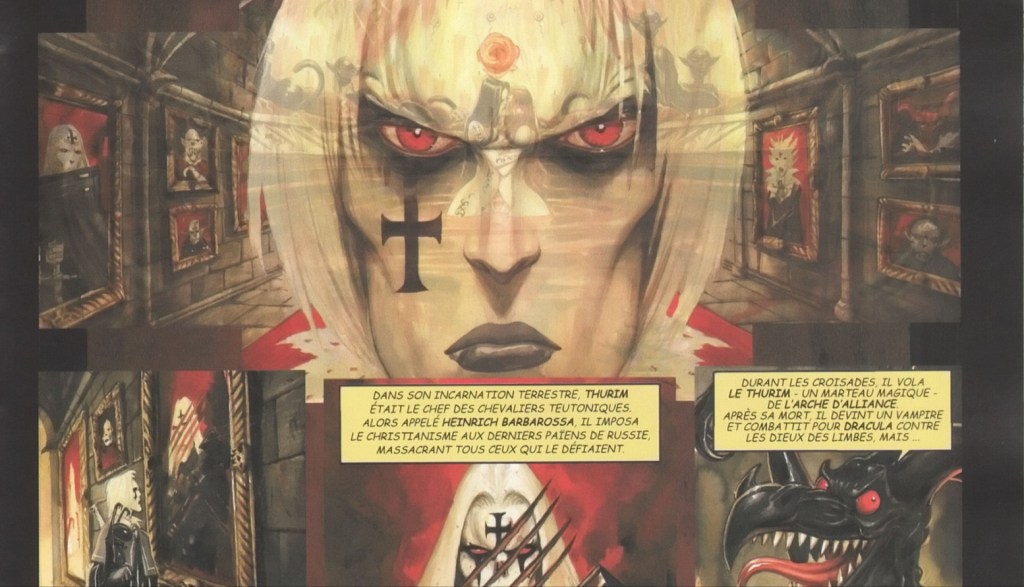
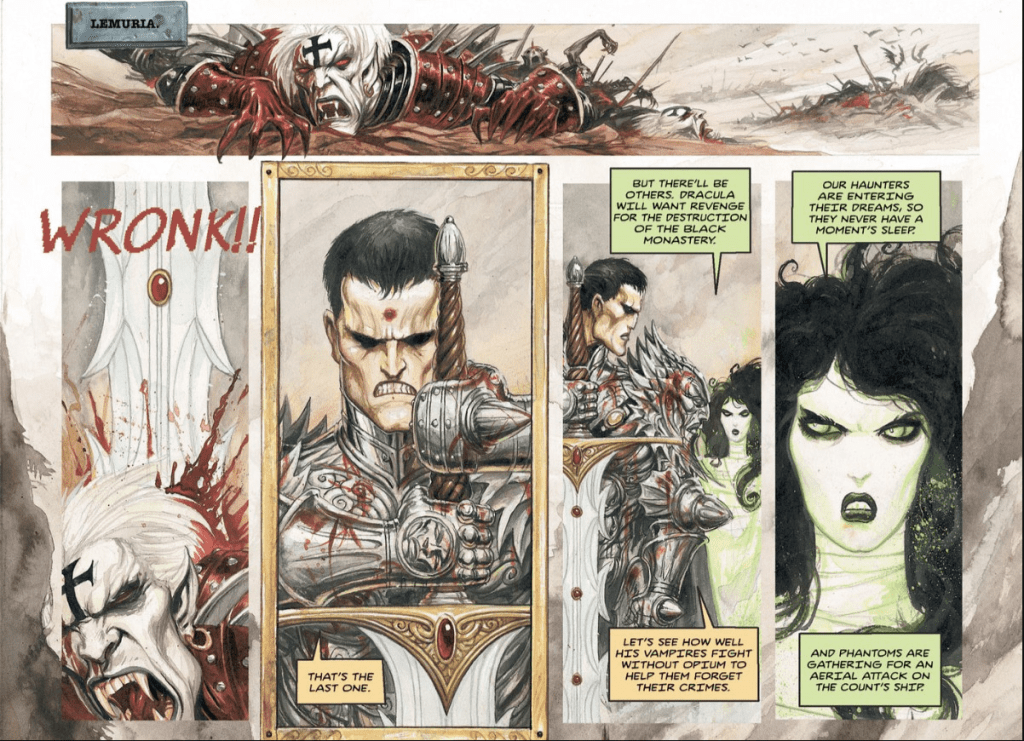
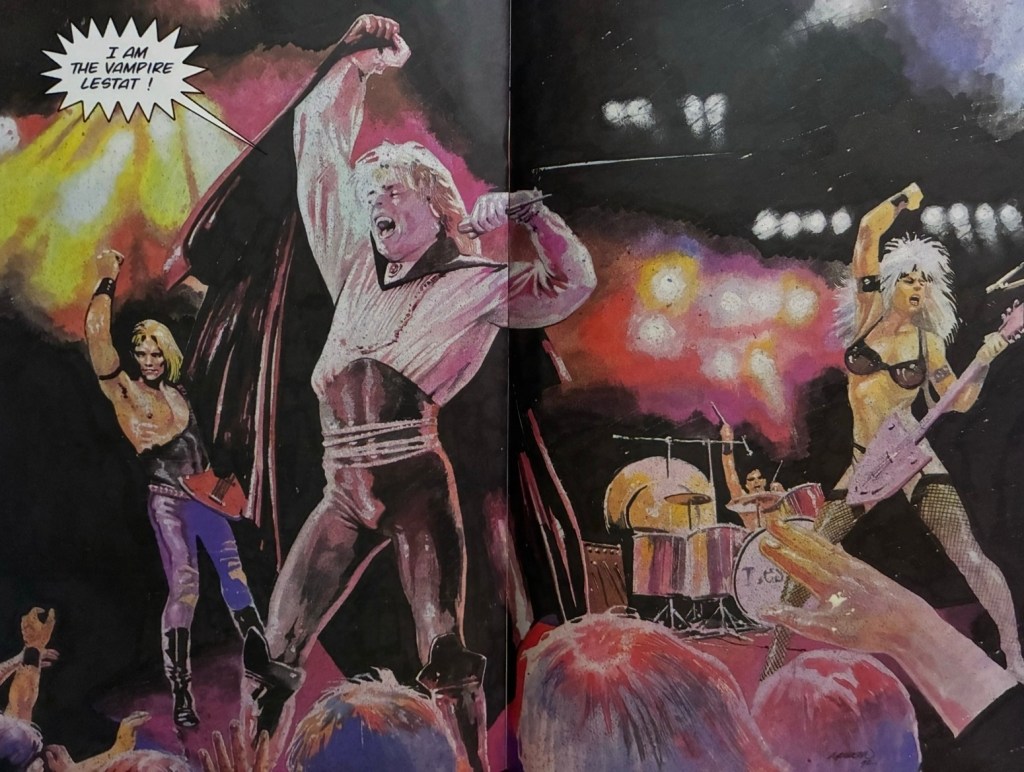
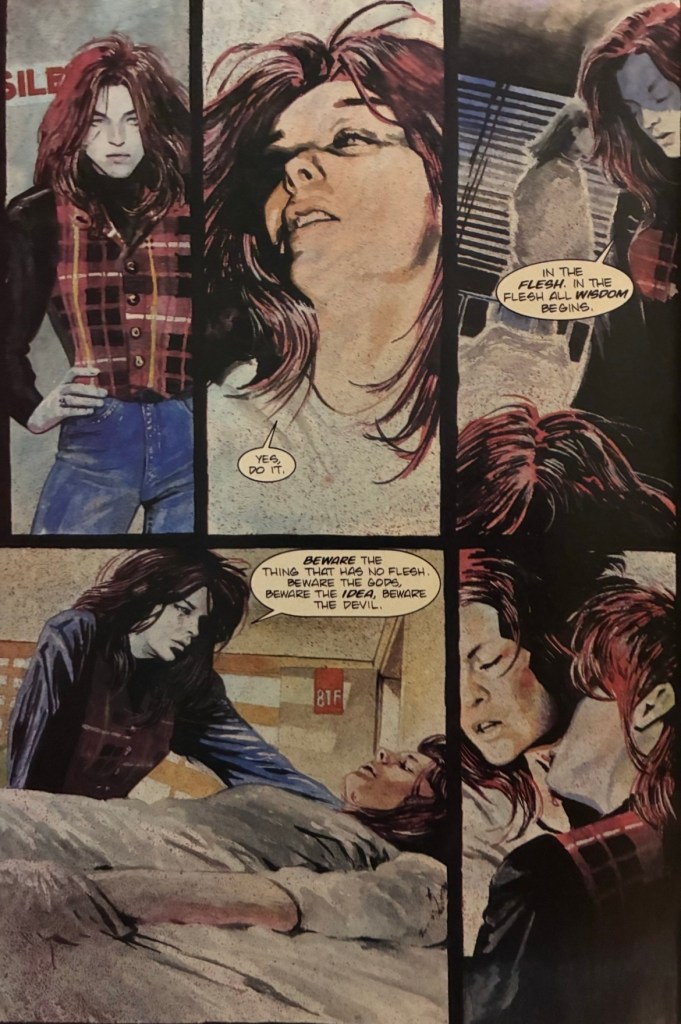
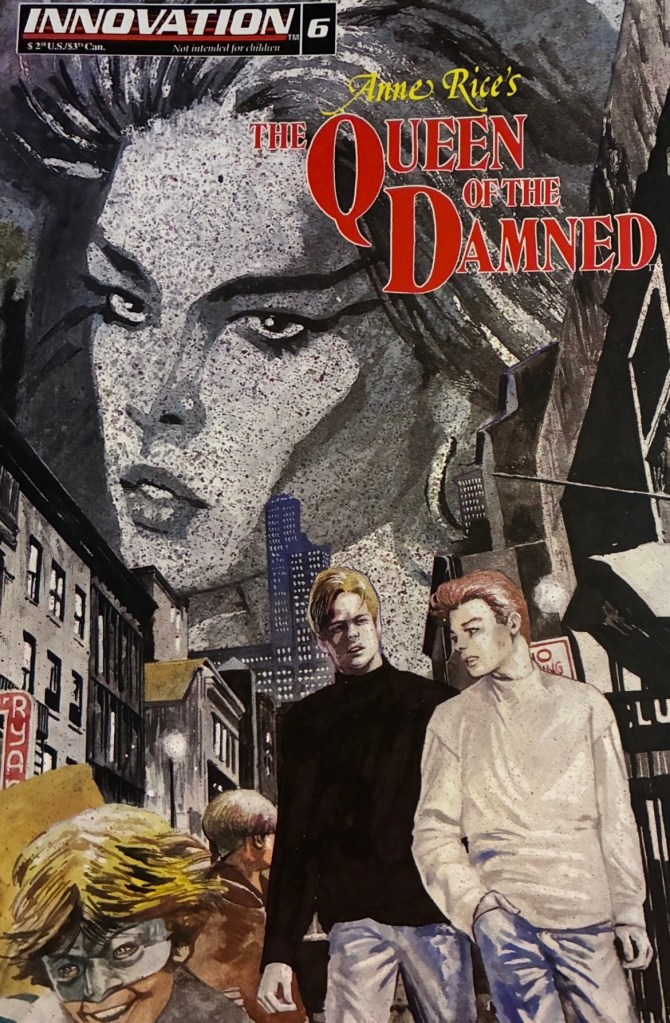
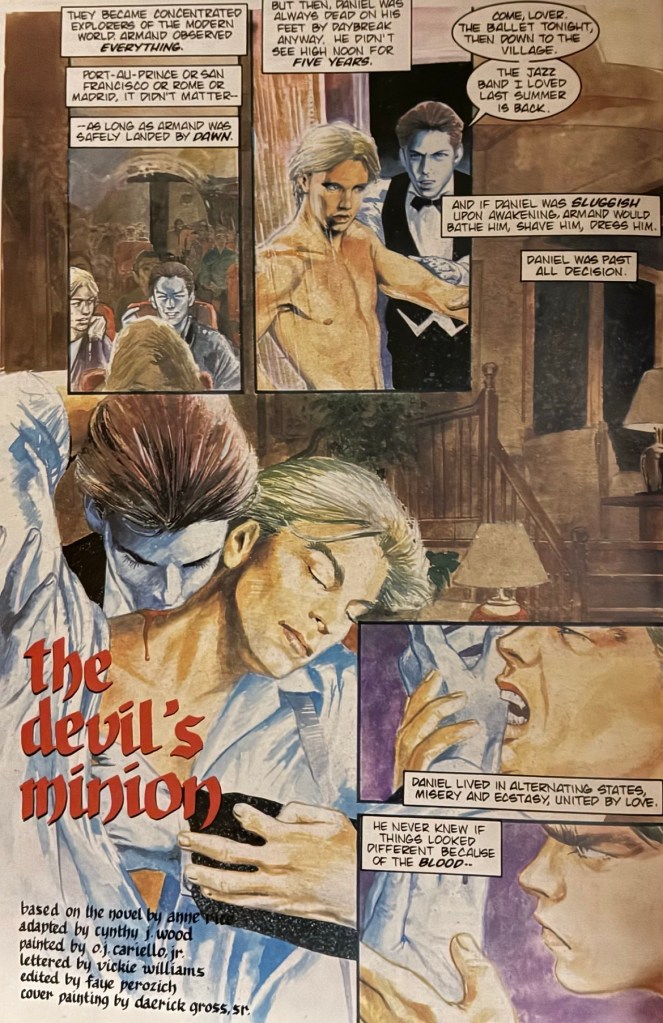
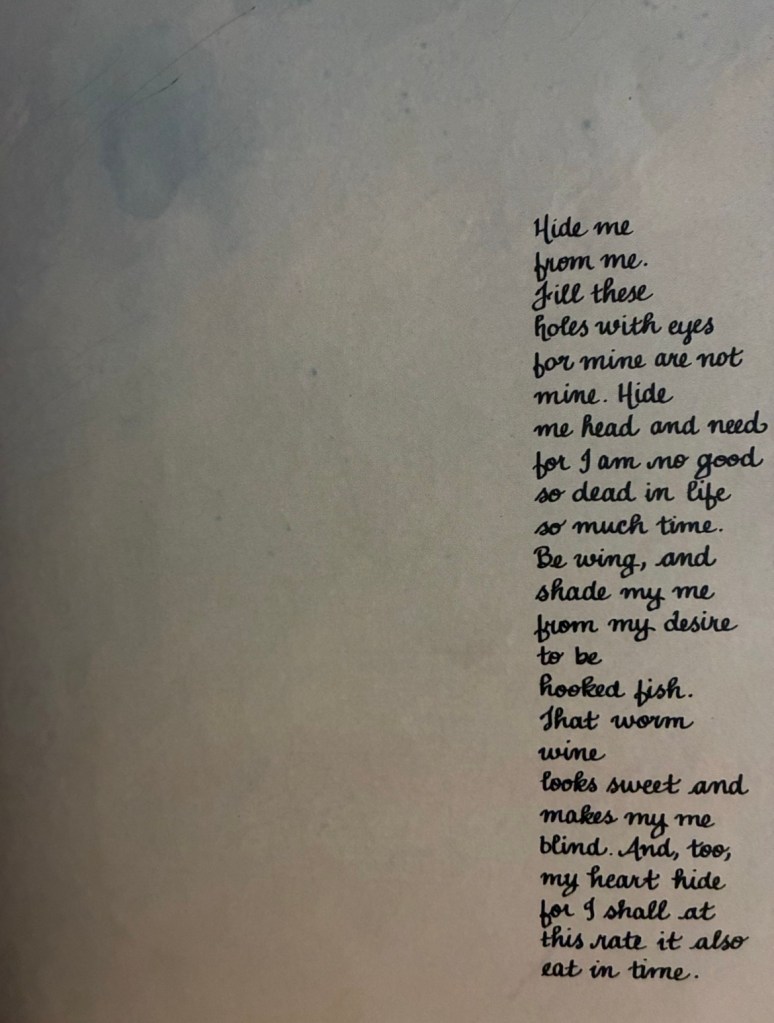
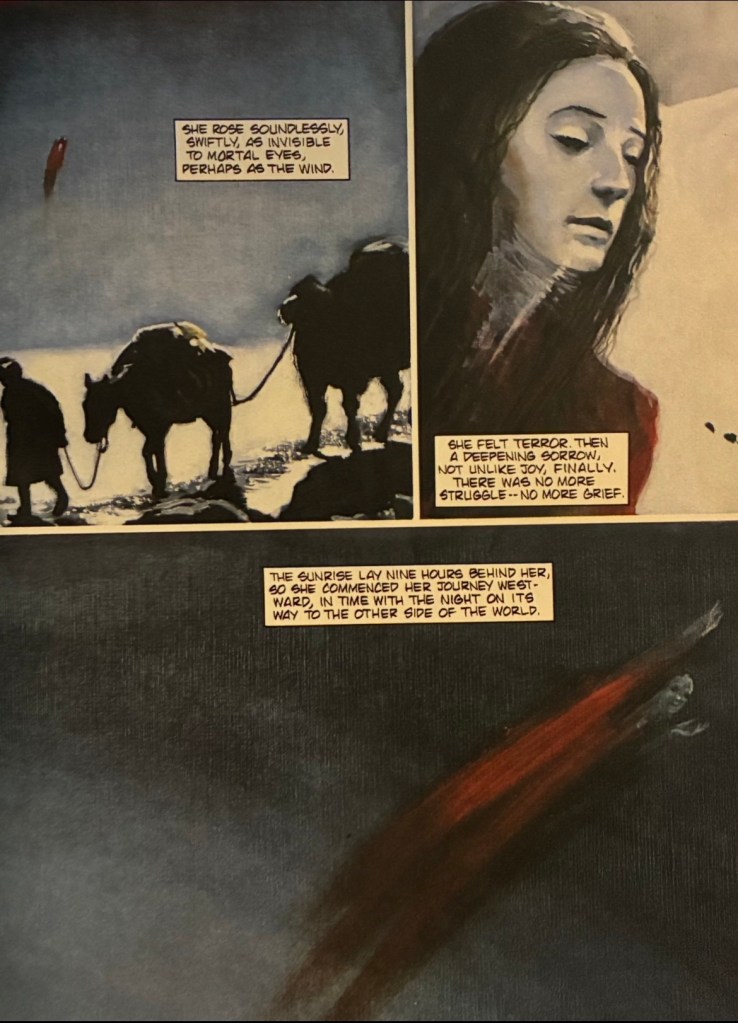
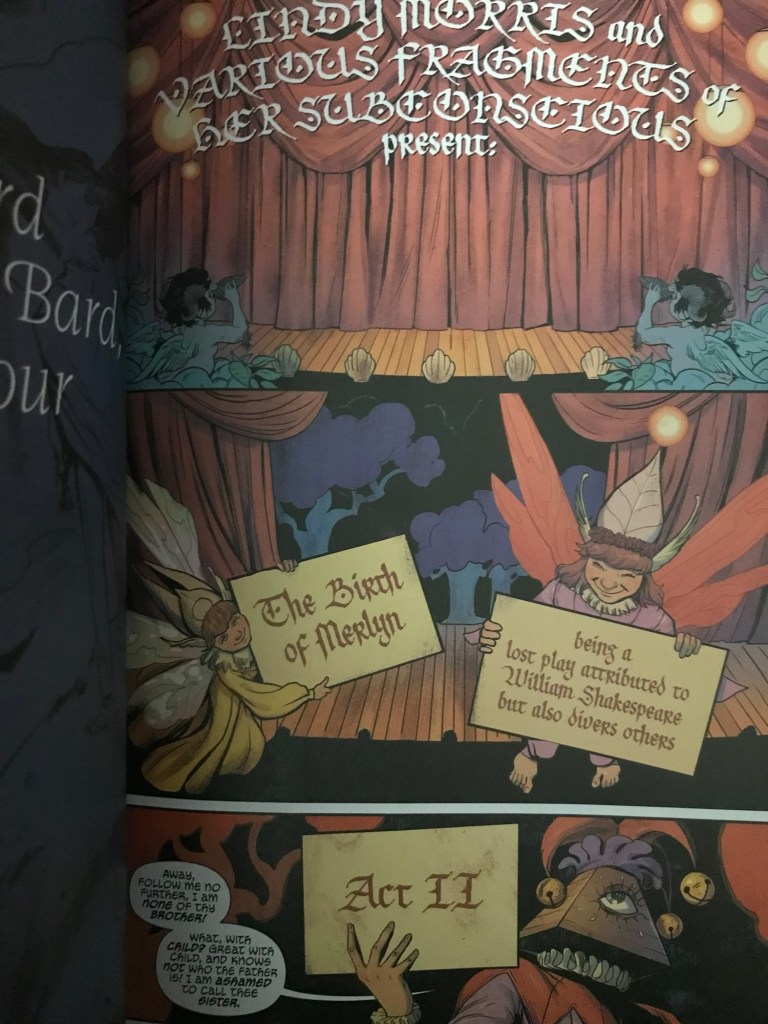
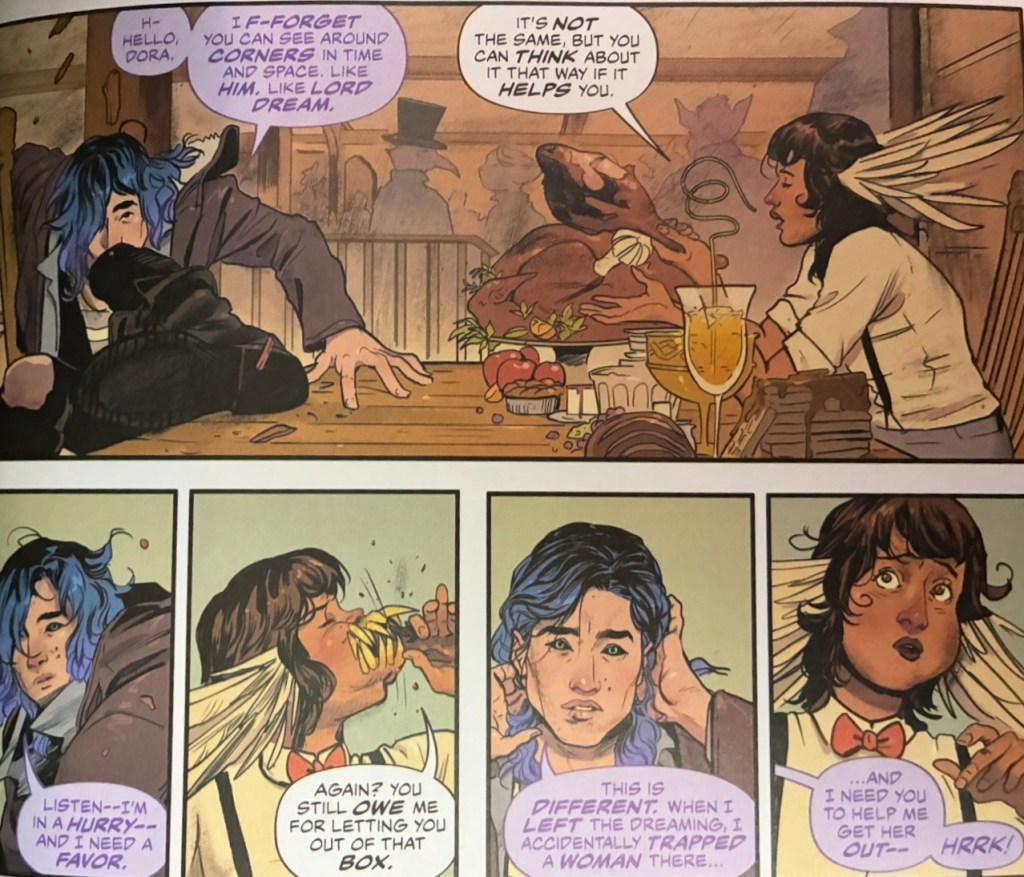
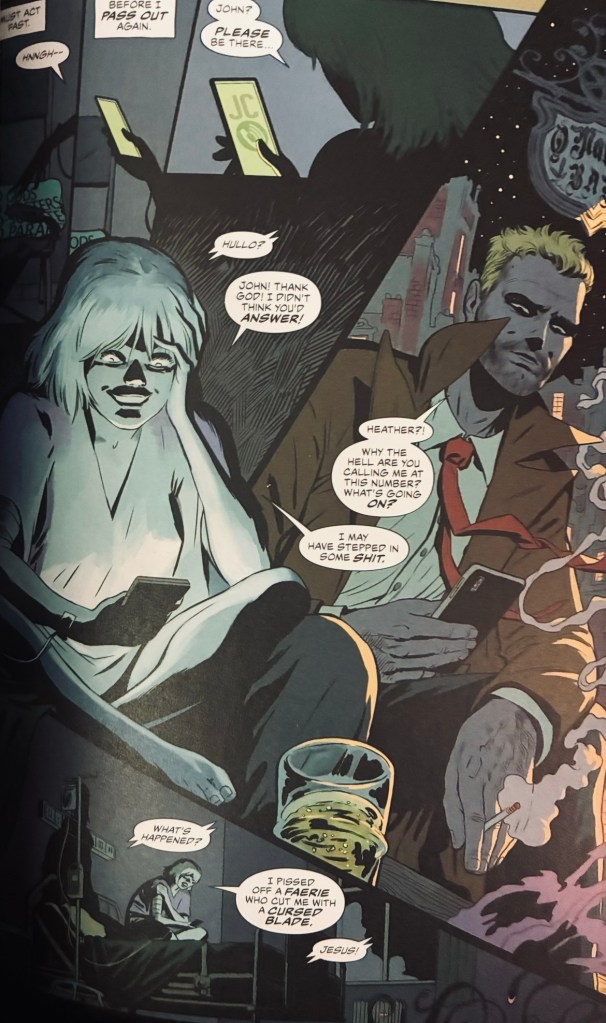
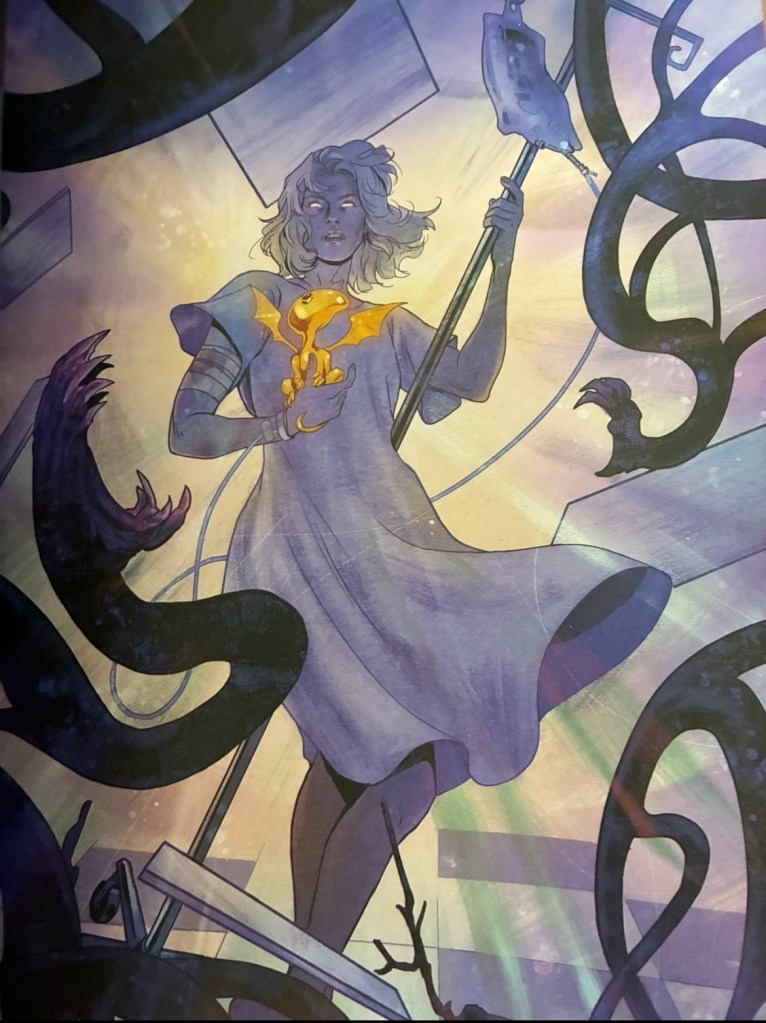

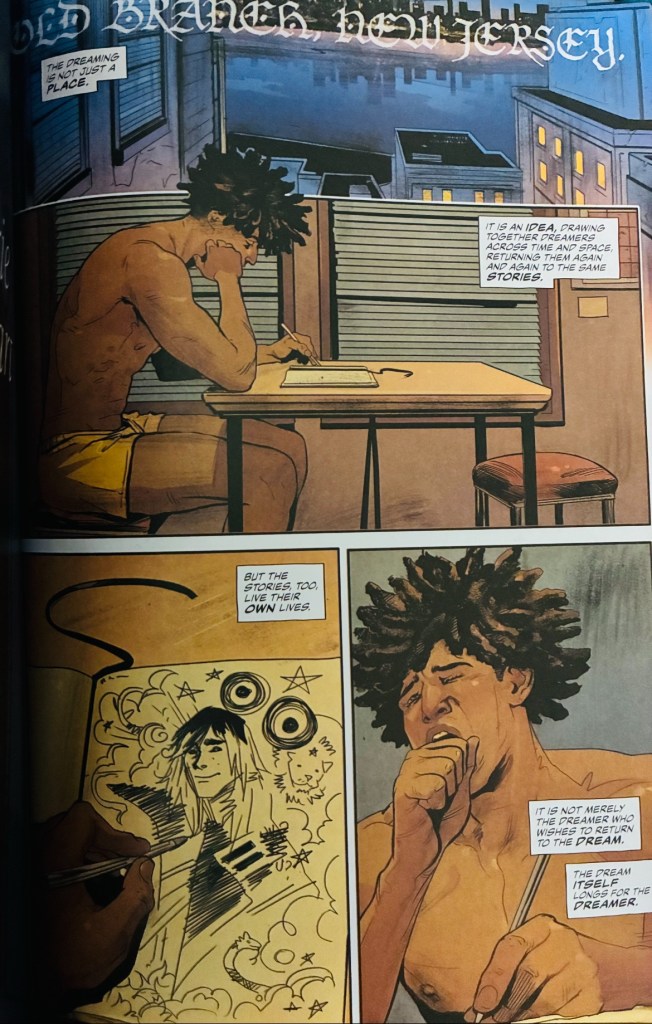


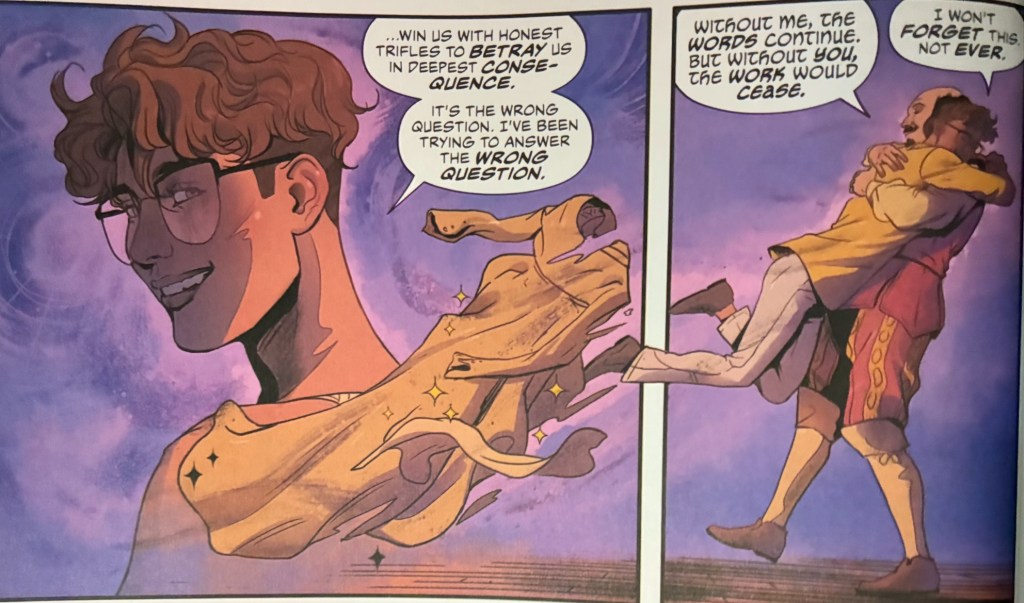
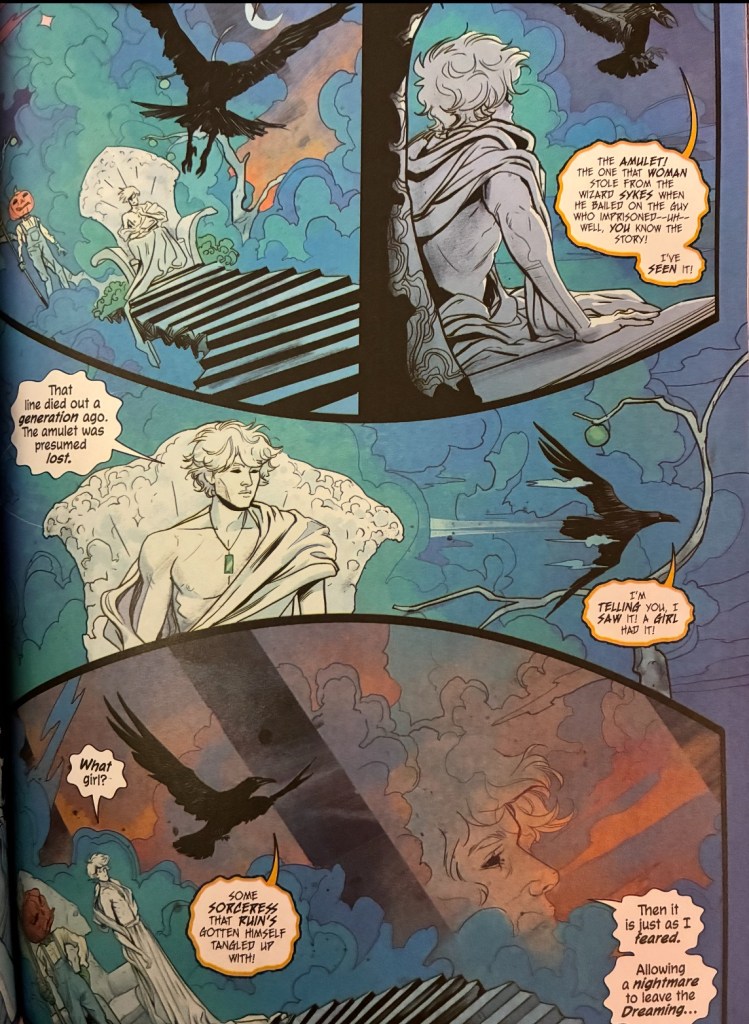
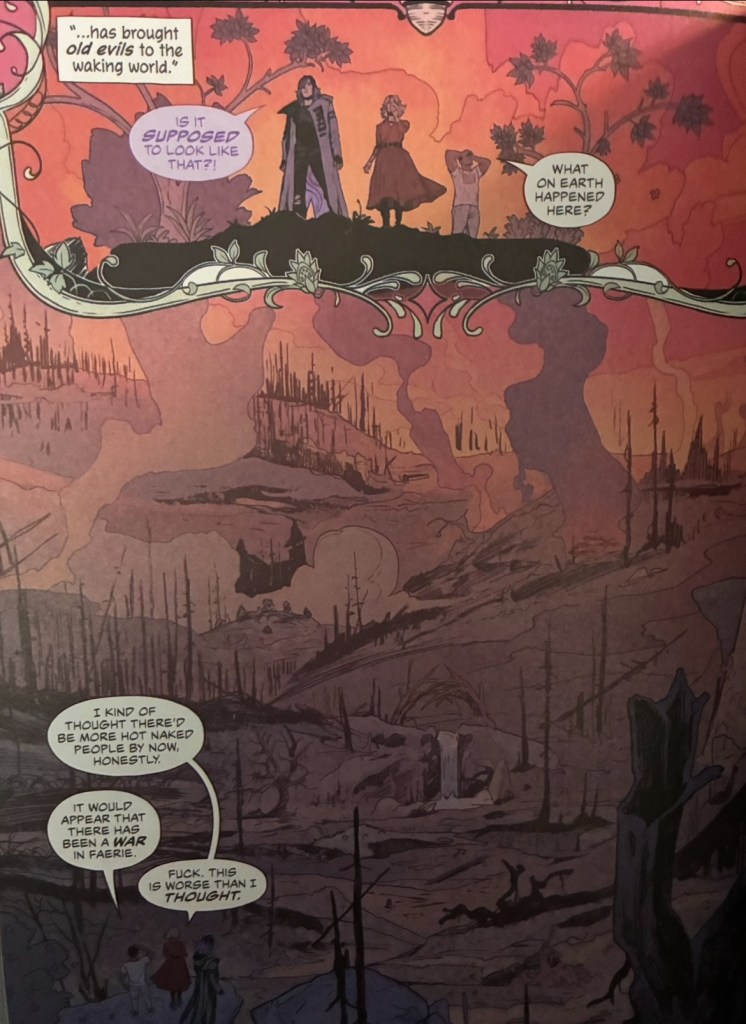
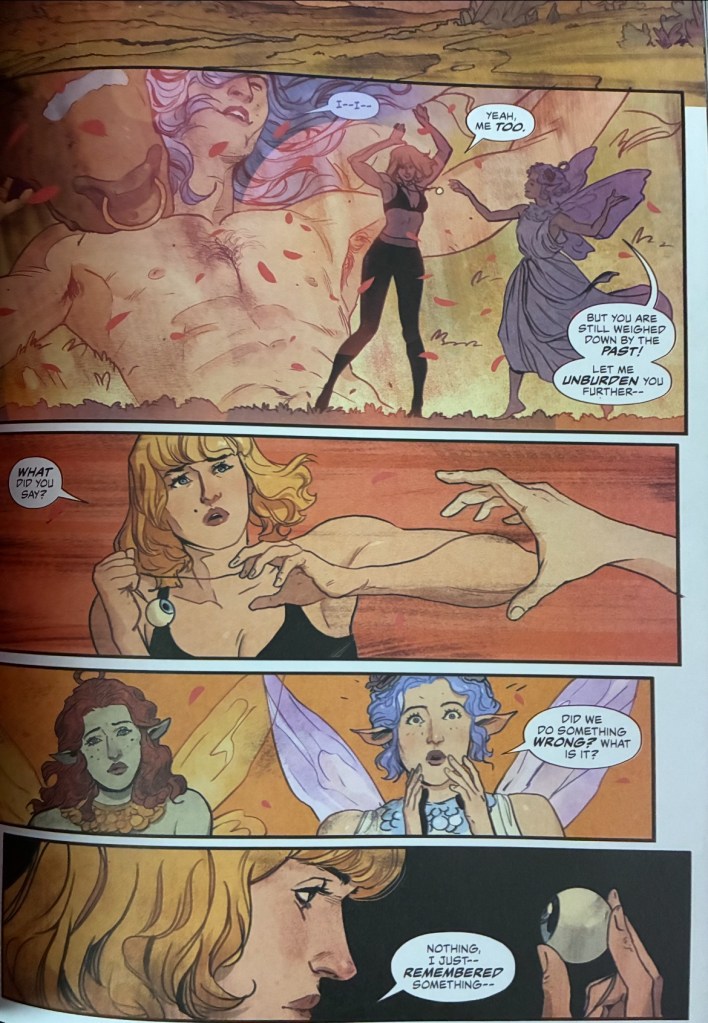
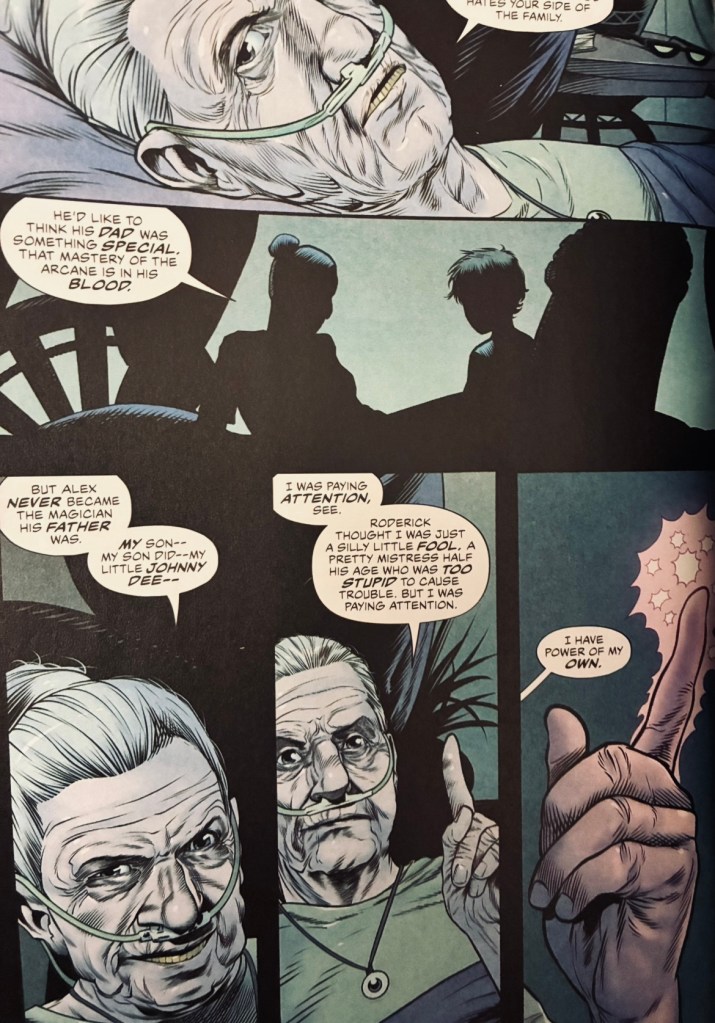
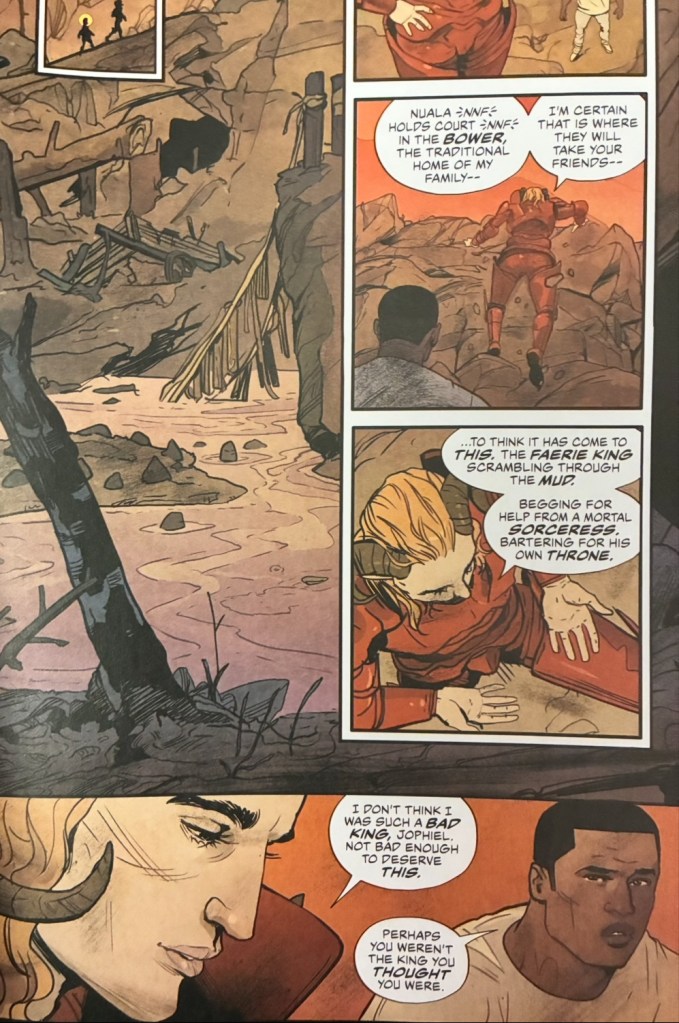
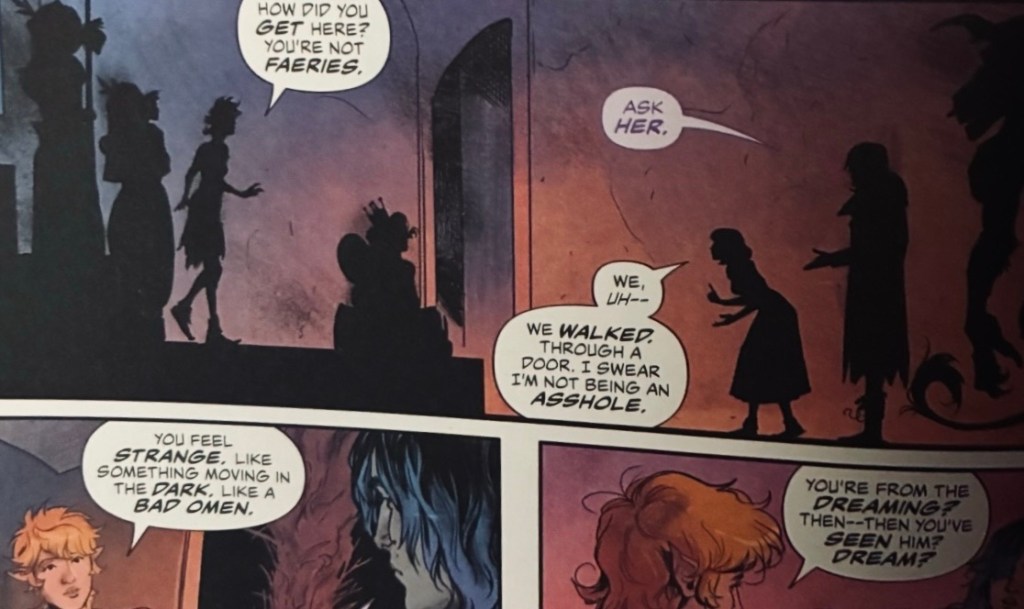
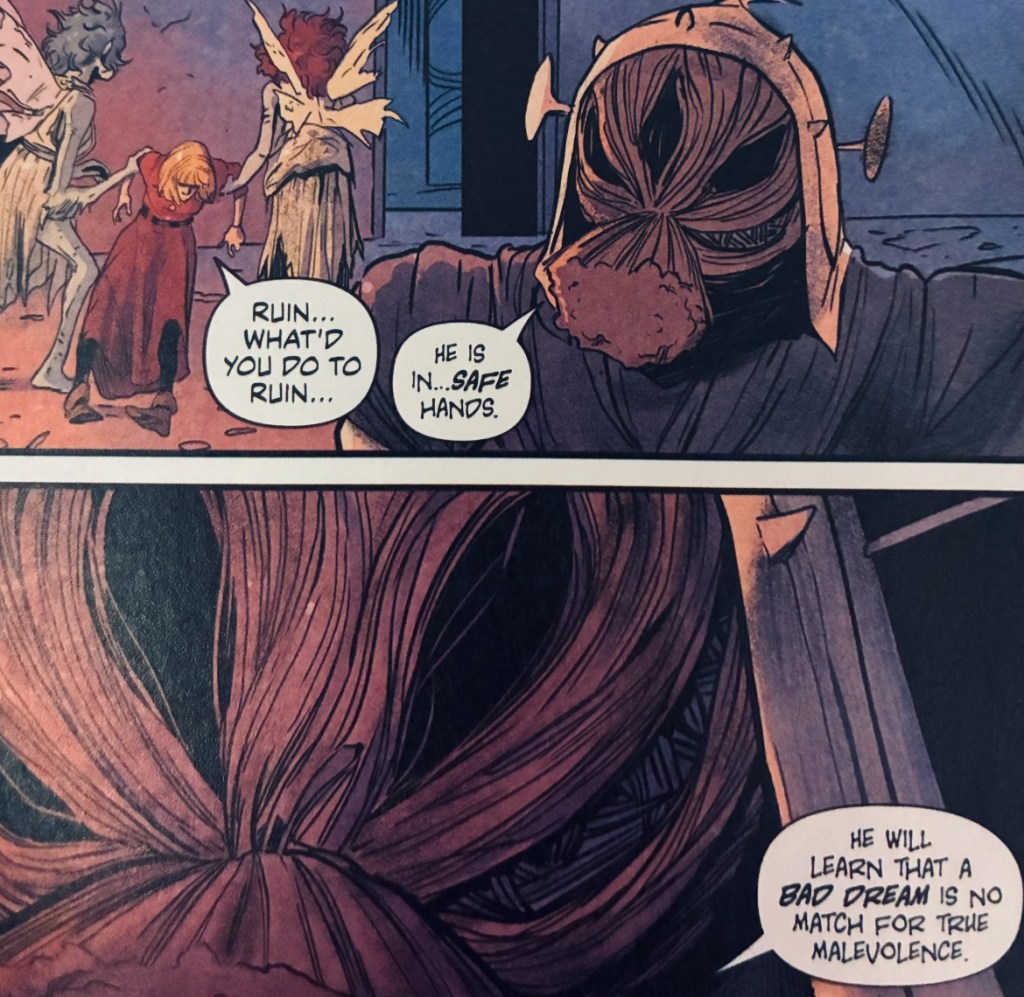
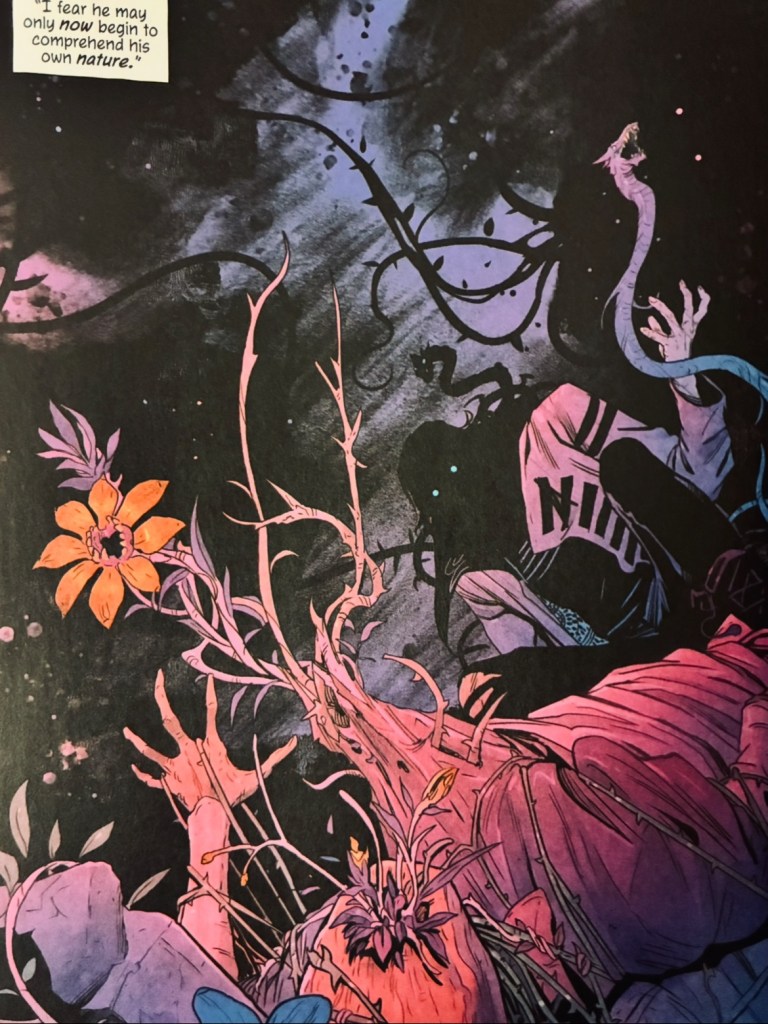
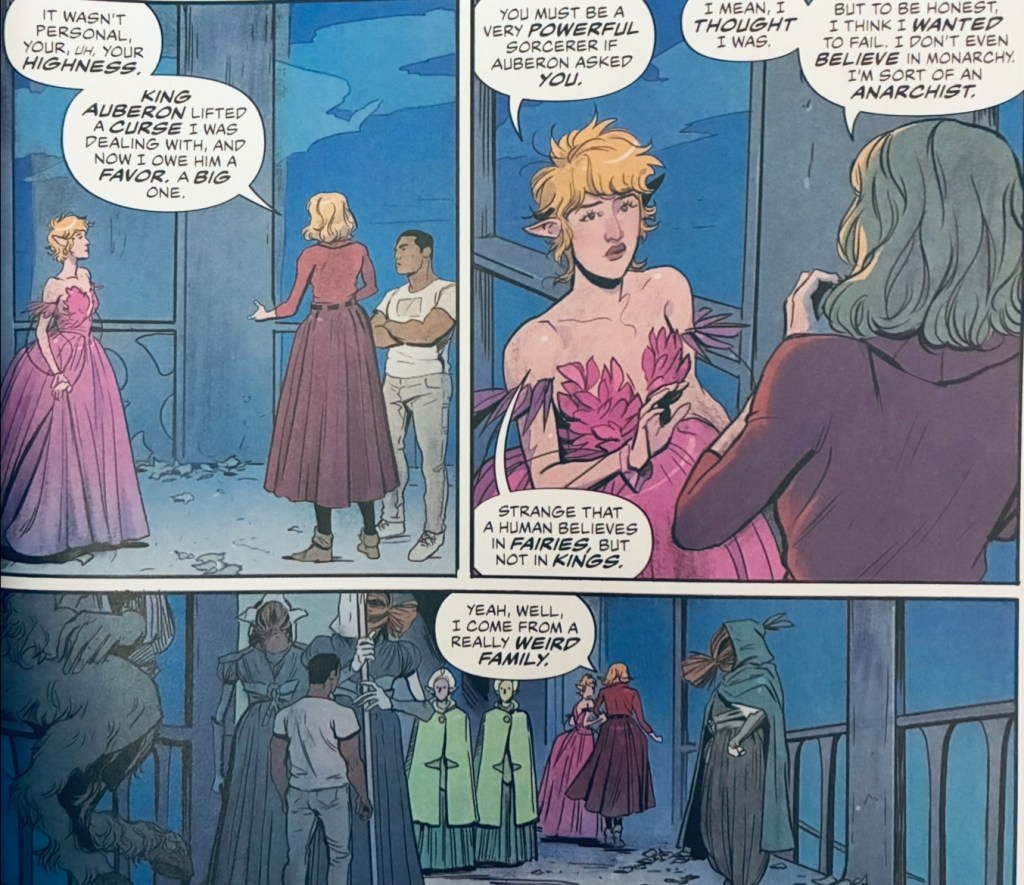
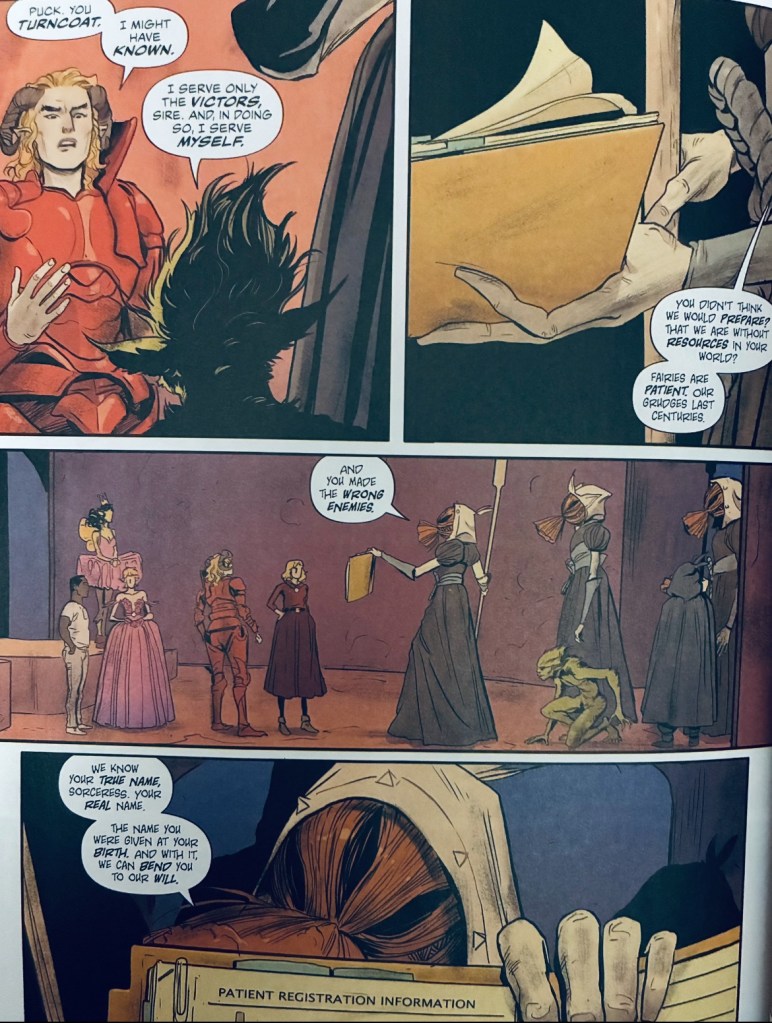
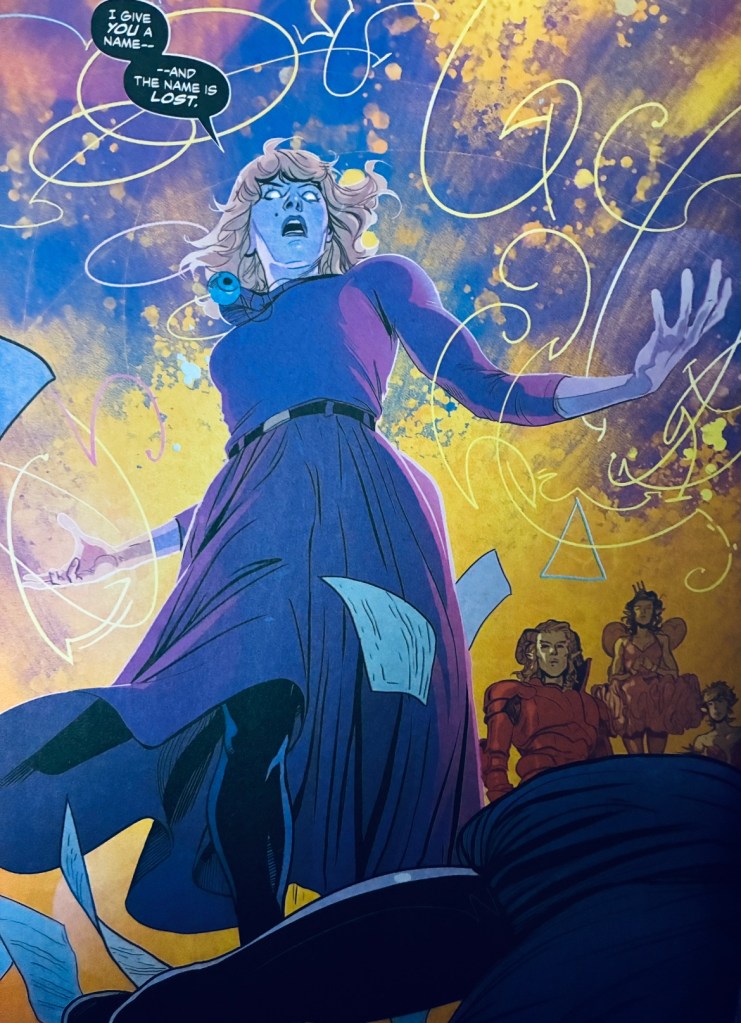
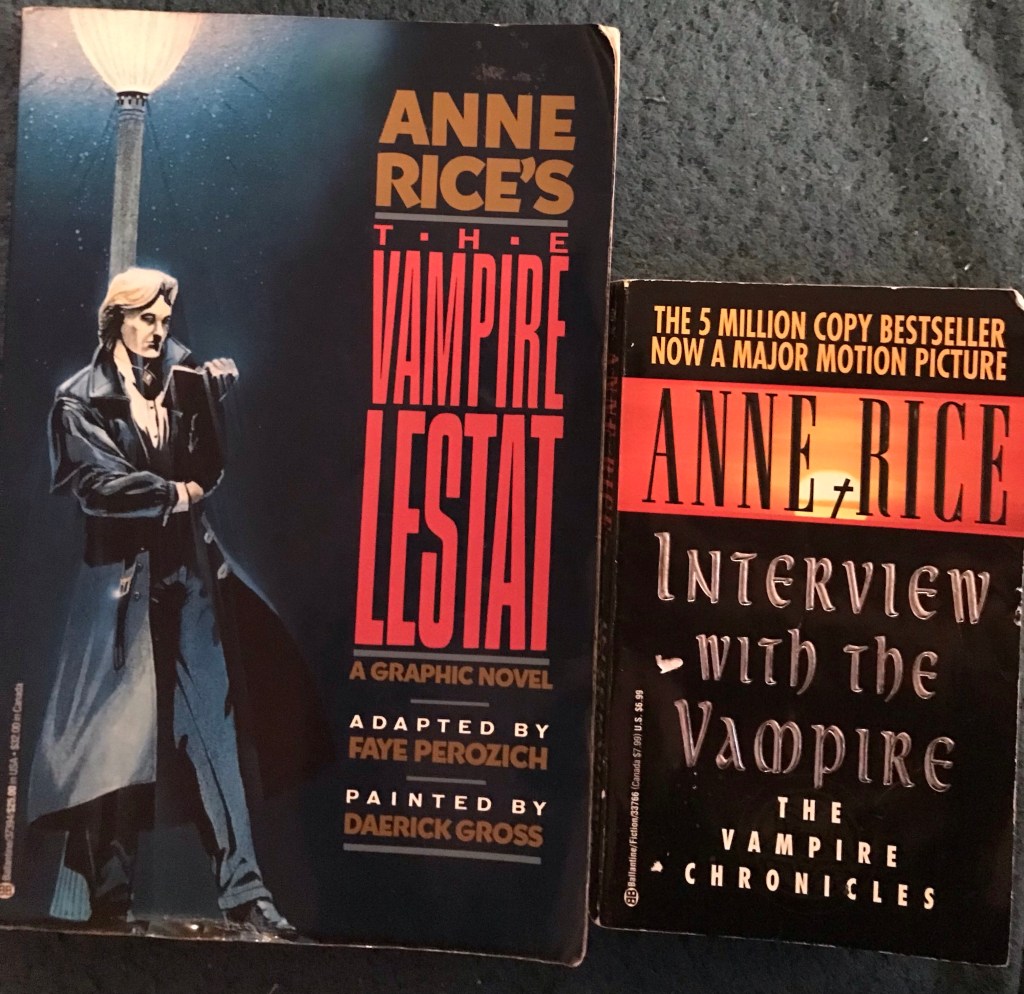
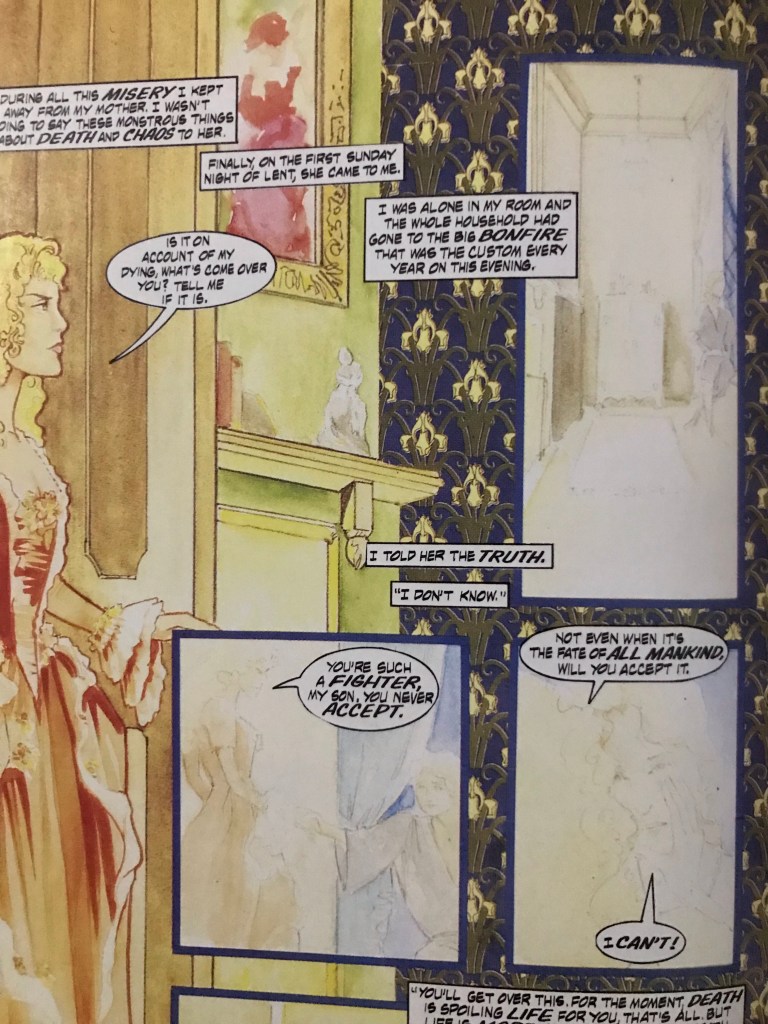
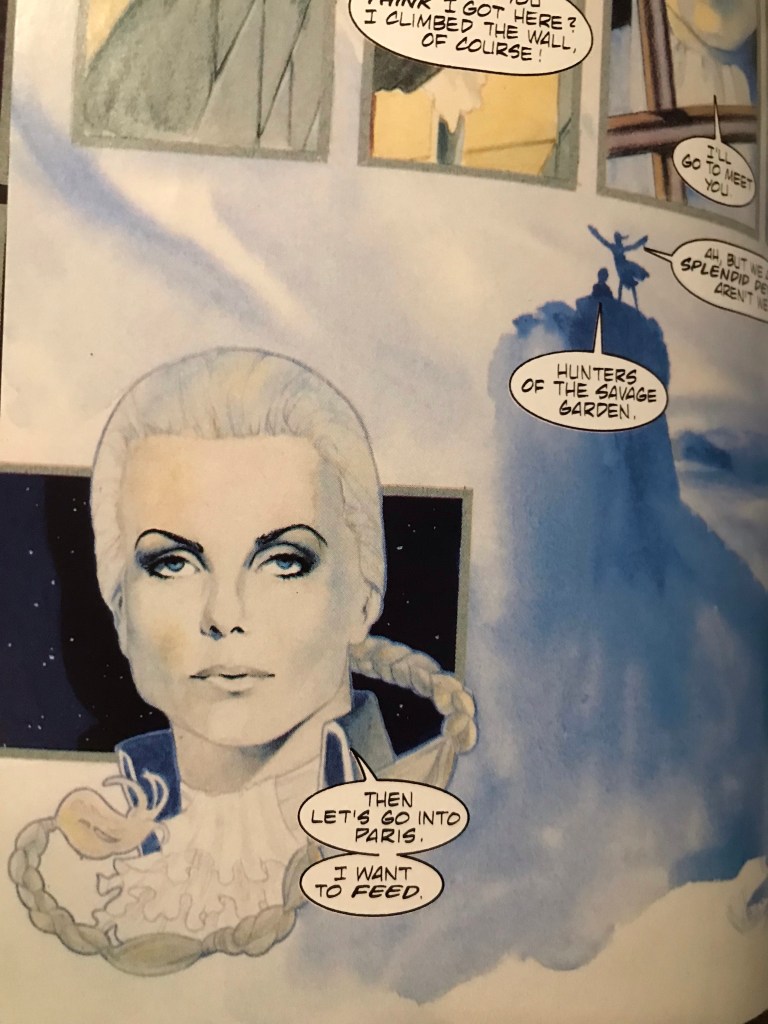
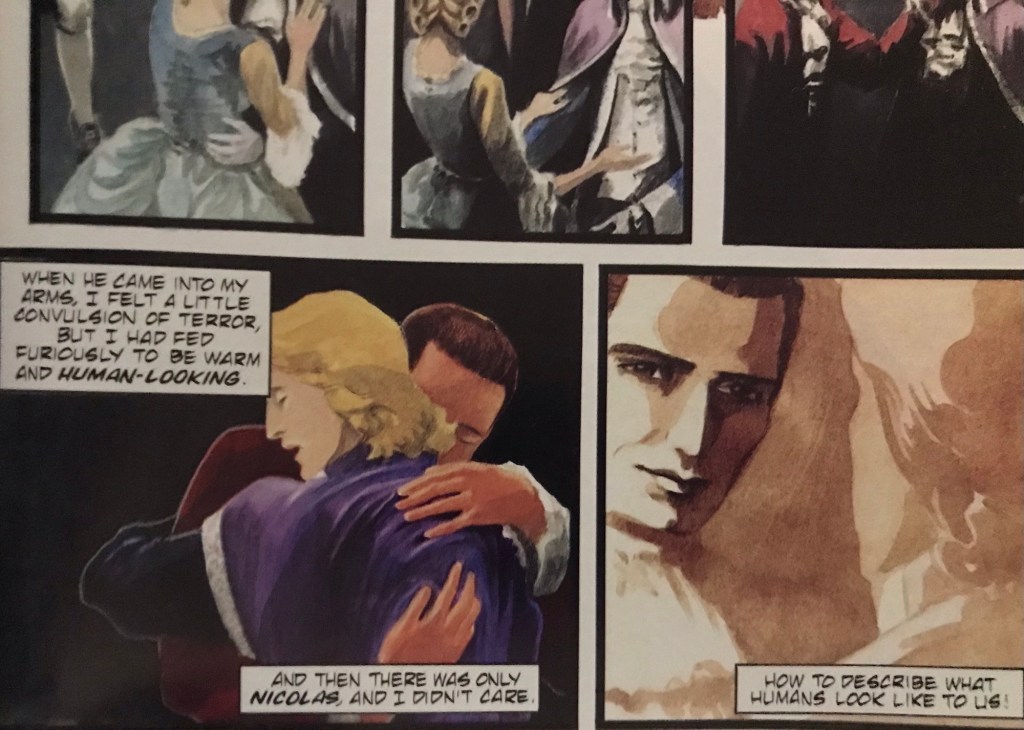
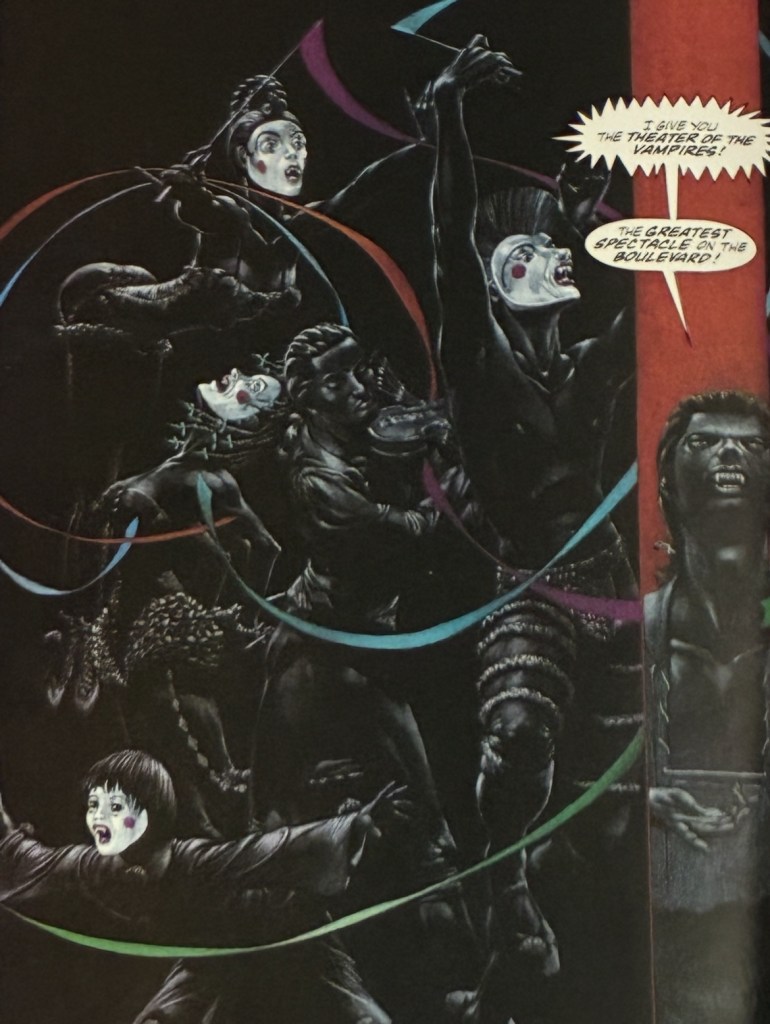
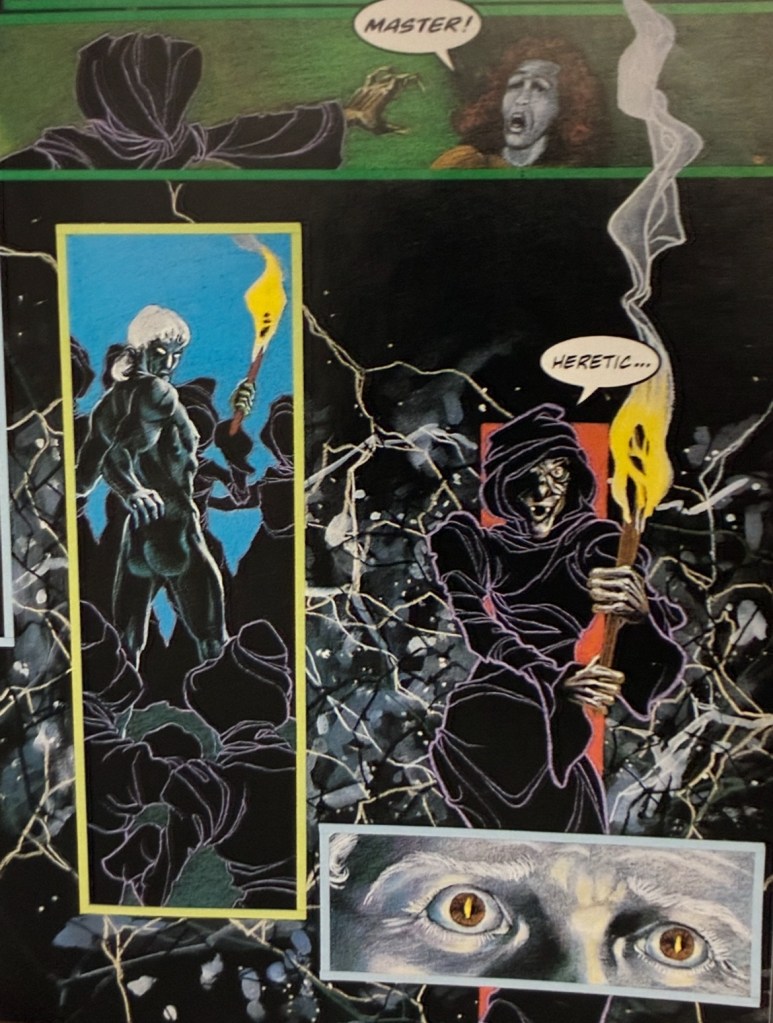
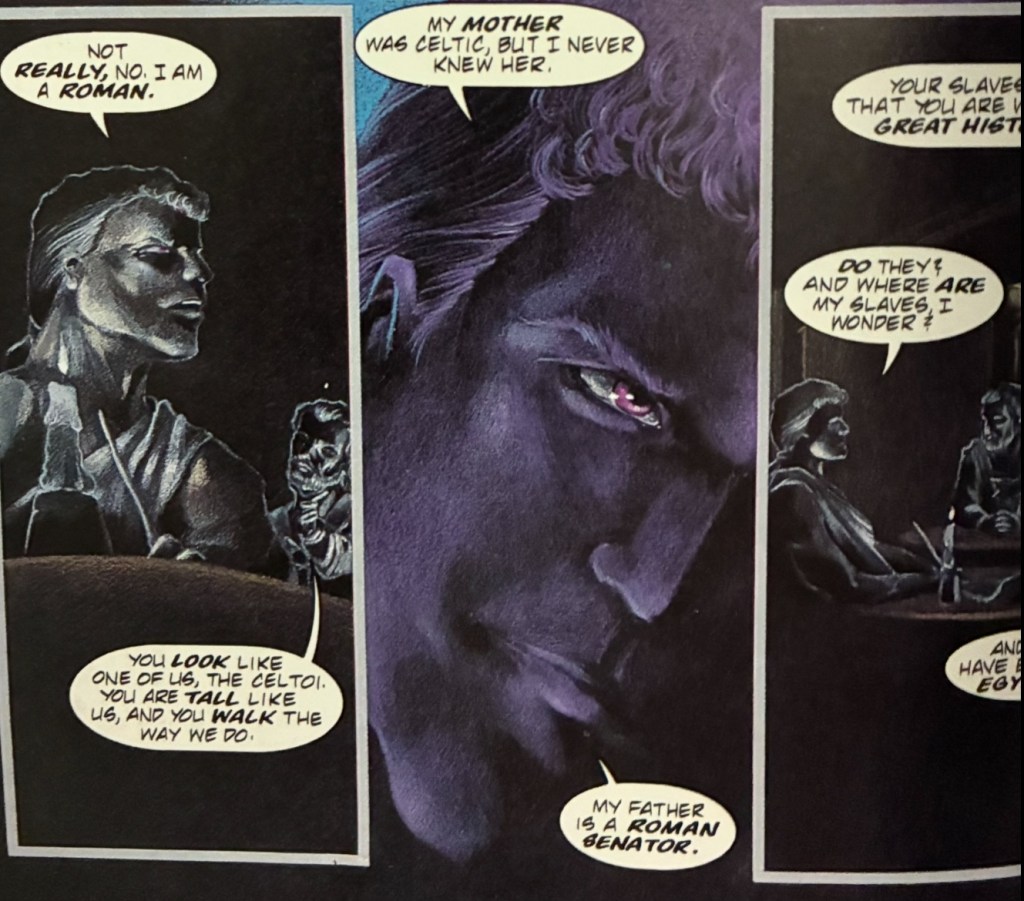
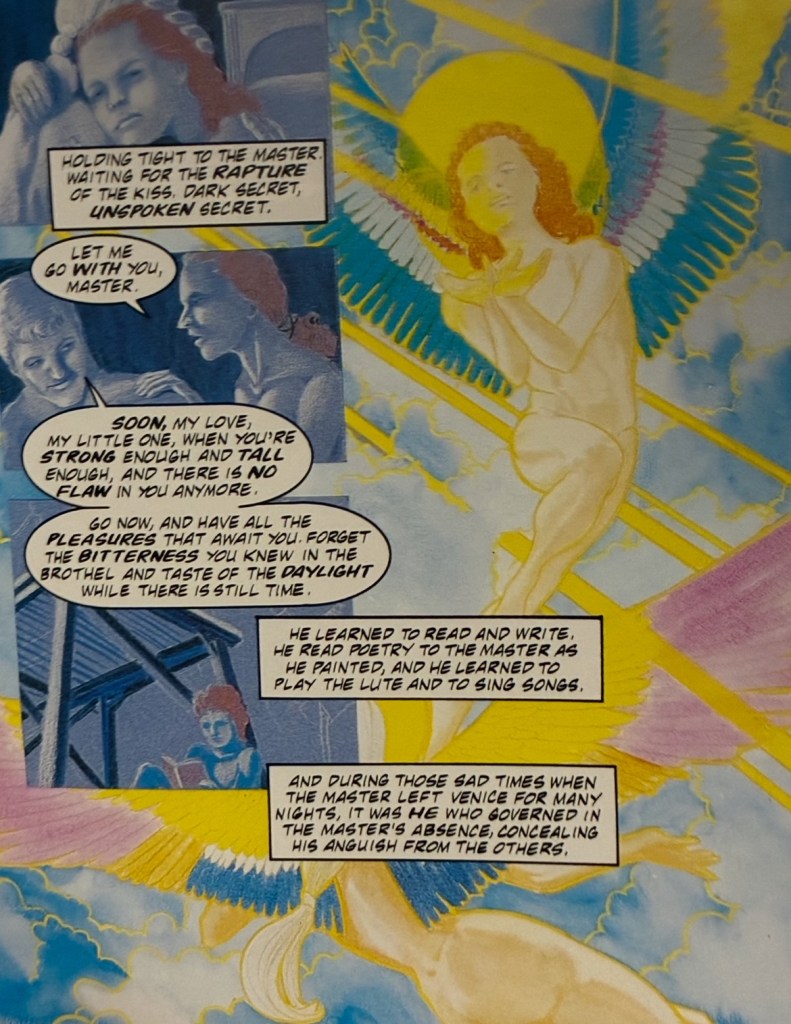
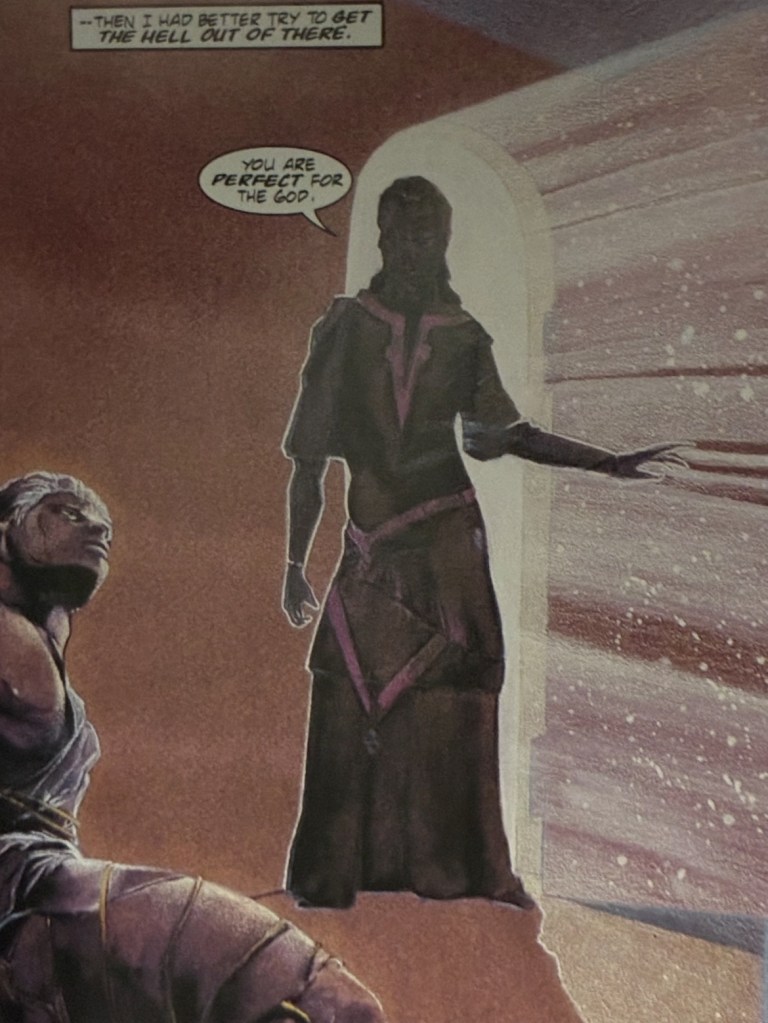
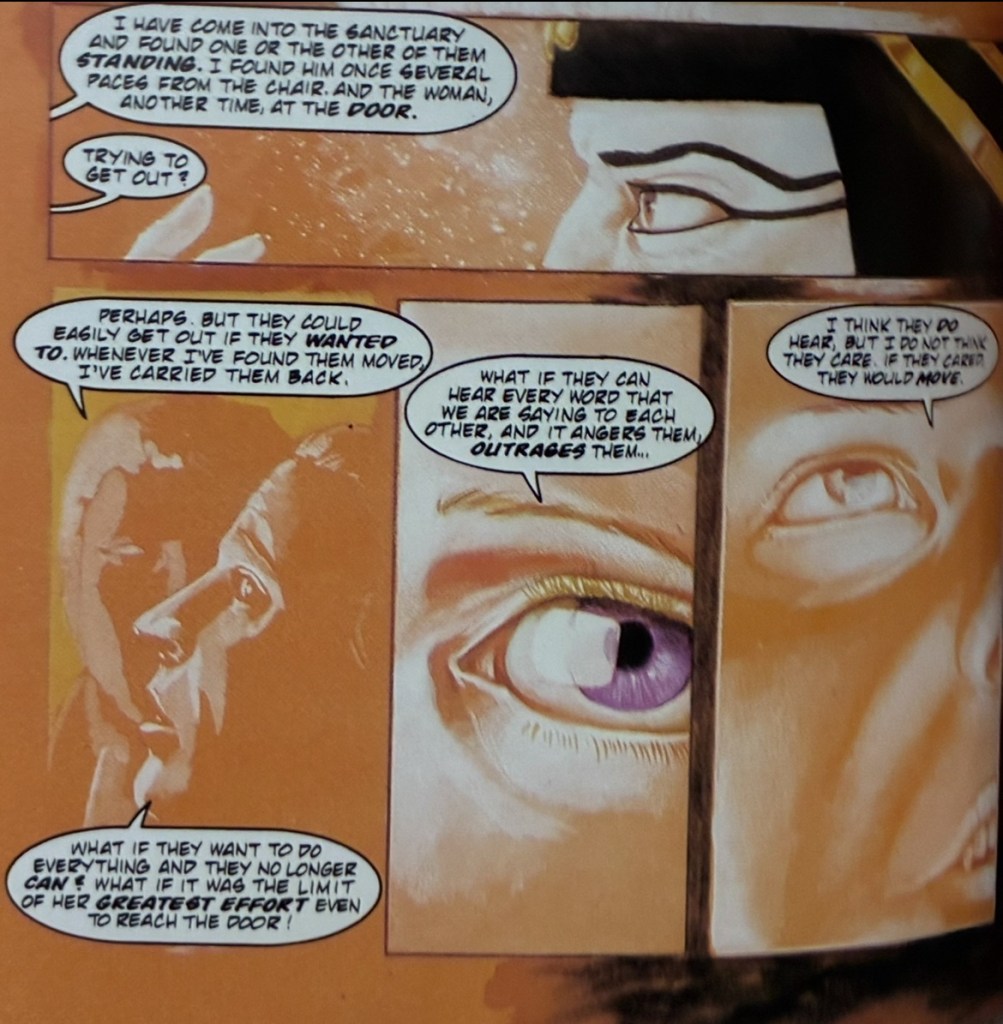

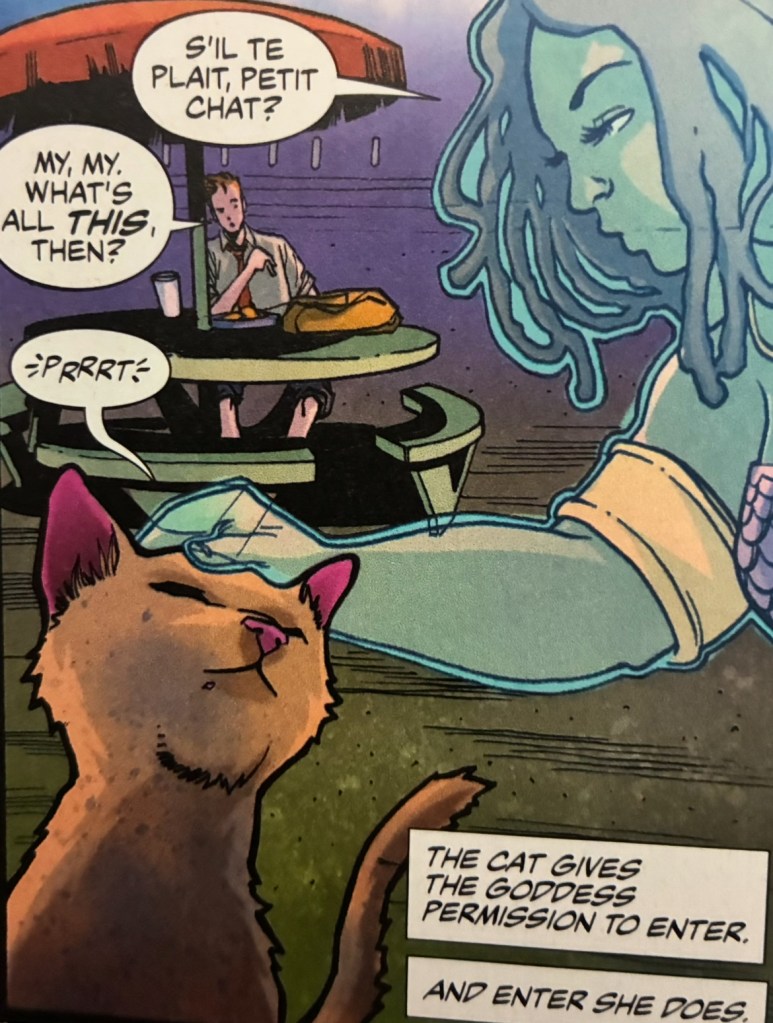

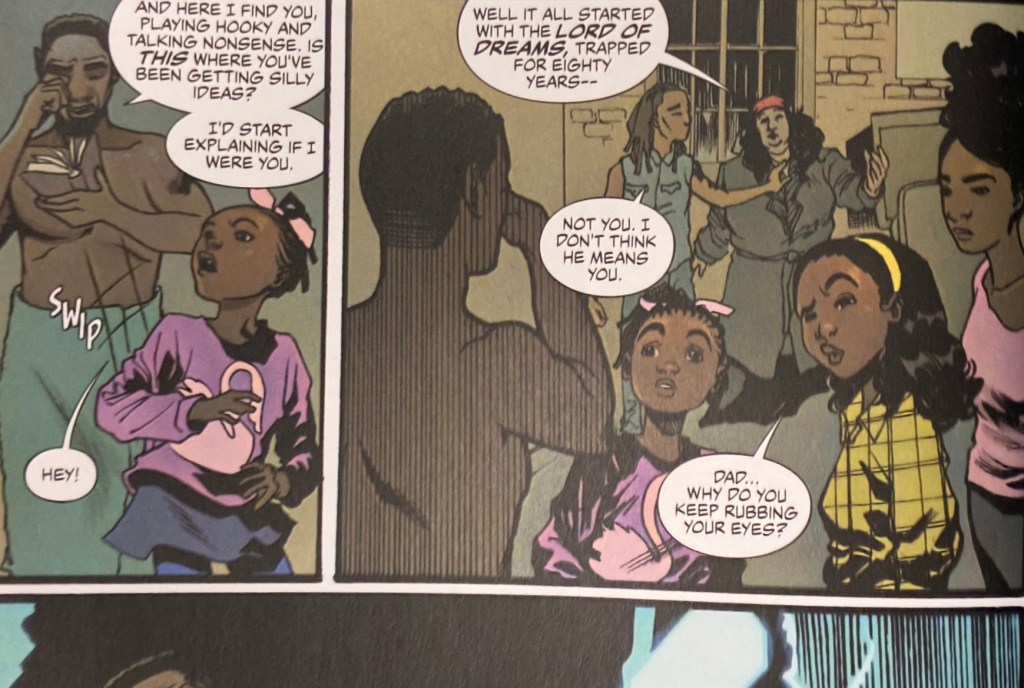
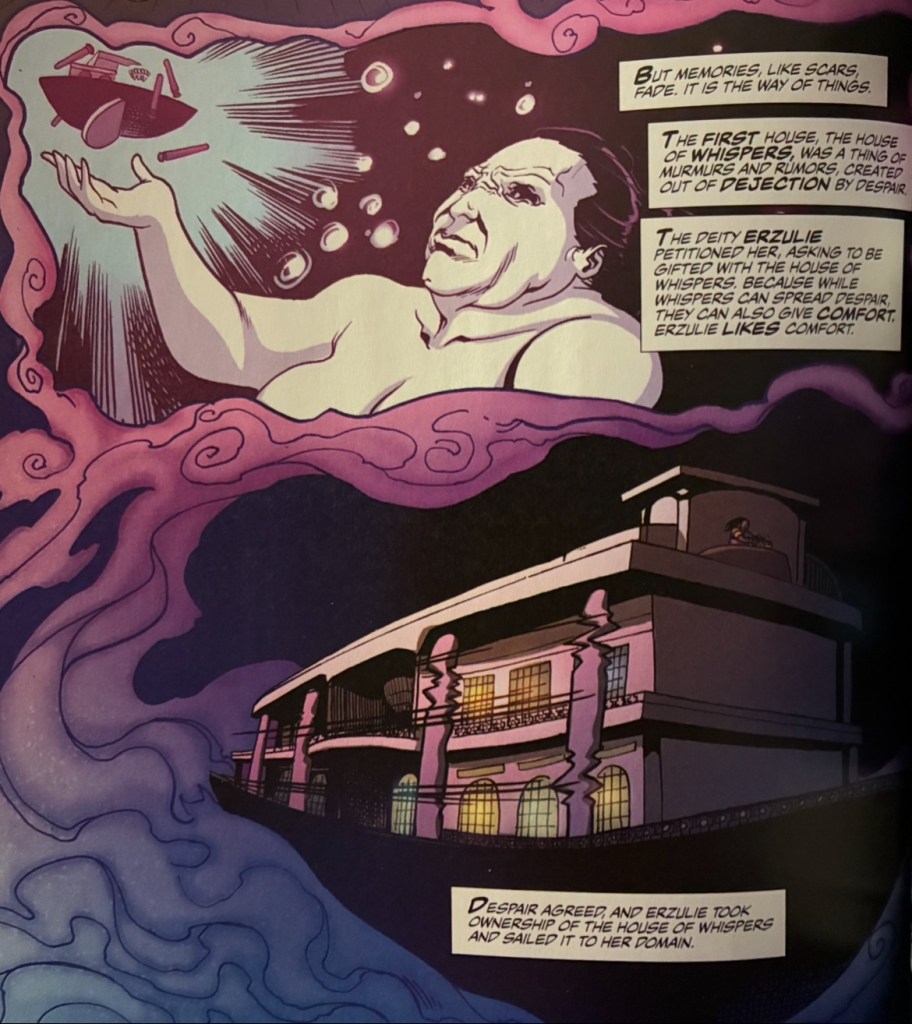

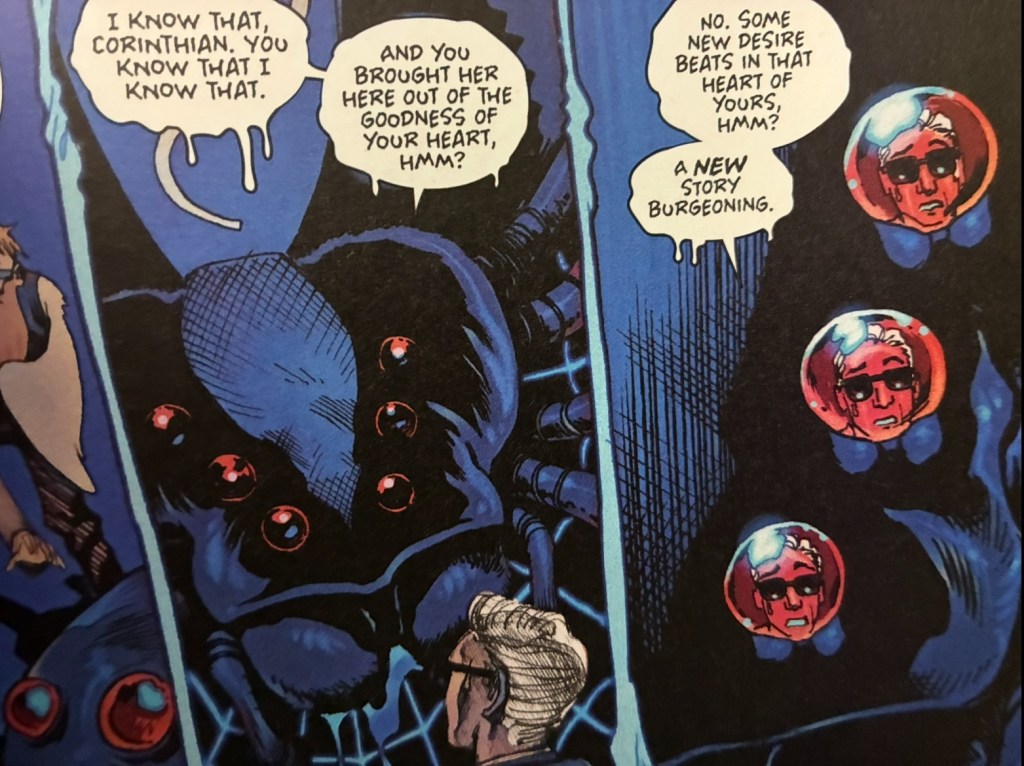

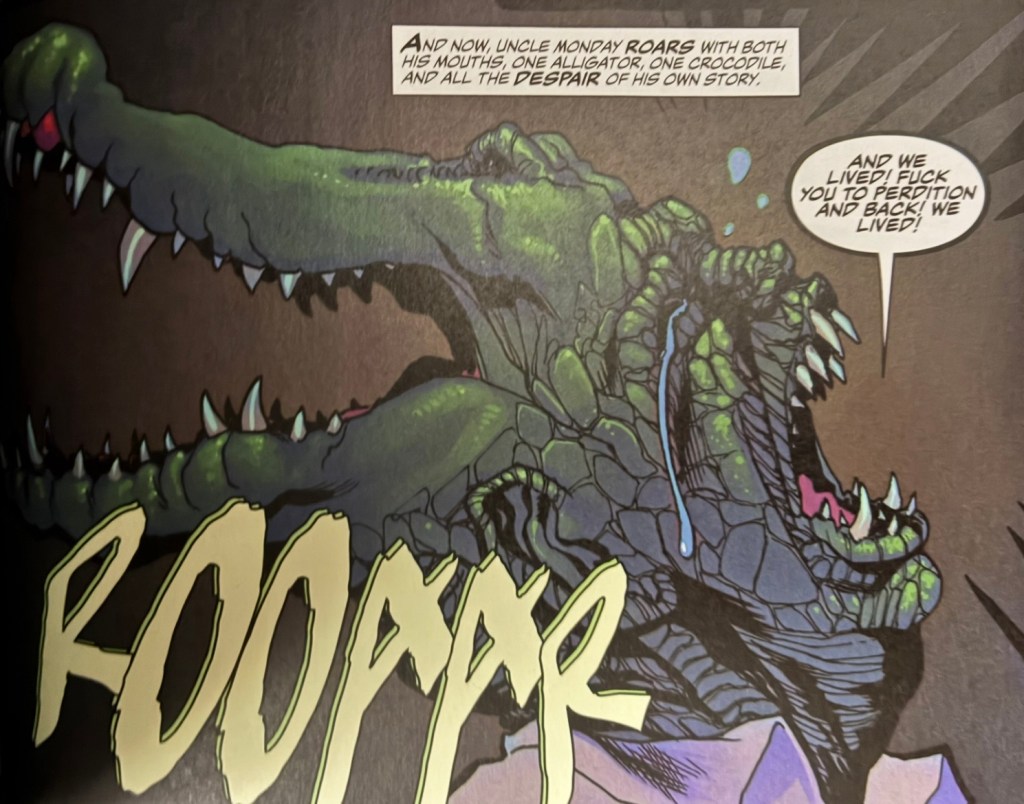
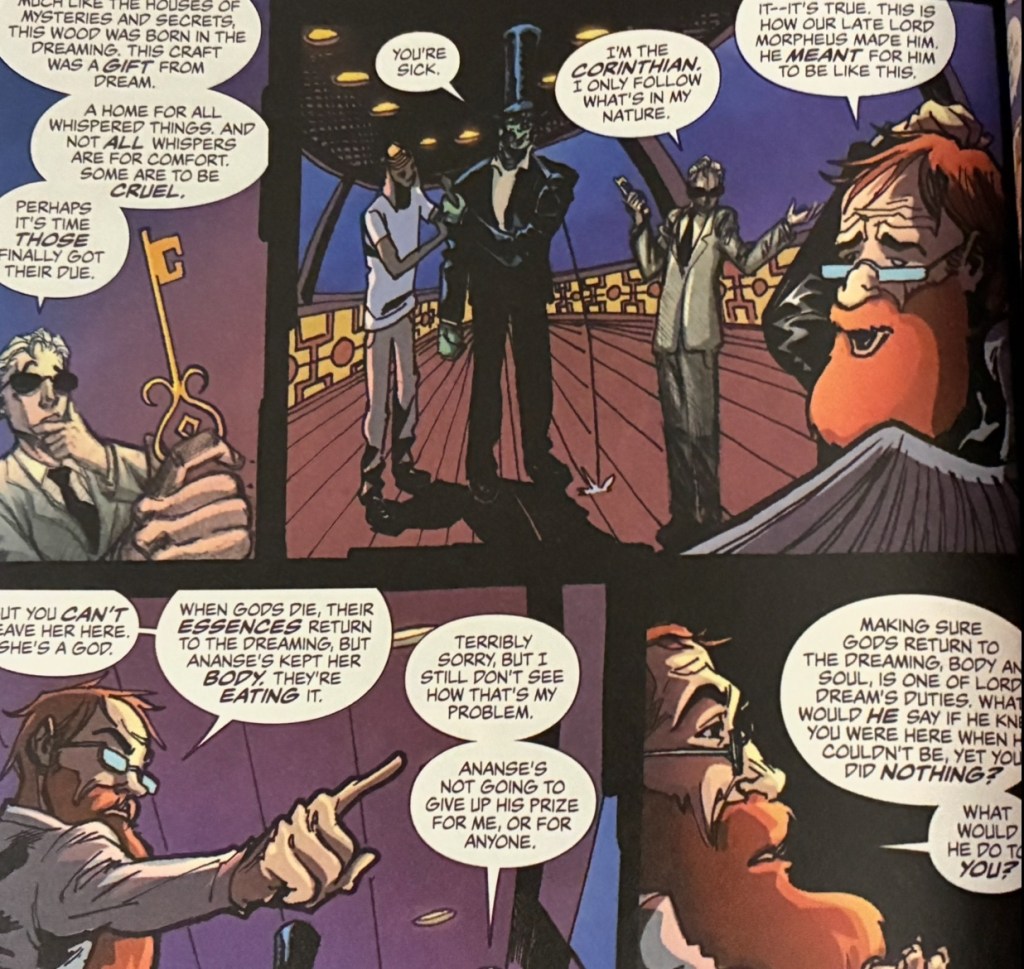


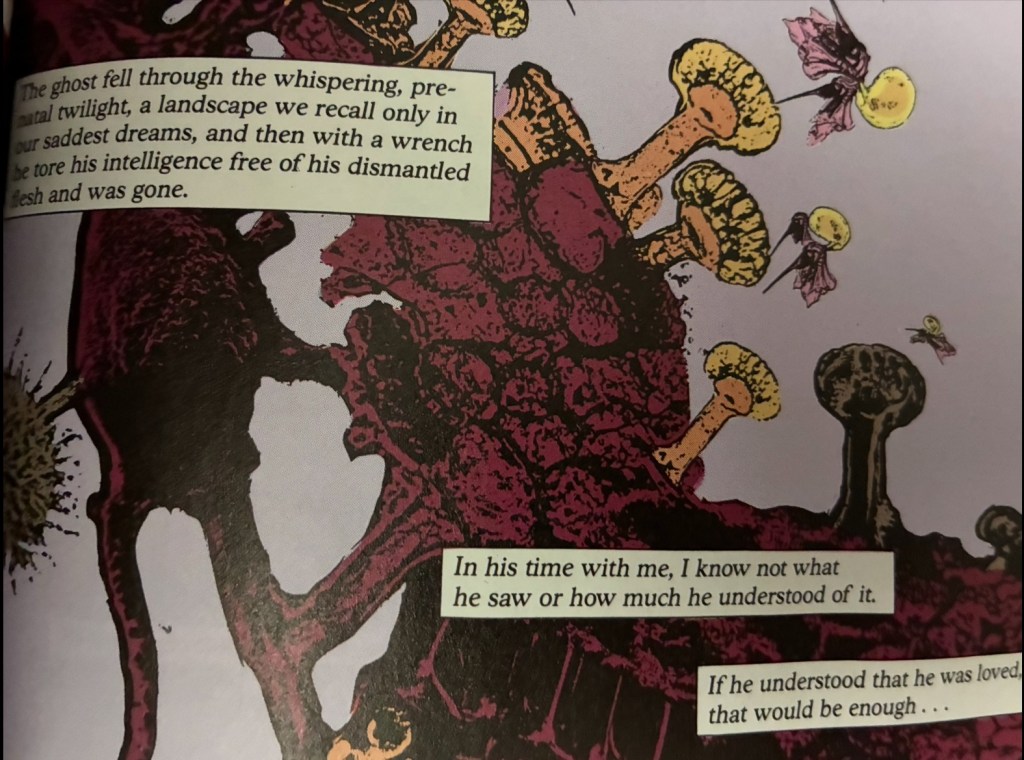


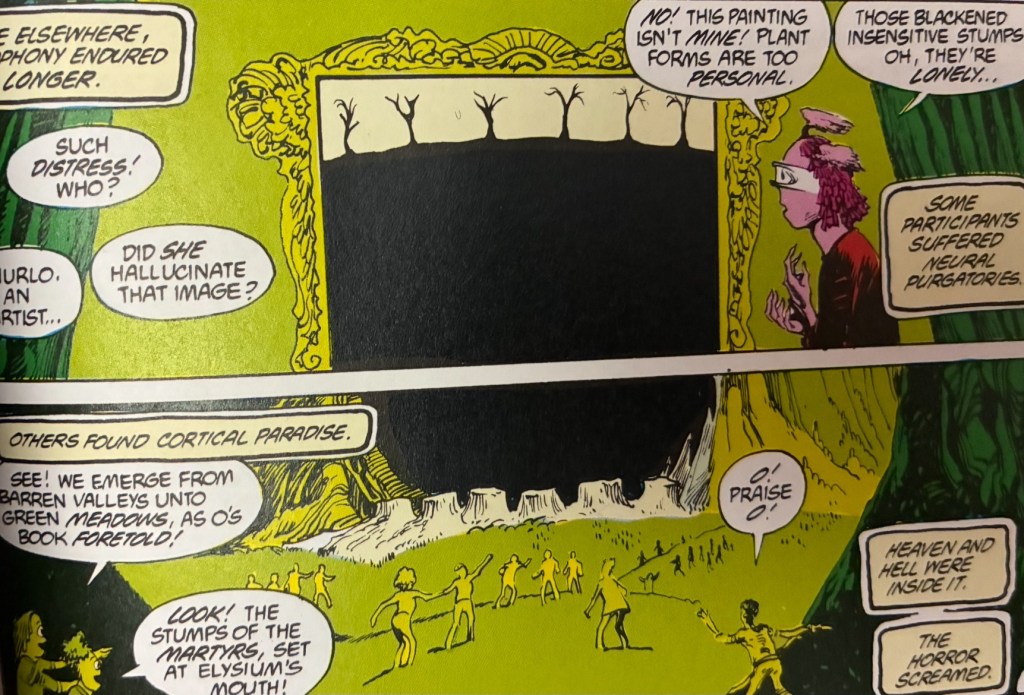
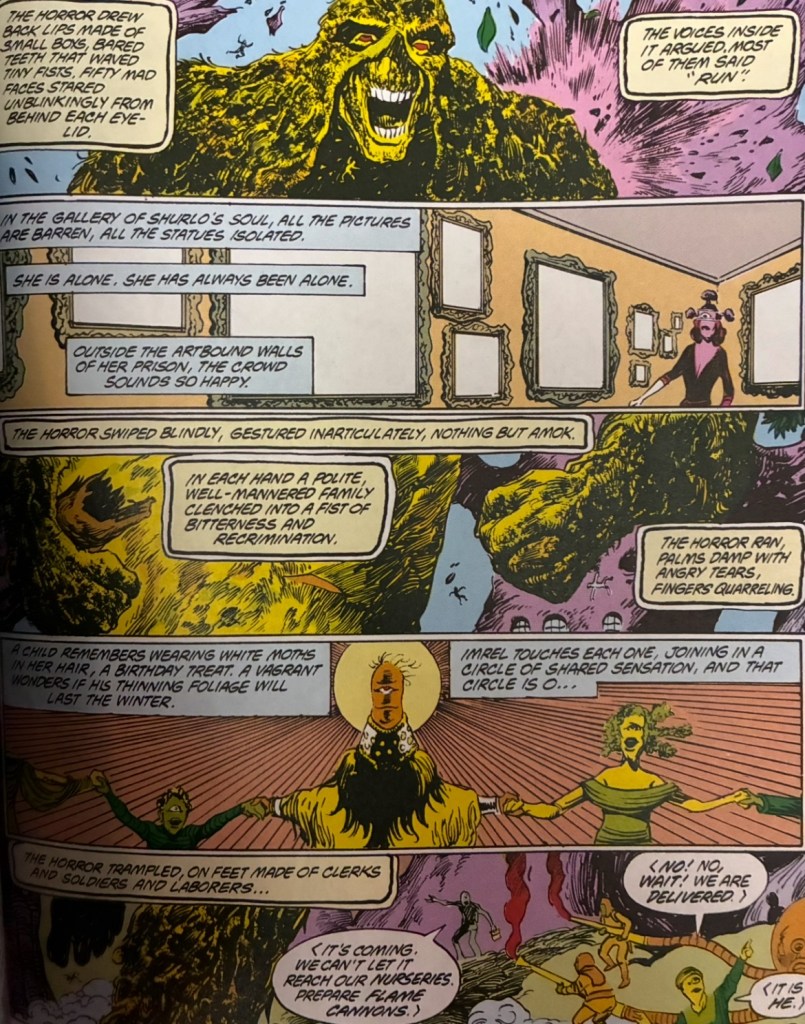


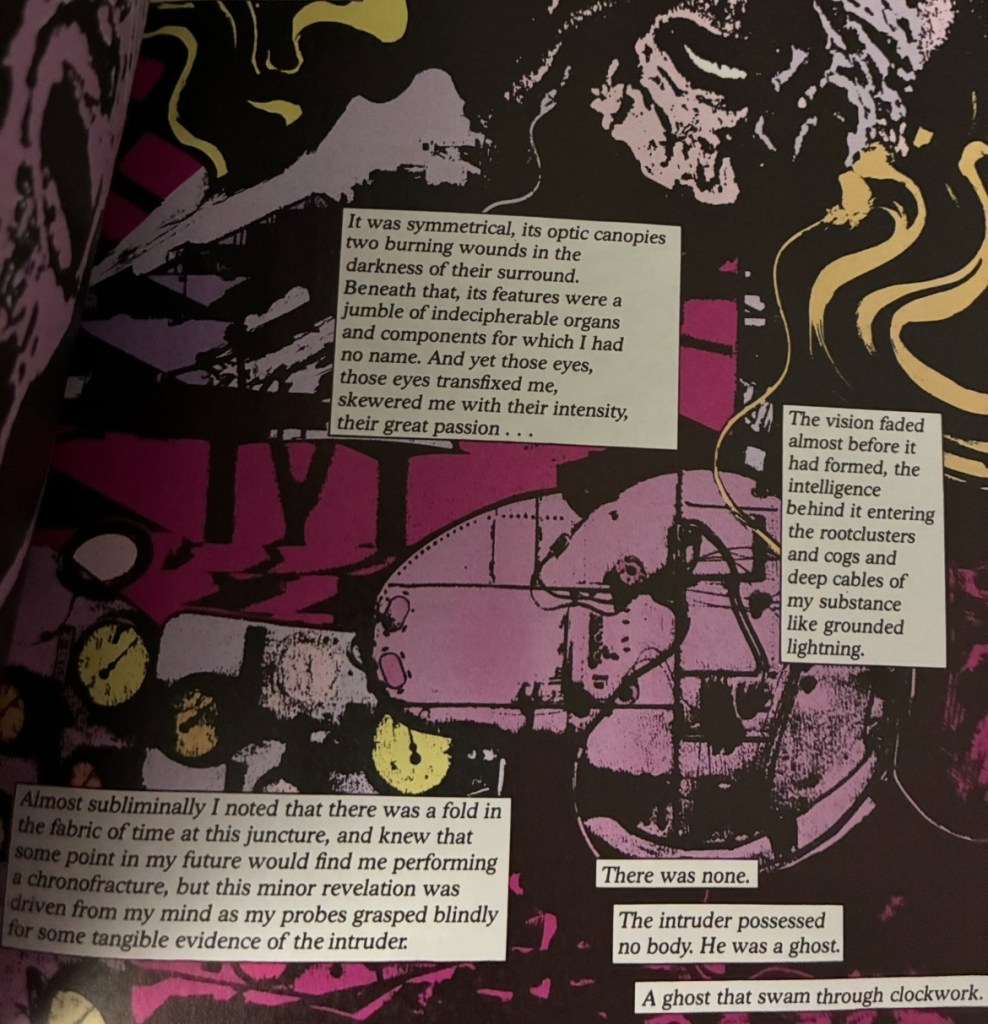
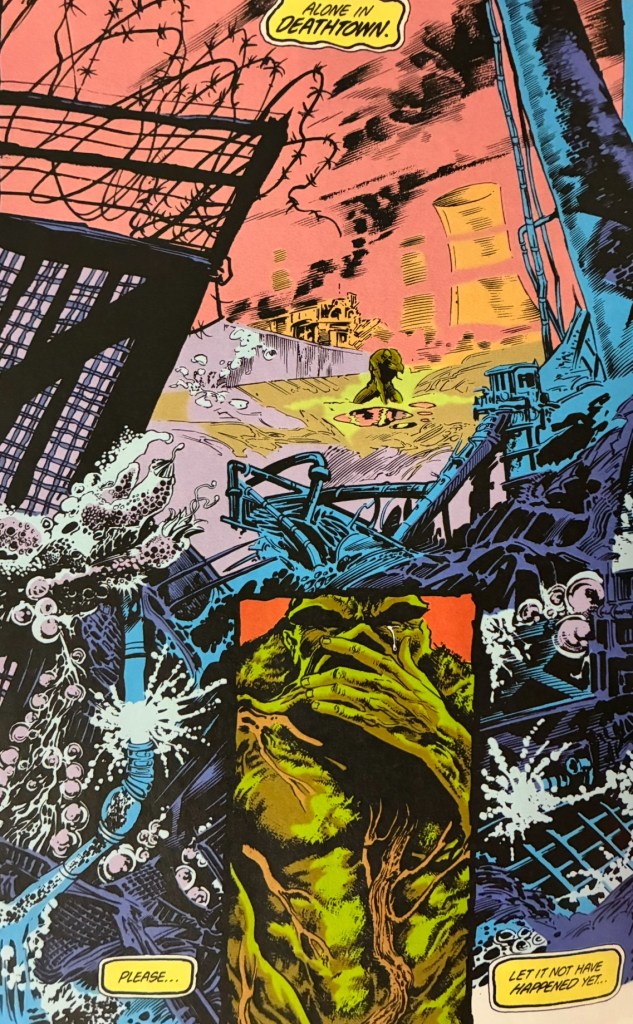
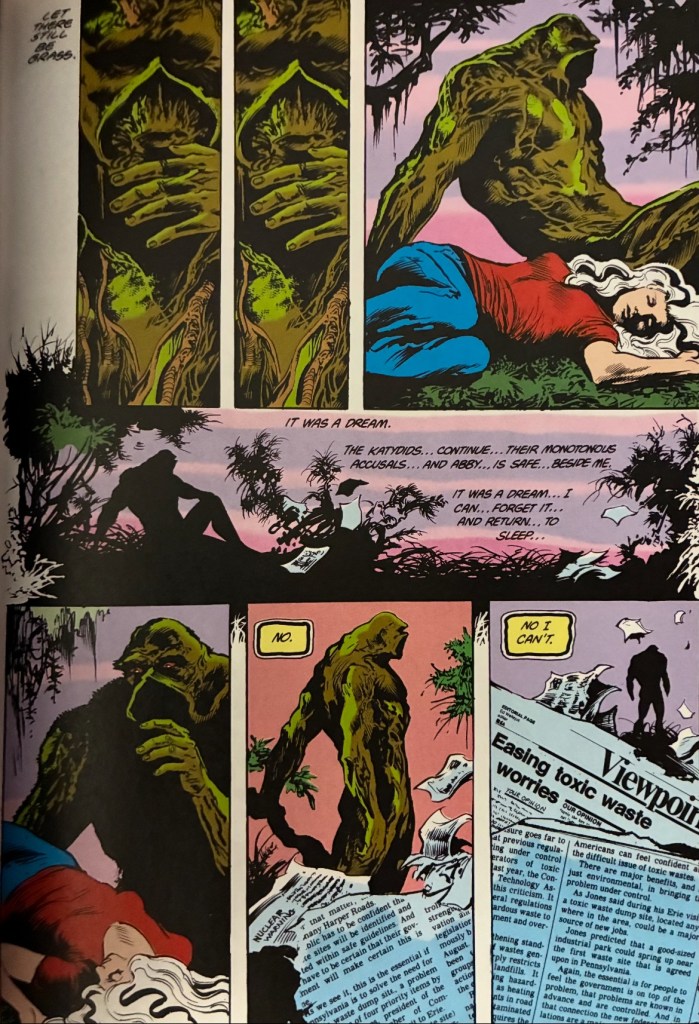

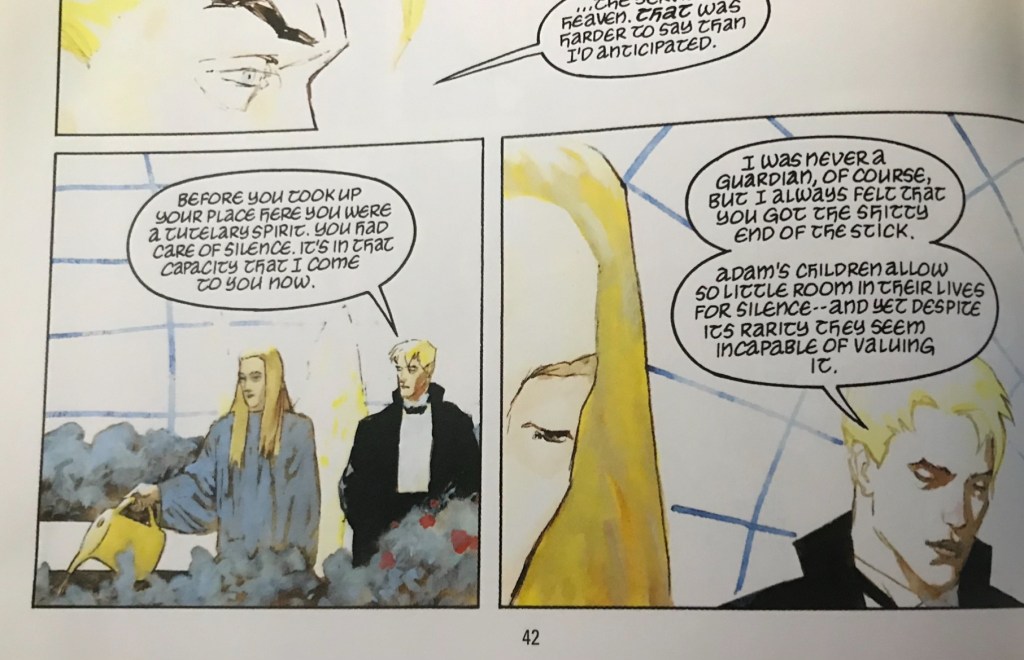

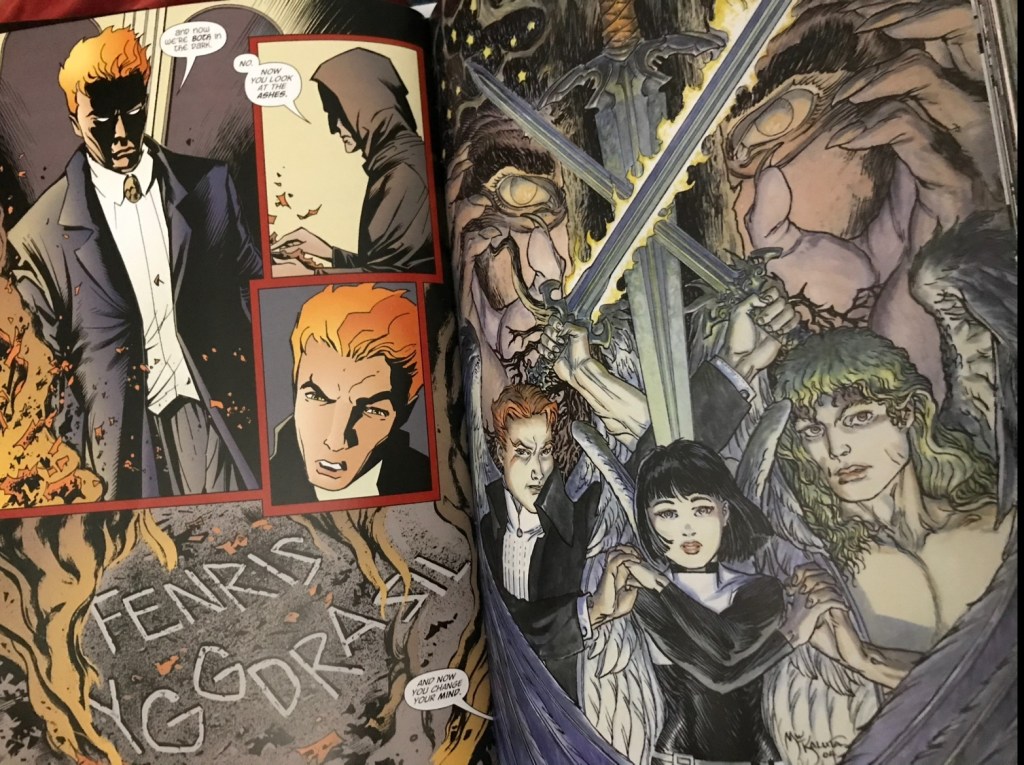

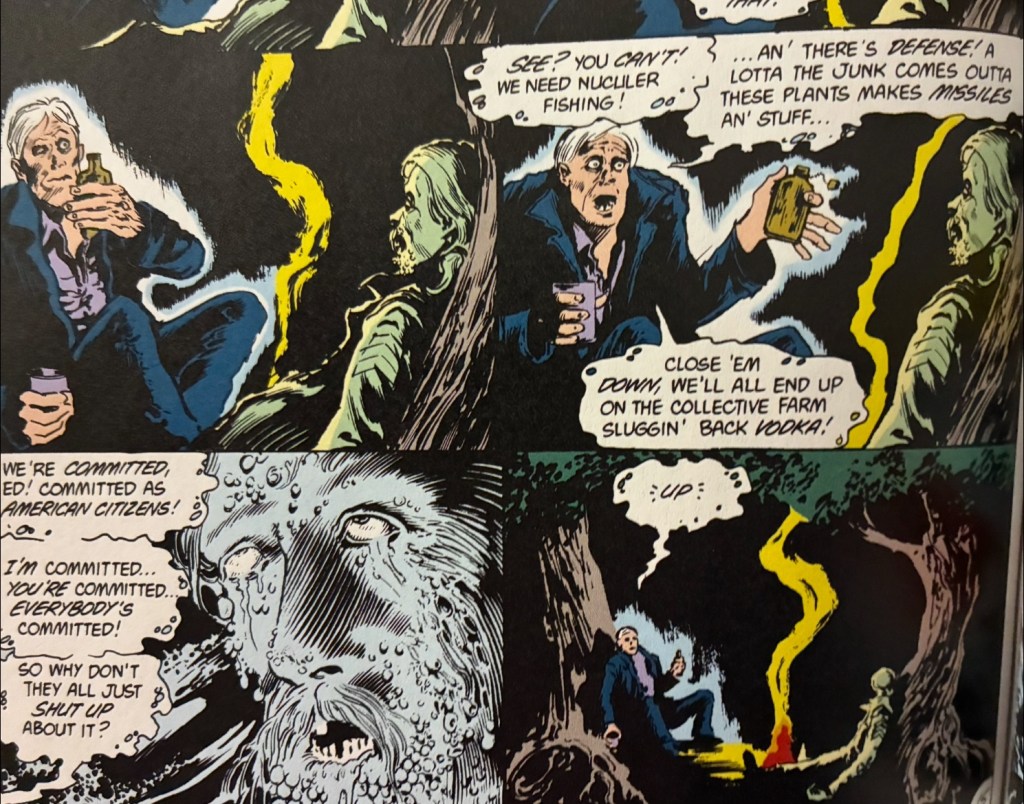
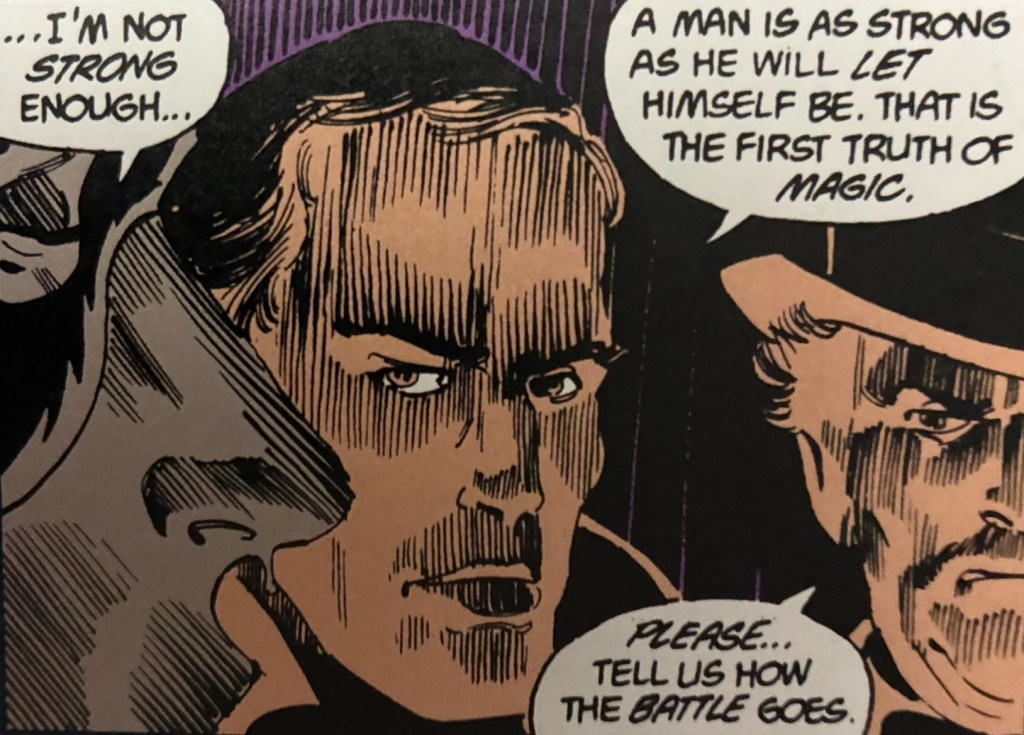

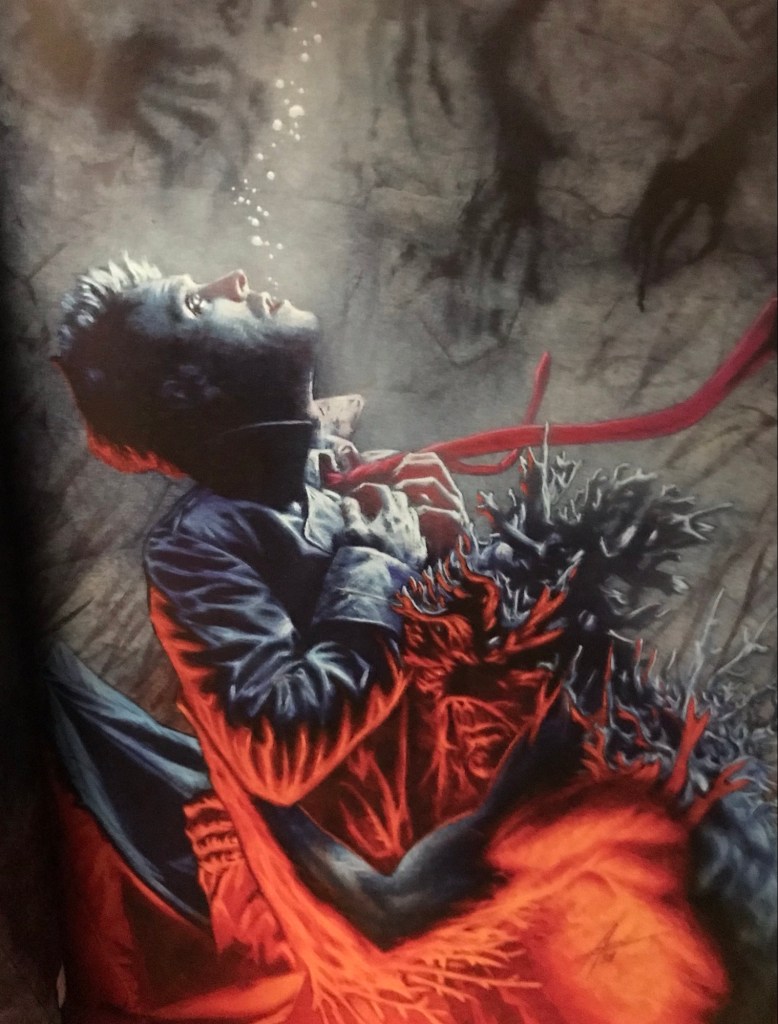


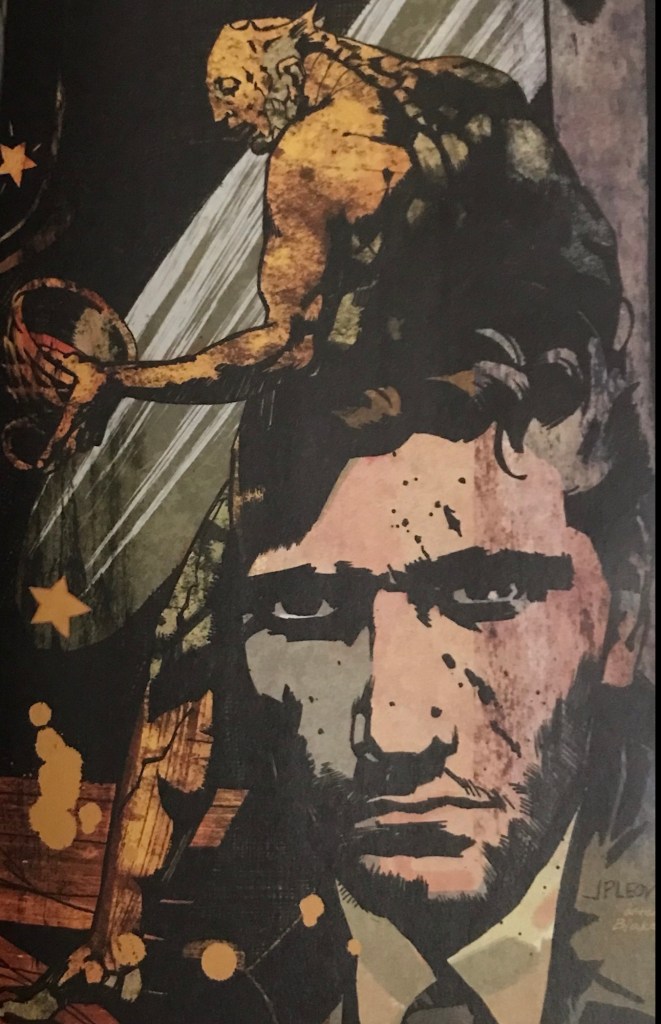
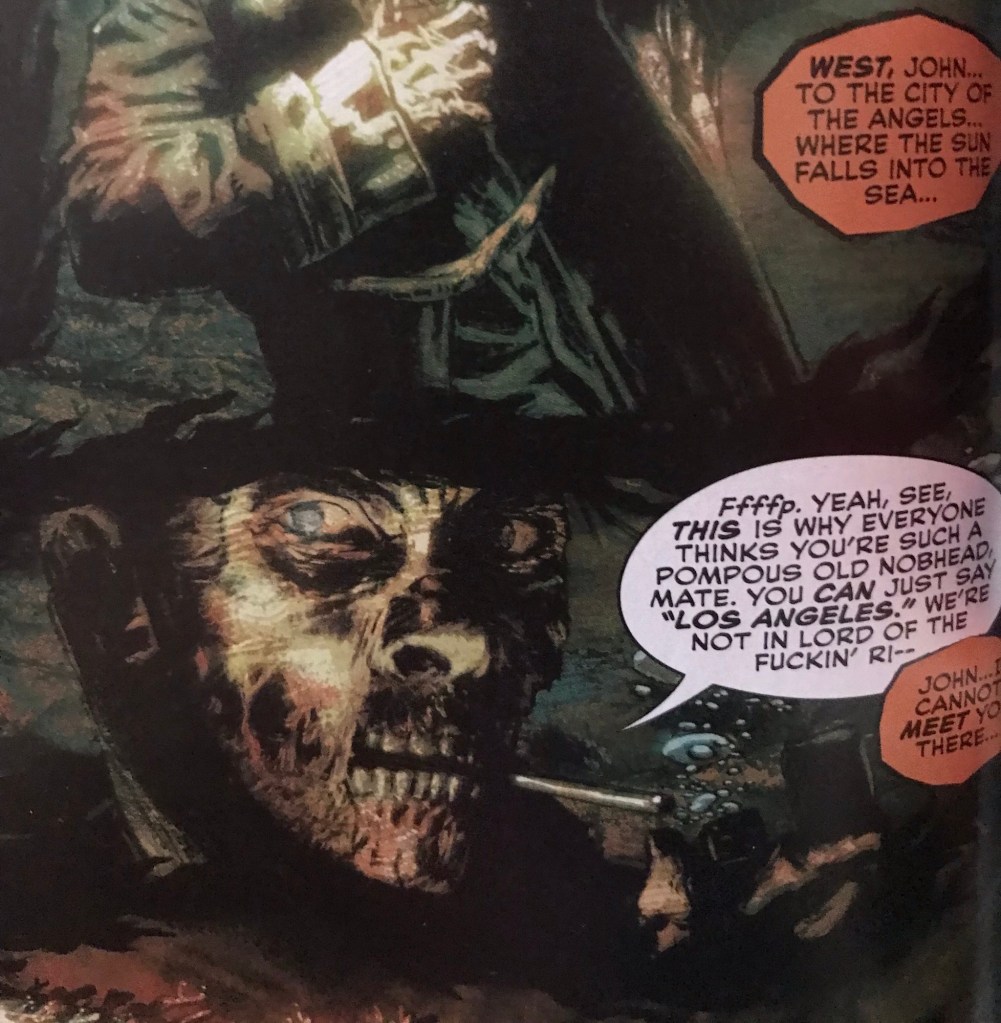

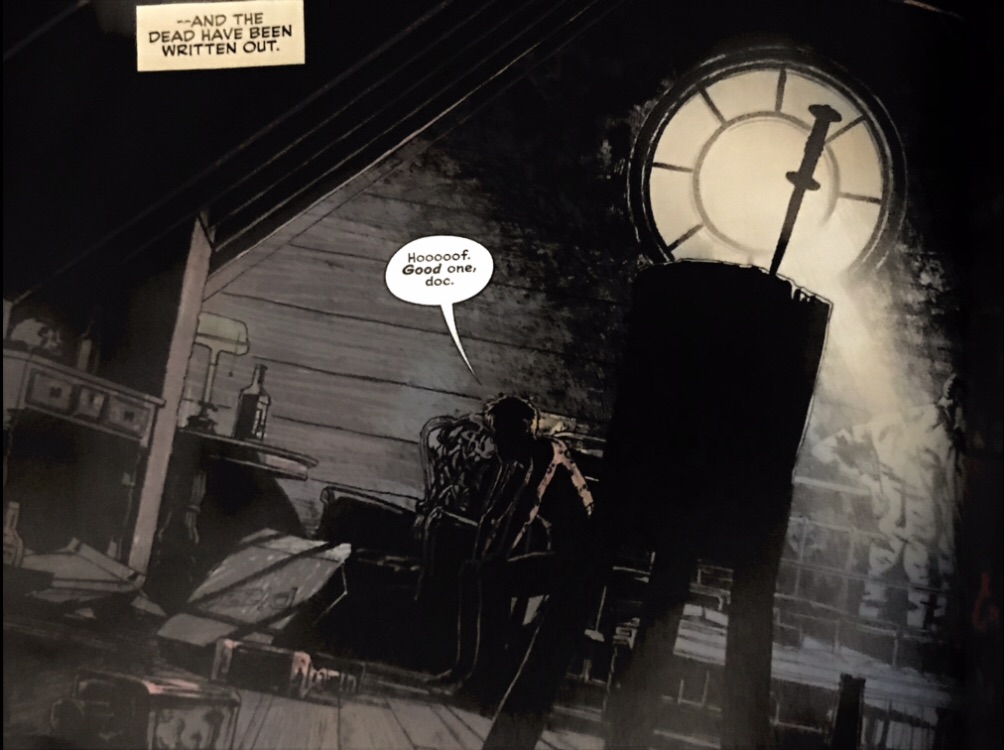
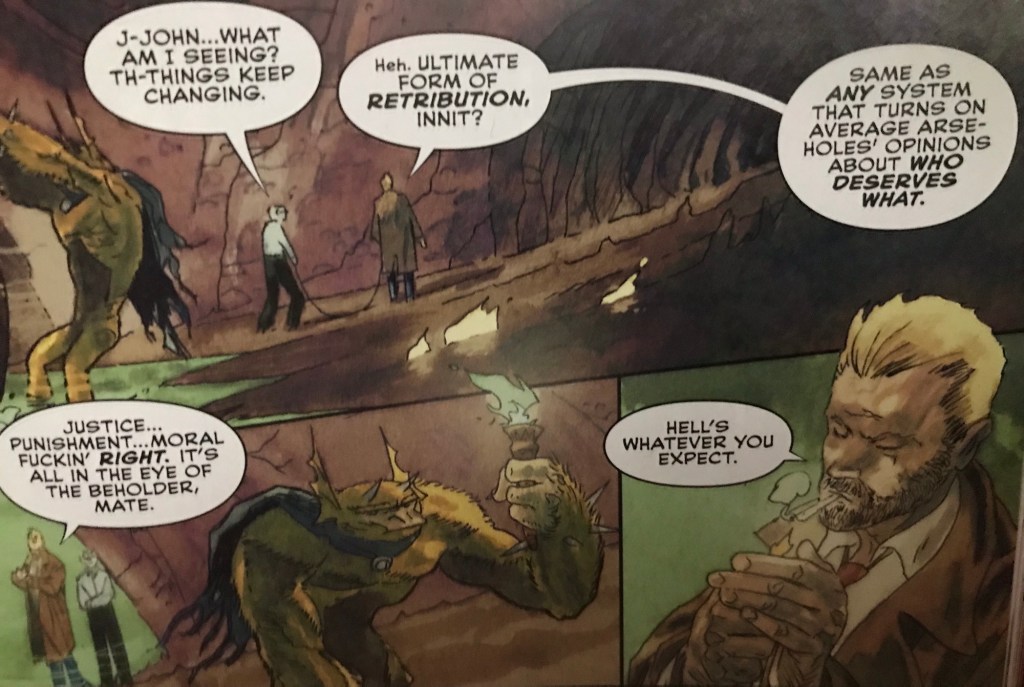


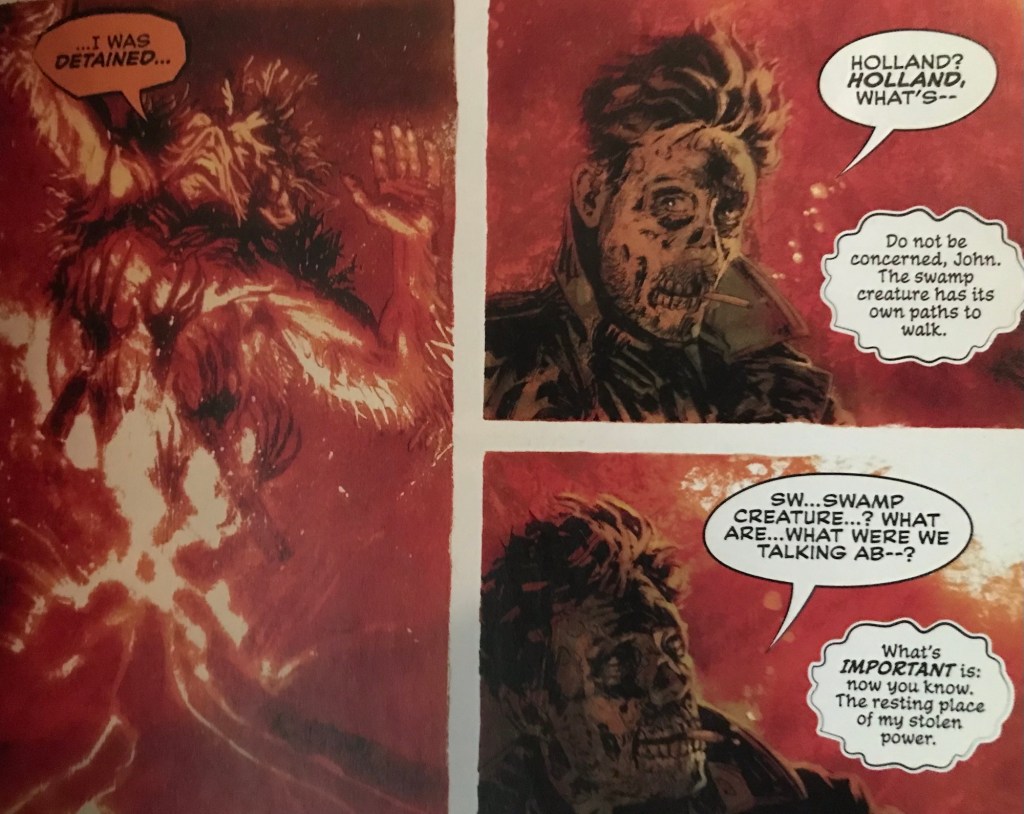


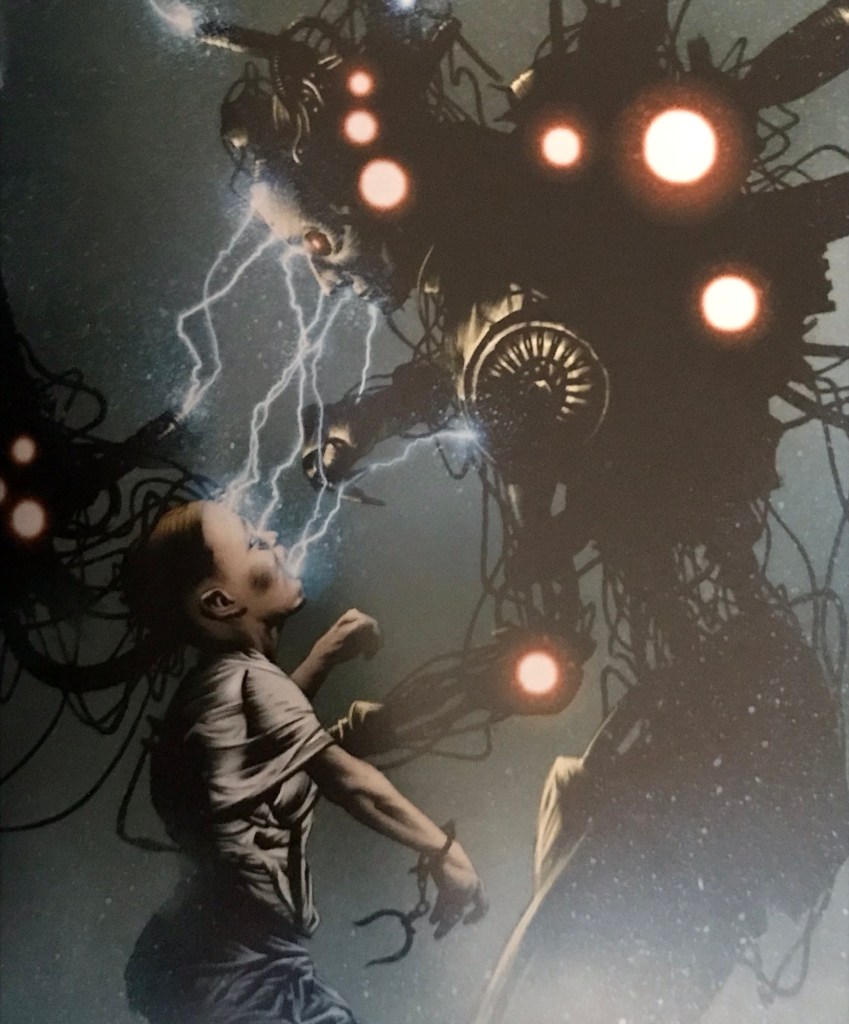
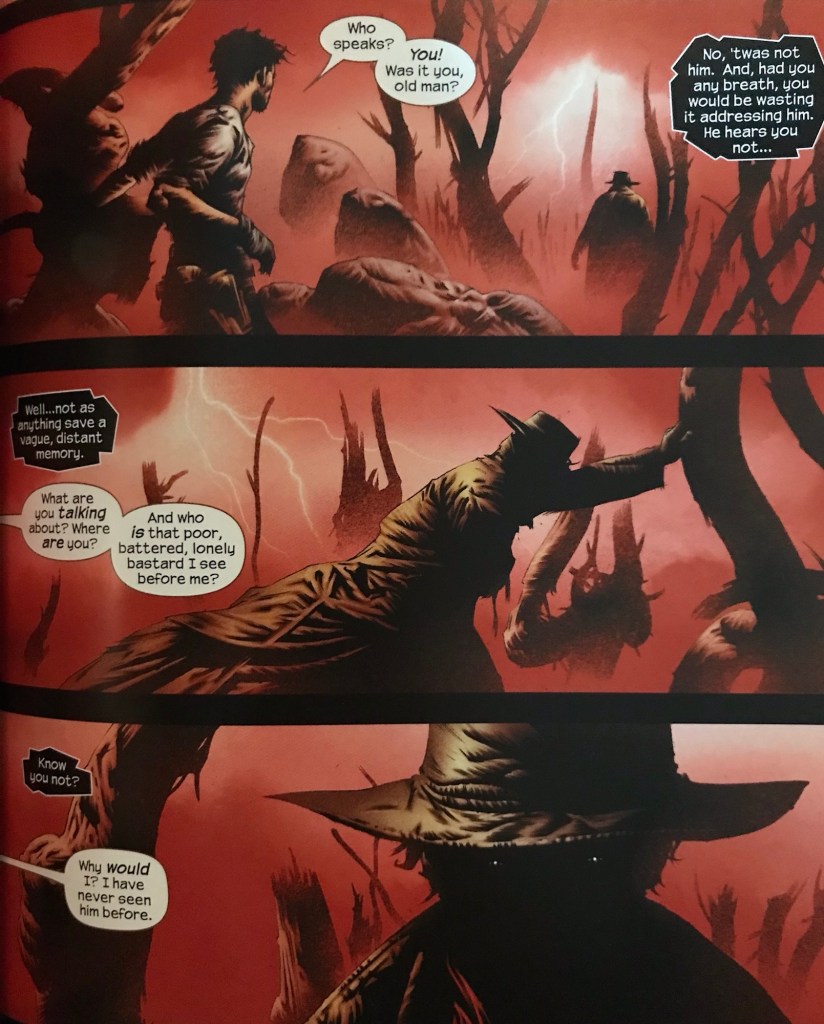

 AilixChaerea