Analyzing Final Fantasy VII: scale & content

(spoilers for original VII, Crisis Core, Remake and Rebirth)

Intro page

A lot of Final Fantasy VII fans (my age and older) have been overthinking it for a long time. In case this seems like an inordinate amount of thought to put into a video game analysis.

Anyone who played Final Fantasy VII in the late nineties or early 2000s probably remembers the GeoCities and AngelFire fan communities. I could probably write an entire post on those websites. One of them contained a long narrative poem describing the entire game from Sephiroth’s perspective. On an ‘about’ page, the author declared that Professor Hojo was her soulmate. Many of these revolved around gaming urban legends, like the surprisingly common belief that Aerith could be brought back from the dead (not that there was any lack of online guides on chocobo breeding or beating Emerald and Ruby WEAPONs). Many of these websites ended up discussing lore and the grounds for various interpretations.

For example: one prevalent myth about resurrecting Aerith was that there was some hidden way to throw a phoenix down into the pond Cloud lowers her body into. On my own favorite among these ancient websites (link below), the blogger Seraphim debunked a number of theories before getting to his own. When he came to the phoenix down chestnut, he explained that a phoenix down does not actually bring anyone back from the dead. When a character’s HP hits 0, it symbolizes becoming too weak to continue fighting. In a lot of online conversations between fans, the symbolic meaning of the mechanics were a common topic. Another one was the relationship between the battle screen and what was literally going on during combat.

For Seraphim, this mattered because it emphasized the true nature of the dilemma. Aerith is not conked out; she’s actually dead. The nit-picky exhaustiveness of these discussions had some funny foundations. No one would resurrect Aerith because it could not be done…which only drove the search further into the margins. Some bloggers tinkered around with the GameSharkPro and found ways to trigger Aerith’s dialogue for points in the game she’s not alive for, which was taken as confirmation by some.

What actually happened was that Square was going to script at least one permanent character death: Barret or Aerith. They based their decision on play tester reactions which led to the situation we have now.

Brief digression- This proves what a happy accident Final Fantasy VII was. Big name video game developers and film studios make a lot of creative decisions by committee.

Getting back on topic-

Aerith’s dialogue for the last two-thirds of the game was cut, but since the game was originally scripted to have everyone for the whole thing, the dialogue was still there in the code for data miners to find.

The real reason why Aerith had cut dialogue occurring after her death was not confirmed by Square until a few years had gone by. If the fans were determined to find their own answers, though, you couldn’t blame them. Especially since so many of the events depicted within the game depend on interpretation.

Massive spoiler warning for the original game.

The planetary force called Holy barely manifests in time to stop Meteor. When I first completed the game, years before the Advent Children film or any of the additional games and novels that flesh out the lore, it appeared to me that Midgar did not survive Meteor. But the planet, Gaia, did survive.

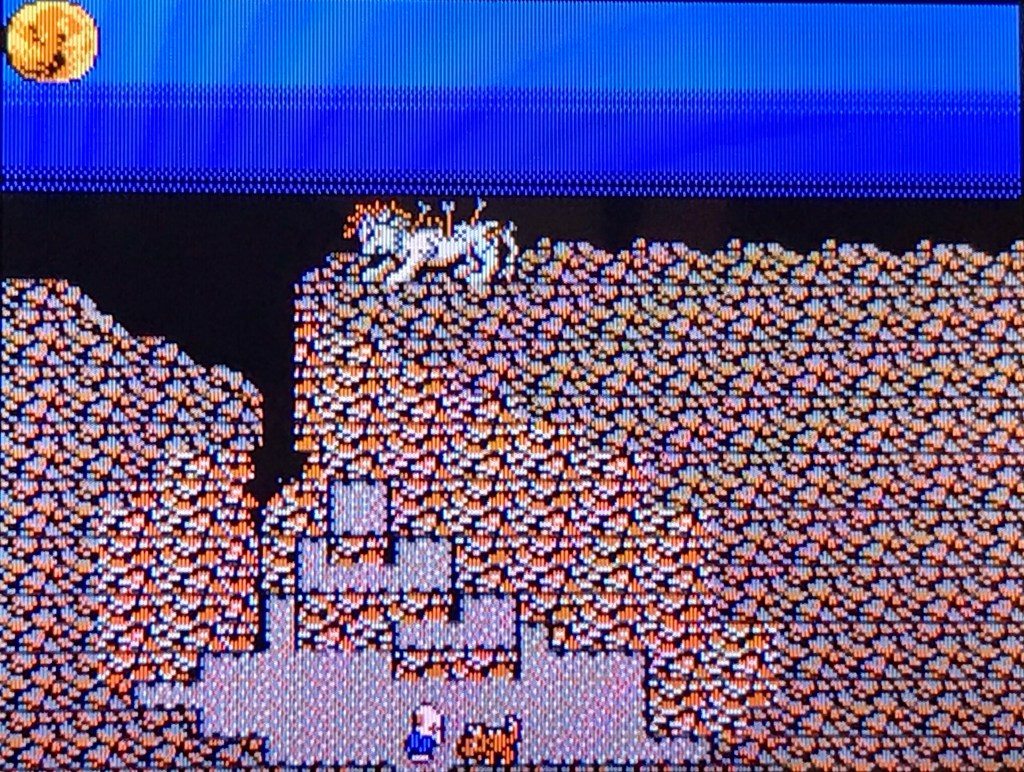
After this planetary near-miss, we get the ending credits followed by a cut to the relatively far future. The character Nanaki belongs to a species that is extremely long-lived. Although he is over forty years old in the period where the game takes place, that only puts him on the level of a teenager. Presumably, in the succeeding decades, he matures more. Nanaki appears to have cubs in the flash-forward, with whom he is hunting/exploring/playing with. He follows his cubs to a cliff overlooking the remains of Midgar which is completely overgrown with plants and wildlife. Gotta admit, that looks like a conclusive statement on the fate of Midgar.

Our last post-credit scene is a brief cut to the opening cinematic, where Aerith’s face fades in over an apparent starscape.

In the absence of any direct explication within the base game, both of these moments rely on some active reading. These may be the most mysterious scenes in the game- but they’re not the only ones that rely on inference or interpretation.

The crowd that was determined to resurrect Aerith latched onto a few of these smaller mysteries. If you manage to get back into Midgar’s ground level late in the game, there is a ghost of Aerith in the church in the Sector 5 slums. Aerith’s polygon flickers for a moment and vanishes before you have the chance to approach her. In Wall Market, at the beginning of the game, Cloud has an uncanny hallucination of a doppelgänger in the Honeybee Inn which has no clear in-world explanation.

Many of Cloud’s hallucinations are telepathically directed by Sephiroth or Jenova…but not all of them. Cloud has a moment in the opening bombing mission where he freezes and a voice in his head says ‘this isn’t just a reactor’. This is, in all likelihood, a trauma-response like PTSD triggered by memories of the Nibelheim reactor. Cloud’s trauma surrounding his hometown Nibelheim is frequently used by Sephiroth and Jenova as a point of entry for their psychic manipulation. But that trauma still exists irrespective of them.

In light of the story in general, this feels like an intuitive way to make sense of Cloud’s episode during the bombing mission. But there is no direct comment on it within the script. Cloud’s hallucinatory doppelgänger in the Honeybee Inn, however, has no implicit explanation furnished by Nibelheim, Sephiroth or Jenova. Presumably, the doppelgänger hallucination is an organic event.

It feels funny using the phrase “active reading” in reference to playing a video game, but it’s hard to get reeled in to Final Fantasy VII without some active reading.

While the nineties gamers determined to resurrect Aerith would necessarily be disappointed, they were on to something essential.

Final Fantasy VII is about death. A lot of it is, anyway. Two of the main characters exert massive influence on the plot after they die: Aerith and Sephiroth. These two are also deeply enmeshed with Cloud, our viewpoint character.

Seraphim pointed me in the right direction here. My favorite part of his analysis was his assertion that the real main character of Final Fantasy VII is Aerith and that Jenova is the real villain.

Seraphim categorizes Cloud and Sephiroth as victims but he does not offer any comment on Cloud’s function as the viewpoint character. If Jenova and Aerith are the real plot-movers, then Cloud’s place in the foreground is more of a way of orienting the perspective of the player/audience. Cloud is the lens through which we see the story but not a major character within it- almost like a narrator.
Placing Aerith as the main character is not as much of a reach as it might sound. Especially considering one of the most important recurring plot elements in Final Fantasy: the paradigm shift. I ended the intro post the way I did for a reason.

In the intro, I mentioned Cecil, Terra and Zidane. Terra lived much of her life as a mind-controlled war slave. The story of Final Fantasy VI effectively starts when Terra regains control of herself. Cecil begins his quest as an unflinchingly loyal soldier and Zidane as a petty thief. None of them are the same in the end.

The plot of many Final Fantasy games rests on two layers of crisis. There is an earthly antagonistic force which is empowered by the influence of a deeper event. This second layer is often exposed half way through the story and can cause (directly or not) a basic re-evaluation of motives in the main characters. This almost always includes the protagonist. This is the paradigm shift I was referring to.

Final Fantasy X and Final Fantasy XIII situate the paradigm shift within a conflict of free will and determinism. Final Fantasy XV was also about the clash between destiny and autonomy but FFXV was not able to portray their version of the paradigm shift before the second season of DLC was canceled. As the game’s existent material stands, it appears to depict the return of an old paradigm rather than learning to live in a new one. You could reasonably disagree with that, as Square’s plans for the real ending were expressed in the novel The Dawn of the Future. But none of the video game material communicates that ending.

FFXIII initially props up Lightening as the main character but in the end Fang and Vanille move the plot more than anyone else. FFX and XV examine doomed martyrs and their growing bonds with those they must leave behind. FFXV may not have had the chance to depict it’s paradigm shift as intended but a thematic echo survives in the arc of Noctis. All of these games were also flagship titles for the new consoles of their day. It makes sense that there might be influences behind them that are parallel or derivative from one another. Final Fantasy VII was also a flagship release for a new console.

The paradigm shift within Final Fantasy VII happens on a number of different levels and story junctures. One such connecting moment is the party’s exit from Midgar. And, of course, the occasion for it. Intriguingly, Final Fantasy VII Remake follows the story up to this same plot point. Final Fantasy VII Rebirth picks up from there.

This early glimpse of the paradigm shift happens when the second crisis absolutely T-bones the first. The automated systems of the laboratory are dead, including the locks on your cell doors. President Shinra is dead. A ghostly sword vanishes from his body and Palmer swears he saw Sephiroth kill him.

In roughly 1 & 1/2 scenes, one big bad is eclipsed by another. Before this, the moral paradigm of the story was plain: a small handful of rebels versus a powerful establishment. Now, there is something that both the party and Shinra are equally threatened by.

Cloud (ever the strong, silent type before now) suddenly starts talking. He is the only one offering answers, however flawed or psychologically filtered. This puts his memory and testimony squarely in the foreground.

If not the main character, Cloud is definitely the viewpoint character. This viewpoint is mostly consistent across the paradigm shift and is consequently shaken by it.

Not many other Final Fantasy games tie the audience point of view so specifically to one character. Final Fantasy X did it. In VIII, the cuts back and forth through time at first appear to be some kind of direct reflection of Squall’s mind. XIII has an omniscient narration that later turns out to be the voice of Vanille. None of them pushed it as far as VII, though.

This transitional moment between Midgar and the rest of the world is also when the (eventually) two dead characters draw closer to the center of the story. The rescue of Aerith draws the party to the Shinra Building and the apparition of Sephiroth takes them out of it.
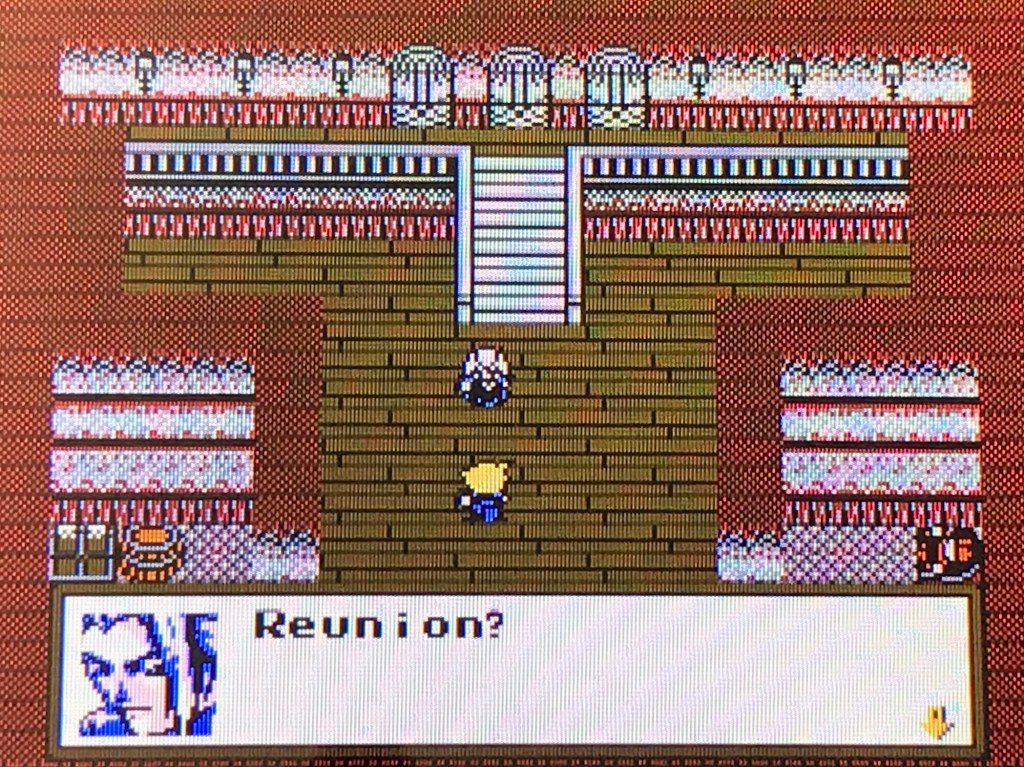
Let’s flesh out the thematic function of those two as “dead people” a bit more.

Aerith is kind of a no-brainer. Her greatest influence on the plot is exerted after her death and she seems to anticipate that something like death will be necessary before she can summon Holy. Sephiroth is a bit more tricky.

As is typical of Sephiroth, Cloud is directly affected. This is one of the reasons I’ve been at such pains to establish Cloud’s function as a narrator. This also relates to the fact that Cloud does not belong to the same “dead” category. But he’s not really like anyone else, either.

The transition between the two crisis layers is intimately tied to the shifts in Cloud’s mind. This creates an association between Cloud’s mind and the story structure. The link is preserved through his mental collapse and the summoning of Meteor. After that, Cloud disappears beside Sephiroth’s frozen body and resurfaces in Mideel, incapable of speech or any other outward expression. His reintegration into the party requires Tifa to join him in his mental solitude.
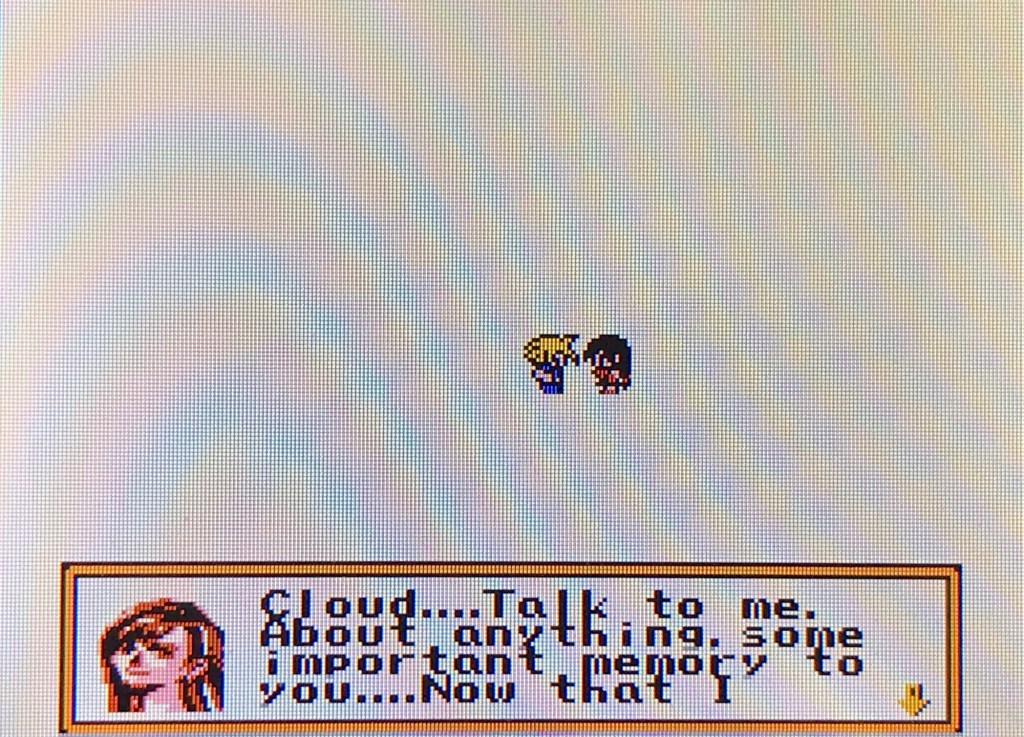
This is important for a few reasons. One of them is balancing Cloud’s point of view with the outside world. This then has to reconcile with the rest of the story, in which Cloud’s point of view dominated the foreground. The weight of the outside world is clear when Cloud himself has to accept it. The scope of the story gets bigger than Cloud once he “gets over himself.”

Sephiroth’s place in Cloud’s mind changes as Cloud himself does. With that in mind: excluding the blurring of Cloud’s stories and memory dynamics, what actually happened to Sephiroth?

He fell into a mako reservoir. Because of Cloud. Put simply- Cloud killed him. Along with everything else Cloud lied about and ignored…Cloud has also been carrying the private knowledge that he killed Sephiroth. And that, to the best of his knowledge, Sephiroth has been dead for five years.
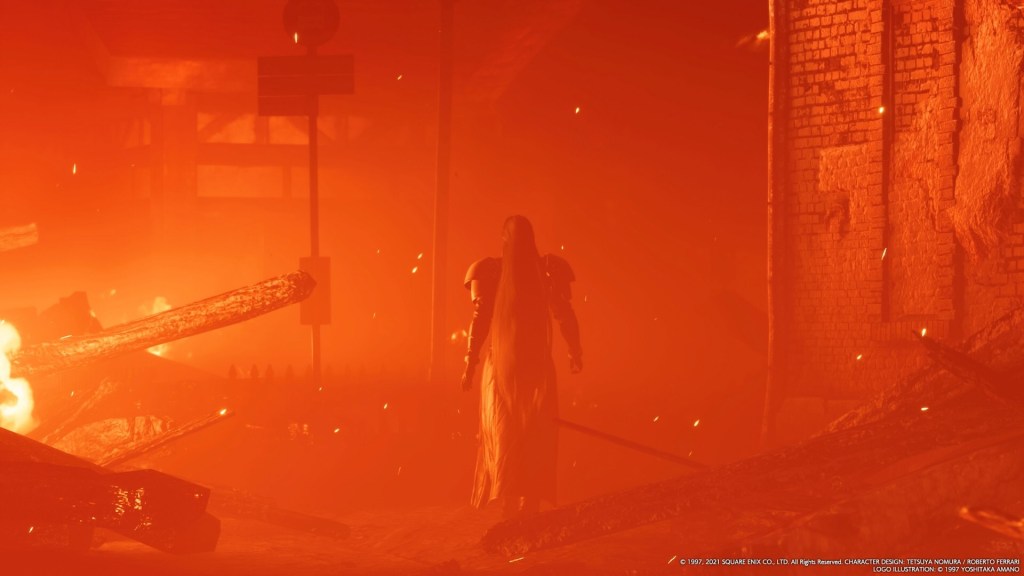
Five years later, his reappearance is not unlike a haunting. Before Sephiroth began sending his consciousness through a telepathic network of Jenova cell carriers, he existed in his original body. That body was pushed into a mako reservoir by Cloud, and ghosts often haunt their killers. Just like Barrett conjectures in Final Fantasy VII Remake, Sephiroth’s body ends up in the center of the planet, from which he and Jenova project their hauntings.

The psychoanalytic theme of suppression is emphasized by Cloud’s retelling of the Nibelheim incident garbled with his neurotic identification with Zack. One of the subconscious functions of this identification appears to be avoidance or disguise. The pain implied by this avoidance easily matches something very Freudian.

In Frued’s outline of the Oedipal complex, the castration anxiety at the dawn of the genital stage of psychosexual development is suppressed by rejection of the opposite-sex parent and identification with the same-sex parent. Cloud’s rejection of his own weaknesses prompts a sort of denial within himself which compels him to blend his self-image with male identity models, like Zack and Sephiroth.

If Zack’s example provided Cloud with a story that he would choose over his own memory, then Cloud’s stated motive (later in the original game) of neurotic shame makes sense. It makes just as much sense, though, when one considers only the truth of the Nibelheim incident without any stated motive in the present. We have already seen Cloud state his admiration for Sephiroth and his desire to be like him as a child, during the flashback with Tifa at the water tower. Watching your hero lose his mind and massacre your hometown is a blow…but so is killing your hero with your bare hands.

Many of the psychoanalytic themes become clear at this point. Cloud’s character arc rises and falls around how he crafts his identity. In his formative years, he preferred to deny his emotions and emulate others. In psychanalysis, one’s shadow self is a version of yourself containing every trait you wish you didn’t have. Zack and Sephiroth gave Cloud’s juvenile mind identity models that he used as an escapist fantasy. If Cloud was ‘escaping’ the weakness he perceived within himself, then identification with Zack and Sephiroth is determined more by what Zack and Sephiroth are not rather than what they are. Cloud only drops Sephiroth off the mako reactor catwalk after Sephiroth goes on his rampage.

Sephiroth and Zack represent power fantasies to Cloud but they are also the absence of his self-repulsion. When Sephiroth reveals himself as repulsive, the emotional betrayal is visceral. This anguish would have been present when Cloud made his suicidal, single-minded effort to kill Sephiroth. Cloud also spent most of his life wishing he was Sephiroth, which would continue to be part of the backdrop of his mind after the panic and agony of the moment was over. Responsibility for Sephiroth’s fall would not be easy to accept.
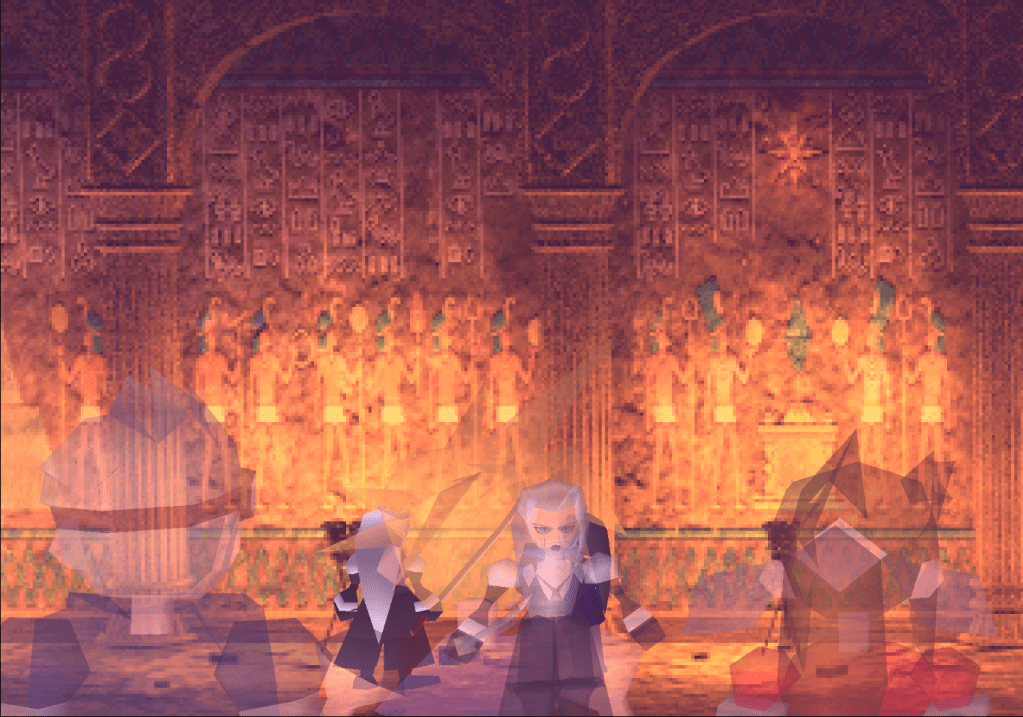
Meanwhile, all the psychic projections into the bodies of Sephiroth clones and SOLDIERs are proving that Sephiroth is not dead after all.

The metaphysics of souls, transmigrations, the uncanny and the parallels between a body and a puppet still matter…but before moving on from psycholoanalysis, I want to spend some time on the differences between Cloud’s memory of Sephiroth and Cloud’s memory of Zack. The memories of both figures furnished subject matter for Cloud’s delusions but I do not think they are equal. Final Fantasy VII Rebirth takes pains to emphasize this difference.

Consider two levels of power fantasy: one is that the world comes second and everything is about you. Others barely exist and when they do it’s for your benefit. The second level is to be valued by others.

Since Rebirth concerns the events between Midgar and the Forgotten Capital, Aerith’s place in the love triangle is foregrounded. Meanwhile, in an adjacent timeline, Zack managed to survive his last stand outside Midgar and jumped forward to the present of the main timeline. It looks like Zack has wandered into a world with no place for him, with a comatose girlfriend and bestie. On the other side of the wall of destiny, Cloud the bestie is subconsciously emulating Zack and growing close with his ex-girlfriend. One begins to wonder if the original love triangle (Aerith-Cloud-Tifa) matters as much as the new one (Zack-Aerith-Cloud).

A Freudian assessment comes easily to mind. Within his cluster of subordinate timelines, Sephiroth is omnipotent. In VIIR, Sephiroth’s Whisper-conglomerate contains multiple timelines worth of Gaias. The universes within (which haven’t been devoured yet) all have skies with a massive light-phenomenon called the rift in the sky. Zack may be in VIIR because he happened to be outside of Midgar when the wall of destiny appeared but it is just as likely that Sephiroth wanted him. In Rebirth, Marlene tells Zack that- unless Cloud wakes up soon -a “scary man” with long white hair will kill Aerith. Zack looks over his shoulder at Cloud and I found his facial expression difficult to interpret.

If we assume that this situation is constructed by Sephiroth, then maybe the Zack-Aerith-Cloud triangle was also Sephiroth’s doing. In my Rebirth theory (check the ‘Final Fantasy’ section in the menu for the whole thing), I entertained the possibility that VIIR’s extra-dimensional Sephiroth came from his own timeline, separate from the one we all know as well as the slightly different one that Zack ended up in. There are circumstances in Rebirth which made me wonder if Cloud had a special role to play in extra-dimensional Sephiroth’s timeline of origin- an essential ally.

In Rebirth‘s Kalm-narrative, Cloud remembers the death of a soldier who accidentally fell into the rapids of Mount Nibel. Later, he seems to recall that this person had been Zack. Also in Rebirth, Cloud remembers Tifa’s death at the hands of Sephiroth. As Cloud tells this version of things in Kalm, it feels almost as if Tifa was why he stopped his story when he did. Her death is a painful memory that he would rather not dwell on, at the same time that Tifa is sitting right in front of him.

This made me wonder if Cloud’s role in extra-dimensional Sephiroth’s original timeline depended on a personality change that was brought about by the deaths of Tifa and Zack. In Gongaga, extra-dimensional Sephiroth tries to convince Cloud that Tifa is dead and that the Tifa seen in the present is a shape-shifted cell-carrier.

As a traveller between timelines, extra-dimensional Sephiroth understands that any other Cloud he meets will probably not be the same as ‘his’ Cloud. He may therefore decide that, if he ever wants ‘his’ Cloud back, he would have to create him. As in- find Cloud in another timeline and make him viscerally experience the deaths of Zack and Tifa.

At the same time, there is blossoming romantic chemistry between Cloud and Aerith. Love for Aerith was also the threadbare hope carrying Zack through much of his arc in Rebirth. An acrimonious love triangle in which Cloud kills Zack out of jealousy would play into extra-dimensional Sephiroth’s hands. Perhaps more so, if Zack’s jealousy was aroused first and Cloud was forced to defend himself.

In classical psychoanalysis, suppressed jealousy and suppressed desire are inexorable forces. This story doesn’t play out that way, though, and I think that matters.

Since Square Enix has encouraged an association between Crisis Core: Final Fantasy VII Reunion and the VIIR project, the Crisis Core plot is relevant to this. There’s a decent chunk of the latter half of Crisis Core that consists of a kind of escort mission: Zack escaping Nibelheim with Cloud.

Owing perhaps to a difference in tolerance between SOLDIER graduates and everyone else, the concentrated mako bath within Hojo’s lab hits Cloud harder. He is inert and incommunicado for the entire time he is on the road with Zack. Yet Zack always addressses him and otherwise behaves as if Cloud is lucid and mentally present. Cloud could not express himself and was completely dependent on Zack. With Zack’s allowances for Cloud’s presumed perspective and interests, it’s almost as if Zack is exteriorizing two sides of a conversation. This is done, specifically, as Zack’s means of determining and caring for Cloud’s interests. Later, Jenova uses Cloud’s projections upon Zack as material for false memories.
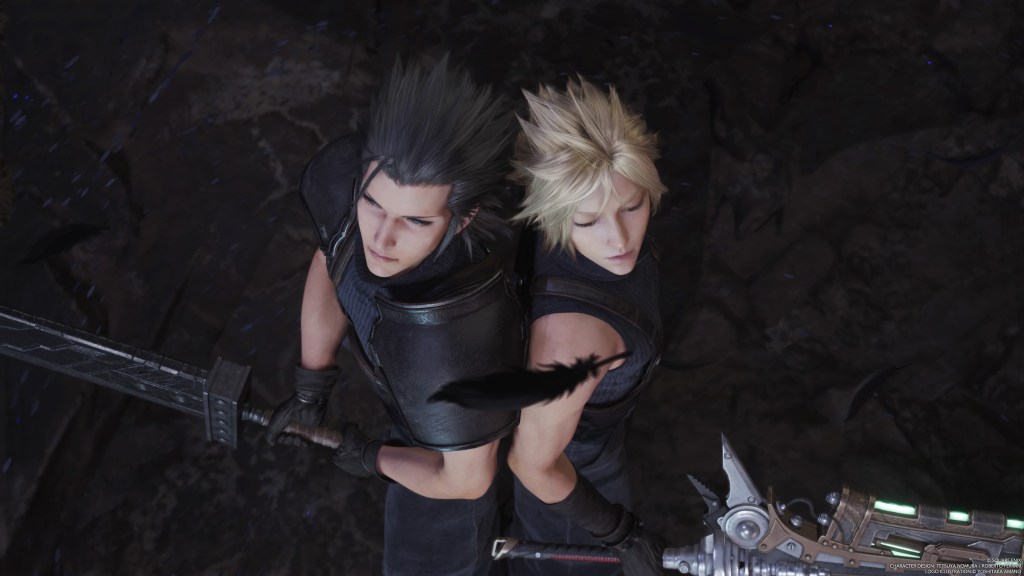
We know that Jenova has been using cracks in Cloud’s self-worth for psychological leverage. Feelings of unworthiness can furnish morbid envy…but the Crisis Core story introduces an essential difference between Cloud’s memory of Zack and his memory of Sephiroth.

Given Cloud’s perspective as a Shinra tropper, we can imagine that the visibility and status of Zack and Sephiroth would be enviable. Zack did something that Sephiroth never would, though: carry him out of love and try to understand and care for him in spite of the communication barrier.

No, this is not (as far as I know) discussed in the open. The inclusion of CCReunion into the VIIR canon means that it still matters, though. Barring future lore elaborations, I wonder if it is never discussed on purpose: these would, for Cloud, be memories of silence and vulnerability.

(During the times he was conscious, anyway. Cloud’s reaction to Zack’s death implied that he was aware of his immediate surroundings and situation at least some of the time.)

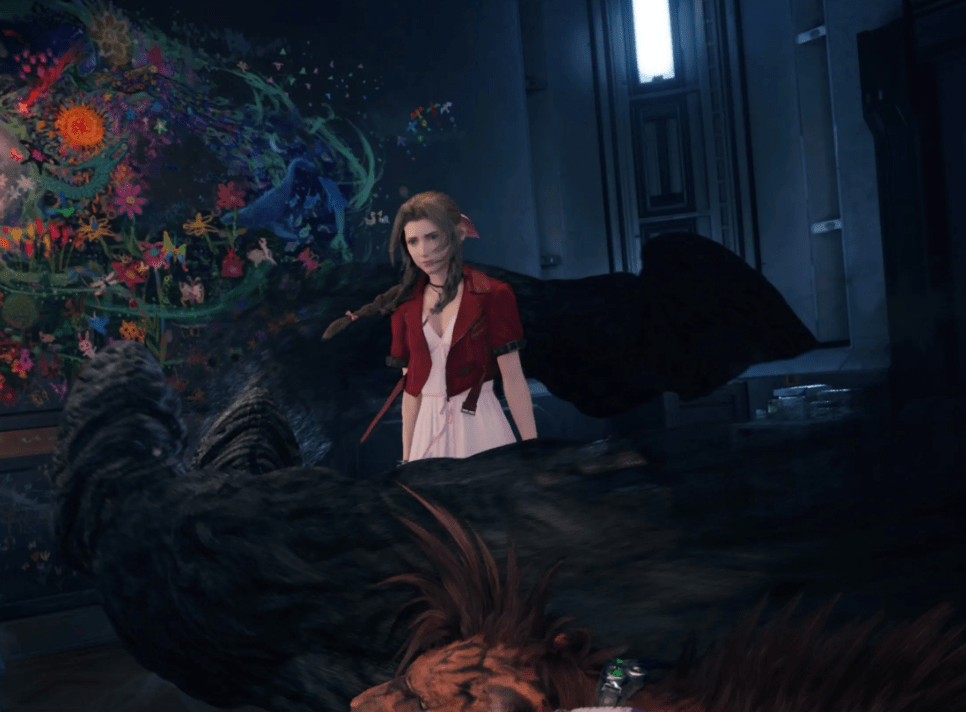
In the timeline where Zack finds himself in Rebirth, both Cloud and Aerith are rendered mute and motionless by mako poisoning. Once Aerith’s surrogate mom Elmyra enters the picture, she fully takes charge of Aerith’s care, leaving Cloud in the hands of Zack, just like the Crisis Core roadtrip. Sure enough, Zack continues to talk to Cloud, in the way that he always has (not to mention talking to Aerith). A few different scenes start from Cloud’s alternate timeline POV in the wheelchair (above), which plays well when the scene immediately follows Cloud taking a nap, as though he’s dreaming of the other timeline.

In other words, Rebirth shows Zack caring for mute and helpless Cloud…while Cloud in another timleine is emulating Zack with uncanny, The Talented Mr. Ripley-like ease, as sparks fly between him and Zack’s ex.

Between the two identity models (Zack and Sephiroth), Sephiroth telepathically urges Cloud to take any delusiory short cut to make things fit in the present. Whether or not Cloud is emulating Zack just as cynically is an unspoken question in Rebirth. Then the final battles start crossing dimensional boundaries and Zack and Cloud find themselves pitted against the same foe. After they are separated again, two different alternating scenes play of Cloud and Zack reciting the same oath with the Buster sword.

What really establishes the differences between the two identity models, though, is that Cloud cannot beat Sephiroth alone. After the dimensional rifts happen during the final battle, Cloud fights first alongside Zack and then with Aerith.

And, of course…those of us who played the original know that Cloud and Aerith were never meant for each other, anyway. All of this makes it difficult to think that Cloud could ever wish to steal Zack’s life no matter how Jenova takes advantage of his feelings.

And now, back to metaphysics and the soul.

In the intro, I spent a lot of time on the aesthetic motivations behind Final Fantasy character design leading up to and including VII. Hironobu Sakaguchi has explained that, up through VII, characters were modeled after puppets in dioramas. Since the influence of Dungeons & Dragons is all over Final Fantasy, I’ve occasionally wondered if they were also modeled after miniatures on a map. Especially given how the combat screens from the 16 bit games retained the chibi-doll character sprites whereas the monsters looked hand-drawn or painted. VII used the symbolism of non-literal chibis to acquaint the player with non-literal imagery in general, to build a foundation for a larger-than-life story.
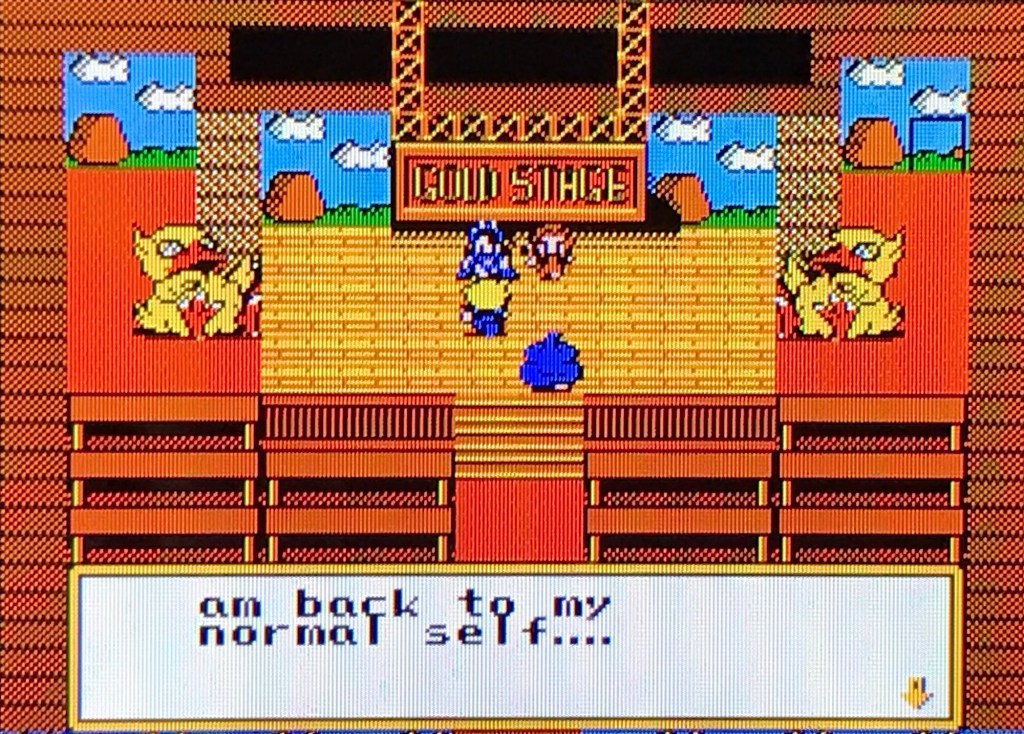
I cannot help but wonder if the role of bodies, souls, hauntings and transmigrations in the plot is a knowing elaboration on the metaphorical language of puppets. Both Jenova and Cait-Sith talk about toys and puppets in a metaphysical context.

The metaphysics of the soul in FFVII also mark a central event in any other fantasy story: the unveiling of the cosmology. Lord of the Rings depends on our knowledge of Middle Earth history and the role played by Sauron. In FFVII, we get little snippets of cosmology throughout. But the metaphysics of the soul, projection, transmigration, haunting and the like are when the player/audience sees the cosmology- free from explication- in the present of the story.

Fantasy typically relies on an internal consistency to establish its own rules. That is why cosmology matters so much. In other words: fantasy depends on a central myth. Through explication, we hear a lot about Lifestream, mako extraction and Jenova. But we only see the central myth at work through Cloud, Aerith and Sephiroth. Mostly, we see it through Cloud- even when Cloud is seeing Aerith and Sephiroth.
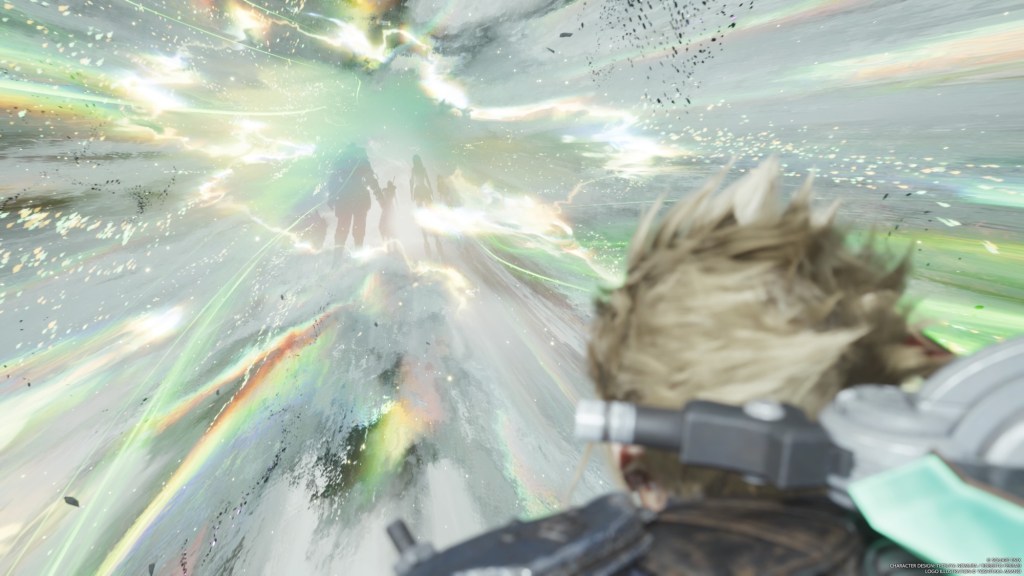
If Cloud has visions of the afterlife and the “true nature of reality”, then he appears to embody the mythic archetype of the pilgrim. And he resembles one pilgrim from world literature, in particular. One who, “midway along the journey of our life”, woke to find himself “in a dark wood”, having “wandered from the straight path”, who is then guided through Heaven and Hell by two separate guides. Both are deceased souls. One of them was an inspirational identity model of his youth. The other was a woman who elevated his romantic yearning to spiritual wisdom.
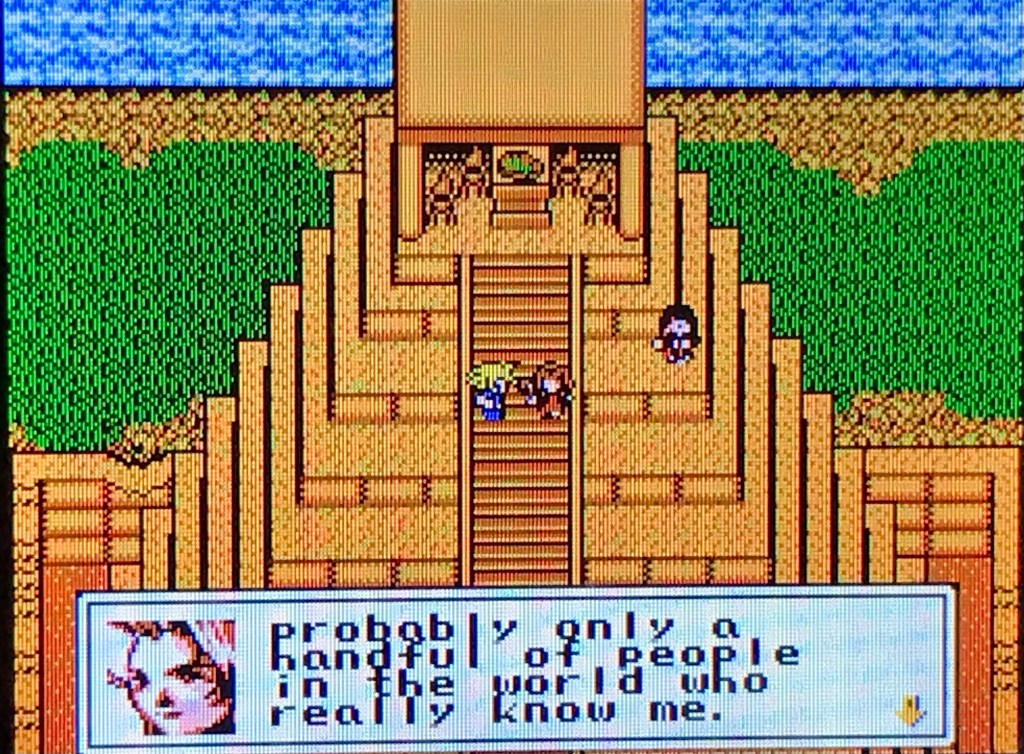
Even the love-triangle subplot of FFVII plays into this. Dante Alighieri modeled Beatrice after a woman he had fallen for. He avowed that he would write about her in a way that no woman had ever been written about.

If Cloud is an archetypal pilgrim, then he gets the literary fantasy treatment. He is not just a mythic pilgrim, he is Nojima and Kitase’s (to say nothing of Sakaguchi’s) version of a mythic pilgrim. He was also the last Final Fantasy main character to have the chibi-doll design. A design pattern that Sakaguchi felt was evocative of a puppet show.

The layering of the soul-investiture and puppet themes indicate the central myth. Cloud, the pilgrim, sees the world beyond the tangible. In the end, he masters his fear and grief and is less daunted by death. Not unlike Gerda from The Snow Queen or Dante.

Yes, all that explication about the Lifestream and mako and Holy still matters. But something told through explication just doesn’t shine as bright as a dynamic that unfolds through the course of a story.

Not that there’s any conflict between one or the other in this case. The major emphasis of the world-building is the transmigration of souls. Holy is a cumulative spiritual force embodied by souls en route to their next life. The exertion (or will) of this force is what people in FFVII are talking about when they say “the planet.” This holistic divine will is what is invoked with the white materia and the plot depends on it.

The central myth concerns the afterlife and its relationship with the rest of the world. Anything beyond that point is a matter of interpretation. That being said, I think there are a number of probable interpretations. The frequent use of psychological imagery depends on a distinction between literal and non-literal. References then stand out even more.

References to World War II are particularly hard to miss. Heidegger is named after Martin Heidegger, the German philosopher that collaborated with the Nazis and had a few of his students sent to concentration camps. Professor Hojo is also clearly modeled after Josef Mengele and the Cetra have an ancestral legend of a place called The Promised Land. The first Cetra victim of Hojo we see is Aerith, who is one of our two dead main characters.

Sephiroth has been initiated into a zero-sum game by Jenova. Among the cell carriers, Sephiroth is the dominant personality beside Jenova herself. In the Northern Crater, Jenova attacks the party in her original body for the first time (Jenova-SYNTHESIS). After defeating her, the first clash with Sephiroth (Bizarro) has two separate torsos, as if the body is split between two occupiers. In Sephiroth’s next incarnation (Safer), he has clearly come out on top. The extraterrestrial being is still the same except now it’s named Sephiroth instead of Jenova. After Safer-Sephiroth goes down, he tries to jump ship into Cloud’s body.

Sephiroth strives to absorb the Lifestream transmigration nexus into himself. Aerith, meanwhile, is attempting to channel the planetary will, shared by all in the transmigration nexus, for their own benefit.

The first allegorical Jew of the game lays down her life to preserve the divine and familial (one might say “brotherly”) harmony between all souls.

There are two basic concepts from Hinduism which also appear in Bhuddism: Atman, the individual soul, and the greater universal tapestry to which in belongs, called Brahman. Interpretive traditions like Advaita Vedanta maintain that the wholeness of one depends on connection with the other. This is evocative of the Bhuddist concept of interbeing: the irreducible essence of the individual is nurtured and cultivated by the outside world. One necessitates the other.

In Final Fantasy VII, a soul grows and matures during the mortal journey and takes that accumulated vitality with them when they die. The soul passes into the Lifestream transmigration nexus, where the maturity of that soul will diffuse among all others and nurture them, before starting the cycle over again in the next life. This also analogues the indivudual / collective unit of the Jenova cell carriers. Some fans theorize that a being like Jenova is what happens to a Lifestream once it’s excised from a planet.

Then there’s the combined Semitic and Christian symbolism of Aerith. A few years ago, I replayed the original FFVII with a close friend. During the last psychic exchange between Aerith and Cloud in the Sleeping Forest, my friend commented on the similarity with the Agony in the Garden of Gethsemane: the kiss of Judas by which the Romans knew Jesus.

Cloud as an archetypal traitor makes too much sense for comfort. I remember, when I first played through the Temple of the Ancients, I was horrified when Sephiroth’s mind control took hold. A different, child-like segment of Cloud appears to separate from his body, and then he beats the shit out of Aerith.

I guess this is one of those moments in which the puppet show either works or it doesn’t. In my opinion, it was uncomfortably successful. That scene, along with the first two scenes with the ‘Who…Are You?’ scoring, were nightmare fuel to me as a preteen (pretty cool reimagining of that song in Rebirth, btw, which somehow didn’t make it onto the commerically released sondtrack).

I’m tempted to read that implication as more relevant to Cloud’s feelings about himself at that moment, than anything else. All of Cloud’s guilt- all of his worst thoughts and feelings about himself -have accumulated into a perfect storm by the time the party arrives at the Northern Crater. Sephiroth then goes for the psychological / telepathic jugular by erasing his sense of self and convincing him that he’s a botched Sephrioth clone.

The gradual, layering use of non-literal and psychological imagery allows the historic, literary and religious allusions to rise to the surface without speaking too loudly. This is, pretty much, why I’m confidant that the commercial and cultural engineering of upper Midgar has a soft 1940s influence. That, in turn, creates a close degree of association with the cinematic themes I mentioned in the intro. I thought that cinematic expressionism was a close relative of literary fantasy to begin with since they establish internal consistency using very similar narrative cues. More than anything else, though, I find it easiest to associate the early 1940s-ish imagery of the original’s beginning with the two most visible nuke analogues: mako reactors and WEAPONs.

The analogues between mako reactors and fossil fuels and nuclear anxieties are apparent. The WEAPONs are a bit less obvious, though. WEAPONs are ageless beings originally conjured by the planet to fight Jenova. Since Jenova’s cells have been dormant for thousands of years, so have the WEAPONs. Once Meteor is summoned, the primordial kaijus start waking up.

Kaiju movies showed up just after WWII. Nuclear fallout creates giant monsters that level cities. The kaiju cultural footprint has become ubiqitous enough to loose any specific association with the post-war era but the rest of the original FFVII makes the WWII themes difficult to ignore. The WEAPONs may not have been created by human meddling but they are summoned by it. They were originally created to fight a hostile alien and humanity- in late FFVII -has made itself equivalent to hostile aliens. Human meddling didn’t create them: it was just the last straw.

When Shinra goes completely off the rails, there is no one to say no to Heidegger, Scarlet and Hojo. Scarlet and Heidegger build a giant mech called the Proud Clad which has no in-world model other than the WEAPONs, as if Scarlet and Heidegger saw them and thought “that looks cool, let’s do our version”. Heidegger and Scarlet build their own WEAPON while Hojo is using every reactor in Midgar to power the Sister Ray and blow the seal off of the Northern Crater. The kaiju born of human meddling only appears when the most powerful humans lose their minds. After that, the world has seven days until Meteor and barely makes it by the skin of its teeth.

Then VIIR and Crisis Core introduce the possibility that Midgar has never been in a period of peace. After the ceasefire with Wutai, Shinra experiences a rash of SOLDIER desertions and defections. Rebirth tells us that at least a few of them (not depicted in Crisis Core) joined Wutai, such as Glen Lodbrok (even if he’s little more than a Sephiroth finger puppet like most of the cell carriers).

In the VIIR games, AVALANCHE is a global, decentralized guerrilla network with ongoing operations against Shinra. To the chagrin of Barret and the Midgar cell, AVALANCHE also has interests in common with Wutai and collaborates with them.

So Shinra declared victory against Wutai and has still never known peace. Since Hojo’s work on the SOLDIER program, there just hasn’t been an incentive for peace. The military apparatus of Hojo, Scarlet and Heidegger has become a self-perpetuating institution. The historical parallels are apparent.

Seraphim’s page:

http://elbryan.tripod.com/FinalFantasyVII.html

Other stuff:
Three timelines- VIIR theory

(spoiler warning for original FFVII, FFVII Remake & Rebirth)

So, I was wrong about something-

My only firm prediction for Rebirth didn’t pan out.

It did not end at the Whirlwind Maze, in the Northern Crater. It seemed obvious, at the end of Remake, that the second leg of the story would begin almost exactly at Kalm and Cloud’s first telling of the Nibelheim incident. I figured, since the story would begin with Cloud’s recall-narrative…that the Whirlwind Maze would make for the perfect dramatic ending. Cloud’s memory is challenged directly by Sephiroth with the full force of Jenova’s ability to shape-shift and spell-bind.

Cloud seems almost suspiciously vulnerable to Sephiroth’s psychic duress. He soon becomes convinced that he was a failed Sephiroth clone, made in the aftermath of the Nibelheim incident, with DNA samples from Sephiroth in his post-Jenova state (that, I imagine, is what Cloud recalled Hojo keeping in the tanks in the Shinra Mansion, what with the skin and the hair and blood, most of which could probably have been taken forensically after the Nibelheim incident- skewered leg, other tussles during his rampage, etc).

I thought it was a great opportunity for a cliff-hanger that would, at a convenient narrative stopping point, add maximum drama while expanding the scope of the story, boosting the set-up to the third act.

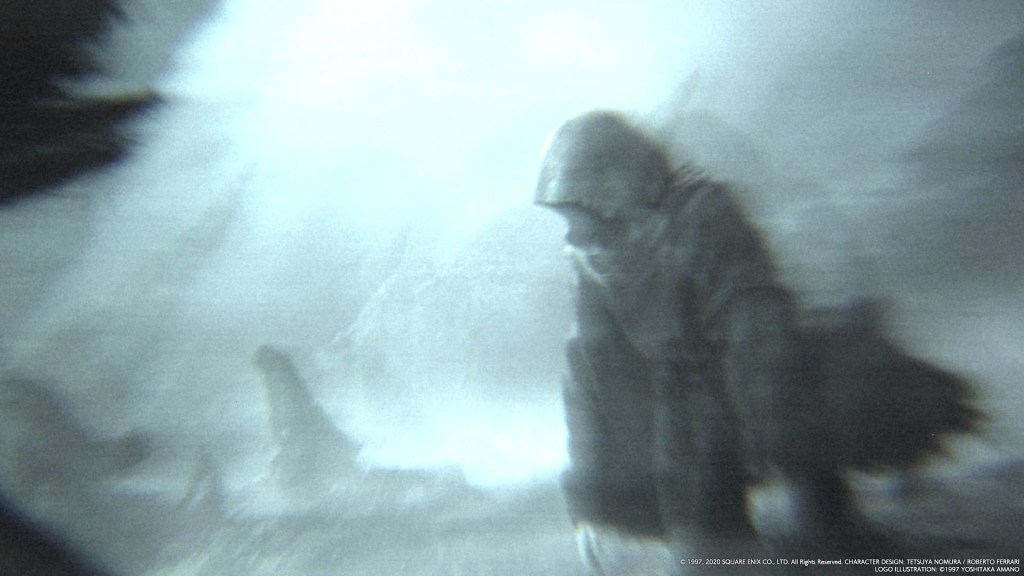
Cloud’s psychic glimpse, early in Remake, upon meeting a robed cell-carrier for the first time. That background was also a reason I thought the Whirlwind Maze would play a significant role soon

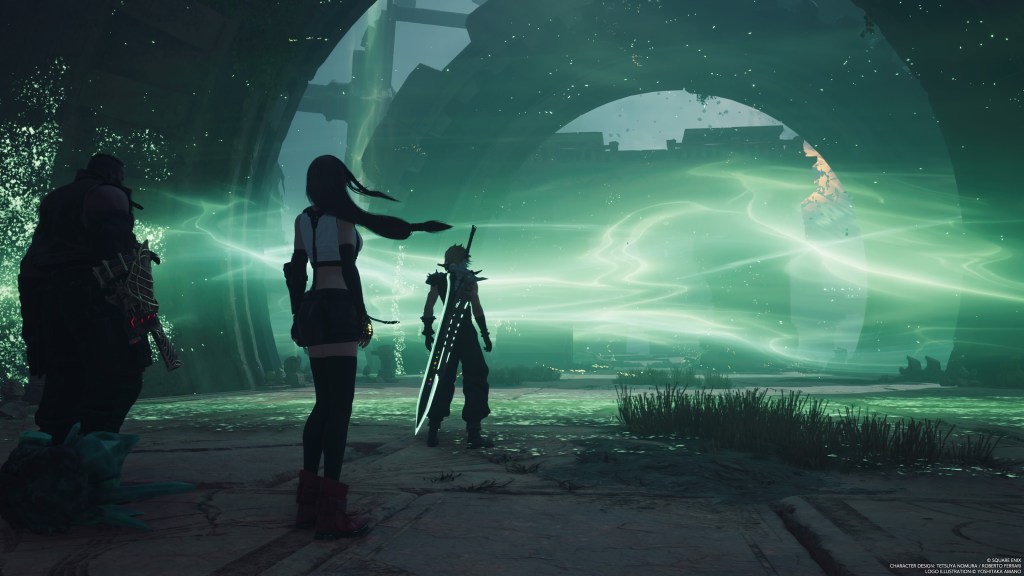
Nonetheless…Lifestream-tinged wind-storms made their appearance in the final act of Rebirth, even if it wasn’t in the Whirlwind Maze. Similar looking phenomena dominates the horizon in the Terrierverse, where we find Zack.

One wonders if these visual cues will come together when the final third of VIIR does portray the Northern Crater and the Whirlwind Maze. If they will mean what they meant in Rebirth but within the Whirlwind Maze, nestled against the edge of the crater.

Before going that far, let’s review what they actually were in Rebirth. They manifested in the sky in a certain cluster of worlds. These include the part of the Terrieverse that Zack wanders into at the end of Remake and the beginning of Rebirth. Elmyra tells Zack that some people think that it heralds the end of the world. Shinra appears completely galvanized around it, in spite of other recent blows to Midgar like the fall of the Sector 7 plate, the bombing of mako reactors and something that was widely perceived as a tornado.

It seems obvious to me that this is because of the interdimensional nature of what happened at the end of Remake. Rather: what usually happens when Sephiroth conjures a wall of destiny. Sure enough, at the end of Rebirth: Sephiroth manifests the wall of destiny on the outside of the Forgotten Capital of the Cetra. The last time this happened, someone (Zack) ended up in a cluster of worlds where the sky is covered with the same Lifestream-like glow as the whirlwinds in the Northern Crater.

One possible reading is that the Whirlwind Maze in the Northern Crater is dimensionally-unique space. The cluster of worlds containing whirlwind-green horizons may be distinguished by the fact that their entire world(s) are covered with the dimensional uniqueness of the crater, rather than a discrete location within a world.

What if: the Northern Crater is where it all came together for extra-dimensional Sephiroth. The event that broke the Sephiroth/Jenova/Whisper-conglomerate out of the first timeline also set them on the rampage that leads to the other two timelines. An interdimensional phenomena arising from a certain place may express itself in the same place across timelines. In a few different worlds, it looks as if a particular location is haunted by interdimensional weirdness. This could be an outside view.

In the world where we spend the most time with Zack, the whirlwind-glow is commonly called the rift in the sky. That looks like an inside view.

From the ease with which extra-dimensional Sephiroth omnipotentally manifests in the worlds with the sky rifts…it seems to follow that those are the worlds that are under the pressure of extra-dimensional Sephiroth’s Whisper-conglomerate. Directly against it, maybe.

How far out can Sephiroth go, exactly? How far out was extra-dimensional Sephiroth during his appearance in Remake and then in Rebirth?

Speaking of him-

Near the end of Remake and throughout Rebirth, the story can be divided between the timeline containing the party and the timeline containing Zack. At the end of my Rebirth review, I considered the relevance of a third timeline, where the extra-dimensional menace originated.

Before now, I’ve assumed that extra-dimensional Sephiroth originated from the “first” possible timeline that we, as gamers, are aware of: that which begins with the first Crisis Core and ends with Advent Children and Dirge Of Cerberus. That, of course, would go with the assumption that Jenova ultimately “won” in that timeline- either at a future date not portrayed or subtly “winning” in the present. Jenova (and, presumably, Sephiroth) won and turned Gaia into another flaming vessel for Meteor, from which to proceed to new planets and timelines to conquer. Maybe the mysterious fate of Genesis (post-Crisis Core and throughout the Deepground program in DoC) had some bearing on Jenova’s apparent victory in that timeline.

The theory has a ring of truth, considering the tone of the ending of the original Final Fantasy VII. Yes, it left room for some hope. Life, post OG VII, continued after the apparent fall of both Jenova and Shinra. Nanaki, at least, fills out the typical lifespan of his kind and begets a family along the way. Midgar, however, suffered damage from both Meteor’s approach and the abrupt, last-minute intervention of Holy. Some hundreds of years later, Nanaki and his cubs unexpectedly find themselves on a cliff, affording a panoramic view of Midgar, completely overgrown with wildlife and greenery.

Yet Midgar is only one human city-state: it’s downfall can only relate to the downfall of Shinra. Maybe humanity isn’t on top, just then, but wasn’t the whole story about humanity’s growing pains anyway?

The tone of the ending is tough on humanity but it is also fair, considering events up until then. A new planet-threatening crisis derived from human meddling (Genesis, post DoC) would cut against any possibility of a positive arc for humanity…but if Sephiroth and Jenova somehow came out on top “in the end”, then maybe it wasn’t looking good for humanity anyway.

Or, if Genesis didn’t “cause” it, then maybe Genesis was the one who brought Sephiroth’s extra-dimensional Whisper-conglomerate over the veil. Maybe the circumstances need to be the same to make contact with other Gaias, hence the insistence of “enforcing” the original timeline (Nanaki’s flash of the original ending near the end of Remake, i.e. “[t]his is what will happen if we fail here, today [sic]”).

Given some lore introduced in Rebirth, though, I’m not sure if extra-dimensional Sephiroth did come from the original timeline. The behavior of the black Whispers in Remake were clearly interested in enforcing the original timeline. We now know that the intentions of the black conglomerate-Whispers are not just enforcement of its creation, though: maybe enforcement of a temporal entry point? One that depends on the unfolding of the original timeline?

The enforcement of that timeline matters at least a little; the ‘analysis’ blurbs for the Whisper Harbinger’s three lesser Whispers say that they are protecting their timeline of origin. In a recent Ultimania guide, some of the creators of Remake effectively told the interviewer that the three end boss Whispers are Kadaj, Loz and Yazoo from Advent Children. The Ultimania statement, the ‘analysis’ blurb in Remake and the behavior of the Whispers in that game all attest to the enforcement of the original timeline. If not for origin, than for an entry-exit causality juncture which (presumably) enabled them to survive the original timeline.

This would also necessarily mean that extra-dimensional Sephrioth did not come from the original timeline, though.

Jenova-facilitated contact from a third timeline would explain some of Cloud’s memory-flashes in Rebirth. One of them dates back to the beginning of Remake, when Cloud encountered a robed cell-carrier living next door in an apartment building. Lots of robed figures, against a windy, rocky background, with some jagged peaks that I find reminiscent of a location from the original. More recent memory-flashes include the deaths of Zack and Tifa.

Strictly speaking, the original Final Fantasy VII furnishes some intuitive answers. By the end of that game, we knew that Cloud was harboring Jenova cells ever since Hojo experimented on him and Zack in the Shinra Mansion. It’s commonly interpreted that the psychic sensitivity and shape-shifiting potential of Jenova caused Cloud’s personal cell colony to fabricate memories, such as the ones demonstrated in his telling of the Nibelheim incident in Kalm.

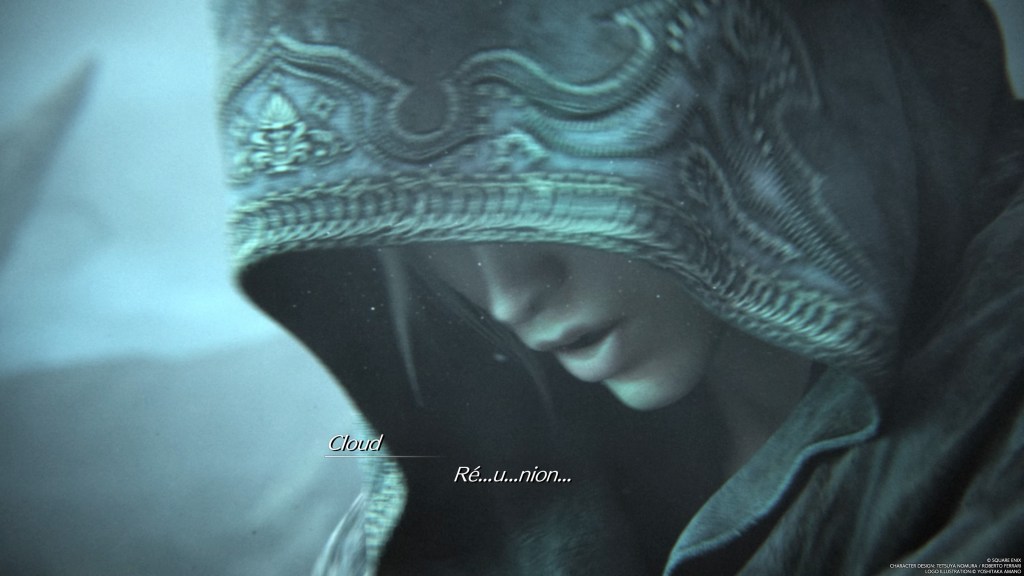
We also know, from the original, that Sephiroth will use any psychic pressure that could possibly help him. If its helpful for him that Cloud start believing that he’s a Sephiroth clone, Sephiroth will see it through. If Jenova and Sephiroth in Rebirth have that much in common with the original story, then artificial memories of Tifa and Zack dying are definitely something that they might try. The vision of Cloud in the cell-carrier robe, seemingly shuffling around the Whirlwind Maze muttering “reunion”, could also be a whole-cloth fabrication, for that matter.

How many whole-cloth lies have we seen from Sephiroth, though?

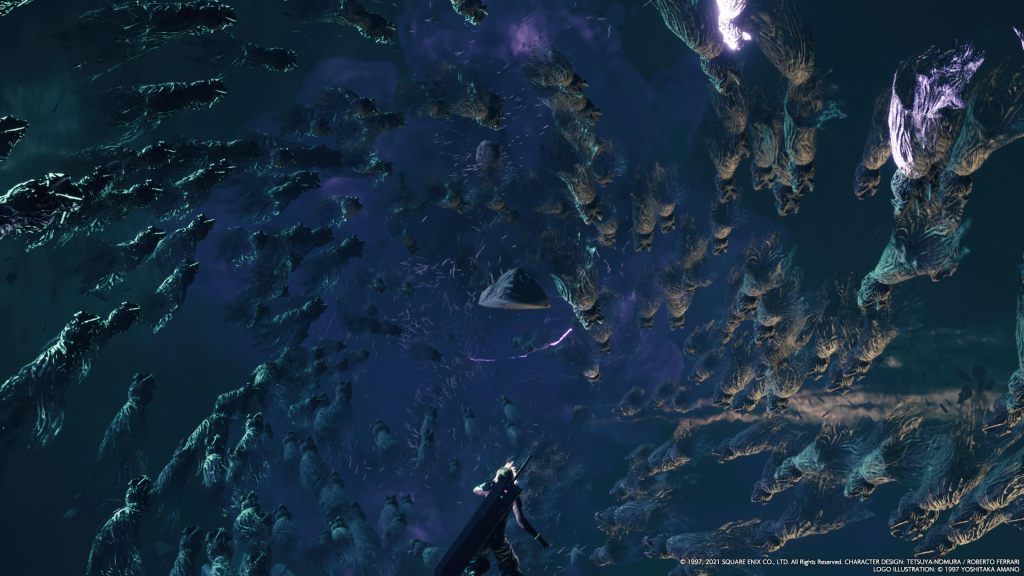
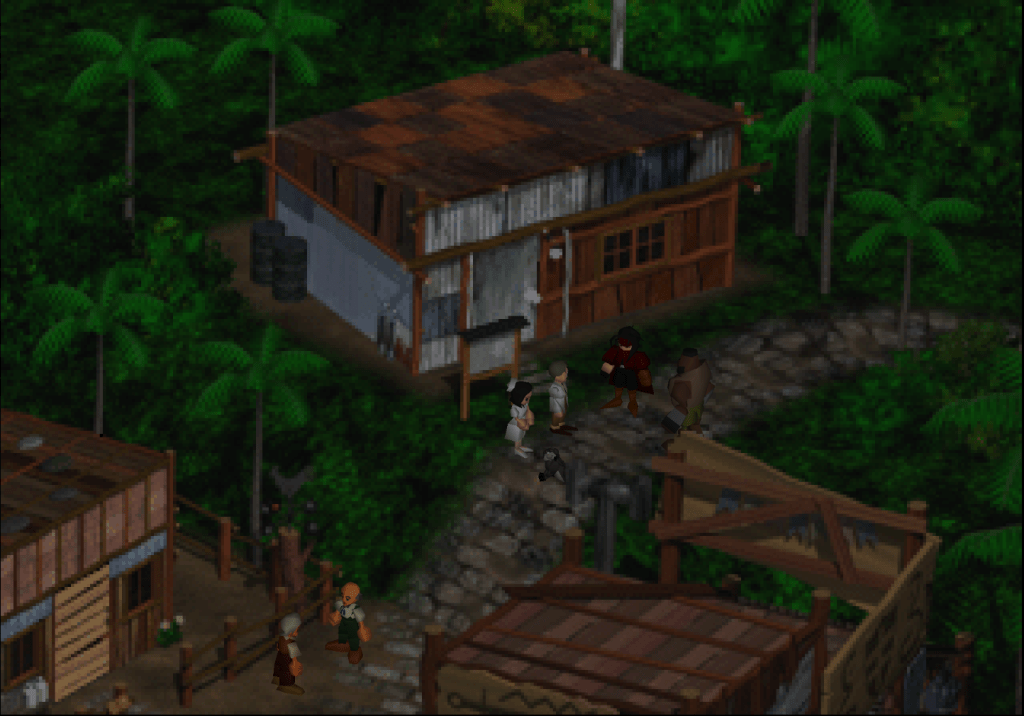
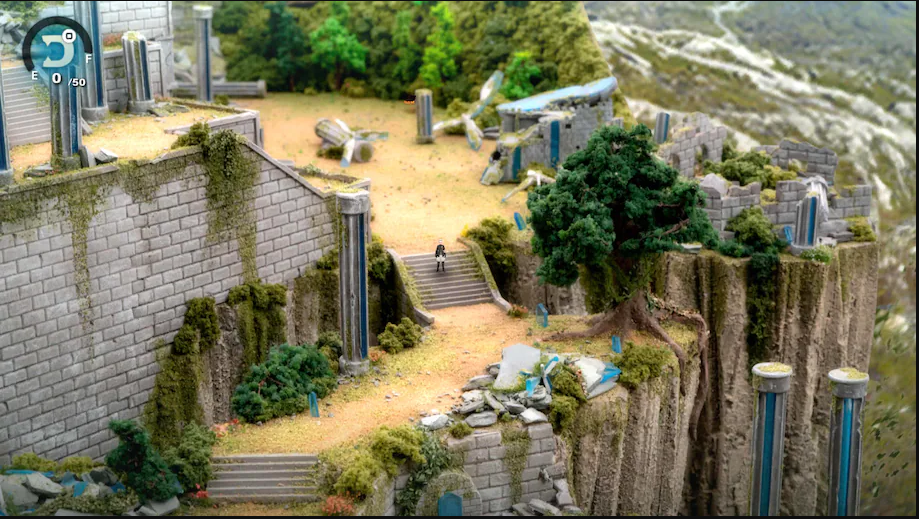
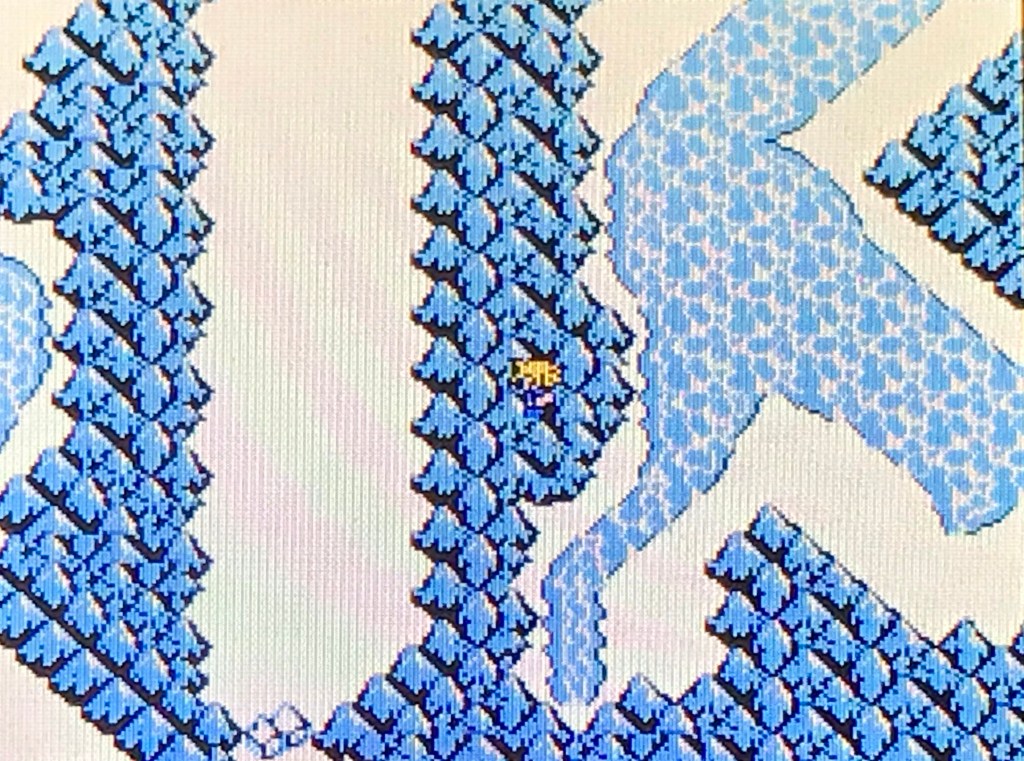
The frozen, crystalized heart of the Northern Crater, as seen from the scale of viewpoint characters (PS1, obvs)

The biggest candidate would be the idea that Cloud is a Sephiroth clone. Yet, considering that Hojo likely dosed Zack and Cloud with Jenova cells from biomatter left by Sephiroth, it isn’t entirely off base either. Sephiroth and Jenova will control the framing of apparent information and elimate information but they don’t appear to add information, except in a blunt, copy-paste way. Cloud’s delusions of “being” Zack are crafted around his observations of Zack. Cloud can’t even leave out the traits he doesn’t want idealized- those are given to a random Shinra trooper, who just happens to be in all of the situations Cloud himself actually would have.

The telepathic pressure of Jenova seems to lie more in misrepresentation and projection than outright fabrication.

Obviously, if you think that Jenova can do fabrication, then you can sweep those recent memory-flashes into the ‘deception’ category.

I’m inclined to think that the memory-flashes of Cloud in the robe, the death of Zack and the death of Tifa are probably based on something, even if the source and the meaning isn’t direct. A third timeline accomodates this, especially considering that it was probably a timeline in which Cloud turned as ugly as Sephiroth (to say nothing of the role played by the loss of Zack and Tifa).

In the version of this theory that I arrived at during the end of my Rebirth review…this timeline makes itself known to Cloud (potentially from a young age) for very specific reasons. A very specific reason that can hide in the shadow of existing world-building.

Remember how much the VIIR devs have emphasized their attachment to faithfulness. Any new cosmology innovations will not likely edge out existing cosmology.

Narrative changes have been made, of course, but I think the majority of those arise from the modern graphics, which tie the scale of the perspective to human physical proportions. Things that happened in the overall plot of the original game find their way into comparable places, if they can’t be in the same place (Fort Condor-related sub quest in Junon, even if the actual Fort Condor location isn’t there, etc).

Dramatic changes have also been made with extra-dimensional Sephiroth and the Whisper-conglomerate. But I think those changes are more likely to rhyme with the original cosmology than contradict it.

This rhymes with Cloud’s mental wounds.

The dude has had a painful relationship with self worth. His last commuincation with Tifa, before her childhood accident on Mount Nibel, was urging her not approach the rope bridge because there was nothing to find; the local folklore about Mount Nibel is folklore only and the land of the dead is not there. Cloud only made his presence known once Emilio and others left Tifa alone on the mountain. He accompanied her to the rope bridge and brought her back to Nibelheim. In the original, Cloud was smeared by Emilio and the others- stemming, apparently, from the shame of their abandonment.

His first experience sticking his neck out for someone ended with at least a temporary bad reputation and isolation from Tifa. After that, the quiet anger and resentment of Cloud’s early adulthood began to sink through. At age thirteen, he tells Tifa that he plans to join SOLDIER, in emulation of Sephiroth.

Here, it becomes helpful to remember the beginning of Remake: something happened, with a leaky mako pipe, that had some connection with Aerith’s awareness of the other timelines.

Nibelheim is also the site of the first mako reactor. And it’s known to leak. And early-teen Cloud is nurturing his indignance with power fantasies.

The original story accomodated this with the relationship between Cloud’s inferiority complex and his eventual dosing with Jenova cells. Obviously, both of those things are still present and active in VIIR.

Jenova is known to shape-shift and use psychic manipulation. All she needs is a psychological exploit. But this is a world where Jenova is connected, across timelines, to extra-dimensional Sephiroth. One of the trickier parts of differentiating between extra-dimensional Sephiroth and local Sephiroth is that both rely on Jenova which means telepathic influence could be coming from one, the other or all of the above.

What if Jenova had reference material to use on Cloud, from the Whisper-conglomerate? Say, a timeline in which Cloud became a famous 1st Class SOLDIER alongside Sephiroth? Feeling small can create big dreams.

This timeline, as far as we’re concerned, would look completely random unless it was built up beforehand (Cloud in the robe, Tifa and Zack, etc).

The death of Zack (in the rapids of Mount Nibel instead of outside Midgar) is also clearly not meant to be a throwaway memory-flash. When it happens, Cloud says to Tifa that they need to tell Aerith, for her closure. Tifa tells him that she will take care of it, later, in privacy.

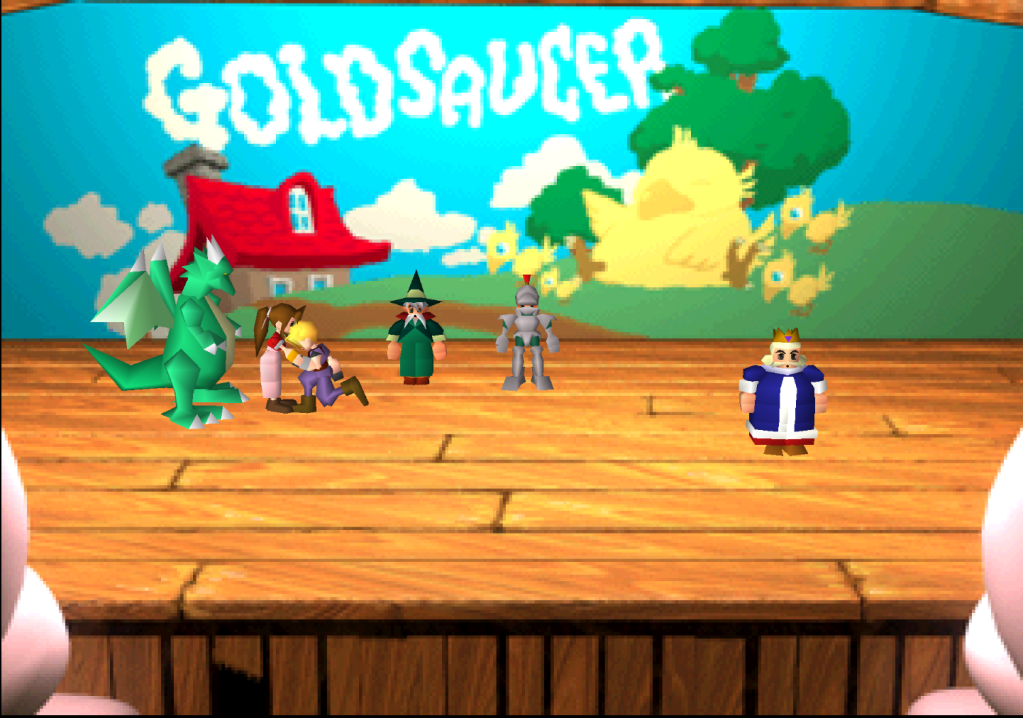
Later, if you end up with Aerith during the second Gold Saucer visit, Aerith delivers a combination of familiar and unfamiliar dialogue. She comments on Cloud’s uncanny resemblance to Zack in his mannerisms and bearing. Cloud assumes that she is beginning to grieve because Tifa told her how Zack died. He says (pretty much) “Tifa told you, huh?”

We then get a brief flashback to that conversation and Tifa apparently choked: she only managed to say that “Cloud remembers Zack now” before losing her nerve.

Aerith, therefore, has no obvious reason to know what Cloud was talking about.

To address some concerns of Aerith’s awareness:

Before now, Aerith had revelatory little memory-flashes about the “original” timeline. Throughout Rebirth, those visions are less available to her. She tells Tifa, in Kalm, that she lost a lot of those memories (presumably when they crossed the wall of destiny on their way out of Midgar). Aerith tells Nanaki that she managed to regain some of them and gain further insights. In spite of that, Aerith doesn’t appear to have the whole, intact, extra-dimensional awareness that she did in Remake. When Aerith touches other people in Remake, they get flashes of the original CC-DoC timeline. That touch-effect isn’t present in Rebirth.

What all that means is: Aerith doesn’t necessarily know how things turned out “first time around.” Meaning, she may or may not have any awareness of how Zack died outside of Midgar, much less Cloud’s memory-flash of him falling into rapids on Mount Nibel.

So. Back to Aerith and Cloud, during their Gold Saucer date. Aerith might be unaware of any subtext that would let her know what Tifa was driving at. Aerith may have no idea what Cloud was talking about with the “Tifa finally told you” line. In any event, Tifa did not tell Aerith what she said she would and Aerith says nothing to imply any contextual knowledge of this.

(Not to stray too far from the Gold Saucer date…but consider what Tifa probably thought of Cloud’s dead-Zack-in-the-rapids flash. Cloud has already voiced the idea that Tifa herself appeared to die after Sephiroth slashed her open. Maybe it’s manipulation from the third timleine but Tifa seems to think it’s psychosis. She has also sat through a telling of the Nibelheim incident by Cloud, with Cloud doing all the Zack stuff. Tifa likely assumed that the memory of Zack’s death on Mount Nibel was purely delusional. In that case, she wouldn’t want to freak Aerith out over Cloud’s problem and therefore froze)

If someone starts with the VIIR games with no knowledge of the original, the vision of the Mount Nibel rapids might appear even more significant.

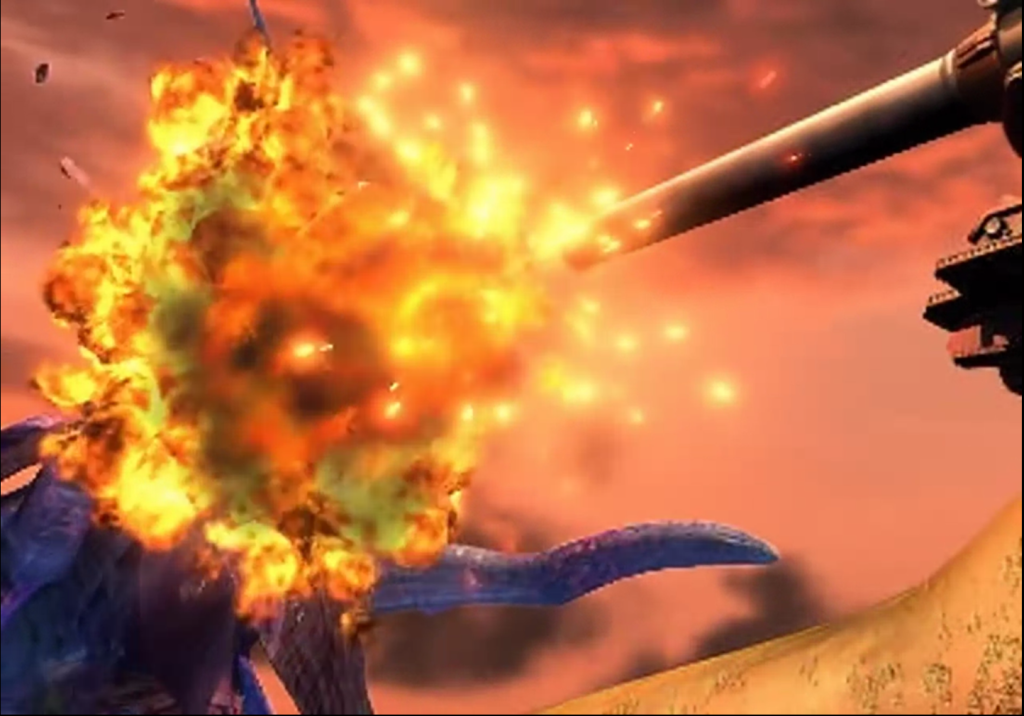
Another reason I find the possibility of a third timeline compelling: in the original, Sapphire Weapon goes down after taking a mako cannon shell at point-blank range, never to be seen again. If that was meant to be the death of Sapphire, then I wonder if the ending of Remake may have included another hint at the third universe.

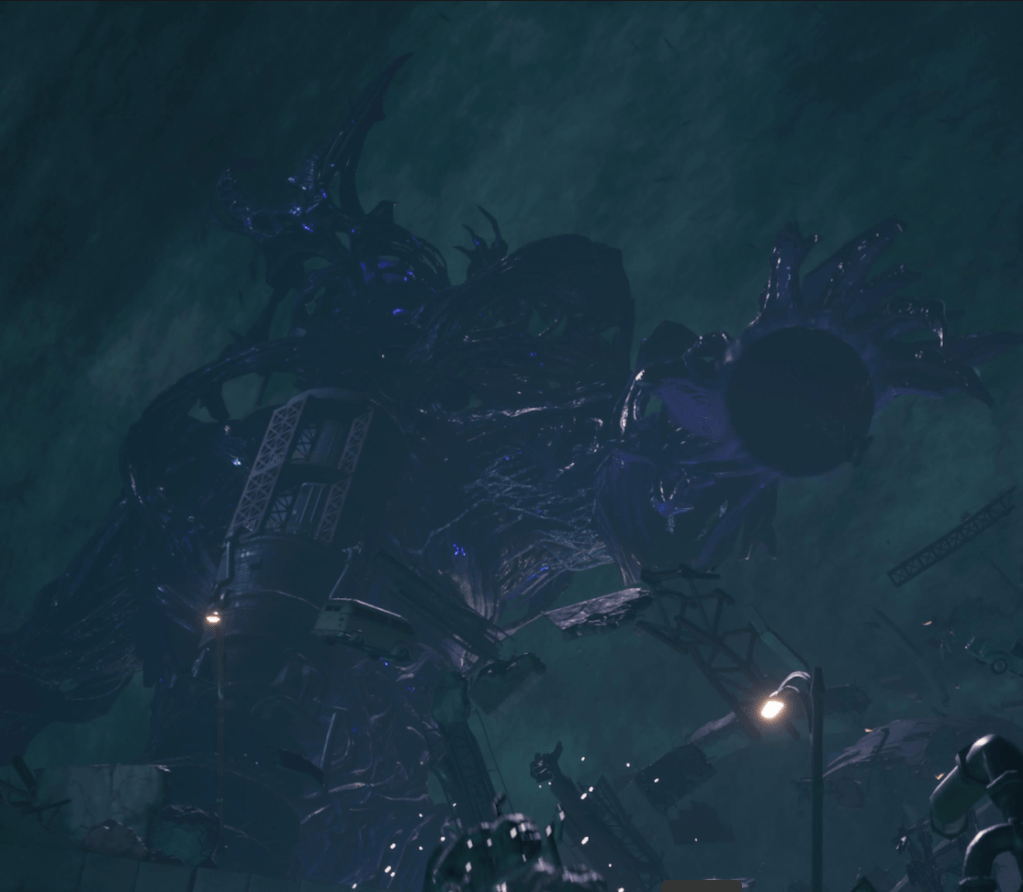
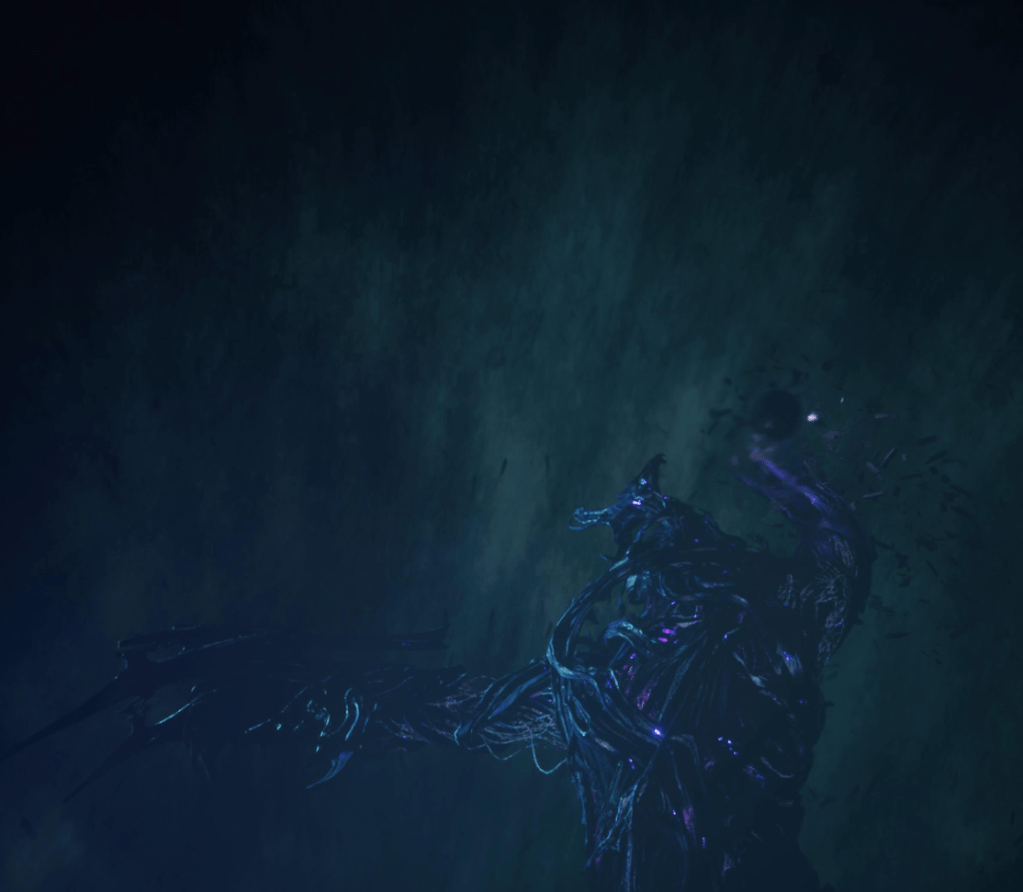
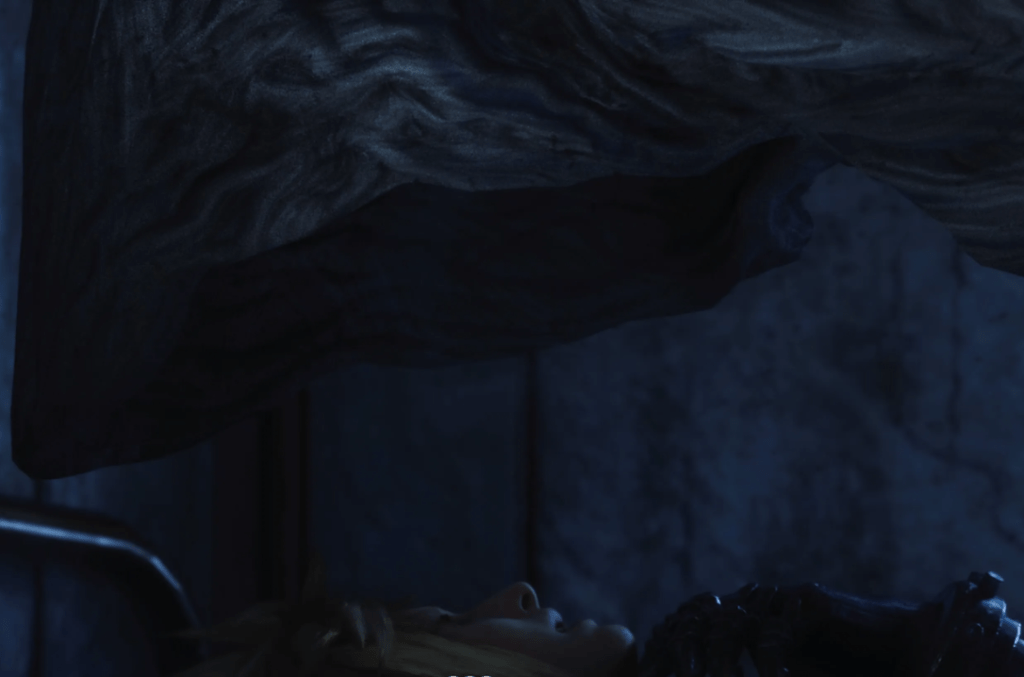
Basically, I think the Whisper Harbinger in Remake looks like Sapphire Weapon.

In the original, Sephiroth’s organic body- from which he psychically projects into cell-carriers -is suspended directly above Sapphire Weapon’s head in the Northern Crater.

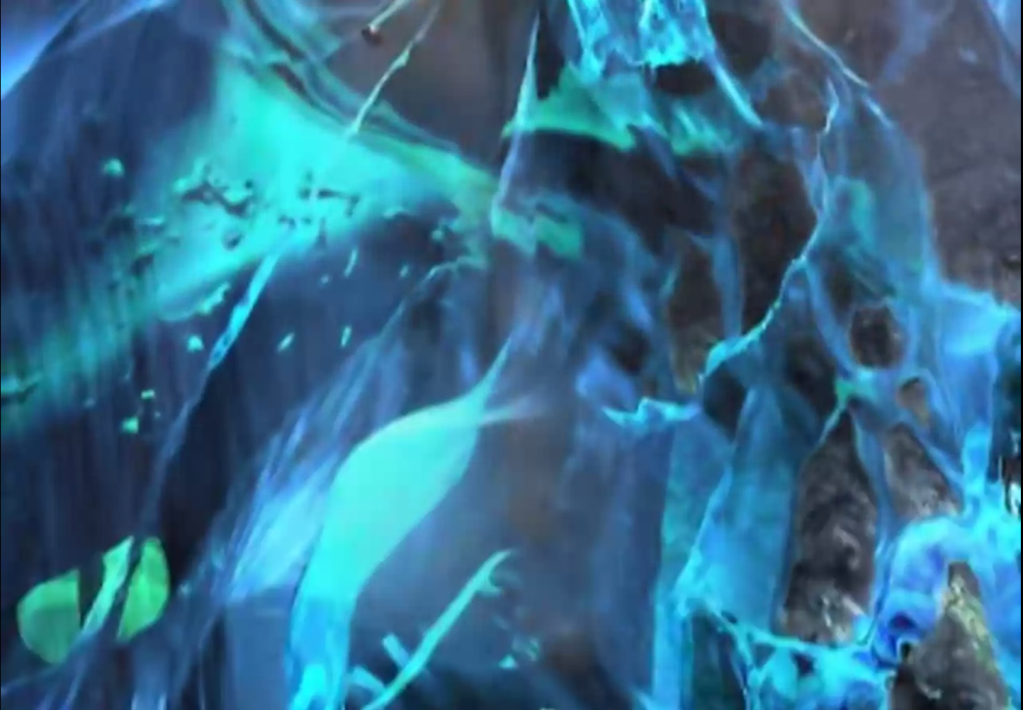
Dunno about this next comparison exactly but I couldn’t help but notice the narrowed eyes-

This always stood out in my memory as one of the few times we see Sapphire Weapon’s eyelids move in the same way they did before (you know, like they did behind the frozen wall within the Northern Crater)

To say nothing of the one obvious deviation from Sapphire’s traditional design-

I think the arms might be the only thing that PS1 Sapphire DOESN’T have, yet allowances must be made- Sapphire Weapon wasn’t originally suffused with an excised Lifestream dominated by Jenova and Sephiroth, so…

These similarities feel even more significant after seing how Rebirth depicted the Lifestream-view of the interdimensional incursions of Sephiroth between worlds.

VIIR features a new Weapon-being, known to come and go from mako reservoirs in at least two ruined reactors: first in Corel and then Gongaga.

After everyone’s first evening in Gongaga, they wake up to disturbing news. Shinra is fast approaching the mako reactor ruin and Whispers are preventing members of the militia from approaching. The party encounters them on their way to the reactor but they seem far less interested in them then they were in Remake. Cloud sees one of them assume the shape of Sephiroth, which I suspect was simply extra-dimensional Sephiroth making his presence known to him.

At the reservoir (which is still somehow drawing mako despite being non-functional), the Whispers are swarming in a spiral overhead. Cloud is overwhelmed by Shinra troopers when extra-dimensional Sephiroth manifests, telling Cloud that he needs to embrace his anger without reservation. Cloud then becomes an unstoppable BEAST, brutally and efficiently cutting down all in his path.

Tifa is alarmed at this sudden change and approaches him. Sephiroth repeats his assertion that Tifa is dead and that this person is a Jenova cell-carrier. Cloud mumbles this as it’s relayed to him and Tifa is flabbergasted: she already showed Cloud her surgical scar, how could he still be on about this?

The Whispers in the sky disappear and Cloud attacks Tifa, who dodges his blade only to fall backwards into the reservoir. As she falls, extra-dimensional Sephiroth and the Whisper-conglomerate (worst band name ever) withdraw from Cloud and he realizes what he’s done.

Tifa, meanwhile, gets swallowed by the Weapon. This Weapon, by the way, has a Huge Materia socketed into its body. Rufus, earlier, told his cabinet that Weapons appear when the planet is in danger and contain their own Huge Materias. This, apparently, pertains to Weapons in general and not just this specific whale-like one.

Next, we are rooted in Tifa’s perspective, inside the Weapon. The environment has at least a passing resemblance to the Lifestream astral plane from the original- the one Tifa and Cloud end up in after a Lifestream swell erupts in Mideel, where she psychically helped Cloud separate his own memories from the cell-colony illusions.

Here, like Mideel in the original, Tifa concludes that she is within the Lifestream. On this plane, the Weapons are not just defenders of the planet: they are her avatars.

To everyone’s awestruck relief, the Weapon surfaces from the reservoir again, to return Tifa in a flash of green light.

Tifa later tells everyone (after a therapuetic debriefing with Cloud) that she saw the planet in conflict with an outside menace. This maps onto Tifa’s vision of the Corel-Gongaga Weapon fighting against the Whisper-conglomerate. For part of this, Tifa is looking outward at the Lifestream from within the Huge Materia in the Weapon’s belly. After going a few rounds with the Whispers, the conglomerate parts, revealing extra-dimensional Sephiroth, who lunges through the Lifestream and cuts open the Huge Materia, ending the vision.

Immediately before gouging the Huge Materia that Tifa is looking out from

Speaking of Cloud and Tifa’s Lifestream adventures…they still have a distinctly psychological structure, even with their significance beyond the individual. Weapons represent the will of the planet, much like Holy. The planet contains the Lifestream. Yet Weapons can interact with other continuities from within it, both inside and out like a Russian nesting doll. As if the Lifestream contains avatars from different timelines, like multiple personalities within the same mind.

If Sephiroth and the Whisper-conglomerate are going from timeline to timeline absorbing different Lifestreams, an avatar through which to travel to other timelines would be important. Also: if Jenova’s ultimate goal (perhaps her life cycle) depends on subjugating entire Lifestreams, that could be expressed as bending the planet to her will. The will of the planet would become her own, perhaps capturing the local Holy and the local Weapons.

Meanwhile, in a certain timeline, Sephiroth is suspended in the Northern Crater, directly over Sapphire. Just sayin’.

Here’s my Rebirth review for context

https://ailixchaerea.blog/2024/09/30/final-fantasy-vii-rebirth-review-heavy-spoilers/

And this is a lore analysis I wrote after Remake came out, dealing with the Whisper Harbinger and the Ultimania interview

https://ailixchaerea.blog/2020/07/04/final-fantasy-vii-remake-lore-theory/

Traces Of Two Pasts (book review)

As the cover art and the name suggests, this is about Aerith and Tifa. If you’re looking for a character study of the two FFVII heroines, you’ll get what you came for. An unfamiliar reader would look at this and probably infer that this is a kind of flashback anthology about two women talking and bonding. Just as advertised.

The stories have substance but rely strongly on the source material. It’s nowhere near as self-sufficient as the FFXV novel.

For a fan of the original story, though, the beginning is awkward. This may be a consequence of the centrality of Cloud’s story about his past and the reality behind it. A reader approaching this story in isolation might not have this problem. A lot could turn on how much the final vignette reconciles with the loose ends…which is more suggestive than explicit. The cover of the book says it’s a novel, and since the bulk of the story is dominated by one single narrative theme (Aerith and Tifa reminiscing), it’s as much of a novel as any. But the frequent use of suggestion, rather than directly connected plot points, could make it feel a bit more like an anthology.

The first vignette is about Tifa’s past, which is enmeshed in Cloud’s past. Kazushige Nojima even solidified the connection.

To get some basics out of the way: two of our Final Fantasy VII main characters, Tifa and Cloud, come from the same sleepy village nestled in the foot of a mountain, called Nibelheim. Something happened there that left it’s mark on their minds and bodies. Nojima decided not to depict this event, which is understandable if not satisfying. A central plot thread of the base game depends on both the event itself and Cloud’s first flawed telling of it.

There are a number of late-game character beats that depend on Cloud’s misrepresentation being exposed. Since Square is retelling the story with the Remake trilogy…and because Final Fantasy VII is such a reliable cash cow…they are probably hesitant to draw too much attention to the Nibelheim incident. Especially since FFVII Rebirth covers the part of the story with Cloud’s first garbled telling of the Nibelheim event.

Anyone who has played the original PS1 game knows what parts of his story are not accurate and why. But the Remake trilogy is reimagining this with an eye toward updated social dynamics. If Cloud’s first telling is meant to come off as “true” so it could be contradicted and corrected later…I don’t know how that would shape out. Maybe they’ll make it obvious that Cloud didn’t tell the whole truth and they’ll repeatedly draw attention to little things that reveal the falsity of his version.

It’s hard to read the first half of Traces Of Two Pasts and not think about this. Obviously, Nojima didn’t want to talk about the Nibelheim incident in detail so as to avoid stealing the thunder of the recent game (Rebirth).

At the same time…the event is central to the story of Tifa’s youth and early adulthood, which is the first half of this book. The vignette is divided between her younger years in Nibelheim and her early adulthood in Midgar. The Nibelheim incident connects both of these halves, which Nojima made even more explicit.

If I were reading Traces Of Two Pasts as a standalone novel, the beginning of Tifa’s story would feel like a normal beginning. The narration cuts between Tifa’s memories and the conversation she is having in the present with Aerith. The past and the present contrast in ways that suggest something important is waiting just around the next corner.

She also discusses the childhood social dynamics of Nibelheim and how being one of the few girls in a one horse town made male friendships uncomfortable. She had three male friends with Cloud lurking on the edge of their periphery. For most of her teenage years, she gets used to the experience of brushing off frequent attempts to flirt. Even her three regular buddies do this off and on. She remarks on how a few of her childhood friends truly wanted to marry her in the long run and her awareness that she wanted nothing of the sort.

Cloud, as a child, made his own earnest-yet-awkward bid for her affections which, to Tifa, felt ambiguously different from all the other passes made by the local boys.

During the subchapters set in the present, it’s clear that adult Cloud is travelling with them. I know that kind of narrative contrasting between a past-version and a present-version of a character doesn’t have to be foreshadowing but a lot of people will read it like that. I would have, if I had no prior knowledge of Final Fantasy VII. Combined with the allusions of some important reunion with Cloud, it starts to feel even more like foreshadowing. She then drops a few hints of some mysterious connection between her reunion with grownup-Cloud and the dark, mysterious Nibelheim incident.

During this connecting event, Tifa sustains a mortal injury. Before that point, the person who injured her has received a lot of ominous build-up. Tifa mentions, very specifically, the look on her assailant’s face. This person, Sephiroth, is referred to by name in Tifa’s vignette but has little to no references outside of it. If you want to treat this character as a fixture of the world-building beyond the narrative, there are ways to do that. But you shouldn’t tie it directly to the central narrative thread. In my opinion, the anthology vibe would have been stronger if there was at least some version of the Nibelheim incident depicted. That would have concluded Sephiroth’s role in Tifa’s story which would allow the reader to move passed it when the next story rolls around. Instead (again, assessing this as a standalone novel) it just feels like a loose end.

What happened at Nibelheim is something that powerful people want to cover up. They go out of their way to hide the deaths that happened. Tifa would have been one more incriminating corpse to worry about, so they rushed her to a clinic in Corel and then for long term physical therapy in Midgar. Everyone in Midgar knows that people who expose secrets don’t live very long. Tifa learns this lesson and keeps quiet about it.

Before moving on to the strengths of Tifa’s story there is another world-building concern I need to mention: cosmology. Especially since it comes up again in Aerith’s part of the book.

In the original Final Fantasy VII, there is a concept called the Promised Land. President Shinra & friends believe it is an actual, physical place with bottomless mako energy to pump. According to Aerith, the Promised Land was a non-literal, metaphysical concept of the Cetra.

This adds a touch of religious fundamentalism to Shinra’s ordinary greed. Especially since President Shinra himself is a vocal believer in the literal existence of the Promised Land. One of the Honeybee Inn sequences in the PS1 original even featured the President dressed as a wizard in a private room conducting a kind of ceremony. His body guards complain about the President’s need to do this and, in his ceremonial recitation, talks about a harbinger of the Promised Land who is covered in black with a long sword. At that point, it almost sounds like there’s some kind of freaky high-roller cult that venerates Sephiroth.

In Tifa’s half of Traces Of Two Pasts, one of the conversations that drew Tifa to Avalanche is depicted. Jesse begins her explanation of the Lifestream by talking about the transmigration of souls. Tifa says that Shinra somehow proved that there is no non-physical state after death which Jesse says is propaganda.

To say nothing of the conflict with prior world-building…only the most far-gone, ideologically-motivated atheist would make a claim like that. No atheist I ever met personally would say something like that. Life after death in laboratory conditions is like God in laboratory conditions. It can’t be falsified and therefore can’t be tested, let alone “proven” one way or another.

Not that history doesn’t have it’s own examples of this. In Eastern Europe and Asia, militantly atheistic fascist governments have suppressed and persecuted religion with inhuman brutality. A historical tally puts events like that in the minority against religious oppression- but atheistic tyranny is still documented. But if you’re writing a story where powerful people are motivated by a literal interpretation of ethno-religious folklore, like Final Fantasy VII, maybe try not to have the source of that power lean into radical atheism. Going straight to see screenings of ideological films after that conversation also gives her induction into Avalanche a hint of cult-recruitment.

Later, in Aerith’s story, Tseng says that Shinra’s inner circle are motivated by their belief in the literal truth of the Cetra scriptures.

Not gonna lie, this annoyed me. First, Shinra is radically atheist, appearing to contradict the source material. Next, they believe Cetra legends are literally true.

Before moving past these weaknesses, I want to emphasize that it’s still internally possible for both portrayals of Shinra in Traces Of Two Pasts to be true. At least, according to an extremely strict reading of the text.

For many people, the concept of life after death is inseparable from religion. On an abstract basis, this association is not necessary. There are sects of Mormonism which believe that the second coming of Christ will usher in a physical, corporeal Kingdom of Heaven. As in, those who are saved will have immortal, physical bodies and unlimited material wealth. There are also strains of Islam and Judaism in which the final, permanent era of creation includes the resurrection of physical bodies. In these cosmologies, the everlasting life of the faithful is not continued existence after death so much as it is a physical reversal of death.

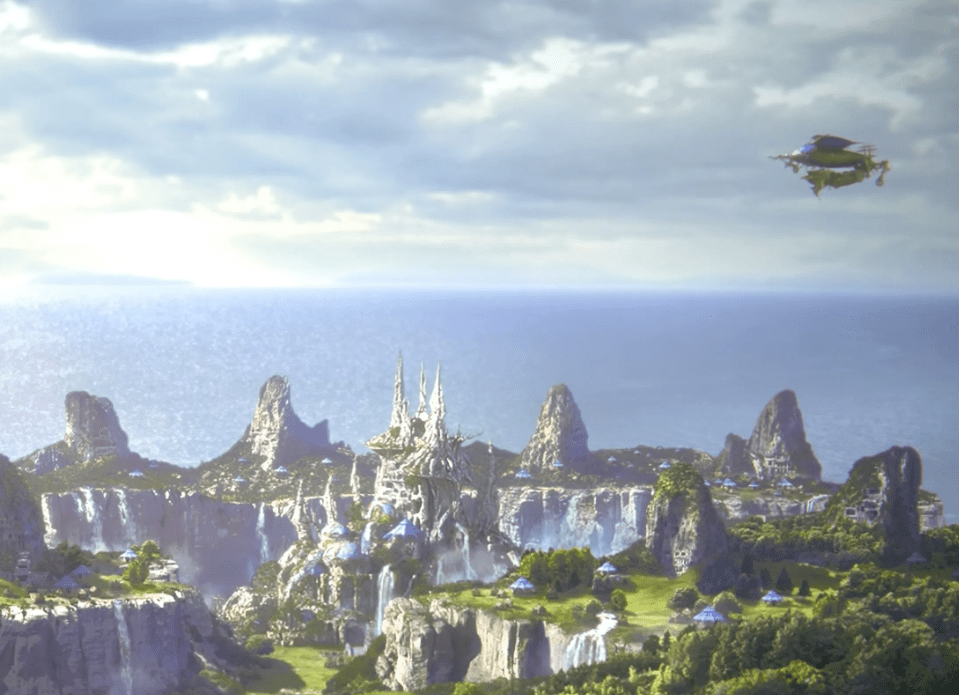
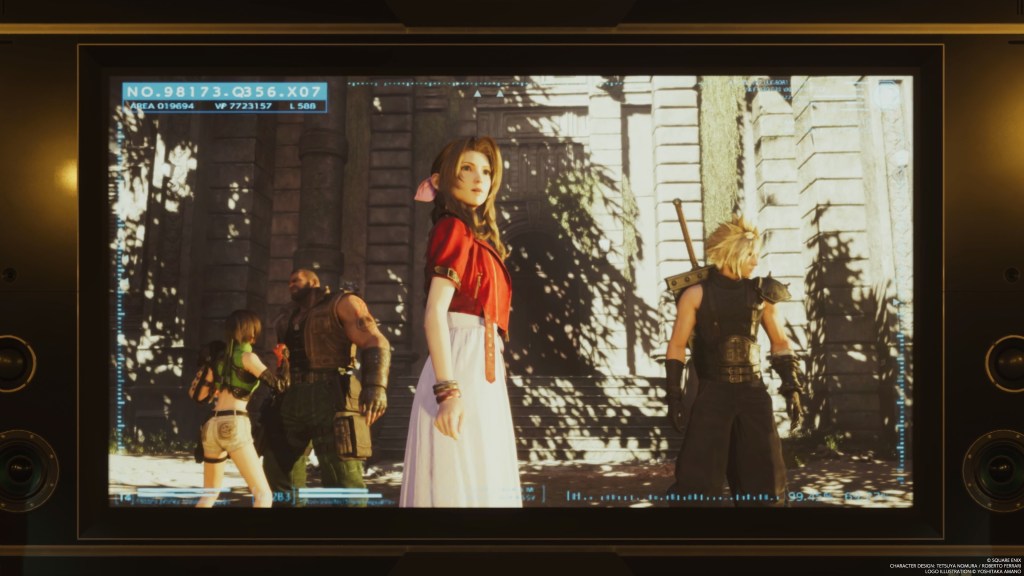
As this is set in the Remake continuity, this concept of a tangible, physical Promised Land might remind us of Shinra’s VR presentation from the first PS4/PS5 game. The VR portrayal of the Cetra definitely emphasizes material comfort and scientific sophistication. Appealing to a belief in an idyllic, lost past or state of grace is a common propaganda angle, and maybe Shinra’s portrayal of the Cetra is that simple. Or maybe the VR presentation is depicting what Shinra actually aspires to be- the Cetra with more technology.

The world-building can be held together by these fine points….but they are fine points that require a careful reading while we’re also dealing with the absent Nibelheim incident (which included the adult reunion with Cloud and Sephiroth’s attack). The rest is an appreciable and reasonably complete short story.

If you saw the cover of this book and are solely interested in character studies of Tifa and Aerith, you will not be disappointed.

Tifa experiences the inability to acknowledge the worst thing that’s ever happened to her. On more than one level. She is trapped in medical debt in a strange place where she is nearly homeless. I don’t think any of these things can be shrugged off as trivial. Least of all the thing that they all have in common: talking doesn’t help.

The people she wakes up to after surgery in Midgar emphasize that, if you go around saying you were mortally wounded by a Shinra icon like Sephiroth, someone will make you disappear. Tifa is then guilt-tripped into an existence of paying off the massive medical bill that resulted from Sephiroth’s assault. All the while making ends meet in a place where abductions and trafficking are common. This may have been what Shinra intended by leaving her in debt-servitude; she’s a loose end of the Nibelheim incident, after all.

Studying the written lessons of Zangan is her only outlet, which narrows her focus to simply existing, from one moment to another. Existing reliably and implacably, with no other resource but her strength.

Perhaps these factors can paint a more humane picture, if equally pessimistic. There is such a thing as truly informed belief leading to belief-driven actions. It’s not all channelling emotion into unrelated things for psychological reasons…but for a lot of us, those messier motives are a big part of things.

Other than whittling her debt away, little by little, this is a period in Tifa’s life where she has relatively little but herself and her belief in her strength. From her point of view, Jesse, Wedge, Biggs and company are probably the first people she met who offered companionship with no obvious strings attached. That’s a powerful thing, if you’ve never encountered it before. Personal loyalties are formed by personal encounters but personal encounters also have a huge impact on bigger, more abstract loyalties.

In other words: Tifa may have joined Avalanche for no better reason than that a few members showed her kindness at the right time and social osmosis. Then again, there are a lot of soldiers in a lot of armies for no other reason than a firm sense of belonging.

Political and religious groups know this dynamic. Religious conversions are common in prison because, when everyone abandons you, it’s easy to end up bonded to the first people who don’t abandon you. Especially during a time when your personal strength is your only assett.

My recent play-through of the original VII reminded me of what strength meant in Cloud’s juvenile mind, as revealed in the Lifestream. If many newcomers to the Final Fantasy VII universe are frustrated with Square’s tendency to leave the context implicit rather than explicit…we can at least be thankful that they err toward consistency in those patterns. If the context is established internally from one multimedia story to another, then the original PS1 game tells us that Cloud and Tifa both had a period of isolation with only the hope of their personal strength. We can assume that this a thematic connection.

If such a connection is both understated and likely to be intentional, then the understatement appears more significant. This is a picture of a time where Cloud was gone from her life, with no apparent reason to expect to see him again. In her recent memory, this early period in Midgar is as ‘Cloudless’ as it gets. At no other point did Cloud’s promise at the water tower appear more broken.

When they feel most distant from one another, they behave similarly.

Aerith’s vignette contains its own analogue of the original story. In the PS1 game, Aerith is hunted because she is the last Cetra. In Traces Of Two Pasts, she is hunted for a more idiosyncratic reason: wrong place, wrong time. Twice.

For better or worse, first impressions are powerful.

Aerith spent her early childhood in the Shinra Building, with her mother, Ifalna, surrounded by Hojo’s medical-laboratory staff. One staff member has a son named Lonny, whom is brought to work, so Aerith has the (ocassional) company of a child her own age.

Then, with the help of a lab tech named Faz, Ifalna and Aerith have the chance to make their escape. Before Ifalna became too ill to walk, the plan was to meet Faz at the Sector 5 church.

Aerith and Elmyra mirror each other in a way that is similar to Tifa and Cloud in the last story. Elmyra’s husband, Clay, was expected home from his Wutai deployment a long time ago and she has been lingering near the Sector 5 train station on a regular basis. There, she eventually finds Aerith, calling out for a doctor while Ifalna lays quietly dying on the platform. They do not live together long before (like Tifa and Cloud) the same problem they both have drives a wedge between them.

Much of the story provides context for the retelling of Aerith’s childhood that Elmyra gave in Remake. Aerith felt the passage of Clay’s soul, as he returned to the planet, bound for his next incarnation as the experiences that made up his prior life nourish the Lifestream. In both Remake and original, this anecdote is tinged with both sorrow and wonder. In Traces Of Two Pasts, Elmyra bristled at this statement. Aerith was less than eight years old and was only speaking frankly: she felt Clay pass and wanted to assure Elmyra that the “self” of Clay’s prior lifetime was everywhere and would be with her forever.

What the original FFVII and Remake do not mention is that Elmyra blew up at Aerith, following this. They eventually reconcile but, afterward, Aerith is wary about mentioning any of her interactions with the Lifestream voices or premonitions with Elmyra.

This thread is understated but important. Aerith rescues the life of a childhood bully by remote-viewing his location after he ran away, later to end up mortally injured. Aerith informs Elmyra and the boy is saved. There are sinister murmurings around the neighborhood about his family and Elmyra’s. Someone eventually starts thinking “Isn’t it funny that Elmyra knew where to find him and gave zero explanation as to how?”

Because of these suspicions, Aerith confides the role of her vision to a friend of the family, Carlo. Long story short, word gets around to Marcellus, the boy at the center of everything. He pays Aerith a visit when they were both around thirteen to express his heartfelt thanks and the spiritual stirrings the event left him with. Marcellus gets a little too chatty and one part of his entourage urges him away. Before they do, though, he manages to let slip to Aerith that Shinra put Sector 5 off limits, as well as the areas between Sector 5 and anywhere else. This happened in response to a gang war that broke out, between the different syndicates that Shinra contracts with in the slums. The consequences of another previously depicted event begin to manifest.

Tseng, of the Turks, made a housecall when Aerith was a child, on behalf of Shinra. Tseng says that Shinra will leave them in peace if Aerith can tell them where the Promised Land is. Aerith insists that she has no idea what he is talking about and he believes her; but she also admits to hearing otherworldly voices. Tseng and Elmyra come to an agreement: Aerith clearly knows nothing that Shinra would want but- if any of those voices do fill her in on anything interesting -Elmyra will let Shinra know. In Elmyra’s telling of this to Aerith, she assures her that she’ll never tell Shinra anything even if she does start hearing voices again.

This is also when we hear that Shinra leadership takes the Cetra scriptures literally, lining up better with the established lore than the philosophical materialism in Tifa’s vignette

And now Marcellus just told her that Shinra locked down Sector 5 and the surrounding areas to keep Aerith out of harm’s way during a long-lasting, intermittent gang war. Aerith, now a teenager, has lately tried to get a job. Before she could take a single step, Elmyra got her hired at an orphanage, immediately outside of their property, as a teaching assisstant / baby-sitter. Aerith cannot avoid connecting the lockdown with the visit from Tseng, all those years ago. Maybe Shinra isn’t kicking Elmyra’s door in, just now, but they are clearly willing to clamp down on the general area even if they’re waiting for Elmyra’s word, which she promised Aerith she would never give.

Aerith, at that age, had developed a relentless sense of responsibility. At least part of this came from Elmyra’s parenting. Elmyra is a single, first-time parent, who never anticipated having kids. That means a lot between her and Aerith was worked out on the fly. To Elmyra’s credit, she did her very best not to be overprotective of Aerith but she also had no illusions of what Shinra was capable of in their pursuit of the Cetra. Her brutal honesty and practical values meant that things were discussed in direct, personal terms. No one had ever before made Aerith feel so independant.

Or valued so independently of anything else, since Ifalna died at the Sector 5 train station. The only time Aerith ever knew Elmyra to direct untoward anger to her was after her vision of Clay. And now, at the age of thirteen, she is wondering why Elmyra has tried so hard to keep her from leaving Sector 5 and Aerith only learned of the lockdown because another preteen told her on accident. Said preteen did this because of how her gifts involved her in his life. At first, she fears that Elmyra is keeping her contained for Shinra’s benefit. But whether Elmyra is playing her or not, Aerith starts to wonder if she’s maybe put Elmyra through enough. It doesn’t help that Aerith is around thirteen and had, in her own words, gone into full “moody teenager mode.”

Although Ifalna’s decision to flee the Shinra Building with her daughter was the biggest transition in Aerith’s living memory, Elmyra was probably the biggest transitional personality. Whenever possible, she tried to prioritize Aerith’s preferences and feelings and wellbeing, which is a new experience. Receiving presents is a new experience. So are decisions like (temporarily) choosing a new name to avoid detection. Along with this new elevated independence, Elmyra is also a hard-bitten veteran of slum life who was spared no emotional barb. She spares none with Aerith and often talks to her in a way more typical of how an adult addresses an adult. She has no apparent awareness of how adults typically mask their vulnerability around children. When Aerith accidentally pushes Elmyra’s personal boundaries, Elmyra responds almost in the same way that she would if an adult had done the same thing on purpose.

At the same time, Aerith’s life with Elmyra cannot be normal. There is a brief experiment with an alias and she spends a lot of time housebound, so she doesn’t get abducted. Tseng makes his agreement with Elmyra, which offers a bit of wiggle room but Aerith herself is hardly inclined to trust it. The specter of Elmyra keeping her contained for Shinra’s eventual benefit is more of an implication in her mind but the thought is so haunting that an implication is enough.

After the blindside of Elmyra’s brand of independence, that implication puts her limits in an uncomfortably familiar light. Betrayal from Elmyra feels plausible. The tension of the mixed messages (“you are your own person” vs “you will never be free”) expesses itself in Aerith’s teenage-brained solution to the problem: running away. If the lessons of helplessness are older than the lessons of responsibility, a developing brain can split the difference as “everything is my fault.”

Especially if all this seems to repeatedly spring from her Cetra inheritance. The very reason Shinra kept her and her mother as captive research specimens.

After guilt-tripping herself into running away from Elmyra’s home in the middle of the night, she makes decent progress for a while. She encounters neither Shinra troopers nor gang members. Instead, she runs into Faz: the lab tech that helped her escape with her mother.

Like Aerith and the boy who was saved by her remote-viewing, Faz is swept up in the “why”s.

See, he’s been hung up on a “true love” kick ever since he helped smuggle Ifalna and Aerith to freedom. He appears capable of distinguishing between Aerith and Ifalna at first. He mentions a house he obtained for she and her mother to use and talks about it in terms of “us”. When Aerith asks for clarification, he starts calling her by her mother’s name and says that he and her (Ifalna) will live their forever.

At first, Aerith wonders if he’s a ghost. She’s seen ghosts before and they often wear clothes that they wore around the time of their death. She wonders if he died while waiting for them at the Sector 5 church, since he’s still wearing lab scrubs (what with the internal guilt trip). She entertains the idea that he was haunting that location because she and her mother never met up with him, as planned (also: guilt trip). When it becomes clear that he’s not a ghost, she realizes what he actually is: a stalker who fell in love over a decade ago due to a chance meeting.

At that time, Aerith thought she was a terrible person who used up and spat out everyone who ever tried to help her. The life-and-death urgency forces a different conclusion, though: she’s cornered by a dangerous adult because she was in the wrong place at the wrong time. Once when she and her mother first met Faz and again when she crossed paths with him as a teenager. Nothing more. Elmyra’s practicality plays a role in this and it involves how Aerith became proficient in polearms.

Obviously, I like Aerith’s vignette a little better than Tifa’s. There’s also a role that Aerith’s sublimated feelings of responsibility play in the last little story in the book: a coda called ‘Picturing The Past’.

When Aerith was still a little girl in the Shinra Building, Hojo relied on her for one talent in particular: remote viewing, which often manifested while she was drawing. The locations that came through the most clearly were selected for others to study and locate in the real world. These remote-viewed places would then be surveyed for mako-accessability. Aerith, evidently, has a gift for detecting mako-rich areas, where Shinra would immediately build a mako reactor. She is so accurate, in fact, that she has a reputation among Shinra surveyors.

Hojo tells her that mako-surveying is a dangerous gig and that- if she is not as accurate as possible -people may die.

This is definitely manipulative, regardless of any amount of truth in it. When she tells this to her friend Lonny, though, he sees it as pure fabrication. Lonny thinks that- if she could only mess up on purpose -she’d wash out of the program and be home free. Aerith is afraid to do anything other than what she is told, though. Lonny therefore takes the lying into his own hands and dictates a drawing for Aerith to make: an image he vaguely remembers from a travel magazine cover. Lonny ends up in possession of at least one copy.

A lab technician, Geddie Bach, eventually pays Lonny for one of them.

Geddie ends up on a mako reactor survey team, on a helicopter bound for Cosmo Canyon coordinates. Once he and the pilot are alone together, Geddie bribes him into taking him to another location: Mideel, which he believes he recognized in the drawing that Lonny and Aerith came up with together.

Also: ‘Picturing The Past’ might be narrated by a Whisper.

For the non-gamers: in this retelling of FFVII, Whispers are beings which, at first glance, appear to be ghostly enforcers of destiny. Later events, such as Whispers having silent narration in the voices of specific characters, imply that these are more like ghosts that originate from other timelines, attempting to sculpt the timeline they find themselves in to create circumstances that will let them incarnate. For example, if a Whisper could orchestrate the events of their own conception and childhood, they would find a way to do it. This drive includes influencing things in their present location to conform to their original timeline. In VIIR, they create physical impediments, resurrect the dead and exert telepathic influence to bring their current timeline closer to the one they came from.

The word ‘Whisper’ is never used in ‘Picturing The Past’. But we do know that the majority of characters were probably all nonconsensually dosed by Hojo.

Dosed with what, you ask? cell-samples from a shape-shifting, alien colony organism. Upon arriving on the planet Gaia, she began to integrate herself with the Cetra. As far as anyone knows, this is the beginning of the usage of the name ‘Jenova’. It is commonly theorized that the name derived from a Cetra woman- perhaps her very first shape-shift on Gaia.

I’m making with the lore bomb because it adds a lot of context that this book takes for granted. We’ve already been over a lot of these problems in the Tifa vignette, I know, but it keeps coming up.

After the fake remote-view, a ghostly figure attempts to strangle Aerith, like a living shadow with a whispy, robed appearance. This apparent ghost soon turns into a woman, whom the other lab techs promptly subdue and sedate, while calling her ‘Lilisa’.

‘Lilisa’, we learn, was a newly-graduated Shinra trooper. Lilisa went through basic training with three friends: Joann, Glen and Geddie (same one from earlier- the amount of overlap with the Shinra military and these lab personnel is never directly commented on).

Joann and the two G’s are placed on a mako-reactor surveying team. Lilisa is not. The night before everyone ships out, Lilisa drunkenly confesses her love for Glen…and both Glen and Lilisa end up with near-fatal, debilitating mako poisoning by the end of the night. Joann and Geddie are safe and are also the only two people who barely ate. The intuitive assumption is that Lilisa attempted a possessive murder-suicide. Claiming that he wants to sacrifice his own career for his lifelong bestie Glen, Geddie then steals his identity. He gains access to Glen’s Cosmo Canyon coordinates, which is at the end of a scheduled list of drops. Once he is alone with the pilot, he tells him to make for a different set of Mideel coordinates.

Geddie, apparently, poisoned the two others. Glen was on his list simply for being the last on a drop schedule. Lilisa was only targeted to make it look less like a coordinated hit on Glen. Lilisa’s drunken confession of love was, for Geddie, a lucky break.

While grown-up Lonny is reeling over what his false remote-view led to, he decides to seek out Aerith, whom he learns regularly sells flowers on the upper plate. Aerith briefly indicates that she knows who he is but never speaks a single word to Lonny as the whole tale spills out of him.

Nearly every main character encounters traumatic mako poisoning. Geddie gets mako poisoning while surveying in Mideel under Glen’s name. Glen himself and Lilisa get it with food mixed with mako-based machine slag.

Joann remains involved with them through her caregiver role with Lilisa. Each of these three sometimes go on long, unpredictable walks and have lately acquired black cloaks. She tells Lonny that, even before then, it wasn’t uncommon for people in the slums to go missing for a while and turn up later, mako-poisoned, incommunicado, numbers tattooed on their shoulders and wearing a black cloak. Lonny remembers, from his childhood, that the numbering scheme was used by Hojo.

The narrative payoff is the revelation of the lengths that Geddie Bach went to in order to survey Mideel because of Aerith’s drawing. But I can’t help but notice that, after Shinra R&D gets ahold of mako-poisoning patients (under the pretense of experimental treatment of a historically terminal condition), they usually end up acting like the robed cell-carriers from the game. If Lilisa, Glen and Geddie manifest the robes, it’s probably because they were injected with Jenova cells. Usually, the robes don’t come out until they’re hearing the voice of someone through the communal telepathic network. Sephiroth and Jenova herself are the only two who ever exercise telepathic dominance.

And Aerith never verbally acknowledges the main character, during their adult reunion. She makes a face, which indicates to him that she recongizes him, but acts as if all she can do is listen. Almost as if she’s communing with a ghost- or a Whisper. This is the upper plate where Aerith sells flowers- we see her surrounded by Whispers there in Remake.

If Aerith sees Lonny as a Whisper, there can be a few reasons. I’ve already entertained the idea that any soul looks like a Whisper if it ends up in a separate timeline. If the cell-carriers only start wearing the robes after they’re summoned, though…where to start, with that?

Maybe one reason why someone might see a Whisper is because someone else in another timeline passed by a dimensionally porous area. At the same time, those summoned by Sephiroth or Jenova emulate the appearance of interdimensional travellers. A few cell-carriers, like Lilisa, can even assume the shape of Whispers.

There’s no place in ‘Picturing The Past’ where Lonny could have been visibly dosed. Then again, most mako-poisoning patients within reach of Shinra R&D are implanted with Jenova cells on principle. Lonny was not simply ‘within reach’: his mother was a staff member and he had regular, extended visits to Shinra R&D to keep a valued research specimen company. Just because he can’t remember being dosed doesn’t mean that he wasn’t.

It adds up: one is a psychic colony organism that can integrate into other bodies. Another is mentally and physically debilitating poisoning from an experimental energy source. Soner or later, someone is going to connect A to B. Especially if there is an established practice of using remote-viewers to find Lifestream swells.

Mideel, in the original FFVII

Then there’s the fact that Geddie encountered mako poisoning from a Lifestream swell in Mideel. Evidently, the fake remote-view led to a real mako-rich area in spite of itself. Dangerously mako-rich.

Mideel is also the site of a huge Lifestream swell in the original Final Fantasy VII. There’s even a paralell figure with a mysterious identity turning up there with traumatic mako poisoning.

Lonny, meanwhile, might resemble a Whisper to Aerith’s eyes because he’s crossing a dimensionally porous zone or Jenova cells or both. Whichever, it seems that Lonny (this Lonny, let’s say) is not from the original continuity. Maybe just one timeline over from the branch the party travels in Rebirth and Remake. Considering how the dialogue at the end of Aerith’s vignette syncs up with dialogue in Rebirth, I don’t know how closely to judge it’s relationship to that specific timeline.

The end of Aerith’s spoken tale matches the Rebirth dialogue but the next few lines seem different. That could easily be just me, though. I consume a lot of media in French to maintain my fluency and, although I am well into a third play-through of Rebirth, I have not yet played Rebirth in English. I read this book in English, though. For all I know, the English voice acting might line up perfectly. In the book, they consider talking about “boys”- just in general -before Cloud and Barret show up. In the French script, Aerith says she wants to talk about her “first love” when the boys interrupt. I don’t know if this is supposed to be an innocently “equivelant” wording or if the difference matters.

Analyzing Final Fantasy VII: intro

In an August 2021 Washington Post article, Hironobu Sakaguchi and Nobuo Uematsu discussed their work on Fantasian, which was about to receive its final update. Although Fantasian was an online IOS game, the collaboration allowed Sakaguchi and Uematsu to reconnect with their original approach to making RPGs.

Sakaguchi and Uematsu are two of the oldest and most important influences behind the Final Fantasy series. Both were involved in the first three entries on the NES (‘87-‘90) and both were present and active all the way through Final Fantasy X (2001).

Gamers who were hooked in those early years probably noticed a few common elements. No early Final Fantasy story was sequential with any other but there were many recurring story elements. Storytelling shared the foreground with gameplay. Since Final Fantasy was the most visible face of the Japanese RPG in America, many Americans associate Final Fantasy with separate battle and navigation screens. There was something else, though, that’s not so easy to summarize.

When FFIV came out on the SNES, the chibi art style probably excited little comment. It made sense that Square would rely on its last reference point from the NES. FFV still had chibis, but now the chibis had facial expressions and body language. Mega Man and Mario pulled off huge visual rehauls with the jump to 16 bits. Final Fantasy played it safe, with the increased graphical capabilities used to build on what came before. The simple sprites became more doll-like, with facial features reminiscent of anime. IV, V and VI used the 16 bit graphics for enemy sprites and backgrounds during the combat screen, which looked either painted or drawn. All of your player characters were still chibi dolls. These specialized uses of complimenting art styles even lasted until the move to the PlayStation. Between VII and IX, the battle screens were filled with polygons, along with the “overworld” section. The exploration screen now had polygon characters against a more detailed pre-rendered background.

Many of those qualities disappeared after X, when Nobuo Uematsu and Hironobu Sakaguchi began to step back.

From the Washington Post article

In the Washington Post article, Sakaguchi and Uematsu discuss Fantasian as a return to their JRPG roots. This game was developed in 2014 and the contemporary software was once again used to build on their traditional approach to JRPG storytelling.

Hand-made diaramas were photographed for environments containing the doll-like, polygonal characters. When talking about his recent play through of FFVI, he compared the art style of early FF to a puppet show.

Think about the tone of some of those early to mid FFs. Particularly IV and VI. Themes of wartime atrocity, mental illness, suicide and the end of the world stand side by side with moon rabbits looking for their calling and a pun-loving octopus. Whimsy and tragedy co-exist easily in non-literal storytelling. The same flexibility that enables erratic tone shifts also enables some unexpected emotional blindsides. Final Fantasy VI was the first to deviate from the traditional swords-and-sorcery subject matter but Final Fantasy VII brought the puppet show into 3D.

Final Fantasy VIII had a futuristic story with a heavy anime influence. IX played it safe with a Jim Hensen/Henry Selick-like fantasy world. X was a meeting between the old and new guard. Final Fantasy VII was a fifty-fifty split between the traditional puppet show aesthetic and the later variations.

The world-building of VII is only slightly more daring than VI. The main variation is in its complexity. VII is also less interested in a traditional fantasy origin story: human society, in VII, is divided on how to interpret history. Which made it feel a little more modern than VI. FFVII had whimsy but nothing on the level of Namingway in IV or Ultros in VI.

The use of the chibi-doll polygons against the pre-rendered backgrounds brought a level of surrealism. When I first played FFVII on the PC around 2000, there was a glitch in the opening FMV and one of the chibi train attendants was briefly superimposed over the crowded streets of Midgar. As the camera rose over the cityscape, the train attendant who looked like a doll ran offscreen.

The glitch put one of these guys over the birds-eye view Midgar panorama

At first, I thought this was intentional. I had played Super Smash Bros. recently which revolved around a magical glove that brings toy Nintendo characters to life. Toy-based metafiction was precedented in game design, even before Smash. The glitch never repeated, but it did suggest to me that there were actual human characters here represented with symbolic toys. Other things, like the combat system (which is obviously not a literal representation of what is going on) backed this up.

From the Washington Post article

The varying art styles in the FMVs are a major reason why the Washington Post article rang true to me. Fully animated cut scenes have no function other than supporting a narrative. Their purpose is identical to flavor text. In a high-stakes move to a new platform with an unprecedented Western ad campaign, Square was limited only by their imaginations and hardware. The decision they made was to have some cut scenes with chibi dolls and other cut scenes with more realistically-proportioned characters.

I’ve always remembered the scene with Barret comforting Tifa after Cloud falls through the suspended structure over Sector 6. It has an almost Rankin/Bass stop-motion quality. Tifa’s escape from Junon to the Highwind also had chibi dolls.

There were also interesting moments when the dialogue boxes fleshed out details of more intimate moments. Things that couldn’t be depicted with the chibi dolls, like Jessie rubbing the soot off of Cloud’s face or Barret’s whiskers scratching his daughter when he cuddles her. The normalization of these smaller, non-literal emotional beats establishes believability for more serious moments later on, such as the Nibelheim flashback. Even the more comically awkward scenes like Cloud’s cross-dressing infiltration benefited from this.

This also strengthened the immersive quality of the dialogue boxes: it’s easy to hear the character’s voices in your imagination when you’ve already accepted that there are more intimate, human events that exist whether or not you see them. The pathos of the non-literal character interactions also brought dramatic weight to the story’s larger-than-life scale.

Critics of remaking FFVII across multiple games overlook this. The puppet show’s distance from reality opens a wider scope for storytelling. By using graphics to establish symbols rather than direct representations, there is less of a need to let the ordinary unfolding of life and physics bog down the narrative. If Final Fantasy VII was ever going to be remade as a modern video game with realistic or cinematic graphics, it would have to be a very different story…or find another way to convey its scope. To tell a story with a realistic sense of scope, breaking the story into multiple games is the best way to cover every point of faithfulness and give it all room to breathe.

But none of those cinematic, hyper-realistic games will have the same tone. Motion-capture and granular texturing directly effect how the tone informs the scope of the story. Everything would rely on a sense of human physical proportion.

The way in which the puppet show aesthetic exploited the intersection between tone and scale even has a relationship with the literary genre referenced in the name.

Let’s get some basics out of the way:

Final Fantasy is set in a fictional world subject to fictional conditions. Magic is abundant. This, by most standards, makes it fantasy. A looser standard (but no less prevalent) is that a fantasy story has magic.

The influence between tabletop RPGs and the modern JRPG video game is apparent. Dungeons & Dragons is a widely invoked similarity. D&D is obviously the most prevalent tabletop RPG. It wouldn’t surprise me if Hironobu Sakaguchi, Yoshinori Kitase or Kazushige Nojima were regular DMs among their friends when they were young. It’s also easy to be reminded of D&D during combat in the 16 bit Final Fantasy’s, what with the artistically-rendered enemies and the chibi doll player characters (are they chibis or are they miniatures?).

The Hobbit and The Lord of the Rings enjoyed American popularity during the sixties. Obviously Tolkien was a foundational fantasy writer. The ubiquitous medieval settings, orcs, elves, halflings and wizards of modern fantasy were also shaped by the popularity of Dungeons & Dragons, though. Tabletop RPGs have been a popular hobby since even before Gary Gygax got in on the action. Like LotR, it was big in the sixties (let us not forget that the first three FFs used a magic system resembling spell slots).

I know there are innumerable different opinions on what constitutes any genre. But I believe that fantasy is defined by a relationship with mythology. More than swords and sorcery, more than treasures of the elements and magic swords, more than races of supernatural creatures. The power of fantasy is channeled through mythology.

J.R.R. Tolkien, C.S. Lewis, Lord Dunsany, J.M. Barrie and every other foundational fantasy writer were all aware of this. H.P. Lovecraft was aware of it and tried to incorporate this mythic influence into his own work. Tolkien, Dunsany and Lovecraft were so smitten with the desire to capture the language and tone of ancient texts that they became famous for being dry. In high school, I had a classmate who said that The Fellowship of the Ring was accessible as historical fiction, The Two Towers felt like historical fiction with heavy ancient world atmosphere and The Return of the King was “the Old Testament.”

While Tolkien emulated the tone of ancient poetry and epics, C.S. Lewis coordinated his relationship with mythology less directly. He insisted that The Chronicles of Narnia was not a Christian allegory: it was a depiction of a world that ran parallel to his Christian world view. Aslan was not a symbolic representation of Christ; Aslan was literally Christ in the world of Narnia. To use a concept from a separate religious tradition, Aslan could be described as an “emanation” of Christ. Lewis’ Space Trilogy dealt with other worlds that exist before and after their respective Falls from grace in their respective Edens.

Lovecraft wanted to capture a sense of classical authenticity denying us cosmic validation. A voice from the past informing the present that the search for meaning is doomed to fail. While Hans Christian Andersen wrote fairy stories from his imagination, his work reflected the influence of both European folklore and Christianity.

Even Dungeons & Dragons includes (both then and now) a ton of mythic creatures and phenomena. If imagination is the playground of the role playing game, then there is no excluding folklore.

I’ve always suspected that fantasy storytellers are motivated by a personal relationship with mythology. And mythology is our oldest storytelling tradition of dealing with the unknown and what matters most. At the same time, they are not reducible to an allegory or a metaphorical treatise. The first humans to hear the first creation stories did not think that they were listening to imagination or metaphor. Many modern fantasy readers and writers (like myself) don’t think the value of fantasy can be reduced to anything pragmatic. A good artist works with the outside world, so it makes sense to incorporate things like social commentary and matters of personal belief and observation. Those are things that people relate to and they are some of the building blocks of good storytelling. But no single one of those dimensions captures the essential value.

On some level, we still hear literal truth within mythology.

Or, perhaps more accurately, we hear experienced truth, and no experience is reducible to a single specific meaning. Meaning is an effect of experience, not a cause.

Many ancient myths, to modern readers, are simple stories. Things can be deep and powerful while being simple. A good pop-rock musician can make three to four minutes do a lot of work. Simplicity is probably one of the oldest qualitative benchmarks in the history of creativity.

High artistic benchmarks usually have a high failure rate, though. And fantasy is simultaneously one of the most beloved and most derided literary genres. Opinions tend to cluster into child’s play, garbage or the highest of the high.

Final Fantasy itself is a good example of what can go wrong. One of the most common criticisms of the series is that things get complicated. I have nice things to say about the story of XIII, which might put me on thin ice to begin with, but not even I can reconcile the world-building between XIII-2 and Lightening Returns. The story and the cosmology of the first XIII game worked well together. The world-building of the next two games completely ignored each other’s continuity.

World-building minutia can create a sense of authenticity and immersion. But it can just as easily derail the tone of the main story.

FFIV also has cluttered world-building. But it didn’t excite the same western exasperation that XIII did. The graphical difference between the first SNES Final Fantasy (IV) and the first PS3 Final Fantasy (XIII) necessarily effects the tone. The tonal impact of the graphics is one reason why the science-fiction aesthetic of XIII grated on me the way it did. While scrolling between the stats of your party members, a picture of the relevant character will appear with brief facial movements. The intent was to create the effect of a face seen on a security camera recording immediately before someone “pauses” it. Whenever something happens that resembles magic, there are usually musical cues signaling a tone shift from the futuristic atmosphere. XIII also had a relentlessly serious tone. A dark or dour tone won’t break a story on it’s own but when it’s stacked on top of extremely detailed world-building, the risks add up. In addition to the tone and the world-building, the graphics of the PS3 entangles its sense of physical and emotional scale with human bodies, faces and voices.

It could be argued that a technology-heavy, futuristic setting does not have to draft detailed renders of human characters into a less fluid tone. Wall-E was a computer-animated movie about a sentient AI cleaning robot which kept the tone as whimsical as anything else Pixar did, like Toy Story. Wall-E also waited until the second half of the movie to introduce human characters, though. The robots, with their wildly varying shapes, were allowed to set the tone by being the only characters in the first act.

FFIV may have had a long and complicated story but it also took itself less seriously. Or maybe it’s overall aesthetic made it more approachable.

The game starts with Cecil, a military commander in the fictional nation of Baron, having just raided a village under orders from his king. When he questions the morality of these orders back home, he is punished with a menial delivery task. Upon arrival, the object he was told to carry turns into a magical weapon of mass destruction and levels the surrounding city. Cecil realizes that he has been trapped in a “blood in blood out” arrangement. His opinion no longer matters because he has already shared the guilt of his comrades. In spite of this, the plight of a young girl who was orphaned by his unwitting attack causes him to defect.

He leaves the scene of the carnage with her because he knows his fellow soldiers will likely sweep the area looking for survivors. She fights him and hates him every step of the way. Soldiers of Baron soon try to take both Cecil and the girl, Rydia, into custody, and he fights them off. This is the moment that changes Rydia’s mind about him.

There are a few different ways to take this. Rydia’s mother was not killed in the same wave of destruction that destroyed her home. Rydia belongs to a people called summoners who have symbiotic relationships with magical beings. Before entering the village, Cecil was attacked by a dragon which he succeeded in killing. This dragon was in an entangled symbiosis with Rydia’s mother. Because of Cecil, her mother was dead before he even set foot in her village.

Most people would not easily forgive the person who kills their mother. It also must be said that Cecil did these things unwittingly. He had no way of knowing that the dragon was anything but a dragon or that the package he was delivering would basically explode. On the level of conscious intention, Cecil is innocent, but intentions do not ameliorate trauma. Trauma can also narrow perspective with panic. While fleeing Nazis in WWII, it’s safer to travel with a defecting Nazi than a Nazi true believer. Or maybe the example of his violent insubordination actually convinced Rydia of his commitment to protect her.

Since this is all happening with chibi dolls, it’s easy not to react the same way as you would with a live-action portrayal. The tone doesn’t try to force your empathy. This is not the same as saying it doesn’t matter anyway: there definitely would have been a wrong way to do it. Rydia’s initial hatred and resistance to Cecil makes her eventual acceptance more convincing. More so than it would have been if, for example, she never blamed him for anything. It would have rang equally false if Rydia leapt from her bed and ran to hug Cecil as soon as he fought off the soldiers who were sent to capture them.

The doll-like appearance of the character sprites do not invite visceral empathy or identification. It would have been easy to make it cartoonish. The simple presentation goes over better with more concise dialogue anyway. If your conversations need to be brief, it would be intuitive to lean into melodrama to extract the most value from the shortest amount of space. Instead, after fighting off the soldiers, Cecil tells Rydia that he wouldn’t dare to ask for her forgiveness or affection but he will still do everything he can to protect her. Her reply: “Promise?” This is the first non-combative statement she offers him.

I’m not saying Final Fantasy IV isn’t melodramtic or escapist. A lot of characters appear to die with maximum pathos who turn out to be alive again later. You travel to an underworld filled with dwarves and fairies and even end up on the moon. It’s as escapist as it gets. But FFIV is a better game than it would have been if it leaned into a cartoonish tone to compliment the cartoonish appearance. FFXIII made thorough use of the PS3’s graphics for both spectacle and grittiness. IV balanced it’s appearance with writing, whereas XIII’s writing accommodated the appearance. The result was that XIII appeared more melodramatic to westerners (at least) than the 8-16 bit games.

Balancing cartoonish graphics with text and scenarios that are not cartoonish is a win but it is not the sole strength of the puppet show. There’s something about a lack of physical realism that enables easier mental access to certain things. Anne Rice said that her supernatural novels enabled her to talk more directly about spirituality and philosophy than her realistic ones. The appearance of something like a puppet may be cute, quaint or artsy. They look like simple representations that allow for artistic freedom but not literal truth, so it’s easier for aesthetics to dominate the first impression. If you start with aesthetics, it is a short leap to imagination. With a little bit of emotional realism (rather than visual), non-literal representation can access vast potential.

This is why I find it so easy to be reminded of non-textual allusions throughout the first Final Fantasy VII for the PS1. The game starts in a city called Midgar with two horizontal tiers: the ground and the upper plate. At the beginning, it’s easy to overlook the fact that you are in a mako reactor immediately beneath the upper plate. After y’all blow it up, everyone escapes onto the upper plate and from there they catch a train to their hideout on the ground level.

This is one of only two glimpses of the upper plate in the whole game. And the story basically starts there. The opening cutscene starts with Aerith emerging from an alley in a crowded sidewalk beside an intersection where we briefly run into her after the bombing mission. The opening cutscene makes it visually clear that both Aerith and the route to the train station are on the upper plate but it’s easy to forget; especially since our starting player characters are so ideologically aligned with the people living under the plate.

I remember at least a few fans talking about a scene near the end when the player characters parachute onto Midgar from above as if it were the only time we ever see the upper plate. Apparently, more than one western gamer did not recognize the upper plate in the early bombing mission. Especially since your main task in the beginning is blowing up a mako reactor, which are tower-like structures between the two plates anyway.

While you’re there, though, consider the visual cues. Immediately after your escape, you crawl through a tunnel into an open indoor space with black and white floor tiles and destroyed statues. From there, you emerge into a street beside skyscrapers and strips. It’s still early in the game so it might not be obvious that you would only see things like this on the upper plate. The shadow play is directed by fluorescent streetlamps in the pre-rendered backgrounds. The general, pervading darkness is suggestive of a night sky. There are giant banners advertising a play called Loveless, a few of the footpaths are cobblestones and the cars look like they came from the forties or fifties. It has a New York-flavored, classic film atmosphere. After this brief passage across the upper plate, the party returns to the slums below by train.

Although the ground-level slums are very different from the upper plate, the disembarking on the train station below still maintains the atmosphere of nighttime urban romance. A young couple happily reunites beside you. You overhear them talking about a separate, abandoned train depot that’s rumored to be haunted. The girl is wearing a leather jacket and punk swag that could have come from the eighties. Cloud arrives at the Seventh Heaven with everyone else and reunites with his childhood friend, Tifa, who apparently got him involved in the bombing to begin with. Cloud and Tifa then share an extremely non-literal flashback.

We’re in the Sector 7 slums, under a plate, but a brief cut appears to take us near a water tower under a night sky. The adult chibi-dolls are soon replaced by child chibi-dolls. Another cut brings us back to the bar beneath the plate. The player learns, later on, that the flashback depicted something that happened on a separate continent.

During the moment where the setting of the flashback is inhabited by the adult characters, we’re not quite in the memory yet. We’re just seeing adult Cloud and adult Tifa talk about it. Basically, we’re being introduced to a psychological use of environments at the start of the game. Considering the role that belief and delusion play in the rest of the story, this has got to be intentional.

Before this early stage of the game, there are other indications of non-literal storytelling that could be easily overlooked. The game begins with a long credits roll, like a film. The starting screen does not have a logo. The only text are your two options: ‘New Game’ and ‘Continue.’ The only image is Cloud’s buster sword, angled with it’s point downward, surrounded by a spotlight. If you manage to get KO’d, you’ll see a game over screen with a broken strip of film and a film reel canister off to the side. If you see that screen before escaping from the reactor, the old-fashioned cars and cobblestones imply an even more direct classic film aesthetic. The only thing that stops me from making comparisons with noir is that there are too many colors (however subdued).

On this note- when development started on Final Fantasy VII, it was originally planned to take place in twentieth-century New York and would have told the story of a detective. The detective eventually made it into the final game, after many revisions, as the character Vincent Valentine. Square’s New York-based detective concept would later be used for Parasite Eve, which was released very closely to Final Fantasy VII. Parasite Eve was something of a survival-horror game and therefore had a darker tone than Final Fantasy. The police-procedural plot structure and the darker atmosphere landed much closer to noir than FFVII.

Maybe classic film (noir or otherwise) was an early influence in FFVII. Maybe not. I lean toward affirmative. Especially since discovering Vincent, the original detective character, will connect several plot threads. His entrance to the story functions as an arch-clue solving a number of mysteries. To say nothing of the WEAPON monsters later on, which are evocative of the Japanese kaiju movies of the sixties like Godzilla. That last part clinches it for me but I’ll have more to say about that later.

So. The torn film in the game over screen and the buster sword, spotlit as if onstage, are tucked into forgettable moments like losing battles and starting the game up. As out-of-the-way as they are, though, they point directly toward a kind of metafiction. When I first played the game on PC, the glitchy train attendant all but convinced me that FFVII was “acted out” with dolls, like Super Smash Bros. There are less direct indications, though, that also point to toy metaphors.

On the train returning everyone to Sector 7, Jessie shows Cloud a digital wire-frame model of Midgar, 1/10,000 scale. Later in the game, we pass by a physical diorama of Midgar in the Shinra Building. There is an odd set of collectible items called 1/35 SOLDIER that look like miniature train-attendant polygons. The Temple Of The Ancients is revealed to be the Black Materia and must be reduced to a size small enough to fit in one’s hand. Cait-Sith repeatedly refers to his body as a toy and that he can shift his consciousness from one toy to another. The instruction booklet for the PS1 FFVII says, in Cait-Sith’s character profile, that he primarily resides inside of the cat and the body the cat rides on is a toy moogle that he “magically brought to life.”

That last one feels directly analogous to Sephiroth’s consciousness shifting between carriers of Jenova’s DNA while his original body is sealed in the center of Gaia. It’s also hard to shake an association with Cait-Sith when Sephiroth, “possessing” one of his clones, refers to the “end of this body’s usefulness.” Then there’s Jenova’s only line of dialogue, telepathically addressed to Cloud, calling him a “puppet.”

One of the strengths of Sakaguchi’s puppet-inspired design is that it doesn’t immediately draft your visual mind into a literal emotional language. The emotional and psychological dynamics are furnished entirely by dialogue and situations. Depending on preference, this can either completely stop immersion or it could completely immerse you. I found it immersive but then again I’ve never thought it was necessary for video games to emulate film (not that they shouldn’t- modern video games can and do succeed at that; I only mean that it is not universally necessary).

In a lot of my gaming posts, I’ve talked about how the entire gaming industry jumped on board with voice acting, whether or not it was a good idea for all games. Rather like reading, I’ve always appreciated dialogue-boxes because it puts the voices of the characters directly in your head. For me, the puppet show succeeds in a similar way. Especially in moments like Rydia’s acceptance of Cecil in FFIV, when a few careful writing choices can get you across the distance of abstraction.

From the Washington Post article

I think a lot of the aesthetic references and allusions feel more direct because of the abstraction between the puppet show and the story it tells. It’s a reason why so many thematic bells and whistles in Final Fantasy VII are so close to the surface. It’s why I can’t play through that beginning part without being reminded of old detective movies from the forties and fifties.

BTW- if it seemed like I’m on a noir kick…it’s ’cause I am ^^

One particular trait of noir is relevant here: moral ambiguity.

To simplify the history of film a bit- German expressionism was a close cinematic cousin to noir. Expressionism freely incorporated abstractions on a few different levels- characters that embody and control things like gods and wildly creative painted backgrounds. Expressionist film establishes it’s own internal consistency rather than depending on real-world reference points. If expressionism is set in it’s own psychological world, noir is set in it’s own moral world.

This moral abstraction is most typically established by bleakness. Many detective movies, both then and now, are as gritty as the conventions of the day permit.

Both expressionism and noir depend on an internally-consistent world that attempts to support itself rather than bringing in literal outside reference points. Just like the fantasy genre. Early in A Song of Ice and Fire, George R.R. Martin made sure to include things like “to the Others with X” and “Others take X”. By replacing ‘Hell’ with ‘Others’, he using the structure of common English euphemisms to establish the internal frame of reference of the novels. It’s also evident in one common criticism of The Matrix trilogy: too much in-world jargon. One review said that the scene where the Oracle says that the Keymaker is with the Merovingian is like hearing someone say “the thing said you need the thing which is held by the thing.”

Building your own internal consistency which is separate from the outside world and relatable only by analogy is hard. And like any other art form, brevity and efficiency often have to co-exist with that. Removing the possibility of direct, external reference makes things really simple and, as in so many things, simple benchmarks are often the highest and most difficult.

While fantasy may share the abstraction of expressionism, Final Fantasy includes a noir-like flourish that raises the stakes. And it’s nothing new. It’s the thing that usually gives you something to pay attention to within stories, without which people will say “nothing happened”: conflict.

More specifically, a conflict of meaning. In the most memorable Final Fantasy stories, some conflict of meaning is explored. In IV, Cecil goes from a loyal soldier to a righteous deserter. In VI, Terra starts as an unwilling pawn and goes through a variety of paradigm shifts, including (but not ending with) abandoning the quest for a simple life of good works. Zidane starts his quest as a self-interested thief and Tidus begins as a hormonal teenager trapped between puberty and emotional abandonment. Neither of them end in those places. In all of those games, the moral stakes at the beginning are revealed to be the surface of deeper machinations.

The conflict is made specifically moral by a mistaken or misguided source of power. It could be a feudal monarchy, a religious movement, a political movement or a corporation. Final Fantasy begins with an underdog in a corrupt world and then moves on to the reality that the “corruption” is bending under. At that moment, the main character usually has to re-evaluate their motivations.

On to the next part

https://www.washingtonpost.com/video-games/2021/08/13/final-fantasy-creator-sakaguchi-fantasian/

https://www.thegamer.com/cloud-strife-new-york-final-fantasy-vii-development-concepts/

Crisis Core: Final Fantasy VII Reunion first impressions (sorta, also heavy spoilers)

Upon this, my second total play-through since playing the original back in 2020, the WEAPON motifs in Genesis’s design during the final boss fight stood out more. It lends potential relevance to the theory that the summon monsters are a kind of emanation that expresses itself throughout all of the FF worlds.

That’s close to the definition of the word used for summon monsters in FFIX & XIII: eidolons (also my favorite name for them since it’s possibly the most descriptive). In FFX, summon monsters are called aeons, a word with ties to Gnosticism which describes an emanation of a spiritual being in a separate, physical plane. Like an eidolon, an aeon is one thing with multiple representations in different places.

In particular, there were two design choices deriving from a WEAPON and an eidolon: Ultima and Bahamut. The bladed halos positioned above the wings is a reoccurring trait of Bahamut in Final Fantasy. The Flare attacks and beam sword attacks are another similarity…to say nothing of Genesis summoning Bahamut repeatedly through the game.

Still less overwhelming than Golbez in the Dwarven castle in the FFIV remake for the DS

Ultima Weapon, in FFVIII and FFXIV has a mouth (or even a face) on their belly, where their human torso emerges from a quadroped body type, like a centaur. FFVII has a little of both. FFVII’s version of Ultima has a round aperture in their chest where beam attacks come from. Similar to Omega in FFX. In the original FFVII, Sephiroth’s first form in his boss fight (Bizarro Sephiroth) has the centaur “transition mouth” between the torso and the equine trunk. Bizarro Sephiroth’s resemblance to Ultima implies something about Genesis’s own Ultima/Bahamut transformation.

Might be a bit of a reach, but the materia in the hilt of the sword reminds me of Ultima’s beam aperture in the original FFVII. Also note how the lower body merges into the rocks

The definition of eidolon is a separate simultaneous presence of something elsewhere, or something that represents something else. If you keep having bad dreams about something (let’s say dreams that scare you) over and over again, that something meets the definition of a scary eidolon. Or if you want to be pretentious about it, an eidolon of fear, or whatever it’s subjective relevance is for you, separate from the literal truth of the thing itself.

Each Final Fantasy game is set in it’s own world but with repeating patterns in each of them. The eidolon summon monsters are some of the few things that remain mostly constant. Since the semi-Greek Weapon names (Omega, Ultima…) and the monsters with the gemstone names (Sapphire, Ruby, Diamond, Emerald, etc) also re-occur…those also appear to exist in the same category as the summon monster eidolons.

So. Remember how the main change to the plot in FFVIIRemake was introducing divergent timelines influencing each other?

In the Final Fantasy universe, the difference between one world and another may be comparable to the difference to one timeline and another. Fan theories fly thick and heavy over that possibility. Since both FFVIIR and FFXV include diverging timelines, those theories now appear to be on to something.

Especially considering the appearance of the three clone avatars that Genesis summons during the final boss fight:

The correspondence isn’t one-to-one, but I think there is a distinct resemblance between these clone avatars and the three Whispers summoned by the Whisper Harbinger in FFVIIR. A developer interview in FFVIIR’s Ultimania guide briefly touches on the possibility that the three minions of the Whisper Harbinger are Kadaj, Loz and Yazoo from Advent Children. I wrote another big long post about the possible consequences of that (link below).

But even without getting into all of my thoughts on that…the Advent Children connection also complicates the possible reasons behind Genesis’ boss transformation.

Does this seem like a weird thing to hyperfocus on? Sorry, can’t help it. Square’s been saying things to the press about Crisis Core: Final Fantasy VII Reunion now serving a complimentary function within the developing “remake trilogy.” As a prequel, the original Crisis Core had numerous references to the original FFVII. If Crisis Core: Final Fantasy VII Reunion now represents the prequel to the first remake game, those original reference points take on new meaning.

Is it bad that I wonder what these plays and musicals are actually like?

When the release of this game was first announced, Square used the words ‘more than just a remaster’ in a few different advertisements. At the same time, there is virtually no change in the overall content. Obviously, there’s the graphical upgrade and the streamlined combat system. The DMW slot-machine display no longer takes up the whole screen and pauses combat but rather is constantly going in a smaller section of your HUD. Personally, this made the role of the DMW less apparent this time around. In the original, the full-screen DMW made it easier to notice when, say, there was a number combination that levels up your materia.

At the same time, the quieter DMW in Reunion could reinforce it’s function by fading closer to the background.

A clever dimension to the DMW is how it deconstructs a lot of typical RPG mechanics. It even clarifies a basic effort-to-reward metric at work in most video games. In RPGs, it’s most recognizable in grinding.

To clarify: grinding is repetitively wandering around trying to accumulate the rewards of combat. In Pokemon, you’re doing it when you’re searching one section of tall grass for a particular Pokemon. In most RPGs, grinding is getting in random battle after random battle to hoard experience points. Usually when you’ve hit a difficult place where you just want to brute force your way through because no strategy seems to be working. The whole principle is based on an effort-to-reward system. If you spend twelve hours grinding, you will necessarily do at least some character-building.

The DMW mechanic streamlines this by making the rewards for combat almost perfectly proportionate to the amount of time you spent fighting. The DMW slot combinations happen at regular intervals and the slot combinations are how you level up or grow your materia. An easy battle ends quickly, which means little to no opportunity for the DMW to level up Zack or his materia. A longer (and presumably harder) battle means more time for the DMW to churn out a reward other than a limit break.

As cool as the upgrades to the combat system and the graphics are, though…everything else is the same. Every story beat is the same. Does that mean there are no story changes?

Arguably. It is definitely true that there are no story threads in Crisis Core: Final Fantasy VII Reunion that are not present in the PSP original. I am still slow to believe that means there is literally nothing to see.

(Except when Cloud and Sephiroth stab each other in the Nibelheim reactor: at the entrance and exit wounds, there is dark gray vapor, like when Sephiroth skewered Barret in FFVIIR and the Whispers brought him back to life. Obviously we never see a Whisper in this game. Maybe it’s a random detail nobody thought about. But it definitely looks like the dark gray vapor in FFVIIR)

Especially since the first PSP version was released closely to the Advent Children film. Advent Children was released in 2005 and Crisis Core: Final Fantasy VII originally came out in 2007. After finishing this last play-though, though…I wonder about the connections from back then that I failed to notice because I saw that movie and played that game at very different times.

Big’ol spoilers incoming

I wonder if the helicopter landing outside of Banora happened the same way in both the original and in Reunion. I only played through the PSP version once but I don’t recall any differences from what I just saw in Reunion. I wonder, though. Because what I just saw was kind of shocking.

If there was a difference…the fandom would probably be discussing it right now. If they are, I haven’t noticed yet.

Soo…if the helicopter landing outside of Banora is the same in both versions…then this now ties directly into Kadaj, Loz and Yazoo.

What happens, exactly?

Helicopter lands. Two figures emerge, scoop up Genesis’ unconscious body and leave. One of them says that he will “(b)ecome our brother” and muses about whether or not Genesis will accept this fate willingly.

If that happened in the original…I feel like I would have remembered. But maybe I didn’t. Maybe I ignored it because I chalked it up to a future story wrinkle which might not have manifested. I still haven’t played Dirge of Cerberus, and various online sources agree that this scene relates directly to that game.

Excluding things like an abandoned story line (like the cancelled FFXV DLC) or a connection to a game I haven’t played…it seriously looks like they’re insinuating that Genesis becomes one of the three Advent Children villains. Meaning that Genesis might be Kadaj, Loz or Yazoo. And all that entails. In that event, they probably wiped Genesis’ prior identity and replaced it with one-third of Sephrioth’s mind.

We never see the faces of the two figures from the helicopter. We see that they are wearing SOLDIER uniforms and that they have slightly longer white hair. Kadaj, Loz and Yazoo all have white hair, which I had long assumed was because they were Sephiroth clones summoned for the Reunion at the Northern Crater. Sephiroth killed as many as he could to lend the power of their souls to Jenova’s manifestation. But if he sent out a generalized psychic beacon, summoning every carrier of Jenova cells to the Northern Crater…he would have to make damn sure that he killed them all. Cloud and co. had better hope so, since- if even one was left alive -then that’s a body that Sephiroth or Jenova could transmigrate into. So if Sephiroth “cast a wide net” with his psychic broadcast, there’s always the possibility that one or two cell carriers fell through the cracks.

I always assumed that Kadaj, Loz and Yazoo were three of those unaccounted-for Sephiroth clones. Each one embodies a different quality of Sephiroth and all of them have small, superficial resemblances to him. All three have white hair. At the end of Advent Children, Sephiroth appears to “emerge” from Kadaj the same way that the will of Sephiroth or Jenova could manifest within any cell carrier. Kadaj only transforms into Sephiroth once Yazoo and Loz appear to be killed by the Turks, which even adds a bit of the Reunion metaphysics. When Loz and Yazoo show up again later, they could just as easily be channeling their souls into some other Sephiroth clones that never made it to the Northern Crater.

If there were that many clones, there’s no reason why Yazoo, Loz, Kadaj, Sephiroth and Jenova couldn’t just keep popping up like a whack-a-mole game.

That I took such a scenario for granted leads to one reason why I avoided the original Crisis Core for so long. If each culture of Jenova cells binds to a specific carrier who received them while they were in the womb (like Genesis, Angeal or Sephiroth) then…the plot for the original FFVII would depend on every Angeal clone and every Genesis clone being dead. Other wise, the psychic dominance over the cell carriers wouldn’t be limited to just Jenova and Sephiroth.

Perhaps Sephiroth’s soul could be uniquely empowered since his original body is held by Jenova within the Northern Crater, which is exposed to a Lifestream vein that runs to the center of the planet. Basically, Jenova and Sephiroth are empowered by being immersed in the transmigration nexus for all souls on that planet. That could explain why that pair is so exceptionally represented. For that reason, the clone problem is not world-breaking. But it is still a loose thread.

To return to the relevance of the helicopter scene to the “remake” continuity, though: If Genesis was somehow “absorbed” into the body of a Sephiroth clone, later to become one of the three Advent Children villains…how does that impact the timeline dynamics?

If we trust the Ultimania text, then one of the three Whispers summoned by the Harbinger, Rubrum, represents Kadaj. If, hypothetically, Genesis was later “turned into” Kadaj, that means that the Rubrum Whisper also represents Genesis. It would mean that Genesis is present in the timeline manipulation at work in Final Fantasy VII Remake.

Maybe I’m only freaking out over the helicopter scene because I forgot about it and was blindsided. Maybe it’s only a tie-in with Dirge of Cerberus and nothing more. Only included in Crisis Core: Final Fantasy VII Reunion because it was in the original and the devs wanted to be faithful. As I type this, I realize this is almost certainly true.

But this new version is, somehow, supposed to a prequel to Final Fantasy VII Remake. The big deviation in FFVIIR are the Whispers pushing over from the timeline next door. The invasion from the neighboring timeline doesn’t rise to the foreground until the very end, with the Whisper Harbinger, the three lesser Whispers (Kadaj, Loz and Yazoo) and Sephiroth.

If Kadaj, Loz and Yazoo were embodied in the three Whisper minions, then little details that resemble that moment in Crisis Core: Final Fantasy VII Reunion become more interesting. Like the clone avatars that Genesis uses during the final boss fight and their resemblance to the Whisper minions. A small, visual reference to the FFVIIR Whispers becomes harder to miss in conjunction with the helicopter scene.

I’m not saying that this is what it means, but to me it looked like the Genesis clones in the boss fight were a visual reference to the fate of the three clone brothers (Yazoo, Loz, Kadaj) immediately before the clone brothers come together by transforming Genesis. It has an ending-to-beginning symmetry to it.

If Genesis goes on to become a clone brother, then that means that Genesis was always present in Advent Children, was involved in the FFVIIR final boss fight and might even be in Final Fantasy VII Rebirth, the next game in the remake continuity. This would be a hell of a way to create a unique prequel-to-main-story relationship with the remake continuity.

Then again, the story of Crisis Core is fundamentally intertwined with the story of the original FFVII anyway. They don’t have to add extra lore to the PS5 edition for that. It’s possible that Square is saying that Crisis Core: Final Fantasy VII Reunion takes place in the remake continuity just to drum up hype for Final Fantasy VII Rebirth.

But if Reunion has a specific relationship with the remake games…then it makes sense to re-evaluate the references to FFVII in light of the new continuity. Like how Sephiroth’s function in the original FFVII plot was reflected in both Angeal and Genesis.

All three of them were infused with Jenova cells in the womb. This began with placing them in the body of a woman named Gillian. Angeal receives his dose from Gillian’s body after she was impregnated with him. Separately, Professor Gast took a DNA sample from Gillian and surgically mapped it onto Genesis while he was a fetus. Angeal can use his Jenova cells as a two-way conduit. He can send and receive both information and genetic traits.

Angeal carriers include different species of animals along with different humans. Lazard and Hollander are latter-day Angeal carriers. Before Angeal attacks, he summons several monsters with his cells to combine into. This resembles the Jenova Reunion from the original FFVII without death being necessary to distribute lifeforce between the collective (even if being physically absorbed is as good as death). Genesis can send and not receive.

Sephiroth, who was gestating in his mother’s womb already when she was infused with Jenova cells, can do neither. But Sephiroth’s cells can heal the eventual degradation in both Angeal and Genesis carriers.

After the Nibelheim event, Hojo circumvented Sephiroth’s mind-cell limitation by surgically adding them to both Zack and Cloud. Sephiroth himself is missing, so Zack and Cloud become targeted by the Genesis clones since their bodies are housing the only cultures of Jenova cells in accessible, living bodies. After the fight with Genesis at the end of the game, Zack, Lazard and Cloud all eat Banoran apples together. Ones that look like the apple that Genesis is always carrying around and gesturing with like frigging Hamlet with Yorik’s skull.

I mean I know the reference is probably meant to be Biblical but he’s just so hammy with it

The apples have other meanings in the lore. Genesis’ family used to farm them. But the cell decay of Lazard and the mako poisoning in Cloud seem to get better after they all eat the apples. We also know that Genesis carriers can send but can’t receive and Sephiroth carriers can heal but can’t telepathically interact outside of their bodies at all.

Angeal carriers, meanwhile, can send and receive. Lazard is present with the cells of Angeal. Presumably, he has a two-way conduit with all other Angeal carriers. If the apples carried by Genesis are basically a cell culture prepared for consumption, which would open a presumably one-way conduit with Genesis…the apples shared by the three could enable the two-way exchange to happen with Genesis carriers. All three eat them, including one with the two-way conduit. This unlocks the two-way conduit between Zack, Cloud and Lazard.

Cloud and Zack, meanwhile, are Sephiroth carriers. Meaning they can heal, and they have just received the two-way conduit from Lazard through the apples. So the healing trait circulates between the three of them. This would also explain how Sephiroth carriers can both send and receive in the original FFVII. In the original FFVII, carriers of Sephiroth’s cell culture can even telepathically induce hallucinations in each other’s minds.

Can you believe, just a few paragrpahs ago…I said that I avoided the original Crisis Core because I was afraid it would needlessly complicate the plot of the overall story? Obviously I had no clue what the future held X_X

I know it’s a lot of circular-sounding jargin. But I wouldn’t have cared enough to pay attention if I wasn’t actually hooked by it.

Also, if the cell-exchange between the Genesis, Angeal and Sephiroth carriers enabled the totally uninhibited psychic and biological colony organism that exists in FFVII…that would be kind of cool. Maybe that explanation was intended in the original Crisis Core. But if we’re getting some completely insane curve-ball with Genesis being the former identity of one of the clone brothers…then the subplot about the Sephiroth, Genesis and Angeal cell carriers united through the cell doses in the apples becomes much more important.

(I also don’t see how we wouldn’t end up exploring the potential link between Cloud’s memory issues and the suppression of Genesis’ identity to make him a Sephiroth carrier. If Cloud’s mental problems enabled Jenova to subvert his sense of self then it makes sense to wonder if something similar happened with the destruction and recreation of Genesis’ personality)

In the original FFVII, the Weapons (Diamond, Ultima, Ruby, Emerald, Sapphire) are guardian totems that the planet summons when threatened. If the vitality of a planet in this cosmology is manifested in the Lifestream, then that means the life of a planet comes from its transmigration nexus. If the planet has a will, it’s an emergent will from every soul on its way to its next life.

When characters like Aerith use phrases like “the cries of the planet” or the “the voice of the planet”, they are talking about a kind of collective subconscious shared by all sentient life on a given planet.

This would make the Weapons magically incarnate archetypes. Another word for an archetype is an eidolon.

Sometimes, when Jenova cell carriers are forced to change shape by Sephiroth or Jenova or whatever dominant personality, they might express traits of eidolons. Mythic beings that exist in a collective subconscious. This pattern had already been established in the original FFVII, what with Bizarro Sephiroth’s Ultima-ish shape with two faces (the upper, dominant head representing Jenova and the face closer to the four-legged body representing Sephiroth).

The Ultima association in particular seems meaningful since Cloud’s best weapon in the original game is made from part of Ultima’s dead body. There was a guide published back in the nineties that riffed on that: “Cloud’s ultimate weapon, the Ultima Weapon, is obtained after defeating the Ultima Weapon.”

As goofy as the naming scheme is, even that is echoed in Crisis Core, with the Buster sword playing a role in the arcs of Angeal, Zack and Cloud.

I was wondering what this one would look like on a modern console
Also: all the locations we’ll probably get to see again in Final Fantasy VII Rebirth!

My post on the FFVIIR lore theory:

https://ailixchaerea.blog/2020/07/04/final-fantasy-vii-remake-lore-theory/

My first ever Crisis Core play-through:

Just finished Crisis Core: Final Fantasy VII for the first time (spoilers as usual)

Final Fantasy VII for the NES! (spoiler review)

After the example of the famous Chinese NES bootleg, this version was made to be a closer reflection of the PS1 original. These adaptations were made by Lugia2009 with patching and translation support from Lindblum, who also provided the English translation for the first Chinese version.

The 2005 Chinese “Famiclone” is widely credited to Shenzhen Nanjing Technology, which tempts me to assume that the game engine is original. There are however unmistakable resemblances to the first three Final Fantasy games, including reused assets. For the most part, it plays like an early FF as well. A notable improvement is that your party has armor, weapons and materia from the very beginning, which I’m happy with since I’ve recently dealt with FF1’s initial grinding slog.

Of course, when I say materia, what I mean is magic that works the same way as the spells you learn in shops in FF1. Each party member has a single piece of materia when they join you and each one will grow its own roster of spells as you accumulate AP. Each party member can only equip a single materia at a time. Perhaps that was the best way to reconcile the materia system with the early FF scaffolds- simply integrate it into the existing equipment mechanic. It also simplifies strategy- even streamlines it.

To an extent, anyway. It gives each party member a distinct function. This comes through in the mid to late stages of the game when more healing spells are likely to develop (excluding Aerith’s Light materia- the only one with healing magic enabled from the beginning). The majority of your strategic freedom concerns elemental affinities, which is accommodated by the ability to equip and unequip materia in your inventory mid-battle.

On the other hand…elemental affinities are infuriatingly difficult to keep track of. Especially since the whole range of random encounter monsters could potentially show up at any point. Like in the image above- you can run into Christopher and Tonberries and stuff as early as the bombing mission at the start of the game. Sometimes there are vague encounter patterns, but you could potentially run into any monster anywhere. Some reasonable consistency is still maintained by how tough they are, though, relative to location and progression route.

This rom-hack retains a few of the base game’s sudden difficulty spikes but, fortunately, not all of them. In an NES format it would be maddening.

After the unpredictability of the monster encounters, the next biggest combat annoyance is the scarcity of group healing magic. Even without Aerith, you’ll probably end up having one of your party members carrying her Light materia. Then again, you could simply cough up for a ton of group healing items, depending on whether you prefer to rely on magic points or money. The former can increase its max limit with usage and regular stops at “magic shops.”

Which brings us to another key mechanic change- materia and weapon enhancement. Your character builds will hinge on two point values: conventional “grinding” by winning battles and the frequency with which you use both weapon and magic.

EXP, of course, raises your level and therefore stats, etc. AP is accumulated every time you use a weapon or a materia-based spell. When you reach a given maximum limit, you’ll need to stop at either a weapon or materia enhancement station to move the ball forward. Neglecting this can make you feel extremely naked and challenged early on so luckily it doesn’t take long to put it together.

Stat + items are also dropped way more frequently than they were in the base game, which is interesting. 4-8Productions, on YouTube, has a video about the only non-finite source of stat+ items: using the morph materia on any monster in the crashed Gelnika. This is, naturally, a huge pain in the ass because that means whittling down a ton of really strong monsters to roughly below 10 HP so the morph ability can knock them below 0. However, if you’re patient and persistent enough, you can unlock a HUGE work-around the leveling system. (Yes I’ve done this and yes it’s every bit as grueling as it sounds)

This can either be good or bad. Good because it enables more character build freedom or bad because it makes a group of PCs that feel kinda same-y even less unique. As much of a fanatical Final Fantasy VII fan girl as I am, I still can’t help noticing that the combat system lurched between stilted and fluid to the point of emptiness. In order to notice and take interest in the subtleties of FFVII’s character build avenues, you would almost certainly need to like the story and the fictional world enough to pay close attention. While I’m one of those people, it’s still kinda sad that the character build experimentation was not more accessible.

Since this is an 8-bit, NES demake of Final Fantasy VII, it is necessarily shorter which means less time to stop and smell the mako. Which means the finer points of gameplay need to carry more weight. Perhaps the frequent stat+ item drops from monsters were meant to add an extra layer of build variability. This, like healing magic from non-Light materia, will likely be at its most noticeable near the end. Chiefly because you’ll have the ability to travel between the different land masses and observe which stat + items are dropped where.

Essentially, the progression route follows the original as closely as it can. Some of the music, early on, is a little tinny, but evens out once Cloud makes it to the Seventh Heaven. The chip-tuney version of Lurking In The Darkness was a pleasant and charming surprise, especially since it gets used in a few more dungeons. Those Who Fight Further was converted nicely which matters- in graphically simple turn-based RPGs, music carries a lot of weight.

As per the necessary shortening, certain musical cues are adjusted. During Cloud’s brief dream dialogue before waking up in Aerith’s flower bed, I was surprised to hear Listen to the Cries of the Planet (the music from the Forgotten Capital in the original game). Reunion is heard for the first time inside Gaia’s Cliff, which I appreciated. I realize that Reunion is basically Aerith’s Theme with a lower, mysterious-sounding key change. But I always thought it was unfairly overlooked.

One interesting consequence of the shortening was a new presentation of Cloud’s mental struggles. We simply hang out at the Inn room in Kalm as Cloud tells everyone. No actual flashback. Which means, when the party gets to Nibelheim, the player is seeing it for the first time. Unless you hang out nearby for the grinding, you won’t see it again until the illusion just outside of the Northern Crater. It’s a neat way to build tension; a series of small, gradual reveals that create questions about why Cloud told things the way he did.

Obviously there are far less side quests and stuff like Wall Market are pretty linear in comparison. I noticed some collision detection oddities on the world map (which, mechanically, functions no different from anywhere else) which made me wonder. I’ve been playing through the second quest on the Challenge Games Legend of Zelda rom hack, so I have been doing some compulsive wall-testing lately.

Maybe the Zelda hack is making me obsessive…but after I found a short length of mountain you can walk over in the Icicle area, I immediately doubled back and started testing other terrain barriers. Particularly around Wutai and the area between the Mythril Mines and the place where Fort Condor is in the original. You can see little entrances under mountain ranges and house sprites in inaccessible areas.

Like…you can see the entrance to the cave with the old miner who gives you the mythril key item in the original (to be traded for Aerith’s Great Gospel limit break). If you explore in the northern oceans, you can see a house that looks like it might be the home of the Chocobo Sage. On the southwestern continent, you can get a view of a circular pond collected from a waterfall that then feeds into a lake, like Lucrecia’s hideout.

Then again, the moogle construction site of Wutai was obviously there just to…pay tribute to the original and add a bit of cute, aesthetic consistency. Sort of a wink and a nod saying “Yeah, we get it, it should be there, but what do you expect? It ain’t like we got three discs!” Maybe the miner’s cave and the Chocobo Sage’s house are decorative, as well.

In an objective and qualitative assessment, this is equivalent to a streamlined NES-era Final Fantasy. Other than this one, I’ve played some of the very first FF and the very beginning of the second. This reimagining of FFVII has an intuitive and accessible combat system and some simple “high score” rewards that let you enhance your weapons and materia. The adaptation of the soundtrack from the original also adds to its stylistic distinction from other NES Final Fantasy games. But this second iteration of NES Final Fantasy VII doesn’t exactly “push boundaries.”

But for FFVII fans who also like retro gaming, this game is rather more than the sum of its 8 bits. Also like the original Final Fantasy VII, the storytelling is the main distinction here. The portrayal of Cloud’s background is significantly altered, as is the date with Aerith in the Gold Saucer. The location within the Northern Crater where Sephiroth’s original body is located, right next to Sapphire, Ultima and Diamond WEAPONs, is named “The Mako Tree” and the Prelude music is heard there, like the crystal chambers in FFIV and FFV. Since the original FFVII was such a huge tone shift from all others before it, I was both bemused and charmed to see this thematic tie-in with the older, “swords and sorcery” games.

The “tree” part is also an interesting touch. Especially given the shortening of Sephiroth’s name during combat. I know it’s an NES remake which means that menu commands, item names, monster names etc. get shortened sometimes, what with the limited information storage. But when you name the antechamber of Sephiroth’s stronghold “The Mako Tree” and you drop the “h” from the end of his name…it kinda puts the whole Tree of Life symbolism closer to the foreground. Maybe it’s not the biggest deal in the world, but I think it’s cool.

Just finished Crisis Core: Final Fantasy VII for the first time (spoilers as usual)

After all this time, I have finally played and finished this game. And I went into it with a negative bias: with as much as I love the original Final Fantasy VII, I was bound to play it sooner or later but we all know the odds with later elaborations on cool stories (that do not necessarily need any). There is a lot that can go wrong. So I was not expecting it to come as close as it does to perfect. Perhaps it is perfect, for what it is.

The only problem I had with the game (if it ever qualified as a problem) was the kind of action RPG that it is. I think Crisis Core adheres to some sort of handheld action RPG formula that is also prominent in Final Fantasy: Type-0 which is my least favorite FF. Both Type-0 and Crisis Core have constant access to missions with varying degrees of relevance and irrelevance to the mainline story. At any given point in both games, one can access mini-raids that do not advance the story at all and you will sometimes be strongly pressured to do them.

A few times in Crisis Core, there are story beats with no obvious path forward. You will likely do a lot of these missions because it is easy to suspect that, since nothing appears to be happening, that the missions might trigger the next thing. Eventually, you realize it doesn’t work like that and then explore and trigger the next story event on accident. Since the PSP was a potential commercial risk for Sony, maybe they thought designing games that you can easily tune in and out of would be a way of playing it safe or appealing to “casual” gamers. Random fetch quests and random battles do not have a huge structural need for continuity.

For that reason, it is easy to spend lots of time playing either Crisis Core or Type-0 doing a lot of stuff with no cause and effect relationship with the story progression. This seems to be an emergent genre, and it is also a prequel and prequels have a little bit of reliance on the base game. This is what I mean when I say that Crisis Core: Final Fantasy VII may be perfect for what it is. It happens to be in a genre that I often find boring unless it has some other strength going for it. Luckily, Crisis Core does.

What I liked most about FFVII was it’s story. So it was bound to be something I would be looking for here. One of the reasons I was interested but not quite eager to play Crisis Core back when it first came out was a story concern. According to a few sources, there were now two more characters that were infused with Jenova cells as fetuses.

While Sephiroth is still basically just “possessed” by Jenova like all carriers of her cells, he is still somehow different. Even though all carriers are controlled by Jenova, it often looks like Sephiroth is the vehicle and enforcer of her will, up to and including exerting his own will through the clones. The original Final Fantasy VII offers Sephiroth’s fetal exposure as something that could set him apart from the rest of SOLDIER. With that understanding, adding more characters that were changed as fetuses would undermine the plot of the original.

There are degrees of this procedure, though, which creates specific differences between them. In the first two experiments, a woman named Gillian who had been infused with Jenova cells was the source of the experimental DNA. Genesis had Jenova cells generated by Gillian’s changed body mapped onto him as a fetus. This was done surgically with a donor mother. Angeal, then, was conceived by and birthed by Gillian.

This does not necessarily need to subvert the plot of the original, though. By the time of the mainline Final Fantasy VII, Sephiroth is the only remaining fetus-hybrid anyway. Additionally, his closeness to the Lifestream nexus point of transmigrating souls in the core of the planet constitutes his real usefulness to Jenova.

At the same time, Crisis Core has a story that does make distinctions between different kinds of fetus-hybrids. If Crisis Core was the only FFVII story I ever encountered, I would be forced to assume that the enigma of Sephiroth’s unique nature would be clarified somewhere else. Crisis Core ends with Genesis’ inert body being mysteriously carted off by SOLDIER. This, at least, made it clear that Square wanted loose ends to lead into other installments in an expanded universe (at that time, anyway).

But if you played the original, you know that the only word on how Sephiroth was exposed to Jenova’s cells in the first place is that it was while he was a fetus. In light of the additional lore in this prequel, though, being infused as a fetus can mean different things.

Is this a serious narrative weakness, though? I don’t think so. Not even a weakness, really, more like a complication. The only real consequence it could have is whether or not all Genesis and Angeal carriers are eradicated. There are a lot of them for all three of the fetal experiments. The plot of Advent Children relies on three Sephiroth carriers surviving by simply falling through the cracks during the Jenova Reunion. Assuming, for now, that there are no more Angeal or Genesis carriers isn’t that much of a big deal. And if Sephiroth’s real usefulness to Jenova is his location at the Lifestream transmigration nexus, that leaves the plot of the original game intact.

So in the end, there is nothing about Crisis Core that really contradicts or subverts the original, in terms of plot or lore continuity. Crisis Core does more than simply not fail, though.

Whether or not Crisis Core starts off on an easy path is a matter of interpretation. Zack Fair, our protagonist, is super stoked to be in SOLDIER and to fight for the global dominance of Shinra. For a fan of the original, in which Shinra is an unambiguous force of evil, this is jarring. Then again, all armies have their propaganda and their own true believers. Warriors on all sides always think they are right- so Zack being a warrior of conviction actually makes a lot of sense.

This is hint one that Zack is gonna have an arc that goes from naïveté to maturity. But for a while he plays the role of the big bouncy Boy Scout a little too well. Zack never gets as annoying as Snow from FFXIII but walks up to the line occasionally. Being a guileless and trusting recruit at first, Zack’s ideals are larger than life and quickly slide from white to black (musing whether he is a hero or a monster, etc).

Zack becomes aware of necessary shades of gray when he is assigned to track and neutralize Genesis and Angeal once they defect. Hollander and Genesis have an exchange in front of Zack that makes it clear that Angeal and Genesis need Hollander and his Shinra-based procedure that staves off their cell decay. If certain death is the motivation for Angeal and Genesis remaining loyal to Shinra, then the possibility of a non-Shinra source of sustenance is life-changing.

In other words, the Shinra super-SOLDIERs fight because they have to in order to survive. Genesis’ mood swings could have a few different explanations, but the revelation that he doesn’t have to be Hollander’s dog forever seems like a contender. Angeal, who is also subject to the cellular decay, rebels also but tries to maintain his early values, such as protecting his old relations and innocents who get trapped in the crossfire. Genesis wants to start over and Angeal wants autonomy but still clings to his prior obligations.

The dialectic of balancing individual need versus wider complications is emphasized more by a conversation between Zack and Sephiroth immediately before the fatal journey to Nibelheim. Sephiroth tells him that he might defect from Shinra soon but does not offer any explicit reason. The only implicit reasons are the recent events with Angeal and Genesis. It seems possible that Sephiroth is also questioning (he says he may defect) whether or not he would die without Shinra support. This would mean that his personally-felt loyalty to Shinra is now irrelevant, since he’s learning he might be nailed down to it anyway.

A loved one of mine shared bits of the Crisis Core soundtrack with me a long time ago, including a song called The Price Of Freedom. That phrase captures the emerging thematic concern at this point in the game.

Crisis Core is a prequel and is fundamentally tied up in a relationship with the OG Final Fantasy VII. It would be an extremely weak prequel, though, if it had nothing but it’s connection to the source material going for it. This questioning of genuine commitment versus coercion leads us to a personal narrative about Zack, which kicks into overdrive when Zack is forced to act independently.

After escaping the grasp of Hojo and his lab tech, Zack is soon cut loose from Shinra. He has digital access to internal Shinra documents stating that both Zack and Cloud are dead. Then the word goes out that some important Shinra “fugitive samples” have escaped.

The game from this point resembles an escort mission: maybe the most emotional escort mission I’ve seen in a video game in a while. Zack has watched his heroes turn sadistic and homicidal and was forced to put down a few of them himself. Cloud looks up to Zack as a role model but, now that he is on the other side of the hero-worship he indulged in himself, Zack is more willing to treat Cloud like an equal than his own heroes were.

After the Nibelheim disaster, though, Cloud ceases to be a mere “kid brother.” Zack witnessed the importance of Tifa and Nibelheim for Cloud and the destruction wrought there by his own former masters. After the loss of Sephiroth, Angeal and Genesis, Cloud is now Zack’s only surviving fellow traveler. This also makes Aerith more than a long-distance girlfriend for Zack: she is the last part of his old life that remains good.

FFXV was lauded for its portrayal of platonic love between male companions. I think I gotta say that Zack and Cloud do this better. And it’s built up by a succession of smaller moments, like Zack carrying Cloud around and re-dressing him in new clothes. Final Fantasy is famous for being dialogue-heavy, but a lot of the pathos of this bond is built by being non-verbal. Cloud might not talk back to Zack post-trauma, but Zack still makes an effort to discern his feelings and needs.

Zack always addresses Cloud as if he is lucid and paying attention. At this point in the story, all institutional sources of meaning have, for Zack, been revealed to be treacherous. Zack’s only values need to be the ones that he embodies himself. The function served by Zack’s relationship with Aerith as a motivator is a little reductive but it works as something real for him to be invested in, after his other idols are discredited. Cloud, though, is a living embodiment of this.

Before wrapping this up, there is another gameplay element I wanna mention: the modulating phases. This was almost…kind of…subversive in a good way?

In lieu of normal experience points, we now have a slot machine mechanic that starts up after a certain length of time. This basically limits the rewards of combat to its’ length, which can achieve a lot of the same ends as an exp leveling system. Easy foes get done away with easily so there is no risk and no reward, since the battles won’t last long enough for the modulating phase. Most of the numbers correspond to materia slots and two or three numbers of a kind will level up the materia in that particular slot. Solid 7’s are how Zack himself levels up.

This creates a feeling very similar to more conventional RPGs. Enemies below your level are quickly done away with and have minuscule rewards: the real grinding needs to happen with monsters close to your own level. The modulating phase slot machine is also how special, hard-hitting attacks similar to limit breaks are triggered.

Near the end, during Zack’s last stand outside of Midgar, you are clearly overwhelmed and most of us knew how this would go anyway. But you keep getting thrown into playable combat against the vast Shinra hoard with frequent modulating phases that buzz with static and roll irregularly, as if glitching. The slots even have some of their character illustrations go white and fuzzy and the screen will white out without giving you a specific set of three numbers. The poignance of this portrayal of Zack gradually dying crept up on me.

I might also be stating the obvious by mentioning the similarities with the portrayal of Zack’s last stand in Final Fantasy VII: Remake. Both versions have Zack saying the words “(t)he price of freedom is steep” and some very similar “camera angles.” If Square continues to insist that Crisis Core is not cannon, we’ll just have to see how that bears out in part 2 of the remake.

After all these years, I’ve now learned that this is where the image of Sephiroth at the start of Advent Children came from

My review of Crisis Core Reunion:

Crisis Core Reunion first impressions (sorta, also heavy spoilers)

Final Fantasy VII Remake lore theory (ending spoilers)

In a recent interview for the Final Fantasy VII Remake Ultimania Guide, Tetsuya Nomura dropped some huge lore bombs. Among them was the very strong hint that the Whisper bosses at the end are Kadaj, Loz and Yazoo from Advent Children. The descriptions revealed by the assess materia, for all three, state that they are defending their timeline.

Later, the party catches a glimpse of events from Advent Children and Nanaki says “this is what will happen if we fail here today”.

Two paths that fork from the point of departure at the end of FFVIIR are discussed. One openly, the other by implication. Advent Children was a sequel to the original Final Fantasy VII. The path of the original that proceeds into Advent Children is what Nanaki said would happen if they “failed”. The path revealed by implication is what the party embarks on after they appear not to fail.

Kadaj, Loz and Yazoo are protecting the timeline that shaped them as they were in Advent Children. Three of the Whispers at the end are meddlers from outside of the timeline.

What about the giant Whisper Harbinger that looms in the background during that fight? It looks a hell of a lot like Sapphire Weapon. Why would a Weapon be intruding into another timeline?

The planet created the Weapons to defend itself in the event of an existential threat. They were originally created to combat Jenova (according to Ifalna) but so long as Jenova exists in an undead, “viral” state, they can’t go away. The planet will also lash out at any soul that’s been exposed to Jenova as it passes through the Lifestream on its way to its next existence (Geostigma).

It is intuitive to think that a Weapon is attacking another timeline because it poses an existential threat to the planet in its own timeline. Aerith, in her dialogue describing what she knows or has deduced about Sephiroth, says that she thinks that he has good intentions even if his actions are destructive (“he would probably say he would do anything to protect it”, loose paraphrase). Later, after the final boss fight, Sephiroth tells Cloud that he wants him to exist for as long as he himself does.

In the original game, Sephiroth never said or did anything that would suggest he cares about the planet. Nanaki’s remark implied that the timeline of the original FFVII was a worst case scenario, yet in the chronology (which ends with Dirge of Cerberus, if I’m not mistaken) nothing seems to back this up.

If Jenova ever fully corrupted the Lifestream and turned Gaia into a new Meteor, we haven’t seen it yet. Maybe this is a mystery that the Remake series might elucidate in the future.

If Sapphire Weapon is penetrating into a new timeline, it is equally possible that it’s either attacking Jenova or defending the planet in its own timeline. If Jenova ever succeeded in corrupting the Lifestream, though, would the planetary Weapons continue to distinguish between it’s wellbeing and attacking Jenova?

And if the Whispers are pure, spiritual agents of destiny, why do they seem beholden to Sephiroth? Why, at the end of FVIIR, does it seem like both Sephiroth and the Whispers are protecting the same thing?

This theory depends on the ultimate fate of the original timeline. Either Jenova “won” in the end, during some far future event we just haven’t seen, or Jenova was somehow subtly “winning” the whole time. Either way, the Gaia of the original timeline does not seem to exist.

The behavior of the Whisper Harbinger and the three boss Whispers begins to make sense in this situation. Kadaj, Loz and Yazoo have no other existence except for the one that happened in the original timeline. They want to “enforce” the chronology that happened in their own past because it’s the only way to guarantee their existence in a new timeline. Sephiroth, Sephiroth clones and Jenova attempting to shape the events of a separate timeline to conform to their own only makes sense if the world they originated from doesn’t exist any more.

An event like that would also explain why Sephiroth wants to protect Gaia and why Aerith sees him as a threat in spite of that. Jenova is a colony organism that exists by spreading its cells into more bodies. When such a body dies and it’s soul passes into the Lifestream, the essence of Jenova is now mixed up in the planetary transmigration cycle. Jenova exists through “possession”, almost like a demon whose cells can be both spirit and matter. If Jenova “possessed” every body and every soul on Gaia in the original timeline, then the Lifestream itself would be possessed. The Lifestream is the spiritual existence of the planet, so even beings like the Weapons would end up enslaved. (That Sapphire Weapon was originally right next to Sephiroth in the Northern Crater might also be a factor)

If the Gaia in that timeline ceased to exist, though, Jenova would be saddled with a Lifestream with no planet. The existence of both Jenova and Sephiroth would be dependent on that Lifestream, so it makes sense that they would stop at nothing to protect it. If you have a Lifestream with no planet then you would want to find a new one. In a parallel timeline, for instance, within the same planet it came from.

This possibility also clarifies what Nanaki meant when he said “This could very well be her last line of defense, it won’t be easy.” If Jenova would “burn out” a planet while possessing or consuming it, the search for a new planet to move the corrupted Lifestream into would be the last line of defense.

If the Whisper Harbinger actually is a Weapon that (like Kadaj, Loz and Yazoo) originated in a doomed timeline, what about the rest of the Whispers? If the world was destroyed in that timeline and the displaced souls are pushing through to the timeline next door, there’s gotta be more than three. Maybe all visitors from outside your timeline look like Whispers in this fictional world.

I suspect that the Whispers are not agents of destiny but migrating souls desperate to create a timeline that will bring them into existence. That would mean making sure everything happens the same way it did last time. Not a single detail can be out of place because every single detail probably played a role, ala “butterfly effect”. That would also explain things like resurrecting Barret after the Sephiroth clone skewered him- he’s not allowed to die like that because he didn’t the first time around.

This begs another question- the last boss fights in the game imply that Sephiroth and the Whispers are working toward the same end. The whole theory I just unpacked would also support that. However, Sephiroth and Jenova need to shape the neighboring timeline to resemble their own in order to preserve themselves. If the old timeline is recreated in every detail in the new one, though, both universes might end the same way.

Final Fantasy VII Remake: Just finished first play-through (heavy spoilers)

Was it what I wanted?

Put simply, yes. I mean, there was a lot in the original that made you wonder about how it would play out “for real” and not all of it was even story-related: I mean…in the crashed Gelnika, there was a hostile gastropod with an attack called Creepy Touch. What exactly happens when one performs the Creepy Touch? I mean, I could tell you about the interpretation that my friends and I used to cackle over, but what actually happened? What exactly is a Dorky Face, and why are so many of them in the Shinra Mansion in Nibelheim?

When I was younger, I used to try to visualize what the combat would look like if it wasn’t a video game. My most recent frame of reference at the time was anime, so I kinda imagined some Z-fighter stuff like materia magic- casting bolt would probably look like a ki blast, for example. Later, I saw the Last Order anime with the non-delusory version of the Nibelheim incident and the travels of Zack and Cloud afterward. Both Zack and Cloud were infused with Jenova cells while in Hojo’s custody along with a mako bath (redundant for Zack, first time for Cloud). Cloud is unconscious for a lot of the story, though, so we mostly get to see Zack and Sephiroth in action. Sure enough, Zack flits around invisibly like a Z-fighter.

That last part actually sort of helped for my grasp of the in-world physics \ metaphysics: those who had been bathed in mako or injected with Jenova cells were supposed to be supernaturally formidable compared to ordinary people. For some reason, as a preteen, I was particularly attached to imagining the fight between the Turks and Cloud’s party during the return to Midgar as…basically…Dragon Ball Z with giant swords, firearms and electricity (no I’m not ignoring Trunks, let’s stay on topic).

For anyone who wondered about those nuts and bolts, Final Fantasy VII Remake absolutely delivers. Setting the first installment completely within Midgar was a good choice for every obvious reason: the original had a very large and detailed world map. The lack of exploration within Midgar was a teasing absence. Digging up the key card to get back into Sector 5 during the third disc assuaged the yearning a little bit but there was just so much that you still couldn’t check out- like more of the upper plates.

So kudos on being Midgar-centric. There were also quite a few moments that had an absolutely beautiful sense of place. Sector 7 and Sector 5, in the remake, both took my breath away. The graphics were crisp and detailed but…well…Sector 7 and Sector 5 both remind me of my childhood. Not that my hometown is absolutely dilapidated and cobbled together from garbage but…well…um…uh…actually nevermind ._.

I know I’ve droned about this a lot in the other entries about the remake, but I absolutely adore how carefully this game builds a sense of distance and proportion with nearly all of its environments. Very understated at times, like how in Sector’s 7 & 5 you can catch glimpses of the sky in certain directions which contrasts with other moments that are wide, open areas that are definitely beneath a plate.

The lights look uncannily like stars sometimes
Sometimes, when you look closely at the pre-rendered far-off images, the rest of the environment can look slightly surreal

Even the sound design contributes to the sense of place. In some environments, when explosions go off, any sound you hear immediately afterward will be muffled as if you’re ears are ringing. The background chatter in the town areas always sounds natural and spontaneous. The music is also very well placed and the score has a nice back-and-forth with the diegetic music from jukeboxes \ stereos \ whatever.

On that note, I was pretty happy with the soundtrack. I may find it hard to tease apart how my love of the original colors this, but I appreciate how the soundtrack layers motifs from the original soundtrack. In the original, Words Drowned By Fireworks is memorably used during the Golden Saucer date. I think there is another use of the track before then but I can’t remember.

Anyway, in the Remake, the first time we hear music that uses partial melodies from Words Drowned By Fireworks is during a flashback to Nibelheim, when Tifa and Cloud made the promise. A potentially intact version of the whole song can be heard between Sector 5, Wall Market and the collapsed tunnel leading to Sector 7.

This gradual layering of motifs from the original soundtrack is also used with Lurking In Darkness. The complete song is first used, in a quiet and unobtrusive way, when Cloud is taken aside by Don Corneo’s goons and snatches of the melody can be heard in the sewers.

Also really liked certain understated “teases” used for foreshadowing, like the first time we hear Trail Of Blood, when Cloud is woken up in the middle of the night by a nearby Sephiroth clone.

First use of ‘Trail Of Blood’

While we’re talking about the soundtrack, I was so fucking happy when I heard the orchestral version of Listen To The Cries Of The Planet when Sephiroth takes Cloud to the edge of creation. I bounced so much I shook the camera my girlfriend was using to record my gameplay. I also loved what they did with the J-E-N-O-V-A music during the fight with Jenova Dreamweaver.

Not that I don’t like the well-known music like One Winged-Angel, but many of the more powerful moments from the original soundtrack were the understated ones. I wrote earlier that Who…Are You? made a huge impression on me the first few times I heard it. Lurking In Darkness is slightly jazzy and melancholy and is used in a few very different situations. My favorite overlooked song from the original is called Reunion and is first heard in the Northern Crater when Sephiroth is doing a number with Cloud’s disassociation.

So far, the remake has given much of the original music time to breathe, some in multiple fragments or versions. Not everything, of course, because this new version of FFVII isn’t done yet, but as much as it can.

I hesitate to say whether or not the gameplay of Final Fantasy VII Remake outperforms the original or if it simply keeps pace with it in terms of overall quality. I say in terms of overall quality because many of the specifics are very different. FFVIIR has a quick menu to use restorative spells and items while simultaneously walking around, kinda like the menu in Bloodborne. All combat, of course, takes place in the same map as everything else rather than its own combat screen. In my last entry, I complained a little about the inconvenience of needing to build the ATB bar in order to do anything other than attack, block or dodge. Which means you need to go in blindly swinging at least a little bit in order to strategize.

That gripe being vented, it can be satisfying to dive in button-mashing like you’re playing Smash. It’s just that you might not actually accomplish anything. This was a really big headache during the Rufus and Hell House boss fights which I struggled with. I hate running in circles, trying not to get hit, because I need the ATB gauge to fill up so I can heal and my health is too low to risk attacking to make it fill up faster.

Also, this game is pretty linear which was absolutely the right direction to go in. More than any other Final Fantasy game, VII is a vehicle for a story: to jeopardize the momentum of that story with random exploration like XV would have been catastrophic. Even within those parameters, though, there is still a lot to do between story beats.

Other detours in the original story that really worked for providing more content and building a sense of immersion are your first visits to Sector 7 and 5. If the Midgar AVALANCHE cell is cut off from the bigger organization, it stands to reason they would be on a super tight budget and Cloud would have a credible reason to help Tifa collect his fee. If this were a movie, I could easily see that part of the game being a dialogue-heavy character building scene.

When I said Sector 5 works in the same way, I guess I just meant both of the towns you see with Aerith. The towns are probably better designed than any other towns in any other game that I’ve played.

The giant, meandering collapsed tunnel near Sector 5 was very welcome, both the first time with Aerith and the second time with Cloud, Barret and Tifa. Making the collapsed tunnel an entry point for the underground Shinra laboratory was a genius way to expand the gameplay and flesh out the world-building. The mutated test subjects bore a slight resemblance to the beings in the pods at the mako reactor in Nibelheim. Placing this nuance of the world-building close to Elmyra’s explanation of Aerith’s abilities and heritage was also a good thematic touch. (Also I never played Crisis Core or Dirge Of Cerberus so I’m not familiar with all the lore but…Deepground, much…?)

There are still a few potential red herrings though. Potential because there are hints of more subtle relevance but nothing openly stated. Particularly with Eligor and the abandoned train station.

The train station has a beautiful interplay of lights from different sources that, when they get the smallest touch of saturation, creates a cool, dreamy, otherworldly effect. Later, when ghosts show up and you’re doing switch puzzles, the otherworldly lighting can almost make the train station feel like a Silent Hill game. And not in a bullshitty, pandering way like the horror survival level in Nier: Gestalt.

Eligor is also a nice, tough, satisfying boss fight. We get some framing when Tifa recalls Marlene talking about what happens to the children who go missing at night, realizing that she must have been talking about Eligor. Later, Eligor shows Aerith and Tifa an image of Marlene that leads Tifa to think that Eligor actually has her, which turns out to be false.

What I meant earlier by red herring is that I’m not sure why Eligor is in the game. Is the abandoned train station just super duper haunted? Full stop? Are beings like Eligor connected to the Whispers, since it showed Tifa something that could happen instead of something that did happen? What about the fact that Aerith appears to recognize Eligor, during her brief abduction by the ghosts?

What I appreciated about the illusory vision of Marlene is that it sews the question of whether she’s okay or not in a way that gives weight to Aerith’s rescue later on. Particularly since you actually get to play as Aerith as she rescues Marlene. The appearance of the Whispers near the end of the station also suggests a connection with Eligor. All of those add up to implications, though, since Eligor’s contribution to the story is never made clear.

Speaking of the story…

This is…pretty much…not a big dramatic departure from the source material. Many of the differences have to do with framing things and fleshing things out. The main innovation that wasn’t there in the original has to do with fate…or potential alternate timelines.

You are haunted, throughout the whole game, by ghostly, ephemeral beings called Whispers. When they touch you, they may make you get flashes of the past or the future. After the bombing of reactor 5, Cloud missed a shot with his grapple hook that he’s more than capable of making. As if some unseen force wants him to fall onto Aerith’s flower bed and bring Aerith into it.

Cloud, no stranger to hallucinations, sees a flash of the future in Sector 7 with the plate falling. Later, when he runs into the Sephiroth clone named Marco, Cloud briefly glimpses a jagged, rocky landscape that a player of the original will recognize as the Whirlwind Maze in the Northern Crater. In the original game, this event occurs about halfway through the story, just before the third fight with Jenova. Rather far into the future for Cloud at that time in the remake.

Like FFVIII and FFXIII, Final Fantasy VII Remake deals with predestination and the role of free will. Incidents like Cloud’s improbable miss at the reactor 5 bridge and the attacks of the Whispers suggest that the strings of fate are now visible, and Sephiroth invites Cloud to challenge destiny with him. Most shockingly of all, though (the title warned you about the spoilers)-

Zack.

When the party reaches the end of the chase on the highway, we see a cutscene on the outer edge of Midgar. It is broad daylight and Zack is fighting off hordes of Shinra soldiers. It looks a lot like the depictions of Zack’s last stand in the original and in Last Order, but why the fuck does it look like it’s currently happening, with the Whispers enveloping Midgar in the background? Maybe clashes between agents of destiny are spiritually significant events that can be seen by nearby ghosts? Why does the camera show you the empty chip bag with Stamp on it? Does it signify a particular era?

I freaked out so bad when I saw this for the first time. Like…like…um…what? Zack of all people? Seriously? Is Cloud gonna run into him and flip shit? Does this have consequences for Aerith…??

And then, minutes before the game actually ends, we see Zack carrying Cloud toward Midgar just as the party passes through that same location in the opposite direction. That means it was a flashback, right…? Maybe…? Why did Aerith just stop in her tracks like she felt something?

And which specific manifestation of Sephiroth did we just fight with? I mean, it was a psychic presence in the clones that moves between all carriers of Jenova cells, right? Sephiroth was injected with Jenova cells while he was still in the womb and has a closer relationship with her than any other character. Any being carrying Jenova cells can be influenced by either Jenova or Sephiroth. So it wouldn’t be going far at all to suppose that Sephiroth can “possess” the body of a clone with his mind, like a demonic possession. We see both Jenova and Sephiroth change into clones with number tattoos, so it seems pretty obvious.

So. Is the final boss fight the same psychic presence that was walking around inside the body of the clone carrying Jenova’s original body in his arms? Did Sephiroth simply move on to a new clone to possess at the moment of the final boss fight? Does the final boss fight even happen on a physical plain of existence? We know from the original that Sephiroth can jerk Cloud out of his own body if he’s moved to. Could it be like the final telepathic fight at the end of the first game (oh, and we even see a certain version that scene as well)?

Sephiroth “possessing” a clone
The same clone, still carrying Jenova’s body like before, only without Sephiroth in control

Was the final battle an event on the astral plain or within a “collective dream” shared in everyone’s mind? Given what we know about Sephiroth and Jenova’s ability to affect the mind of anyone who carries her cells, it’s possible that the party is simply fighting a cell carrier that is “channeling” Sephiroth.

So did the party physically fight a “posessed” clone or did Sephiroth telepathically lash out and drag the minds of the party into his own imaginative construct?

So the question of “which” Sephiroth are we fighting has a handful of different answers. However, his wish to defy destiny and our glimpses of possible futures makes it hard to avoid another possibility: that he came from another timeline. Or the future, or something.

I seriously got nothing on that possibility, no idea what to think of it- it’s just too foreign from any analysis of this story that I ever encountered before playing this game. But the glimpses of other timelines at least imply that something like that might be possible. Especially considering something Nanaki says during the fight with the giant Whisper that looks like Sapphire Weapon: the whole party sees a glimpse of the opening scene from Advent Children and Nanaki says that it’s a vision of what will happen if they “fail here today”. Sooo….does that mean that the whole original time line is now off on a different course? That the events from the original to Advent Children are now not happening?

Oh and the big bad Whisper at the end looks a hell of a lot like Sapphire Weapon. Are the Weapons now involved in the new world-building with alternate timelines and destiny spirits? I don’t suppose I can complain about that. In the original, the appearance of the Weapons does seem a little out of nowhere, with only a tenuous connection to the previously established lore. So I appreciate that they are now trying to introduce the concept earlier.

Laying the groundwork for concepts that will be important later is something the remake really succeeded at. Cloud’s mako poisoning later is foreshadowed with Jessie’s father, and Jessie’s theory that those with mako poisoning are suspended between their body and the planet’s core, since mako is processed lifestream that still tries to transmigrate. Barret also makes a comment that’s relevant to both Cloud’s mako poisoning and to the last thing Sephiroth did during the Nibelheim incident:

Sephiroth’s original body, the one birthed by Lucrecia, is in the planet’s core after leaping into the mako in the reactor at Nibelheim. All appearances of Sephiroth during the present are either telepathic or channeled through the bodies of clones that carry Jenova’s cells.

Unless we’re gonna entertain the whole time travel thing…then I don’t know where the fuck that leaves us.

I have to echo a sentiment first expressed by the YouTuber The Night Sky Prince: Nomura says that the story will remain the same and that his only big point of departure is that someone from the original, who died, will not be dead this time. It really looks like that’s gonna be Zack. If Zack’s alive, I’m not sure how much room is left for the story to play out the way it did originally. A bit of a mixed message, but it’s drastic no matter how you interpret it.

For me, the really weird part of this is that the remake appears to be aware of the role that Zack plays in Cloud’s psyche and how Zack was turned into an alternate persona. Before Cloud wakes up in Aerith’s flower bed, he is having a conversation in his mind with someone else in SOLDIER 1st class gear. For the first few seconds, we don’t see the second person’s face, and it looks like it’s gonna turn out to be Zack. When we do see the face of the second person, it’s a second Cloud. So the writers were definitely aware of the role of Zack in Cloud’s arc. Soo…I’m not saying I think this will happen, but how the fuck would Cloud take it if he ran into Zack before he has the chance to work out his issues?

It’s a huge, huge gamble and I want it to work. No one wants this to work more than I do and I want the next chapter to come out right now. But keeping Zack alive can have very dramatic, far-reaching consequences for the story. I simply don’t see what Nomura can possibly mean if he says the story will be pretty much the same while also implying that Zack will be alive. And if this has some kind of consequence for Aerith, like not dying, she’ll cease to be a thematic mirror image of Sephiroth. The mirroring between Sephiroth and Aerith is absolutely fundamental to my understanding of the story and to keep Aerith alive would change the whole nature of the story. Maybe it will turn out to be a genius curve ball that will totally work and outstrip the original.

I hope so, anyway. There’s no denying the boldness of the step, and it is refreshing to see Square Enix regain the will to take risks, which was a fear I had after FFXV.

Soooo yes.

It was what I wanted and then some ❤️

If you’ve made it this far, perhaps you’d be interested in a lore theory:

Final Fantasy VII Remake lore theory (ending spoilers)

Here’s my review of the next installment:

Final Fantasy VII Rebirth review (heavy spoilers)

My playlist w/ Bowie & FFVII music

Most of the Bowie material are electronica instrumentals from the late seventies Berlin trilogy with a few exceptions. Son Of Chaos, Sephiroth’s Wake and Of Transformants & Brevity are all covers of FFVII music from ocremix.com.

1. A New Career in a New Town (Bowie, Low)

2. Heart of Anxiety (FFVII)

3. A Small Plot Of Land (Bowie, 1.Outside)

4. Under The Rotting Pizza (FFVII)

5. Joe The Lion (Bowie, “Heroes”)

6. The Oppressed (FFVII)

7. Who…Are You? (FFVII)

8. The Hearts Filthy Lesson (Bowie, 1.Outside)

9. Sense Of Doubt (Bowie, “Heroes”)

10. Flowers Blooming In The Church (FFVII)

11. Son Of Chaos (Shinra Company)

12. Hallo Spaceboy (Bowie, 1.Outside)

13. Warszawa (Bowie, Low)

14. Forested Temple (FFVII)

15. Outside (Bowie, 1.Outside)

16. Words Drowned By Fireworks (FFVII)

17. Weeping Wall (Bowie, Low)

18. Lurking In The Darkness (FFVII)

19. Segue: Ramona A. Stone/I Am With Name (Bowie, 1.Outside)

20. Of Transformants & Brevity (The Nightmare Begins)

21. We Prick You (Bowie, 1.Outside)

22. Sephiroth’s Wake (Trail Of Blood)

23. I’m Deranged (Bowie, 1.Outside)

24. J-E-N-O-V-A (FFVII)

25. Subterraneans (Bowie, Low)