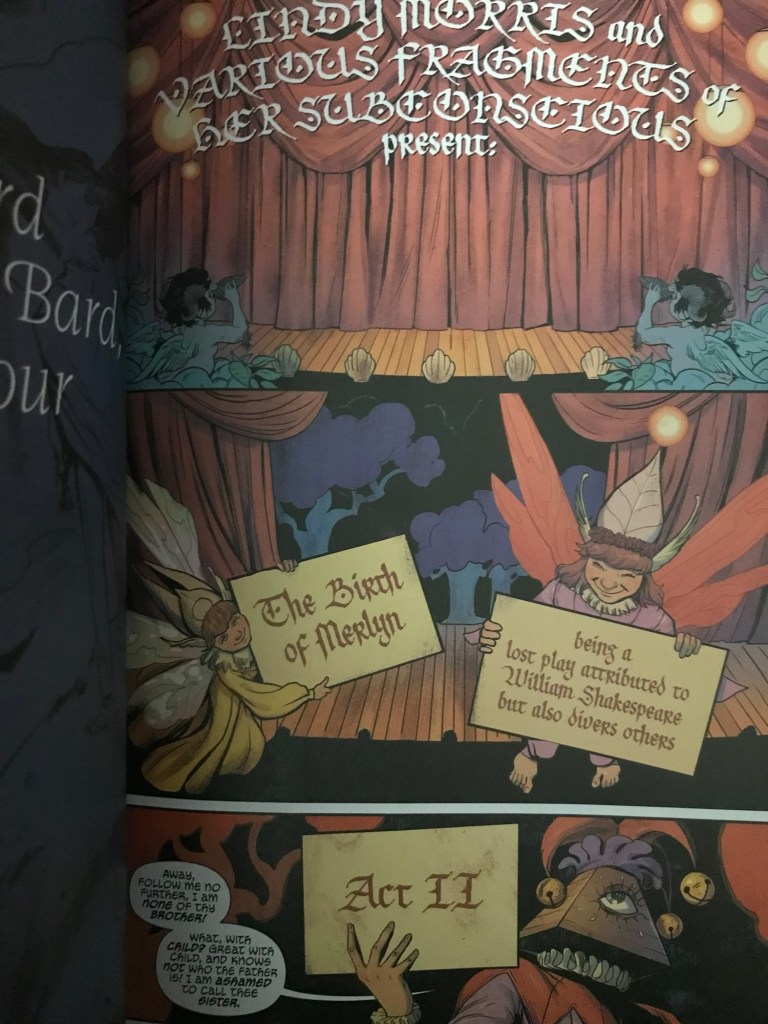
Waking Hours: The Dreaming, volume 4

Art and colors by Javier Rodriguez

Spoiler warning

Judging from where things went with Nightmare Country, I wonder if G. Willow Wilson was working on a related concept in ‘Waking Hours’. Volume four of The Dreaming came out roughly at the same time as the first two Sandman Universe Hellblazer arcs and I think all of those were out by the time Nightmare Country ramped up. As Nightmare Country has Madison Flynn and the Corinthian, the fourth book of The Dreaming has Heather After and Ruin. Also like Nightmare Country, the main human and the main nightmare have a dynamic that ropes in other more short-lived events.

A Shakespeare scholar called Lindy Morris dreams something at the wrong place at the wrong time.
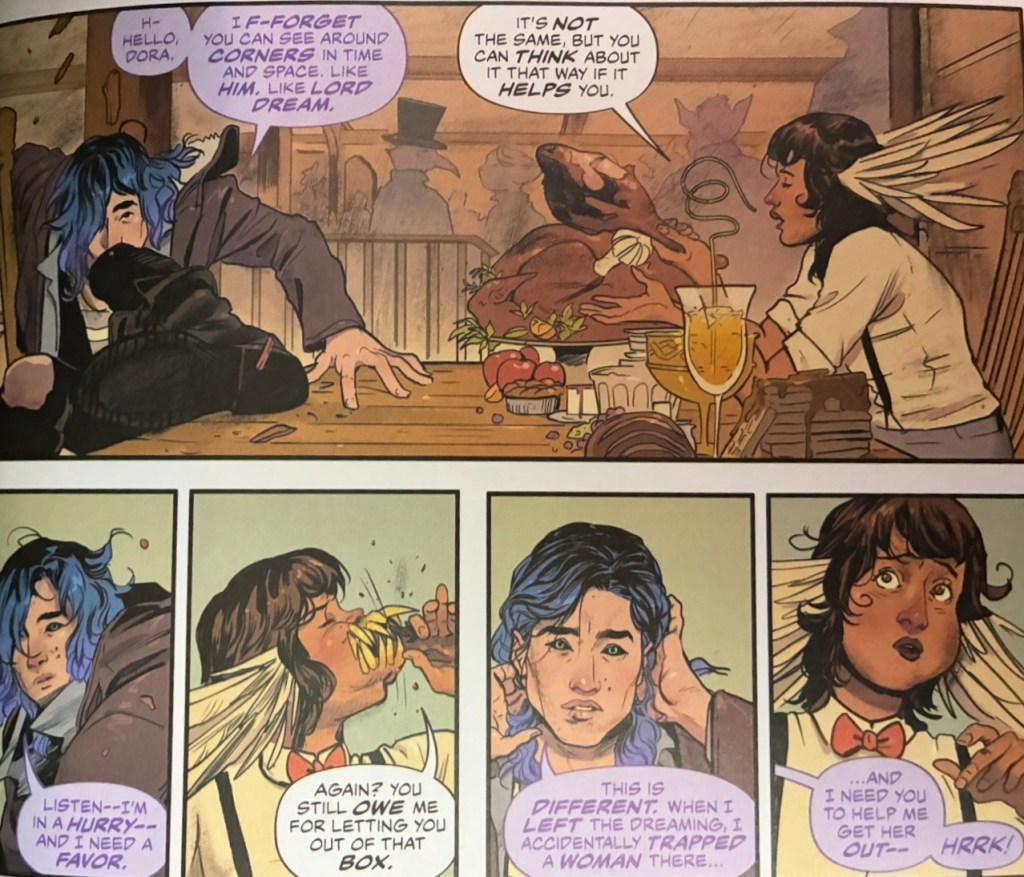
Ruin is a nightmare who escaped from Dream’s quarantine/prison chest with the help of Dora (remember her? The Night-Hag from the first three arcs? She’s now something of a mover-&-shaker at the World’s End inn). Why? Because he fell in love with the first human he tried to hunt on the astral plane. So after escaping, he breaks into the waking world using Lindy’s recurring Shakespeare dreams as an entry point.

Thing is, crossing dimensional boundaries in both a tangible and autonomous state requires serious magical investment. Ruin pulls it off because he accidently shifted Lindy’s tangible body into the world of her recurring dream.
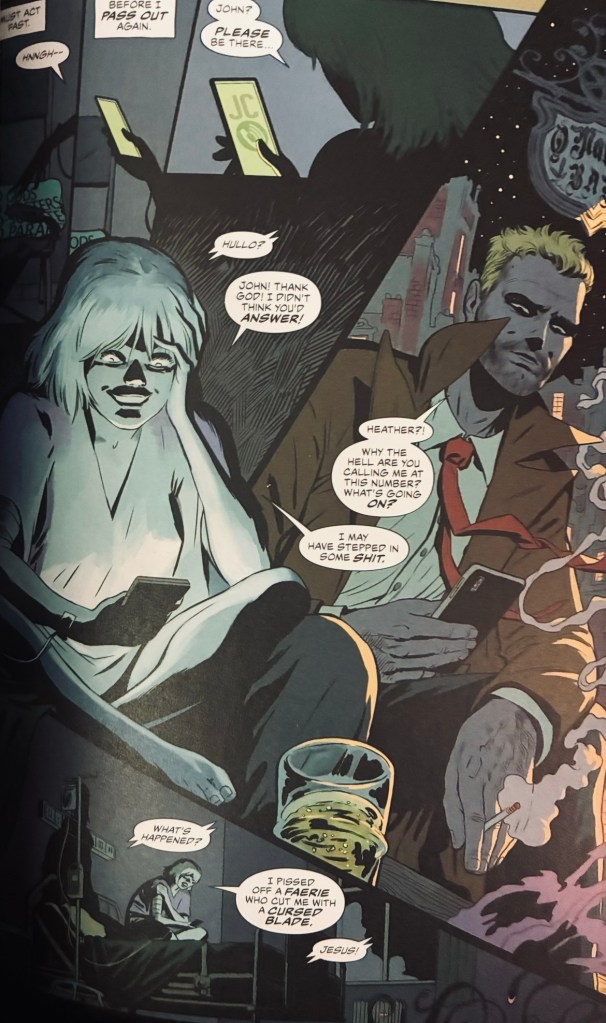
Our main human character, Heather After, is a magician with the mind of puissant gambler; undaunted by the need to put some skin in the game to get things going. She was mentored by John Constantine though, so maybe that’s to be expected (Constantine’s quite the magical educator, isn’t he? First Timothy Hunter then Heather After).
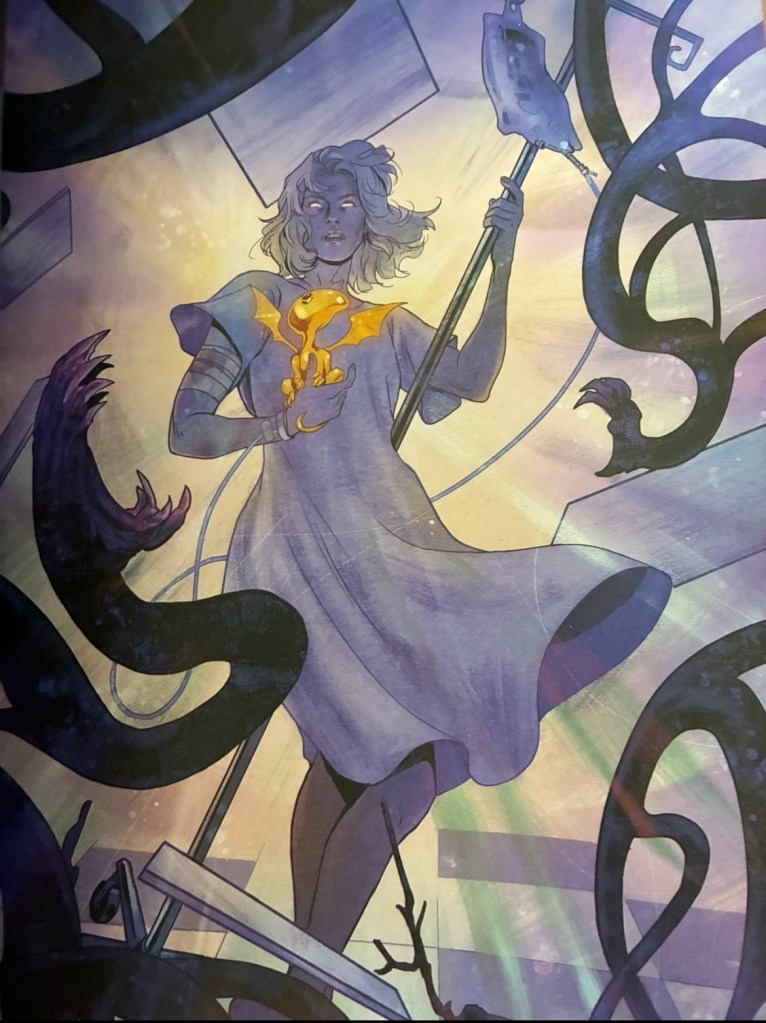
I love the ‘Promethea’ vibes in this picture. ‘Intermezzo, Part Two’ cover art by Nick Robles

What’s more: she’s handled the transactional nature of sacrifice well in the past. Arguably.

She once attempted a summoning for what she described as a “nice, chill little fire spirit with the intelligence of a goldfish”. Instead she snagged the cherub Jophiel who promptly threatens her in his flaming, lion-headed, multi-winged form. She lets him go when asked and earns a tiny bit of good will.

Around that same time, Jophiel was attempting an astral dialogue with a young Catholic seminarian called Benedict, who had the potential to become the next Pope. Jophiel is channeling various visions and whatnot which- due to Benedict’s human nature -must occur in the theater of dreams. That means that it’s occuring within the Dreaming. Because of this, other dream-kind have enviornomental access which is how Ruin found him and well…you know how Ruin fell in love with his first human victim?
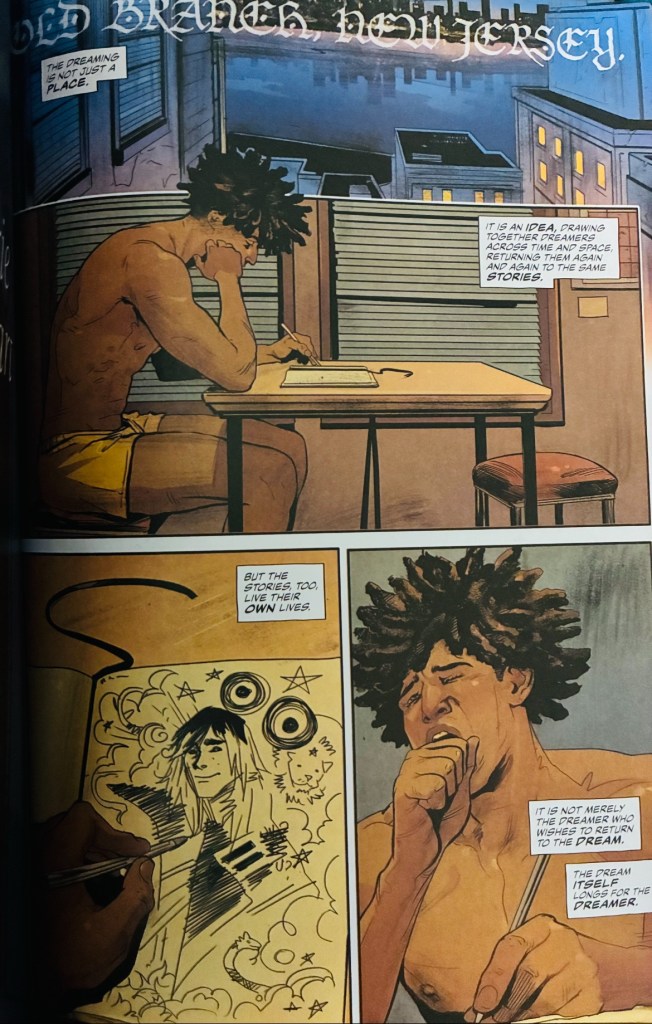
Once Ruin got involved, Jophiel’s intended visions got derailed and Benedict dropped out of seminary. Jophiel is subsequently punished for his failure with temperory banishment to Earth.

The overlooked nail that catches on the sweater is a recurring plot device in this story. Once Ruin makes it to the waking world, he looks for the only person he knows there: Jophiel, who hates him and immediately tries to drop him off on Heather’s doorstep.

Heather hopes to rescue Lindy through an indirect, adjacent entrance to the Dreaming: Faerie. She combs through the ether for a being that’s closer to Faerie than they are and hooks Robin Goodfellow. Being rather less of a negotiator than Jophiel, the Puck swears vengeance for the temporary abduction. Heather, Ruin and Jophiel dodge his immediate wrath but he keeps his word anyway.

In the meantime, we are alternating with Lindy’s advantures in her dream construct. The Lindy arc succeeds as its own story but Sandman readers will wonder about the role of William Shakespeare. Especially since the SU Lucifer also riffed on the in-uinverse relevance of Shakespeare. It essentially depicts the in-universe events that shaped the idea that Dream imparted to Shakespeare, later to become The Tempest.
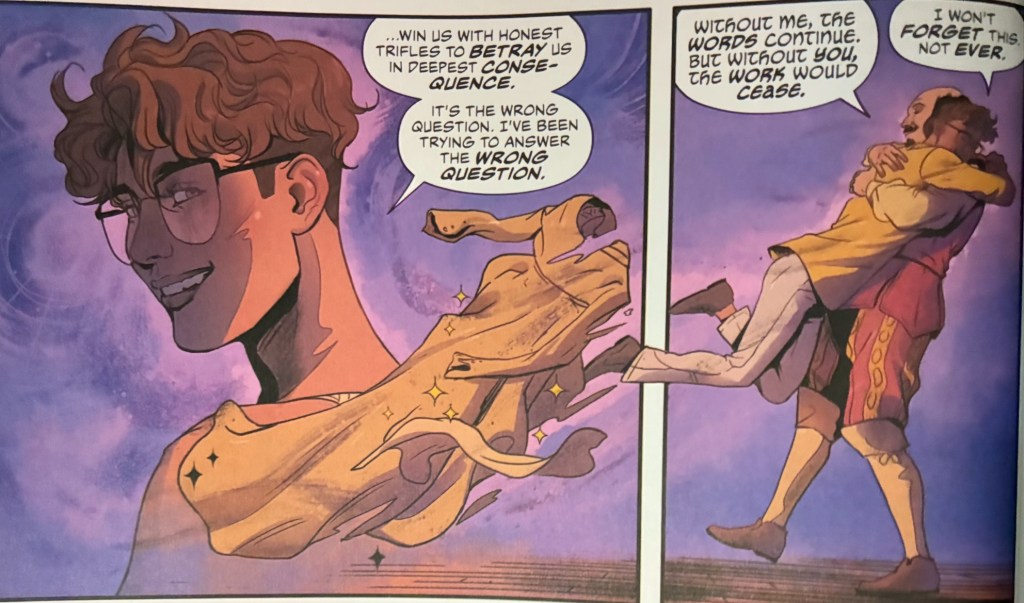
While we don’t get the kind of detailed flashbacks that SU Lucifer had, Shakespeare’s prior Sandman involvement comes through. Lindy becomes convinced that her dream will end if she solves an ongoing argument in her inescapable dream-house: she’s trapped with a bunch of different Shakespeares who are all convinced they’re the one that derived from the real, historical author. Details from the ‘Midsummer Night’s Dream’ vignette within Dream Country provide a random memory that one of the Shakespeares lets slip. This blurt gives Lindy an early, vital hint.

Like I said, it works fine as its own story. There is another possible association, though: Shakespeare is, potentially, the only one who spoke with Morpheus about the angst that drove him to suicide.

Daniel, the current incarnation of Dream, feels the stirrings of Morpheus-era memories.
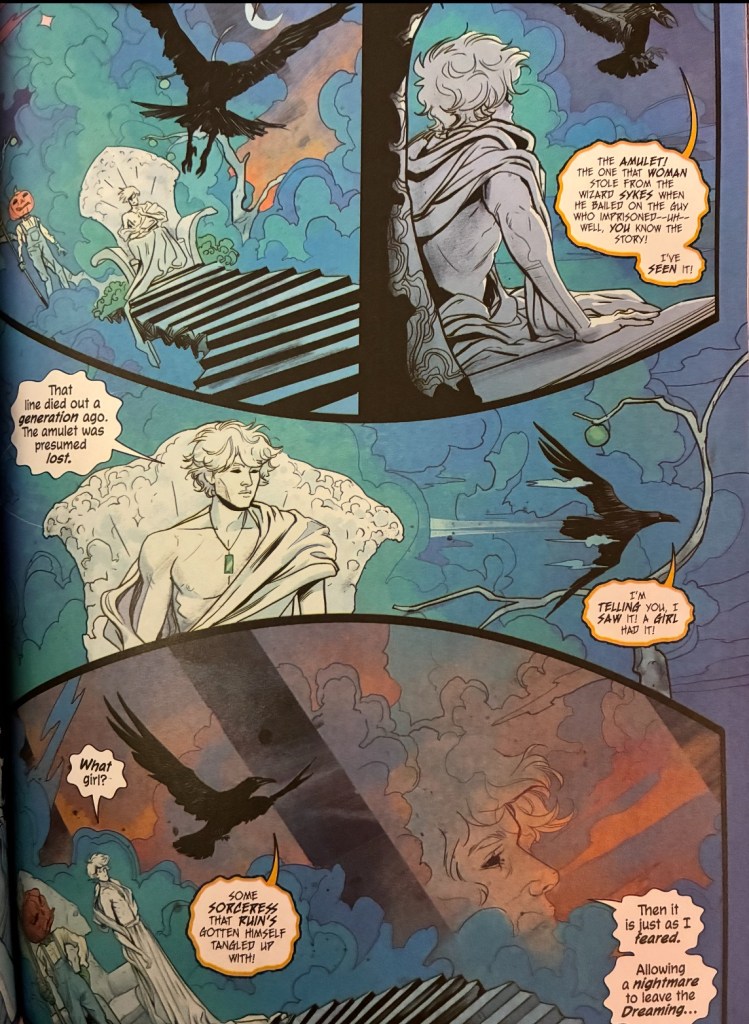
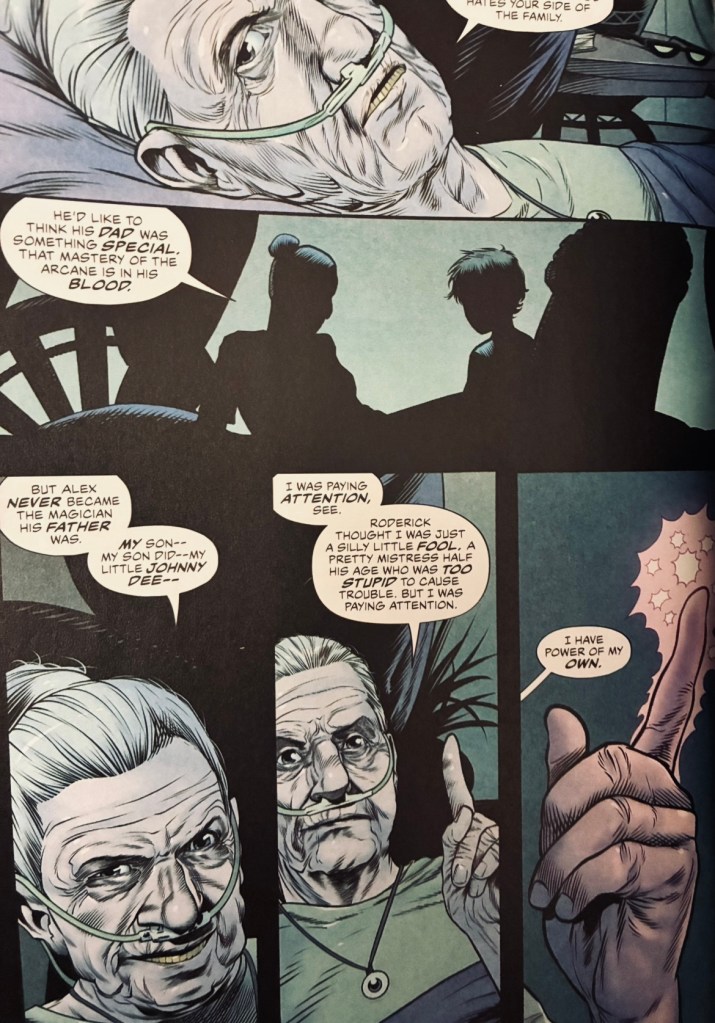
Speaking of those: Heather After is the granddaughter of Roderick Burgess- the guy who trapped Dream for eighty years during the early twentieth century. In fact- unless I’m missing something -it seriously looks like Heather is John Dee’s bio-daughter. Like, Doctor Destiny, from ‘Preludes & Nocturnes’; the Justice League villain who tried to claim Morpheus’s Ruby.

We aren’t given the exact details of her origin; save that she grew up in the lap of the Cripps family, whose magical heritage is at least as potent as the Burgesses, considering how a lawyered-up meeting goes between them during the reading of Ethel Cripps’ will.
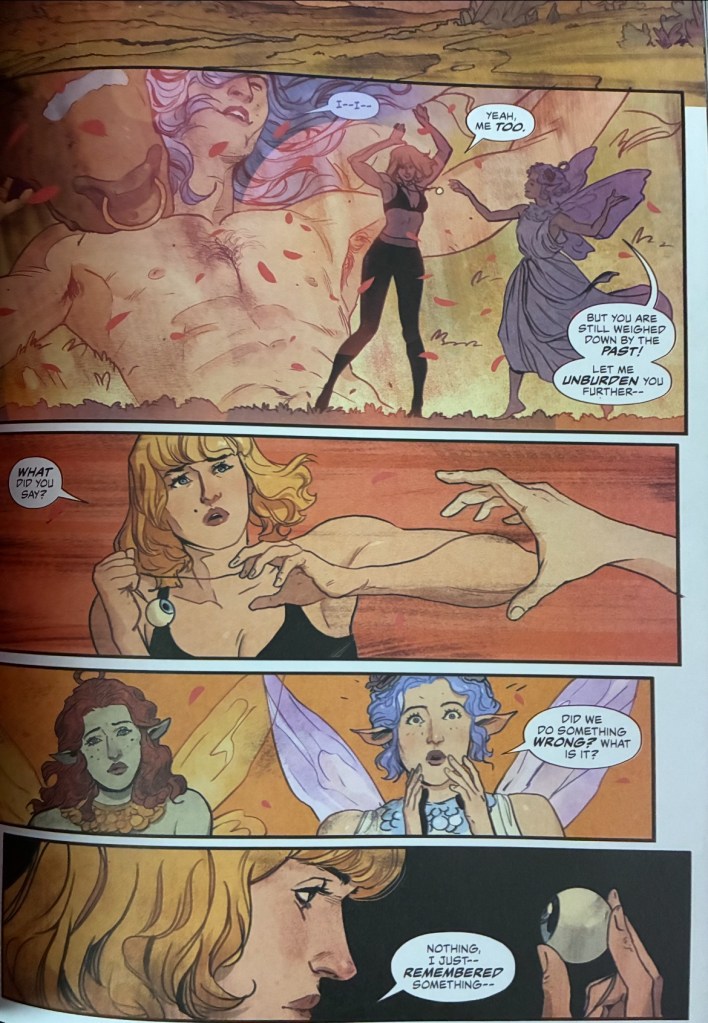
On her deathbed, Ethel told Heather that she has no reason to be dependant on the Burgess family. Judging how Heather takes this information, I wonder about the kind of relationship the two of them had. Heather is a transwoman and it looks as if Ethel was the only one in the family who accepted her when she first came out. The chosen family dynamic is not spelled out in so many words but Heather’s reaction to Ethel’s death is telling. Ethel appears to have been the only adult that defaulted to her chosen name. She barefaces her way into the will reading, claiming to just want some of her grandmother’s personal effects to remember her by. Heather swipes a grimoire and casts a barrier spell behind her on the way out, leaving the Burgess and Cripps lawyers panicking and slinging spells at each other.

I did say she had a history of successfully managing risk.
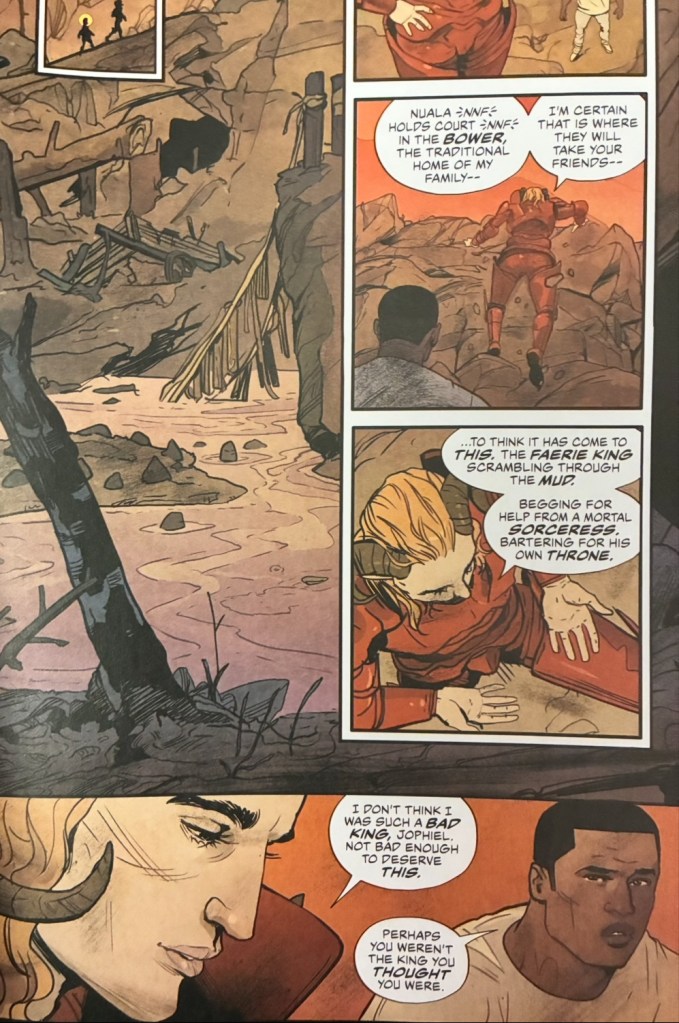
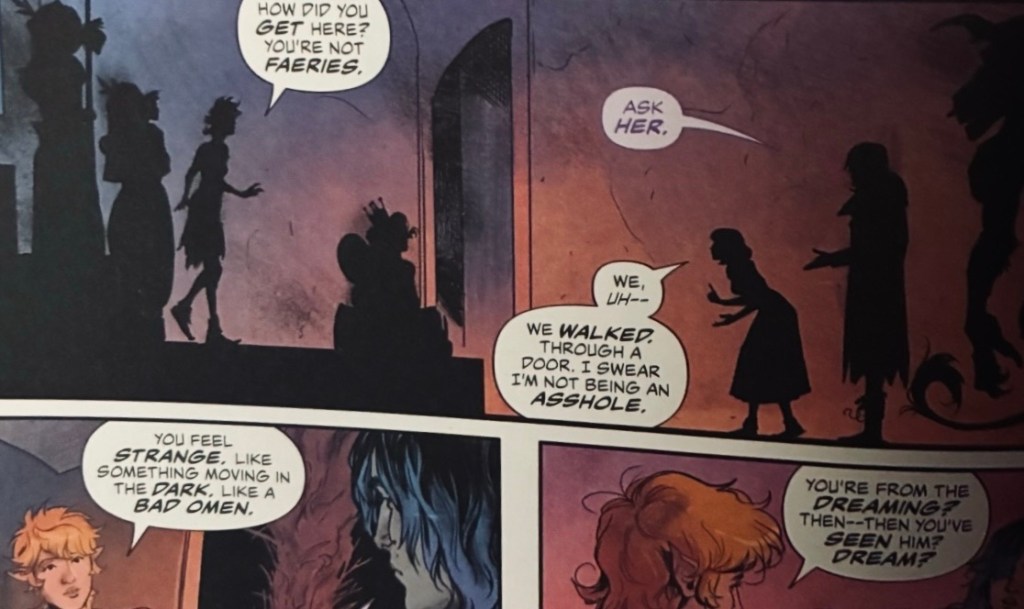
Coulda did better with the Puck, though. If you piss off one fairy then it pays to have either fairy allies or negotiation leverage with other fairies. She manages to persuade Auberon to help her out but only in exchange for a favor.

Nuala has deposed Auberon and Titania and they want their throne back. Auberon does, anyway. Titania would like it back but spends most of her time as one of Nuala’s cringing courtiers.

It’s tempting to wonder about the tension that was growing between Nuala and Titania during ‘The Kindly Ones’; buried romantic or sexual jealousy over Morpheus. The Netflix miniseries brought some of that closer to the surface but it was evident in the original comic as well.

I also couldn’t help wondering about Cluracan’s nemesis: the being he created by bumping into some raw creative energy in Dream’s castle. Off the top of my head, I think he eventually refers to himself as either the White Stag, the Wild Hunt or possibly both at different times. I wonder how relevant the second moniker is, since other beings use that name in the third SU Lucifer book. I’d be surprised if Cluracan’s nemesis was the same Wild Hunt that Lucifer crossed paths with. The Wild Hunt in SU Lucifer is an ancient and ineffible trio, almost reminiscent of the Kindly Ones themselves…whereas Cluracan’s nemesis is relatively young.

Anyway, Cluracan’s shape-shifting nemesis gives Nuala almost as much shit as Titania does in ‘The Kindly Ones’. He appears in the shape of Cluracan to threaten Nuala and gloat over her during ‘The Wake’.

We do get Nuala’s version of things eventually but it’s rather short and not very specific. She makes no mention of any party external to herself, Auberon and Titania except the Unseelie. From the context offered here, the Unseelie were always present in Faerie but never rose to the level of visibility as the Seelie characters.
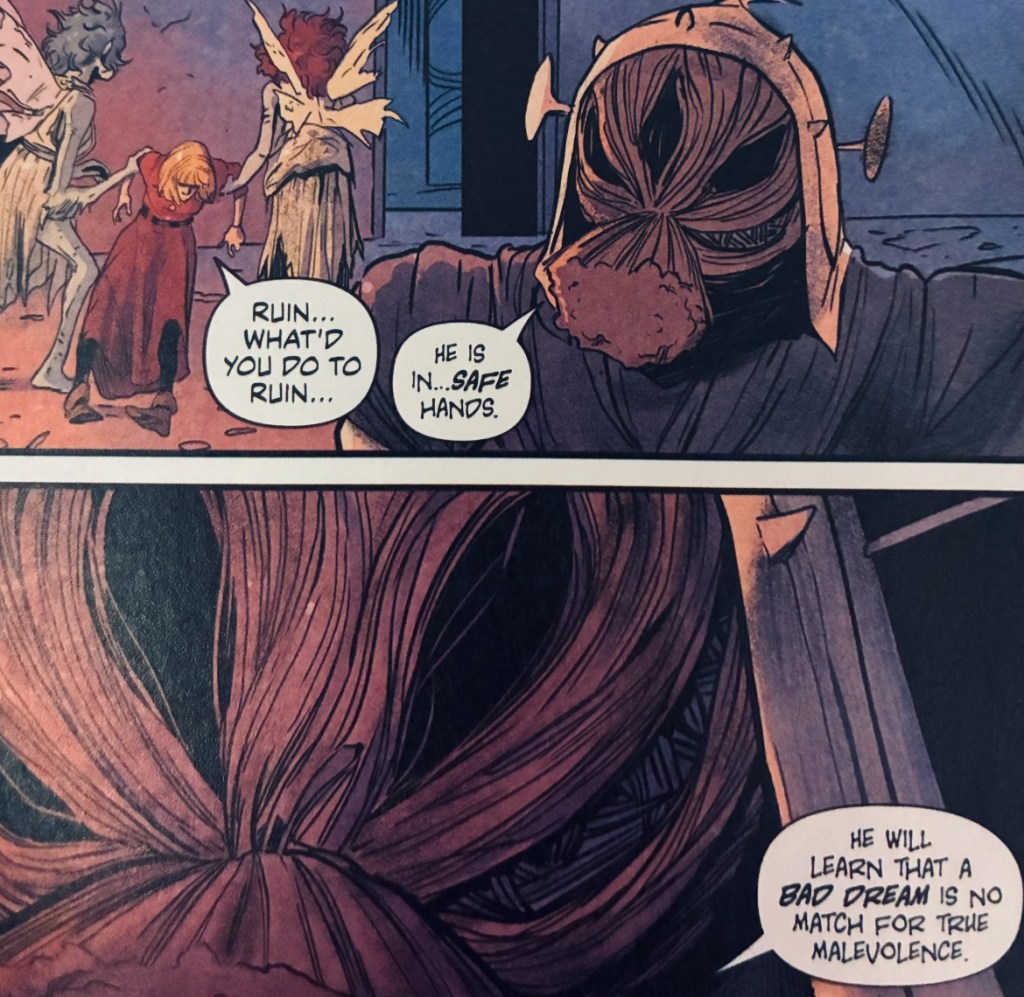
As for the ‘Waking Hours’ characters, everything that has happened so far either dates back to Heather accidentally summoning Jophiel or accidentally summoning Robin Goodfellow. I don’t recall any specific reason to think that Heather’s summoning of Jophiel played a part in Jophiel’s failure to guide Benedict but it feels plausible. In any event, Jophiel blames Ruin exclusively.

I mean, she seemed to accidentally summon Jophiel shortly before Ruin showed up? And Jophiel being who he is, I don’t think he’d be civil and friendly with Heather if he thought she had anything to do with it.
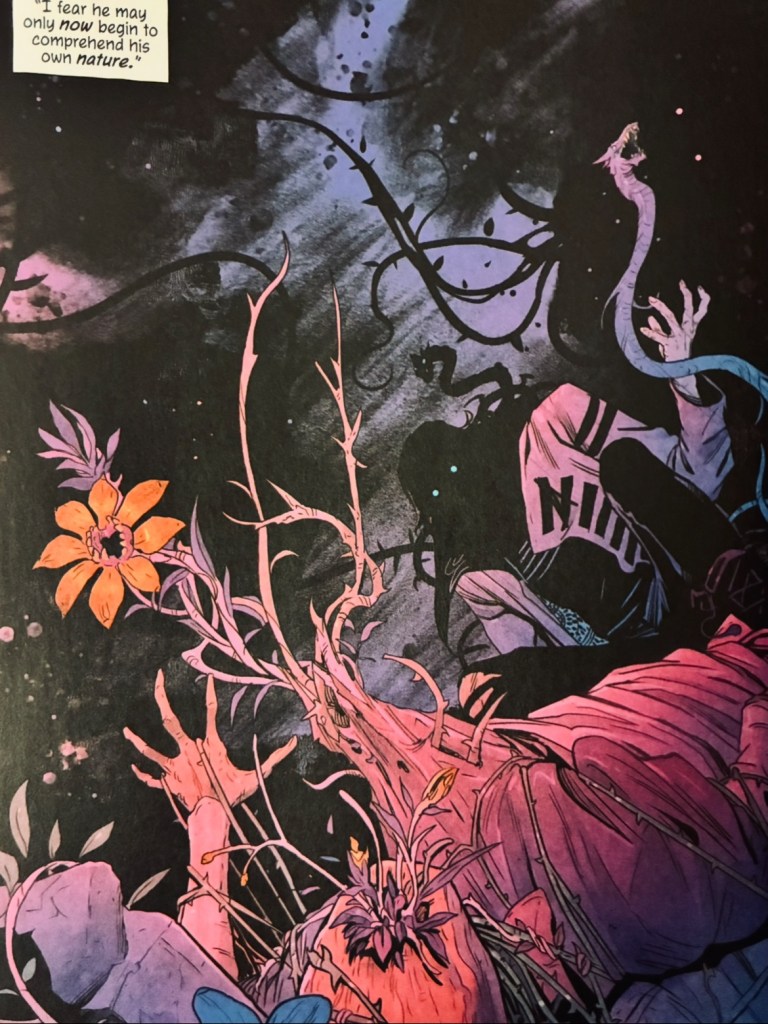
Even if that one is open and shut, though…none of the second half of ‘Waking Hours’ would have happened if Heather had not snagged Robin Goodfellow at the beginning.

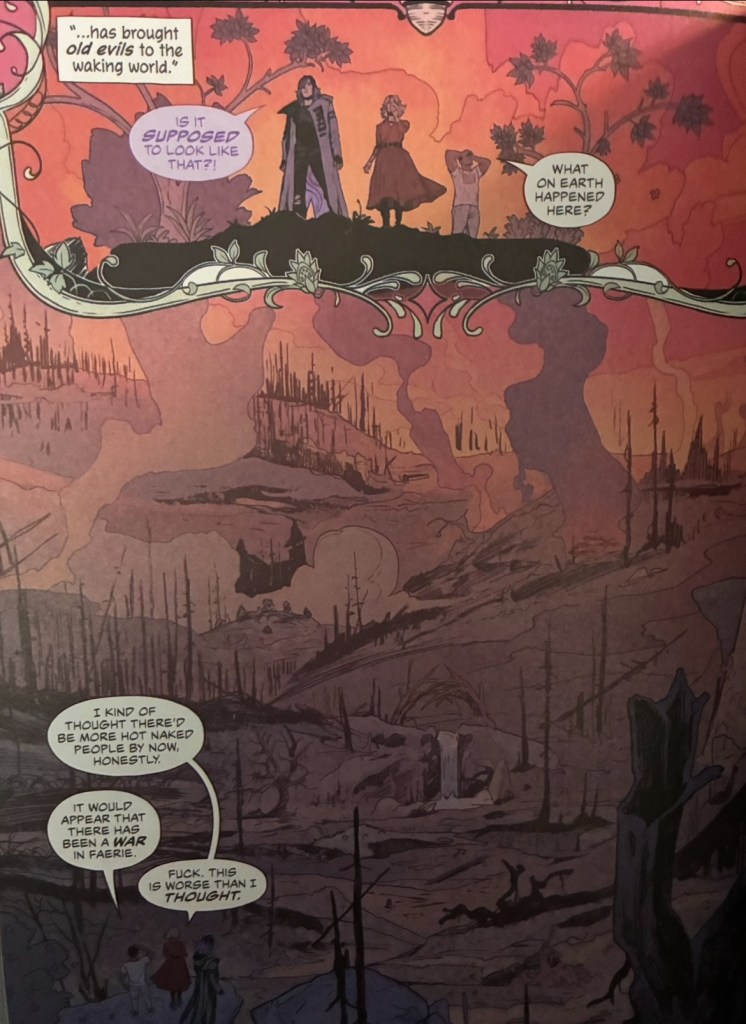
There is nothing to be immediately deduced from this just now…except for Dream’s belief that a nightmare (Ruin) wandering different planes “has brought old evils to the waking world.” When he examines the hospital room where the curse from Puck’s blade grew out of control, he says “(t)here is a coalescing in this place…the spiral of time doubling back upon itself…warning us that that which has happened before will happen again”.
We have also known, since the beginning of ‘Waking Hours’, that a descendant of Roderick Burgess is involved. Dream has only lately figured that out which he probably took for confirmation. Since Dream attributes all this to a nightmare outside of the Dreaming, his suspicions probably run closer to Jophiel’s.

It is also evident when Dream decides to take Ruin back to the Dreaming. He sees the localized effects of a localized cause. This part is also interesting because Dream shifts from distant observer to direct participant. His position- relative to the other characters -becomes antagonistic. Possible foreshadowing of later developments in Hellblazer and Nightmare Country (perhaps going as far back as House of Whispers)?
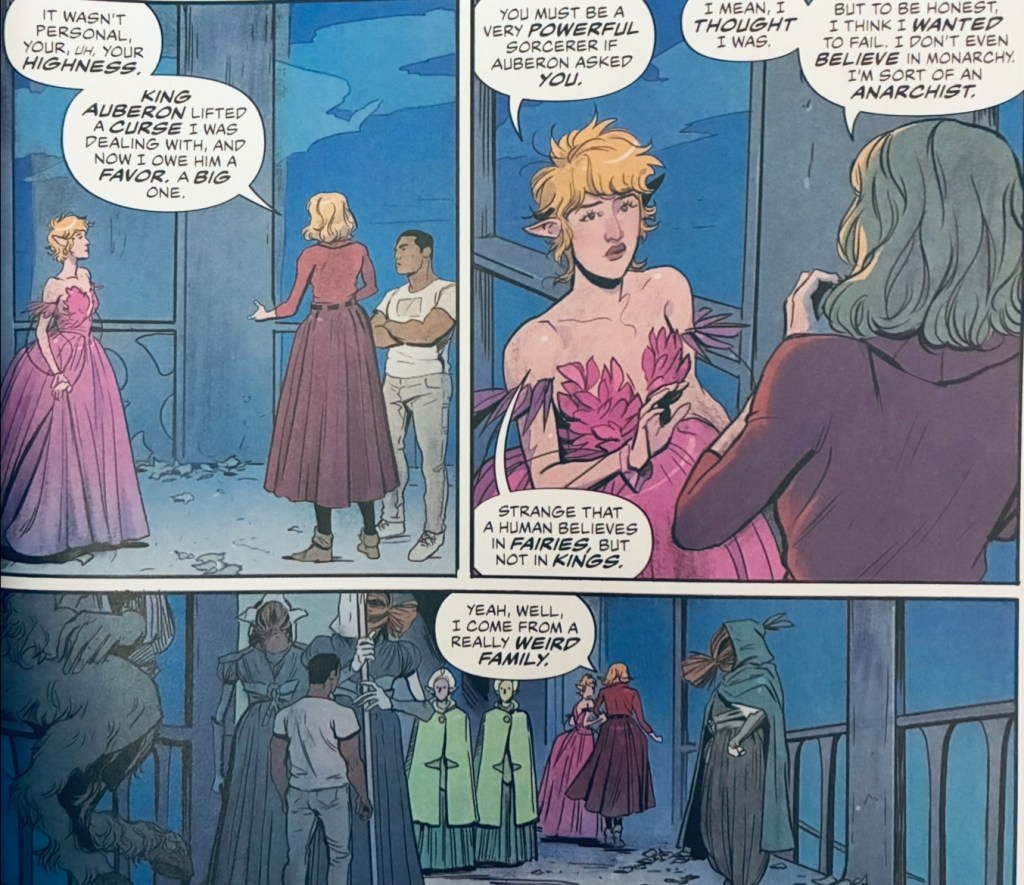
In all fairness…Dream’s role in the later Sandman Universe comics has been closer to strict neutrality rather than antagonism but- considering how ‘The Glass House’ ended -that shade of gray is going darker. His behavior in ‘Dead in America’ also stands out in contrast to Morpheus. Morpheus was a stickler for the rules and had zero compassion for those on the losing side of them…but he didn’t exactly relish flexing on his enemies like Daniel does.
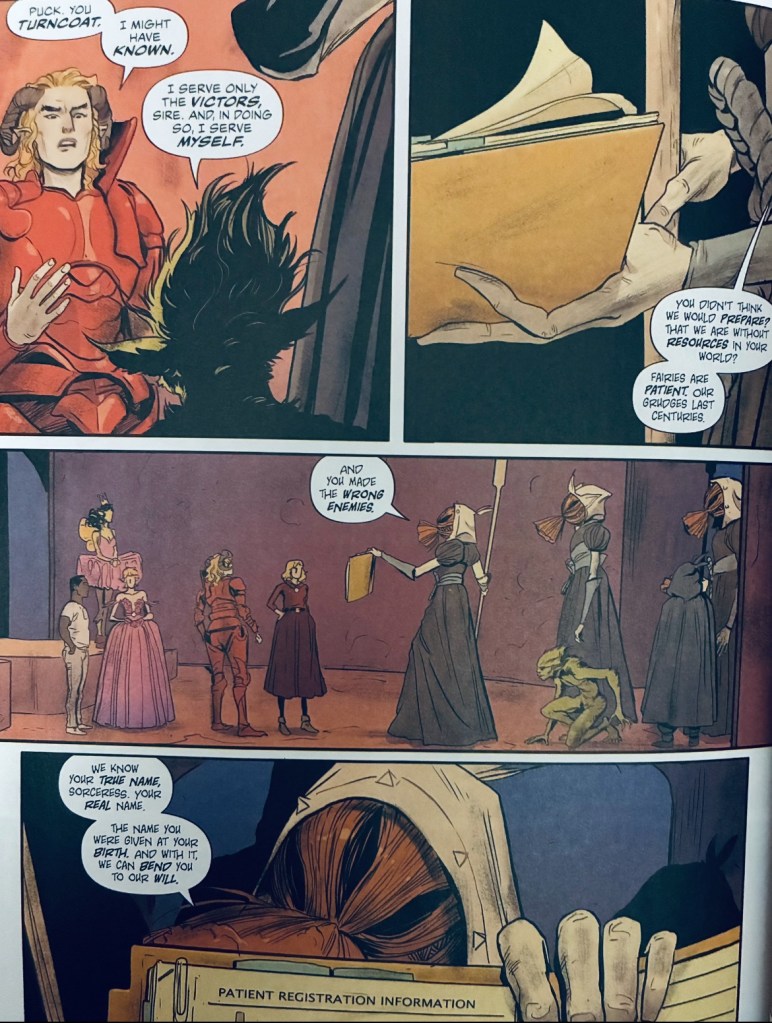
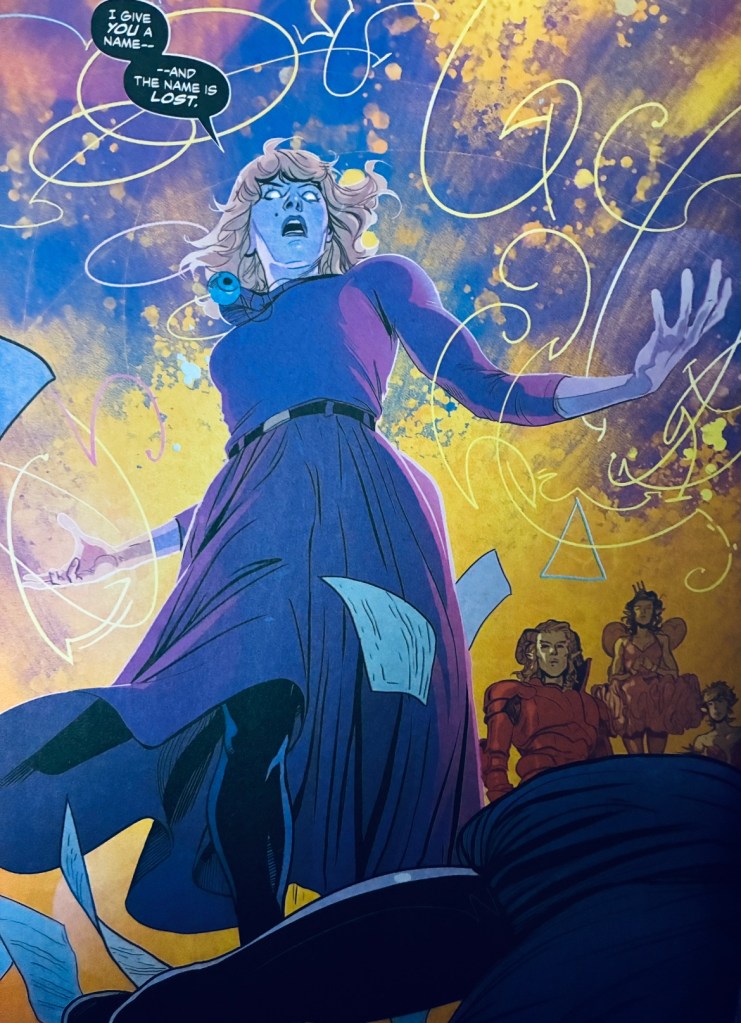
I wonder if ‘Waking Hours’ was the early turning of this corner. I wouldn’t be surprised if the third volume of Nightmare Country sees Dream getting even more cozy on the dark side.
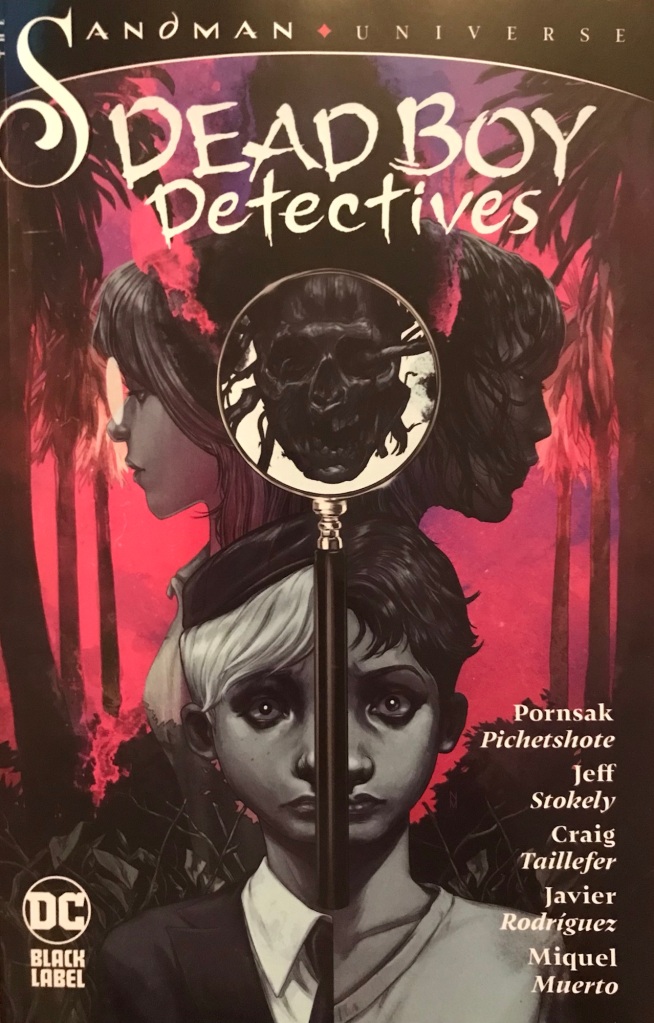
The Sandman Universe: Dead Boy Detectives, volume 1 review (spoilers)

Definitely recommended, if you liked ‘Season Of Mists’ from the original Sandman.

While Lucifer may have been the break out character of ‘Season of Mists’, Charles Rowland and Edwin Paine had an equally pivotal role in that story. Neil Gaiman even included Edwin Paine in the epigraph: “You don’t have to stay anywhere forever.” Paine and Rowland are also the ones to bring the self-determination theme into the foreground.

Lucifer, of course, was open about how Dream inspired him to abandon Hell but both of them have their own frames of reference with regard to freedom and duty. Charles Rowland and Edwin Paine systematically “figured out” self-determination due to a lack of any other options.

‘Season Of Mists’ spoilers incoming-

Hell is a separate plane of existence most easily accessed by untethered souls- the dreaming and the dead. When Paine and Rowland end up there, they have uncanny, disturbing experiences that fit in with Hell but undeniably resemble nightmares. At the same time, Hell has its residents and natives, with their own agency. While Dream is trapped on Earth, one of his former captors barters Dream’s helm in exchange for protection. Presumably, there was someone on the other side to barter with. Among the residents, though, are deceased souls that simply feel a sense of belonging to Hell. After Lucifer abandons his throne, many of those souls continue their eternity in the same way: wallowing in the echoes of their mortal suffering and guilt. Then there were the ones like Rowland and Paine, who were trapped by the Hell “insiders”, with no desire to continue business as usual.

The same bullies from 1915 who murdered Edwin get booted out like everyone else. Once they start terrorizing (and eventually killing) Charles, they make him endure a rant: they spent their short lives sacrificing animals and smaller children to Satan, hoping for super powers or whatever. They appear furious that they got nothing in return, other than importing a few unwilling souls to Hell through ritual sacrifice. In the words of one of them, “Nobody in Hell gave a toss!” However cheated they feel, though, they continue behaving the same way they always have.

If Hell attracts Hellions through psychic resonance, then it’s subconscious. When Hell is emptied, many of the ghosts are as conflicted as the dead 1915 bullies. By the end of this chapter, Charles Rowland concludes that this is because they are convinced they have no other choice. When Charles broaches the topic of running away, Edwin is hesitant at first: his bones are still in the attic of the boarding school where the chapter takes place. Charles, who is more recently dead, says “Well, so are mine. Not to mention my flesh and hair and stuff.” Not long after, Edwin comes around with his “(y)ou don’t have to stay anywhere forever” line.

This is the ‘Season Of Mists’ nuance that the new SU Dead Boy Detectives incorporates: the things that others persuade you to believe about yourself.

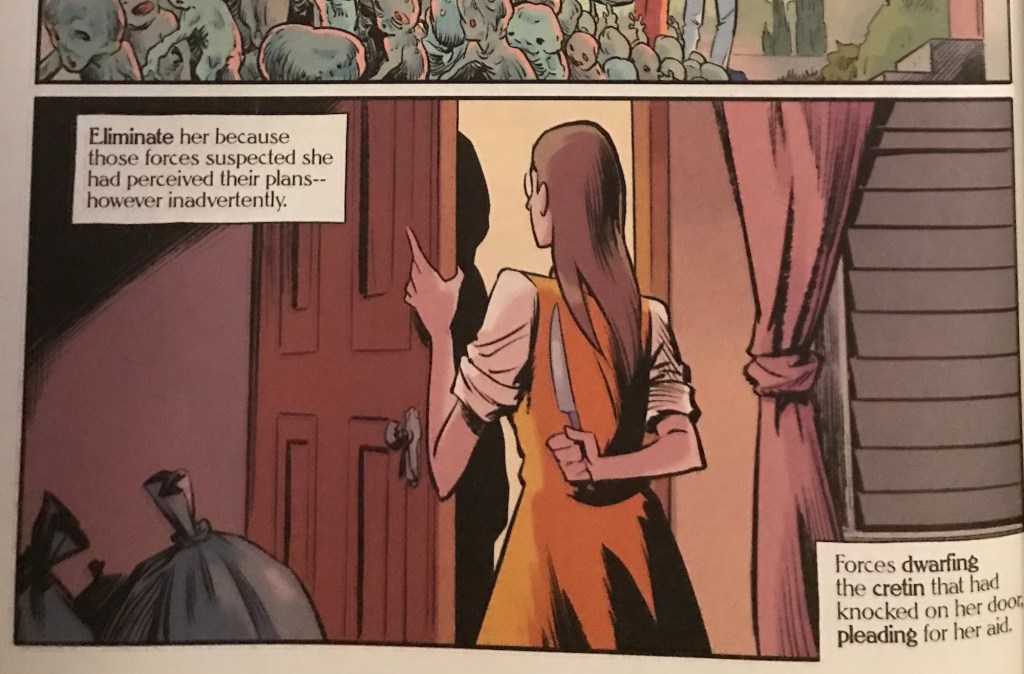
Also cool: it picks up where volume one of Nighmare Country left off with Thessaly. Like, exactly. We even see the Dead Boys version of Nightmare Country‘s last panel: Thessaly, answering a knock at the door, wearing yellow over white, holding a knife behind her back, with a garbage bag visible on the left. Immediately after she allowed Jamie to ask his one question.

Evidently, Thessaly’s involvement in this story is connected to the Madison Flynn drama.

Beings like dream-kind, who are native to a psychic/astral environment, are sensitive to psychic vibrations. Nightmare Country book one ends with Jamie asking Flynn who killed her. They “feel it” when Flynn squeals from beyond the grave and they notice that Jamie was the one who heard her. Hence the spontaineous combustion. While Thessaly is sweeping up Jamie in a dust pan, she begins to think that the deadly gaze that found Jamie could easily have found her as well. Then there’s a knock at the door.

If the connection is that direct, then the brains behind Ecstasy and Agony empowered an amateur magician to take her off of the playing field.

The “cretin” who knocked on Thessaly’s door wanted to resurrect his daughter. Amateur necromancy is extremely precarious and Thessaly refused. So he gets himself a kumanthong collection (kumanthongs being a Thai spirit embodied in a stillborn male fetus painted with varnish and gold leaf).

Kumanthongs derive their power from the innocence of dead babies. They are powerful but they have limits. Swarming a three-thousand year old witch in broad daylight and kidnapping her should be beyond those limits. In this, Thessaly sees the mysterious force that incinerated Jamie.

The grieving Thai father tries his luck with his imperfect understanding of ceremony and superstition. He starts with a collection of kumanthongs which are far more powerful than expected. He then proceeds to hold Thessaly captive and force her cooperation.

The metaphysics of ghosts happen according to different spiritual practices which means there are cultural differences. With the inherent chaos of amateur necromancy combined with the transplanting of a Thai ghost from one place to another, there is a lot of risk involved. The forces that empowered the father to capture Thessaly are maneuvered into a committed position: Thessaly cannot oppose them directly but she can take advantage of the role they chose, in the father’s necromancy. What’s more: the necromantic spell wants to stay active.

The kumanthongs and the binding circle they form around Thessaly are empowered by outside forces. She effectively harnesses the momentum of those forces.

Variant cover by Alex Eckman Lawn for The Sandman Universe: Dead Boy Detectives #5

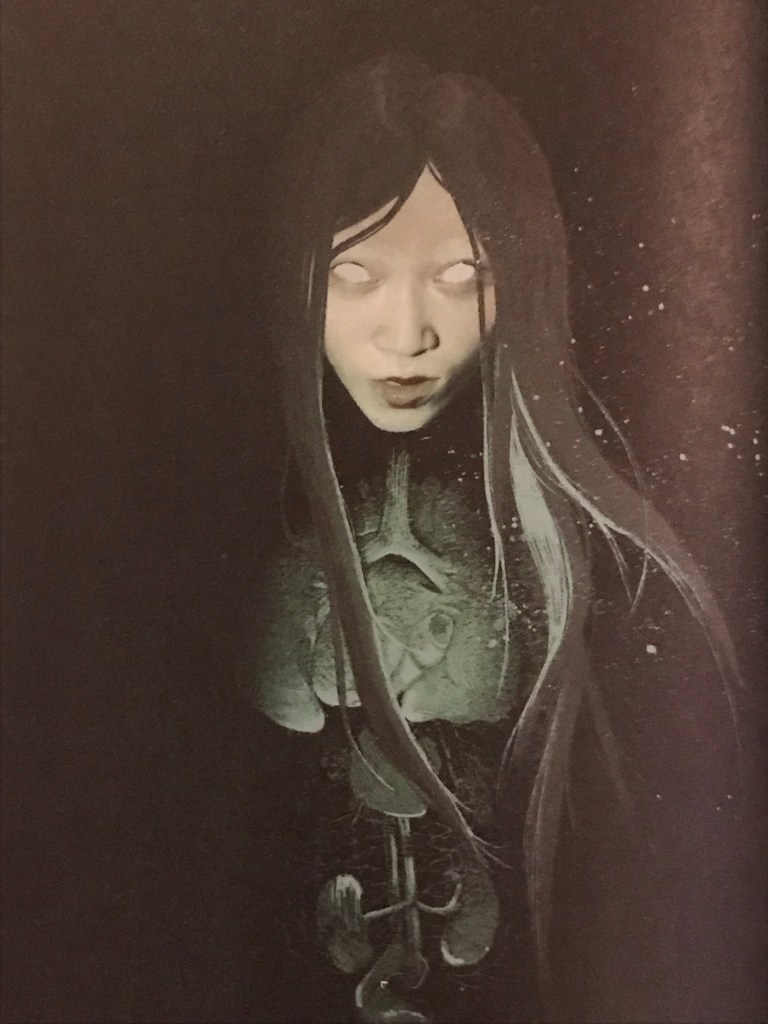
The man’s daughter returns as a krasue: a dangerous, nocturnal Thai ghost. The krasue’s head separates from her body at night to hunt victims, organs hanging from the neck. The narration tells us that the krasue is “the most savage, terrifying, and vengeful ghost of all.” During the day, she “lives as normal.” For a grieving parent, half of a reunion is better than none at all.

Because the kumanthongs are compelling Thessaly’s participation and containing her, they are something of a foundation stone for the whole spell. Which means the outside influence that made them stronger also empowers the spell and its consequences.

Since ghosts are shaped by mortal beliefs and practices, Paine and Rowland appear to have a unique asset that they take for granted: the ghost roads.

To the other ghosts, the boys look like they can teleport at will, anywhere they want. This isn’t wrong but it isn’t the whole picture. When Rowland and Paine do their instant-travel trick, they are moving through something that they call the ghost roads. For the boys, this is little more than a brief in-between state while travelling in spirit form. To the Thai ghosts who eventually follow them through it, it’s gruesome to the point that they prefer to close their eyes and be led by Paine and Rowland.

This mode of travel is usually reliable except for a few moments in the new Dead Boy Detectives when they are jerked to a separate destination, without warning.

The ghost roads, for those who linger long enough to take it in, are a panorama of ghosts, melted together into the surrounding landscape, forever monologueing about the memories of their living agony. A longtime Sandman reader may be tempted to compare this to the suicide forest, glimpsed briefly in Hell, until another connection is made plain.

A kumanthong in its “ghost road” state

The faces of the suffering ghosts, embedded in the landscape of the ghost roads, all look something like this. The first time we see such a face separate from the ghost roads, their body shape looks a lot like the kumanthongs. Specifically: the state the kumanthongs were in when they abducted Thessaly. This absolutely matters but consider the word choice in the panel above: among the Endless, isn’t there someone who knows suffering, inside and out? Whose mind frequently returns to the imagery of a pierced eyeball?

If the kumanthongs are the foundation for the botched resurrection spell…and if they can snatch Rowland and Paine directly from the ghost roads…could this tell us anything about the mysterious, external force that caught Thessaly off guard?

If this force was connected with Despair of The Endless, then it would line up with the role Desire played in Nightmare Country. Desire and Despair are frequent collaborators, after all, not to mention twins. If Desire and hir thralls are the “operators” then maybe Despair is the “backup.”

Speaking of Nightmare Country– the Corinthian keeps a notebook filled with his favorite memory-fragments from his first life. One of his favorites involves a mirror, rather like the mirrors that surround Despair in her own realm. If Desire’s servants (Ecstasy and Agony) are systematically killing the would-be authors of works about the Corinthian, it looks even more like the Corinthian is attached to some middle-ground between the machinations of the Endless twins. The Corinthian, by the way, was one of Morpheus’ favorite creations because he functions as a ‘dark mirror’ for humanity.

The Nightmare Country version of a scene glimpsed in one of Despair’s mirrors in ‘Brief Lives’
Or not…? This is the image from ‘Brief Lives.’ The hair is different, they’re wearing a shirt and they have a fork. No evidence of Corinthian features either but teeth eyes can slip through in a background detail like this.
The figure in this image appears to have gouged one eye out, which has at least a passing resemblance to the boy feeding his fingers to his eyes.
Maybe the visual similarities are closer to a reference rather than a direct connection. I wouldn’t be surprised if Nightmare Country was going for an uncanny resemblance

As cool as this is, though, another aspect of Despair is more relevant to the current Dead Boy Detectives story. Whenever anyone looks into a mirror in a state of despair, their reflection is visible in Despair’s realm, who looks back at them. In the total alienation of despair, all you have is yourself and despair has a way of diminishing even that. Despair warps your self-image and her cold gaze is the only one looking out at you from the mirror.

Even the symbolism of the kumanthongs relate to this: stillborn fetuses, painted gold, their innocence ceremonially bottled for later use. They derive their strength, in part, from the pure simplicity of that innocence. Such power, though, is not easy to wield. It is very simple and its momentum is unidirectional. Such is the power of a permanent, unchanging state of being.

Dom, a psychic who briefly cares for the Thai ghosts appearing in the wake of the spell, thinks something similar. He believes that these ghosts are especially vulnerable because they are children. In his mental narration, their innocence was “cut short”, like stunted beings for whom change is death.

Both Rowland and Paine have been children for decades. Paine only recently cleared his first century. When Rowland falls for a living friend, though, he begins to realize what permanent childhood could mean. Paine sees this as well and believes the solution is to narrow the scale of their activities. What Paine and Rowland have always done together was solve mysteries: that must suffice. The prospect of losing Rowland, though, awakened him to his own discontent with the narrow scale.

Similar frustrations with static existence come through in all of the Thai ghosts but Jai and Melvin stuck with me, in particular. Jai believes her parents moved to America to pursue shallow and mistaken values, which she equates with a generalized tendency of adults to accept comfort over thriving. She fears this, more than anything. Melvin, a loud chlid whose short life taught him the defensive value of a big personality, is perpetually haunted by stereotype threat. When faced with his own despair, he protects himself with fury and a drive toward retribution.

Like the kumanthongs, the energy of despair is unidirectional and gravitates toward itself. More than anything else, despair tempts you with the illusion of inevitability. Not unlike the magnetism between Hell and Hellions, in ‘Season Of Mists’. This dynamic and the realizaiton that you don’t have to stay anywhere (or remain in the same state) forever is the emotional core of this book, which is one thing that I do not want to spoil.