
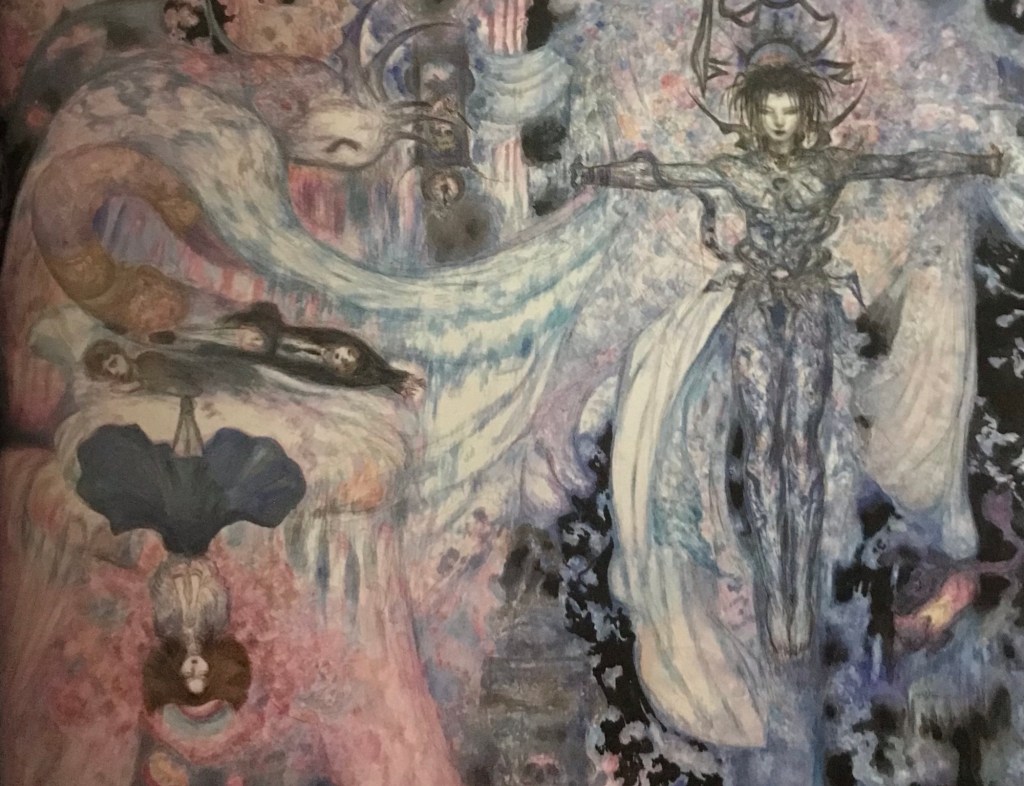
Speaking of: as a Final Fantasy fan girl, I’ve always wondered what it would be like if Amano did another full-length Sandman story collaboration, like he did with Dream Hunters
Other Sandman Universe comics have met high qualitative bars close to the original.
Two, at least, in my opinion. The Dan Watters Lucifer comics are some of my favorite stories in the pictures-and-word-balloons format. House of Whispers tells a story set in the same world but with its own catalyzing circumstances. It nonetheless features some familiar sights, like the Dreaming and the Corinthian. Even the rebooted Books of Magic and The Dreaming, with their visible weaknesses, succeed in other areas. The recent Dead Boy Detectives reboot hit some careful notes with subtle, thematic callbacks to the ‘Season of Mists’ arc.

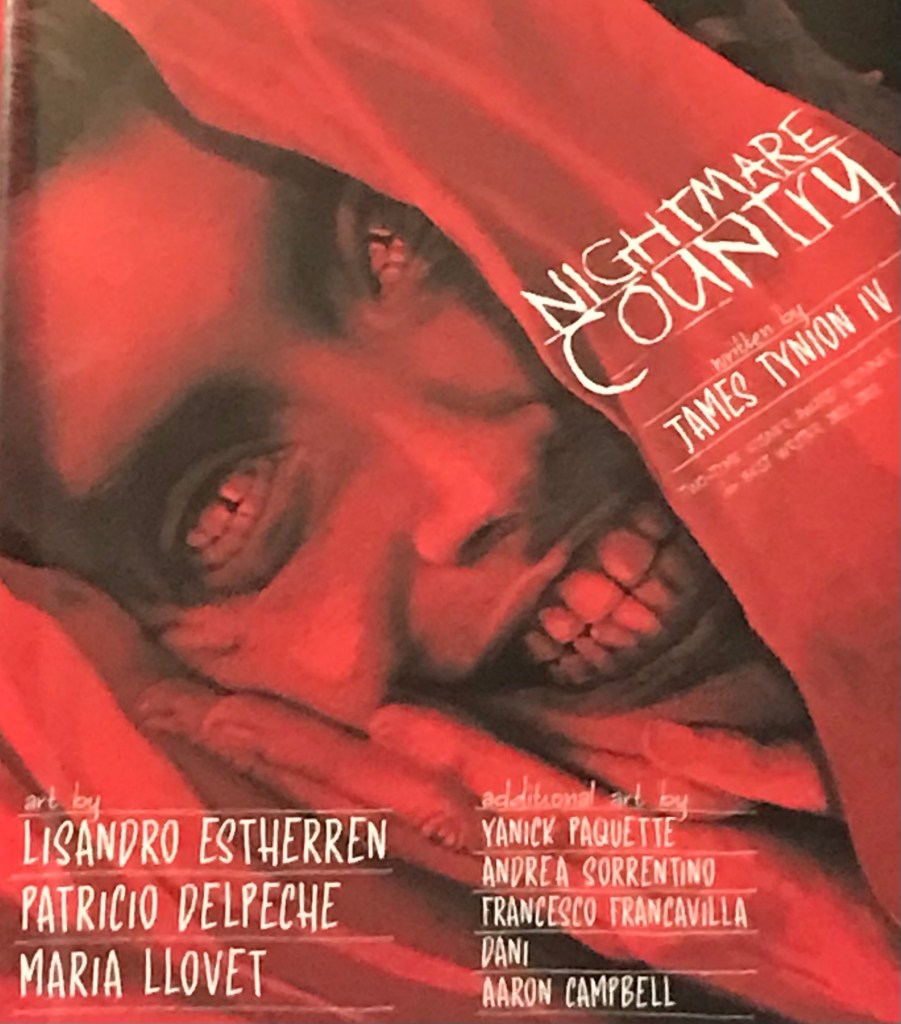
What distinguishes Nightmare Country is relatively familiar circumstances. Obviously we have classic power players like Desire and Despair, but the plot dynamics and the world building unfold like a 90s Sandman comic. With the usual caveats, of course.
The new Sandman Universe comics are situated, roughly, as one big sequel series to the original. Thessaly and the Corinthian are our central viewpoint characters in Nightmare Country and the plot is a few turns of cause-and-effect removed from the original.

Thessaly stepped in at the end of the first book and her after-the-fact discoveries keep the relevant data points united in one character’s mind. Flynn, embodied as a dream-kind cat (like Matthew is a dream-kind raven), has a deeper perspective but her agency is limited in the waking world. The Corinthian, tasked with her protection by Dream, is the muscle. Thessaly has more freedom to pursue her own ends.
The Corinthian and Flynn are immediately evocative of his trip with Matthew in ‘The Kindly Ones’. The overall dynamic also fits within the tendency the 90s Sandman had toward “odd couple” plots. Corinthian plus Matthew, Rose plus Fiddler’s Green, Dream plus Delirium, etc.
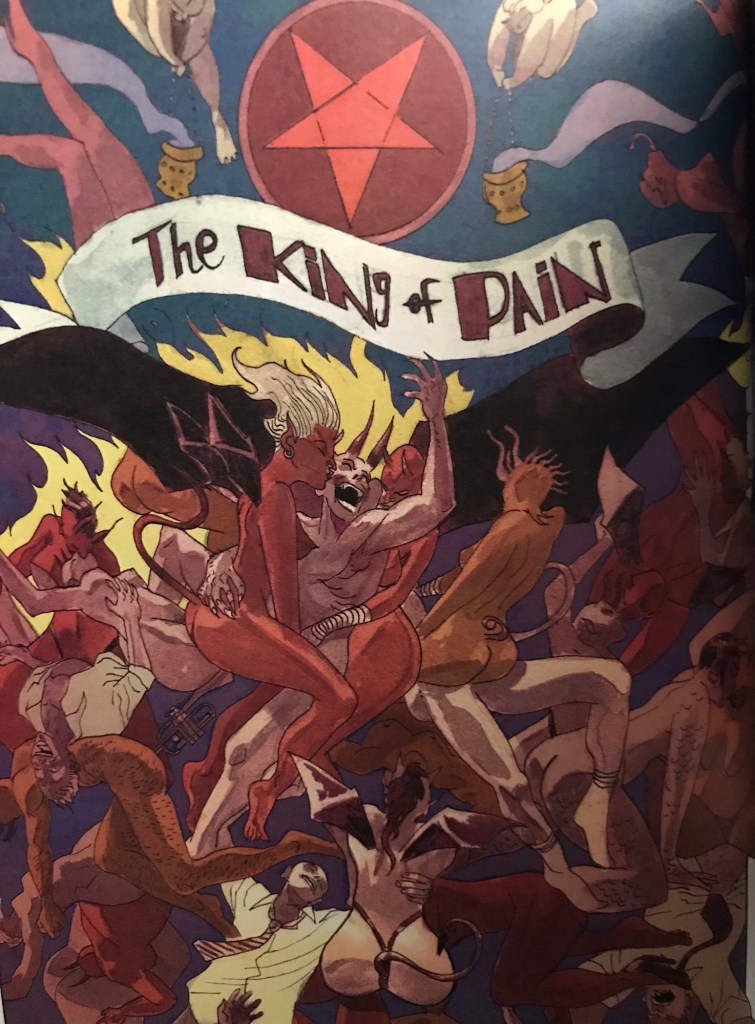
Speaking of unlikely bedfellows, Nightmare Country book two brings back a character whose only prior appearance was as peculiar as it was short.
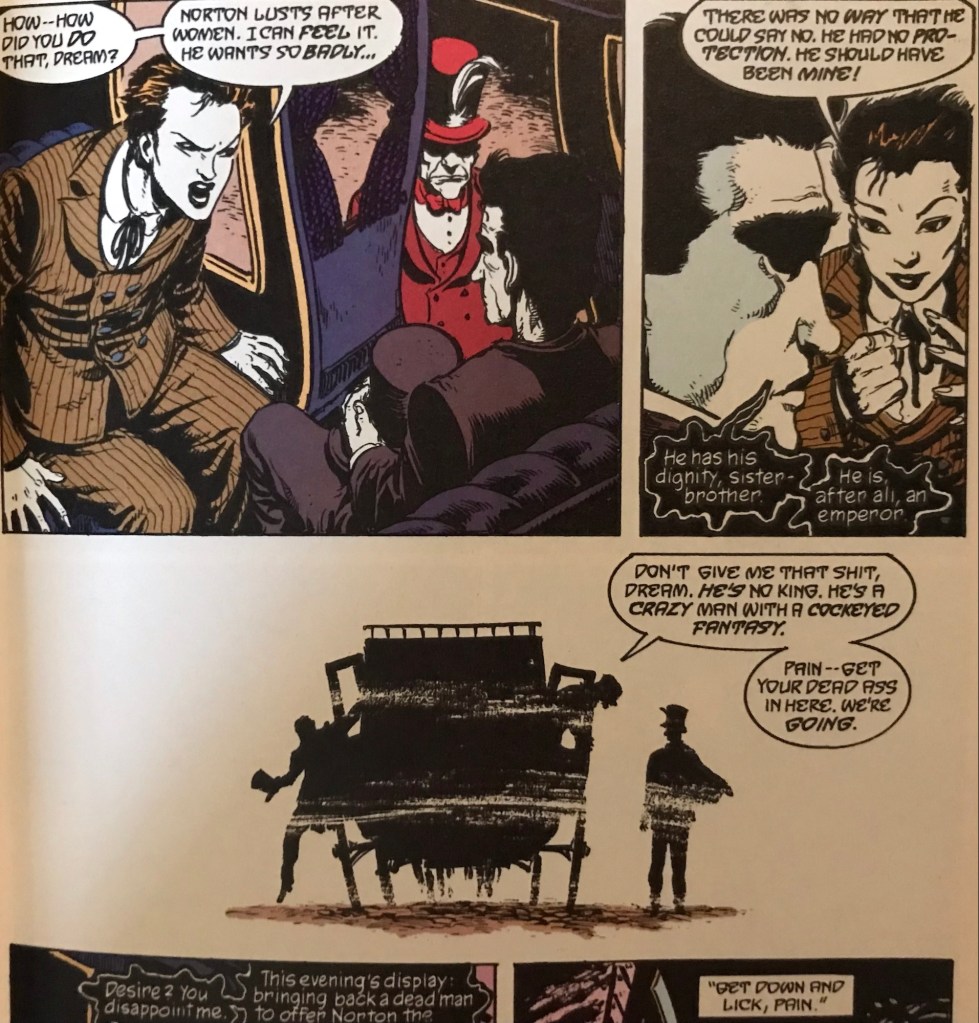
The King of Pain: last seen in ‘Three Septembers and a January’, during the competition for Joshua Norton’s soul in the nineteenth century. The contenders were Desire, Despair, Delirium and Dream. Desire attempts to dominate Norton with a supernatural visitation and an offer to fulfill any sexual wish. Her/his envoy in this was a walking corpse, who was once a gambler who committed suicide over his debts. Whoever he was during his lifetime, he now introduces himself as the King of Pain.

Norton brushes him off and he slinks back outside to a carriage where Desire and Dream wait. The King of Pain then starts slavishly fawning over Desire while the siblings argue over Norton.
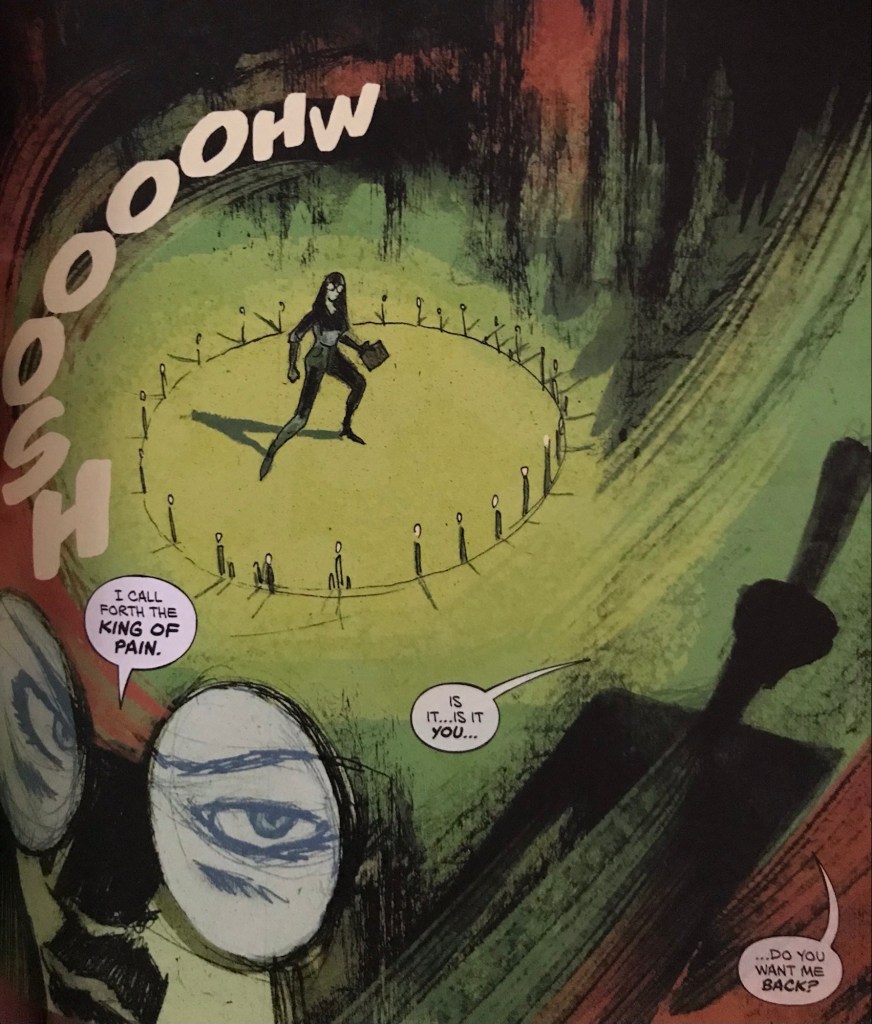
I suspected he might show up after the first Nightmare Country collection. From the beginning, we are acquainted with a pair of undead assassins, loyal to Desire, called Mr. Agony and Mr. Ecstasy. It’s easy to forget one character from a massive comic with many short story anthologies…but if you happen to remember him, he is a clear precedent.
Mr. Ecstasy, Mr. Agony and the King of Pain all attest to Desire’s pattern of using undead servants. The similarities may stop there, though: Mr. Agony and Mr. Ecstasy are “bounty hunters, trained at the Unseen Cathedral”. The King of Pain is not a warrior.
He could very well be something, though.
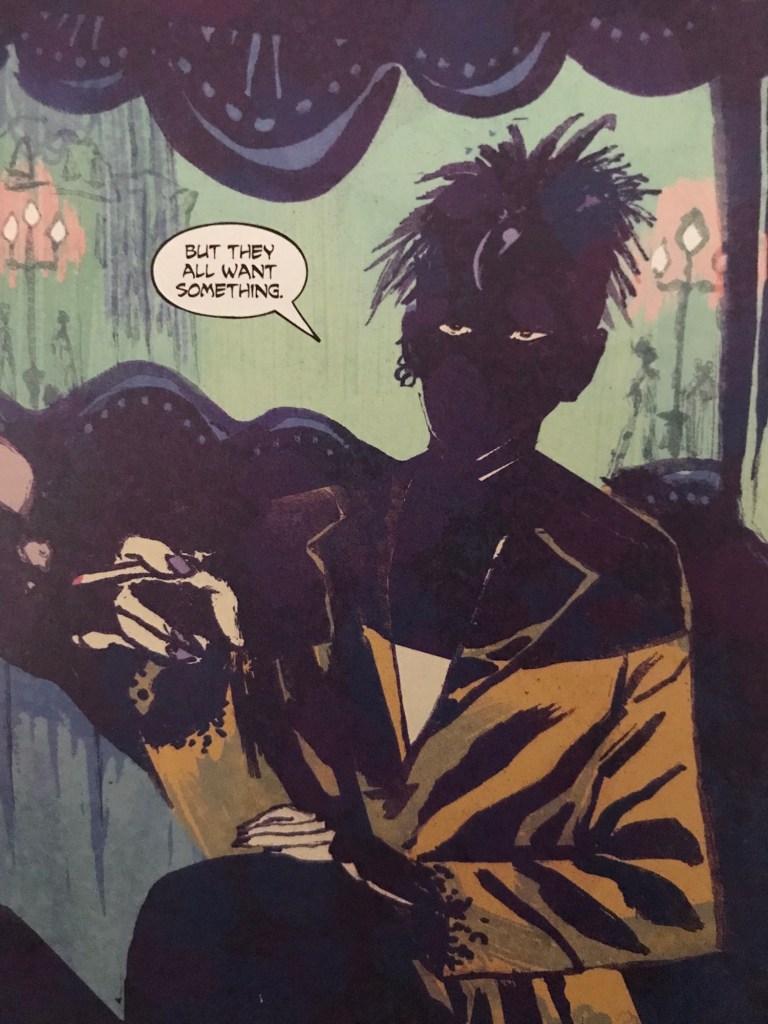
As in the last book, there are ideas that can draw the wrath of Desire’s assassins. Last time, the targets appeared to be people who are inspired (consciously or not) to write books about the Corinthian. In book two, ‘The Glass House’, the deadly ideas include books “about” the King of Pain.
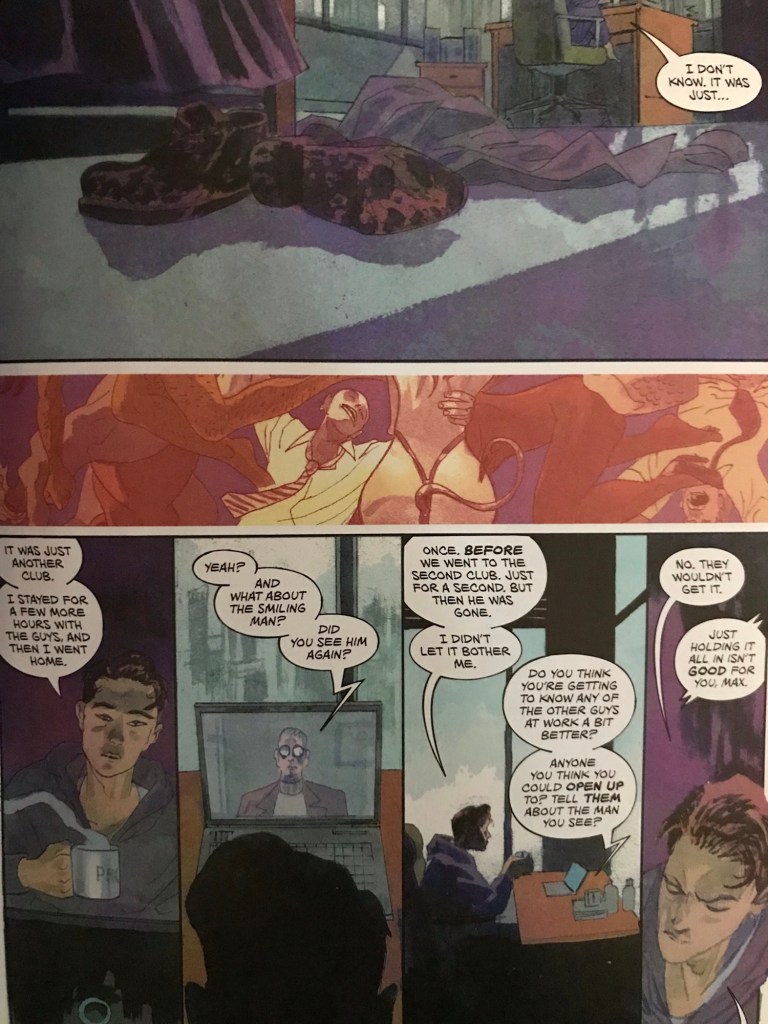
What remains the same: those who have the deadly ideas claim to never dream and regularly hallucinate a fat, naked, smiling man with Corinthian-like eye-mouths.
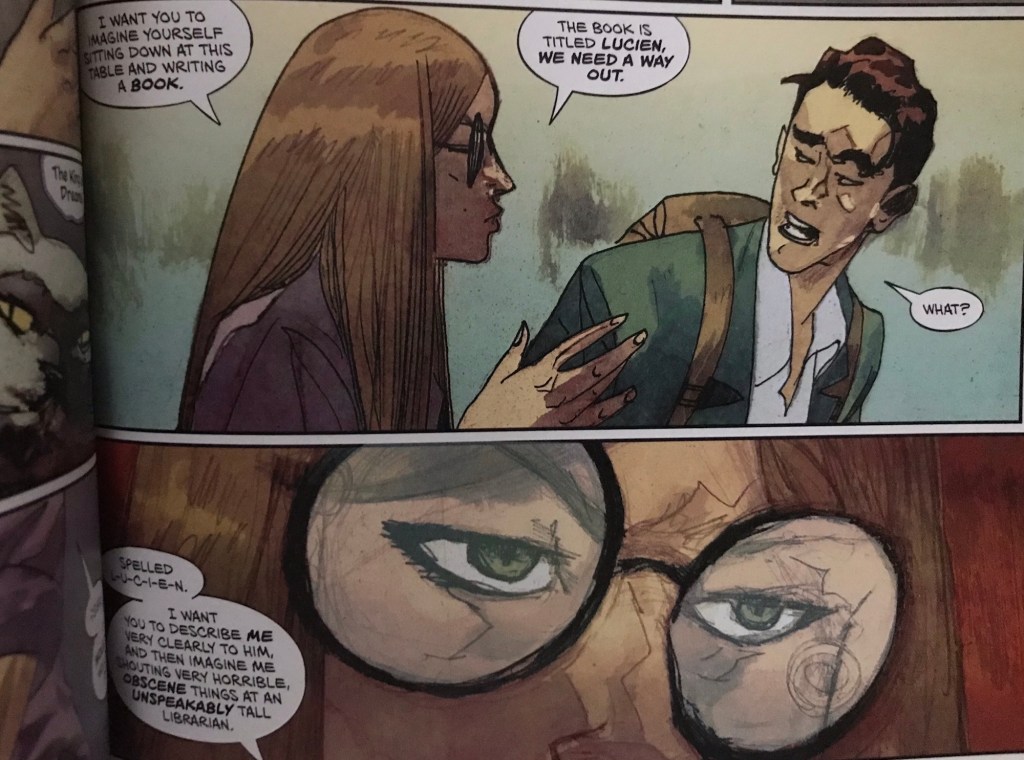
Our present inspired-uninspirable is Max Lee. Like Flynn and Jamie, Max doesn’t dream. Also like them, Max exists in a state of perpetual, unsatisfied yearning. Flynn’s friends did not respect or acknowledge one of the largest parts of her life: art, inspired by the Smiling Man. The guy she hooked up with in the beginning only listens to her long enough to sleep with her. While he dreams, he expresses contempt for her while talking to the Corinthian. Jamie has perpetual imposter syndrome and is terrified that everyone is barely tolerating him.
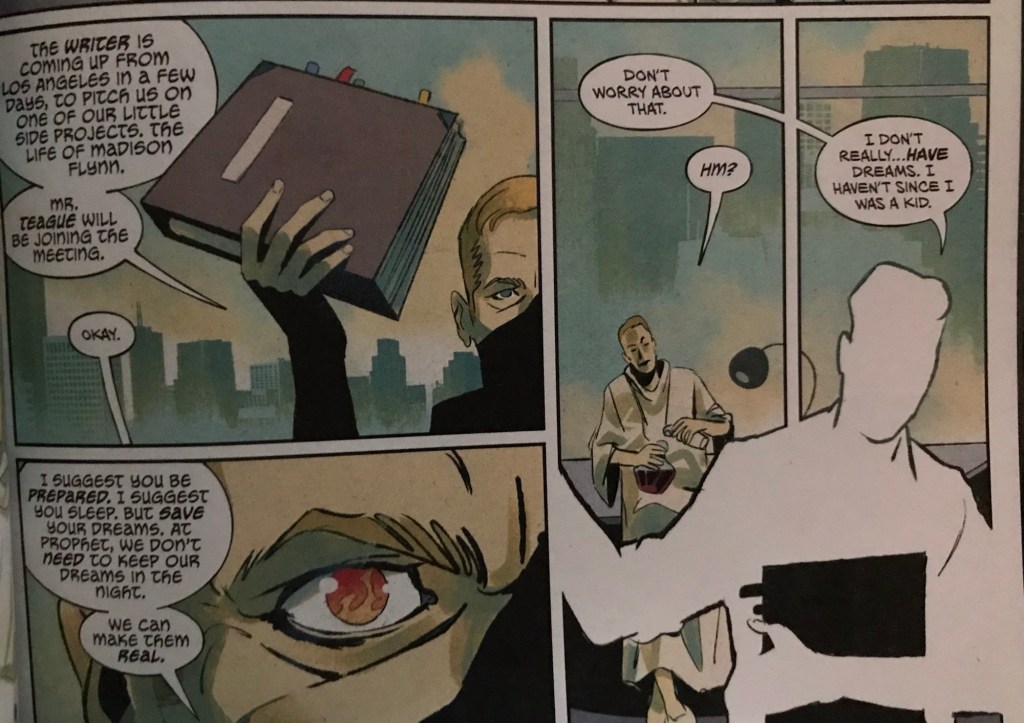
Between them, Max has more in common with Jamie. All three of them live as if acceptance is conditional. If all validation necessarily requires compromise and submission from you, it implies that you- on your own terms -would basically just be “in the way” for everyone else. In a scene where Max says he hasn’t dreamt since childhood, the shape of his body is a white void in the panel.
One notable difference with Max: as alienated as he is, he does fall in love with Kells, who is paired with him by Azazel. His unspeakable itch that he needed to go to a demonic nightclub to scratch: to cuddle, talk and exchange earnest affection. Something we haven’t seen any other inspired-uninspirable achieve.
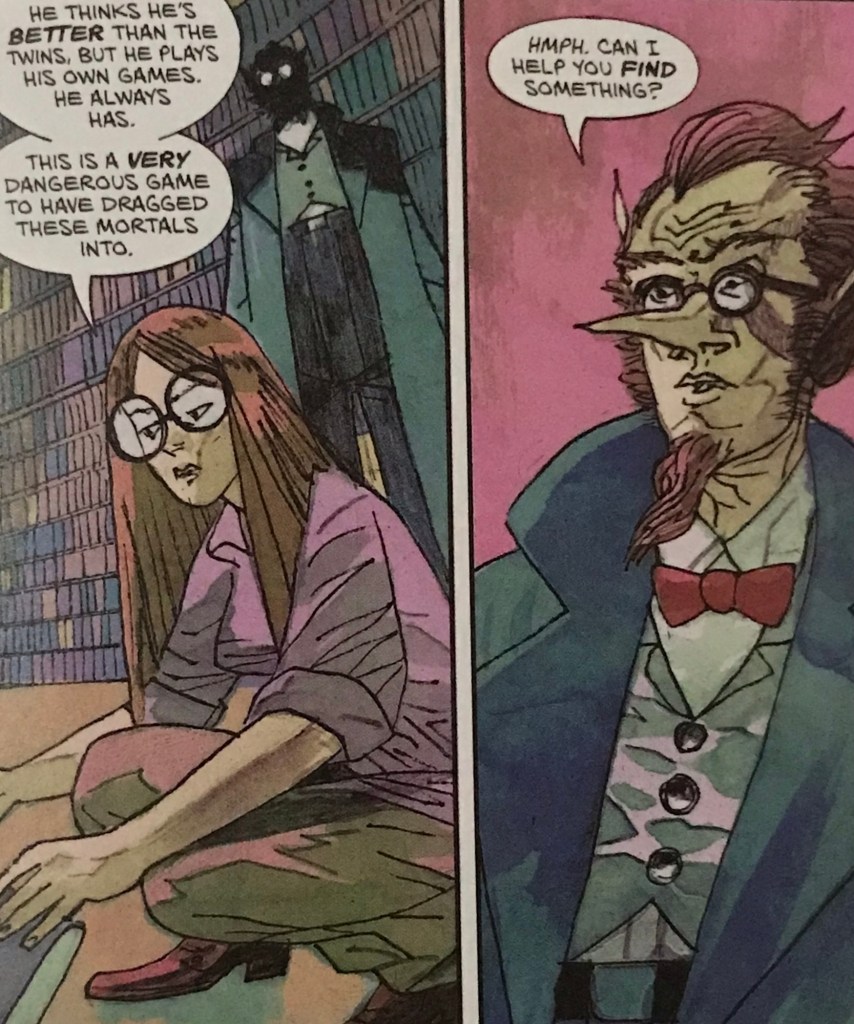
The specific content of the deadly ideas may be less important than (or equal to) the people who have them. Late in the book, Dream mentions an inverse-echo of the regular dream vortex events, such as the one that swept up Unity Kincaid and Rose Walker.
The dream vortex seems to require a sentient anchor to latch onto, at first. In the late stages of a vortex, the initial anchor can be subsumed in the conglomerate of blended souls but it at least starts with one dreamer (Sandman: Overture).
Flynn, Jamie and Max all resemble one another and they all see the Smiling Man. At the same time, the words and behavior of the angel “Morrie” imply that there is a part of this that is less bound to one person.
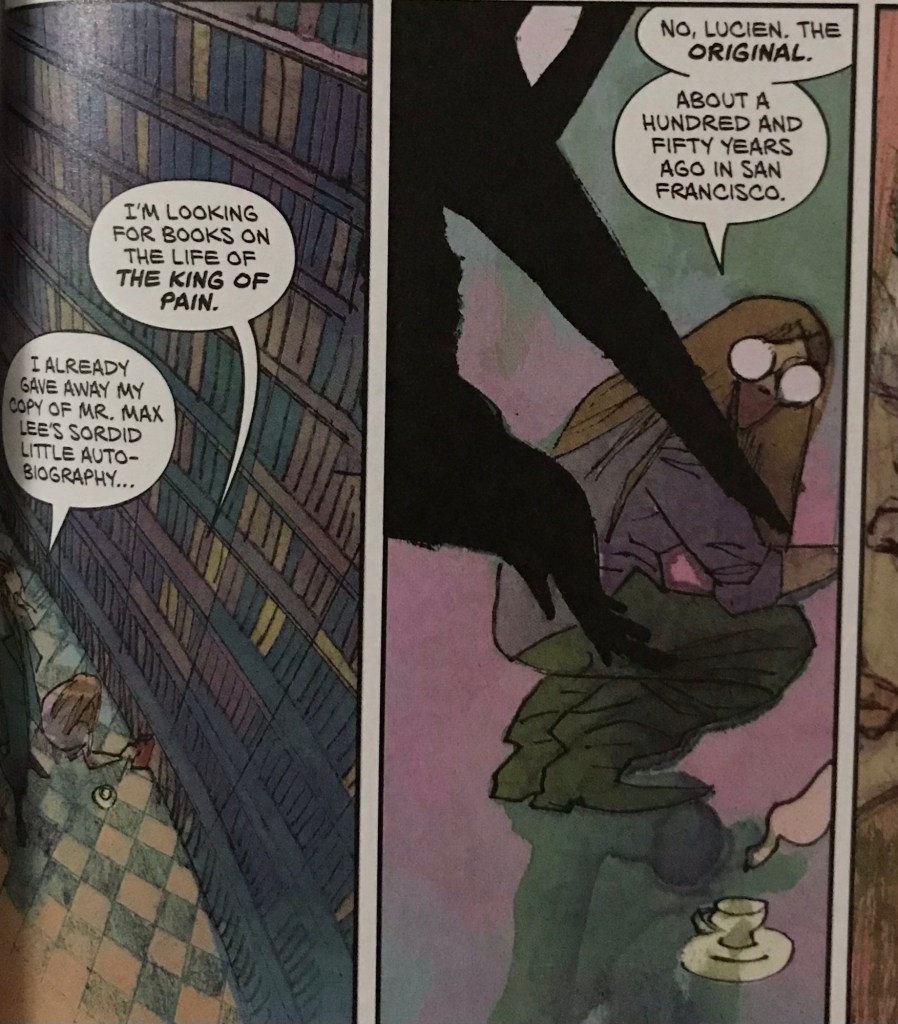
Each iteration of the deadly idea accumulates from the older versions. In the beginning, the inspired-uninspirables had ideas to write books about the Corinthian.

An oddity about Ecstasy, Agony and the Smiling Man: they all have the word balloons and lettering of Morpheus. The late elder Dream, as opposed to the current Dream that grew from Daniel Hall. Black word balloons, wavy boarders with soft white letters. In the world of The Sandman, the lettering of the Endless is absolutely unique. They only appear for a single character. If the speaker is not the given Endless than the given Endless has either shape-shifted or has invested something/someone with their soul.
In ‘The Glass House’, we learn that the demon Azazel has been carrying the blood of Morpheus ever since he was captured in ‘Season of Mists’. That is, blood shed by Morpheus in their brief fight. With the blood of Morpheus, Azazel had something of a private stash of dream-magic, with which he plies mortals with their most depraved and violent fantasies in exchange for their souls.
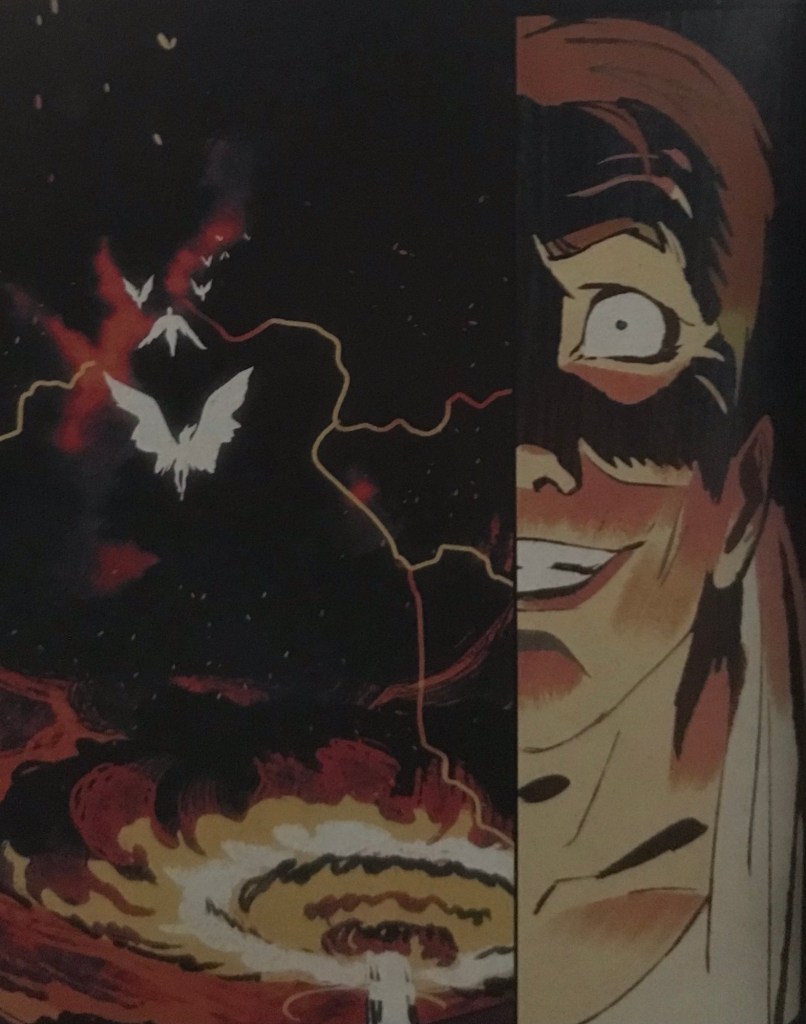
Morrie the angel, meanwhile, snorts dream sand, presumably from the same pouch that Morpheus once tracked down with John Constantine.
If this was about a demon and a renegade cousin of the Endless running an infernal fly-by-night operation, the possible uses for dream-magic would be evident. Yet the Morpheus lettering coming from the Smiling Man suggests that the good luck of a few soul-hawkers is not the only reason why we’re finding dream-magic tucked out of the way.
Especially since Dream (Daniel) wipes the memory of the Corinthian when he fails to convince him to abandon the mystery voluntarily. Dream also convinces Max, Kells and Flynn to stay in the Dreaming. After the manner of his predecessor, Daniel is implacable in his duties. To one of the new (potentially permanent, never to reveal any secrets) residents of the Dreaming, Daniel says that he suspects some kind of reverse dream vortex.
Which brings us back to the hidden stashes of dream-magic that seem to keep coming up. Azazel, with his soul-hustling, has a good enough reason to want dream-magic. But what about the Smiling Man and the deadly ideas?

I suspect that the content of the deadly ideas are not completely incidental. Morrie says, at one point, that a story touched by Dream of the Endless is more powerful than any other story.
Now…whatever was initially going on in the first Nightmare Country, with the Smiling Man, Madison Flynn and the fourteen other people who died before her…Dream got dragged in at the end, by the Corinthian. And, as we know, Dream saved Madison Flynn from death by turning her into a dream cat. In other words, the story of Madison Flynn is now touched by Dream of the Endless.

Jamie got involved- in all likelihood -because he was an inspired-uninspirable, who saw the Smiling Man. This, alone, seems to put him on the hit list of Agony and Ecstasy and therefore Desire.
Now, though, it appears writing a screen play about Madison Flynn has the same effect that writing about the Corinthian used to. Ditto the King of Pain. If Morrie’s plans require stories touched by Dream, commissioning a movie about Madison Flynn makes sense.
Yet there were already fifteen dead people (counting Flynn) who were inspired by the Corinthian. The fact that they may all have been interpreting the Smiling Man seems relevant. Thessaly attempts to cut through the obfuscation by pretending to be Jamie with a finished screen play.
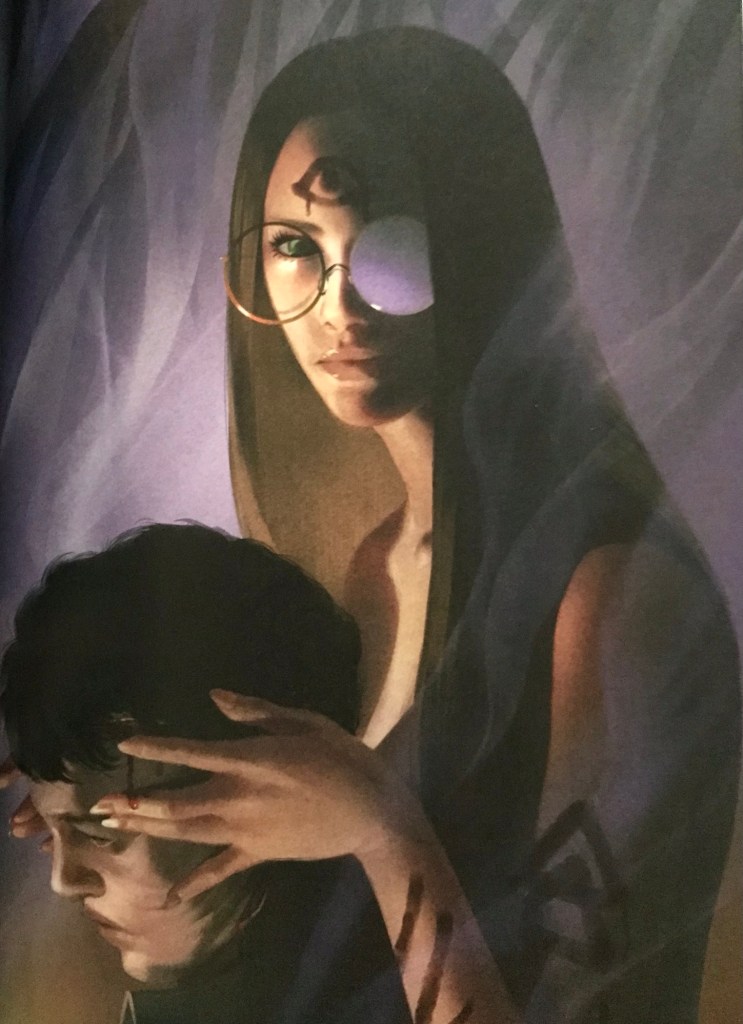
If the inspired-uninspirables all see the Smiling Man, then is the tendency to imagine art/stories/etc. of the Corinthian pure coincidence?
If Morrie requires stories touched by Dream, then one way to make something happen with Dream is to target someone in his neighborhood. Too close a confidant could be a liability. It would have to be someone close to him- someone with Dream’s ear -who is not constantly at his side. It would also help if this person’s feelings are not always in agreement with Dream. The Corinthian wouldn’t be a bad target.
One possibility: the whole point was to make something happen that involves Dream. Once you have a thing that happened, you have something to talk about. Or, in other words, a story.

In could be that simple. That could explain why Azazel’s demonic playground is called ‘The King of Pain’. Who is that person, in this world, except someone who did something with the Endless, once? If all you needed were scraps of Dream-related history, it’s the kind of thing you might cling to.
The Smiling Man appears to be able to locate an inspired-uninspirable at any given moment. And they, of course, can locate him. But don’t the words of the lesser mouths have the lettering of Dream? Just like Ecstasy and Agony?
If the Smiling Man can find the inspired-uninspirables, perhaps the Smiling Man can consume them. Or consume whatever he detects in them: something to do with Dream.
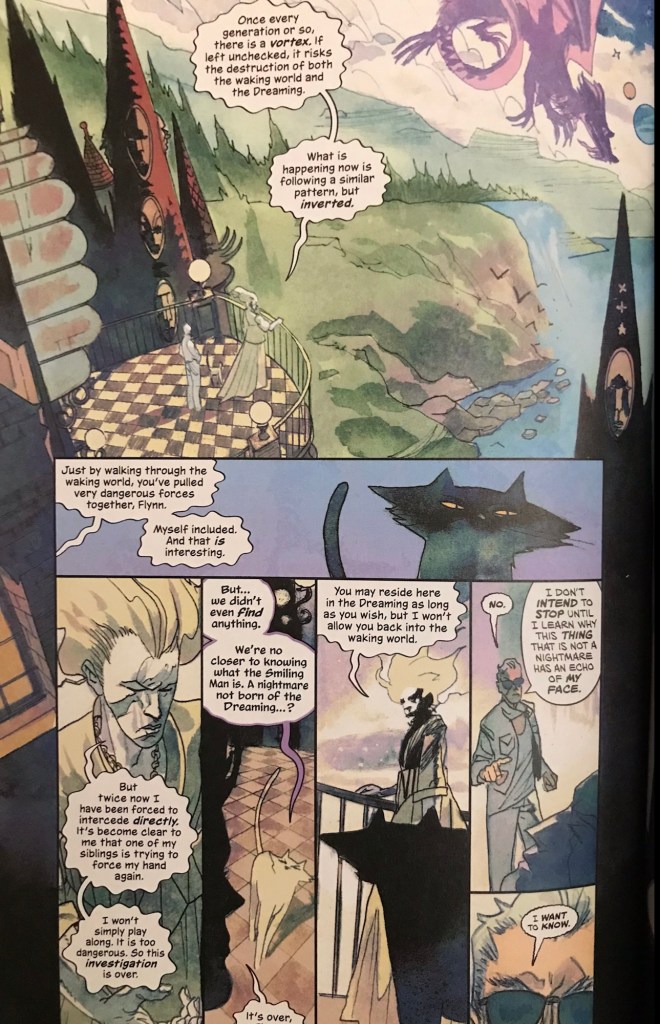
Could the inspired-uninspirables all be manifestations of the inverse vortex? Unlikely, since Dream is apparently at ease housing two of them (Flynn and Max) in the Dreaming. The vortices are not normally harmless.

If the dream vortex unites dreamers in a voracious psychic mass…maybe the new vortex pulls something toward them? Haven’t we met (a round, naked, smiling) someone who is good at finding and absorbing things?


 AilixChaerea