Judging from where things went with Nightmare Country, I wonder if G. Willow Wilson was working on a related concept in ‘Waking Hours’. Volume four of The Dreaming came out roughly at the same time as the first two Sandman Universe Hellblazer arcs and I think all of those were out by the time Nightmare Country ramped up. As Nightmare Country has Madison Flynn and the Corinthian, the fourth book of The Dreaming has Heather After and Ruin. Also like Nightmare Country, the main human and the main nightmare have a dynamic that ropes in other more short-lived events.
A Shakespeare scholar called Lindy Morris dreams something at the wrong place at the wrong time.
Ruin is a nightmare who escaped from Dream’s quarantine/prison chest with the help of Dora (remember her? The Night-Hag from the first three arcs? She’s now something of a mover-&-shaker at the World’s End inn). Why? Because he fell in love with the first human he tried to hunt on the astral plane. So after escaping, he breaks into the waking world using Lindy’s recurring Shakespeare dreams as an entry point.
Thing is, crossing dimensional boundaries in both a tangible and autonomous state requires serious magical investment. Ruin pulls it off because he accidently shifted Lindy’s tangible body into the world of her recurring dream.
Our main human character, Heather After, is a magician with the mind of puissant gambler; undaunted by the need to put some skin in the game to get things going. She was mentored by John Constantine though, so maybe that’s to be expected (Constantine’s quite the magical educator, isn’t he? First Timothy Hunter then Heather After).
I love the ‘Promethea’ vibes in this picture. ‘Intermezzo, Part Two’ cover art by Nick Robles
What’s more: she’s handled the transactional nature of sacrifice well in the past. Arguably.
She once attempted a summoning for what she described as a “nice, chill little fire spirit with the intelligence of a goldfish”. Instead she snagged the cherub Jophiel who promptly threatens her in his flaming, lion-headed, multi-winged form. She lets him go when asked and earns a tiny bit of good will.
Around that same time, Jophiel was attempting an astral dialogue with a young Catholic seminarian called Benedict, who had the potential to become the next Pope. Jophiel is channeling various visions and whatnot which- due to Benedict’s human nature -must occur in the theater of dreams. That means that it’s occuring within the Dreaming. Because of this, other dream-kind have enviornomental access which is how Ruin found him and well…you know how Ruin fell in love with his first human victim?
Once Ruin got involved, Jophiel’s intended visions got derailed and Benedict dropped out of seminary. Jophiel is subsequently punished for his failure with temperory banishment to Earth.
The overlooked nail that catches on the sweater is a recurring plot device in this story. Once Ruin makes it to the waking world, he looks for the only person he knows there: Jophiel, who hates him and immediately tries to drop him off on Heather’s doorstep.
Heather hopes to rescue Lindy through an indirect, adjacent entrance to the Dreaming: Faerie. She combs through the ether for a being that’s closer to Faerie than they are and hooks Robin Goodfellow. Being rather less of a negotiator than Jophiel, the Puck swears vengeance for the temporary abduction. Heather, Ruin and Jophiel dodge his immediate wrath but he keeps his word anyway.
In the meantime, we are alternating with Lindy’s advantures in her dream construct. The Lindy arc succeeds as its own story but Sandman readers will wonder about the role of William Shakespeare. Especially since the SU Lucifer also riffed on the in-uinverse relevance of Shakespeare. It essentially depicts the in-universe events that shaped the idea that Dream imparted to Shakespeare, later to become The Tempest.
While we don’t get the kind of detailed flashbacks that SU Lucifer had, Shakespeare’s prior Sandman involvement comes through. Lindy becomes convinced that her dream will end if she solves an ongoing argument in her inescapable dream-house: she’s trapped with a bunch of different Shakespeares who are all convinced they’re the one that derived from the real, historical author. Details from the ‘Midsummer Night’s Dream’ vignette within Dream Country provide a random memory that one of the Shakespeares lets slip. This blurt gives Lindy an early, vital hint.
Like I said, it works fine as its own story. There is another possible association, though: Shakespeare is, potentially, the only one who spoke with Morpheus about the angst that drove him to suicide.
Daniel, the current incarnation of Dream, feels the stirrings of Morpheus-era memories.
Speaking of those: Heather After is the granddaughter of Roderick Burgess- the guy who trapped Dream for eighty years during the early twentieth century. In fact- unless I’m missing something -it seriously looks like Heather is John Dee’s bio-daughter. Like, Doctor Destiny, from ‘Preludes & Nocturnes’; the Justice League villain who tried to claim Morpheus’s Ruby.
We aren’t given the exact details of her origin; save that she grew up in the lap of the Cripps family, whose magical heritage is at least as potent as the Burgesses, considering how a lawyered-up meeting goes between them during the reading of Ethel Cripps’ will.
On her deathbed, Ethel told Heather that she has no reason to be dependant on the Burgess family. Judging how Heather takes this information, I wonder about the kind of relationship the two of them had. Heather is a transwoman and it looks as if Ethel was the only one in the family who accepted her when she first came out. The chosen family dynamic is not spelled out in so many words but Heather’s reaction to Ethel’s death is telling. Ethel appears to have been the only adult that defaulted to her chosen name. She barefaces her way into the will reading, claiming to just want some of her grandmother’s personal effects to remember her by. Heather swipes a grimoire and casts a barrier spell behind her on the way out, leaving the Burgess and Cripps lawyers panicking and slinging spells at each other.
I did say she had a history of successfully managing risk.
Coulda did better with the Puck, though. If you piss off one fairy then it pays to have either fairy allies or negotiation leverage with other fairies. She manages to persuade Auberon to help her out but only in exchange for a favor.
Nuala has deposed Auberon and Titania and they want their throne back. Auberon does, anyway. Titania would like it back but spends most of her time as one of Nuala’s cringing courtiers.
It’s tempting to wonder about the tension that was growing between Nuala and Titania during ‘The Kindly Ones’; buried romantic or sexual jealousy over Morpheus. The Netflix miniseries brought some of that closer to the surface but it was evident in the original comic as well.
I also couldn’t help wondering about Cluracan’s nemesis: the being he created by bumping into some raw creative energy in Dream’s castle. Off the top of my head, I think he eventually refers to himself as either the White Stag, the Wild Hunt or possibly both at different times. I wonder how relevant the second moniker is, since other beings use that name in the third SU Lucifer book. I’d be surprised if Cluracan’s nemesis was the same Wild Hunt that Lucifer crossed paths with. The Wild Hunt in SU Lucifer is an ancient and ineffible cohort, almost reminiscent of the Kindly Ones themselves…whereas Cluracan’s nemesis is relatively young. To say nothing of the possibility that the shape-shifter filled the void of the Hunted God, which Lucifer previously believed to be annihilated.
(I hear that the first run of The Dreaming snipped that loose end but I can’t help being attached to the theory that Cluracan’s nemesis somehow went on to become the Hunted God in SU Lucifer. In ‘The Wild Hunt’, Odin says that Lucifer’s doom was set in motion by one of the Endless)
Anyway, Cluracan’s shape-shifting nemesis gives Nuala almost as much shit as Titania does in ‘The Kindly Ones’. He appears in the shape of Cluracan to threaten Nuala and gloat over her during ‘The Wake’.
We do get Nuala’s version of things eventually but it’s rather short and not very specific. She makes no mention of any party external to herself, Auberon and Titania except the Unseelie. From the context offered here, the Unseelie were always present in Faerie but never rose to the level of visibility as the Seelie characters.
As for the ‘Waking Hours’ characters, everything that has happened so far either dates back to Heather accidentally summoning Jophiel or accidentally summoning Robin Goodfellow. I don’t recall any specific reason to think that Heather’s summoning of Jophiel played a part in Jophiel’s failure to guide Benedict but it feels plausible. In any event, Jophiel blames Ruin exclusively.
I mean, she seemed to accidentally summon Jophiel shortly before Ruin showed up? And Jophiel being who he is, I don’t think he’d be civil and friendly with Heather if he thought she had anything to do with it.
Even if that one is open and shut, though…none of the second half of ‘Waking Hours’ would have happened if Heather had not snagged Robin Goodfellow at the beginning.
There is nothing to be immediately deduced from this just now…except for Dream’s belief that a nightmare (Ruin) wandering different planes “has brought old evils to the waking world.” When he examines the hospital room where the curse from Puck’s blade grew out of control, he says “(t)here is a coalescing in this place…the spiral of time doubling back upon itself…warning us that that which has happened before will happen again”.
We have also known, since the beginning of ‘Waking Hours’, that a descendant of Roderick Burgess is involved. Dream has only lately figured that out which he probably took for confirmation. Since Dream attributes all this to a nightmare outside of the Dreaming, his suspicions probably run closer to Jophiel’s.
It is also evident when Dream decides to take Ruin back to the Dreaming. He sees the localized effects of a localized cause. This part is also interesting because Dream shifts from distant observer to direct participant. His position- relative to the other characters -becomes antagonistic. Possible foreshadowing of later developments in Hellblazer and Nightmare Country (perhaps going as far back as House of Whispers)?
In all fairness…Dream’s role in the later Sandman Universe comics has been closer to strict neutrality rather than antagonism but- considering how ‘The Glass House’ ended -that shade of gray is going darker. His behavior in ‘Dead in America’ also stands out in contrast to Morpheus. Morpheus was a stickler for the rules and had zero compassion for those on the losing side of them…but he didn’t exactly relish flexing on his enemies like Daniel does.
I wonder if ‘Waking Hours’ was the early turning of this corner. I wouldn’t be surprised if the third volume of Nightmare Country sees Dream getting even more cozy on the dark side.
The SU Locke & Key only lasted for three issues…but they tell a neat little one-shot. It would make a good animated short film about the twins John and Mary Locke and their brother Ian.
It’s interesting to see the post-WWI Roderick Burgess again, with Morpheus in his basement.
One thing a longtime Sandman reader will recognize: metaphysical timelessness. Dream-kind like Fiddler’s Green and Corinthian were not made in the three-dimensional world. The angels of the Silver City and Lucifer are even further from the third dimension.
Another thing that stands out to OG Sandman readers: the third act explains where Lucifer’s key to Hell came from.
Basically, Mary Locke made it with her cousin Chamberlain’s locksmithing kit and forge. She made it specifically to rescue her twin, who lied about his age so he could enlist as a teenager, later to die in WWI and end up in Hell (sounds like a ‘Sleep of the Just’ subplot).
It was made in the forge of universal keys to break the permanence of Hell. In both the Silver City and Hell, all time is simultaneous and an angel manages to place it around the neck of Lucifer before his fall.
Mary Locke, meanwhile, only made her own key to Hell because she heard the gates of Hell were locked. And why wouldn’t she? Lucifer had it when he fell, after all.
Yes it’s paradoxical. I don’t know if this is meant to tie in to the Overture world-building, with the Gemworld and multiple timelines interacting with each other but it would fit in with it.
Unless the “first draft” of the universe had time loops written in from the beginning. That nuance could also leave room for the Gemworld. It also reminds me of some themes from the SU Lucifer (he’s in this as well, looking like nineties Bowie at the turn of the century, roughly eighty years before he looked like late-sixties Bowie in ‘A Hope in Hell’). Lucifer is always himself and nothing else: perhaps because God made him before discovering time loop editing.
I don’t think the ending would have the same pathos if it wasn’t for the first act, though (marked ‘issue 0’ on the cover).
That vignette concerns Ian, who died in childhood. The Locke family patriarch decided to house his soul in a pocket dimension, with other recently deceased family members, inside the moon. Without any broader context from Locke & Key, this could be an ephemeral state, the Locke family ghosts could be “squatting” between worlds or both.
In any event, the shelter seems to depend on its obscurity. The only reason the moon-door held against Lucifer was probably because Mary still had her key. Shortly after seeing Jack home, Mary hears that a pair of angels named Duma and Remiel would like a word. She journeys to the Silver City, followed by Fiddler’s Green, and hands over the key to Hell when asked; just in time for a certain moment in a certain timeless, recurring war of the angels (speaking of SU Lucifer).
Lucifer was only thwarted at the moon-door by a technicality. A technicality that disappeared as soon as Remiel and Duma asked for it. The rescue of Jack is all the sweeter for it being a series of gambles which could easily have failed. The winches and ropes and pulleys behind the moon add a bit of turn of the century romance. A vague association with the silent film A Trip to the Moon, perhaps.
Warning of sweeping spoilers for both the original Sandman and the newer Sandman Universe comics
Morpheus had black word balloons and wavy white letters. Daniel has white word balloons and wavy black letters. Ananse also has white word balloons with wavy black letters. Morpheus had a unique, subjective avatar for each person who interacts with him. Have all the avatars of Dream shifted from Morpheus to Daniel…? Considering Daniel’s role in the fourth Dreaming volume and ‘Dead in America’, there may be some relevance to his overall character arc.
Granted, Daniel/Dream is absent from the Dreaming at that point in the SU chronology. We know, for sure, that Dream takes whatever shape is best depending on who he’s talking to. But what if a bunch of people see the same shape and compare notes? How many myths could spring up in world history, from that? Perhaps Ananse and other storytelling tricksters like him?
If dream-kind deities could spring from this, then maybe a few of Dream’s personal avatars have become less personal and more cultural. Maybe some of them- in their current state -would not necessarily disappear with Dream but continue to reflect and channel him.
The legacy of Morpheus’s psychic infrastructure under Daniel (to say nothing of third parties) is a major plot point in ‘Dead in America’.
Morpheus may not have been a humanitarian but his intensity and seriousness seemed to grow with his closeness to humanity. In ‘Three Septembers and a January’, Morpheus initially looks down on Despair, Desire and Delirium over their wager on Joshua Norton’s soul. It is beneath their dignity, beside their duties and affects innocent people. Despair browbeats Morpheus/Dream into joining them by comparing him to Destruction. Morpheus/Dream wins the game in the end, simply by using Joshua’s dreams to empower him against the others.
I don’t think Daniel/Dream would have the same reactions. Perhaps not even the same strategy.
I was nervous about Daniel when the first volumes of the reboot of The Dreaming came out. It looked as if Daniel was just stepping into the same romantic and emotional rut as his predeccesor. But what if it was more of a recapitulation period? Daniel has a brief and stormy love affair with Ivy Walker which causes him to leave the Dreaming and the whole drama with Judge Gallows and Wan unfolds in his absence.
Then Daniel returns. We still don’t know everything that happened between him and Ivy. What if the relationship had a firm, decisive ending, with no looking back? Perhaps Daniel completely “shook off” his Morpheus baggage after that.
Morpheus grew more stern as he drew closer to humanity. Daniel does not seem stern. Daniel smiles and his smile troubles John Constantine. Both Nightmare Country and the fourth volume of the rebooted Dreaming show Daniel in a more mercurial light. In ‘Dead in America’, Constantine barely manages to talk Daniel down from completely wiping the Kindly Ones from existence (Constantine, as usual, had his own reasons).
If Ananse started out as an aspect of Dream, which then changed when Dream himself did…then maybe Ananse’s eagerness to claim and devour could tell us something about Daniel.
I’ve taken forever to review this part of the Sandman Universe run for two reasons. The first is that I wanted to reread them all, from beginning to end, before doing so, rather than the truncated reaction posts I sometimes do. The second reason is that the story told in the House of Whispers trilogy feels extremely personal to me. While I have no African heritage, I did grow up practicing an ethnically-inherited spirituality. I still do.
This personal resonance also drew my attention to how Neil Gaiman has handled concepts common in both The Sandman and American Gods. I remember, when American Gods the novel was published, the curious lack of dream-kind avatars of currently-practiced religions. Like, where are all the Yawehs and Jesuses and Satans and angels (distinct from Lucifer and the Silver City) that are dream-kind, animated by belief? Emanations of celebrity worship were mentioned in the novel, like Marilyn Monroe and Micky Mouse. Then there’s the modern-day abstractions like Technology and Media and World.
To illustrate this point a bit: The Satanic Verses by Salman Rushdie could easily exist in the world of American Gods…except, you know, occuring mostly in Bombay and Britain, with dream-kind expressions of Arabic and Islamic concepts. Which was enough for a nation-state to sic a million theocratic would-be assassins on him.
The TV adaptation (of American Gods) addressed a few of these oversights. Still, though: you wonder just how busy a fictional universe with these rules would be if every prevalent belief you can think of was accounted for, with zero threats aimed at the author?
The Power Divided
Survivors from antique pantheons are where the action is at in a lot of these stories, yet the internal consistency requires that there be dream-kind that are currently worshipped. House of Whispers not only pulls this off but beings like Erzulie Freda and Ananse feel natural alongside other familiar faces like the Corinthian, Mazikeen and Papa Midnite.
See above
There is also an intersting timelessness in the perspective of the loa characters that reminds me a lot of how Mike Carey characterized Lucifer (speaking of- House of Whispers is co-authored between Nalo Hopkinson and Dan Watters, the latter of whom authored the Sandman Universe Lucifer). Erzulie Freda, her relatives and her husbands hit rock bottom fast, lash out fast and move on fast. Erzulie Freda is also the only character in the world of The Sandman whom we are allowed to follow into annhilation other than Morpheus himself. In Overture, non-existence is a torpor that Morpheus gets shaken out of by Destiny (which may have been possible simply because the multiverse was deteriorating). In House of Whispers, Erzulie Freda experiences personal annhilation as an infuriating, painful problem that needs to be solved.
Both of them get out of it in similar ways. Morpheus gets summoned back into existence by Destiny, who points out a ship, made of dreams, offering escape to those whose worlds are crumbling.
Remember that boat from Sandman: Overture? Made of dream-substance, created by Despair’s twin? This is from Watching the Watchers, btw
Erzulie, meanwhile, relies on the faith of a small handful of believers. Even after her subjective point of view is wiped out and all knowledge of her vanishes from the waking world, there is still at least one worshipper left: Alter Boi. Alter Bois workings enables Erzulie to manifest once more as Marinette of the Dry Bones.
Ananse
This happens in book two, ‘Ananse’, which was when I realized this was one of the best stories in the Sandman Universe run. The appearance of Marinette got me right in the pathos but there’s just as much awesome craft bells and whistles. The Sandman Universe comics haven’t really been big on the anthology books (such as ‘Dream Country’, ‘Fables and Reflections’ and ‘World’s End’ from the original Sandman). Out of the few anthologies that have appeared in the Sandman Universe run, ‘Ananse’ is easily the best. I put it on the same level as ‘World’s End’ or ‘The Wake’.
‘Ananse’ begins with Shakpana (the loa that presides over disease) in the waking world, following up on plot threads from ‘The Power Divided’. These chapters alternate with a nightmare that the Corinthian is torturing a dreamer witih. For awhile, it’s not altogether clear that this person is dreaming and it is way too tempting to think that Shakpana’s psychic disease from ‘The Power Divided’ has gone completely ape shit and unstoppable.
Specifically: bloodshot, terrified, bulging human eyes have spontaineously appeared on animals. There is a wave of veganism, which rebounds when people realize that the eyes, with their concentrated agony, are delicious. This dreamer, who is likely an environmentalist in her waking life, is horrified to see that vegetarianism is now redefined as those who eat normal animal meat minus the eyeballs. Later, everyone realizes that eyes taken from humans taste better than any others. Restaurateurs come to the conclusion that the people have spoken: if society in general loves to eat human eyeballs, who are they to say no? The ethical Overton window shifts a little more and vegetarianism now includes people who eat animal eyes but abstain from human eyes.
The Shakpana chapters are so blinkered that you can’t help wondering if the eyeball restaurants are literally springing up everywhere. We only know that this is a dream when the Swan Prince, at the behest of Erzulie, tracks down the Corinthian.
In ‘The Power Divided’, the loa Agwe (one of Erzulie’s husbands) becomes trapped in the House of Whispers, slowly but surely blending with the vessel itself. Ananse may be able to extract Agwe but he is famously mercurial. In the absence of any other options, though, she rolls the dice. The Swan Prince happens to know that the Corinthian has something of a friendship with Ananse and catches the mouth-eyed gent mid-nightmare.
The Swan Prince sheepishly approaches the Corinthian and informs him that “Mistress Erzulie would like a word.”
Corinthian: “What? I’m nothing but a humble nightmare– and a GOD seeks my help? This I have to –ahem– see.”
Swan Prince: “I must say, that was an amazing nightmare you were pestering that woman with.”
Corinthian: *cheekily grins* “Lord Dream destroyed the last Corinthian for his lack of imagination. I’ve been working on my own.”
I love that exchange. The Swan Prince seems intimidated but also earnestly appreciative. Come to think of it, I don’t know if the Swan Prince had any speaking roles in the original Sandman. Off the top of my head, I can only remember one or two background appearances, usually in the company of the white rabbit from Alice’s Adventures in Wonderland. I think, in ‘The Kindly Ones’, they’re briefly visible sneaking around a staircase. The white rabbit also showed up in ‘Empty Shells’, book two of the Dreaming reboot.
Ananse
Once the Corinthian brings the House of Whispers to Ananse, negotiations develop into a storytelling contest between Ananse and Erzulie.
Like ‘World’s End’, there are a succession of self-contained stories until the final chapter of the wider frame story becomes the final vignette. A disagreement about the rules of the contest pushes Ananse over the edge and he moves in for the kill. Erzulie disappears from the minds of humanity except for the devout Alter Boi, whom had previously served Erzule as her willing horse (one who consents to carry a loa in their body- from what I could find online, such a person is typically called a chwal).
The Power Divided
Alter Boi, in hir grief, recreates the sacrificial working from January first, 1804 in Haiti, that preceded the Battle of Vertières: the slave revolt that won Haiti her independence. The only slave revolt in recorded history known to have led to the founding of a nation.
First, there is only Alter Boi. Then a few of Alter Boi’s house mates. Not unlike the bones of a religion…and bones are more than enough.
The Power Divided. Uncle Monday is both an alligator and a crocodile, which I find evocative of the location of Cécile Fatiman’s 1804 working: Bwa Kayiman, meaning alligator forest.
So. What is left of Erzulie, in Ananse’s web, after her flesh and her spirit are picked clean? Her bones, newly infused with a burnt offering. Her bones begin to stir with the fury of the vanquished and the hapless.
It’s powerful poetry but it also ties back into the timeless simplicity of the loas- and perhaps all beings whose existence does not occur on mortal terms. It even reminds me of a fundamental reality of the Endless, spelled out in ‘Brief Lives’: an Endless embodies both their purpose and its reflection. Even the Corinthian, musing on the prospect of claiming the House of Whispers for himself, echoes this.
Ananse
In all the decades I’ve been reading and rereading Sandman comics, it never occurred to me to look into the linguistic roots of the Corinthian’s name. I figured there was probably something to find there but dream-kind exist according to dream-logic: an explicable cause is not necessarily called for. I finally got around to it, though: one meaning derives from the New Testament epistles, in which the people of Corinth are described as sinful and impulsive. Another possible meaning of corinthian is athletic rigor. The Corinthian does what he wants, whenever he wants and he’s a perfectionist about it. This even sheds some light on the function Morpheus originally envisioned for him: a dark mirror of humanity. Did he not recently craft a nightmare in which ordinary appetites drive people to devour each other’s eyes?
Like all Sandman stories- both original and post-2019 -subjectivity is central. Alienation, of course, puts one directly in touch with subjectivity. Not unlike how Despair crafted the House of Whispers from dreams or Desire used dreams to craft hir own ship in hir brother’s absence. Book one, ‘The Power Divided’, begins with Shakpana’s journal of imaginary diseases going missing in Lucien’s library and ending up in the hands of children, playing a game of telephone. A game of telephone changes a little with each repetition yet this one leaves a uniform mark on each participant: the removal of their soul.
The Power Divided
Just so you know, I’m going to get a little personal here.
In my experience, spiritual events can be perceived on a level close to mental and emotional ones. Getting swept up in something like pain can deafen you to the music you are dancing to. The kind of personal inventory that can reveal these things can also reveal spiritual events within yourself.
While Shakpana is walking around in an escaped convict, he encounters a coat-rack supporting a bunch of bottles. Each one contains a soul killed by Madame LaLaurie- a real, historical serial killer who tortured and murdered her slaves. The convict, having been spiritually aroused by Shakpana, hears their wailing and is unaffected. Like a lot of people, he caught the soul-removal plague. He says he hears the ugly but can’t feel the ugly. This is the kind of personal inventory I was talking about. Simply asking yourself what you are feeling and why. Discrepencies point straight toward things that bear investigating.
Watching the Watchers
Before wrapping this up, I have to mention Papa Midnite, who gets roped into the story by Aesop. In D&D terms, a sorcerer is someone who is born with supernatural powers. A wizard or a witch is someone who acquired them through study and application. John Constantine is a wizard. He relies purely on deduction and prior experience and the patterns he recognizes. This means that he is also usually one push away from total disaster.
Papa Midnite- born Linton, with the difference sometimes split with Linton Minuit -is also a wizard. he exists on the same precarious basis as Constantine but he has also been doing it longer than him. Hundreds of years longer. Also like Constantine, Linton Minuit is dogged by the wrath of those he has wronged in the past. I don’t know if the story of his sister was ever fully told in Hellblazer but it is absolutely central to what happens to him in ‘Watching the Watchers’.
Linton Minuit brings a mercurial counterpoint to the timeless simplicity of the loa characters. There was a time when he was tortured by his immortality and wanted to lift the curse that caused it…until Ananse got him burned at the stake.
See, he cheated some early American anti-slavery guerillas with a fake immortality concoction, leaving them to die in battle. At the moment of their demise, they cursed Linton: he would never be free to die so long as “whites…own(ed) the Earth”.
He of course can’t die but he can burn and regenerate. This is never spelled out in so many words but the insinuation is that this experience- in addition to creating a vendetta with Ananse -cured him of his yearning for death. Remaining corporeal is then both a game and a motivator, which causes a succession of different attitudes toward the curse that made him immortal and the debt on his soul. His debt could be a purpose but his grudge against Ananse has a way of making the idea of purpose a little academic. Immediately after the curse, he wanted to end white supremacy. A plan along those lines was what brought him into contact with Kwaku Ananse. After suffering Ananse’s treachery, he cracks a little more.
His sister Luna, meanwhile, plans to avenge her own murder. Papa Midnite says that he killed his sister to spare her the same fate as him. I detected a vague implication that the curse of the dying freedom fighters was somehow on Linton Minuit’s bloodline…but Nalo Hopkinson used a third person omniscient voice during the prior narration. She referred to Linton in the third person singular “him”. In that omniscient moment, the narration limits the curse to him alone.
Could Linton Minuit (while smoking weed with Aesop with a bong made from his sister’s skull) have been referring to something else? The ambiguity begs questions. I haven’t read any Hellblazer that wasn’t part of the Sandman Universe run but- from what I’ve gathered -his sister’s skull usually represents a magical focus, offering (as she does in ‘Watching the Watchers’) access to other planes. So Linton had a definite functional role for her, after her death. Self-interest muddies the waters even more. To say nothing, of course, of the fact that Luna was affianced to one of the freedom fighters.
Nalo Hopkinson on creating Papa Midnite’s backstory:
The 2020-2025 Hellblazer are the best stand-alone comics in the Sandman Universe run since the first four were cancelled.
(Big fat spoiler warnings for ‘Marks of Woe’, ‘The Best Version of You’ and ‘Dead in America’, btw)
Outside of the nexus stories like The Dreaming and Nightmare Country, the Dan Watters’ Lucifer is still my favorite. Right now, though, Hellblazer: Dead in America is tied for second place with House of Whispers.
‘Dead in America’ is only the third act, though.
Coincidentally, I started watching the Netflix Sandman series just as I was finishing the first two collected editions. One connecting moment stands out: Roderick Burgess commands his son Alex to take the three fetishes of Dream. John Constantine makes a similar demand of a trusting and vulnerable youth who is revealed to be his son.
Which is interesting, since this run of Hellblazer takes off from the far-future apocalypse of the Sandman Universe version of Books of Magic. In both the SU story and the original, Books of Magic is centrally concerned with Timothy Hunter’s life in another timeline, in which he became a world-ending monster. The SU Books of Magic thereby fell into an arc about stereotype-threat: Timothy is not as bad as he looks and has not had a chance to make his own mark.
SU Hellblazer sees John Constantine making an inverse journey. Unlike Timothy, John has had a chance and is every bit as bad as he looks.
The first run of Books of Magic began with a group of mages: The Phantom Stranger, John Constantine, Dr. Occult and Mister E. All four had knowledge of what Timothy would eventually become and- over the objections of of Mister E -they decide to educate him in the hope of heading off his reign of terror.
If the full story of evil Timothy has been written, I’d like to read it (That may be a reason for me to look into the rest of the old school Books of Magic). In the picture of things from the SU though, it seems John was part of the dwindling forces of good keeping supervillain Tim at bay.
In the story ‘Bad Influences’ (which appears within ‘Dwelling in Possibility’ from SU Books of Magic and ‘Marks of Woe’ from SU Hellblazer), John has just escaped from the far-future hellscape into a nearby timeline. In said timeline, Timothy Hunter is still a teenager.
At the time of the ‘93 Books of Magic, Timothy was approached by John Constantine, Phantom Stranger, Dr. Occult and Mister E. They launched from the ‘evil Tim future’ under different circumstances than Constantine at the beginning of ‘Marks of Woe’, however.
In ‘Marks of Woe’, John Constantine’s departure from the ‘evil Tim future’ is initiated by a being claiming to be himself from a different timeline: older, happier and without a soul. This apparition wants the soul of his younger self in exchange for safe passage to a version of Earth that’s not about to be vaporized.
‘Quiet’ cover art by John Paul Leon
The negotiation makes mention of innumerable people whom John has used as meat shields and bargaining chips, for innumerable reasons; both selfish and ethical. The transaction is, according to alleged ‘future John’, nothing more than the consequences of his actions (their actions, actually, since alleged ‘future John’ makes no distinction between his own spiritual destiny and ‘our’ John).
There is even an insinuation that such a transaction may not be the end. According to ‘future John’, “what better place” for the old “ghost” to go, other than back into the “family”? As if ‘future John’ is not dead yet and the soul could still have some time left (even if it would mean subjective annhilation for ‘our’ John).
These are the first actual Hellblazer comics I’ve ever read outside of his appearances in SU Books of Magic, SU Lucifer and a single volume of The Dreaming (to say nothing of the original Sandman). With both the Constantine film and a few animated stories in mind, I could believe that he has a pattern of using people up and spitting them out. This would cast a new light on some things, like John’s rendering of the situation to Morpheus in ‘Dream a Little Dream of Me’.
In any case, both John and the alleged time traveler take this past for granted. Once John takes the deal, we see the manifested proof of it in John’s broken life and relationships, upon his return to the relative “present” (2019). The few who have survived his companionship are done with his shit and want nothing to do with him.
In the world of comics, John Constantine and his moral ambiguity are well-known. A major strength of the Sandman Universe comic line is how well it has built its own continuity. Obviously you’ll get a lot out of it if you read the original Sandman but the SU line has deftly handled its macro-anthology structuring. The individual stories that make up the whole (for the most part) stand well on their own.
‘Bad Influences’ cover art by Kai Carpenter
The SU comics, therefore, have their own self-contained set-up for Constantine’s moral arc. SU Books of Magic tells the story of Timothy’s vindication: his innocence and virtue are proven despite influences from the Supervillain Tim timeline. Thereby, the point of departure for SU Hellblazer is set up (even if Constantine had a brief appearance in another SU story in the meantime- more on that later).
Timothy Hunter is validated in the end because all he has to say for himself is his perspective. He cannot claim acts and identities that he never experienced: the fact that such happened in another continuity is beside the point. This works because SU Books of Magic shows us everything Timothy is aware of (which factors in some memory-wipes from prior comics but I digress). Timothy’s moral truth therefore unfolds before our eyes.
In the SU continuity, John Constantine’s moral arc has its own establishing beats. The past discussed by John and the time traveler, everyone hates him upon his return to normal life, etc. These are passive, retrospective moments, though- just as much happens in front of us.
‘Bad Influences’ is, effectively, our point of departure. John finds Timothy, fully intending to kill him with a book with poisonous, psychoactive pages. John still felt squeamish about killing a kid on principle, though, so he avails himself to a third party which can be bound and commanded. While Tim is under the influence, he is psychically suppressed and contained by the Vestibulan- an angel who refused to take a side during Satan’s rebellion. The Vestibulan belongs to the Aequiim- guardians of impartiality. Within the hallucinatory construct based on Constantine’s lie, the Vestibulan gives Timothy either / or moral scenarios. Between the certainty of Constantine and Tim’s paranoia, the construct changes. The Vestibulan starts showing Tim choices between equally repugnant scenarios. Incoherent Tim decides this is part of the test and psychically attacks the Vestibulan, shoving him out of his mind and into John’s smartphone.
More than that happened but those are the bullet points.
When faced with the illusion of his inevitable evil, Tim literally fought his way out of a spell-bound stupor. In John’s eyes, you can’t say fairer than that. It even rhymes with something the time traveler told John before sending him back to a “safe” timeline: just be the best version of you.
Following the time traveler’s advice and Timothy’s example, we see John simply behave the best way he can, in the moment, as circumstance allows. Explicatory dialogue has told us that John has treated lives and trust callously, but this is a clean slate, right? What better chance to prove your guilty conscience wrong?
John proves it right, in the end. In the course of his new adventures, John meets a young deaf man named Noah: his genetic child from a long-forgotten fling. John being John, he eventually welches on his soul deal.
The time travler wants the soul inside of John’s body, right? Noah is instructed to smash the phone at the moment of John’s death. The Vestibulan latches onto John’s body. From John’s body, the Vestibulan gets yoinked by the time traveler who sends it back to John. The Aequiim were condemned to Hell for their indifference. The Vestibulan is therefore hounded by demons as soon as the time traveler releases him. Since this is all rebounding back to John, the demons seize a nearby body for a possession vector. John telepathically orders Noah to kill the poor guy to stop the demons from emerging. This sacrificial lamb was a naive, well-meaning magician named Tommy Willowtree who idolized John Constantine and yearned to follow in his footsteps. The demons drag his soul to Hell while he cries out to John for help.
Meanwhile, the deal is still on: John’s real soul is nabbed by the time traveler who instantly rejects it.
I’ve spoiled a lot already but for the sake of keeping things neat: the time traveler is not John. They’re not even a corporeal being. They simply wanted a soul and John was chosen for his shame: he hardly believes he has a soul. John definitely doesn’t believe that he deserves anything in particular after death. His belief in his damnation was what made him such a perfect target. The irony: he made his son kill someone who was in the wrong place at the wrong time, which didn’t even keep his soul safe for much longer anyway.
Sorta.
See, compelling his son commit a futile murder tainted John’s soul. If the soul is a getaway car for the time traveler, this is basically like setting the getaway car on fire. Also, since John had to die for this to happen and no one claimed his soul in the end, John is now a walking corpse. A zombie with a personality.
Does this have a Fibonacci vibe? With John’s head being the outermost spiral and the bowl (held by Blake’s ‘The Ghost of a Flea’) being the innermost? ‘A Green and Pleasant Land, Part Two’ cover art by John Paul Leon, btw
It is at this point in this long-ass intro that I am reminded of how the first two volumes initially hit me. They struck me as very straight-laced…and a straight-laced comic is like a straight-laced TV show. Establish the premise, then set a rhythm of self-contained stories. Episodic tales can intersect beautifully with linear threads, as seen in the original Sandman. Here, though, the sequences are direct. First John enters the new timeline, then he assembles a crew which includes Noah and a violent, manic Scottish woman called Nat. There’s a few short-lived events with common denominators, then the first macro-plot ends.
I didn’t post about these comics when they came out because I had attitude problems: the more novel-like SU stories were fresh in my mind and the more conventional comic structure caught me off guard. My interest was not immediately piqued. With that bias out of the way, though, I can’t say a word against either ‘Marks of Woe’ or ‘The Best Version of You’. Once the final chapter gets going, the plot threads come together and get good real quick. The ending was just fast-paced and chaotic enough with consequences that must necessarily last.
Now, finally, I can get to the story that made the SU Hellblazer my favorite stand-alone series since the first four SU arcs: ‘Dead in America’.
Early on, John Constantine meets an old acquantance in New Orleans: Clarice Sackville. In ‘Marks of Woe’, John reached out to Clarice by Vestibulan-phone, in regard to his problems with the time-travelling soul eater. John asks for help and is refused: Clarice has no desire to end up like most of his connections. Nonetheless, Clarice (a fellow traveler) is aware of various prophecies. John is both snarky and incredulous: he’s been around enough to know “vague, apocalyptic arsewater” when he hears it. Clarice insists that this is not the usual endtimes hype: these prophesies are specific and substantial. They mention the possibility of “the true and final death of John Constantine.” Clarice goes on to explain that she was responsible for a series of visions and psychic suggestions, leading Tommy Willowtree to the big bad himself. Clarice says that she knows better than to think that Tommy’s fate- corporeal or spiritual -will motivate John to do anything. She put Tommy on the breadcrumb trail because, in spite of his weaknesses, he could potentially solve the whole thing himself, which John’s ego could not bear.
John returned to the fray out of pettiness and then used the object of his envy as a human shield. In the final pages of ‘The Best Version of You’, we learn that John did die, even if it’s not stopping him. ‘Marks of Woe’ is such a fast-paced read that it’s easy to overlook John’s phone call with Clarice. After finishing ‘Dead in America’, I was forced to consider the scope of those prophecies. The Nightmare Country comics appear to take place after the events of the first three SU Hellblazer volumes. Nightmare Country is set in America and concerns a mysterious confluence of powers both oneiric and infernal. Three of the Endless (Dream, Desire and Despair) are involved. Most of Nightmare Country is set in Los Angeles in particular, which is where John, Noah and Nat part ways at the end of ‘Dead in America’.
If the mysterious apocalyptic menace includes the Nightmare Country players…might it also have fourth-dimensional implications? Some needling little impulse is telling me that it may involve Supervillain Tim and the timelines where his influence has spread. It’s interesting to me that Neil Gaiman wrote the first Books of Magic around the same time that he began working on Sandman: Overture (even if it wouldn’t be published for about two decades). Glory of the First Circle appeared in print for the first time in Books of Magic, as did the mundane egg, which went on to play a pivotal role in the first three volumes of the Dreaming reboot.
Tying all these threads together in one tapestry would be bad-ass if it was done right. Remember, to, that season one of the Sandman miniseries included a scene from Overture in which Dream is attempting to confront the Corinthian in the late nineteenth or early twentieth century. The Corinthian has lately started taking human victims. Dream is about to uncreate him when he is suddenly transported, leaving the Corinthian to make his escape.
The first three SU Hellblazer stories succeed at something far more simple, though: John is a real anti-hero with real shades of gray. Protagonists on negative arcs have, of course, grown popular. Typically, these characters come off as either one-dimensional heroes with rough edges or one-dimensional villains with a little charm.
With 2020-2025 SU Hellblazer, it’s all about the ‘best version of you’ action. All you can do- all anyone can ask of another -is to show up and do your best. Most of us live our lives on those terms. Even when things are bad enough to consider cutting your losses, you always have the choice to continue placing one foot in front of the other. Guilt is a common experience and therefore so is the need to forgive oneself. “Showing up” and “doing your best” in the midst of shame and guilt is to hear a voice at all times, murmuring that you don’t deserve to “show up”. You keep doing it anyway because the point is not where you’ve been- it’s where you’re going.
We’ve all screwed up before but what else can you do after that, except keep going? And do better next time? John makes a rather normal and sympathetic first impression. The trouble is the “do better next time” part.
Like Lucifer in the new SU stories, John Constantine hates losing more than anything else. Many of his most remarkable and creative accomplishments happen under the fear of losing. He tends to look out for number one and not every opportunity to help has a tangible, constructive result. In ‘The Best Version of You’, a mermaid falls in love with an ugly, opportunistic shit of a human who exploits and brutalizes her. When John finds her and they both figure out what happened, he is honest: he cannot undo the damage. Payback, though? “Cheap as chips.” And payback is the only thing he can help her with, in the end (one of the better vignettes in that book, btw- there’s also an interesting one about the British royal family and horse-breeding).
Not every kindness has a productive consequence but life is chaotic: even the incosequential opportunities are not to be shrugged off. In the meantime, you take stock of the things you do have control over, such as yourself. Looking out for number one grows easier.
Then we have the ending of ‘The Best Version of You’, which provides the fundamental set-up for ‘Dead in America’: the interdimensional pride/shame monster wanted John’s soul. The pride/shame monster also wanted John to truly change himself for the better, in order to receive the best soul he can. John escapes because he blemished his soul on purpose, what with getting his son to commit a pointless murder. By the end of ‘The Best Version of You’, both John and Noah are marked for Hell. John’s central motivation in ‘Dead in America’ is getting his son out of the mess that he dragged him into.
Defining oneself through actions in the present is echoed in one of ‘Dead in America’s villains: Elliot Garner, aka Dr. Diablo. Dr. Diablo, as a DC supervillain, goes back far indeed but for now we need only concern ourselves with this particular version of him: an early-Hollywood-therapist-turned-cult-leader who inherited Dream’s pouch of sand from Ruthven Sykes.
Dream’s sand is the central McGuffin of ‘Dead in America’. Most of the story is spent reacting to it and looking for it. Once in America, John hunts down an old friend- Swamp Thing, who has access to a collective psychic plant space called the Green. The Dreaming is the collective unconscious for sentient beings and the Green is the collective unconscious for everything else- one should be useful for revealing the negative space of the other. There are, of course, complications.
A few decades ago, see, Dream was laid low by three beings called The Kindly Ones. According to Etrigan the demon, The Kindly Ones began as rebel angels beside Lucifer. “Angels of hate”, to be exact. For awhile, in Hell, they were the gatekeepers. From here, they carved out a niche for themselves as The Furies from Greek mythology.
So. After their clash with Dream, in the mid-nineties? They scour the Earth for Dream’s left over magical influence, slowly invading and occupying mythic space. Dr. Diablo has since fed grains of Dream’s sand to his clients, some of whom became Hollywood screenwriters. This means that the magic of Dream is part of their new infrastructure. When they finally realize what happened and why, they seek out Dr. Diablo.
Yes there is sand left and yes Dr. Diablo knows what he did with it- he just walled it off in his mind, to stop anyone else from getting it. So The Kindly Ones attacked him and dragged part of his soul to Hell- the part that remembers. Unfortunately, Dr. Diablo’s decision to hide the remaining sand depended on other factors in his life, going back to how he loosened the cord on the pouch to begin with: human sacrifice. His own infant son. Since these events go that far back, there is basically a whole separate half of his memories that are currently languishing in Hell.
In the present, Dr. Diablo is a ghost with half of his identity missing. He retains close to nothing of the past and does (little to) no harm in the present. Actions still matter though and forgetting is not the same thing as innocence, as John himself knows. John and Dr. Diablo know a few things in common. Didn’t John himself loosen the cord of Dream’s pouch? As revealed in the 1980s Sandman story ‘Dream a Little Dream of Me’?
There are other thematic tabula rasa analogues. The pride/shame monster from the first two books is another: all he wanted was for John to feel redeemed for a little bit so he could grab a soul with some mileage left in it. He attempted this by pretending to be something that John himself might fantasize about but never actually hoped for: himself, older, content and at peace with the past. John’s first impression- that his happy, older self has no soul -is a misunderstanding…but a potentially important misunderstanding.
You know that theory I floated, a million years ago, about the foreclosed timeline of Overture being the Gemworld from Books of Magic? What if one makes psychic contact with other timelines through ‘what if’ thought junctures where your timeline would have branched off into the other? Oh and that foreclosed timeline? It’s held together by a rampant dream vortex- a psychic mind that absorbs other minds into an ever-expanding dream.
In other words: a dream vortex (or the mad star it turns into) prefers itself over everything else. If Supervillain Tim was Tim’s bridge to the Gemworld…maybe the pride/shame monster is John’s bridge?
The pride/shame monster is a sentient thought-form, btw. Aka: a tulpa
I still don’t know if I’m all-in on that Gemworld theory yet but it only ever seems to grow more probable. I also can’t help wondering about these moral layers because of my first prolonged meeting with John Constantine- and it wasn’t ‘Dream a Little Dream of Me’. That was a short story. His appearance in the SU Lucifer is likewise short-lived. The first comic I ever read which treated Constantine as a major character was the original Books of Magic, in which he is one of Timothy Hunter’s mentors. Not only was he an instructor of a young magician but he was one of his more humane, well-intentioned and trustworthy instructors.
I basically “got to know” Constantine originally as a young person’s teacher. In the SU Hellblazer, he starts out willing to kill the young person simply to wall off the timeline he might create…then decides not to. John exhibiting genuine darkness was new to me.
The social commentary in ‘Dead in America’ is another unambiguous win. I remember being nervous about the social commentary in the early volumes of the Dreaming reboot because Neil Gaiman himself struggled a little with it in the original Sandman.
If ‘Dead in America’ had no humor and took itself seriously every step of the way…there would be a lot of opportunities for melodrama, what with the vengeance angels taking root in the American subconscious. To be clear, ‘Dead in America’ shoots straight with seriousness when it matters. To paraphrase one of the more memorable one-liners: Americans can’t stand things being given away for free. Absolutely central to what is being done to the American subconscious.
For John himself, though? The Kindly Ones are imposing a rule-set and a rule-set can always be hacked. One of the more fruitful consequences of irreverence and humor is lateral thinking.
That whole speech, above? It’s directed toward Swamp Thing, in the background there. Now focus only on the bold letters: they start with me us blame betterment, which has thematic relevance but lacks specifity. Next, though: monsters culture cross-polination really good dirt. The message gets more specific near the end, as John wipes saliva from the mouth of a demon and wrings it out on top of a dead flower. Earlier in the book? Swamp Thing reconstituted his body by taking root inside of a vampire (decomposing bodies are good for fertilizing plants, etc.). John is basically telling Swamp Thing to pollinate the flower soaked in demon spit. Maybe Constantine can be reductive and petty but his pettiness ironically enables him to think around corners.
Oh hey- earlier, Swamp Thing tells John that his normally efficient travels through the Green were interrupted. In the new Dead Boy Detectives comics, Charles Rowland and Edwin Paine also get derailed in their own psychic space. ‘Dead in America’ establishes that Swamp Thing was intercepted by Dream. The Dead Boy Detectives story strongly implies that Rowland and Paine were intercepted by Despair. This absolutely smacks of the Dream-Desire-Despair entanglement going on in Nightmare Country. John does right by Noah in the end but we still don’t know where Noah and Nat actually ended up, save that it has to do with the film industry in SoCal. A film production outfit in California is also one of the major forces at work in Nightmare Country.
Nightmare Country – ‘The Glass House #1’ 1:50 variant cover by Yoshitaka Amano Speaking of: as a Final Fantasy fan girl, I’ve always wondered what it would be like if Amano did another full-length Sandman story collaboration, like he did with Dream Hunters
Other Sandman Universe comics have met high qualitative bars close to the original.
Two, at least, in my opinion. The Dan Watters Lucifer comics are some of my favorite stories in the pictures-and-word-balloons format. House of Whispers tells a story set in the same world but with its own catalyzing circumstances. It nonetheless features some familiar sights, like the Dreaming and the Corinthian. Even the rebooted Books of Magic and The Dreaming, with their visible weaknesses, succeed in other areas. The recent Dead Boy Detectives reboot hit some careful notes with subtle, thematic callbacks to the ‘Season of Mists’ arc.
Reiko Murakami, variant cover for ‘Glass House #6’
What distinguishes Nightmare Country is relatively familiar circumstances. Obviously we have classic power players like Desire and Despair, but the plot dynamics and the world building unfold like a 90s Sandman comic. With the usual caveats, of course.
The new Sandman Universe comics are situated, roughly, as one big sequel series to the original. Thessaly and the Corinthian are our central viewpoint characters in NightmareCountry and the plot is a few turns of cause-and-effect removed from the original.
‘Thessaly Special #1’ variant cover by Jasmin Darnell
Thessaly stepped in at the end of the first book and her after-the-fact discoveries keep the relevant data points united in one character’s mind. Flynn, embodied as a dream-kind cat (like Matthew is a dream-kind raven), has a deeper perspective but her agency is limited in the waking world. The Corinthian, tasked with her protection by Dream, is the muscle. Thessaly has more freedom to pursue her own ends.
The Corinthian and Flynn are immediately evocative of his trip with Matthew in ‘The Kindly Ones’. The overall dynamic also fits within the tendency the 90s Sandman had toward “odd couple” plots. Corinthian plus Matthew, Rose plus Fiddler’s Green, Dream plus Delirium, etc.
Speaking of unlikely bedfellows, Nightmare Country book two brings back a character whose only prior appearance was as peculiar as it was short.
The King of Pain: last seen in ‘Three Septembers and a January’, during the competition for Joshua Norton’s soul in the nineteenth century. The contenders were Desire, Despair, Delirium and Dream. Desire attempts to dominate Norton with a supernatural visitation and an offer to fulfill any sexual wish. Her/his envoy in this was a walking corpse, who was once a gambler who committed suicide over his debts. Whoever he was during his lifetime, he now introduces himself as the King of Pain.
‘Three Septembers and a January’
Norton brushes him off and he slinks back outside to a carriage where Desire and Dream wait. The King of Pain then starts slavishly fawning over Desire while the siblings argue over Norton.
I suspected he might show up after the first Nightmare Country collection. From the beginning, we are acquainted with a pair of undead assassins, loyal to Desire, called Mr. Agony and Mr. Ecstasy. It’s easy to forget one character from a massive comic with many short story anthologies…but if you happen to remember him, he is a clear precedent.
Mr. Ecstasy, Mr. Agony and the King of Pain all attest to Desire’s pattern of using undead servants. The similarities may stop there, though: Mr. Agony and Mr. Ecstasy are “bounty hunters, trained at the Unseen Cathedral”. The King of Pain is not a warrior.
He could very well be something, though.
As in the last book, there are ideas that can draw the wrath of Desire’s assassins. Last time, the targets appeared to be people who are inspired (consciously or not) to write books about the Corinthian. In book two, ‘The Glass House’, the deadly ideas include books “about” the King of Pain.
What remains the same: those who have the deadly ideas claim to never dream and regularly hallucinate a fat, naked, smiling man with Corinthian-like eye-mouths.
Our present inspired-uninspirable is Max Lee. Like Flynn and Jamie, Max doesn’t dream. Also like them, Max exists in a state of perpetual, unsatisfied yearning. Flynn’s friends did not respect or acknowledge one of the largest parts of her life: art, inspired by the Smiling Man. The guy she hooked up with in the beginning only listens to her long enough to sleep with her. While he dreams, he expresses contempt for her while talking to the Corinthian. Jamie has perpetual imposter syndrome and is terrified that everyone is barely tolerating him.
Between them, Max has more in common with Jamie. All three of them live as if acceptance is conditional. If all validation necessarily requires compromise and submission from you, it implies that you- on your own terms -would basically just be “in the way” for everyone else. In a scene where Max says he hasn’t dreamt since childhood, the shape of his body is a white void in the panel.
One notable difference with Max: as alienated as he is, he does fall in love with Kells, who is paired with him by Azazel. His unspeakable itch that he needed to go to a demonic nightclub to scratch: to cuddle, talk and exchange earnest affection. Something we haven’t seen any other inspired-uninspirable achieve.
The specific content of the deadly ideas may be less important than (or equal to) the people who have them. Late in the book, Dream mentions an inverse-echo of the regular dream vortex events, such as the one that swept up Unity Kincaid and Rose Walker.
The dream vortex seems to require a sentient anchor to latch onto, at first. In the late stages of a vortex, the initial anchor can be subsumed in the conglomerate of blended souls but it at least starts with one dreamer (Sandman: Overture).
Flynn, Jamie and Max all resemble one another and they all see the Smiling Man. At the same time, the words and behavior of the angel “Morrie” imply that there is a part of this that is less bound to one person.
Each iteration of the deadly idea accumulates from the older versions. In the beginning, the inspired-uninspirables had ideas to write books about the Corinthian.
An oddity about Ecstasy, Agony and the Smiling Man: they all have the word balloons and lettering of Morpheus. The late elder Dream, as opposed to the current Dream that grew from Daniel Hall. Black word balloons, wavy boarders with soft white letters. In the world of The Sandman, the lettering of the Endless is absolutely unique. They only appear for a single character. If the speaker is not the given Endless than the given Endless has either shape-shifted or has invested something/someone with their soul.
In ‘The Glass House’, we learn that the demon Azazel has been carrying the blood of Morpheus ever since he was captured in ‘Season of Mists’. That is, blood shed by Morpheus in their brief fight. With the blood of Morpheus, Azazel had something of a private stash of dream-magic, with which he plies mortals with their most depraved and violent fantasies in exchange for their souls.
Fear and Loathing on the astral plane
Morrie the angel, meanwhile, snorts dream sand, presumably from the same pouch that Morpheus once tracked down with John Constantine.
If this was about a demon and a renegade cousin of the Endless running an infernal fly-by-night operation, the possible uses for dream-magic would be evident. Yet the Morpheus lettering coming from the Smiling Man suggests that the good luck of a few soul-hawkers is not the only reason why we’re finding dream-magic tucked out of the way.
Especially since Dream (Daniel) wipes the memory of the Corinthian when he fails to convince him to abandon the mystery voluntarily. Dream also convinces Max, Kells and Flynn to stay in the Dreaming. After the manner of his predecessor, Daniel is implacable in his duties. To one of the new (potentially permanent, never to reveal any secrets) residents of the Dreaming, Daniel says that he suspects some kind of reverse dream vortex.
Which brings us back to the hidden stashes of dream-magic that seem to keep coming up. Azazel, with his soul-hustling, has a good enough reason to want dream-magic. But what about the Smiling Man and the deadly ideas?
I suspect that the content of the deadly ideas are not completely incidental. Morrie says, at one point, that a story touched by Dream of the Endless is more powerful than any other story.
Now…whatever was initially going on in the first Nightmare Country, with the Smiling Man, Madison Flynn and the fourteen other people who died before her…Dream got dragged in at the end, by the Corinthian. And, as we know, Dream saved Madison Flynn from death by turning her into a dream cat. In other words, the story of Madison Flynn is now touched by Dream of the Endless.
Jamie got involved- in all likelihood -because he was an inspired-uninspirable, who saw the Smiling Man. This, alone, seems to put him on the hit list of Agony and Ecstasy and therefore Desire.
Now, though, it appears writing a screen play about Madison Flynn has the same effect that writing about the Corinthian used to. Ditto the King of Pain. If Morrie’s plans require stories touched by Dream, commissioning a movie about Madison Flynn makes sense.
Yet there were already fifteen dead people (counting Flynn) who were inspired by the Corinthian. The fact that they may all have been interpreting the Smiling Man seems relevant. Thessaly attempts to cut through the obfuscation by pretending to be Jamie with a finished screen play.
Thessaly, “pretending” (artist is Reiko Murakami, variant cover for Thessaly Special #1, roughly in the middle of ‘The Glass House’)
If the inspired-uninspirables all see the Smiling Man, then is the tendency to imagine art/stories/etc. of the Corinthian pure coincidence?
If Morrie requires stories touched by Dream, then one way to make something happen with Dream is to target someone in his neighborhood. Too close a confidant could be a liability. It would have to be someone close to him- someone with Dream’s ear -who is not constantly at his side. It would also help if this person’s feelings are not always in agreement with Dream. The Corinthian wouldn’t be a bad target.
One possibility: the whole point was to make something happen that involves Dream. Once you have a thing that happened, you have something to talk about. Or, in other words, a story.
‘Endless Nights’
In could be that simple. That could explain why Azazel’s demonic playground is called ‘The King of Pain’. Who is that person, in this world, except someone who did something with the Endless, once? If all you needed were scraps of Dream-related history, it’s the kind of thing you might cling to.
The Smiling Man appears to be able to locate an inspired-uninspirable at any given moment. And they, of course, can locate him. But don’t the words of the lesser mouths have the lettering of Dream? Just like Ecstasy and Agony?
If the Smiling Man can find the inspired-uninspirables, perhaps the Smiling Man can consume them. Or consume whatever he detects in them: something to do with Dream.
Could the inspired-uninspirables all be manifestations of the inverse vortex? Unlikely, since Dream is apparently at ease housing two of them (Flynn and Max) in the Dreaming. The vortices are not normally harmless.
If the dream vortex unites dreamers in a voracious psychic mass…maybe the new vortex pulls something toward them? Haven’t we met (a round, naked, smiling) someone who is good at finding and absorbing things?
‘Three Septembers and a January’‘The Glass House’ #1 1:100 variant cover by Jenny Frison- beautiful rendering of the younger Dream but also sort of reminds me of Lestat
Definitely recommended, if you liked ‘Season Of Mists’ from the original Sandman.
While Lucifer may have been the break out character of ‘Season of Mists’, Charles Rowland and Edwin Paine had an equally pivotal role in that story. Neil Gaiman even included Edwin Paine in the epigraph: “You don’t have to stay anywhere forever.” Paine and Rowland are also the ones to bring the self-determination theme into the foreground.
Lucifer, of course, was open about how Dream inspired him to abandon Hell but both of them have their own frames of reference with regard to freedom and duty. Charles Rowland and Edwin Paine systematically “figured out” self-determination due to a lack of any other options.
‘Season Of Mists’ spoilers incoming-
Hell is a separate plane of existence most easily accessed by untethered souls- the dreaming and the dead. When Paine and Rowland end up there, they have uncanny, disturbing experiences that fit in with Hell but undeniably resemble nightmares. At the same time, Hell has its residents and natives, with their own agency. While Dream is trapped on Earth, one of his former captors barters Dream’s helm in exchange for protection. Presumably, there was someone on the other side to barter with. Among the residents, though, are deceased souls that simply feel a sense of belonging to Hell. After Lucifer abandons his throne, many of those souls continue their eternity in the same way: wallowing in the echoes of their mortal suffering and guilt. Then there were the ones like Rowland and Paine, who were trapped by the Hell “insiders”, with no desire to continue business as usual.
The same bullies from 1915 who murdered Edwin get booted out like everyone else. Once they start terrorizing (and eventually killing) Charles, they make him endure a rant: they spent their short lives sacrificing animals and smaller children to Satan, hoping for super powers or whatever. They appear furious that they got nothing in return, other than importing a few unwilling souls to Hell through ritual sacrifice. In the words of one of them, “Nobody in Hell gave a toss!” However cheated they feel, though, they continue behaving the same way they always have.
If Hell attracts Hellions through psychic resonance, then it’s subconscious. When Hell is emptied, many of the ghosts are as conflicted as the dead 1915 bullies. By the end of this chapter, Charles Rowland concludes that this is because they are convinced they have no other choice. When Charles broaches the topic of running away, Edwin is hesitant at first: his bones are still in the attic of the boarding school where the chapter takes place. Charles, who is more recently dead, says “Well, so are mine. Not to mention my flesh and hair and stuff.” Not long after, Edwin comes around with his “(y)ou don’t have to stay anywhere forever” line.
This is the ‘Season Of Mists’ nuance that the new SU Dead Boy Detectives incorporates: the things that others persuade you to believe about yourself.
Also cool: it picks up where volume one of Nighmare Country left off with Thessaly. Like, exactly. We even see the Dead Boys version of Nightmare Country‘s last panel: Thessaly, answering a knock at the door, wearing yellow over white, holding a knife behind her back, with a garbage bag visible on the left. Immediately after she allowed Jamie to ask his one question.
Evidently, Thessaly’s involvement in this story is connected to the Madison Flynn drama.
Beings like dream-kind, who are native to a psychic/astral environment, are sensitive to psychic vibrations. Nightmare Country book one ends with Jamie asking Flynn who killed her. They “feel it” when Flynn squeals from beyond the grave and they notice that Jamie was the one who heard her. Hence the spontaineous combustion. While Thessaly is sweeping up Jamie in a dust pan, she begins to think that the deadly gaze that found Jamie could easily have found her as well. Then there’s a knock at the door.
If the connection is that direct, then the brains behind Ecstasy and Agony empowered an amateur magician to take her off of the playing field.
The “cretin” who knocked on Thessaly’s door wanted to resurrect his daughter. Amateur necromancy is extremely precarious and Thessaly refused. So he gets himself a kumanthong collection (kumanthongs being a Thai spirit embodied in a stillborn male fetus painted with varnish and gold leaf).
Kumanthongs derive their power from the innocence of dead babies. They are powerful but they have limits. Swarming a three-thousand year old witch in broad daylight and kidnapping her should be beyond those limits. In this, Thessaly sees the mysterious force that incinerated Jamie.
The grieving Thai father tries his luck with his imperfect understanding of ceremony and superstition. He starts with a collection of kumanthongs which are far more powerful than expected. He then proceeds to hold Thessaly captive and force her cooperation.
The metaphysics of ghosts happen according to different spiritual practices which means there are cultural differences. With the inherent chaos of amateur necromancy combined with the transplanting of a Thai ghost from one place to another, there is a lot of risk involved. The forces that empowered the father to capture Thessaly are maneuvered into a committed position: Thessaly cannot oppose them directly but she can take advantage of the role they chose, in the father’s necromancy. What’s more: the necromantic spell wants to stay active.
The kumanthongs and the binding circle they form around Thessaly are empowered by outside forces. She effectively harnesses the momentum of those forces.
Variant cover by Alex Eckman Lawn for The Sandman Universe: Dead Boy Detectives #5
The man’s daughter returns as a krasue: a dangerous, nocturnal Thai ghost. The krasue’s head separates from her body at night to hunt victims, organs hanging from the neck. The narration tells us that the krasue is “the most savage, terrifying, and vengeful ghost of all.” During the day, she “lives as normal.” For a grieving parent, half of a reunion is better than none at all.
Because the kumanthongs are compelling Thessaly’s participation and containing her, they are something of a foundation stone for the whole spell. Which means the outside influence that made them stronger also empowers the spell and its consequences.
Since ghosts are shaped by mortal beliefs and practices, Paine and Rowland appear to have a unique asset that they take for granted: the ghost roads.
To the other ghosts, the boys look like they can teleport at will, anywhere they want. This isn’t wrong but it isn’t the whole picture. When Rowland and Paine do their instant-travel trick, they are moving through something that they call the ghost roads. For the boys, this is little more than a brief in-between state while travelling in spirit form. To the Thai ghosts who eventually follow them through it, it’s gruesome to the point that they prefer to close their eyes and be led by Paine and Rowland.
This mode of travel is usually reliable except for a few moments in the new Dead Boy Detectives when they are jerked to a separate destination, without warning.
The ghost roads, for those who linger long enough to take it in, are a panorama of ghosts, melted together into the surrounding landscape, forever monologueing about the memories of their living agony. A longtime Sandman reader may be tempted to compare this to the suicide forest, glimpsed briefly in Hell, until another connection is made plain.
A kumanthong in its “ghost road” state
The faces of the suffering ghosts, embedded in the landscape of the ghost roads, all look something like this. The first time we see such a face separate from the ghost roads, their body shape looks a lot like the kumanthongs. Specifically: the state the kumanthongs were in when they abducted Thessaly. This absolutely matters but consider the word choice in the panel above: among the Endless, isn’t there someone who knows suffering, inside and out? Whose mind frequently returns to the imagery of a pierced eyeball?
If the kumanthongs are the foundation for the botched resurrection spell…and if they can snatch Rowland and Paine directly from the ghost roads…could this tell us anything about the mysterious, external force that caught Thessaly off guard?
If this force was connected with Despair of The Endless, then it would line up with the role Desire played in Nightmare Country. Desire and Despair are frequent collaborators, after all, not to mention twins. If Desire and hir thralls are the “operators” then maybe Despair is the “backup.”
Speaking of Nightmare Country– the Corinthian keeps a notebook filled with his favorite memory-fragments from his first life. One of his favorites involves a mirror, rather like the mirrors that surround Despair in her own realm. If Desire’s servants (Ecstasy and Agony) are systematically killing the would-be authors of works about the Corinthian, it looks even more like the Corinthian is attached to some middle-ground between the machinations of the Endless twins. The Corinthian, by the way, was one of Morpheus’ favorite creations because he functions as a ‘dark mirror’ for humanity.
The Nightmare Country version of a scene glimpsed in one of Despair’s mirrors in ‘Brief Lives’Or not…? This is the image from ‘Brief Lives.’ The hair is different, they’re wearing a shirt and they have a fork. No evidence of Corinthian features either but teeth eyes can slip through in a background detail like this. The figure in this image appears to have gouged one eye out, which has at least a passing resemblance to the boy feeding his fingers to his eyes. Maybe the visual similarities are closer to a reference rather than a direct connection. I wouldn’t be surprised if Nightmare Country was going for an uncanny resemblance
As cool as this is, though, another aspect of Despair is more relevant to the current Dead Boy Detectives story. Whenever anyone looks into a mirror in a state of despair, their reflection is visible in Despair’s realm, who looks back at them. In the total alienation of despair, all you have is yourself and despair has a way of diminishing even that. Despair warps your self-image and her cold gaze is the only one looking out at you from the mirror.
Even the symbolism of the kumanthongs relate to this: stillborn fetuses, painted gold, their innocence ceremonially bottled for later use. They derive their strength, in part, from the pure simplicity of that innocence. Such power, though, is not easy to wield. It is very simple and its momentum is unidirectional. Such is the power of a permanent, unchanging state of being.
Dom, a psychic who briefly cares for the Thai ghosts appearing in the wake of the spell, thinks something similar. He believes that these ghosts are especially vulnerable because they are children. In his mental narration, their innocence was “cut short”, like stunted beings for whom change is death.
Both Rowland and Paine have been children for decades. Paine only recently cleared his first century. When Rowland falls for a living friend, though, he begins to realize what permanent childhood could mean. Paine sees this as well and believes the solution is to narrow the scale of their activities. What Paine and Rowland have always done together was solve mysteries: that must suffice. The prospect of losing Rowland, though, awakened him to his own discontent with the narrow scale.
Similar frustrations with static existence come through in all of the Thai ghosts but Jai and Melvin stuck with me, in particular. Jai believes her parents moved to America to pursue shallow and mistaken values, which she equates with a generalized tendency of adults to accept comfort over thriving. She fears this, more than anything. Melvin, a loud chlid whose short life taught him the defensive value of a big personality, is perpetually haunted by stereotype threat. When faced with his own despair, he protects himself with fury and a drive toward retribution.
Like the kumanthongs, the energy of despair is unidirectional and gravitates toward itself. More than anything else, despair tempts you with the illusion of inevitability. Not unlike the magnetism between Hell and Hellions, in ‘Season Of Mists’. This dynamic and the realizaiton that you don’t have to stay anywhere (or remain in the same state) forever is the emotional core of this book, which is one thing that I do not want to spoil.
Mini-print of Death holding Corinthian’s skull by Jenny Frison ♥️ (packed into the hardcover edition)
The first volume of Nightmare Country riffs on the old enmity between Dream and Desire. The story turns on a struggle between the wealth of dreams and the desires that furnish their creation. Not unlike the wave-breaks against the Corinthian as he wades into the Shores of Night.
Volume one begins and ends with souls who are tortured by thwarted desire, with a strained relationship with dreams (of any kind).
Both of them are presented with mysteries. Madison Flynn is an artist haunted by a persistant hallucination of a large, gelatinous figure with mouths for eyes, which she interprets in various states in her art. Jamie is commissioned to write a screenplay about a mysterious, legendary murder.
Flynn names her mystery the “smiling man” and her interpretations make an impression on one of her flings. Said fling falls asleep at her place and dreams about the pictures. While this is happening, we learn he is a regular victim of the Corinthian in his nightmare state. The usual havoc is about to ensue when the Corinthian notices the pictures.
Jamie’s mystery is a murder victim who turns out to be Flynn. The first one runs its course before our (ahem) eyes. The second mystery is almost immediately noticed by someone else: Thessaly, from the original Sandman, currently living under the name Lamia. Under any name, though, she never suffers obfuscation.
Lamia decides to save Jamie some legwork and channels a necromantic link through which he can speak directly to Flynn. When he asks her how she died, he sees a vision and bursts into flames. A moment before, he saw the eye of Desire bracketed by two uncanny faces: a gimp mask and a mutilated smile that would have been at home in some recent Batman comics. The faces are succeeded by the hook that is Despair’s sigil and a final image of an angel.
Jamie, it seems, is the latest in a number of victims. Taking Lucien’s word for it, Jamie is the sixteenth target in a particular series of attacks.
When Lucien brings it up, though, the body count rests at fourteen. Lucien discovers a book is missing from the Dreaming’s library and tracks it down: in the posession of the Corinthian who is, at that present moment, sitting in a diner with Flynn after finding her in the waking world.
Like a lot of awkward situations, it “wasn’t what it looked like.” The Corinthian was, in fact, talking to Flynn about her paintings and why his face is in them. The activities of the first Corinthian in the waking world, though, give Lucien reason to be vigilent. In his first flawed incarnation, the Corinthian became a menace- a mythic archetype among serial killers who eventually became one. The elder Dream of the Endless, Morpheus, uncreated him. The Corinthian had been a favorite creation of Morpheus, though, so he eventually recreated him taking pains to ensure that the new Corinthian would not have the weaknesses of the old.
Certain activities in House of Whispers notwithstanding, the younger Corinthian has not pushed boundaries (the boundary around killing humans for fun, anyway). Nonetheless…the whole comic revolves around the fear of his appearance, what with Flynn being our major viewpoint character and her visions of the smiling man. The cover of volume one is the Corinthian’s face with a red filter, all three mouths grinning and bearing their teeth like angry chimps.
In ‘The Kindly Ones’, though, the younger Corinthian goes on a long, eventful fetch-quest that involves rescuing a baby. Morpheus sent Matthew with him but the Corinthian eventually returns alone, bringing the child safely to the Dreaming unsupervised. If this is the nightmare that launched a thousand serial killers, it’s not quite the same nightmare.
As likely as it may have been in the hands of another writer, the Corinthian is not the big bad of this story. Madison Flynn may be the most direct point of empathy for the reader but our perspective is divided largely between Flynn and the Corinthian. They’re basically the two main characters.
A good story does not say everything at once, though, and this is only the first volume. The identity behind the curtain might not even get us very far.
This agency is first seen in the apparent killers of the unwritten Corinthian texts: Mister Ecstasy and Mister Agony, who are quietly followed at all times by the same smiling apparition that haunts Flynn. They are, respectively, also the bearers of the grotesque smile and the gimp mask seen by Jamie before his death.
Although we are never told, explicitly, who is directing Agony and Ecstasy, we do see something happen, after the pair take an early victim. Mister Agony produces a pocket watch, which speaks to him when opened: “Madison Flynn. Age 20. Brooklyn, New York.” Given what we know of Flynn’s inclusion among the unwritten authors of the Corinthian, the equation is clear: Madison is the next author on the list. We know, at least, that the power above Agony and Ecstasy has an awareness of the Dreaming. More specifically- one of its natives.
‘A Hope In Hell’
At first, I thought these were the same characters from ‘A Hope In Hell’. Tiny, fey-like demons can be seen during the challenge for Morpheus’s helm, referred to as “the twins”- Ecstasy and Agony. The appearance of an angel seems to confirm an association with Hell…but not for this reason. Daniel recognizes Agony and Ecstasy as “(b)ounty hunters, trained at the Unseen Cathedral”. Shortly, they’re both seen in the Threshold- the throne of Desire, whom they call their “employer”. In ‘Three Septembers And A January’, Desire employs an undead servant called the King of Pain.
‘Three Septembers And A January’
Also in ‘Three Septembers And A January’, the King of Pain began existence as a gambler that committed suicide over his debts. In his reanimated state, he has a frozen smile like Mister Ecstasy. When Daniel is summoned by the Corinthian, he says that the bounty hunters of the Unseen Cathedral used to be human and may, in some way, remain so. Maybe Desire has a pattern of using undead servants.
Let us not forget their third companion- the same “smiling man” that haunts the restless mind of Flynn. Flynn has not dreamed since childhood, which almost creates an association between the smiling man and a sleep-deprivation hallucination. In the world of The Sandman, dream-kind such as gods and nightmares are known to psychically manifest as hallucinations or entities in one’s dreams. If the smiling man is a nightmare or some other dream-kind, then maybe his resemblance to the Corinthian is more than skin-deep.
Even if he is dream-kind, though, he is obviously more aligned with Desire than Dream. And, presumably, to be aligned with Desire is to be aligned with Despair. Despair’s sigil was emphasized, in Jamie’s fatal vision, equally with Desire, hir servants and an ambiguous angel.
Ambiguity is rather the trouble with identifying angels in the Sandman universe. Angels bound to the Silver City have delicate, cursive lettering. The Silver City’s stewards of Hell are known to acquire similiar lettering to Lucifer but not quite the same.
At least, they do in the new Sandman Universe comics. Remiel kept his cursive writing until the end of Gaiman’s Sandman and even into Mike Carey’s Lucifer comics. During the SU Lucifer reboot with Dan Watters, the angel lettering in general began to resemble Lucifer’s.
‘Endless Nights’
I remember, when I first read the original Sandman comics, thinking that Desire and Lucifer had some of the most interesting lettering. I noticed they were similar but- in my mind, at least -they were impossible to confuse with each other. As an adult, I’m less certain. Possibly because the cursive angel lettering got phased out a long time ago. I suspected there was a vague thematic association going on in the Dan Watters Lucifer. Like, maybe Remiel’s lettering is changing because he is becoming acclimated to being the steward of Hell, and therefore more “of” Hell than the Silver City. For whatever reason, though, Lucifer’s lettering hasn’t been completely unique for years and now here we are. During the original Sandman, the lettering of Desire and Lucifer resembled each other but no one else.
‘A Hope In Hell’
Lucifer’s ‘e’ looks like a crescent moon with a line through the middle. Desire’s ‘e’ looks like a backwards 3. ’h’, ‘t’, ‘f’ ‘y’ and ‘a’ are also different. In general, though, Lucifer’s lettering looks like faux-Hebrew and Desire’s lettering is faux-Hellenist. Desire’s lettering also has more resemblances to the typical comic font.
So it looks like the angel in the pages of Nightmare Country could be said to have the post-Watters lettering. Which means that the lettering alone will not tell you which angel. My guess, right now, is that the Nightmare Country angel is an original character.
‘Nightmare Country’
And while the angels, in the SU, are a homogonous group, Desire is one of the Endless. Maybe the post-Watters SU emphasizes Lucifer’s nature as an angel more than his uniqueness. But the lettering of the Endless is always distinctive. If their voices issue from a source with no apparent connection to them, there almost must necessarily be a hidden connection.
Speaking of: Agony and Ecstasy. I hyperfocused on the lettering because it seemed like an avenue that could either confirm or deny the connection to ‘A Hope In Hell’. At the end of the first volume of Nightmare Country, Agony and Ecstasy are revealed to be former humans. Even before then, though, I overlooked an even more fundamental reason why Ecstasy and Agony cannot be demons: they have the same lettering as Dream. The first Dream, meaning Morpheus.
Dream of the Endless is connected to every dreamer and dream-kind but each singularity is not, necessarily, identical to him. Morpheus was also known to “store” his power in enchanted objects. One such stone, an emerald, ends up in the hands of Daniel Hall. Evidently, Dream put enough of himself into the emerald to regenerate his soul, giving us our second Dream. The undead husks of Agony and Ecstasy could be similarly invested. Sandman: Overture reveals that Desire would go at least as far for infiltration and espionage.
The Corinthian’s internal narration in Nightmare Country touches on his faint memories of his earlier existence; his defeat at the hands of Dream, at the serial killer convention. Mention is made of Morpheus’ parting curse: may none of the attendant serial killers ever succeed in ignoring who they are and what they’ve done. His curse was the withdrawal of a dream, exercised by the power of the Dreaming. Perhaps Ecstasy and Agony were once human serial killers who were somehow shaped by that expenditure of dream magic. One cursed by separation from the Dreaming would probably find the perfect outlet by serving Desire. In his mental narration, the Corinthian is also very aware of the differences between the current Dream and the Dream he once knew.
When Jamie asks Flynn who killed her, she reveals five images. Agony, Ecstasy, Desire and the mystery angel. And the sigil of Despair. Come to think of it, the smiling man resembles Despair almost as much as he resembles the Corinthian.
I’ll come out and say it: the plot design lacked the finesse of the SU Dreaming and Lucifer and the originality of House of Whispers. But the SU Books of Magic has some of the most memorable character moments in the new Sandman Universe comics, though.
The main standout quality here is the portrayal of stereotype threat. Nearly everyone in Tim Hunter’s life tells him his dormant magic is so powerful that it might be a good idea to cut the universe’s losses and just kill him. This goes back to the very first miniseries which Neil Gaiman completed in 1993. There is even an arc running parallel to Tim Hunter that explores Tim’s genuine potential for destruction as sympathetically as possible.
Like Tim, Ellie is established early in the SU story. The reader gets to know her almost as well as they know Tim. Ellie is joined by two other classmates who are characterized, early on, as one bully and one anxious bystander. I wondered, more than once, if Ellie the teenager is modeled after the adult character from the older Hellblazer comics. If so, I wonder how/if Ellie and the two others (Fatima and Kevin) may factor into the upcoming Hellblazer young adult comics if DC is still committed to that.
As Tim is our main viewpoint character though, the weight of the stereotype threat is expressed largely by what it means for him. In other words: is Tim in fact a ticking time bomb that should be done away with?
The fear of this possibly has oppressed him long enough for Tim’s mind to subconsciously create a mirror image of his conscious good intentions. When this character first appeared, I initially thought it was a version of Tim from another timeline. Multiple timelines have appeared before in this story. If this were an “AU” evil Tim, the plot would probably require a deeper exploration of that timeline later.
That happens, incidentally, but for completely unrelated reasons: “evil Tim” is literally a dream made flesh, born from the fears and dark fantasies that Tim’s mentors engendered with their warnings of what he might become. The problem with possibilities, according to Lucien of the Dreaming, is that too narrow a choice can often be worse than none.
Tim’s future is frequently described to him as a narrow, binary choice: good or evil. The evil part is fleshed out with far more details by those who have been outside of the story’s timeline. One of the first of these people to meet Tim tried to kill him before any of those details materialize. This was a factor in Tim’s earlier decision not to pursue magic, since that choice would stop the “evil future” as surely as his death would. Tim later reversed that decision, though, since his magic is endemic to his being and is no worse than he chooses to be.
Changing your mind is also a thematic big deal which compliments the theme of stereotype threat. While also exacerbating some of the accompanying mysteries. After parting ways with Lucien, Tim encounters Emily Dickinson within the Dreaming. She explains to him that she left precise instructions for her family to burn all of her writing. Instead, her sister re-arranged her poems according to her liking and published them.
Tim understands this to mean that people are only free to interpret your nature and your legacy if you are dead and can no longer speak for yourself to them. He asks Emily if it’s true that, so long as you can think and act autonomously, it is never too late to change your mind. Emily agrees, adding that to be yourself or authentically adopt a commitment is to consciously express it consistently. Almost as soon as this happens, though, we learn that the most consistent antagonists throughout the SU comics and the miniseries are from a reality where this cannotbe true of Tim.
The evil cabal of magicians called The Cold Flame is used as a red herring in the original miniseries. (There’s gotta be a pun in that somewhere) During the original miniseries, there were constant hints about the fabulous and chaotic world just outside of Tim’s point of view. This world is separated from Tim by the “trenchcoat brigade” and the lessons they teach. A battle between the trenchcoat brigade and the Cold Flame happens completely off-camera. Later, one of the trenchcoat mages (Mister E) attempts to kill him. This builds tension over whether the danger in that specific story comes from the outside world or Tim’s would-be protectors.
This works for the duration of the opening miniseries but a bigger story would necessarily show more of Tim’s world outside of his bubble. As it turns out, The Cold Flame comes from a timeline where Tim went full supervillain. Stopping him at all costs is the highest possible priority as far as they are concerned. In the third book, they are revealed to be adult, “alternate universe” versions of Ellie, Kevin and Fatima. They time-travelled to the present of the story in order to kill Tim before he can become the apocalyptic nightmare he is in their own world.
From the perspective of The Cold Flame, Tim’s good versus evil dilemma has already been resolved. This echoes the revelation at the end of the miniseries when Phantom Stranger states that Tim already gave explicit consent to learn magic when he agreed to be educated.
On one hand, your consent and commitment are yours to give or withhold no matter what at any time. On the other hand, your consent and commitment are out of your hands and already decided by others. As soon as Tim leaves the company of Emily Dickinson, Tim is abducted by the Dead Boy Detectives and put on trial for his wrongdoings.
With Tim as our main character, his perspective is the one we see the stereotype threat through. So it’s severity is determined by how much credit Tim gives it himself. So, from Tim’s point of view, what are his wrongdoings?
While Tim has not turned the world into a burning hellscape, he has been forced to kill twice in self-defense so far. Since Mister E had already told him a number of horror stories about how evil he’ll become, these incidents haunt Tim. Potentially, with enough fear and self-loathing, they could be seen as definite proof that he is evil.
In volume one, several members of The Cold Flame attack Tim in astral form and Tim levels them with a flick of his screwdriver-wand (between his hair, glasses, owl and magic screwdriver, onlyone of those was an knowing pop culture reference- the first three were in the original miniseries before Harry Potter was published). In volume two, a proxy of The Cold Flame was about to kill Ellie, Fatima and possibly Dr. Rose before Tim intervened.
This brings us back to the credibility of the stereotype threat and how it’s credibility effects its narrative function. Most of us who do not have antisocial personality disorder would probably need some time to psychologically process killing someone. The normal psychological impact of this experience is exacerbated by the messages Tim has received about being inherently evil. The normal mental hardship of killing is turned into a crisis in which Tim wonders if his accusers have been right all along regardless of his actual decisions.
Luckily, the bodies of the astral warriors are still biologically alive which means their souls can simply be “re-tethered” which Tim has a chance to do. This is what brings Ellie around to wondering if Tim actually is the world-ending menace her future self says he is. The insistence of the other accusers beyond this point convinces Ellie that they’re disingenuous which makes her abandon them altogether.
By the end of the story, all of the main characters have come around to Lucien’s point of view: a given range of possibilities is often limiting because such a range can bait ones’ mind into thinking there are no lateral, “third” options.
The risk of binary perspectives is pointed out several times. One of the starker examples of this happens in the garden of Destiny of The Endless. The last and most powerful of the eponymous books of magic to be gathered is the Book of Possibilities. And it can basically hack Destiny’s book.
This gave me a little bit of pause. The book of Destiny is basically the script for all of space and time- all alternate timelines, every hypothetical or imaginary event, literally everything. The beings and events that defy Destiny’s book in the original Sandman are singled out as startlingly unique, like the triple-goddess form of the Kindly Ones spontaneously appearing to herald the departure of Lucifer. Or even Delirium knowing more about her origins than Destiny himself.
The exceptions to Destiny’s surveyance stood out in the original Sandman. I get that the Book of Possibilities is supposed to be a crazy powerful object. But when an exception is used to signify how special something is…you probably shouldn’t wear out a single, specific standard of exception. It doesn’t break any suspension of disbelief or anything, but it is an unfortunate eyesore.
Getting back to binary versus lateral, the Book of Possibilities basically generates extra paths in Destiny’s garden on demand. And Ellie is the first character we see use the Book of Possibilities within Destiny’s garden. This serves to emphasize the importance of her changing opinion of Tim. But that’s not the only thing that it effects.
Like the role John Constantine and Dr. Rose play in the thematic treatment of binary-defiance. Before handing over one of the books of Magic to Tim, John Constantine elects to put Tim through a reliability test. There are multiple moving parts in this scene but one particular detail serves for our purposes: Tim is required, by a “demon” of impartiality, to sort different uses of magic into general good and bad categories. They soon stop being clear choices between good and bad and become choices between two equally bad events. Tim elects simply to attack the demon and end the charade.
This mirrors the event in Destiny’s garden with Ellie almost exactly, minus the actual Book of Possibilities. The placement of the “sorting” test makes it appear to be foreshadowing which just adds even more build-up to the revelatory use of the Book of Possibilities. This just brings us back to the exceptions to the scope of Destiny’s book being overused, though.
I realize that reading the original Sandman repeatedly for years might not be the frame of reference the SU writers intended, though. The four modern SU stories are supposed to be set within the world of The Sandman, not be an actual continuation. Kat Howard may have plotted this story with nothing else in mind other than the original Books of Magic miniseries. But between Tim exploring the Dreaming and the appearance of Destiny, it really starts to feel like A Game of You, in which the Endless are present but Morpheus/Daniel is not the main character(or barely, in A Game of You). Which makes the over-use of certain tropes hard to overlook.
Both John Constantine and Dr. Rose are interrogated multiple times by different characters for being both committed to Tim’s protection and prepared to kill him if necessary. This implicitly threads the binary-transcendence theme through the story from the beginning. Constantine walks all the way up to that line (remember the moving parts I mentioned?) but doesn’t cross it.
Rose, realizing she has to briefly assume the appearance of going on the offensive against Tim, takes another route to the party. If you’ve read either the opening miniseries or my post about it, you’ll remember that Dr. Occult transforms into a female alter-ego called Dr. Rose when she enters Faerie. During her brief ruse, she assumes her Dr. Occult identity. This moment enables Tim to play an instrumental part in Ellie’s perspective change.
In the SU Books of Magic, Dr. Occult exists almost exclusively as Dr. Rose and only assumes her male identity under specific pressure.
On that subject, I gotta mention how happy I am with Dr. Rose in general. I’m a trans lady so I would be a little sensitive to this, but it really, really looks like Dr. Rose is a trans lady. She even seems to refer to her Dr. Occult alter-ego as something separate from her but with specialized, limited use (“I’ll have to slip into someone less comfortable”).
Granted, using the apparent gender-swap as a last- minute plot device is a bit cringe, but it is portrayed as a temporary magic transformation. As in, a short-lived event, and it doesn’t tell us anything we don’t already know from context. Basically, it looks like her main, long term preference is Dr. Rose, and it’s played for zero laughs, gross-out moments or cheap pathos. That may be a low bar but honestly that’s where we’re at with trans inclusion.
Another character event I appreciated: seeing John Constantine be morally ambiguous for the first time. I’ve never actually read a Hellblazer comic so my knowledge of Constantine comes from The Sandman, the recent SU comics and the 2005 movie. In the movie, Keanu Reeves tried really hard to portray a morally indifferent character who does good things almost on accident. In The Sandman and the new SU stuff, Constantine barely has enough time in the foreground to show any range. So this was my first time seeing Constantine actually grapple with anything.
I also liked how much Howard committed to the stereotype threat/imposter syndrome theme. With a lot of fan communities, you gotta watch how you portray that. For some readers, a character voicing a belief is enough for it to appear canonical. Stereotype threat or imposter syndrome is most readily visible when multiple characters have clashing perspectives and there are clear reasons for both sides of the “disagreement” to have strong, emotional motivations. Then again, a lot of the cool narrative conflicts are conflicts of conviction, so good job Howard.
The collected edition of Neil Gaiman’s opening run on The Books of Magic is one of the most unconventional comics I’ve ever read. While plot construction is one of Gaiman’s strengths, this story does not rely on it much.
Or at least…it doesn’t rely on plot the way most stories do. Lots of stuff happens off camera. The central narrative details the education of a young boy named Timothy Hunter. Timothy has the potential to become the greatest magician of the current age and is taken in hand by DC/Vertigo’s “trenchcoat brigade”: John Constantine, Doctor Occult, Mister E and Phantom Stranger. While Tim is receiving all these words of wisdom, other characters are frequently rushing around doing other things.
Major characterization details are hinted at more than they are shown. With a bit of context this can be overlooked: Neil Gaiman wrote these comics when he was commissioned to do an ensemble story for DC featuring all of their occult characters. The four volumes anthologized in the collected edition were also meant to be a frame work that later stories would spring from. Meaning that Neil’s chief obligation to DC & Vertigo was to establish that a bunch of characters exist in the same universe so other writers could craft stories about them interacting with each other.
So, of course, many of those implied character beats are meant to be callbacks or references for the benefit of readers already familiar with the source materials. Neil Gaiman also took the opportunity to introduce several original characters besides Tim Hunter. One of them, Mister E, has a naming scheme that makes him fit in with the likes of Dr. Occult and Phantom Stranger. He’s a Neil Gaiman creation designed to fit into the overall DC occult universe. If you’re like me and you’re learning about many of these characters for the first time, it’s easy to assume Mister E is another pre-existing character.
Neil Gaiman cannot resist an opportunity to throw a wild card into situations where you are tempted to assume you know what is going on. With this in mind, the subtle introduction of Mister E has got to be intentional.
Another interesting original: Glory. The first time I ever heard of that character was in Sandman: Overture in 2013. The Books of Magic miniseries was first anthologized as a trade paperback book in 1993 though. In retrospect, it lines up: Neil Gaiman has said that he was thinking of the plot of Overture since the early nineties. He originally planned to publish the story that would become Overture as part of the original Sandman run. Even so…it’s a little hard not to be gobsmacked by that character’s appearance in an early nineties comic. For me, anyway.
Comic franchises like DC doing crossover ensemble stories have long been par for the course. When I say that The Books of Magic is one of the most unconventional comics I ever read, I mean the relationship between it’s stated subject matter and it’s script. Most of Timothy’s would-be mentors attempt to shelter and educate him. Tension mounts when Tim is not sheltered and instead learns firsthand. This, in turn, forms a response to the lectures.
Speaking of the lectures…consider the various qualities they attribute to magic. The lessons of Phantom Stranger and Mister E are the furthest from waking, physical life. The lessons of Constantine and Dr. Occult are the closest. Phantom Stranger and Mister E discuss universal generalities of time and space which relate to magic. Constantine and Dr. Occult discuss magic in terms of it’s accessibility from waking existence. The generalities often have smaller details which are consistent with the more specific lessons.
While traveling with John Constantine, Timothy meets magicians who reside in the physical world who discuss their magic in words that have double meanings that can just as easily be true of our reality. Upon arriving in America, Constantine says that, as a boy in England, the comics he read made America sound like a fantasy land. All America was to him as a child was a world where a lot of colorful, larger than life characters were- and also where he was not. As I read that I was reminded of the Atlantis vignette from the lesson of Phantom Stranger.
The Atlantean magician says that Atlantis itself is a symbol of the art (meaning magic). All interactions with Atlantis are with emanations of the original- not the original itself. Later, in the company of Dr. Occult (who occasionally transforms into a female alter ego named Rose), Timothy travels through Faerie, the Dreaming, Hell and a cave where dwells a bard singing songs about a mythic king who sleeps beneath all countries. This could be Heinrich Barbarossa, King Arthur, the Roman Emperor Julian, King Solomon or any other living king that passed into the myths of people who dreamt of their return.
The magical countries of Faerie, Hell, the Dreaming, Atlantis and America are all alternatives to physical reality that provide the opportunity for genuine change to manifest. Many of the magicians residing in the physical world that Timothy encounters have rather simplistic ways of “clipping out of bounds.” Zatana and her father (two of the pre-existing DC characters) discovered magic while talking backwards. Madame Xanadu, another established DC character, begins simply with a Tarot reading. She freely admits that the Tarot symbols could be interpreted on any number of symbolic levels or literally.
This all pops when Timothy and Constantine visit a magician who wants nothing more to do with the practice of magic and insists that anything else is a better use of time and effort.
Magic, for Baron Winter, is everything outside of reality. Atlantis and the fantasy realms of divergence are paths outside of reality that begin with imaginary contrast or re-interpretation. Earlier, with Phantom Stranger, Timothy’s encounter with the Atlantean magician is situated between the distant beginnings of the universe and the birth of human myth, rather like a link between them.
Anyone else think that there’s no way that isn’t the same Hamnet from the Midsummer Night’s Dream story in The Sandman?
It really starts to look like that when these characters are discussing magic they’re actually talking about imagination. However I don’t think The Books of Magic is a narrative treatise in the same way that Promethea is. Yet it is difficult to look past the prominent dialogue. Dialogue (or just someone talking to you without an answer) is a way of directing attention. While Tim is being lectured by Earth-dwelling magicians, a clash between the trenchcoat brigade and the evil magic cabal known as the Cold Flame happens elsewhere. One character in particular is reputed to have fought valiantly in Timothy’s defense. Later, when Tim is alone with him, he’s rather less protective. Details like that draw your attention to what is stated to Timothy versus what he directly observes.
Yes this relates to a plot point and the pay-off at the ending is realizing what happened much earlier while your attention was directed elsewhere. Come to think of it, I think there’s a word for a kind of stage performance you do where you carefully control the audience’s attention so you can do cool things in their blind spots that they don’t notice til later. Involves cutting people in half and rabbits in hats. Cain took a run at it in Season of Mists.
I’ve been light on spoilers so far but now I’m gonna get into some speculation that could spoil some stuff, in case you’d rather not know.
That this was written near the inception of the original Sandman comics appears significant. I have not yet read any of the following Books of Magic comics after this point that were not written by Gaiman. I do have the three recent Books of Magic collected editions from the Sandman Universe run, though, so I’ll probably review those sooner or later. I have also been meaning to review the SU House of Whispers comics but they’re just so dense that I think I better re-read them first.
Back on topic though: Gaiman said that the story that would eventually become The Sandman: Overture was in his head in the early nineties. He also originally intended to publish it within the original Sandman series. The appearance of Glory at Faerie in Books of Magic resembles what might be some early groundwork he was laying for his original Overture plan. The idea of the Gemworld, introduced in Books of Magic, could also tie into that.
Early in Overture, we see all manifestations of Dream, from the eyes of all who have seen him, all interact with each other. It at least seems possible that, along with the “emanation” metaphysics, those different facets are also intertwined with his soul. When Timothy encounters the Gemworld and the regions beyond it with Mister E, mention is made of diverse timelines and how they cluster in matrices of probability. Overture is the only other story within the world of The Sandman that also prominently features different timelines. Mister E also points out, in their journey through future timelines, a cancerous god whose soul forms a hive mind with his followers. I think this sounds like the mad star who became a dream vortex in Overture.
I don’t think I’m ready to commit to the theory that Mister E showed Timothy the foreclosed timeline of Overture but it sorta looks like it. This then leaves us with the conundrum of the mundane egg which also plays a role in the later Sandman Universe stories.

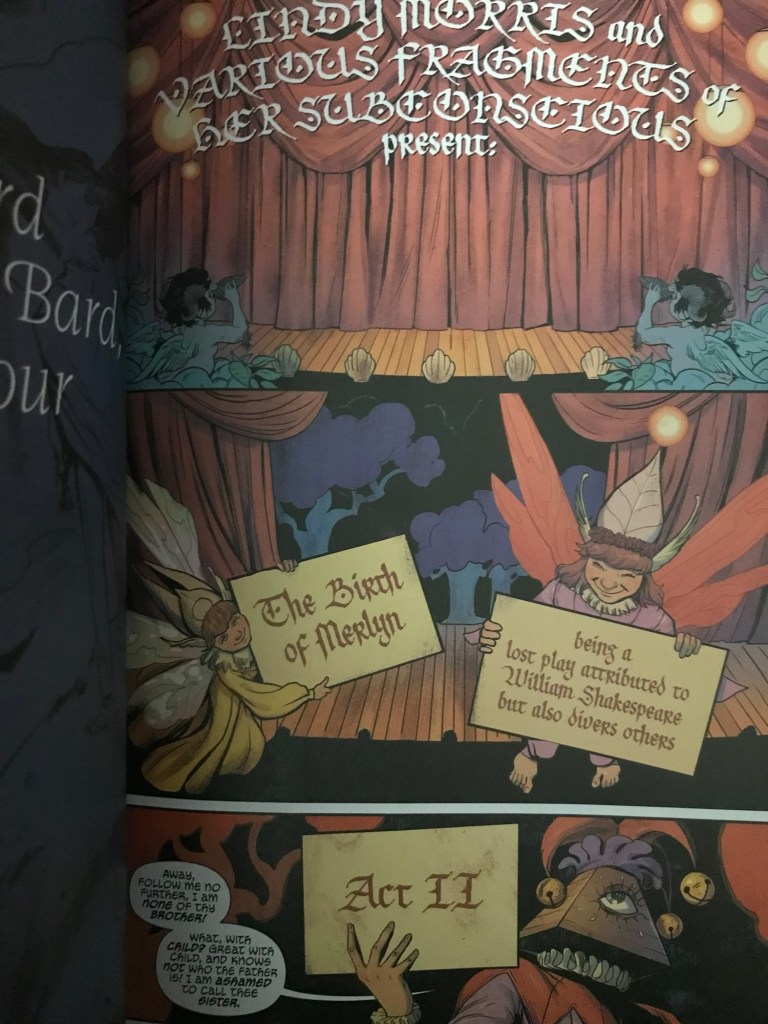
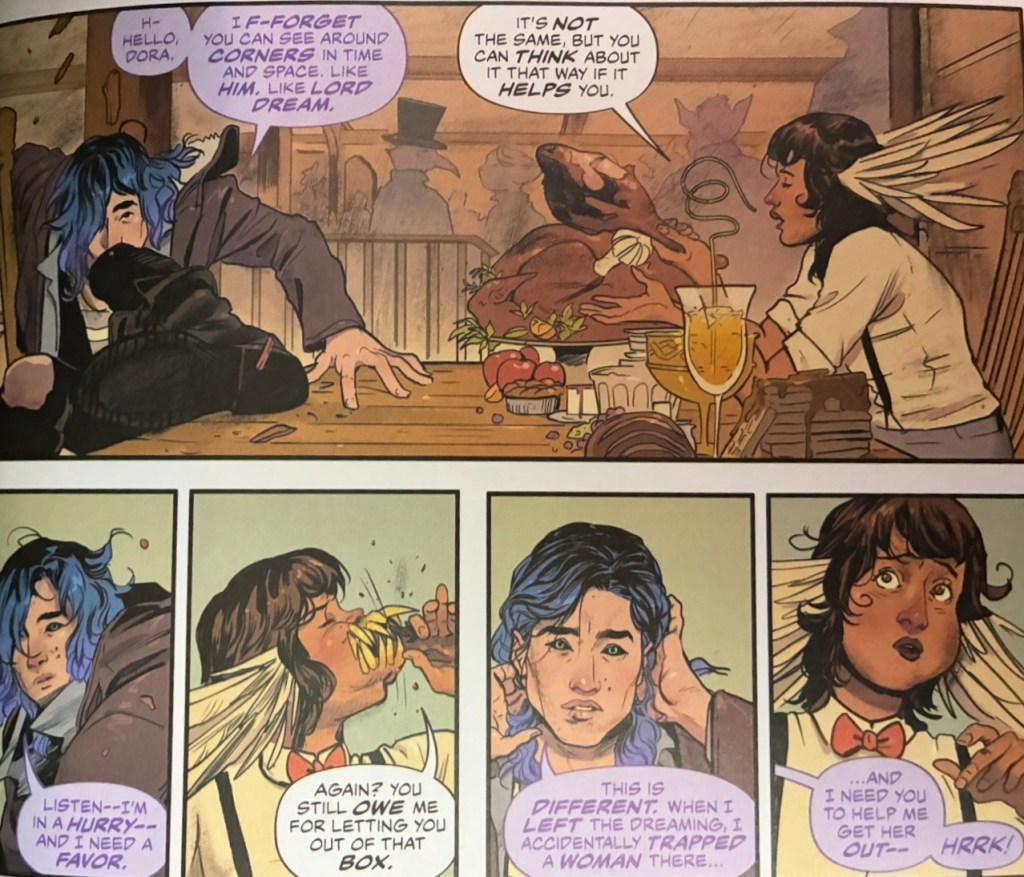
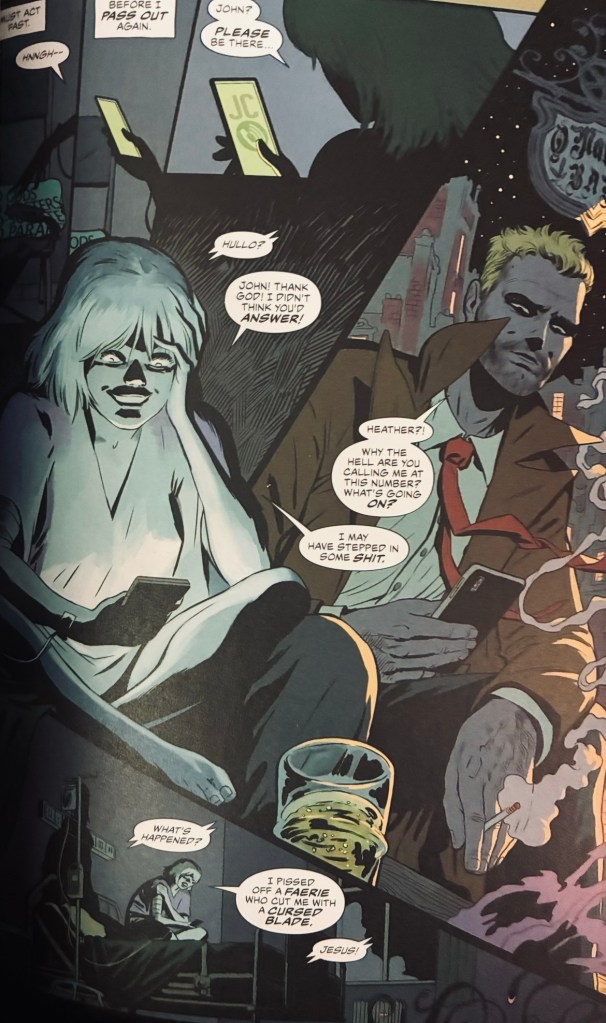
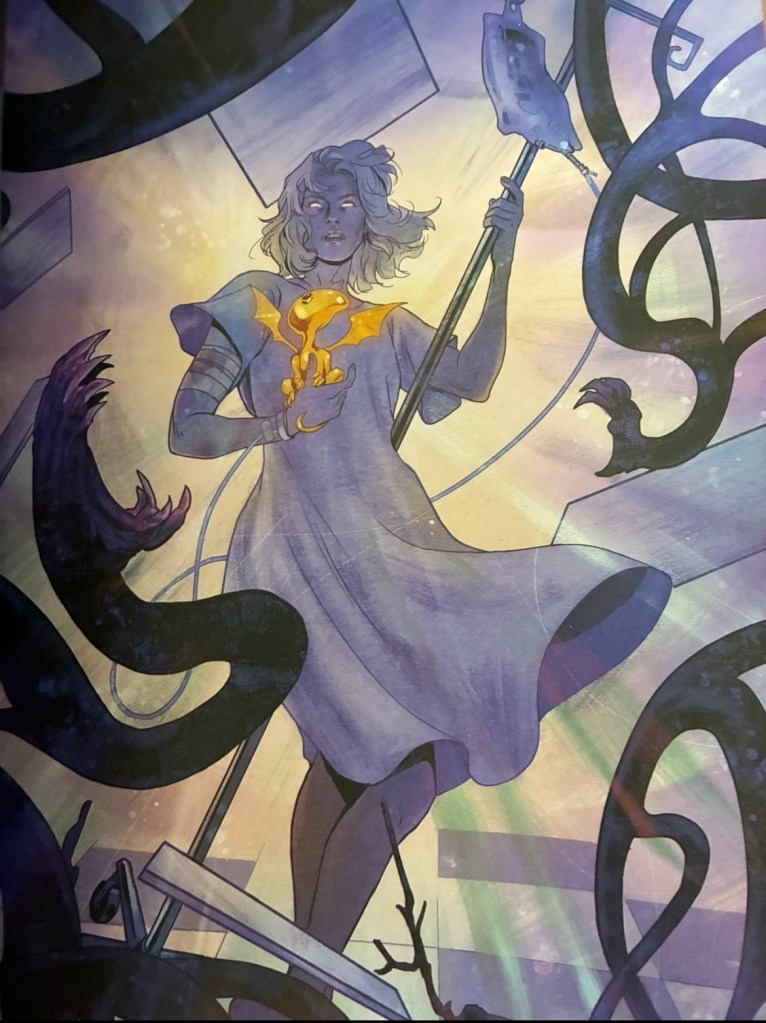

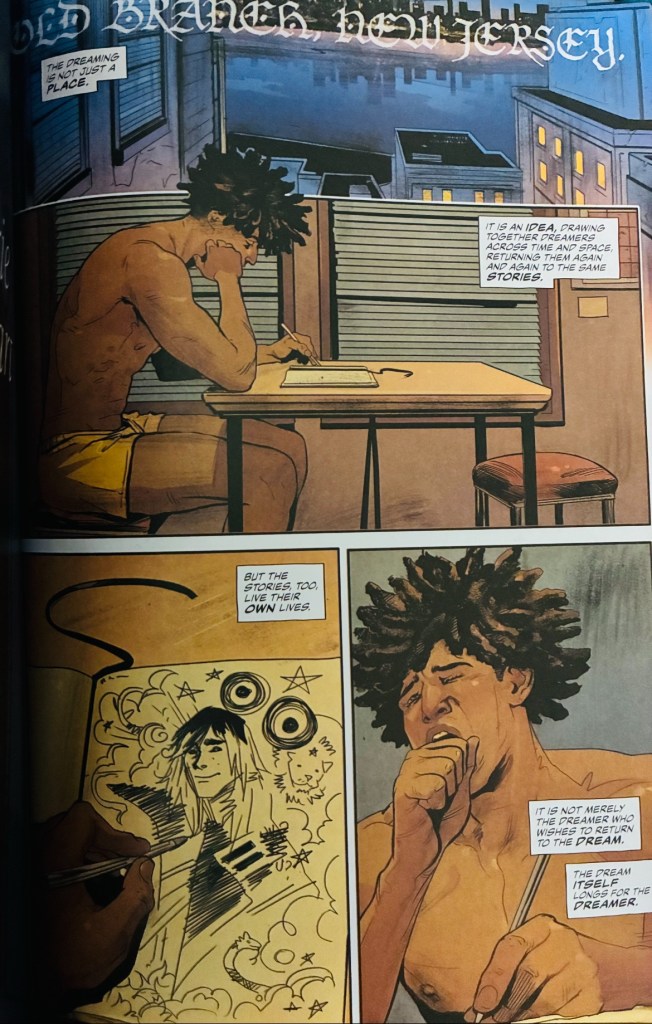


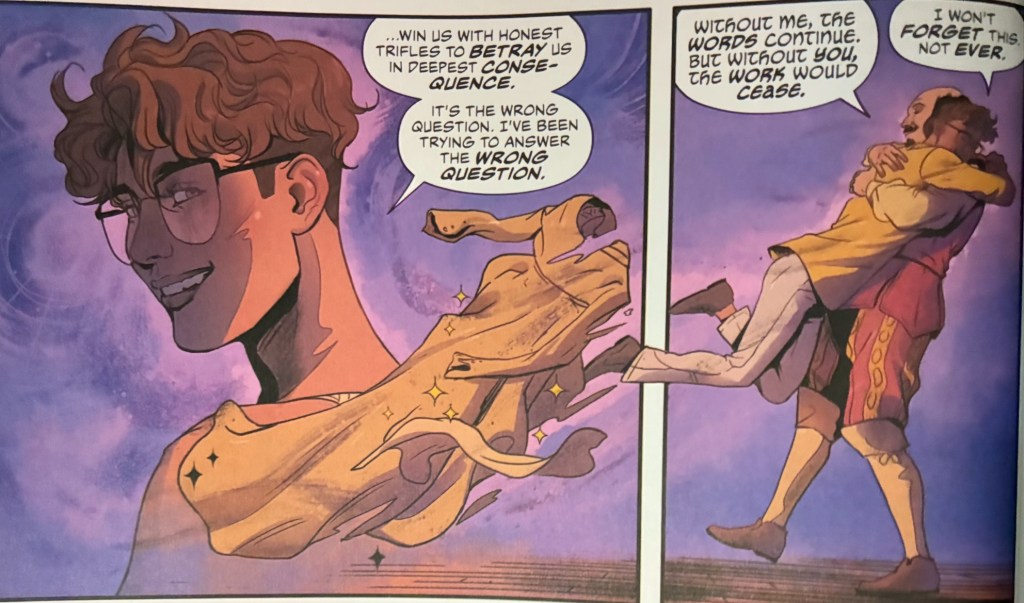
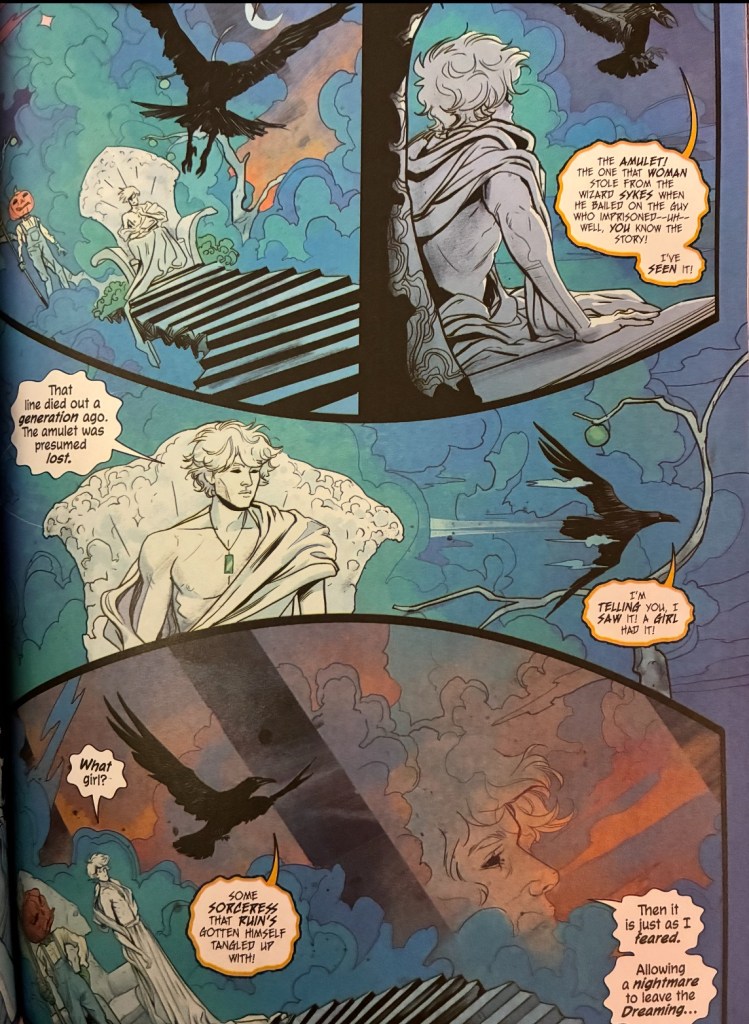
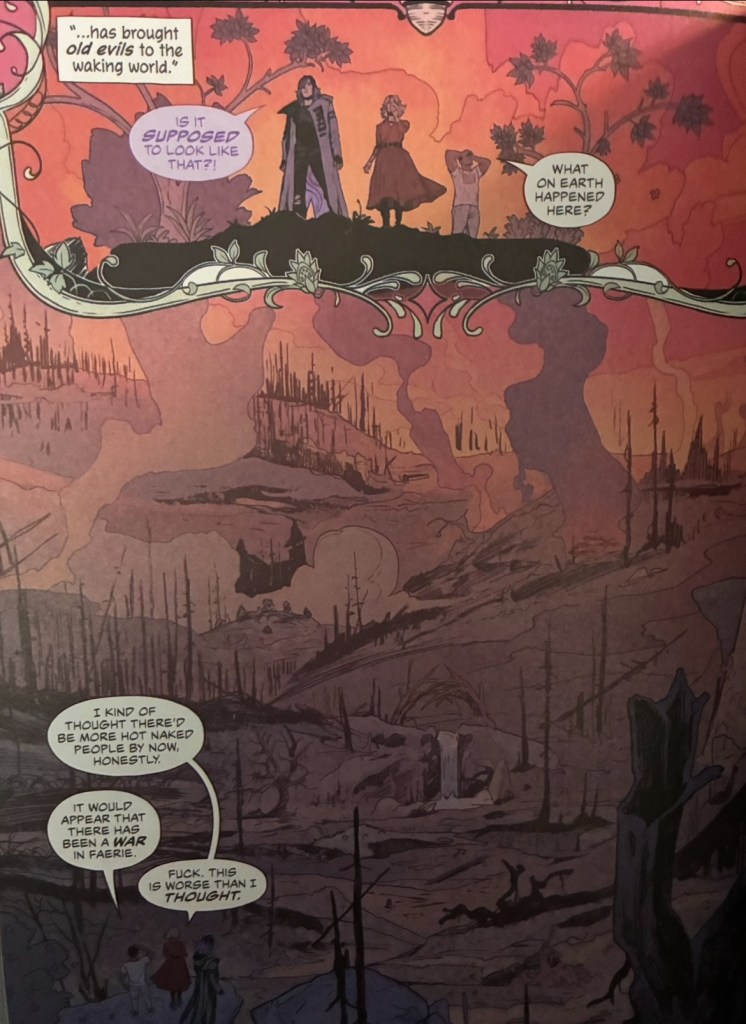
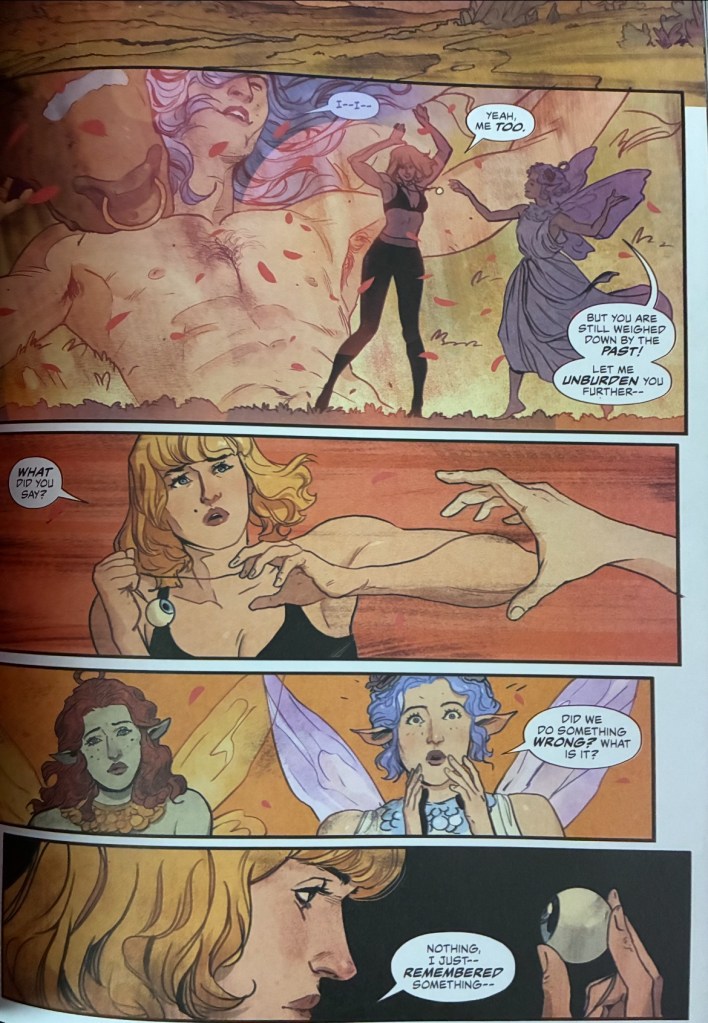
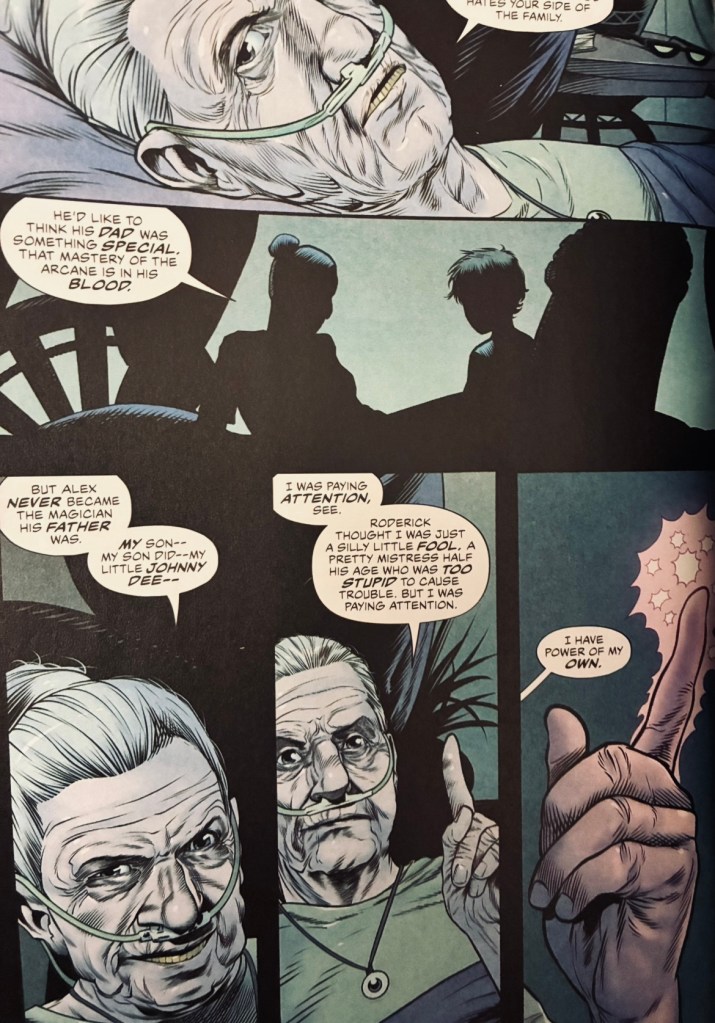
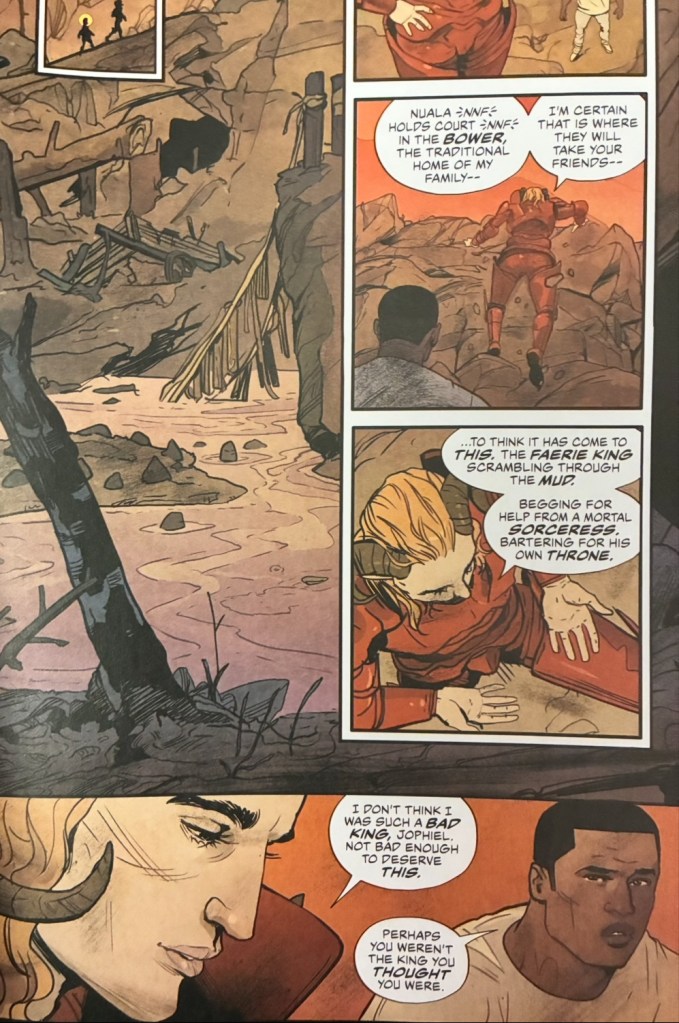
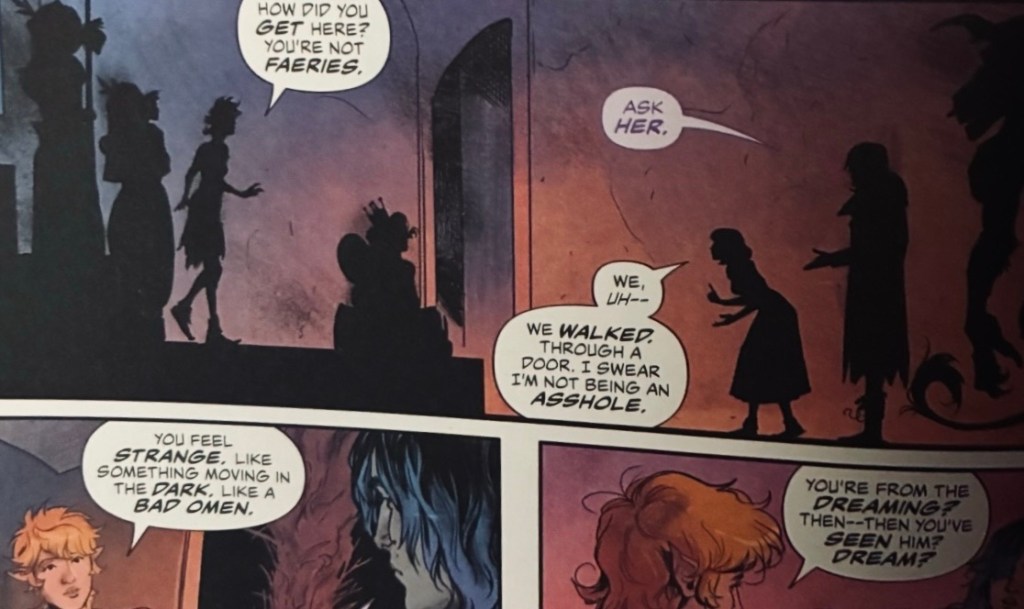
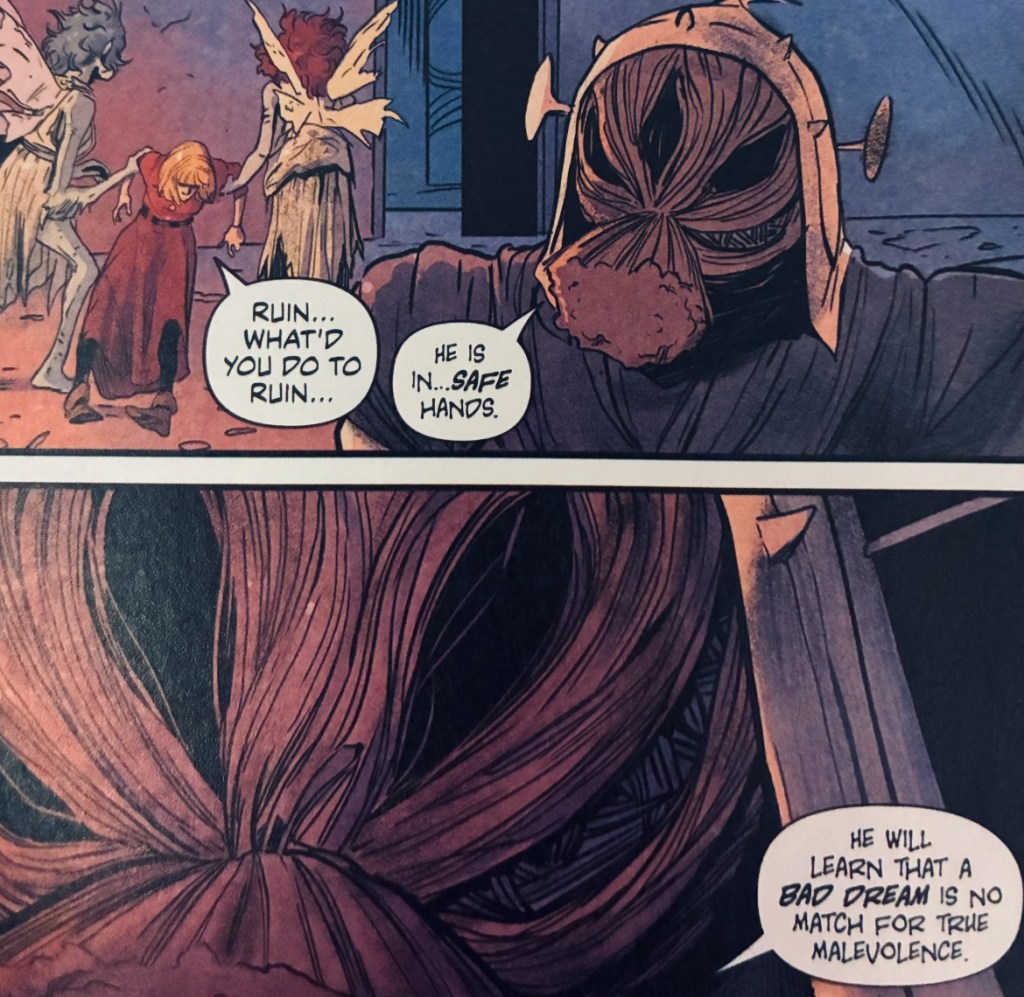
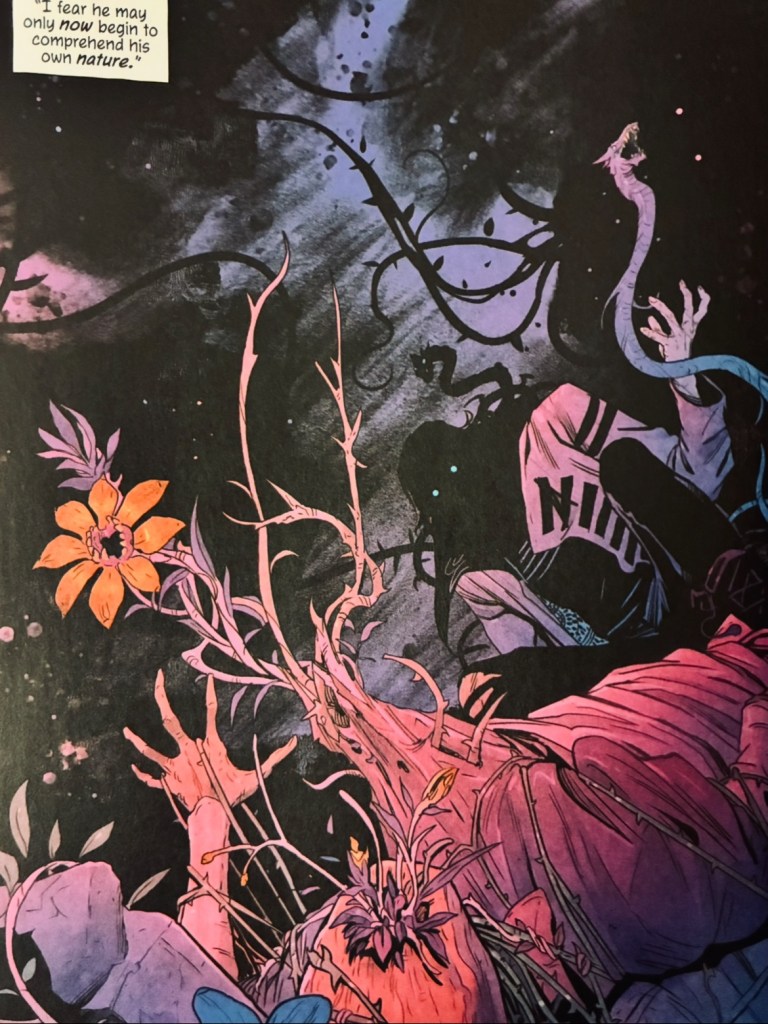
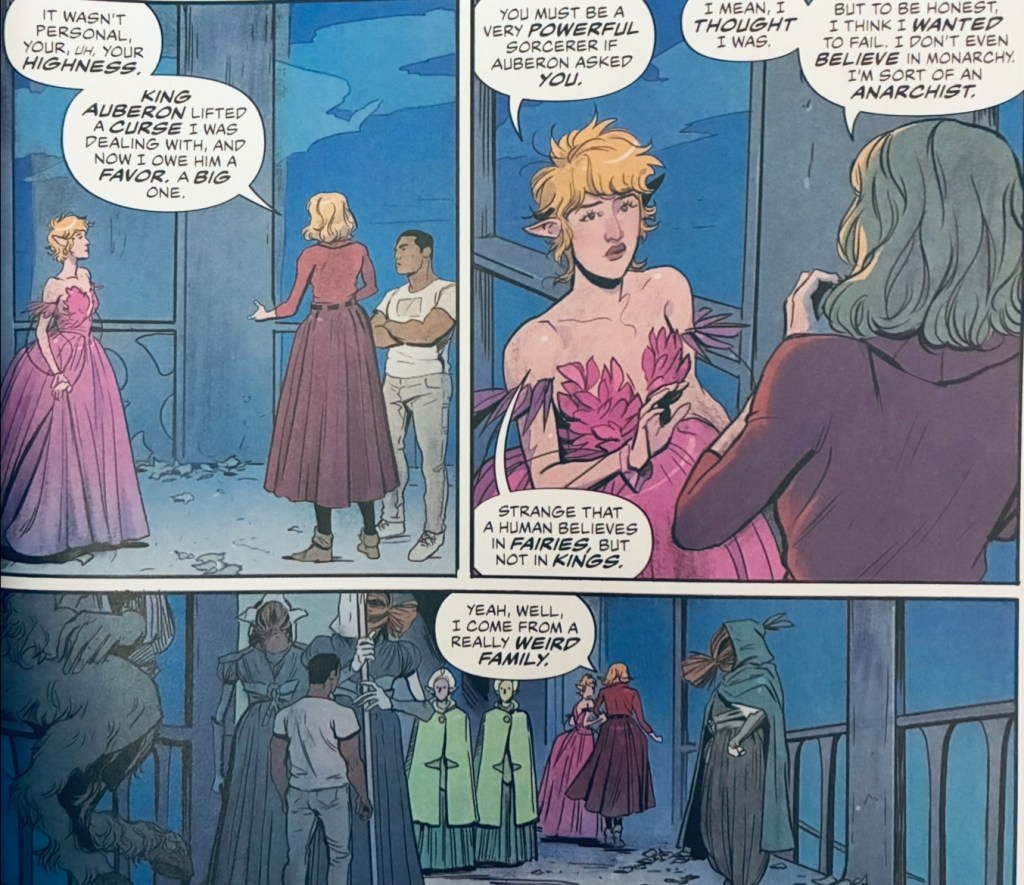
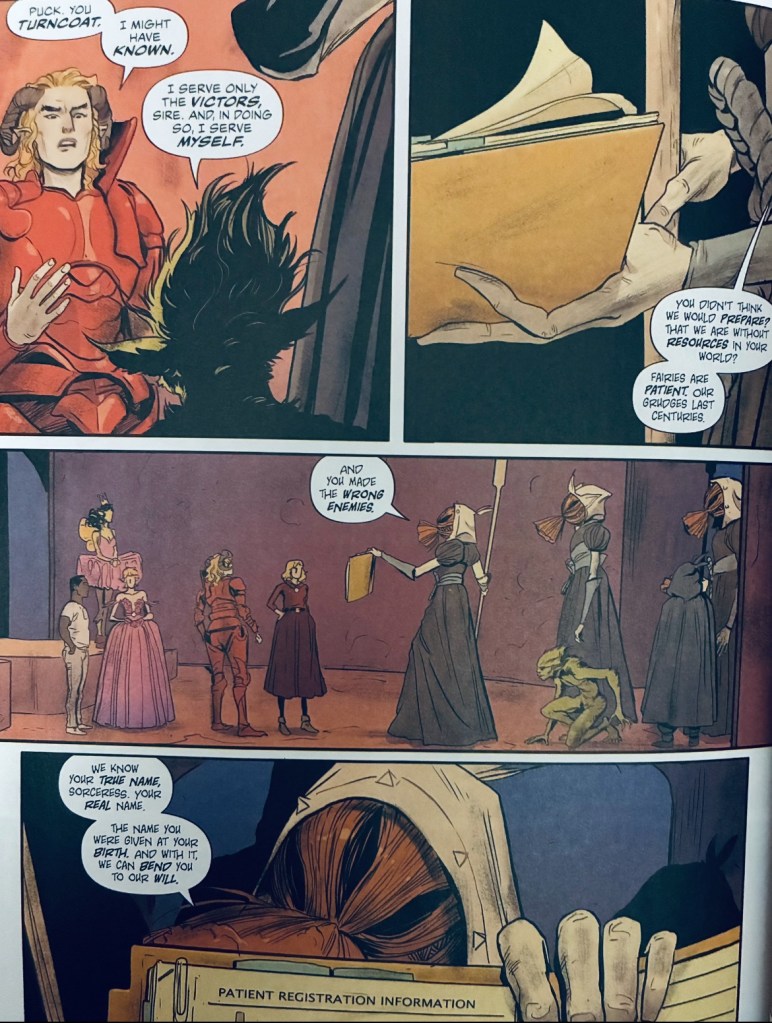
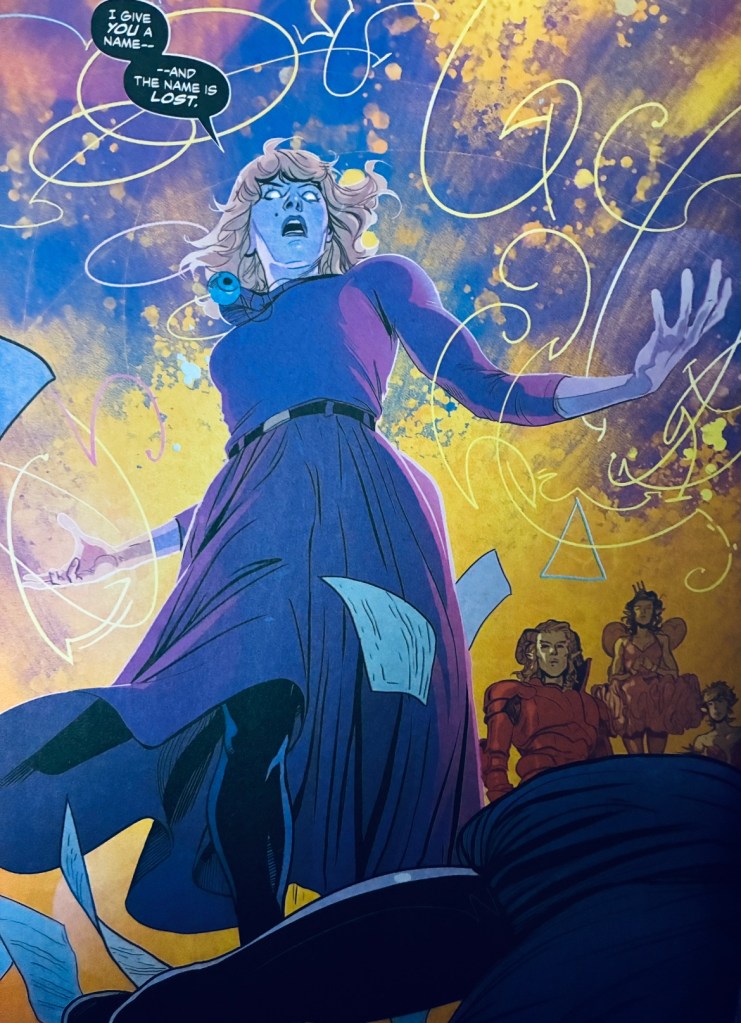

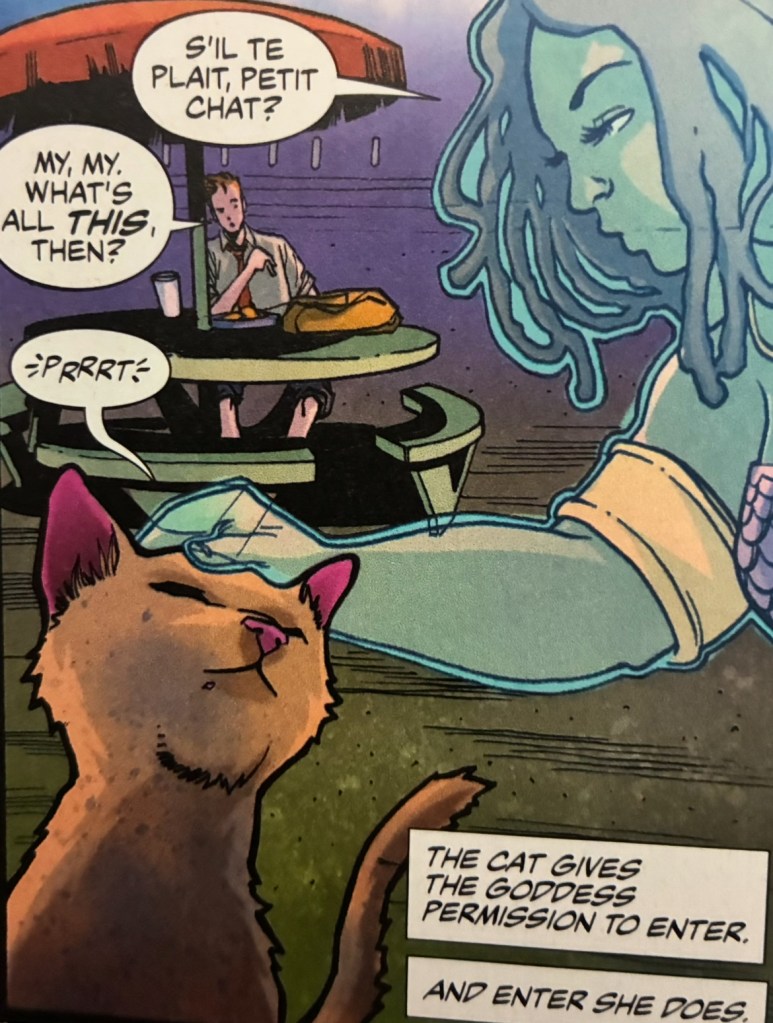

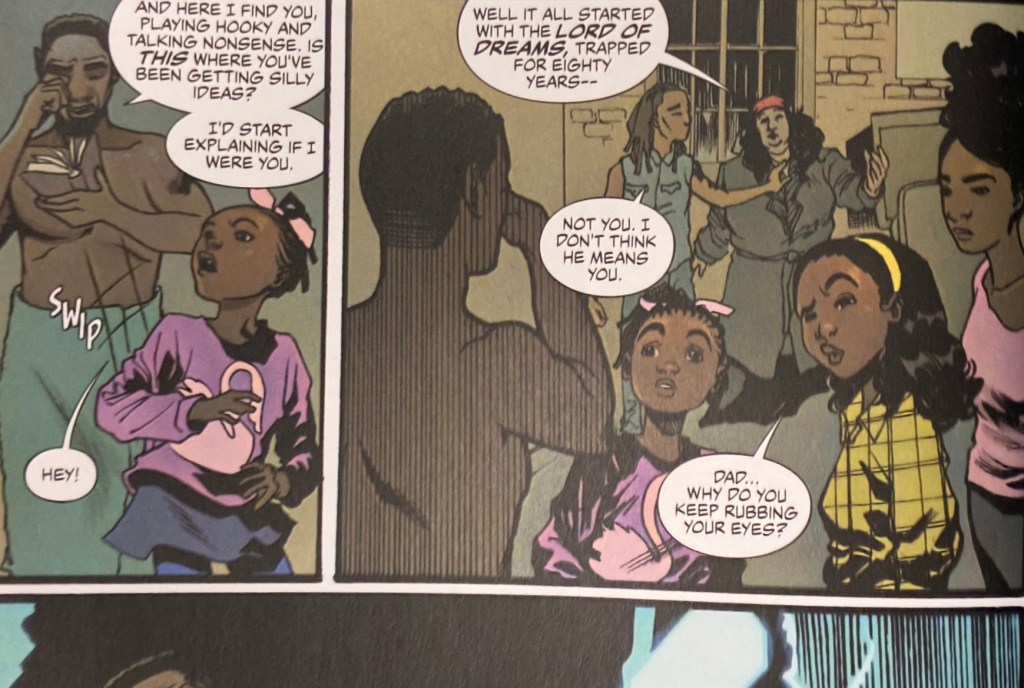
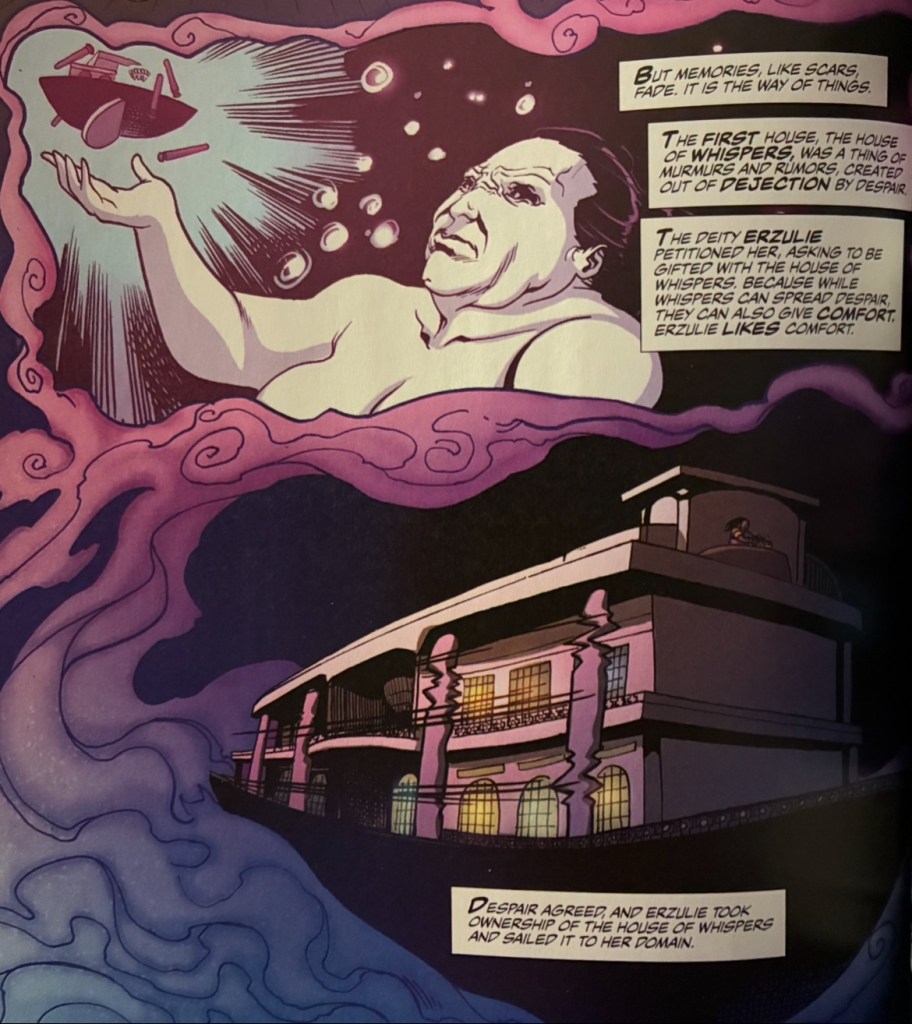

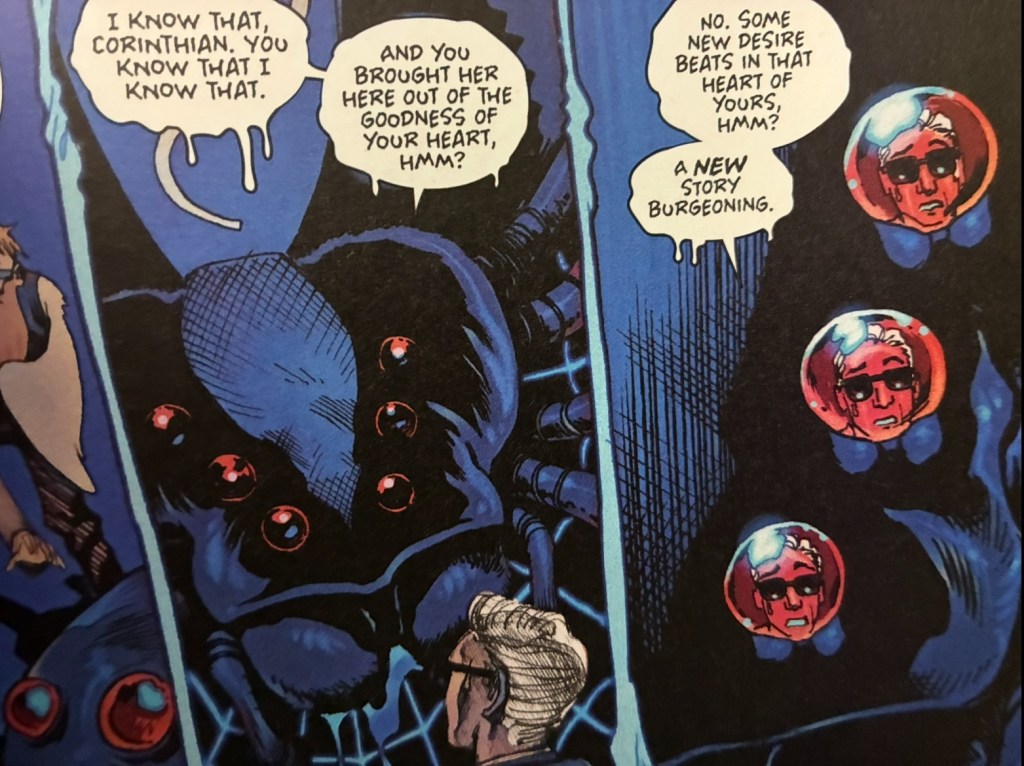

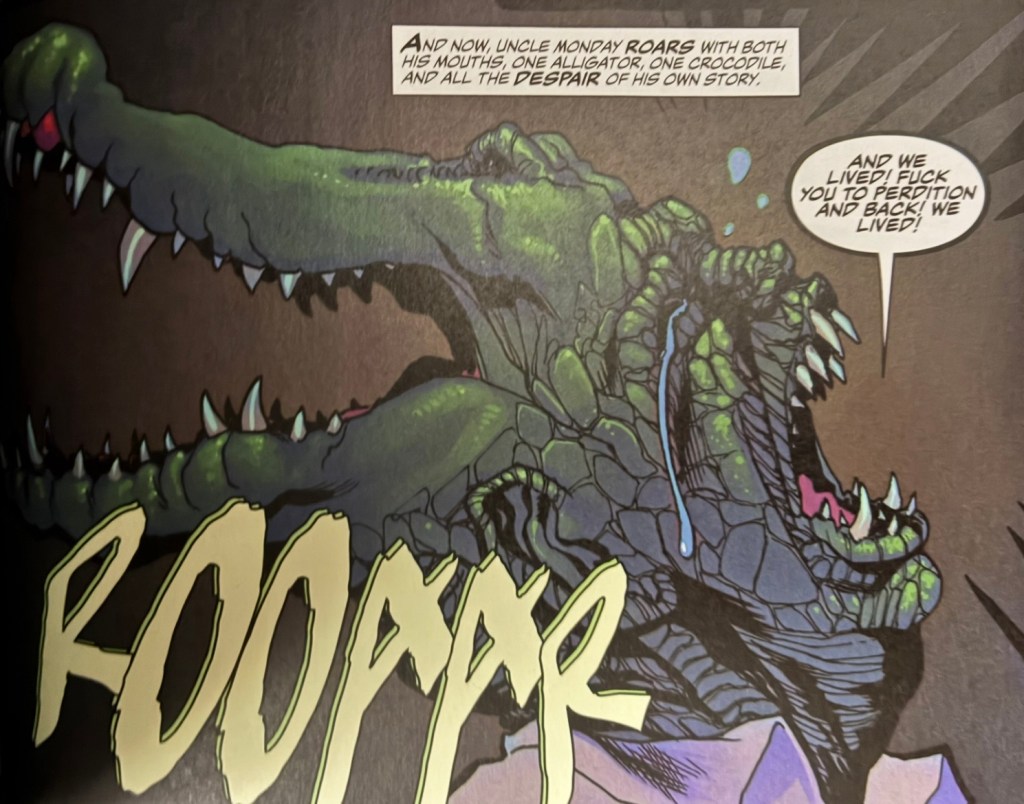
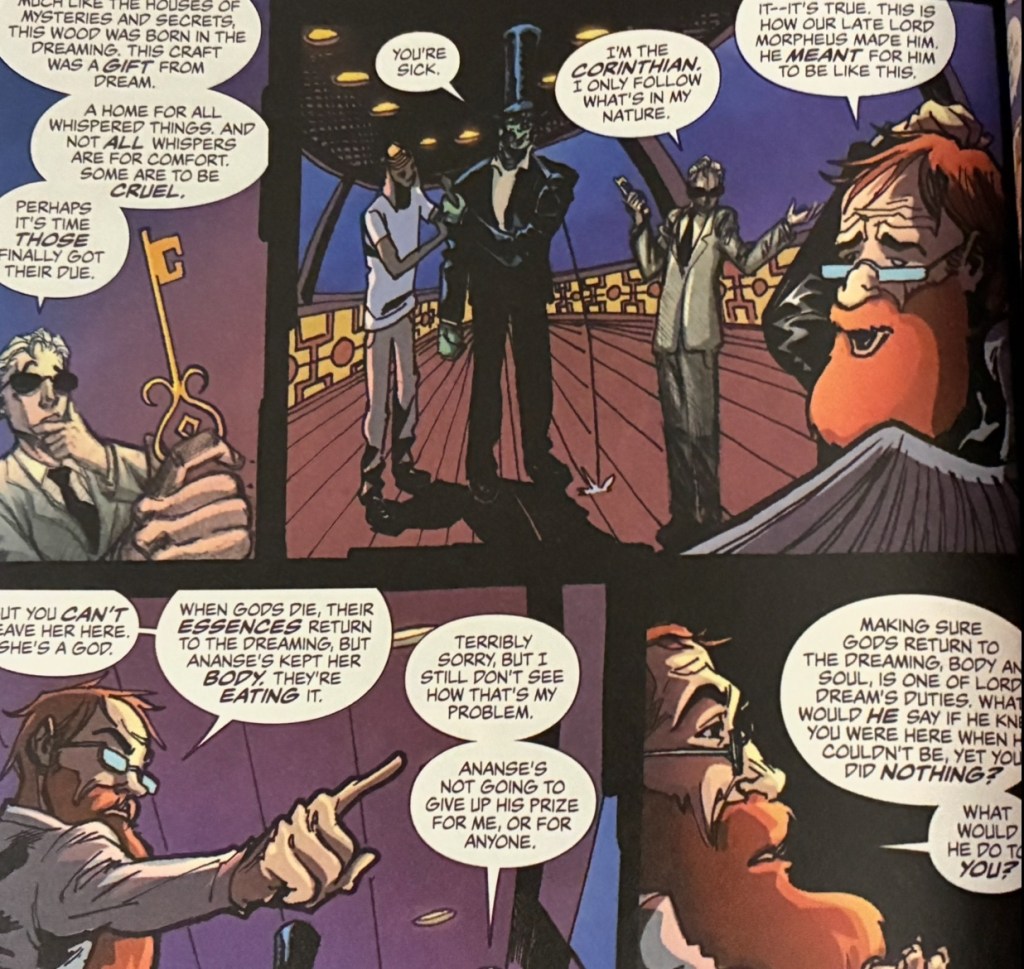


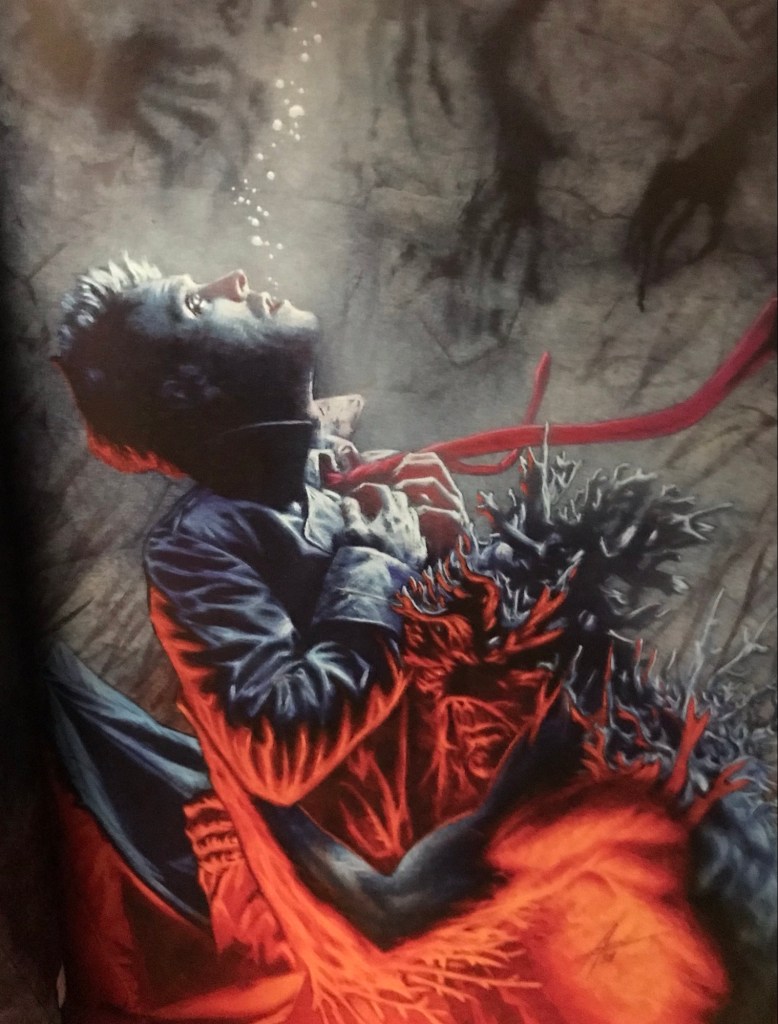


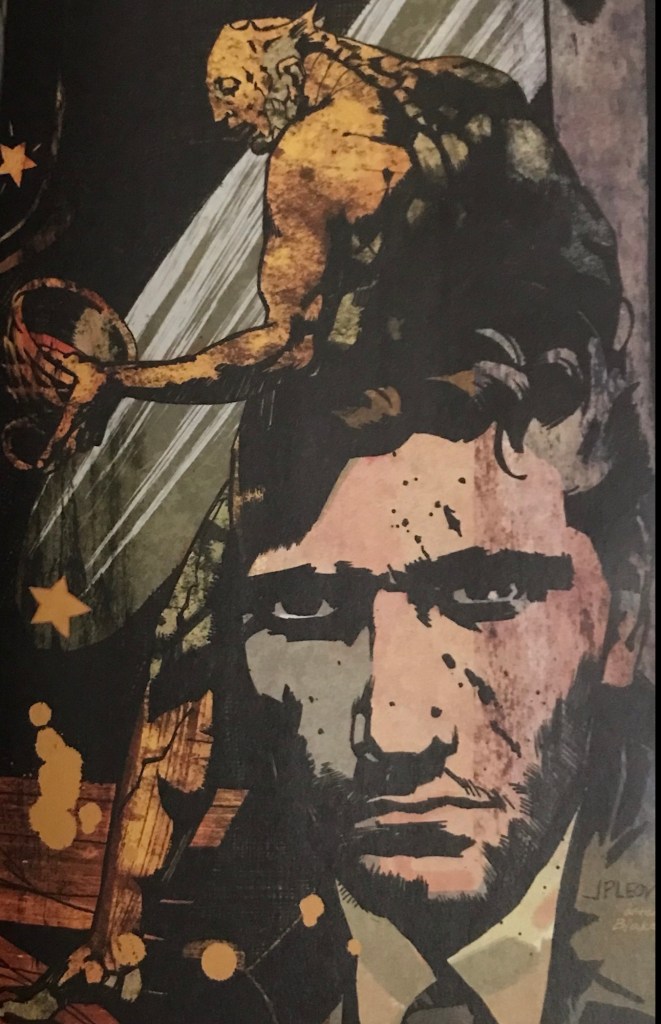
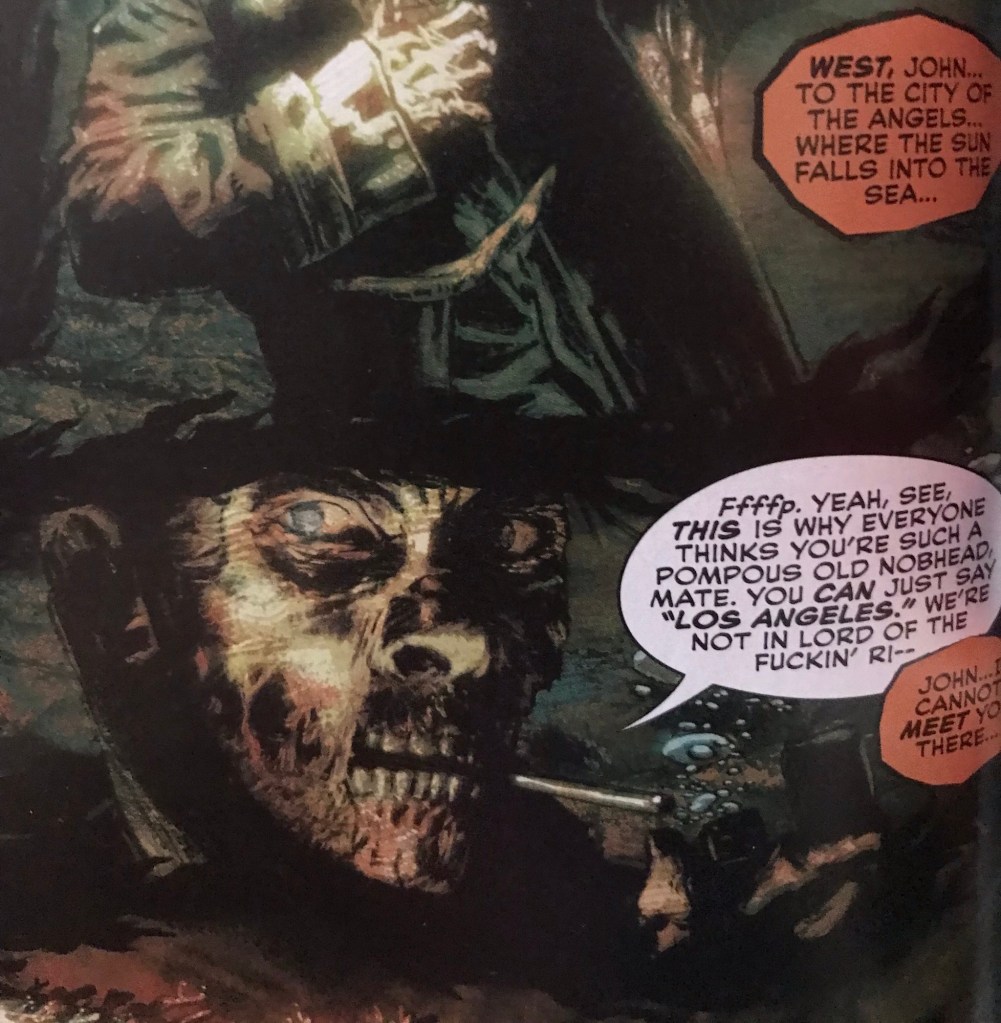

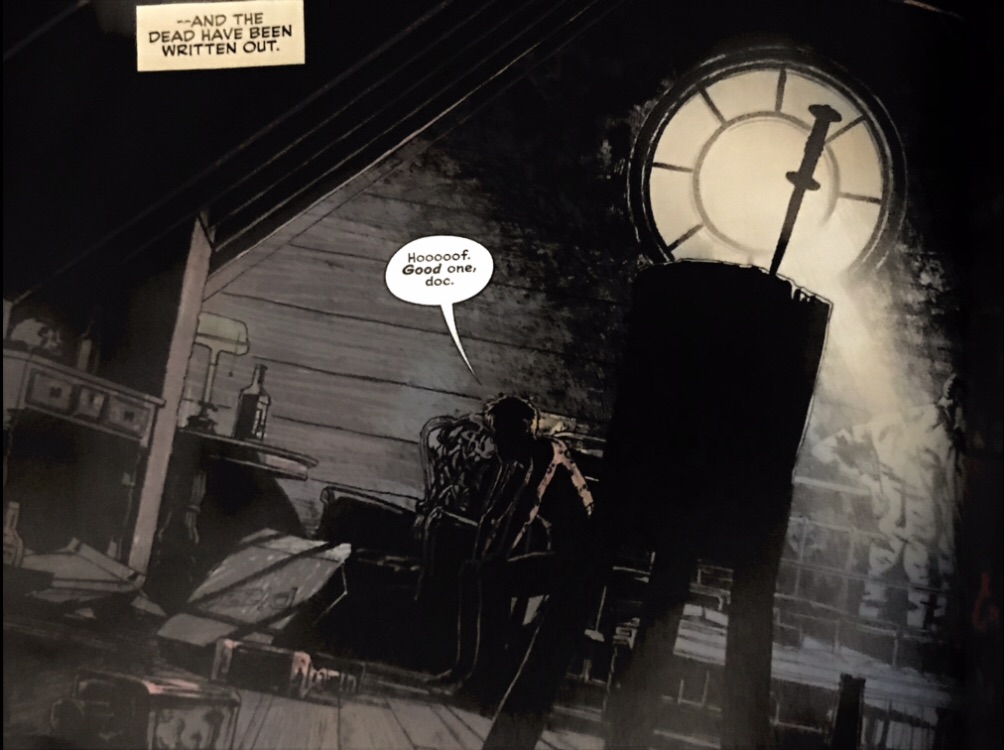
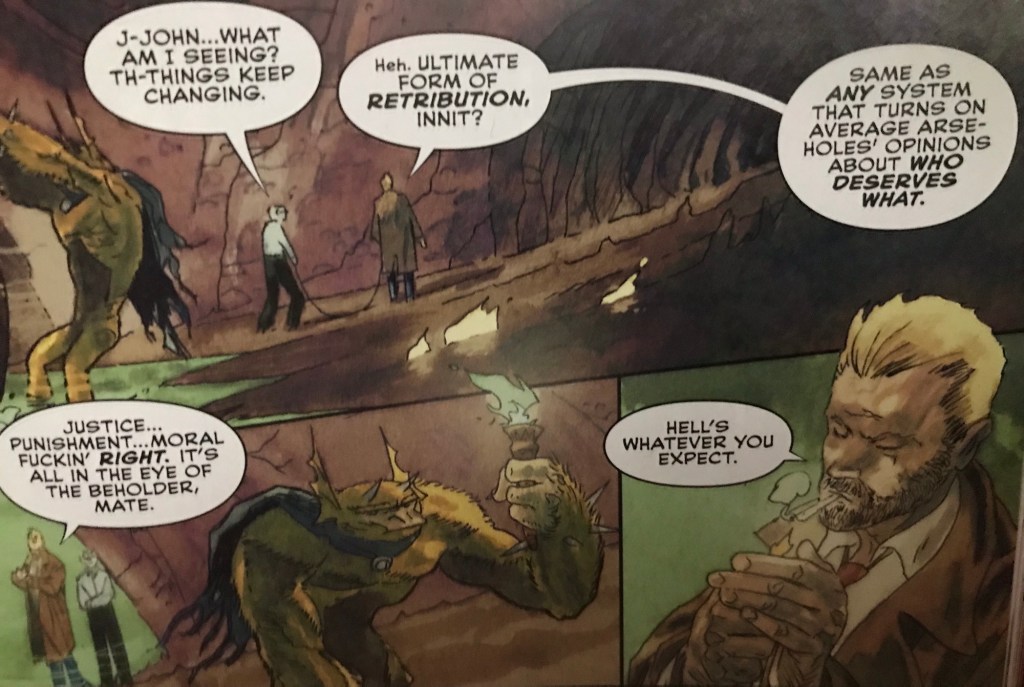


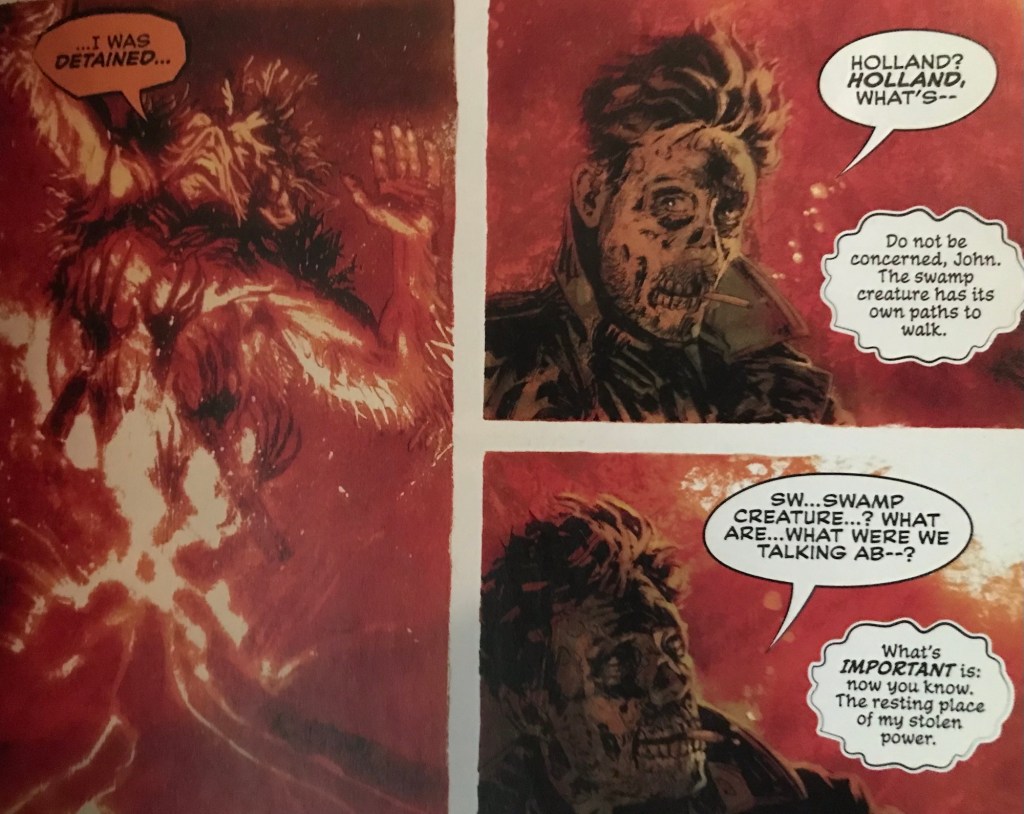
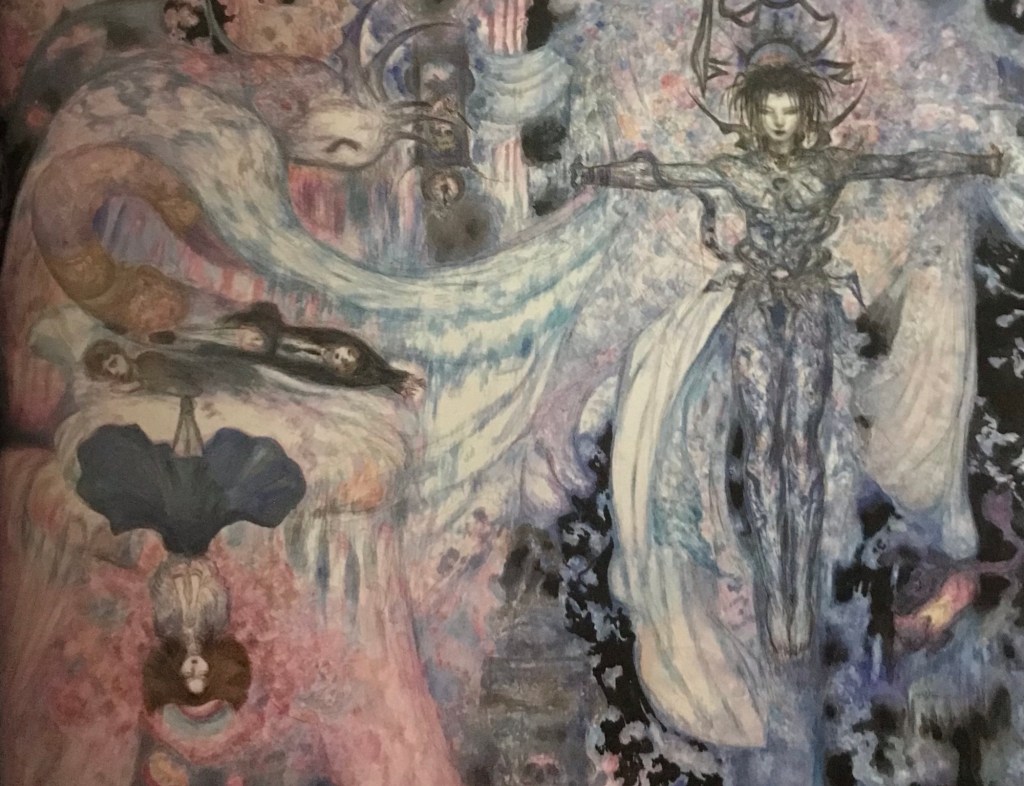


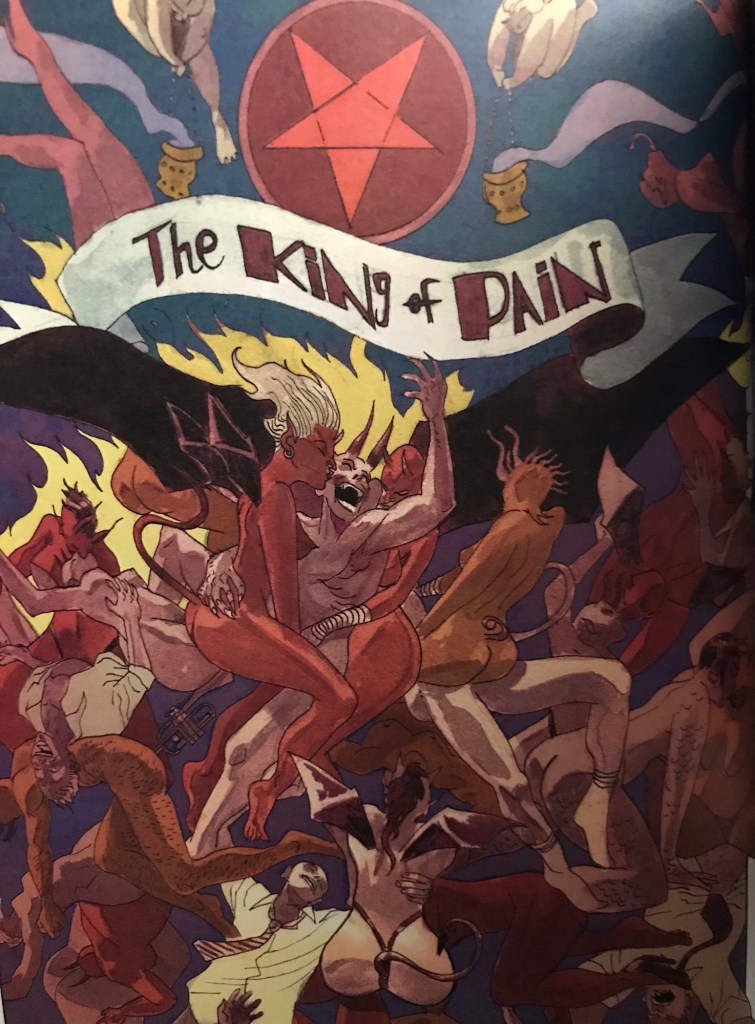
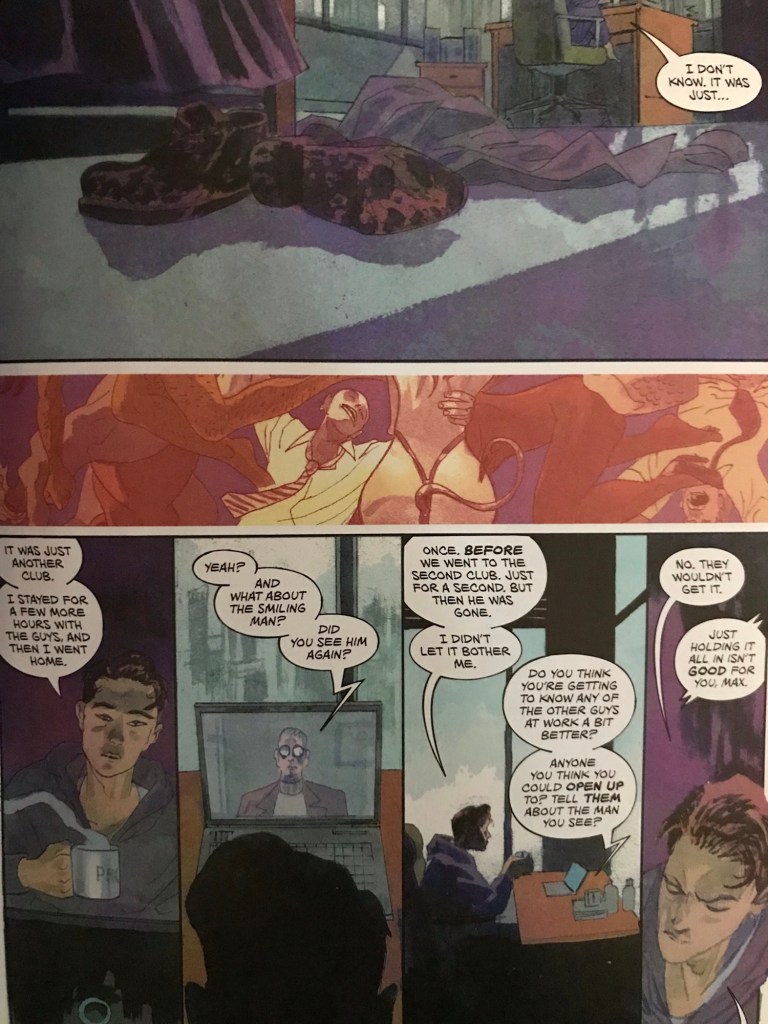

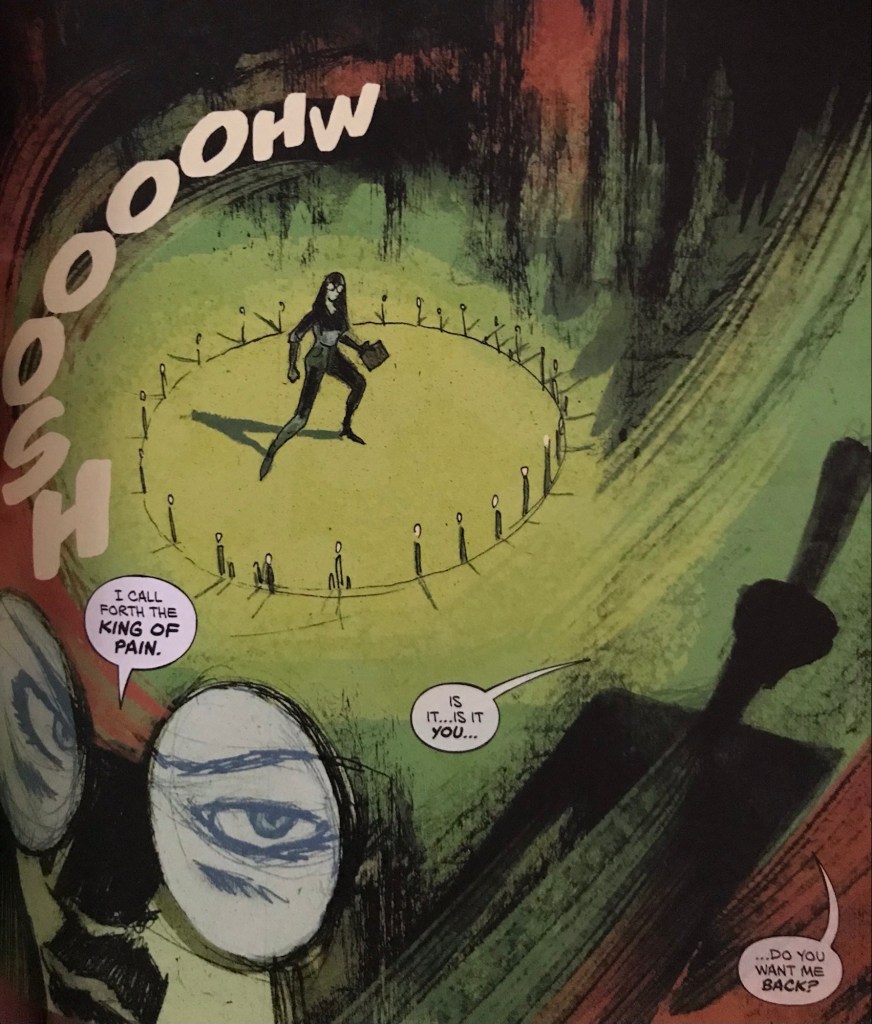
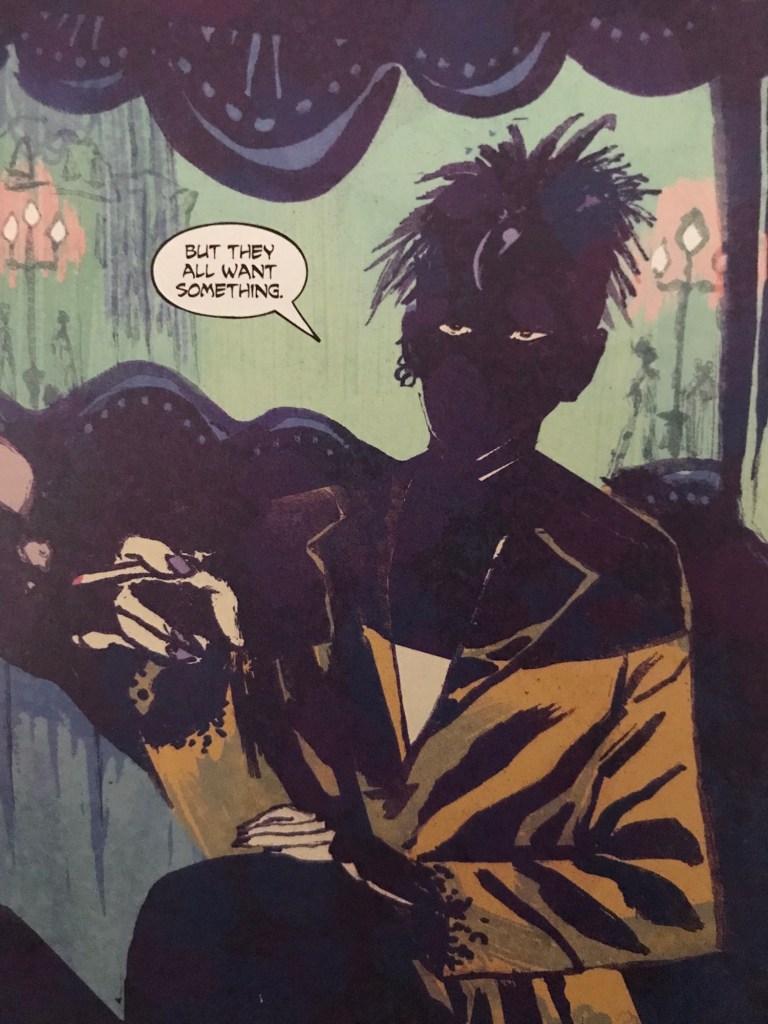
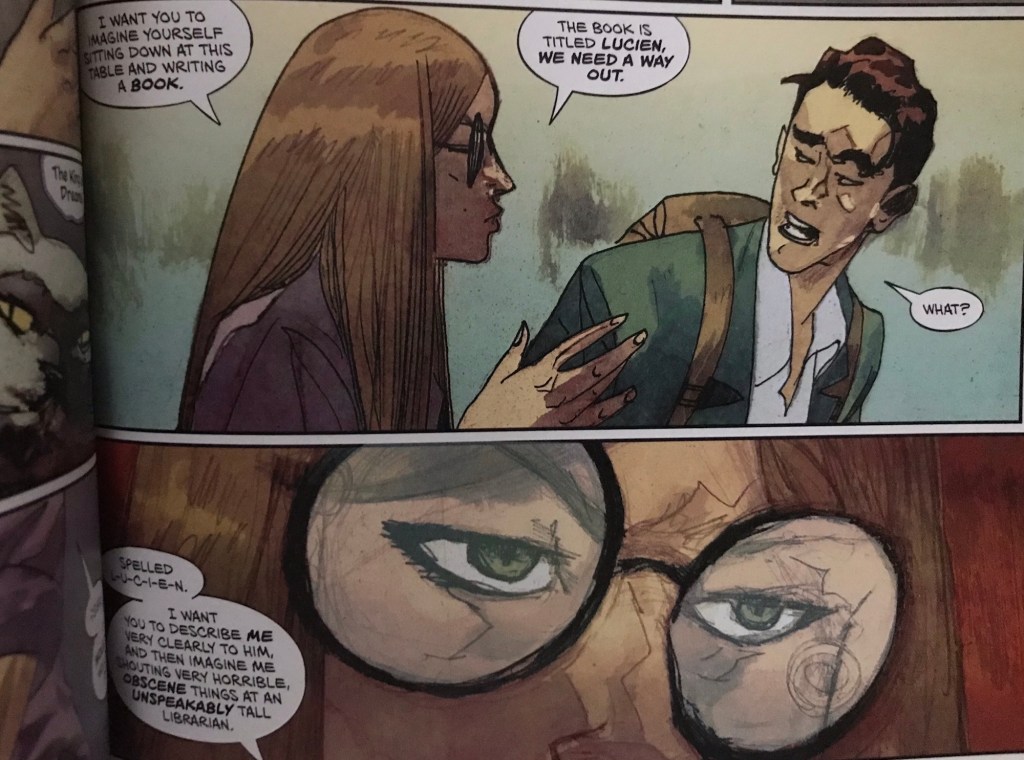
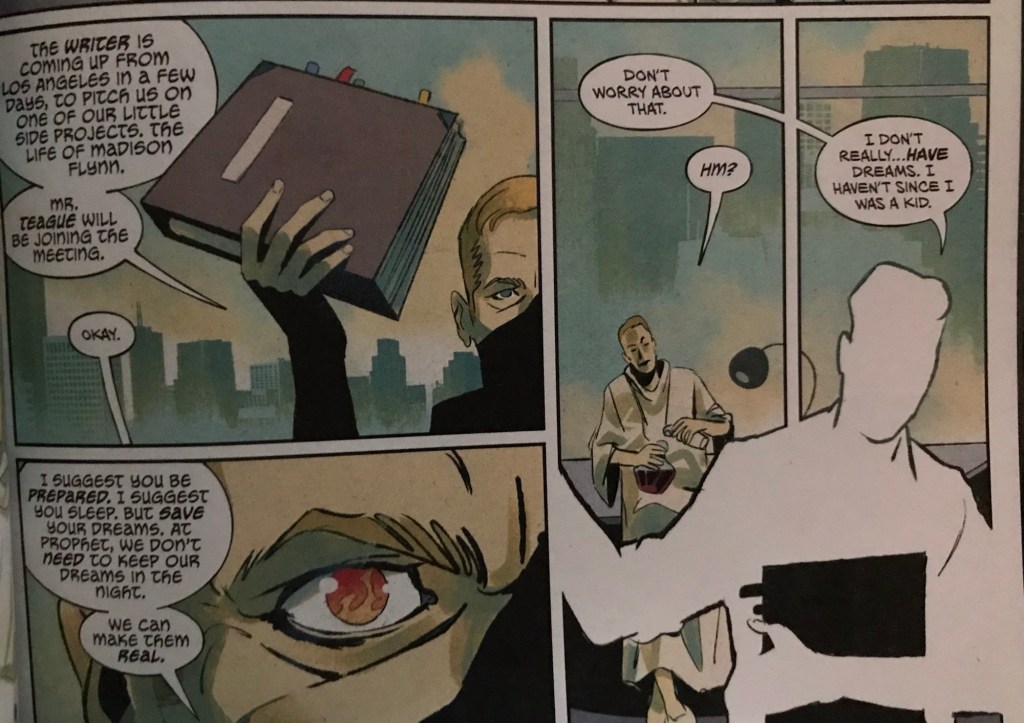
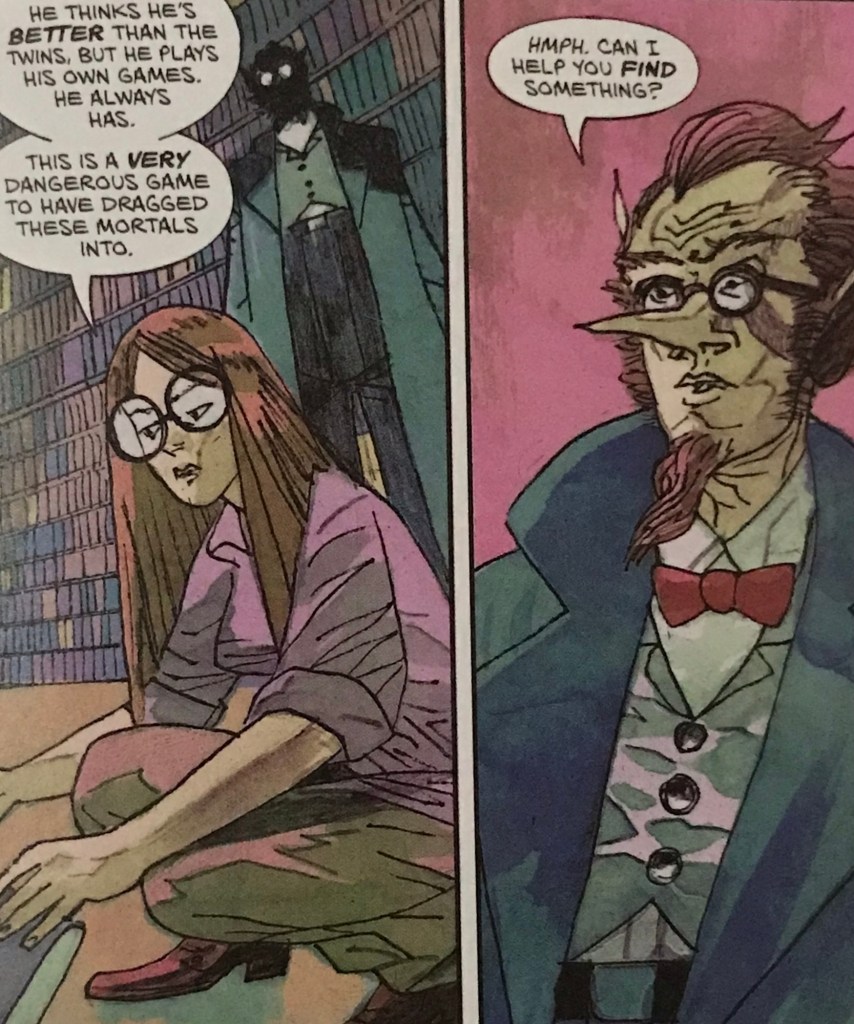
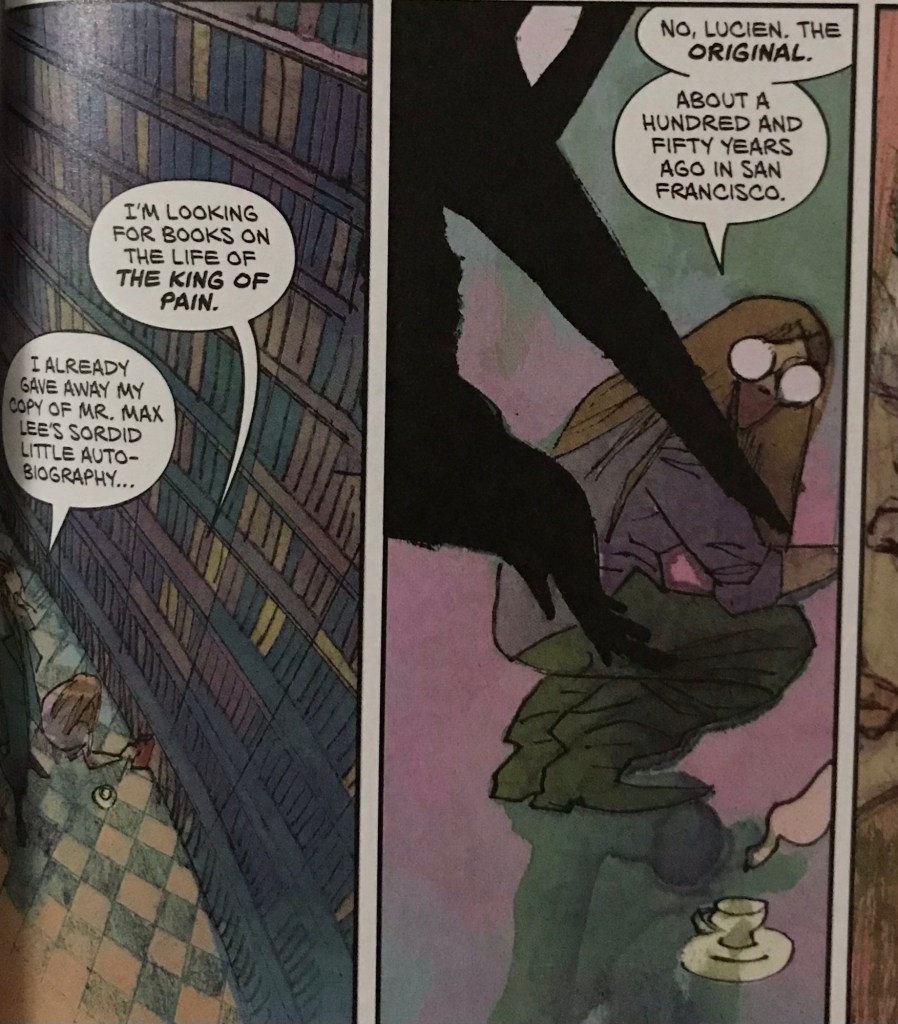

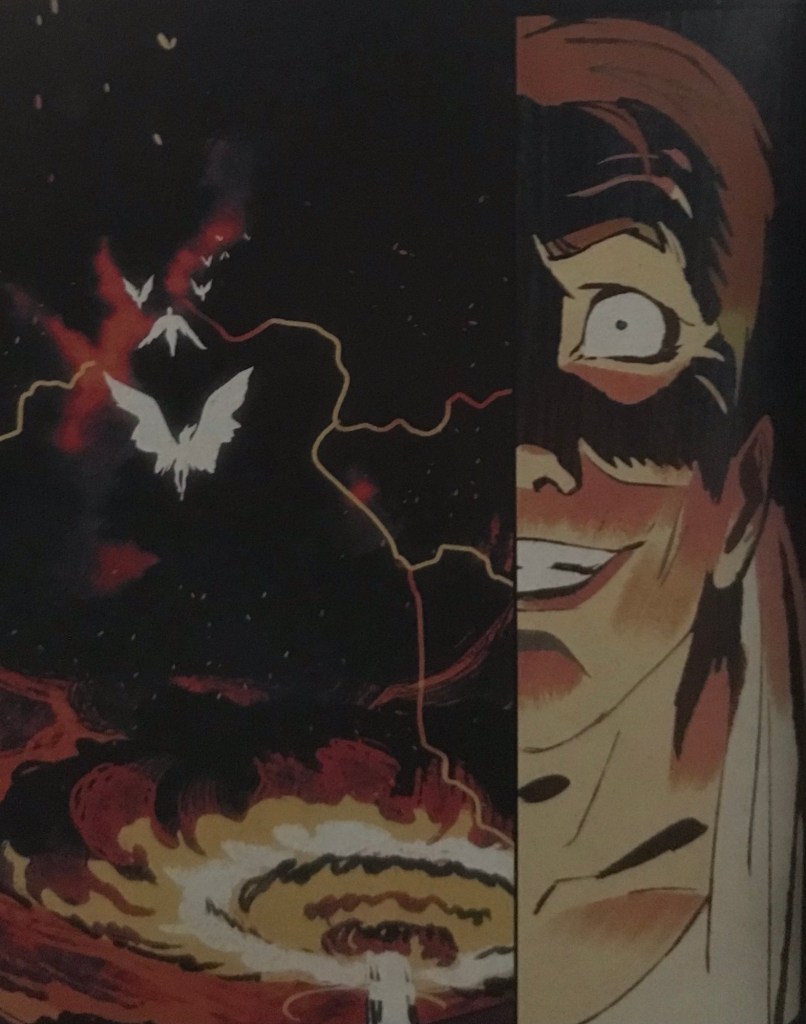


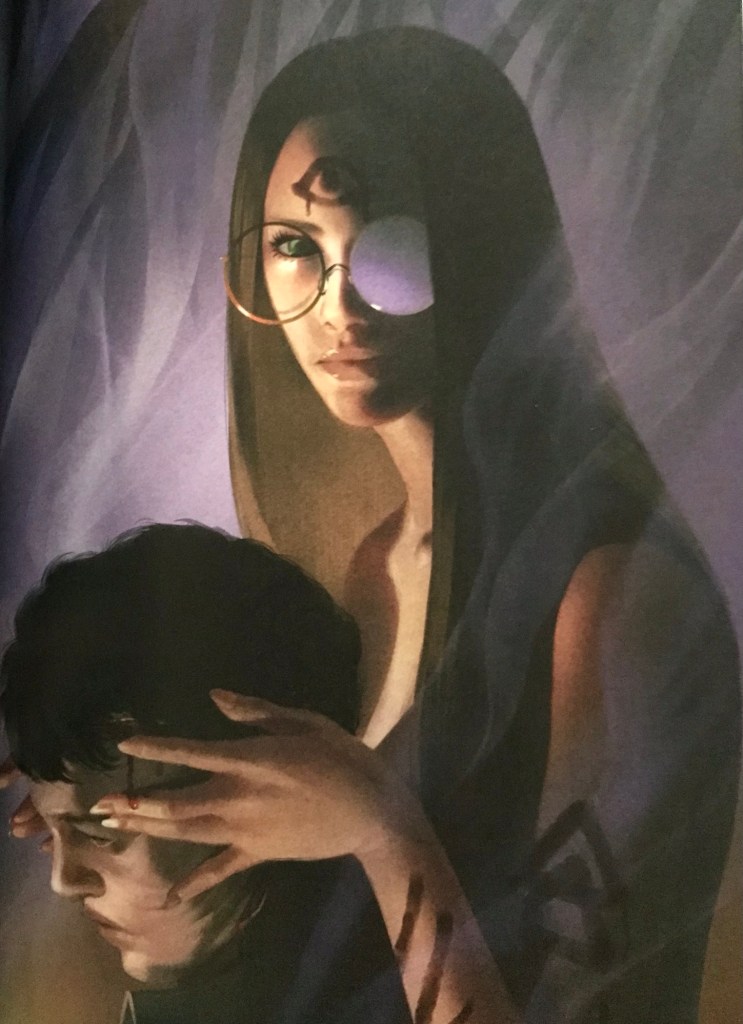

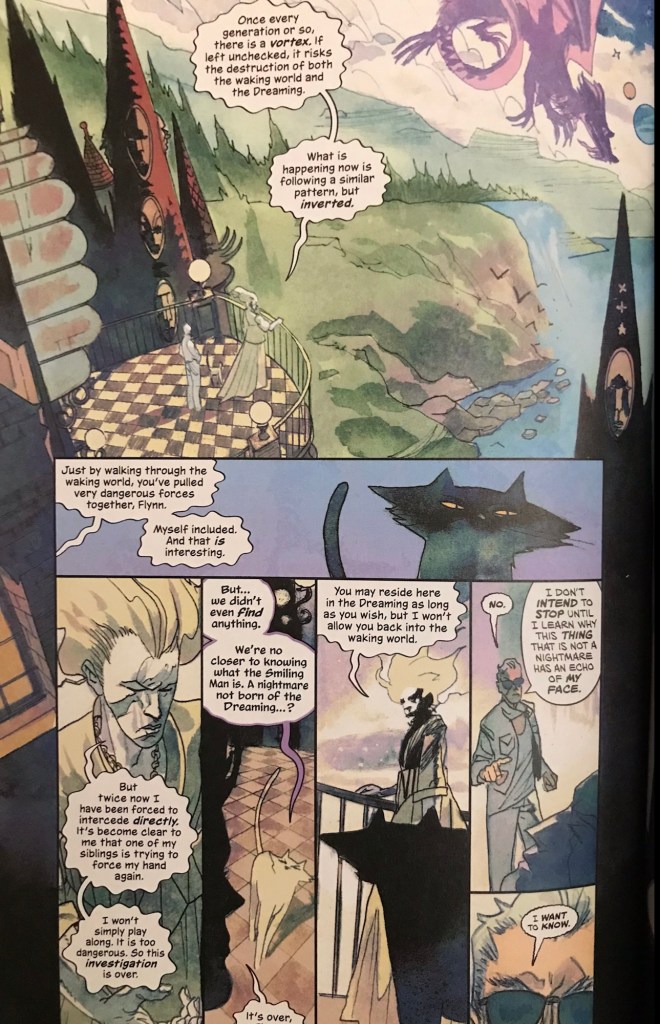

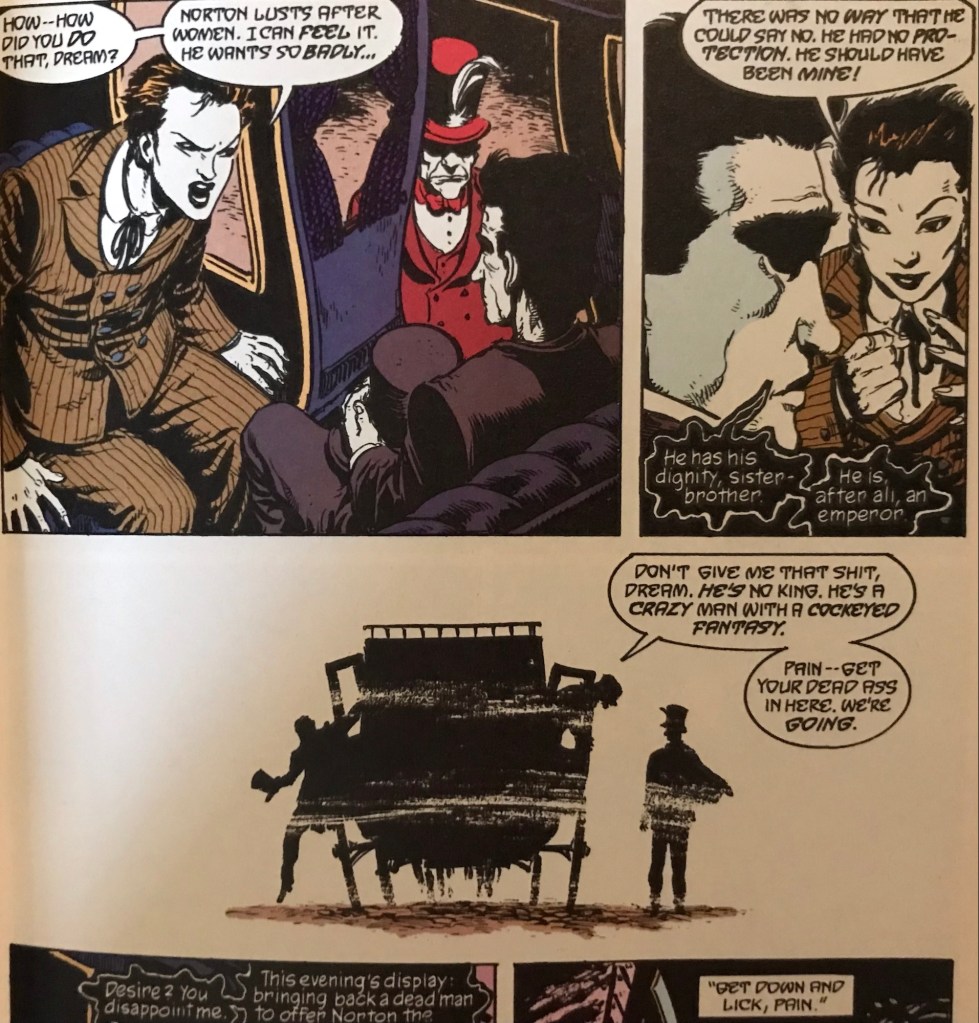
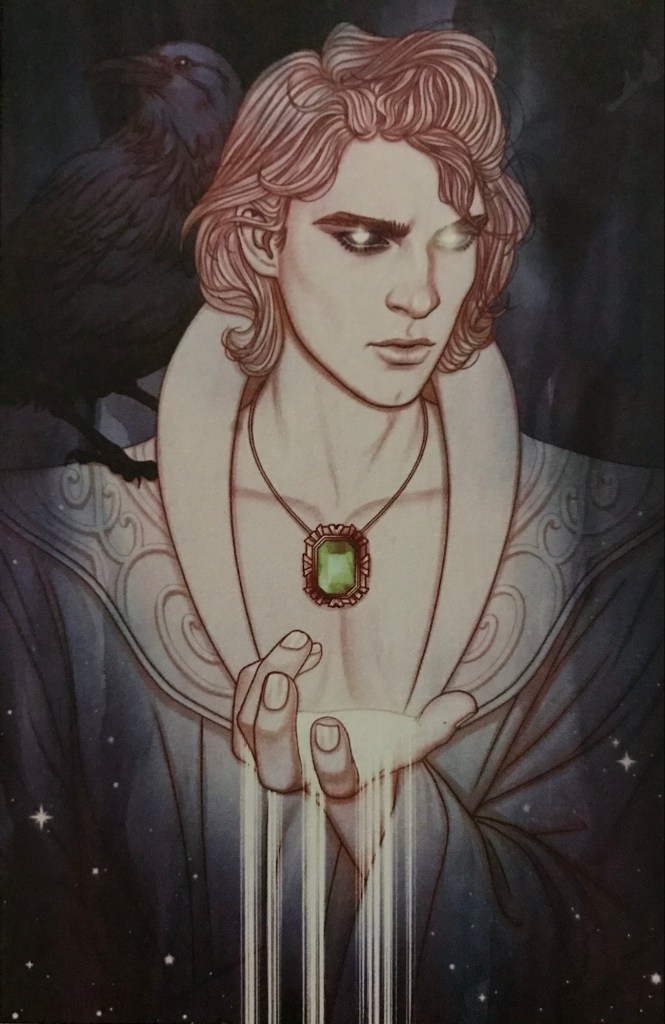
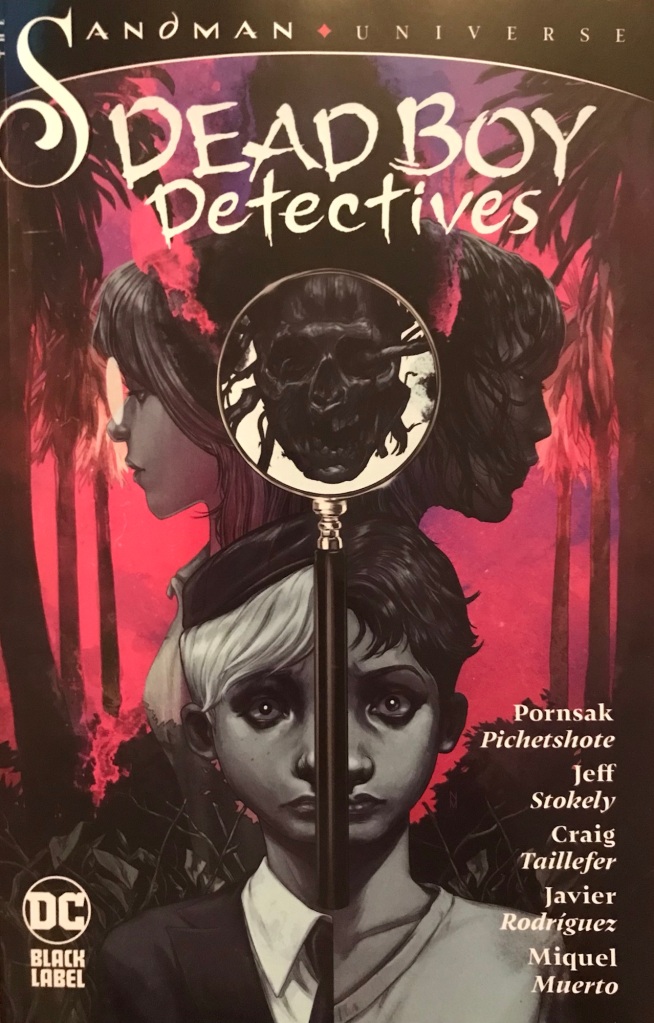
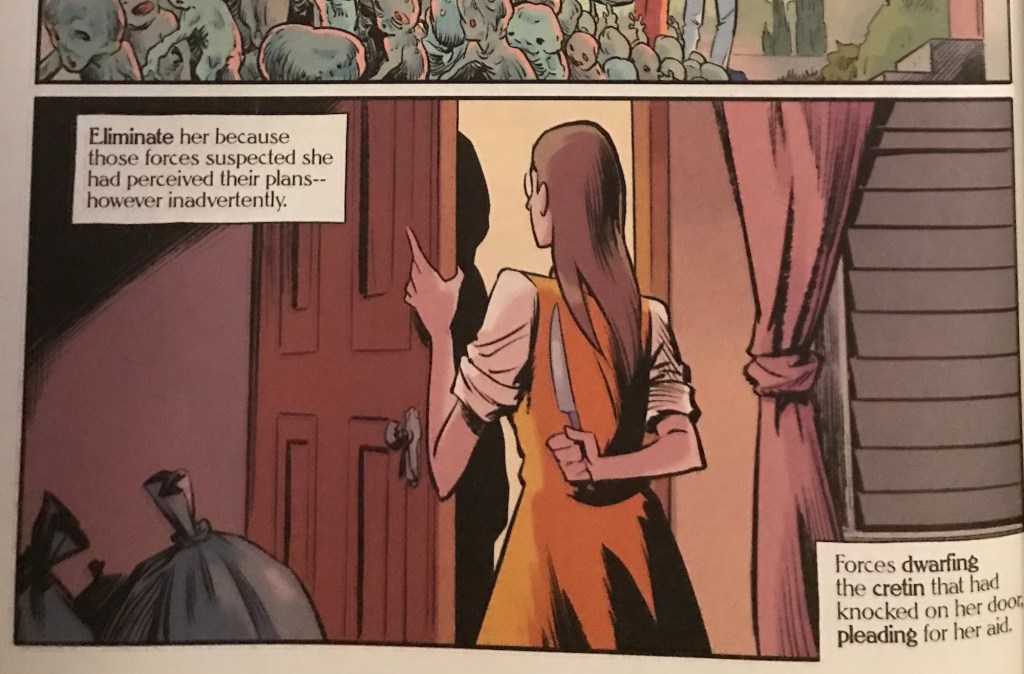
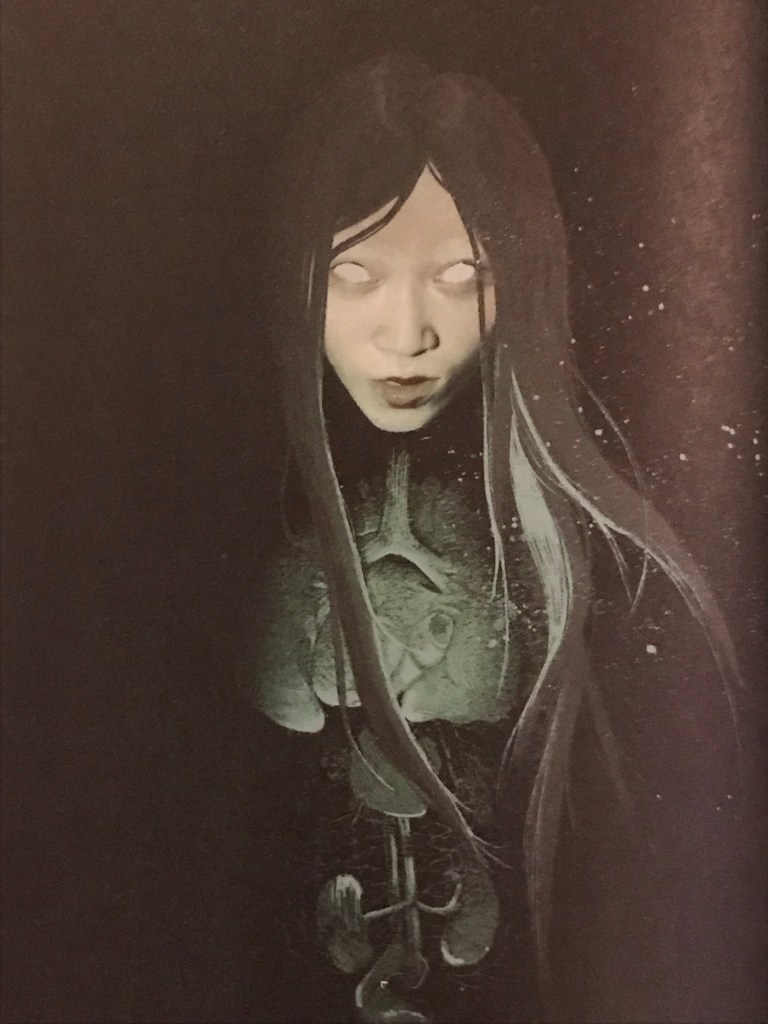


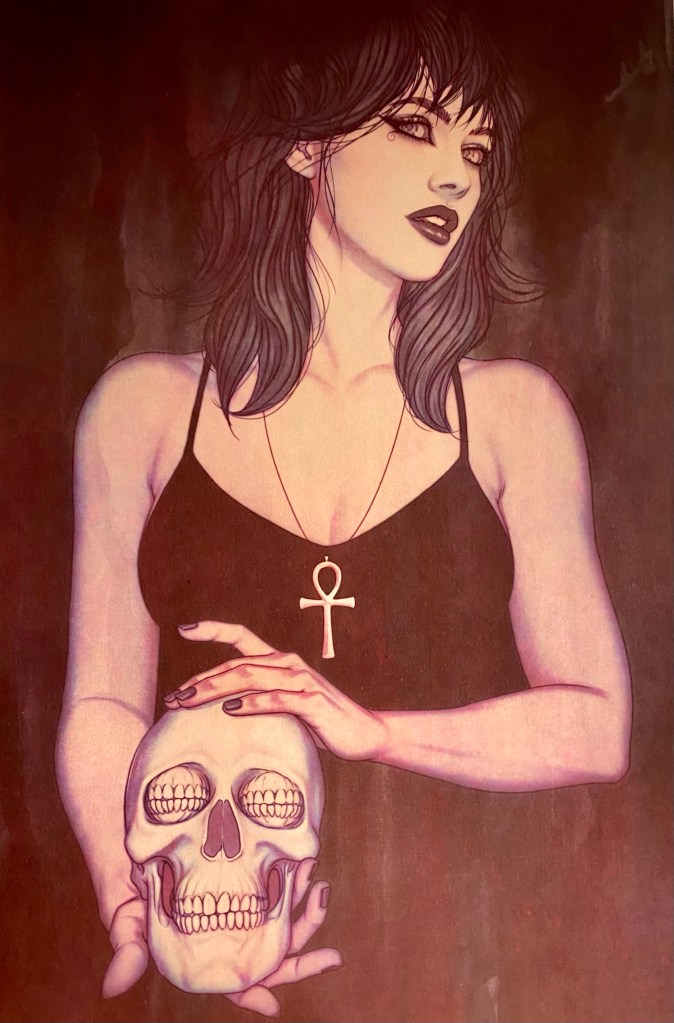
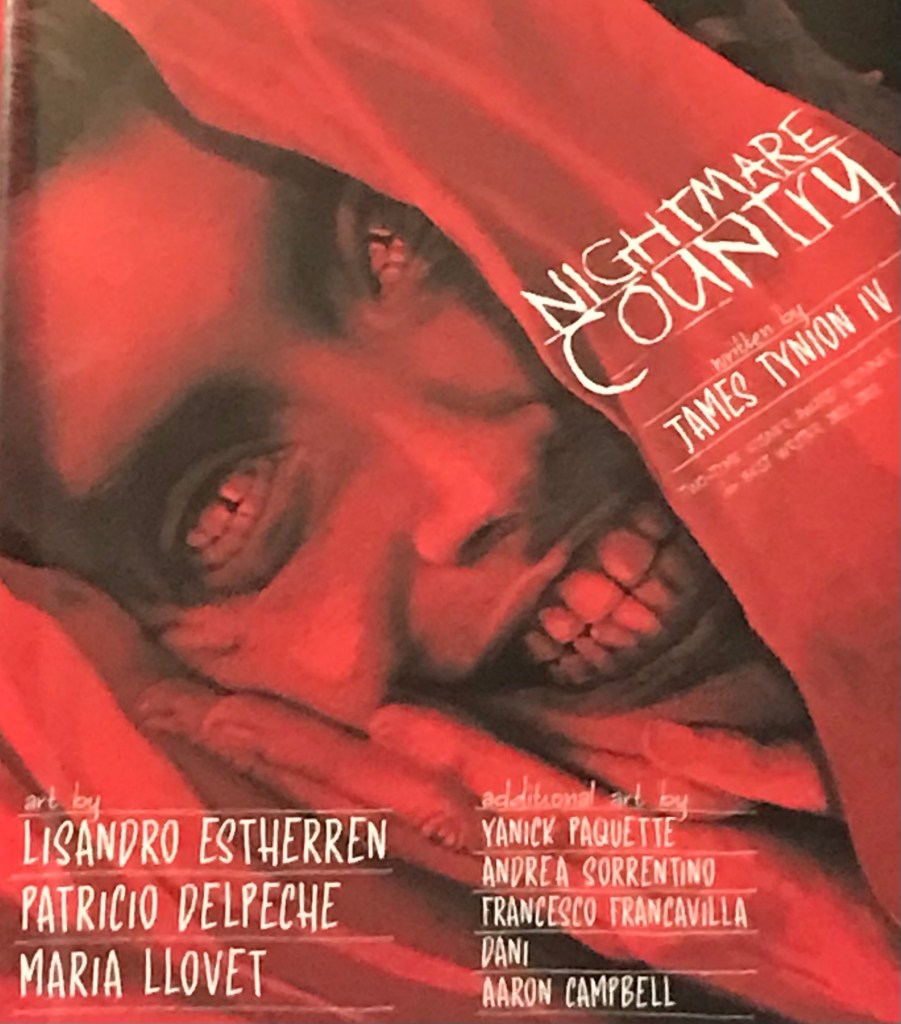


 AilixChaerea