
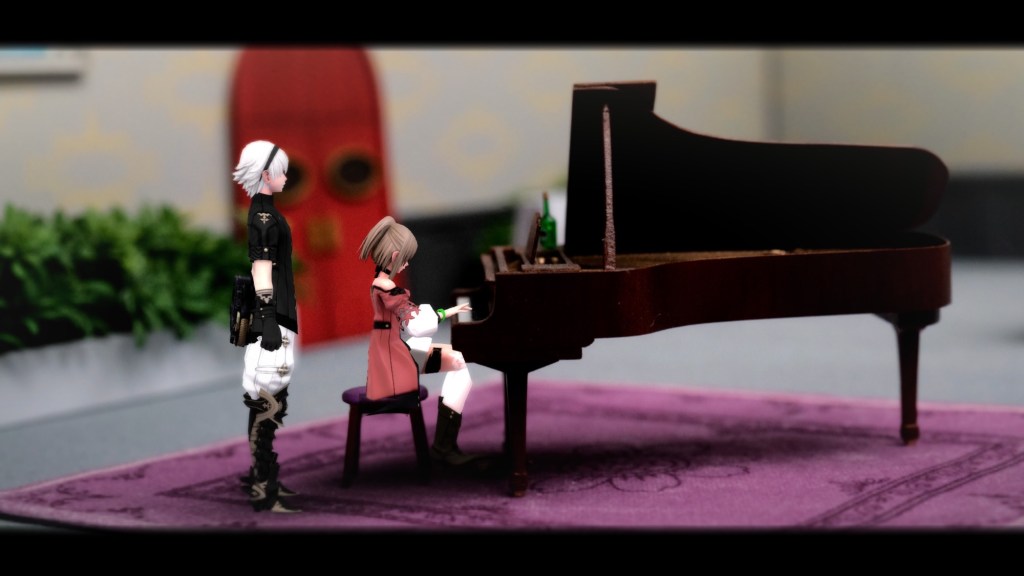
I was not expecting how much this game was going to charm me. I mean, I knew it would be memorable, at least: I first read about Fantasian in a 2021 Washington Post article that I ended up referencing in another entry about Final Fantasy VII. Why was a PS1 game from 1997 capable of telling a story that cinematic, human-scaled storytelling of modern game design can only handle a little bit at a time?
This is, pretty much, what’s going on with the modern VIIR trilogy. Midgar, in the original FFVII, consisted of a handful of corridors to walk through, random monster battles in the corridors, two mini-dungeons (mako reactors) and a normal dungeon (Shinra Building) and a sort of corridor-dungeon hybrid (the sewer). Midgar, as a fictional premise, is two massive, metropolitan cities stacked on top of each other. To reinterpret Midgar according to modern game design, you can’t rely on the same handful of corridors, 1 and 3/4 dungeons and some fights.
One obvious reason for this is modern game development conventions that (on one level or another) emulate film and photo-realism. These conventions turn against a fundamental design principle of 80s and 90s JRPGs, though, which gave them much of their vitality.

Some of this was incidental to early video game development: software was a simpler thing, back then. The first intuitive solution was that games needed to be simple and self-explanatory. See Tetris, Centipede, Q*bert, Pac-Man, etc. The second solution is to have simple game mechanics cover more conceptual ground like some of Nintendo’s early hits like Mario, Zelda and Metroid.
Final Fantasy derives from the second group but has older roots. Today, FF is known as a foundational JRPG. Most of us know that the J stands for ‘Japanese’. These kinds of games are typically Japanese but they are also most often video games. Then there’s the history behind the other three letters.
Tabletop RPGs are all about a gaming rule-set covering larger conceptual territory. If the design of early video games necessarily co-existed with board game design, someone was bound try to pull off video game Dungeons & Dragons. Not only are tabletop RPGs built on appealing to the imagination with a gaming rule-set…they are built on using that rule-set for everything that the people at the table can think of.
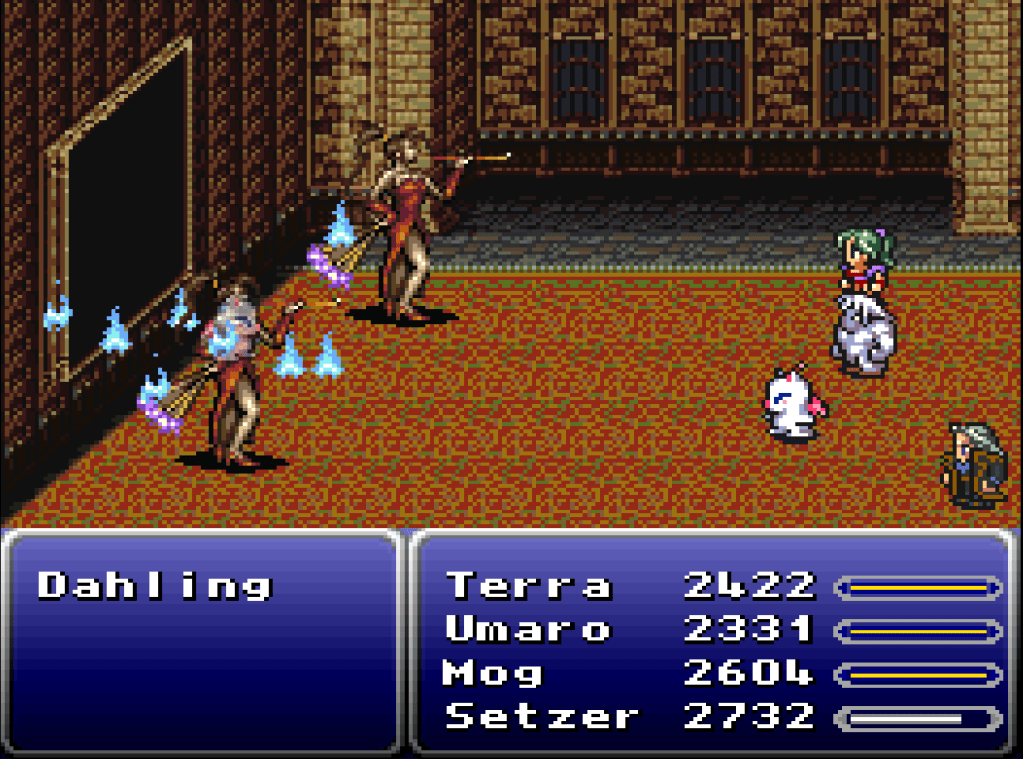
I heard that tabletop RPG kits in the 60s through the 80s made use of both miniature figurines and paper cut-outs. In FF I-VI, the player characters are represented in combat by simple, chibi-like sprites. The enemy sprites were a bit more detailed; appearing almost hand-drawn. They look like miniatures and paper cut-outs to me, anyway.
It now becomes easier to understand how 16 and 32 bit games were capable of telling stories that make modern developers feel burdened rather than empowered with realism. If you can connect a simple rule-set with imagination, then you can turn a handful of corridors, battles and roughly one dungeon into a sprawling dystopian cityscape.
Such a basic appeal to the imagination hinges on the player’s understanding that they are interacting with symbols rather than portraiture.
The Washington Post article confirms all this in almost as many words. While discussing the aesthetics of early Final Fantasy, Sakaguchi and the interviewer hit upon the analogy of puppet shows. Fantasian was meant to be a return to this kind of JRPG design.
See…I’m spending all this time not talking about the game itself because it’s hard to nail down the kind of depth and richness this brought to early JRPGs. Part of becoming more realistic means becoming more concrete and less interpretive. Video games have become more realistic but- like modern film -they have also become both more visual and more literal.
This does not mean that video games are worse off nowadays (any more than film is) but it does mean that video game narratives need to work harder to cover shorter distances.

So the WaPo article piqued my interest. I wanted to play Fantasian as soon as I read it but- at the time -it was only available on Apple Arcade. I don’t object to mobile games on principle but they’re definitely not in my lane. Luckily, there’s a modern console version now.
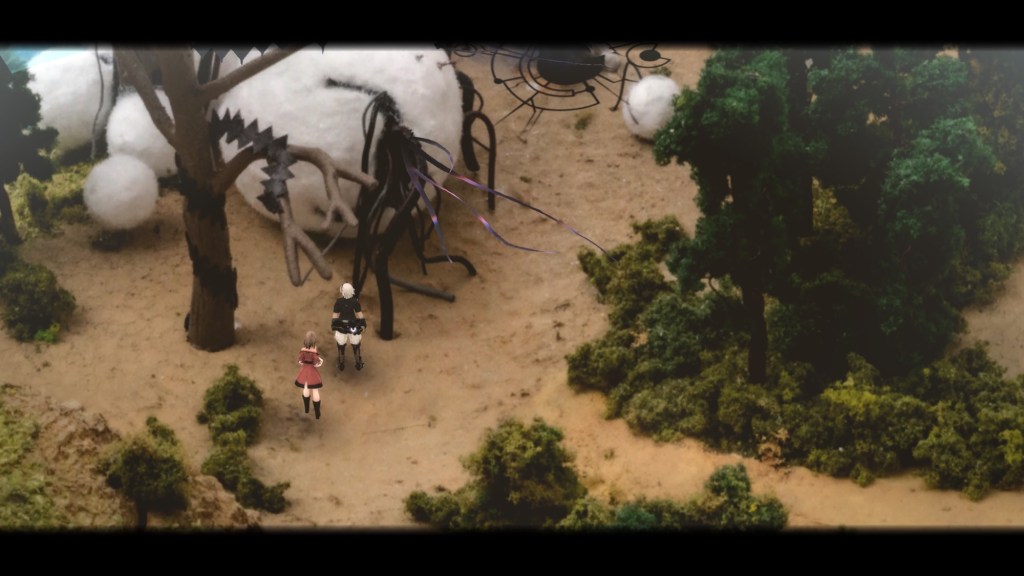
The environments in Fantasian are built from photographs of intricate little dioramas.

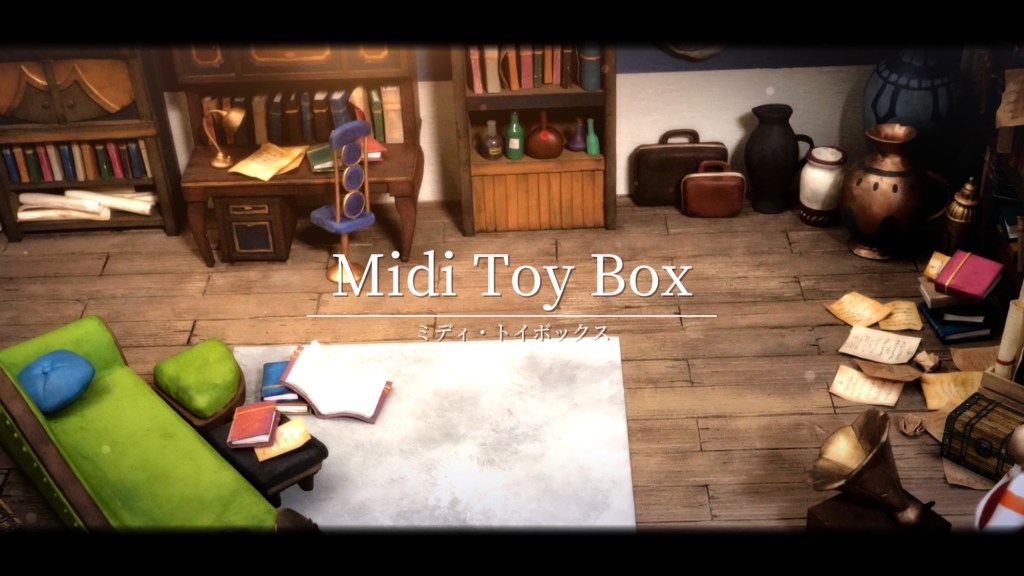
That means lots of opportunities for stuff like this. In general, locations operate like the layouts of the PS1 Final Fantasy games, with the pre-rendered backgrounds. The diorama imaging means- along with the PS1 style layouts -that there can be things like circumstantial cuts and close-ups. Every location has a kind of preferred camera angle but you can still do things like see the diorama layout by approaching a location from different entrances.
Fantasasian Neo Dimension looks better than the old Rankin/Bass stop-motion Christmas movies…but something about the magical, moving toy world reminded me of those movies. This effect would be stunning for a game like Kingdom Hearts.

Especially transitional shots, like the one that connects these two images. On a certain level, it’s obvious (even without context) that these are dioramas. At the same time, the camera is used to imply appropriate distances and size proportions.
Nor are the aesthetics the only reinterpretations of older concepts.

When you start developing more of a party, most of your squad has some way of making use of the three dimensions of the field of battle. Leo, our main character, uses piercing attacks that can be aimed through rows of monsters for maximum damage. Cheryl has a wide damage radius and Kina can launch spells in bending arcs.

I’m not that far yet but even stuff like these little moments of gondola navigation in Vence feel really natural and fluid. Then there’s the cut-scenes.
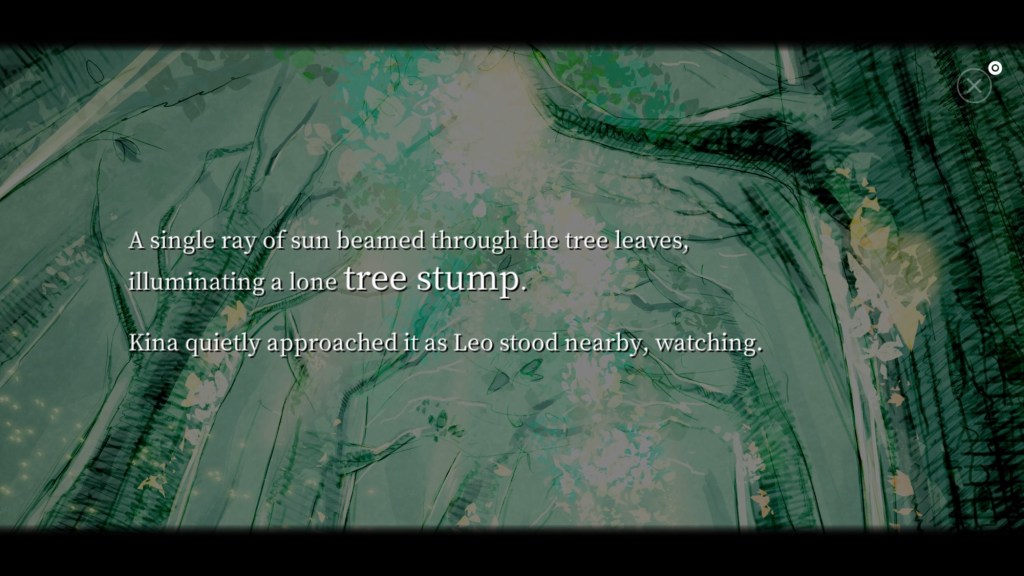
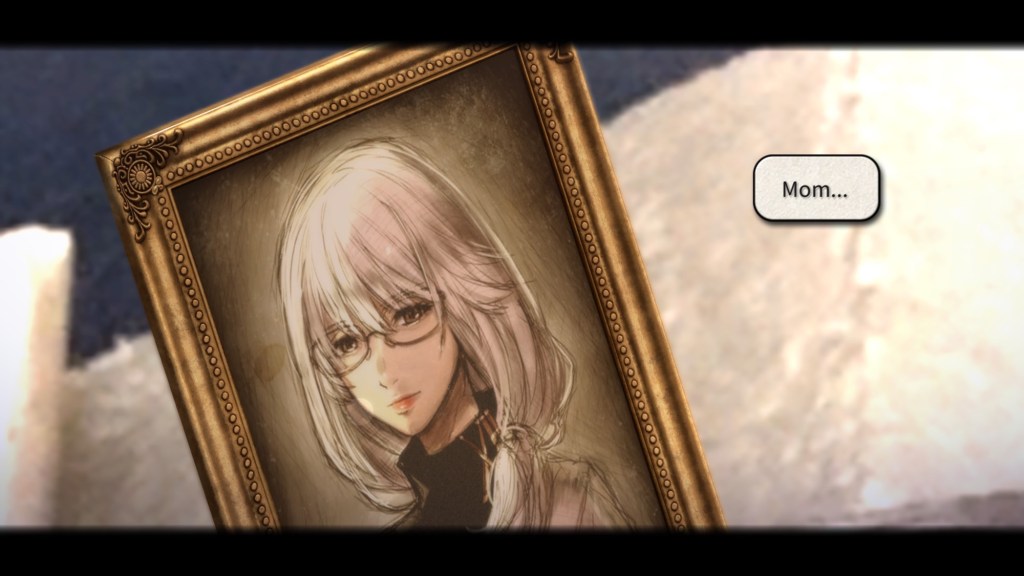
A lot of them look like this; especially the quieter, character-driven moments. The first few story book segments cover flashbacks but soon even character interactions in the present unfold as prose.
It’s a small part of the overall game and it wouldn’t surprise me if most people skip these on principle. But I absolutely love the commitment to the mid-nineties JRPG narrative cues.
Once voice acting showed up in gaming, it was everywhere. I’ve also mentioned before how Diablo II and Final Fantasy X seemed a little over-eager. Lots of devs apparently thought that American accents reading lines with no inflection was better than no voice acting at all.

What we lose in translation is a seat closer to the action. For me it does, anyway. Reading the dialogue of character interactions enables me to experience those narrative beats through my own intuition.
Maybe this will clear it up: what did Cloud’s voice sound like in the original FFVII?
Just think about it. I feel like I know what he sounded like. The same way I know what the voices of characters in novels and comics sound like. It’s a really simple design nuance but it’s capable of a kind of immersion that visual and audio realism is not.

Not that this is a super-serious, super-artsy joint. It’s still a video-game-ass video game with an anime-like story. It doesn’t take itself too seriously…but it does take a moment to breathe and get comfortable in the space that it’s capable of filling.
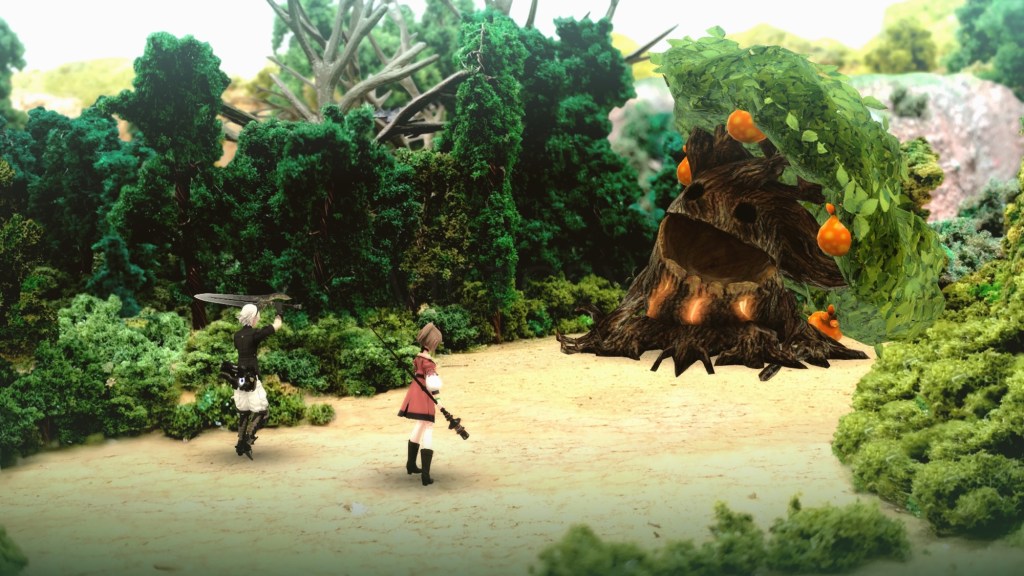
One of the first things you do is battle a tree that magically grows money. Your party gets stalked by a goofy Team Rocket / Ginyu Force villain posse with outfits and poses. The story book segments can also be a little goofy. Just a little. Some funny grammar here and there, maybe a few too many words that end with “ly” (laughingly, captivatingly, etc).
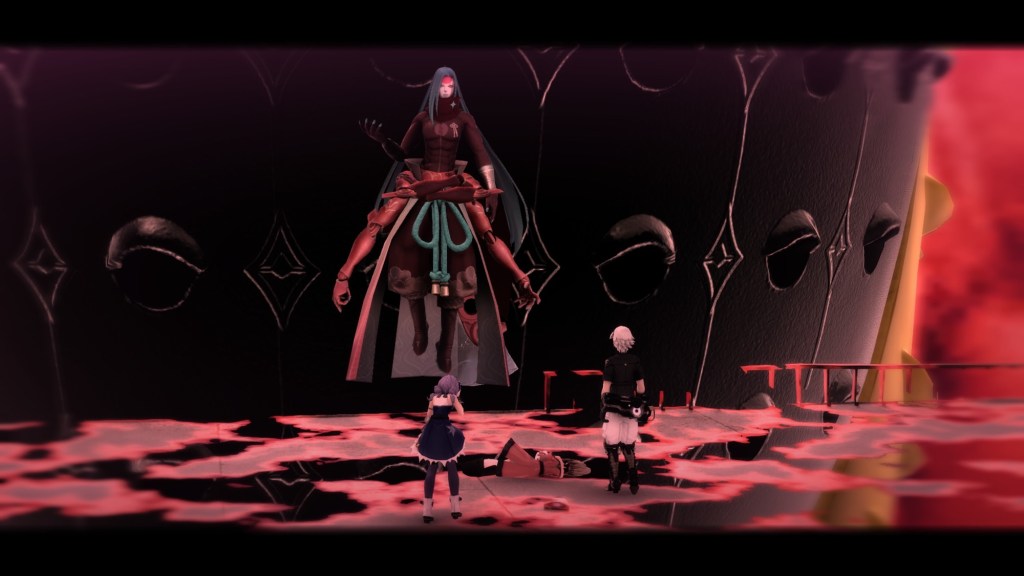
There is also a cartoony love triangle that involves the main character’s backstory, adding a touch of humor to the mysterious lost-memory subplot. There is an implication that Leo was a Zidane-like flirt, once upon a time.
So far, the tone could not be more balanced. But…

This. Just this. Not taking things seriously- just getting comfortable in the space that’s already there. Maybe it’s a little thing but I didn’t know how badly I wanted this kind of narrative experience back.
Here’s the WaPo article that started it all


 AilixChaerea