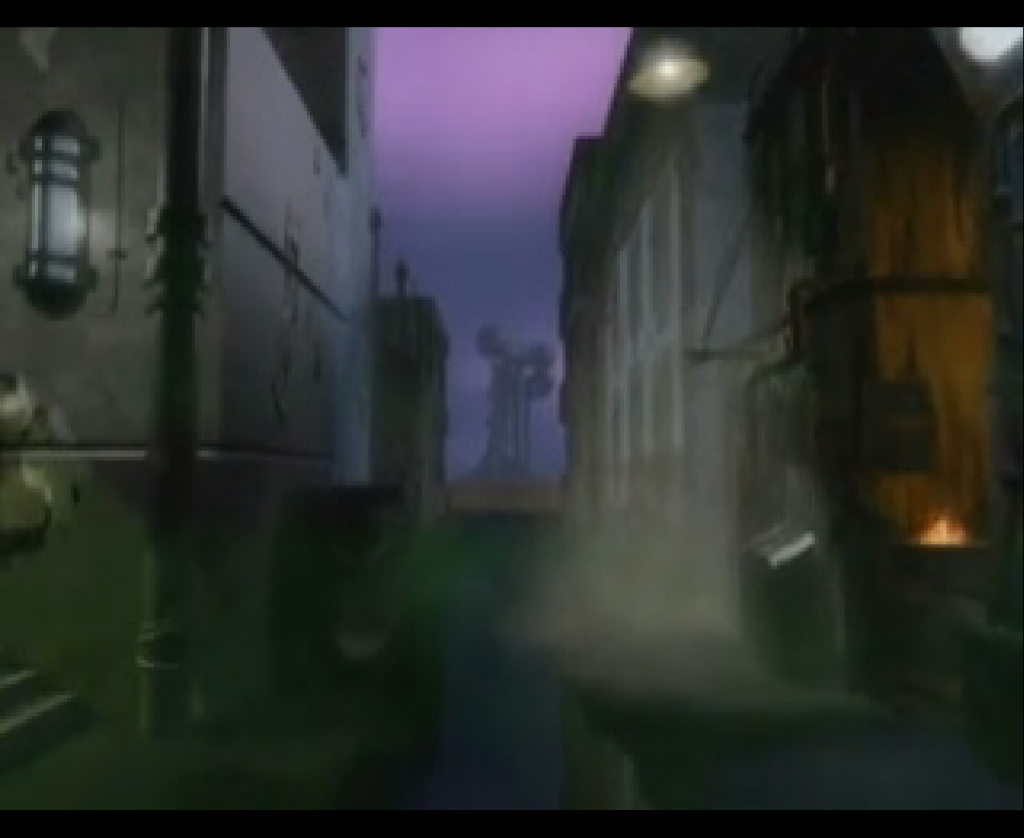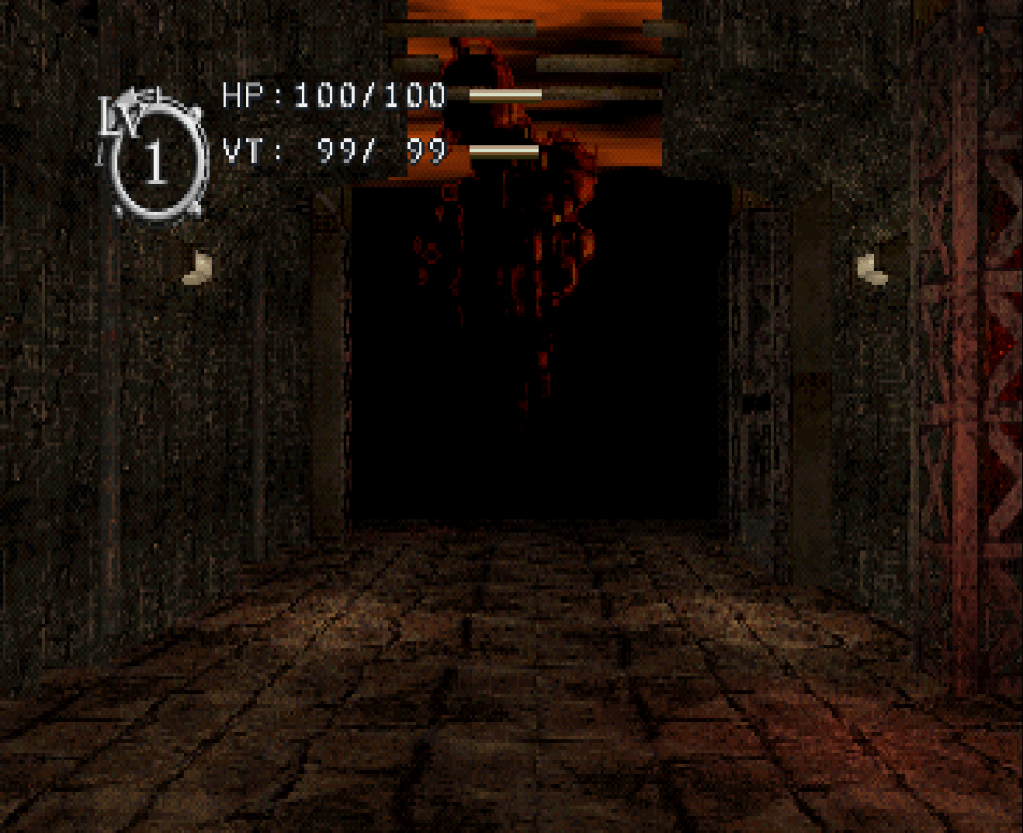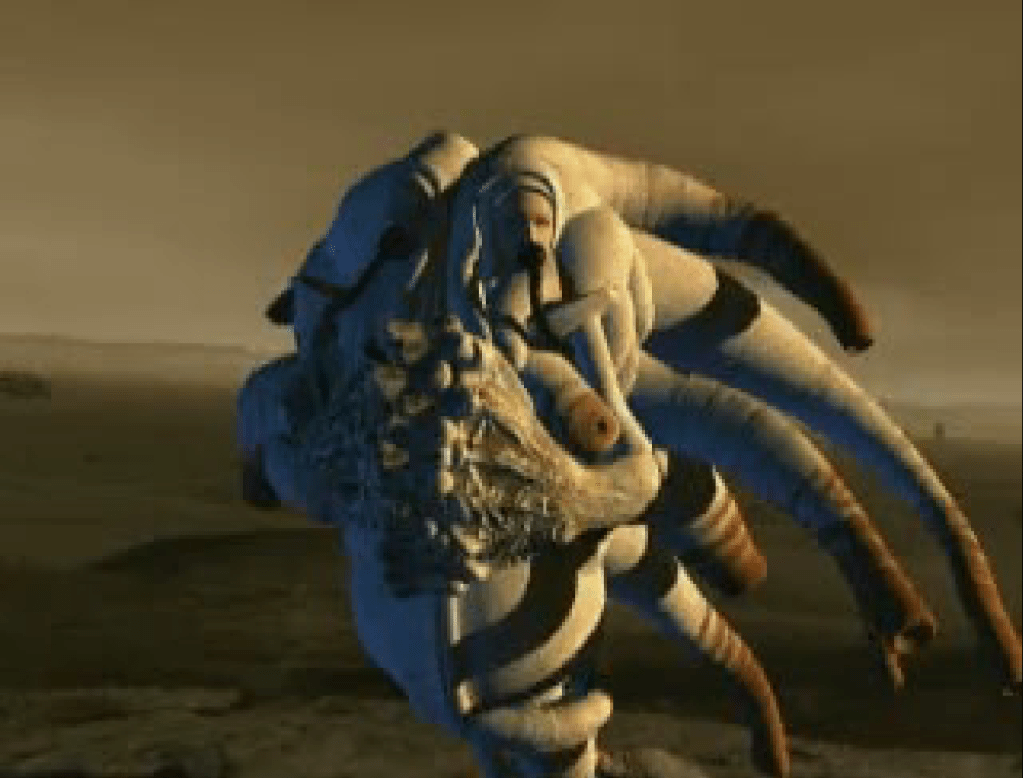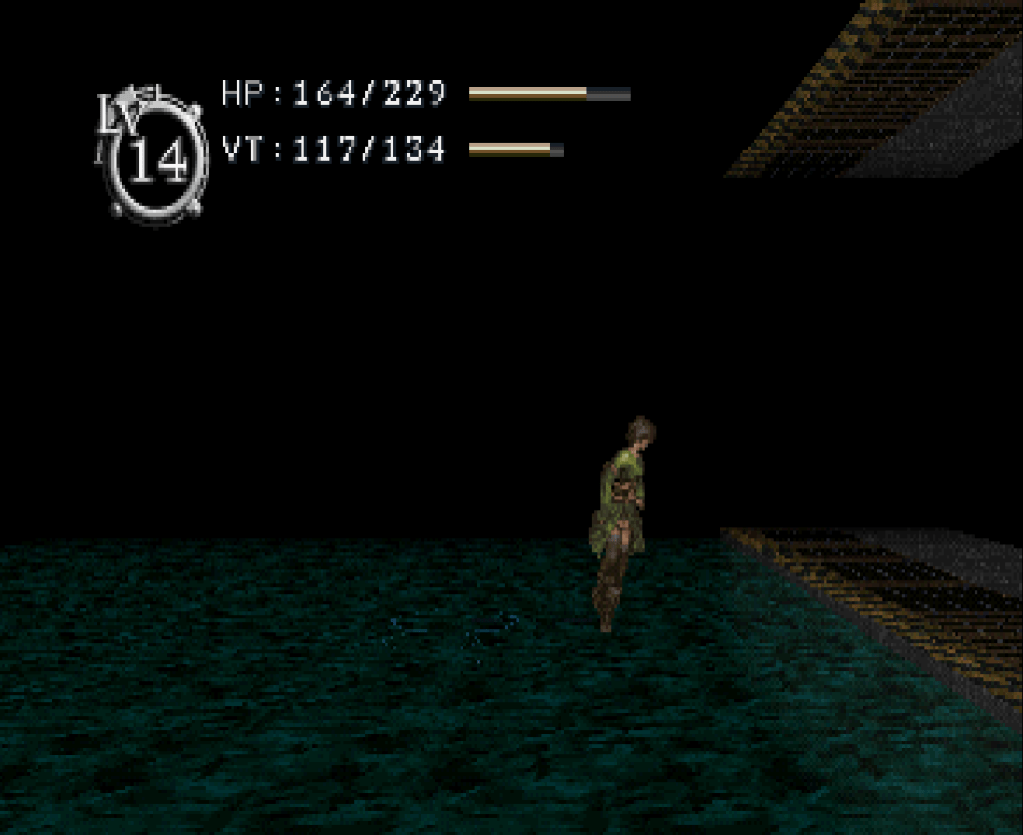
Playing Baroque part 2

The Sense Spheres are an interesting piece of world-building. The Neck Thing says that they came to Earth through outer space and are composed of an extraterrestrial substance. Furthermore, the Sense Spheres appeared simultaneously with a global, destabilizing event called the Great Heat Wave. Also known as God’s Wrath.

Thing Thing didn’t exist in the original version of Baroque, so I don’t know how seriously they figure in the lore. Those sources exist on the internet but I’m doing this blind. Taken at face value, though- the behavior of Thing Thing implies that the practice of grabbing things that emerge from the Sense Sphere has precedent.

This appears to be the main difference on the PS1 version: if you read Thing Thing’s dialogue closely and you connect the right dots in the Nerve Tower…it’s possible to get a clear picture on what the Sense Spheres are useful for. As far as I know, the Sega Saturn version required you to figure out the use of the Sense Spheres on your own. Additionally, the Sense Spheres in the first Baroque only sent items to the sixteenth basement floor.

I dwell on how much Thing Thing matters in the lore because it could effect the world-building. If we accept Thing Thing as canonical, then their behavior implies that the use of Sense Spheres to send stuff back and forth is common knowledge.

Or was common knowledge, anyway. I wonder if the Sense Spheres were used as technology in the final days of civilization as it was known.

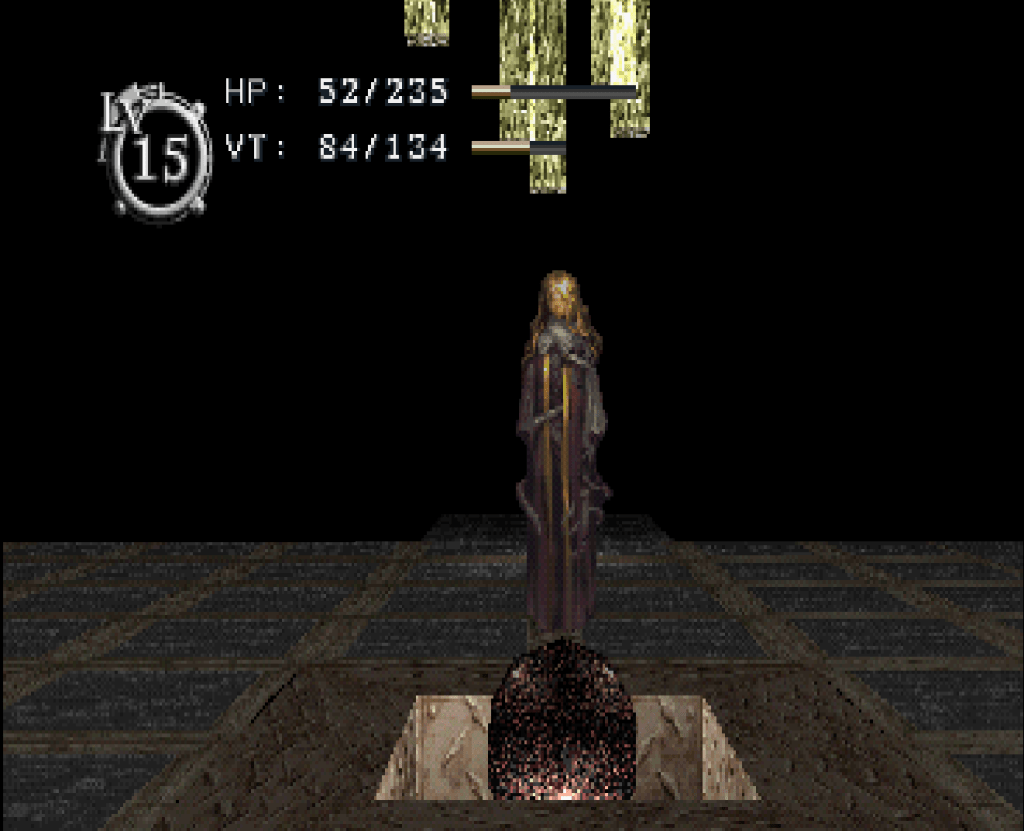
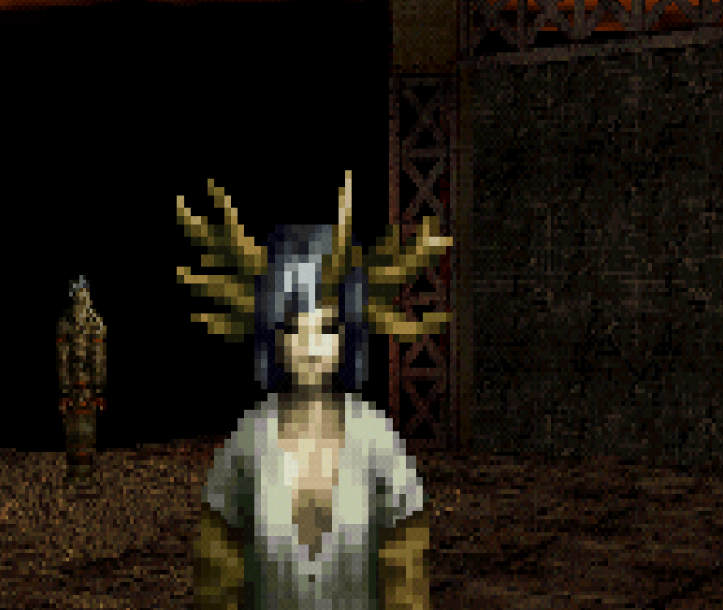
On the fourth level of the labyrinth, there is a ghostly woman named Eliza. In one pass or another, she says that she wants to give birth to a Sense Sphere to restore her insane mother. Above her, things that look like small Sense Spheres float near the ceiling.

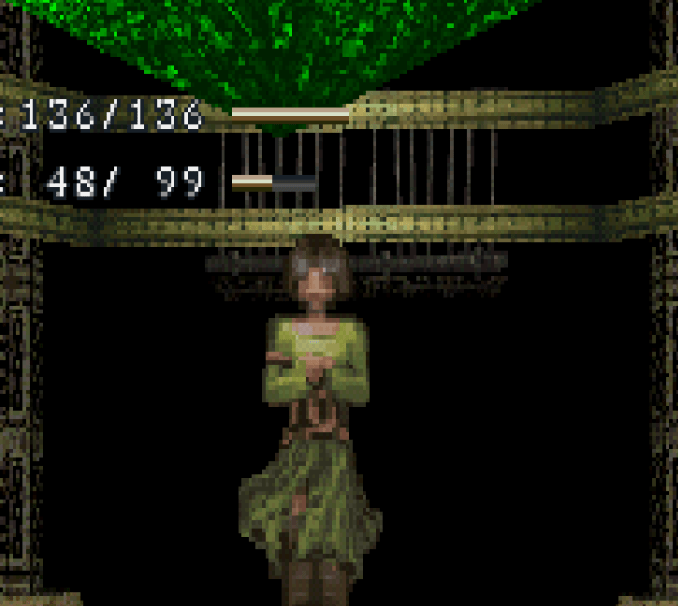
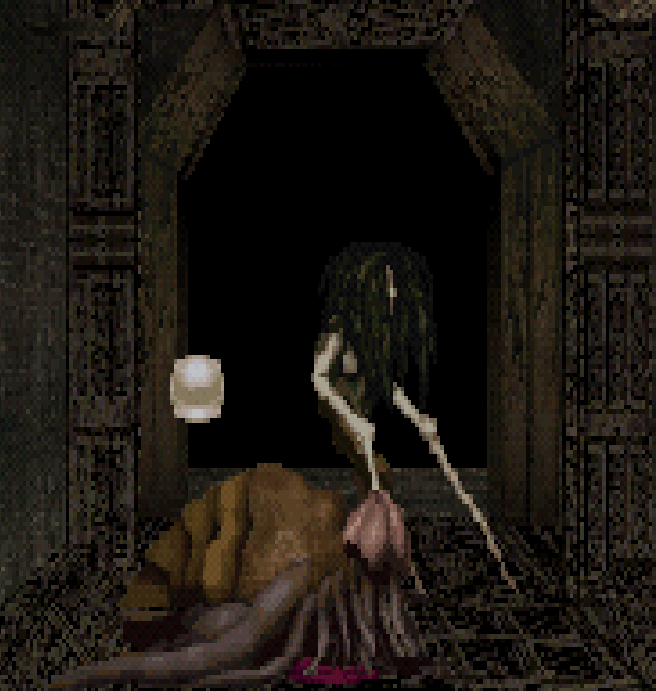
Also on the fourth floor (so far), there seems to usually be another woman called Alice. Like Eliza, Alice floats and vanishes like a ghost.

Alice disappears beneath a green Sense Sphere. To date, I have not encountered the green Sense Sphere outside of the room where the random map generation places Alice. Alice’s Sense Sphere is functional but the many small Sense Spheres of Eliza are not.

Otherwise, Sense Spheres are usually red and fixed to the ground. The contrast this has with the floating Sense Spheres feels relevant to their possible origins, mentioned by Neck Thing. If they came to Earth from elsewhere, it sounds like the kind of thing that humans might tether in order to make use of. The presence of grounded Sense Spheres at the entrance and the deep basement looks like an engineering choice. One might suspect that the grounded Sense Spheres relate to the purpose of the Nerve Tower.

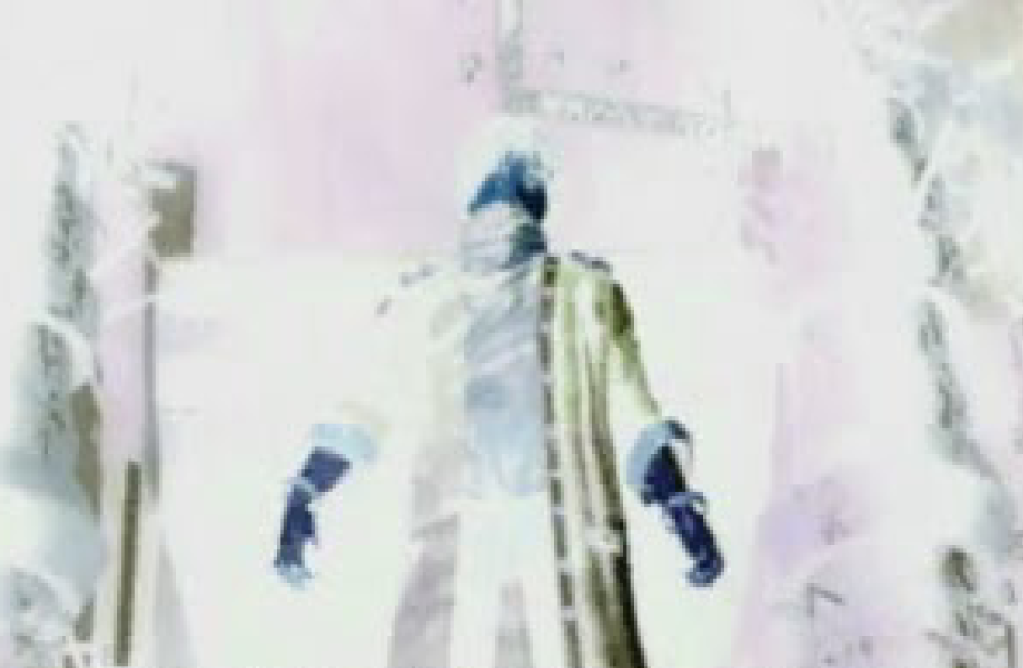
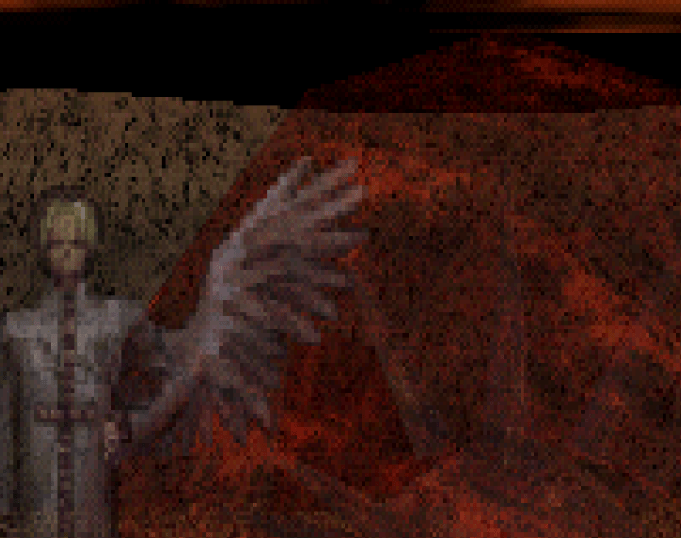
Then…there’s the apparent connection between the player and the Archangel. The Archangel has a projection outside of the Nerve Tower. Inside, you discovered their body impaled on a spike protruding from a Sense Sphere.

So, after another Tower circuit-

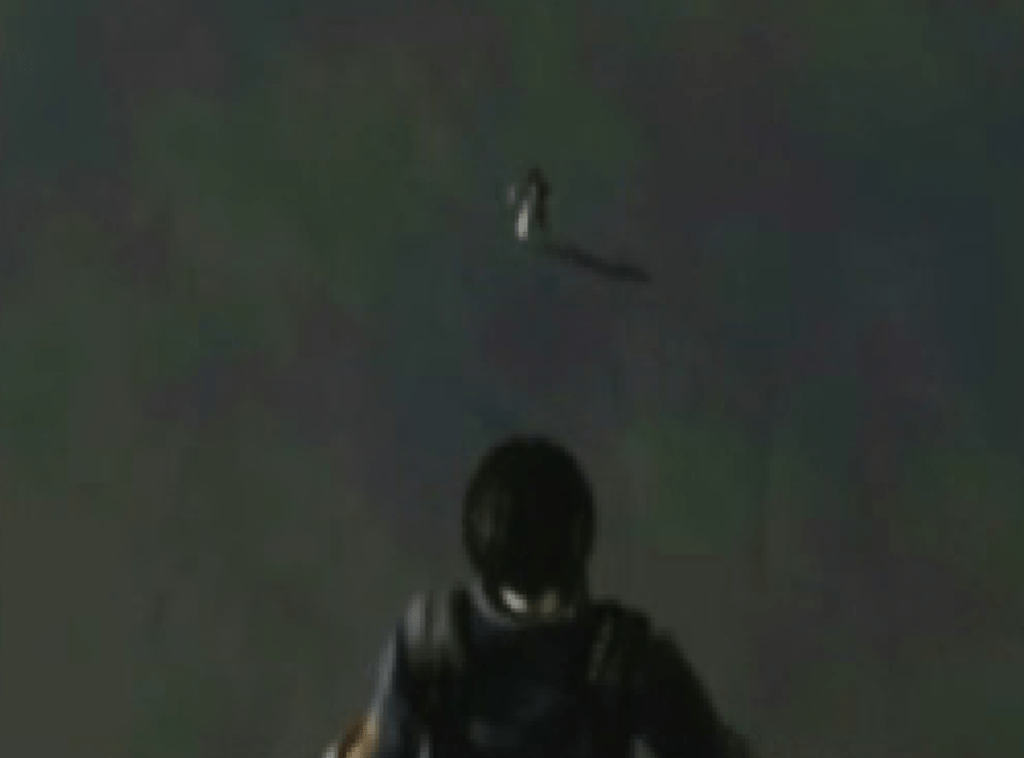
You recover a memory of looking down at another version of yourself from a higher floor in the Nerve Tower. It might also be worth mentioning that the you on the ground watched the upper you fall to your death. At what appears to be the moment of impact, several white feathers flutter by the ground-level you.

If anyone was wondering: I’m not sure what triggered that. At first, I thought it was because I found Koriel, languishing in a biomechanical immortality device, who gave me his Idea Sefirot (i.e asked me to kill him and take it).

While I don’t know exactly how I triggered the “watch yourself fall to your death” ending…it’s possible that it was because I did it with Koriel’s Idea Sefirot in my inventory. Maybe that’s it, but I’m hesitant to make assumptions. Or maybe it has to do with passing through the Nerve Tower roughly three times in a row. Dunno, just now.

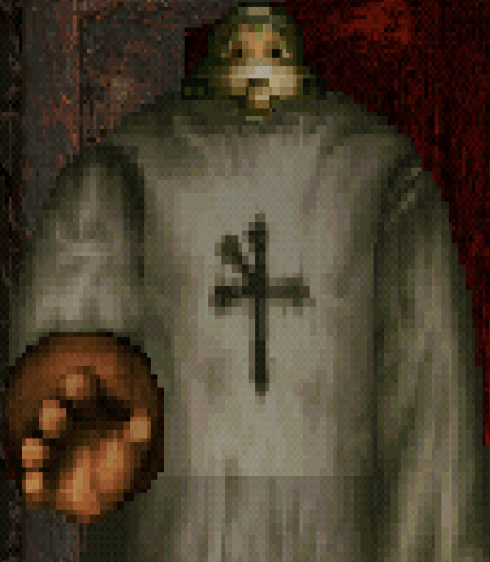
What an ‘Idea Sefirot’ is comes through, of course, by the words of other people and implication. While I was experimentally attempting to give it to various distorted ones, they treated Koriel’s Idea Sefirot with tight-lipped avoidance that seems half emotional repulsion and half propriety. The Coffin Man says that “holding stuff like other people’s Idea Sefirot makes me feel depressed.” Thing Thing, normally happy to hold onto other people’s stuff, wants no part of it. They almost sound prim: “It would be better if you held onto this. I’m fine”. When you try to hand it to the big guy wearing the white robe with the cross…he says he thought he recognized you: “You’re a member of the Koriel, right? I don’t need the crystals of any Koriel”.

Eliza, in the Nerve Tower, likewise spurns the offer: what she needs is your “pure water”. The one you just tried to give her is undesirable, apparently, because it is not “yours”. Idea Sefirot’s are unique for each person and to offer one to another seems to provoke taboo-avoidance. Maybe because Koriel gave this to us while serving a neverending prison sentence. I wonder if an Idea Sefirot is some sort of ephemeral, after-death vessel.

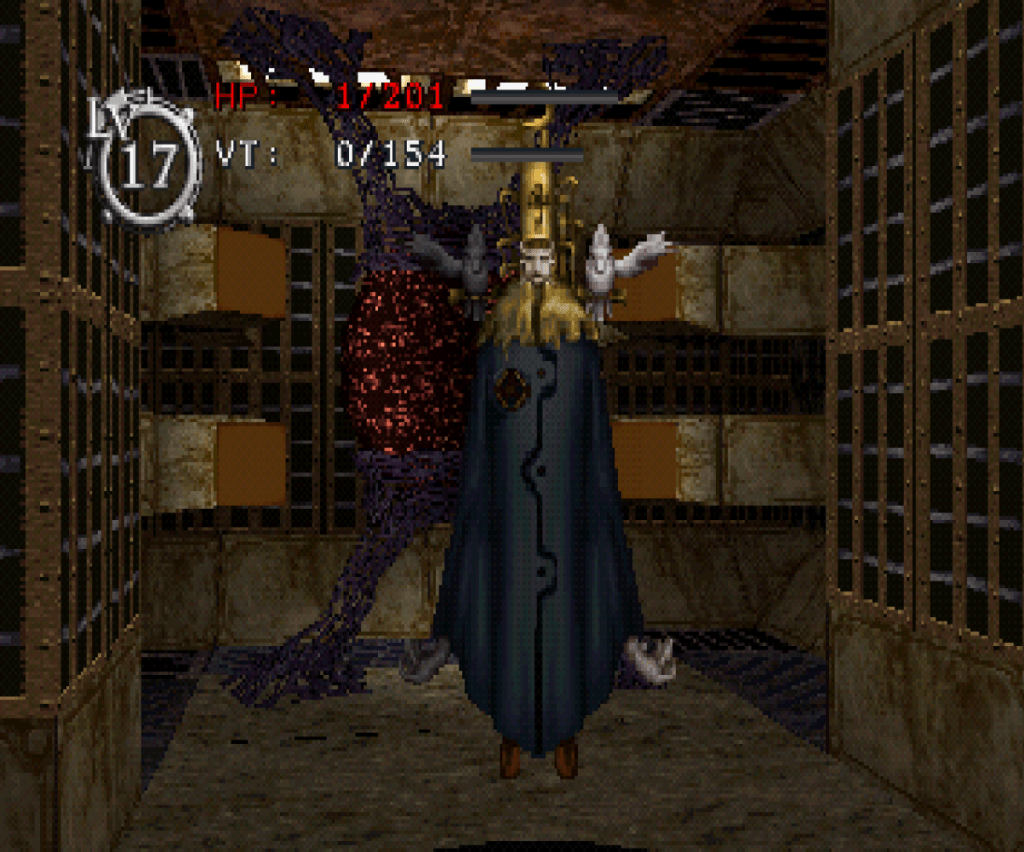
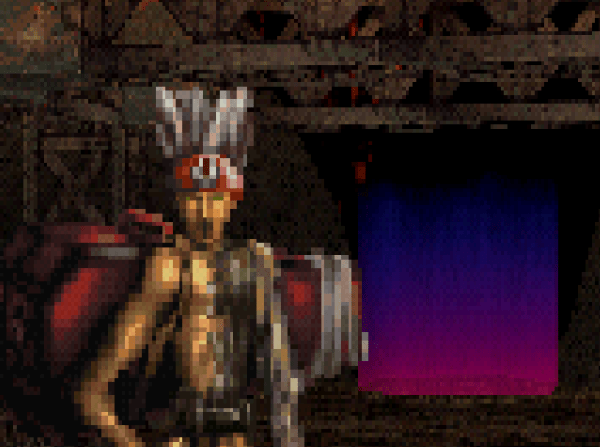
Speaking of: the Archangel delivers some interesting dialogue, after you make your first complete circuit through the Nerve Tower. Feller says that we must learn to survive, even if it takes awhile. As if by way of explanation, he adds that the Sense Spheres are everywhere. He goes on to explain that the whole world is connected and that a piece of your consciousness is “absorbed by the orbs” and fed back into another version of you. The process is reminscent of the Idea Sefirot. I don’t know if it’s possible to run into Koriel before the third circuit but I at least didn’t find him until round three (‘Myself +3’ lingering mysteriously in the inventory screen). If he is off limits until the third pass, then the Archangel’s speech after the first one makes narrative sense. Set-up, y’know.

Yet our situation differs from Koriel’s.

Rather like the Archangel, you are (on one ocassion, anyway) bilocated at two ends of the Nerve Tower.

The distorted ones also have different, successive dialogue. It is from them that we get the earliest overview of the wider chronology: first, there was a global environmental disaster called the Great Heat Wave, which appears to have happened simultaneously with the apparition of the Sense Spheres. Between now and then, the Great Heat Wave turned the world into Baroque.

Between Neck Thing, Alice, Eliza, Thing Thing and the Archangel, we learn that there must have been an intervening period. Human society discovered they could use Sense Spheres for instant travel. Someone eventually builds a complex, Tower-like machine which incorporates multiple grounded Sense Spheres. Two red ones outside of the entrance and one in the deep basement. Having only gotten so far as the middle of a fourth circuit, I’ve usually encountered two additional red Sense Spheres between the surface and the bottom. Lastly, there are the small, non-functioning Sense Spheres of Eliza and the functioning green Sense Sphere of Alice.

(I’m pretty sure that there have always been two red Sense Spheres outside of the Nerve Tower…right? I have this nagging suspicion that there was only one Sense Sphere at the entrance to begin with and a second one appeared later. I’m not sure of it, by any means, but it’s crossed my mind)

However short this intervening era was, many of the present circumstances arose during this period. Neck Thing tells us that the Great Heat Wave is known, to some, as God’s Wrath. Similarly religious language appears even earlier than this: during one of the opening cut scenes, there is a flash of black letters on a white background: “(w)hat must we do to heal our sins?”

Next, consider the discussion of “madness”.

In one of the earliest (if not the first) encounter with Alice, she asks if you remember throwing her mind into chaos. When you do not appear to, she bristles: was it only a game, to you? She sinks into the water below, saying that she is not suffering. Nonetheless, she asks why you didn’t hold on tighter.

On the sixteenth floor, we find the Archangel’s body impaled on a spike, emerging from a gray, metallic Sense Sphere. This he attributes to the Great Heat Wave, “or should I say, the Wrath of God.” He explains that “this” is all your “sin”. What sin, exactly? Driving the God of Creation and Preservation mad, causing the Great Heat Wave.

The purgation of the mad god is the only way to absolution, according to the Archangel. This, it seems, was the reason he gave us the Angelic Rifle outside. In the final, seventeenth floor, the God of Creation and Preservation waits. If you wait long enough, this feminine being will cover the screen with a giant block of dialogue: “Don’t go mad”, over and over again.

During the third pass, Alice asks if we intend to follow the Archangel’s orders. She believes that the Archangel told you to come here, to the fourth floor, and shoot her (Alice) with the Angelic Rifle. She wants to remember the time before she met you, when you both were “melded” together.

If you follow the orders from the sixteenth-floor Archangel and kill the being on the seventeenth, she says that she wanted to be “one with you” again before she dies.

At the beginning of the fourth pass, the Sack Thing says that “(y)ou and the other” screamed during a surgery. According to Sack Thing, the player character said “(w)hy are you tearing us apart? I don’t want to live if it means killing a part of myself.”

On the fourth floor, Alice says that the Archangel tore you both apart. “In order to drive the Creator and Preserver mad. In order to become the Creator and Preserver himself.”
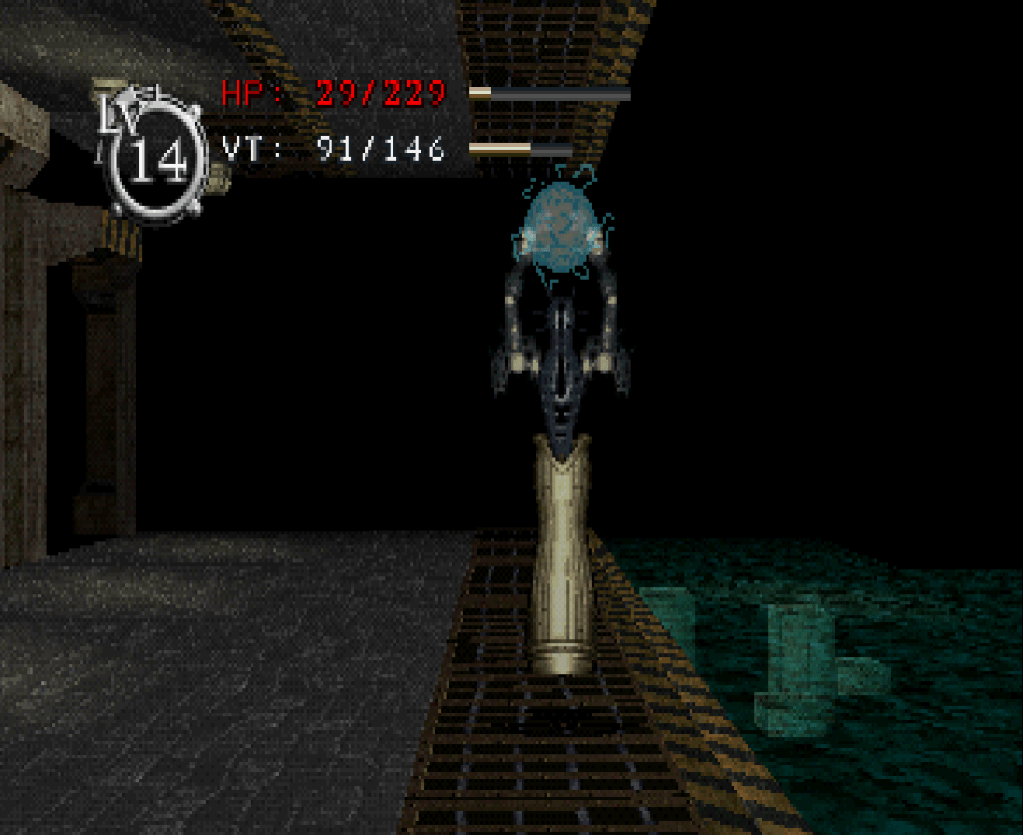
In Baroque, tearing something (or someone) apart could have a few different meanings. For contrast, there is an “angel” worker in the Nerve Tower with a second face growing out of his shoulder. He jokingly refers to himself as a “composite angel”. Alice’s reference to a time when you were both “melded” together could certainly point to a literal meaning: that you were once one being and now you are two. It definitely feels intuitive. But there is another meaning that prior imagery has hinted at.

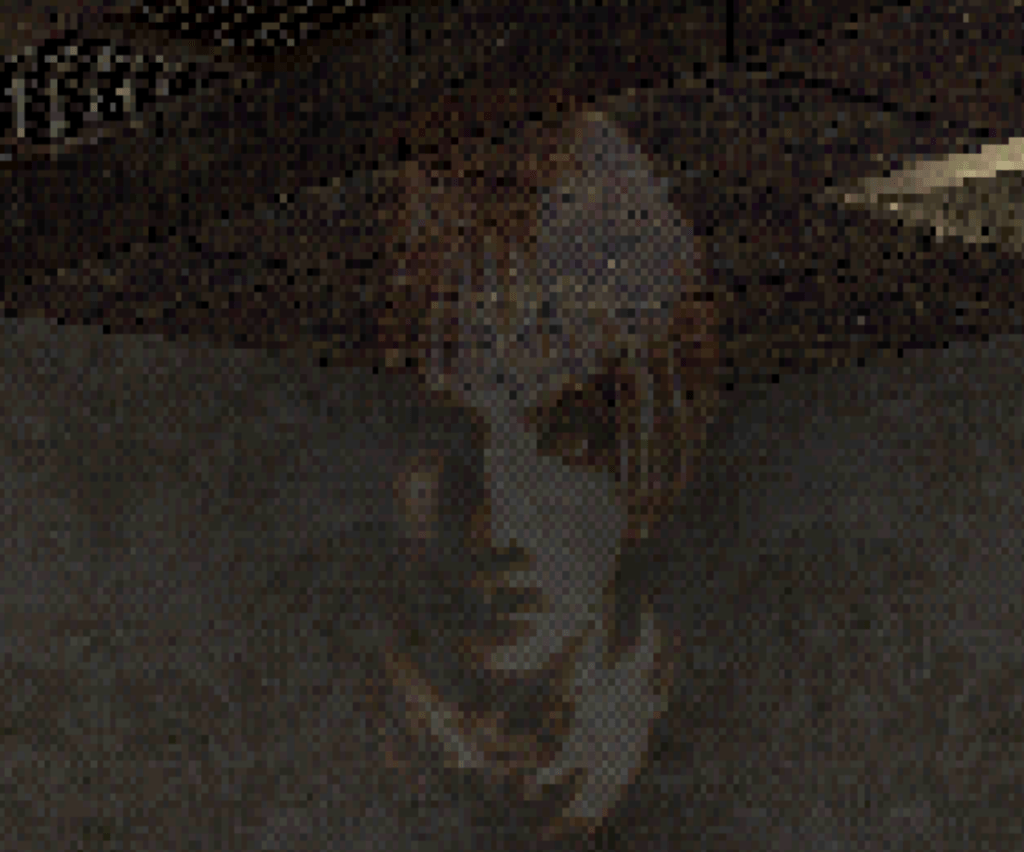
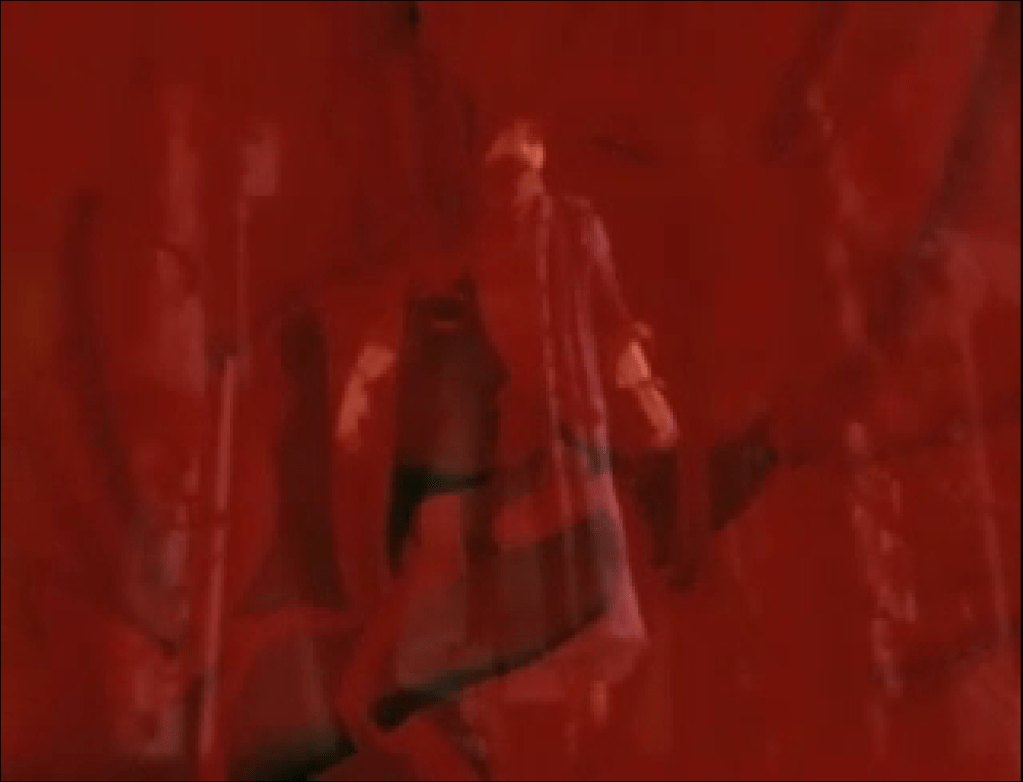
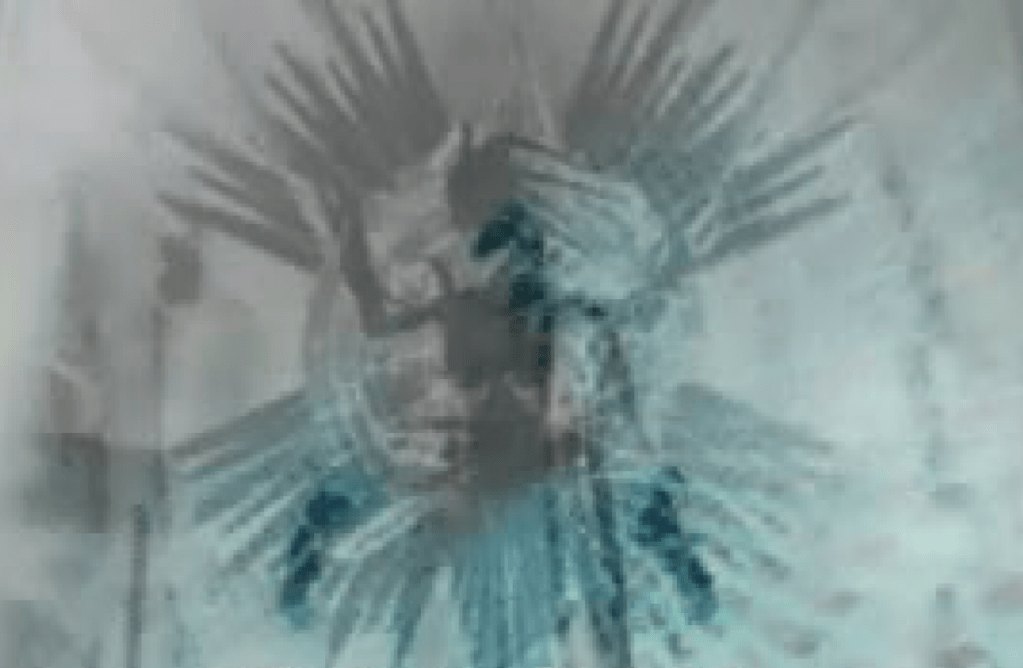
After my first death, this image briefly flashed over the suspension chamber.

After the third pass, the Horned Woman has a surprising realization about “that” face. She recognizes it; says it resembled her own. It may be a mistake to assume that normal social cues apply here. Let’s say, for the sake of argument, that she’s not saying this for a completely abstract or non-existent reason. If the Horned Woman is speaking plainly, it is possible that she is reacting to you. Yours is the familiar face that resembled her own.

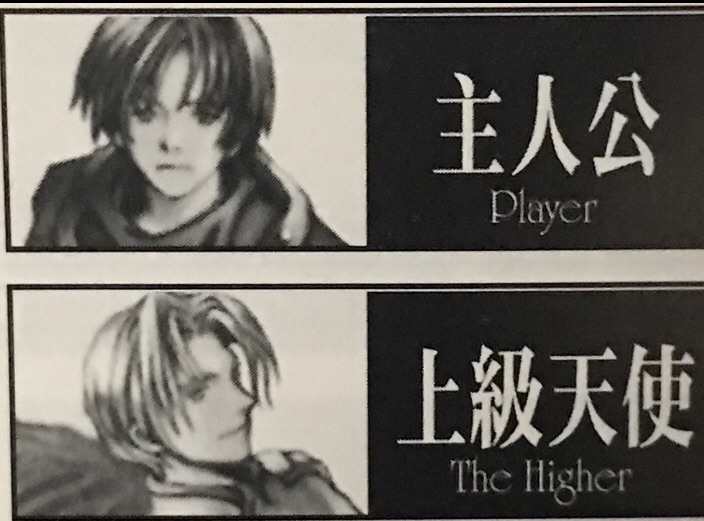
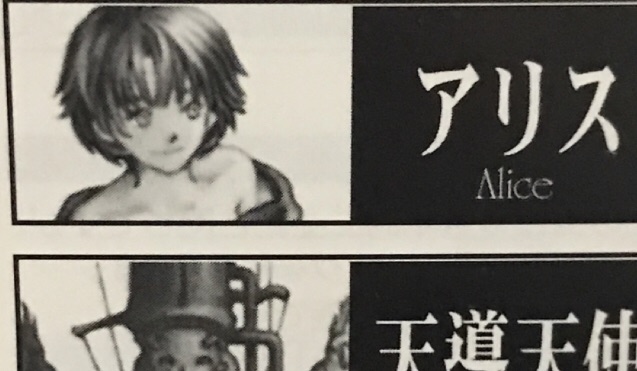
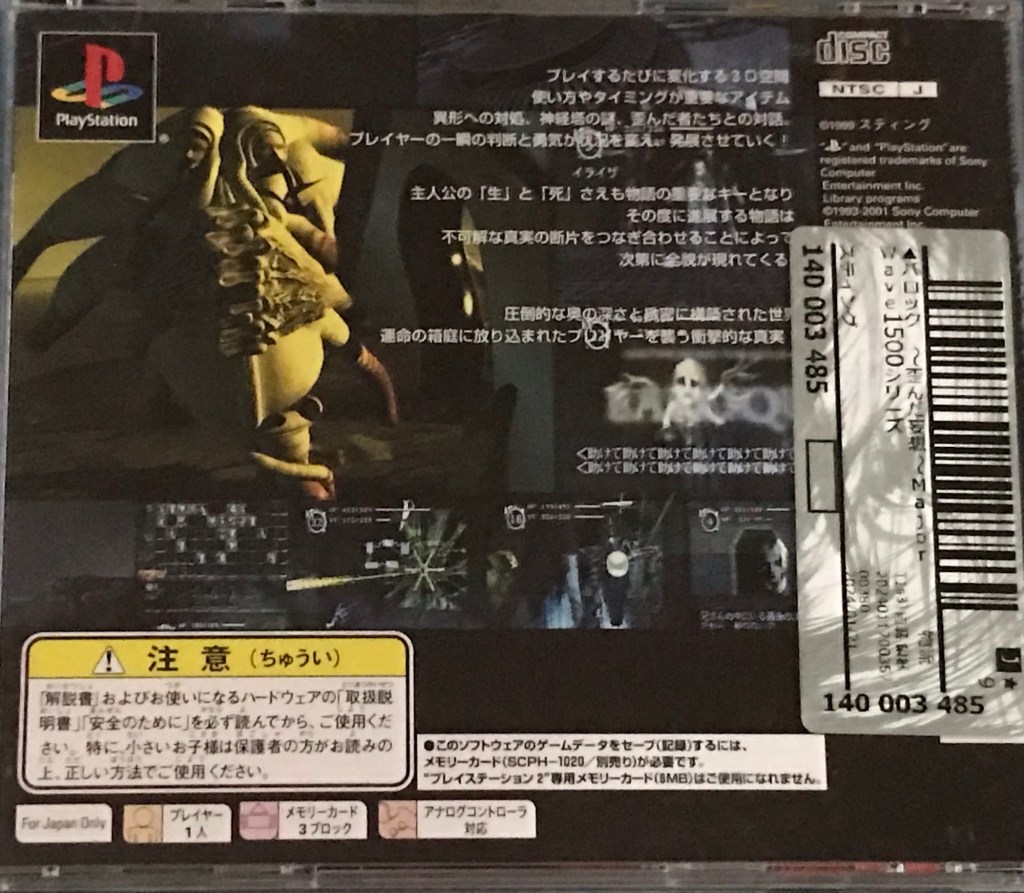
Concerning this…let’s take a look at the instuction manual:

More specifically-

Is it just me, or is there a resemblance between Alice and the player character?

If such a resemblance is intentional, could this tell us anything about the separation they experienced?

Then there’s this pair-

Maybe I’m giving in to a little pareidolia and/or overthinking it…but I wonder if these two share the same connection as Alice and the player character?

With the Archangel’s (The Higher) place in the sequence of events, they could easily be a kind of alien. They typically influence everything around them and possesses information that they don’t immediately disclose.

Perhaps the Archangel went through a version of the separation before setting foot on Earth? With Eliza being their ‘Alice’?

Contrast that against Baroque’s pre-Heat-Wave human societies. Earth, in general, experienced the Sense Spheres and the Heat Wave as totally unfamiliar, external phenomena. You could say that the Archangel has the contextual knowledge of a non-Earthling.

The resemblance between the names ‘Alice’ and ‘Eliza’ stands out, as well.

Don’t forget the earlier cut scenes with the suspension chamber and the off-screen voices. We are still dealing with the possibility that this is some kind of digital simulation, technologically channeled into the player character’s sleeping mind.

If we keep assuming that the player character is the one in the suspension chamber, whose mind plays host to the simulation…would it then follow that the Creator and Preserver represents a facet of themselves? Such a scenario would readily accomodate the significance of being “torn” from Alice.

Nonetheless…is the resemblance between the Horned Woman, Alice and the player truly innocent?

The prospect that Baroque is occuring in a bio-mechanical simulation leads in the other direction. Dream logic would then be part of the world-building…and uncanny doubling is a common dream phenomenon. The player, Alice, the Archangel and Eliza could be different layers of the oneiric nesting doll.

This also implies that the most common experiences constitute the bulk of the probable design of the simulation. Whatever the simulation is expressing…it is probably doing it through the Nerve Tower and the Archangel. If this is the bulk of what the simulation expresses, then the Nerve Tower and the Archangel are the most direct point of contact between the human host of the simulation and the machine they are connected to in the waking world.

What do nerves do? Connect brains to bodies.

Here’s the first part. Otherwise, to be continued.

Playing Baroque part 1 (first impressions, spoilers)

This is a rogue-like, such as Diablo. Also like Diablo, it appears to include a small community outside of an apparently unique ladder of progress- leading either up or down. This game also has a first-person perspective, which I don’t think I’ve encountered in an RPG outside of Shin Megami Tensei and Persona.

Subtitles indicate offscreen voices in the opening cutscene. These voices are talking about sedatives and simulations and whether or not someone is conscious. We are left with the impression that the span of time we keep groundhogging over and over again is what they mean by “simulation.”

About that last part-

Baroque has recognizable RPG mechanics. Level-and-EXP-based progression with stat-building, equipment collections, implied “role-play” what with the first-person POV (nineties versions) and our self-named protagonist.

Little of which has any bearing on the player progress data recorded by the game, other than the “suspend” function. Without “suspend” (quicksave) there is no way to maintain progress in the Nerve Tower between sittings. Which places all of the onus on a complete trip without a single death.

There is a separate category of save data called “arise”, which starts you at the beginning of your most recent pass through the loop.

That’s our rogue-ladder, by the way. Diablo has the pit below the cathedral, Azure Dreams has the Tower of Monsters and Baroque has the Nerve Tower.

One of your first acquaintances on the “ground floor” urges you to hurry to the Nerve Tower before saying anything else. A moments’ distraction or idleness is paid with by either HP or VT, so you might decide to hurry up on your own out of a vague sense that doing expected things has positive results.

No one ever says so, in so many words. But it’s an intuitive assumption.

With some effort, it bears out this time. Setting foot in the Nerve Tower, alone, does nothing. Relief is eventually offered by monsters called “grotesques.” Upon death, they turn into little white spheres, along with any other item drops. The spheres are what keep things somewhat comfortable, as killing grotesques for spheres regularly is the only way to keep VT topped off.

To start with the familiar-

HP is, of course, hit points. You want them as far above zero as possible and taking hits make the number go down.

So long as you don’t get poisoned, HP counts slowly toward its upward limit, based on leveling. This slow recovery happens as long as VT is above zero and VT ticks away, roughly, with the seconds. Running out of VT will cause your HP to drain rather than heal. Without a quick infusion of VT, this drain can kill you.

So the solution is killing grotesques whenever possible. While you’re grabbing the VT orbs and trying not to take hits, it also pays to make prompt use of any restoratives you come across. If either HP or VT is full, they usually bump up your upward limit.

Conservation is best saved for after you’ve KO’d a few times. By then, you should be a little more acclimated to how long-term play works.

Speaking of- levels and stats do not carry over between KOs. Neither does your personal inventory but items can be secured in a kind of dead-drop.

A bit of a grind, really. But people who play through the second quest of LoZ Outlands for their blogs don’t get to complain about difficulty.

With care and repetition, it becomes apparent that the tower is only so long. Or…I guess…its successive basements so deep, since that seems to be the direction we’re heading. If you have a few hours and are willing to roll with some trial-and-error, you could, conceivably, clear the whole basement in one sitting.

One must not count their chickens before they hatch. It pays to see through sticky situations. A recent favorite of mine is running low on both VT and HP surrounded by grotesques I couldn’t possibly kill in the time in takes to survive contact. Like many rogue-likes, Baroque has randomly generated floors. Strategizing must therefore happen in somewhat broad strokes.

It is possible to survive those situations but it is also possible to die because of HP/VT. The random level-generation accounts for a lot of stuff like item drops. A little bit of patience can be surprisingly rewarding.

So things get punishing. What’s actually going on, though?

Rather soon, you realize that you begin the same time loop over and over again, with each death. In some loops, there are unpredictable cues and statements about how the particular loop you’re in right now relates to the other loops. Clustering, usually, into A. it’s different this time or B. it’s never different.

My first death occurred in the Coffin Man’s “training ground”. This triggered a cut scene of a coffin-like suspension chamber. With the context of an earlier cut scene, it makes sense to assume that the player character is inside it.

If you managed to talk to the Archangel before that point, he says that, at “this time”, he exists where he stands and, simultaneously, somewhere else. He says that this “is because this is not the real world”. He goes on to say that, eventually, the player character will awaken to a reality where such “illusions do not exist”.

After dying during the training of the Coffin Man, the Archangel treats you as if there is nothing to say or explain. He appears surprised as he notes that you are, apparently, struggling to speak, and have lost your memory.

A background observation slips through before your muteness and memory loss are apparent. The Archangel says that, if that’s the only problem you have than you’ve been lucky. He realizes it is not the only problem when he observes your (somehow) apparent memory loss.

If, at that point, we are truly free of the simulation and have entered the real world for which the sim was a model…it would make sense if things happened suddenly that were not expected to those who appear to be in charge. Accidents happen in real life. It may or may not be relevant to note that this is the first time I’ve encountered one of his most well-known lines: “(t)here is significance in you using it”, as he hands off the Angelic Rifle.

(The Angelic Rifle will level any grotesque you encounter but it only has five shots and I have not seen any ammunition item drops)

At this point, I have a few questions. One of them is how many of these events happened because of something I did, immediately prior? Did I get the second suspension chamber cut scene because I died in the lair of the Coffin Man? That had also been my first death. Could the second suspension chamber cut scene simply be triggered by your first death?

Neck Thing, one of the NPCs clustered outside of the Nerve Tower, says that the Coffin Man makes him sick by profitting off of the catacombs. This tempts me to attribute the recent change of circumstances to dying under the roof of the Coffin Man. During the second suspension chamber cut scene, one of the off-screen voices asks if “he” just died. Two contrary opinions follow: “this one is garbage to” and “it’s off the charts!”, as if two people saw the same thing and had opposite reactions.

Less defensible but I can’t help but wonder: the suspension chamber cut scenes imply that the simulation is created in concert with your unconscious mind. If the oneiric projections are the basis for representations in the simulation, then consider this: there is a figure for whom you feel instinctive discomfort. You have no idea whether he is a human being or not or what his life and thoughts consist of. Regardless of his humanity or lack thereof, he is one of those whom the Archangel calls “distorted ones”.

Their lives and thoughts must consist of something, though: however incomprehensibly “distrorted” they may be, they are obviously sentient.

Yet for no reason that you are aware of, you give this person a wide berth. He carries a coffin on his back. He is both dangerous and duplicitous and appears to enjoy a kind of power. This I think is implicit in his ability to somehow profit from what happens in the catacombs.

One thing your subconscious might be wrestling with is what just happened, immediately before going under. Perhaps you were compelled to step into the suspension chamber yourself. Maybe you volunteered for it. It entailed a degree of risk, which your subconscious would also necessarily be aware of.
The whole notion of what just happened could make a menacing impression on an unconscious and suggestable mind. You may have thought, before losing consciousness, that this suspension chamber could well be your coffin. Something like the Coffin Man would make sense as a projection of your unconscious mind. If that happened, then such a projection might be something that the simulation drapes one of its NPCs in. Especially if this NPC has some sort of direct link to the life-support or a background program for the narcotic sleep control. Something not so different from the renegade programs portrayed in The Matrix: Reloaded and Revolutions.

An association between the second suspension chamber cut scene and the Coffin Man seems likely. A simulation-based one writes itself.

This is not the only possibility but it is easy to dwell on. At this point, you are aware that dying in the Nerve Tower and repeating the loop all over again is the most basic game play experience. Whatever else happens, whatever may be true about the context of your plight, that much has proved reliable. Being locked in a simulation would accomodate this.

As eternal as the time loop may be, though, the locals do not appear unanimous on it.

Repeated passes through the loop will also eventually draw your attention to a number in the lower right corner of the inventory screen, when hovering over the (so far) changeless presence of an item called “myself”. When you start off, the number next to your “self” is 0. With each death in the Nerve Tower or complete passes through it, the number goes up. The opening cutscene features a montage of images including a black screen with ‘-1’ in the lower right corner.

On the subject of whether every pass is unique or every pass is the same, this stands out. It is the only thing that is visibly changed with every pass through the loop. The dialogue of the distorted ones change as well but with each fresh loop it’s almost as if the prior loop might not have happened. Each floor below the Nerve Tower is randomly generated. The growing number of “selves” is the only clear evidence of consistent, long term progress on the “arise” memory card data (other than wherever the NPCs are in their dialogue trees).

There are other ways that long term progress can manifest, if one is bold, observant and persistant. With the ability to make multiple passes through the Nerve Tower with no relief but the “suspend” quicksave, you encounter things called Sense Spheres. On the original Sega Saturn version of Baroque, items tossed into Sense Spheres would appear around the last one on the sixteenth basement floor. I am, however, doing this on the PS1.

The PS1 features its own unqiue distorted one: Thing Thing. Thing Thing normally tells us about how he collects things that get spat out of a Sense Sphere just outside the Nerve Tower. Yes, it was always there- but nothing draws your attention to it early on, except its relative closeness to the Archangel (or his projection or bilocated presence). Anyway, deck Thing Thing in the face and he will offer to return up to five articles you previously threw into the lower Sense Spheres.

With a lot of care and maybe some luck, Thing Thing enables a way to add some cumulative progress to successive passes through the Nerve Tower. With adroit judgement of the things you send to the surface, you can leave yourself equipment to start your journey with or power-ups that buff said equipment or even level you up before setting foot in the Nerve Tower.

This, however, is juat a first impressions post. More to follow

Onward to part 2

Zelda: Outlands +Q (part 3)

Blobby eyeball creature in Level U doesn’t unlock anything but rupees….X_X…

But now we can buy moblin meat and potions with Bagu’s letter, and the Goron shop with the Kokiri Sword and Goron Shield is unlocked with the ocarina. So at least rupees are worth more than they were.

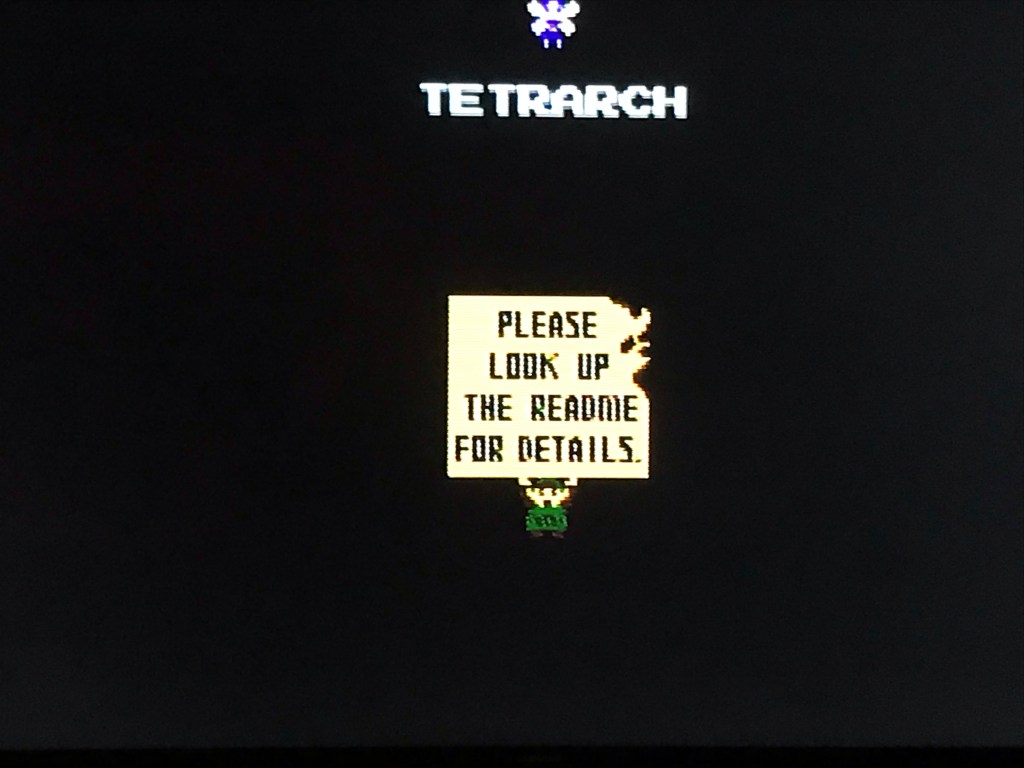
Meanwhile, back in Level T, remember that you just received two expansions to your bomb bag. Take the hint. Both the raft and the dungeon’s Tetrarch Fairy are not far off.

With another fairy comes another ocarina warp location: directly across the stream from Level O. There’s some obvious goodies and a warp cave that returns you to the other side of the stream…but not much more than that so far.

With more progress comes more ocarina warp locations…which you can’t really control. Playing the ocarina can take you to any of them. Now and then I suspect that your location on the map has some sort of correlating, mirroring relationship with where you warp to, but I’m not sure.

What this means is that, with the expanded range, you can no longer count on the ocarina to take you across the central water body. At least, not with any predictability. So, while getting the raft from Level T might feel a bit redundant, it’s really just in time. From now on, it’s the only way you can cross the central water body until you find the Gerudo warp caves.

(Actually, I remember some water in the upper left corner of the map, near a waterfall. I think the raft had some sort of use there, during the first quest?)

Along with the Outlands signature crisscrossing between dungeons comes another reversal of traditional Zelda mechanics. Each dungeon will not necessarily give you something that you need to unlock the next, sequential path forward. A treasure from one dungeon, the ocarina, has unlocked two dungeon entrances so far. Two others were accessible from the very beginning, even without the sword.

Like acquiring the sword, the expectation that the next treasure should unlock the next dungeon is so ubiquitous across Zelda games that, without it, you can easily feel lost. With Level T behind us, the ocarina has gained more warp spots and, ironically, appears a little less useful for it. And receiving the raft feels almost disappointing, since we’ve been coming and going across the water for awhile now without it.

This made me assume, several times now, that there is no clear path forward ever and each time you have to do a ground-up systematic investigation of everything.

So I spun my wheels for awhile before remembering that there are suggestions of where to go next, even if the treasures are not always involved. Back in Level T, Zelda said there was a dungeon with twelve guards. Typically, numbered guards could only mean one thing. And they usually come in pairs of four or five so the uncommon pairs of six adding up to twelve are easy to track down and rule out.

Level T sets an interesting precedent for the next three dungeons: continuing the theme of the Subrosian warp caves, the secret staircases are often one-way passages. Level L particularly is arranged so these paths loop back on each other. The next two dungeons, N and A, also have tricky underground staircases, but at this point T and L still hold the record.

Ooh look another sprite from The Adventure of Link!

Level L also has the next item, after the ocarina, to unlock multiple dungeons: the Handy Glove. Level N is hard to miss if you do just a little bit of experimenting outside of L.

Next, it’s time to hit up the puzzle by the cemetery in the lower left corner of the map, now that we can actually push rocks outside of dungeons. The hint-for-rupees Subrosian said it could be solved the same way it was in quest one, after all.

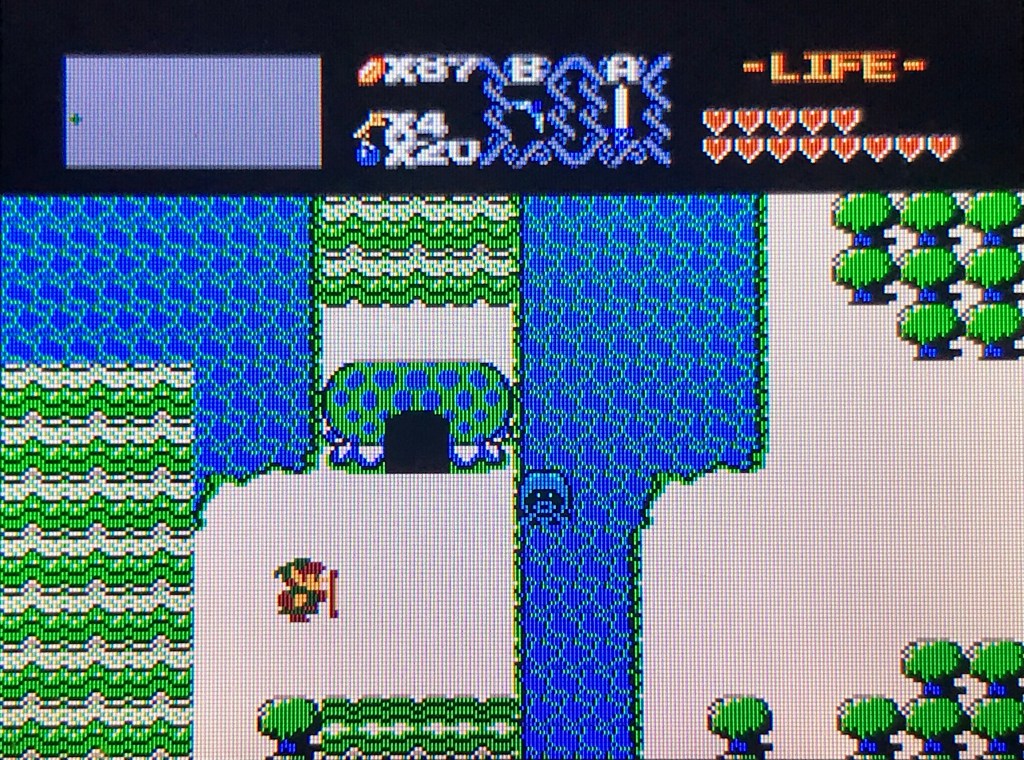
I knew, from the moment I saw this mushroom tree, that it would lead to a dungeon. In the second quest, if not the first

Interesting touch, saving this location for later in the game. The puzzle that lets you access this area felt significant in the first quest to- last time around, there was a heart container hidden in the area. It put me over the quota necessary for one of the Gerudos to hand over the Staff of Byrna. Speaking of, between L, A and a few other random holes in the ground, we’re at more than enough to get the staff in quest two.

If you remember Zelda’s hint about the “red tree path” from Level N you’ll probably find your way to Level C, right next to where the Thunderbird’s fortress was in the first quest. Just a few screens in, though, we naturally learn that we need all eight of the Tetrarch Fairies before venturing further.

So. Where to go from here. This actually got me pretty frustrated for awhile. The only other hint from Zelda was about searching “the dark maze of ice,” from Level A. But you need the Handy Glove to reach Level A in the first place and the Handy Glove dungeon is in the frozen area itself. So it kinda looks like you have to go back and look for a third level in the frozen maze. Which sounds a little obtuse for a Zelda game, what with the emphasis on exploration, but it was the most recent lead I had at the time.

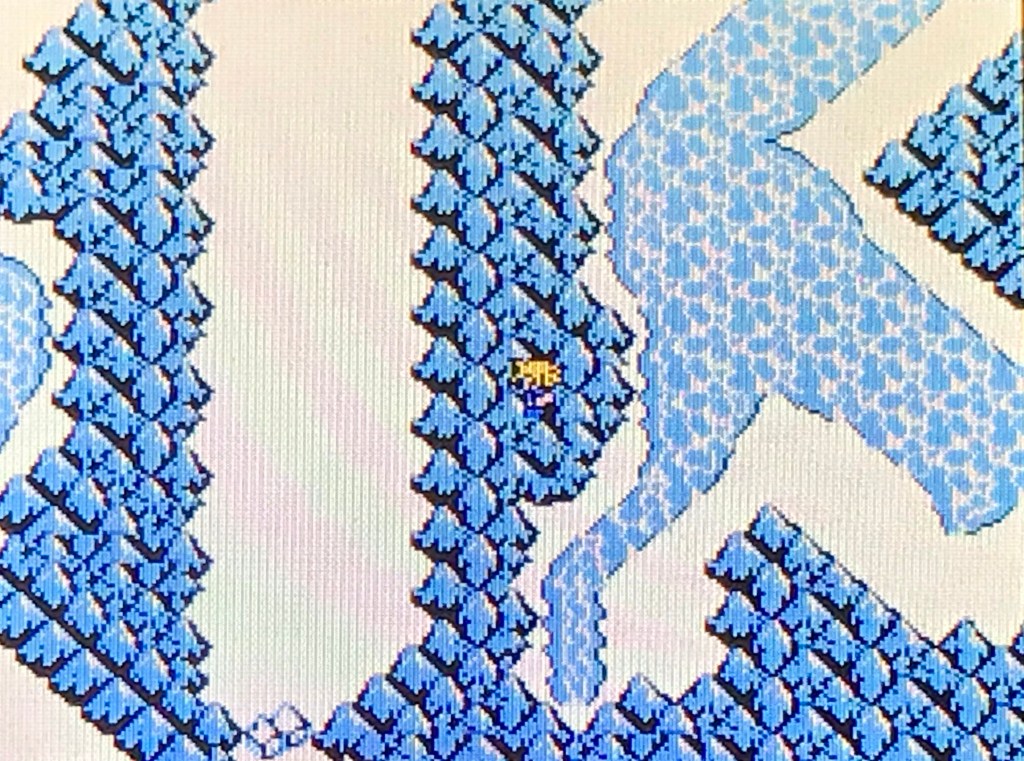
Nonetheless…there was a lot going on up there that I just hadn’t covered yet in the second quest. The waterfall in the upper-right region of the frozen area seemed significant, somehow. I remembered that there was a way to reach it with the raft in the first quest.

Since there didn’t seem to be any way to trigger the raft up there, I started bombing walls and pushing rocks. Bupkiss. There’s no dock to launch from…but if I remember correctly, there wasn’t in the first quest either? My next “sure thing” theory was the small forested area with no snow, near Level L. I remember something being there last time around, but I guess there isn’t this time. Not even after bombing and throwing fire at everything and playing the ocarina.

Slowly, the weirdness of this sinks in. No other Zelda game I can think of has three dungeons in the same area. But wasn’t the hint about the “frozen maze” from Level A? You need the Handy Glove to get to A. The Handy Glove is in one of the two dungeons in the frozen maze. If I’m not supposed to go back to the frozen area, then what does that hint mean?

Another way of looking at it: how many hints refer to the frozen area and how many dungeons are there? Two, for sure. What about the hints? “Twelve guards” is one, “frozen maze” is the other. Is it possible that it’s simply two-for-two and that hints might be scattered randomly?

Strictly speaking…all you need to reach Level L is the ocarina and bombs. It’s entirely possible that someone might finish that dungeon (somehow, miraculously, without the sword, or maybe with the Kokiri sword) and then proceed to Level T. In which case, the “twelve guards” hint would have seemed a little pointless, just like the “frozen maze” hint now appears to be.

It’s annoying but at that point I felt forced to consider it. Also…all of the dungeons, so far, are in different locations than the first quest but none of them are far from their original placement. And I think there were only two dungeons located, roughly, within the frozen maze in the first quest.

There are two conspicuous areas that hid dungeons in the first quest which, so far, have yielded nothing. One of them is a rocky enclosure only accessible through the Gerudo warp caves.

This one, Level D, is just a few screens away from the area you need the Gerudo warp cave to access. Where else do the Gerudo caves lead? Just outside of the Graveyard of Serenity. If two of the warp caves are in the vicinity of Level D and T, maybe the third location is also close to a dungeon?

It’s interesting that sprites from the first LoZ are used for the concept of Dark Link from the second game

As expected, it’s near the Gerudo warp location across the water. This one hardly lasts any longer than N or A. The hardest thing about this dungeon is the search for it. Also interesting: I think Level S has more Dark Links than any other dungeon before it. Story significance, maybe?

With all eight Tetrarch Fairies liberated, we may now proceed to the Thunderbird’s fortress in the red territory of Subrosians.

Remember how I said L and T had the record for misdirection and difficulty? They don’t, anymore. N, A and S were kind of effortless, but C makes up for all that- with rather classic dungeon design. The circular, misleading staircases do make an appearance but they only really take the foreground near the end of the level. It pays to rely on both the HUD map and the map in the pause menu which shows what rooms connect to what others. This level is intimidating but it doesn’t throw anything at you outside of the context from the rest of the game. And there’s some pretty neat treasure scattered throughout, to. Only one of them-the Silver Arrows -is necessary to finish the game.

Just like the first time around, I’m hesitant to go into too much detail. A final dungeon is just…such an important part of a “puzzle box” game. And this one is so much more than a tribute from a fellow Zelda fan (although it’s definitely that as well). Zelda: Outlands actually feels surprisingly genuine- like a Zelda game from some alternate reality.

First quest review

Zelda: Outlands +Q (part 2)

…Lynels…X_X…

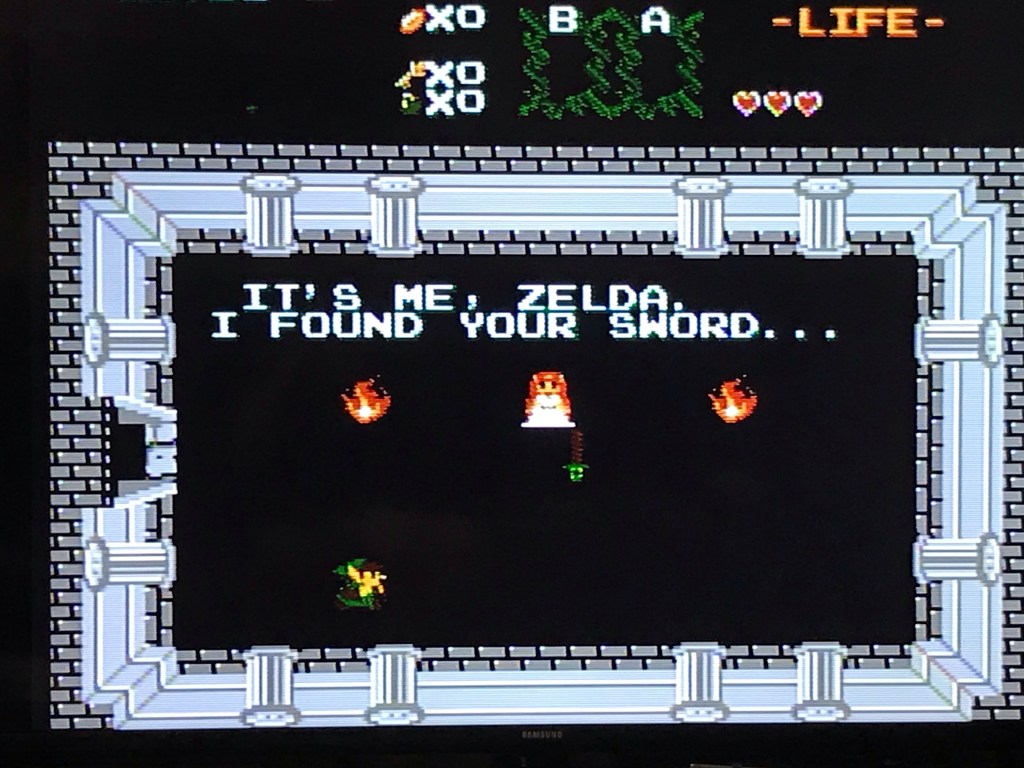
Kudos for dungeon design in level T. You instantly land in a sandpit with a patraquad that is far easier to kill with bombs, so no precious candle-wall cheesing. Just watch the thing and try to place a bomb somewhere it will move over and hopefully you’ll only use one or two of them. Up two screens is Zelda with the sword (thankfriggingNayru) and some more rooms that are either puzzles or require an item. Just past this point, we run into Zelda again who tells us that ‘twelve guards watch over the dungeon’s gate.’

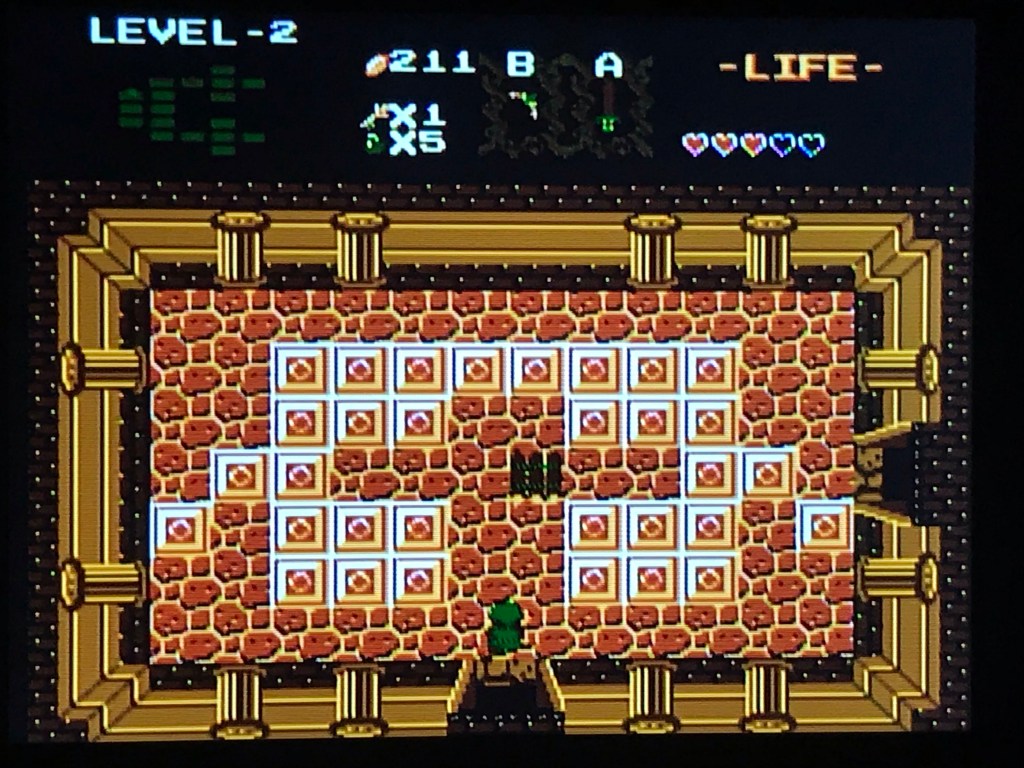
Proceeding down from the patraquad sandpit instead of up, there are some familiar monster rooms with block switches. As per usual, they gotta be cleaned out before the switches can be pushed. One of them is filled with pols voice which die from a single strike but turn into peahats. In the peahat-filled side-scrolling staircases, it’s easy to get complacent. But the directional mechanics aren’t the same in the side-scroll basements which, combined with misplaced sense of sword security, can trick you into taking some hits. So don’t be too eager to stop relying on the boomerang.

So our vigilance is subtly tested during our immediate sense of relief after getting the sword. We also run into a blue lynel for the first time in the game which is a frustrating pain the ass and you had better hope you’re at full health for the sword beam. Compliments to GameMakr24 for creating a test of caution and vigilance reminiscent of Bloodborne.

It soon becomes apparent that, once embarking on the path south of the sandpit, doors lock behind you with no obvious floor switches. This happens as you move down, to the left and slightly upward, like a one-way spiral pattern. With persistence, you will be able to return to an apparently empty room at the beginning of the left turn.

Now…remember the invisible doorways from the first quest? That is the dungeon exit. And this is the first invisible doorway I’ve encountered in the second quest, so it felt like an understated blindside. It really does pay not to loose track of the possible ways of detecting hidden paths, even if one hasn’t worked in a while.

Since Outlands banks on crisscrossing between dungeons, I was tempted to do some back-tracking.

Upon our return to level U- there is a room with a staircase behind a cubic block. It is guarded by peahats, stalfos and yellow tektites, all of which need to be killed before the block switch will move.

A key hallmark of this rom hack is that some of the hit boxes are mixed and matched with other sprites. Peahats have passed their burden of annoyance on to the keese and are now the only monsters that can be killed with the boomerang. The stalfos could be dispatched by cornering them against the wall with a candle or bombs. The tektites, in Outlands, are invulnerable to the candle and the bombs.

Before I finally tracked down the sword, that screen was maddening. Two variety of monsters vulnerable to bombs and the candle and one that isn’t. So guess what I did as soon as I managed to escape from T?

The sword got the tektites out of the way but holy crap does it take some doing. Rather like the first quest…things tend to go smoother if you keep your sword beam as long as possible. As it is also clear that the second quest will play fair as harshly as possible, there is absolutely no reason not to cheese as much as you can. If a room is filled with monsters, hide in a doorway and step out every now and then to throw a sword beam into the fray. Gathered hundreds of rupees? Stop by a Goron shop whenever you can and buy keys whenever you have just over two hundred. As soon as you explore a little bit of level O, it becomes clear that moblin meat is frequently demanded and only occasionally available. So stockpile every resource you possibly can.

No fucks given ^^

Back in U, there are successive rooms with cloaked, firey mages, the ones that turn into disembodied fire sprites when you kill one of their colony members. I know the digital version of the instruction manual has a name for them. They’re basically Subrosian mages that gather together into a colony organism. And there is one after another in a few successive rooms, until you get to one with just a fire sprite and no clear hit box locus. Time to put a feather in that and move on, for now.

Not so far from U is level D, which can be unveiled with the ocarina, which I’ve somehow overlooked this whole time.

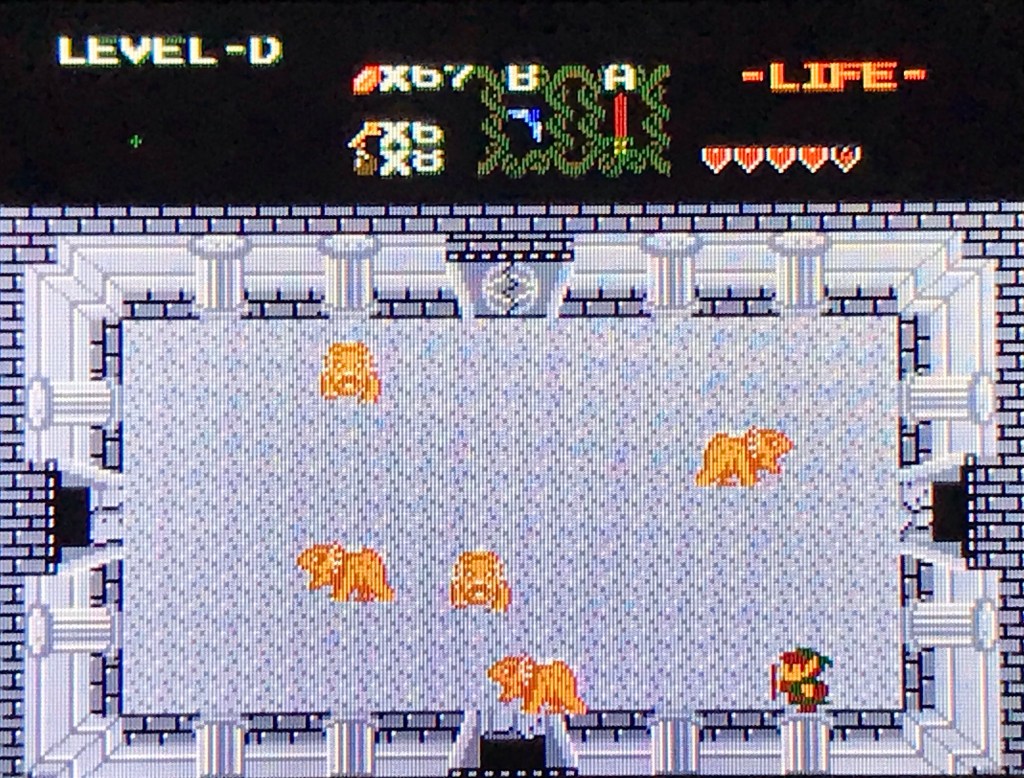
This, as implied by the dodongos, is a bomb-centric dungeon. It is also filled with a lot of monsters that have been bosses and mini bosses in the past. Like, in nearly every other room. This dungeon also has more meat which I promptly ran back to O with. Since D has its own hungry moblin…I was a little worried about…going down a path of no return. So far, I don’t think I have…but holy crap does O have a lot of hungry moblins.

Between O and D, Princess Zelda increases the bomb bag capacity by four in each of them. Once you figure out the reciprocal relationship between both dungeons, it’s pretty easy to release both of their Tetrarch Fairies…which seems to effect the ocarina.

Maybe? ‘Cause afterward, the ocarina can warp to different locations. My working hypothesis for now is that each Tetrarch Fairy unlocks a new location, with the lake near the respawn point as a kind of home base. It seems likely: I can’t remember an exact before and after point when the ocarina began warping during the first quest. Only that it was later in the game, which suggests that the number of fairies released has something to do with it. Not to mention, the flute in the original LoZ warped to each completed dungeon.

So. Because of the liberated Tetrarch Fairies or whatever the reason might be…we now have access to the landmass that was uncovered by the raft in the first quest. It’s only at this point that the second quest feels fully shod of the helplessness it begins with. While everything except the overworld is different, it now feels like the mobility of the first quest is largely regained.

With a little bit of digging, the Goron shop with the bow and arrow can be found, along with the Gerudo with Bagu’s letter. You’ll probably get robbed multiple times in other grottos you expose while looking for it…but it’s there. Now, then: I seem to remember a boss monster with one eye back in the U dungeon…

Part 3

This is my review of the first quest

Final Fantasy VII for the NES! (spoiler review)

After the example of the famous Chinese NES bootleg, this version was made to be a closer reflection of the PS1 original. These adaptations were made by Lugia2009 with patching and translation support from Lindblum, who also provided the English translation for the first Chinese version.

The 2005 Chinese “Famiclone” is widely credited to Shenzhen Nanjing Technology, which tempts me to assume that the game engine is original. There are however unmistakable resemblances to the first three Final Fantasy games, including reused assets. For the most part, it plays like an early FF as well. A notable improvement is that your party has armor, weapons and materia from the very beginning, which I’m happy with since I’ve recently dealt with FF1’s initial grinding slog.

Of course, when I say materia, what I mean is magic that works the same way as the spells you learn in shops in FF1. Each party member has a single piece of materia when they join you and each one will grow its own roster of spells as you accumulate AP. Each party member can only equip a single materia at a time. Perhaps that was the best way to reconcile the materia system with the early FF scaffolds- simply integrate it into the existing equipment mechanic. It also simplifies strategy- even streamlines it.

To an extent, anyway. It gives each party member a distinct function. This comes through in the mid to late stages of the game when more healing spells are likely to develop (excluding Aerith’s Light materia- the only one with healing magic enabled from the beginning). The majority of your strategic freedom concerns elemental affinities, which is accommodated by the ability to equip and unequip materia in your inventory mid-battle.

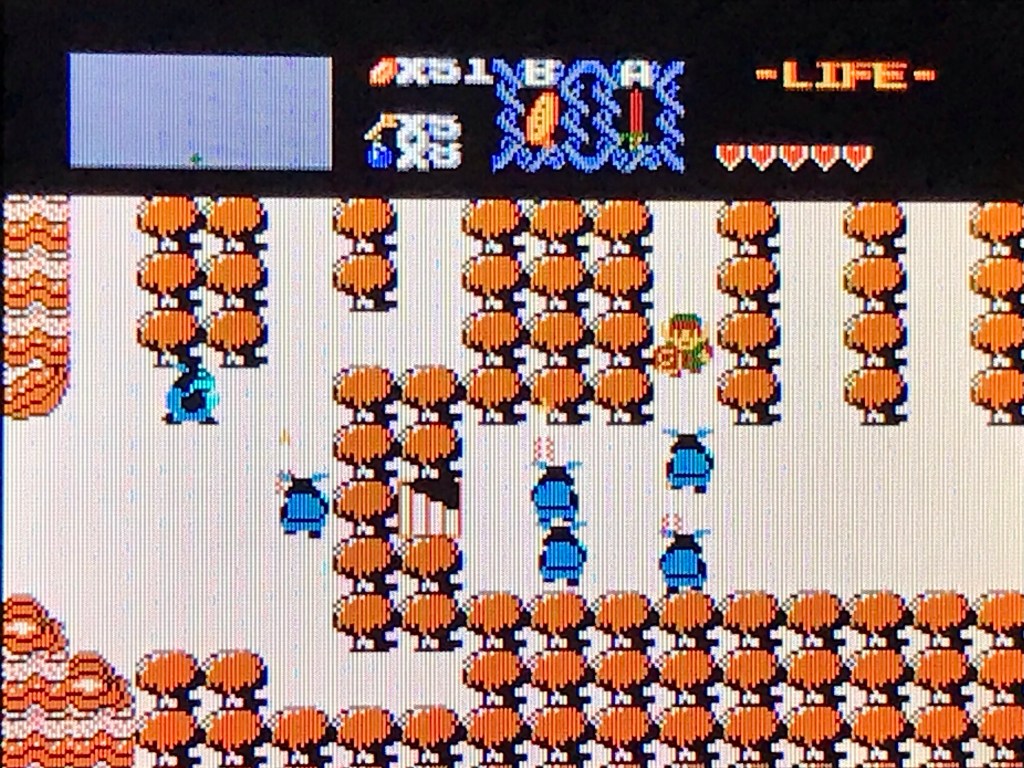
On the other hand…elemental affinities are infuriatingly difficult to keep track of. Especially since the whole range of random encounter monsters could potentially show up at any point. Like in the image above- you can run into Christopher and Tonberries and stuff as early as the bombing mission at the start of the game. Sometimes there are vague encounter patterns, but you could potentially run into any monster anywhere. Some reasonable consistency is still maintained by how tough they are, though, relative to location and progression route.

This rom-hack retains a few of the base game’s sudden difficulty spikes but, fortunately, not all of them. In an NES format it would be maddening.

After the unpredictability of the monster encounters, the next biggest combat annoyance is the scarcity of group healing magic. Even without Aerith, you’ll probably end up having one of your party members carrying her Light materia. Then again, you could simply cough up for a ton of group healing items, depending on whether you prefer to rely on magic points or money. The former can increase its max limit with usage and regular stops at “magic shops.”

Which brings us to another key mechanic change- materia and weapon enhancement. Your character builds will hinge on two point values: conventional “grinding” by winning battles and the frequency with which you use both weapon and magic.

EXP, of course, raises your level and therefore stats, etc. AP is accumulated every time you use a weapon or a materia-based spell. When you reach a given maximum limit, you’ll need to stop at either a weapon or materia enhancement station to move the ball forward. Neglecting this can make you feel extremely naked and challenged early on so luckily it doesn’t take long to put it together.

Stat + items are also dropped way more frequently than they were in the base game, which is interesting. 4-8Productions, on YouTube, has a video about the only non-finite source of stat+ items: using the morph materia on any monster in the crashed Gelnika. This is, naturally, a huge pain in the ass because that means whittling down a ton of really strong monsters to roughly below 10 HP so the morph ability can knock them below 0. However, if you’re patient and persistent enough, you can unlock a HUGE work-around the leveling system. (Yes I’ve done this and yes it’s every bit as grueling as it sounds)

This can either be good or bad. Good because it enables more character build freedom or bad because it makes a group of PCs that feel kinda same-y even less unique. As much of a fanatical Final Fantasy VII fan girl as I am, I still can’t help noticing that the combat system lurched between stilted and fluid to the point of emptiness. In order to notice and take interest in the subtleties of FFVII’s character build avenues, you would almost certainly need to like the story and the fictional world enough to pay close attention. While I’m one of those people, it’s still kinda sad that the character build experimentation was not more accessible.

Since this is an 8-bit, NES demake of Final Fantasy VII, it is necessarily shorter which means less time to stop and smell the mako. Which means the finer points of gameplay need to carry more weight. Perhaps the frequent stat+ item drops from monsters were meant to add an extra layer of build variability. This, like healing magic from non-Light materia, will likely be at its most noticeable near the end. Chiefly because you’ll have the ability to travel between the different land masses and observe which stat + items are dropped where.

Essentially, the progression route follows the original as closely as it can. Some of the music, early on, is a little tinny, but evens out once Cloud makes it to the Seventh Heaven. The chip-tuney version of Lurking In The Darkness was a pleasant and charming surprise, especially since it gets used in a few more dungeons. Those Who Fight Further was converted nicely which matters- in graphically simple turn-based RPGs, music carries a lot of weight.

As per the necessary shortening, certain musical cues are adjusted. During Cloud’s brief dream dialogue before waking up in Aerith’s flower bed, I was surprised to hear Listen to the Cries of the Planet (the music from the Forgotten Capital in the original game). Reunion is heard for the first time inside Gaia’s Cliff, which I appreciated. I realize that Reunion is basically Aerith’s Theme with a lower, mysterious-sounding key change. But I always thought it was unfairly overlooked.

One interesting consequence of the shortening was a new presentation of Cloud’s mental struggles. We simply hang out at the Inn room in Kalm as Cloud tells everyone. No actual flashback. Which means, when the party gets to Nibelheim, the player is seeing it for the first time. Unless you hang out nearby for the grinding, you won’t see it again until the illusion just outside of the Northern Crater. It’s a neat way to build tension; a series of small, gradual reveals that create questions about why Cloud told things the way he did.

Obviously there are far less side quests and stuff like Wall Market are pretty linear in comparison. I noticed some collision detection oddities on the world map (which, mechanically, functions no different from anywhere else) which made me wonder. I’ve been playing through the second quest on the Challenge Games Legend of Zelda rom hack, so I have been doing some compulsive wall-testing lately.

Maybe the Zelda hack is making me obsessive…but after I found a short length of mountain you can walk over in the Icicle area, I immediately doubled back and started testing other terrain barriers. Particularly around Wutai and the area between the Mythril Mines and the place where Fort Condor is in the original. You can see little entrances under mountain ranges and house sprites in inaccessible areas.

Like…you can see the entrance to the cave with the old miner who gives you the mythril key item in the original (to be traded for Aerith’s Great Gospel limit break). If you explore in the northern oceans, you can see a house that looks like it might be the home of the Chocobo Sage. On the southwestern continent, you can get a view of a circular pond collected from a waterfall that then feeds into a lake, like Lucrecia’s hideout.

Then again, the moogle construction site of Wutai was obviously there just to…pay tribute to the original and add a bit of cute, aesthetic consistency. Sort of a wink and a nod saying “Yeah, we get it, it should be there, but what do you expect? It ain’t like we got three discs!” Maybe the miner’s cave and the Chocobo Sage’s house are decorative, as well.

In an objective and qualitative assessment, this is equivalent to a streamlined NES-era Final Fantasy. Other than this one, I’ve played some of the very first FF and the very beginning of the second. This reimagining of FFVII has an intuitive and accessible combat system and some simple “high score” rewards that let you enhance your weapons and materia. The adaptation of the soundtrack from the original also adds to its stylistic distinction from other NES Final Fantasy games. But this second iteration of NES Final Fantasy VII doesn’t exactly “push boundaries.”

But for FFVII fans who also like retro gaming, this game is rather more than the sum of its 8 bits. Also like the original Final Fantasy VII, the storytelling is the main distinction here. The portrayal of Cloud’s background is significantly altered, as is the date with Aerith in the Gold Saucer. The location within the Northern Crater where Sephiroth’s original body is located, right next to Sapphire, Ultima and Diamond WEAPONs, is named “The Mako Tree” and the Prelude music is heard there, like the crystal chambers in FFIV and FFV. Since the original FFVII was such a huge tone shift from all others before it, I was both bemused and charmed to see this thematic tie-in with the older, “swords and sorcery” games.

The “tree” part is also an interesting touch. Especially given the shortening of Sephiroth’s name during combat. I know it’s an NES remake which means that menu commands, item names, monster names etc. get shortened sometimes, what with the limited information storage. But when you name the antechamber of Sephiroth’s stronghold “The Mako Tree” and you drop the “h” from the end of his name…it kinda puts the whole Tree of Life symbolism closer to the foreground. Maybe it’s not the biggest deal in the world, but I think it’s cool.

Zelda: Outlands +Q (part 1)

Meat outside of the floor compartment. What would Dracula say D:

Since I’m playing through the second quest, I’m gonna exercise zero restraint on spoilers.

The first moments of quest one can be a little intimidating. But a modest amount of exploration will reveal that your sword is sitting there for the taking in the first dungeon. After that, a little lateral thinking will set you straight on how this rom hack differs from the original Legend of Zelda: run back and forth between dungeons, the “One way!” teleportation caves, etc.

Second time around, though…after the “New Adventure Awaits!” notice when you bump off the Thunderbird…it’s, uh…pretty tough.

Before now I never really stopped to consider what a security blanket the sword actually is, in a Zelda game. Being without it is pretty damn inconvenient, but on top of having to rely on bombs, the candle and the boomerang to kill and stun monsters…you just feel naked without it.

So you find ways to compensate. I stumbled across a cave with a moblin giving away rupees, early on. From there, the question is what to buy with the most possible utility, since no sword means you won’t be milking enemies for item drops as frequently as the first time around. Like an idiot, I went with bombs instead of the candle. Both the candle and the bombs can harm enemies and unlock hidden paths, but they also have different strengths and weaknesses. The bombs do more damage and the candle is easily replenished between screens. Coming and going from the screen next door to renew the candle is less of a test of patience than spending twenty rupees every time you run out of bombs.

Get ready for lots of THIS shit

Luckily, one of the early dungeons offers a solution: like-likes, who probably have the best item drops out of any monster you’ll have access to in the very beginning. Lots of money and bombs. With persistence and luck, you’ll be able to farm enough rupees for both the first boomerang and whichever of the two initial purchases you didn’t go with the first time around.

After that point…you’ll probably notice that the dungeons have letters instead of numbers. Meaning that the progression route will be even less linear than last time, perhaps? Less linear than the first play through that was distinguished largely by it’s non-linearity?

Like linearity itself, this has it’s own set of possibilities and limitations. We know, from our first quest, that an item obtained in one dungeon may unlock an obstacle in another, or elsewhere in the Outlands. Therefore, finding yourself with bombs, the candle, one boomerang or another and some occasional meat with no path forward in the “first” two dungeons is not a death sentence. It just means you have to keep looking.

As per the original Legend of Zelda and our first quest in the Outlands, the typical methods of revealing hidden paths include: pushing rocks, bombing walls, burning bushes, crawling with the ladder, sailing on the raft and playing the ocarina. That last part is an addition from GameMakr24 that I’m really happy with. It contributes to the exploration of what the lore of Ocarina of Time would be like if it were present in the first game.

So we dart all over burning things, blowing stuff up, pushing rocks and playing the ocarina. This process is narrowed by my lack of a power bracelet: only the plain, cubic blocks and the headstones can be pushed right now. After several failed bombings (hehe…sorry, I couldn’t resist) I remembered a pattern from the first quest: lots of breakable walls and very few flammable bushes. Maybe the distribution is reversed in the second quest?

Maybe a little less of a reversal, as it turns out. While breakable walls are in hiding so far, flammable bushes are only slightly more numerous…and they usually only have moblins who pay you to keep the secrets of their woodsy little holes.

(I know they’re called Goriyas in the NES games…but it’s hard for me to shake the resemblance they have to moblins. Like how the Wizzrobes look like Subrosians from Oracle of Seasons or potion vendors from A Link to the Past. My mind just seems to…have it’s own preference. And it’s not like we don’t call the armored foes Darknuts even though Nintendo canonically named them Iron Knuckles)

Rupees are perfectly good but they don’t really help, if you already have some of the early equipment. Excluding keys for dungeons, of course. Still haven’t found any amazing Goron shops with bows and stuff yet, though, so rupees aren’t high on my list. Given how open LoZ: Outlands is, though, I wouldn’t be surprised if there is a way to access it even at this point.

I found the step ladder in dungeon O. This opens up the territory beyond streams, which shows promise at first. If you can scrape together the rupees, you can pay a Subrosian for a hint. The cute, robed sorcerer makes it sound like the cemetery puzzle in the lower lefthand corner of the map can be solved in the same way it was in quest one. Until I realize that I need the power bracelet to see that through…

…X_x…

The systematic method can be seriously frustrating if you overthink things. Especially if you haven’t played the original Legend of Zelda in a while like me. See, earlier, when you get the ocarina from Zelda, she tells you to look for a hidden path in the Graveyard of Serenity. And you happen to have the step ladder which lets you access the lower-left cemetery. So…it…it almost starts to feel like the game isn’t playing fair…

Then I took a break and realized two, blatantly obvious things I’ve overlooked: the Graveyard of Serenity refers to a specific graveyard and the first quest had three of them. We’ve ruled out one. The other is on the other side of some water. And in the last paragraph, where and when did I say Zelda gives you the hint?

Oh. Right. When she gives you the enchanted instrument that’s used for revealing paths and warping. Thing is…I sorta wrote that off for the same reason I did the flammable bushes: it only ever seemed to unlock rupee moblins and a heart container. And the cemeteries are flooded with ghostly floor masters that I just can’t kill yet.

Back when I was trying to set all the plant life I see on fire, I usually had to clear the screen of moblins and scrubs before I could start testing the bushes one by one. And I didn’t want to keep spending money on bombs so I would come and go from the screen to keep reusing the candle. That requires waiting for them to get close to a wall so the fire can continue to burn them after it knocks them backward. And, if you want to spare yourself as many screen to screen refreshes as you can, you should probably camp out near a wall with the boomerang so you could stun and burn a whole group.

The lady said it was the Graveyard of Serenity, though, so off we go. And that means the floor master ghosts. Which, presumably, means a whole lot of dodging. And the floor master ghosts spawn every time you touch a tombstone. It’s a risk…but not impossible.

This was almost too much for me. Guess what’s in there? A rupee moblin. Just a moblin with more money. *eye twitches*

But did Zelda say to push aside a tombstone? And as much of a bust as the ocarina had been so far…it has unlocked secret paths in places without water before.

So. Not only is the path to level T unveiled but…

Oh Zelda. My orange-headed savior. I’ve never been happier to see you. At long freaking last, my A button is no longer useless!

I mean, yeah, other stuff happened before I got the sword but I had to get it out of my system

Onward to part 2

Also, in case you wanna see my review of the first quest

Legend of Zelda Challenge: Outlands (spoilers)

The Legend of Zelda: Outlands is a rom hack of the original 1986 The Legend of Zelda by Challenge Games that dates back to May 15, 2001. Chronologically, this game is situated as a hypothetical “Zelda 3” that immediately follows Zelda II: The Adventure of Link. It also uses details from the Ninetendo 64 Zelda games, such as multiple ocarina songs, Gorons, the Gerudo and the Kokiri. GameMakr24, the author of this hack, also carefully preserved familiar sights like the black rooms with white dialogue and familiar enemy AI, spawning and spatial design. These familiar touches combined with the late nineties ideas add up to a cool “what if” scenario, as if the world of Ocarina of Time existed a decade earlier.

Immediately after the events of Zelda II, the Thunderbird has apparently survived and has discovered the location of the Triforce of Power in the Outlands beyond Hyrule. The Thunderbird imprisoned the Tetrarch Fairies that stand guard over this third of the Triforce and now must be released by Link in order to get it back.

Upon release, rare physical cartridges of this rom hack were produced, packaged like the original with a printed world map. While I would love to have one of these maps simply for its raw coolness, I instead played it the way so many of us played the original years ago: completely dependent on trial and error.

I WISH I actually had this

This being a rom hack of the 1986 Zelda, it naturally has the same overhead design and nearly all of the same textures and sprites along with some from Zelda II. Sometimes, basic movements, hit boxes and attacks used by a monster from the prior games will be dressed up in a new sprite. The AI and hit boxes of peahats and keese are swapped with each other. In an early dungeon there is a mini boss that moves back and forth and breathes three fireballs at a time, like the dragon from the first game, but is now a giant skeleton.

A lot about this game feels quite familiar, though, in spite of these differences. Like the first game, you start completely naked: the opening text crawl tells you nothing about where to go and only the vaguest hint of what to do. You don’t even have a sword, but at least the first Zelda put an old man in a cave directly in front of you to meet that need. This time, you won’t have a sword until you get to the first dungeon, and guess who gives it to you:

Princess Zelda herself is a constant companion, helping out in almost every dungeon

A key difference between this rom hack and many official Zelda games is the necessity of going back and forth between dungeons before and after releasing the Tetrarch Fairies. In level 2, there is a moblin that refuses to let you pass to the next room unless you feed him some meat (Kinda like in the first Zelda, remember? “Grumble, grumble…”?). This meat, however, is in an underground side-scrolling area in level 3, perpetuating Dracula’s tradition of storing meat in secret stone compartments.

Requires meat
One meat later

Having given the moblin the meat, you will go on to discover a raft that will carry you to a water-isolated place on the map where, for enough rupees, you can buy a Kokiri sword, a Goron shield, a bow and some arrows. The bow and arrows turn out to be extremely useful in dungeon 3- nothing else can kill the tektites efficiently that early in the game.

The bow is also necessary to kill the one-eyed blobby thing in dungeon 4. After that, the door to the left unlocks and Zelda will give you the ocarina. This is necessary to get the step ladder from dungeon one, which is guarded by a monster that resembles digdogger from the first game and, with the ocarina, can be done away with in a similar way. The door at the bottom of the screen will open up and the step ladder is all yours.

The step ladder, meanwhile, allows you to cross gaps that are roughly the size of a sprite which you need for multiple dungeons and overworld navigation.

Around the time you have secured 4-5 Tetrarch Fairies, you will probably notice that the Gerudos usually do one of two things- steal your money and hoard heart containers. On the continent accessible with the raft, there is a cave with a Gerudo who will give you The Staff Of Byrna once you have twelve heart containers. As she stands guard she says that she can only give the staff to “the hero”.

The staff itself, which deals damage, doesn’t expend rupees like the bow and doesn’t require full health like the sword beam, is an all-purpose reliable range weapon. So long as all you want to do is attack- the boomerang and the bow can collect objects for you and you will definitely want to gather stuff from a distance in this game. The Staff of Byrna also fires the slowest projectiles.

Since the staff doesn’t “cost” anything to fire, you may find yourself using it a lot against enemies that deal range damage and are too unapproachable for melee combat. And the enemies most likely to fit that description usually turn out to be the hostile Subrosians/wizards/whatever.

(after googling I learned that they are called Wizzrobes but I’ve been thinking of them as potion vendors from ALttP or Subrosians for too long already)

Little details like that can get you to speculate on the finer story details. Is there a reason why the Gerudos have the weapon that you are most likely to use against the wizards/Subrosians? You usually find the Subrosians/wizards close to the ninth dungeon that has the Spectacle Rock music from the original LoZ. What exactly is the nature of the relationship between the Gerudos and the Subrosian-thingie-people and how does it connect to what’s going on with the Thunderbird and the Tetrarch Fairies? What about the Gerudos gathering the objects (heart containers) that you need to collect for the staff? I like stuff like that, that’s organized enough to imply story threads.

Classic Zelda weirdness near the end

Rather like the original, the first play-through only gets you half of the content of the game and that’s where I’m at right now. This is basically a custom edit of the first Zelda game but it feels weirdly authentic. The final dungeon and final boss, in particular, really made me feel like I’m playing an actual “lost” Zelda game. In fact, more than once, it made me feel the same way I felt when I played Ocarina of Time as a preteen.

On to the second quest!

Little Samson

Today I was treated to a chance to play a special NES rarity called Little Samson. Why this game didn’t blow up into a franchise is beyond me since it has got to be one of the most well-designed NES games I’ve ever played.

I feel like I should qualify this a little: by “well-designed” I mean neatly designed. Neatness is not the only measure of good design. The early Mega Man games, for example, do not take the time to carefully and systematically flesh-out concepts in a way that lets you easily build on one after another. Sequential concept elaboration is simply a design convention and there are other possible approaches.

As I was playing Little Samson with my significant other (whose video game library is gloriously encyclopedic) I had a thought that captured the nature of this distinction: if you want something with teeth right now, put in Mega Man 3 and start with either the Shadow Man or the Gemini Man stage. And yes, while most Mega Man games have a “rock paper scissors” affinity pattern that usually leaves a rather sequential path to quick victory, you have the choice of starting in one of several different levels.

Most people my age though, who didn’t have the benefit of guides back in the early nineties, relied heavily on trial and error. Which meant you would deduce things in a stage you were in no way prepared for and apply them to the platforming in other stages. Eventually these deductions would get you acclimated enough to the platforming and general level design that the easiest possible stage to beat through platforming alone would become apparent.

A less clunky way of putting this is that Mega Man games typically have non-linear design, which places a greater emphasis on trial and error and deduction. Little Samson, meanwhile, has a linear design.

The teeth come eventually, though. The opening stages are little more than obstacle courses that teach you the rudiments of handling the four player characters. These basically function as a tutorial that shows you the basic uses for each playable character’s specialized abilities.

So rather than confronting you directly with multiple layers of difficulty, like Mega Man, the ways to approach different obstacles are broken down for you in the beginning. It is up to you to determine where and how to use these strategies. Later, when the “real campaign” starts, you will normally find that the following stages will accommodate one of the player characters more than the others. This is the period bracketed between the first and second boss fights.

While the second fight is pretty hard, you may begin to be a little dismayed at what appears to be a flaw in the neatness of the design: the dragon pc will get you most of the way through the first two bosses. Which could tempt you to think that the dragon might be the all-purpose boss-killer.

Boss number three will immediately disabuse you of this, to say nothing of the third stage levels requiring more pc rotation than anything beforehand, with the dragon and the mouse being the most useful for the platforming and the golem being useful for some annoyingly persistent enemies. And for nothing else: the golem can barely platform at all. Then you fight a boss that’s unapproachable for any pc except the mouse with two hit points.

The third stage and the third boss are also a great opportunity to address how original this game looks. In fact, I don’t know of any other NES game that looks quite like it. Your main pc, Little Samson himself, reminds me of the child version of Son Goku from Dragon Ball. The sorcerer in the opening cut-scene also reminded me of Dalton from Chrono Trigger. What do Chrono Trigger and Dragon Ball have in common? Akira Toriyama!

(Now I’m kinda torn…does he look more like Dalton or Piccolo…?)

Turns out, the art was done by someone named Yuko Nakamura, for whom I can find no other credits. Which is unfortunate because there are some delightfully wild style variations.

The figures in the palace at the beginning, with their robes and headdresses, look almost Babylonian. Rather like your Toriyama-esque main character, there are some sprites that have a cutesy chibi vibe, like the bubble-breathing diosaurs. The pink dragon pc also reminds me of Icarus, the dragon Gohan adopted in Dragon Ball Z: The Tree Of Might and the different villainous sorcerers all sort of look like Piccolo. The second boss looks like a cross between a dinosaur and a Giger-style xenomorph. A later boss transforms into a huge dragon that takes up most of the screen. Later levels have large purple cartoon hands reaching out of the ground along with stone corridors with Egyptian hieroglyphics.

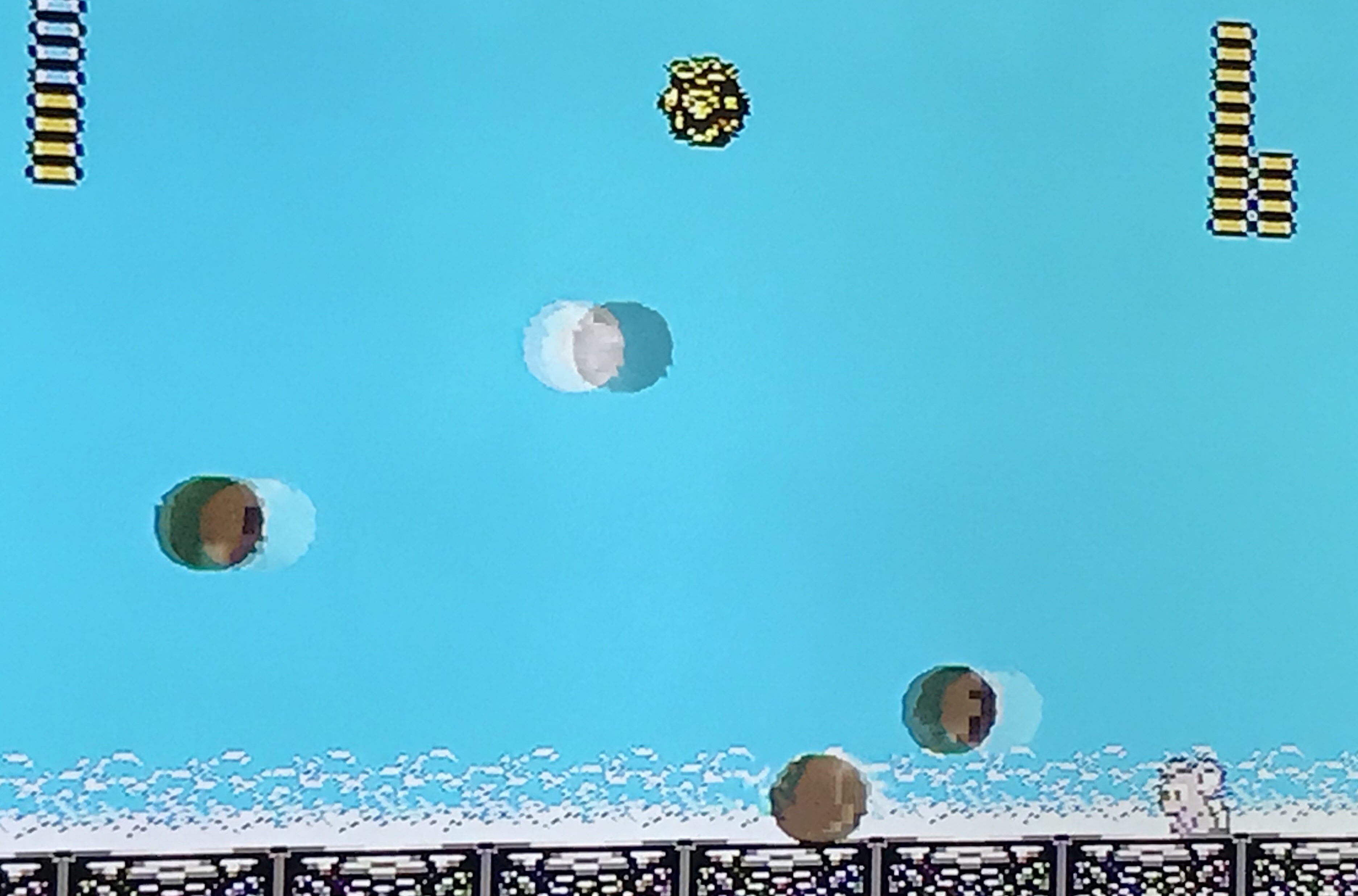
Against any expectation the prior levels and creatures may have furnished, the third stage either looks like an alien planet or some sort of cutesy Mordor. Big’ol starscape in the background with vanishing platforms that either look like chemicals or energy with glowing heads that shoot projectiles. And when the long vertical wall platforms become more common you really tend to rely on the mouse pc.

So you’re doing precise platforming while you’re dodging energy projectiles with a mouse with a standard HP limit of two hits. With the same mouse, you also have to win a boss fight with a sorcerer made of floating demonic skulls with lil bombs like the kind Samus Aran drops with her morph ball. On an alien planet. I did say the teeth come eventually.

Which is another interesting gameplay elaboration. All pcs have different max HP limits. My SO and I were utilizing a quick-save feature that wasn’t in the original game (don’t ask ’cause I ain’t telling :p ). So the quick save may have made this seem like more of a feature than it was meant to be, but I noticed that I was trying to anticipate future pc rotations.

If I noticed that I was relying a lot on the mouse with two HP, for example, I would collect as many HP buffing power-ups as I could so my mouse wouldn’t be a one hit kill. I really started hoarding the HP buffs in stage two when I realized the blue bastard boss fight is best approached with the dragon and therefore needed that pc to have a higher max HP than is standard.

This feature also holds true for other power-ups as well. Every pc has its own unique health bar which means they all need to be healed individually. This calculation is deepened by the fact that you don’t simply lose the pc and keep playing with others when they hit zero: you die if you reach zero in any form. So you need to be thinking of which pc will receive what power-up when you find it.

The music also changes based on what pc you’re using which, at times, can be a lil bit annoying. Which is too bad since the music is pretty good in general.

From the opening tutorials, you learn that the golem, mouse and dragon are the most specialized playable characters with Little Samson being “a jack of all trades, master of nothing”. It’s normal to use Samson early in a stage while you’re assessing which specialization(s) will suit the stage best. Which means you spend a lot of time listening to Samson’s music, and that can be pretty grating. I really prefer a full immersion experience with music and sound and everything happening when it’s supposed to, but while I was playing the third stage I actually muted the game.

That was kind of a disappointing time for that to set in since so many design choices really come together beautifully in the third stage. Not that it’s anything more than an annoyance. If it gets to you that much you can just switch characters. And anyway the final level has its own music regardless of which pc you choose.

Speaking of the last level, Little Samson has a final boss fight that will make you hopelessly dependent on your ability to memorize jumping patterns with the character with the least HP because they happen to deal the most damage (unless you’ve collected buffs). In a few different puzzles and situations you can rotate transformations for alternate dodging and attacking but not this time.

(THIS fucker X_X)

On the other hand. It is also possible to use different characters as meat shields and adroitly switch back to the mouse in time to spam with your morph ball bombs. That’s what my SO did after I spent several minutes fixating on jumping, which actually worked like a dream.

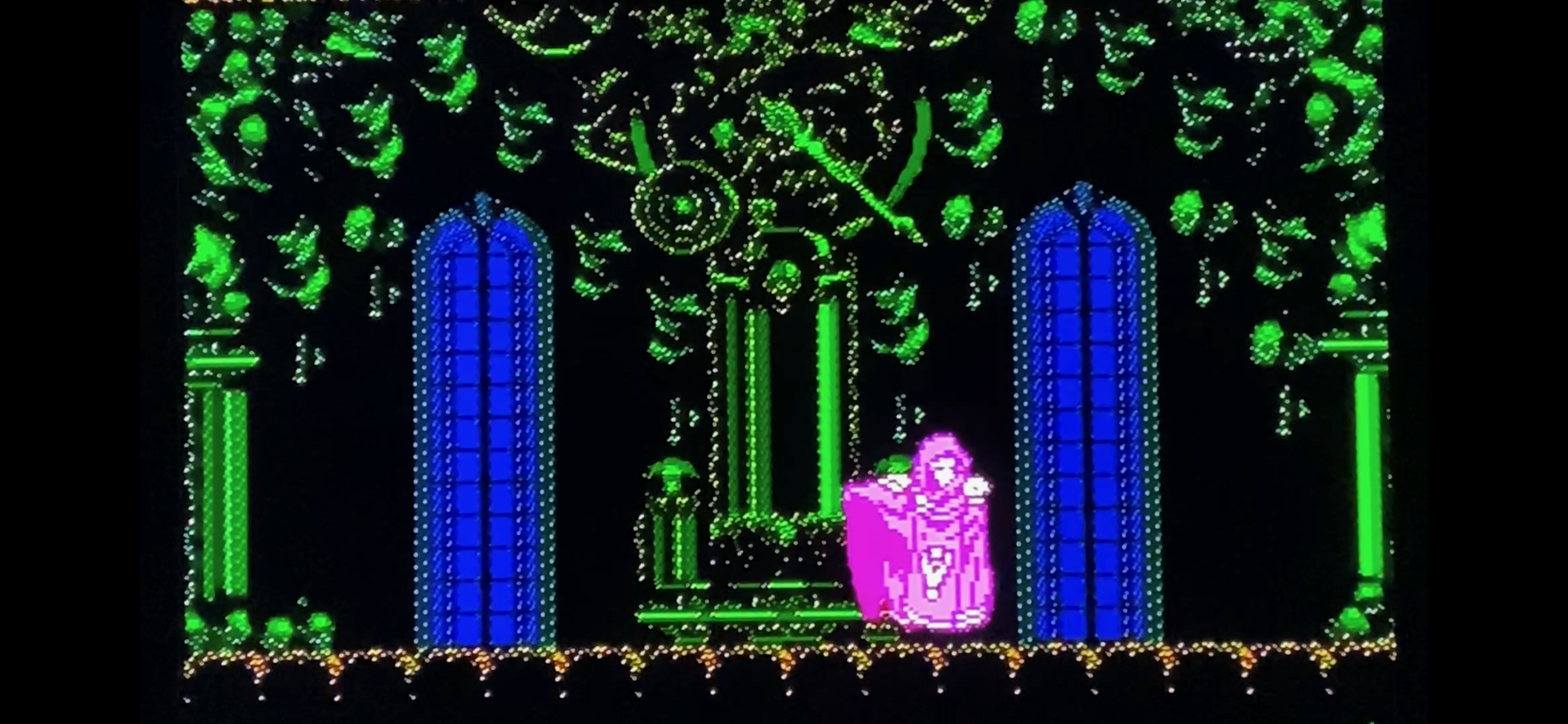
(Then we got a nice lil cliffhanger going on post-credits with this guy flashing on his throne after the four sorcerers wink out of existence)

After we beat the game, my partner showed me a bunch of images to use in this blog as well as some footage of our play through. On one recording we could hear my voice saying “this is simultaneously one of the cutest, weirdest and hardest things I’ve ever played.”

Which is an assessment that I stand by. The difficulty is pitch perfect, it plays fair and it combines a handful of influences from Mega Man to Mario while having a character that’s all it’s own. I remember, when I played the third Mario game, I was in disbelief that it was actually available for the NES- it looked like it should be a SNES game. Little Samson‘s graphics are nearly at the same level of sophistication, especially with cool little gimmicks here and there like rotating sprites. I’m gonna be jonesing on how cool this is for awhile and I’m still surprised that this game didn’t pick up the momentum that it should have (yeah I know it was released just as the SNES was getting off the ground but it’s not fair D: )