In a recent interview for the Final Fantasy VII Remake Ultimania Guide, Tetsuya Nomura dropped some huge lore bombs. Among them was the very strong hint that the Whisper bosses at the end are Kadaj, Loz and Yazoo from Advent Children. The descriptions revealed by the assess materia, for all three, state that they are defending their timeline.
Later, the party catches a glimpse of events from Advent Children and Nanaki says “this is what will happen if we fail here today”.
Two paths that fork from the point of departure at the end of FFVIIR are discussed. One openly, the other by implication. Advent Children was a sequel to the original Final Fantasy VII. The path of the original that proceeds into Advent Children is what Nanaki said would happen if they “failed”. The path revealed by implication is what the party embarks on after they appear not to fail.
Kadaj, Loz and Yazoo are protecting the timeline that shaped them as they were in Advent Children. Three of the Whispers at the end are meddlers from outside of the timeline.
What about the giant Whisper Harbinger that looms in the background during that fight? It looks a hell of a lot like Sapphire Weapon. Why would a Weapon be intruding into another timeline?
The planet created the Weapons to defend itself in the event of an existential threat. They were originally created to combat Jenova (according to Ifalna) but so long as Jenova exists in an undead, “viral” state, they can’t go away. The planet will also lash out at any soul that’s been exposed to Jenova as it passes through the Lifestream on its way to its next existence (Geostigma).
It is intuitive to think that a Weapon is attacking another timeline because it poses an existential threat to the planet in its own timeline. Aerith, in her dialogue describing what she knows or has deduced about Sephiroth, says that she thinks that he has good intentions even if his actions are destructive (“he would probably say he would do anything to protect it”, loose paraphrase). Later, after the final boss fight, Sephiroth tells Cloud that he wants him to exist for as long as he himself does.
In the original game, Sephiroth never said or did anything that would suggest he cares about the planet. Nanaki’s remark implied that the timeline of the original FFVII was a worst case scenario, yet in the chronology (which ends with Dirge of Cerberus, if I’m not mistaken) nothing seems to back this up.
If Jenova ever fully corrupted the Lifestream and turned Gaia into a new Meteor, we haven’t seen it yet. Maybe this is a mystery that the Remake series might elucidate in the future.
If Sapphire Weapon is penetrating into a new timeline, it is equally possible that it’s either attacking Jenova or defending the planet in its own timeline. If Jenova ever succeeded in corrupting the Lifestream, though, would the planetary Weapons continue to distinguish between it’s wellbeing and attacking Jenova?
And if the Whispers are pure, spiritual agents of destiny, why do they seem beholden to Sephiroth? Why, at the end of FVIIR, does it seem like both Sephiroth and the Whispers are protecting the same thing?
This theory depends on the ultimate fate of the original timeline. Either Jenova “won” in the end, during some far future event we just haven’t seen, or Jenova was somehow subtly “winning” the whole time. Either way, the Gaia of the original timeline does not seem to exist.
The behavior of the Whisper Harbinger and the three boss Whispers begins to make sense in this situation. Kadaj, Loz and Yazoo have no other existence except for the one that happened in the original timeline. They want to “enforce” the chronology that happened in their own past because it’s the only way to guarantee their existence in a new timeline. Sephiroth, Sephiroth clones and Jenova attempting to shape the events of a separate timeline to conform to their own only makes sense if the world they originated from doesn’t exist any more.
An event like that would also explain why Sephiroth wants to protect Gaia and why Aerith sees him as a threat in spite of that. Jenova is a colony organism that exists by spreading its cells into more bodies. When such a body dies and it’s soul passes into the Lifestream, the essence of Jenova is now mixed up in the planetary transmigration cycle. Jenova exists through “possession”, almost like a demon whose cells can be both spirit and matter. If Jenova “possessed” every body and every soul on Gaia in the original timeline, then the Lifestream itself would be possessed. The Lifestream is the spiritual existence of the planet, so even beings like the Weapons would end up enslaved. (That Sapphire Weapon was originally right next to Sephiroth in the Northern Crater might also be a factor)
If the Gaia in that timeline ceased to exist, though, Jenova would be saddled with a Lifestream with no planet. The existence of both Jenova and Sephiroth would be dependent on that Lifestream, so it makes sense that they would stop at nothing to protect it. If you have a Lifestream with no planet then you would want to find a new one. In a parallel timeline, for instance, within the same planet it came from.
This possibility also clarifies what Nanaki meant when he said “This could very well be her last line of defense, it won’t be easy.” If Jenova would “burn out” a planet while possessing or consuming it, the search for a new planet to move the corrupted Lifestream into would be the last line of defense.
If the Whisper Harbinger actually is a Weapon that (like Kadaj, Loz and Yazoo) originated in a doomed timeline, what about the rest of the Whispers? If the world was destroyed in that timeline and the displaced souls are pushing through to the timeline next door, there’s gotta be more than three. Maybe all visitors from outside your timeline look like Whispers in this fictional world.
I suspect that the Whispers are not agents of destiny but migrating souls desperate to create a timeline that will bring them into existence. That would mean making sure everything happens the same way it did last time. Not a single detail can be out of place because every single detail probably played a role, ala “butterfly effect”. That would also explain things like resurrecting Barret after the Sephiroth clone skewered him- he’s not allowed to die like that because he didn’t the first time around.
This begs another question- the last boss fights in the game imply that Sephiroth and the Whispers are working toward the same end. The whole theory I just unpacked would also support that. However, Sephiroth and Jenova need to shape the neighboring timeline to resemble their own in order to preserve themselves. If the old timeline is recreated in every detail in the new one, though, both universes might end the same way.
I originally published this a few years ago but I decided to take it down for reasons of my own. Now it’s back :3
Please excuse how outdated it is:
As a Native American, I’ve found it hard to have a straightforward way of identifying as an American.
Before I get into a bunch of personal stuff let me clarify what I do not mean.
Clearly, I have no doubt of my legal nationality. That might sound too basic to bear mentioning but we’re all familiar with how idea exchange on the internet works and sometimes basic stuff needs to be clarified.
I am also not claiming to speak for anyone’s experience but my own. My use of the personal pronoun I in that first sentence looks a little clunky to my eyes but I did it anyway. I’ve held onto a few basic assumptions about writing and grammar from college English classes and one of those is that, since your writing is authored by you, there is no need to attribute your own conclusions and chains of reasoning to yourself. Nonetheless, I’m leaving that sentence as “I’ve found it hard” instead of “it is hard” in order to emphasize that I’m only speaking for myself.
(I’ve never broken anything like that down before now, and I’ve definitely been way less careful when talking about books and video games, but I suspect this is a topic where the reasoning behind word choice might be looked at closely)
A third thing that I am not claiming actually segues into the rest of what I wanted to write about: I am not anti-American, although throughout my life I’ve found it hard to be well disposed to America emotionally and morally.
So, getting back to me-
Early in life, like many Native Americans, I learned that the nation my family has historically belonged to had it’s autonomy wiped away for no better reason than that white people wanted their land. Said white people were also guided by a moral force that made land piracy innocent so long as it happened to non-Christians.
If I wanted, I could take this into a bigger argument about the annexation of Native America in general, but as this is a blog entry about my personal feelings I’ll confine my scope to my own heritage and my own thoughts. The history of my ethnic group has a lot in common with what happened to a lot of Native American nations. When rampant disease broke out upon initial contact with white people, a missionary led a handful of us to a place to start a new settlement.
It is documented that this missionary wanted to abolish the rank of chief, largely because our chiefs were believed to be the descendants of divine, supernatural beings. The chiefs were considered representatives of the spiritual world which made them religious authorities. In his letters, he wrote that he intended to replace the authority of the chief with Christianity.
Now, this missionary is justly celebrated in my community as someone with genuine good intentions and a worthy legacy. He wanted the settlement to be an economically and socially self-sufficient community and today he is remembered as one of its essential founders.
But it all came at the price of forfeiting our historical spirituality and replacing it with Christianity. And the movement to the new settlement happened in reaction to rampant disease and economic displacement, which makes the moral framing of this missionary as a great founder really questionable. If someone offers to save you from death and disaster if you do whatever they say, is that person really a hero?
This is a minority opinion among the Natives I grew up around and I’m well aware of it. Once, as a teenager, I attended an anti-suicide event with a handful of other kids from my hometown with family ties to the reservation that the settlement became in the end. A few community leaders chaperoned. One of those adults accompanying us mentioned once that conversion to Christianity was the one undeniably good thing to happen from white contact. Many rural Native communities are strongly Christian as are many rural communities across America. One night, during a summer-camp trip organized by the local Native corporation that I was a part of, a few adults and a few kids decided to assemble a traditional sweat lodge. Many of those participating helped build this and participated in a sweat, while many others refused on the grounds that it was “witchcraft”.
While many in the Native community I grew up in are heavily invested in our traditions, language and culture, Christianity is given priority whenever it clashes with those traditions. The moral sanction that Christianity gave to the American conquest of Native Americans was the main reason why American patriotism was emotionally and morally repugnant for most of my life, to say nothing of the emotional and moral repugnance of Christianity itself.
While, as a thirty year old adult, I am not anti-American, this is not because I think any of these things turned out to be good in the end. Nothing can ever exonerate or justify the erasure of Native American culture and spirituality and nothing can diminish the role the Christian Church played in it.
In spite of that, my distance from being anti-American even extends to being pro-American. This is because, in many substantial ways, America has set important moral and historical standards. The moral elevation of freedom of expression, religious and intellectual pursuit and democracy are all essential steps forward for both the West and the rest of the world. I absolutely believe that the existence of a global standard-bearer for democracy and the steps the Enlightenment helped us take away from monarchical autocracy and religious tyranny is necessary on the world stage.
Make no mistake, like any other huge developed nation, I think America harbors an inevitable degree of confusion and animosity. While there is always a rational-to-irrational spectrum within public opinion, I feel like many sides of many common conversations agree on the right things.
For example, the importance of individual autonomy. In spite of what many Libertarians claim, they are not a besieged minority. Most people in America think the individual is a basic cornerstone of our values and any politician who wants to get elected will need to say so. You could be a corporate Democrat with everything that makes them repugnant, the kind of person that Republicans think of whenever anyone brings up big government or political correctness run-amok and Progressives think of as a Hilary Clinton-style bad guy who gets cuddly with Super PACs and is totally okay going to war with whistle-blowers like Edward Snowdin and Chelsea Manning…and you would still have to at least pay lip-service to the individual. Sorry for the ugly run on sentence, lol
To illustrate this a bit more: my values as a libertarian made me a feminist. For me, feminism has been a logical expansion of the values I had back when I identified more strongly as a libertarian. As far as defending ones right to control their own bodies and govern their lives as freely as possible while not disenfranchising anyone else, feminism has done way more heavy lifting.
I’m not gonna waste my time defending second-wave feminist insanity any more than a self-proclaimed Libertarian will defend Timothy McVeigh. I don’t think any transsexual (such as myself) or anyone who is a sex worker or thinks that sex workers are human could ever get behind second-wave feminism. Those who espoused second-wave feminism were also disturbingly willing to ignore the autonomy of large groups of women and queers: this would happen along the lines of “you’re too saturated with internalized misogyny to be reasoned with”, with transsexual women being especially likely to end up on the receiving end.
With the freak-bin safely out of the way, I feel like the link between feminism and libertarianism is pretty hard to avoid, at least in terms of moral reasoning. No one is wed so much to the sanctity of the individual and self-determination as feminists and libertarians.
(if I seem inconsistent about capitalizing things like proper nouns, it’s because I know there is a difference between those who identify as Libertarian with a capital ‘L’, as a proper political party, like Republican or Democrat, and those who use words like ‘libertarianism’ and ‘feminism’ as generalized categories like ‘liberal’ and ‘conservative’)
What I’m saying is that, a lot of the time, we agree on many of the essential and necessary things even if we disagree on a million other things. Lately, I’ve become less convinced of this.
While I feel like many people are aware that the press has been profit-driven and manipulative in the past, it has never really bothered me as much as it does now. While presidential elections in America have often been a personality competition, I don’t feel like I’ve observed anything like the 2016 election in my lifetime.
Before 2016 I feel like there was this threshold for cynicism, within which was permissible irreverence and a somewhat hopeful spectrum of possibilities for an elected official. Before 2016, if your choice for president made it to office, you might be resigned to the fact that they will play ball with the big money on the other side but still confident that some of things you voted them in for might reasonably happen. Now, I’m not altogether sure if that threshold still exists.
At least a little bit of my doubt began when Donald Trump began his relationship with Alex Jones. A presidential candidate had chosen to validate someone who thinks all mass shootings were false-flag operations carried out by NWO puppet masters to trick America into surrendering its guns. Trump validated a group of people who don’t think mass shootings even exist. So far from introducing a specific side in the debate on gun violence, the American mainstream was now embracing people who are willing to dispute whether one even exists. Perhaps involving disagreement over the nature of reality itself was meant to provide room for a positive view of how an unobtainably expensive border wall will impact our economy.
My doubt grew a little more when anti-SJW internet trolls unanimously fell in line behind Trump. These are people who felt like a hypothetical anecdote from Anita Sarkeesian was the same as an attack on all male gamers and the panic surrounding non-binary individuals. I think, inevitably, the hysteria over genderqueer people within alienated nerd subcultures has some link with the stigma of furries and otherkin. A ton of Anonymous and 4chan groupies had already built something of a subculture over ripping on otherkin and furries and the second someone got confused over the concept of “non-binary” it became an intuitive lightening rod for these people.
I mentioned in my very first entry in this blog that I have, for a few years, anyway, followed Sam Harris’ Waking Up podcast and considered him the last remaining good guy among pop-atheists (I might include Ayaan Hirsi Ali in that as well but she’s not very invested in theism versus atheism). And even Sam Harris mentioned “nude pronouns” as one of the things that alienated people from the left and contributed to the election of Trump, as if it was a clearly insane priority that the left should have known better than to get involved with.
The reason I’m mentioning trolls is that Trump validated a whole movement of people with a ton of anger and no inclination to map that anger onto anything that exists in the real world. Within internet troll culture, ripping on feminism in gaming and gender non-conforming people didn’t beg any further explanation because, within its own culture, it was understood to be supported entirely by malicious humor. After internet trolls were embraced by the alt-right, though, they were empowered by the realization that they were taken seriously without an explanation. Feminism and queers were accepted as illegitimate and threatening on their face and that position could not get called out in public without drawing censure and ridicule.
The generalized dismissal of feminism and queer equality also had a smooth consistency with many men in Trump’s fan base who showed up to rallies wearing t-shirts saying ‘grab America by the p****y’. The whole ‘p***y grabbing’ buzz phrase evolved from a sexual abuse allegation. Not infidelity, not being a closeted gay or bisexual, not for being a closeted kinkster or any number of morally innocuous (in my opinion) things that politicians have been discredited for in the past. The allegations were about sexual assault. Soo…within mainstream right wing culture, the people who claim to support individual autonomy no matter what, up to the point that they think you should be able to shoot trespassers on your property…these people, so many of whom being self-proclaimed Libertarians, have ceased to consider sexual assault discrediting.
Remember when I said that we are generally aware that the press has a history of being self-interested and manipulative? Strictly speaking, I think shifting popular conversations away from policy and facts toward generalized attitudes is nothing new.
But maybe, now that I’m thirty, it’s really sinking in for the first time. Or maybe this time it really is different. Presidential addresses have definitely been very suspect in the past for similar reasons. How many former presidents, though, have called the American press the “enemy of the people” and mentioned political fads in popular sports (at least) twice? The Independent recently published an article about spent casings from artillery used by ISIS has been tracked to nations and groups that America supplies with weapons. And yes, the casings and the weapons the ammunition goes to are of American make. The rebel groups and nations that we are supporting in the Middle East are openly playing ball with ISIS and Trump is making stupid little pot shots at sport stars who support BLM.
All that can be simplified as: the American president is now openly attacking the press while at the same time using it to establish links between pop-culture and the attitudes of his base. What sort of political leaders attack the press outlets that aren’t being bent to their will? While also hijacking attention away from things our government is doing that has real consequences? Where in history or contemporary geography have we seen things like governments that go to war with the press while using it for misdirection and propaganda?
Again, manipulating the masses through buzz-words and oversimplifications is nothing new. But I can’t help but think that America has never had a president that is as openly cynical about it. And sure enough, whenever some stupid new outrage catches the ire of CNN some talking head is going say that this isn’t going to happen a second time, that this isn’t the new normal. They’ve did it more than once, every time CNN or some other big name news outlet compiles a list of lies spoken by Trump they’ll also add some comment about how this is just a contemporary anomaly and that Trump definitely is not setting a new standard. I find it very hard to believe these optimistic claims…but if they’re as wrong as I think they are, then what does that suggest about our future? Have we actually passed the threshold from political cynicism to political nihilism? Have our disagreements over the nature of reality passed beyond the attacks the religious right makes on science into something even more ubiquitous and destructive?
AAaaaaaaaaand now we’re full circle regarding my own personal feelings regarding patriotism and my beliefs about America’s role in the world and what being an American is even like. I mean, I’m not gonna say right now that America has abandoned its moral and cultural vitality, but I’m definitely closer than I’ve been to thinking that than I’ve been in a very long time.
There are certain Sam Harris books that I think are worth reading in spite of his willingness to kiss the conservative ring.
Since Harris’s post-2016 shift, I have largely stopped following him. I therefore don’t know if his loyalty to the right has been expressed in print.
If not, then his bibliography may allow posterity to remember him at his best rather than his worst. A look at his writing reveals him to be a succinct, accessible and subtly brilliant philosopher. Sam Harris had an early bite at the atheist hipster apple when he wrote The End of Faith, which put him in the same company as Richard Dawkins and Christopher Hitchens. For awhile after that, though, Harris was less interested in fad-chasing than Dawkins or Hitchens: his best work was either completely divorced from atheism or only peripherally concerned with it.
This is one of them. It is almost as small as Free Will, even though Free Will is the bigger bombshell and arguably more important (my favorite Sam Harris book is Waking Up). The subject of lies might strike some readers as so prosaic or universal as to be too bland to write about. What I took from it, though, was an essential critique of the most common reasons for common lies, which adds up to its own kind of bombshell.
One weakness of this book, however, is that it is written from a perspective of good intentions. A central message is that to tell “white lies”, to spare someone’s feelings, avoid harsh truths or to spare your own nerves, is to infringe on the autonomy of another.
Illustrating examples in the book include infidelity and secrecy around health care. Person X is being cheated on by their spouse and it’s an open secret where they work. Person X does not know, but no co-worker will tell Person X that it is happening: their co-workers assume that either Person X must already know and, if not, it’s not their place to reveal it to them. It is uncomfortable, and if Person X gets a divorce as a result, the snitch may feel as if they made Person X worse off. The co-workers, then, have made a decision that their personal comfort and the apparent “bliss” of Person X’s “ignorance” is a good enough reason for Person X not to know.
Another example, offered by a reader and used by Harris with their permission, involves a middle aged woman with MS. This event took place before women were trusted by doctors with their own health care and would often share urgent information with husbands first, believing that a woman would take the news better from her spouse. In this story, the doctor tells her husband that the MS has spread too far for medical intervention. The husband, therefore, decided not to tell her that she has MS, because he believed that her final days should be as comfortable as possible and that she shouldn’t be bothered by worrying about a problem that cannot be solved.
The woman, meanwhile, figured out she was terminally ill on her own and refused to tell her husband because she wanted to spare his feelings. Both wife and husband are now suffering in silence and isolation. Later, during a family doctor visit, the doctor casually mentioned the MS, believing everyone is up to speed. The couple’s adult son is with them and he had no idea. Their son learns from his parents that they both knew but actually kept it from each other and chose not to tell him for the same reason: to spare feelings.
In both examples, secrets are kept from the people they directly involve in order to spare their feelings and the discomfort of a difficult conversation. The avoidance of “harsh” truths, then, can at worst allow a person’s life to crumble without their notice or, at best, force the involved parties to suffer in isolation when they could have had the support and understanding of each other.
If something bad is happening to someone without their knowledge, to keep it from them is to make their decision for them: that you know more about what is best for them than they do. If subverting the autonomy of another person is too abstract for you to care about, then what is unavoidably tangible is that you are either closing off avenues of support or causing them to be surprised by tragedy.
Another common motivator for avoiding difficult problems with others is the possibility that they will not believe you or accuse you of sadistically lying. If one avoids it due to this fear, you have not even given the person the chance to either agree or disagree.
In order for this assessment to be true, the observations of others would need to be genuine, or at least honest. Harris addresses this, saying that,while honesty may frequently turn out to be more practical if less comfortable, it is still possible that someone may be mistaken about a harsh truth. The book offers an implicit rebuttal to this: to not broach a possibility is to cop out of finding out if you are right or wrong. Which is worse: embarrassing yourself by being wrong or allow someone to suffer if you are right? Does your pride matter more or less then the well-being of another?
While I cannot disagree with these answers to the risk of being wrong, I believe Harris sold short the vast influence of this fear. I apologize for being anecdotal here, but a lot of the worst examples of secret-keeping and rumor-mongering are done because of how convinced we are of the facts and of our own altruistic intentions. This can, arguably, be refuted by Harris’s remarks about how people avoid verbal confrontation because they want to spare their own comfort and the feelings of others. Yet I think people’s certainty of their own perceptions can do just as much harm as good. It is, admittedly, a two-sided coin and it is easy to discuss the role of good intentions in passive dishonesty while overlooking the role of good intentions in active dishonesty.
This fine point comes up again when Harris makes another, related claim: that to commit to rigid honesty is to live without calculation or the pressure to “keep a story straight”. More specifically, he writes that “the world” itself can become “your memory”. This can, in effect, turn out to be true in practice, but the opposite is just as probable. After the age of eighteen, I realized that my grasp on the chronology of my life was growing less perfect by the year. Almost everyone I know describes the same thing- the longer you live, the harder it is to remember fine points about events that are spaced between more colorful memories.
One psychological possibility is that less things of personal interest happen in adulthood compared to childhood, so in the long run we don’t feel the need to retain as much. Whatever the reason, though, even with the intention of being honest, it’s still possible to misremember or confabulate.
Let’s recap the weaknesses: can one spread destructive falsehoods and compromise relationships because of a sincerely-meant misunderstanding? Yes. Does Harris adequately address it? He does so admissibly, if not perfectly. Do I have any unambiguous disagreements? Only with Harris’s claim that committing to honesty in all things removes the pressure to maintain a timeline and that the “facts” will always back you up. That point is not central to the book, though.
However, the resonance this book had with me was because of some personal experiences of my own, which involved a conclusion that would have been at home in a book like Lying. Victor Hugo has influenced me more than any other writer because he got me to think of the consequences of human behavior, however subtle, as things that one is ethically responsible for. Are we in control of the layers of cause and effect that emanate from our decisions? Not on the level of direct authorship. Nor does it make sense to act like every consequential ripple is something you knowingly did.
But novels like Les Miserables,Quatrevingt-treize and L’homme qui rit are written with clear moral and spiritual sympathies and portrays the struggles of their characters in terms of their social meaning, either contrasting or complimenting the original psychological origins of a given act. This complimenting and contrasting relationship between society and the psychological origin of behavior had a profound impact on me. It seemed to invest the moment to moment ethical and practical calculations of ordinary people with the import of nearly mythic struggles, as if the currents of history are running just beneath the surface of our minds.
After my first reading of Les Miserables, I was never the same. I was, and remain, unable to contemplate any position I hold or act I might commit without considering every possible ramification and whether or not I am comfortable being the author of those ramifications.
This has led me to behave in ways that others have found strange. Like when my dad adopted a litter of cats to help out with a rodent infestation. The cats began hunting as soon as they were mature enough and our mouse problem vanished. A friend of mine told me to tell my dad to get the cats’ bells for their collars. They said that the cats could still hunt mice with bells because their ears won’t pick up the ring, but that song birds would be warned by it. Because, he said, birds make pretty sounds and look nice and shouldn’t be killed. I refused to relay the message because it seemed like an unethical way to treat the cats: the cats were adopted because they would hunt. The cats were desirable because of their cat behavior: it would therefore be wrong to punish the cats simply for following their nature. This friend has never stopped giving me crap about my “strangely serious” attachment to inter-species morality.
Victor Hugo’s influence on how I thought of ethical responsibility caused me to interrogate any action before carrying it out. I felt compelled to match what I wanted to be responsible for with what I am, in fact, responsible for. Not only does honesty make us more considerate of the autonomy of other people, but it also makes your own personal assessments of what you believe and the kind of person you want to be more rigorous and accurate. One may be afraid to be honest for fear of being wrong, but honesty can also train your mind so you are less likely to be wrong.
Put simply, yes. I mean, there was a lot in the original that made you wonder about how it would play out “for real” and not all of it was even story-related: I mean…in the crashed Gelnika, there was a hostile gastropod with an attack called Creepy Touch. What exactly happens when one performs the Creepy Touch? I mean, I could tell you about the interpretation that my friends and I used to cackle over, but what actually happened? What exactly is a Dorky Face, and why are so many of them in the Shinra Mansion in Nibelheim?
When I was younger, I used to try to visualize what the combat would look like if it wasn’t a video game. My most recent frame of reference at the time was anime, so I kinda imagined some Z-fighter stuff like materia magic- casting bolt would probably look like a ki blast, for example. Later, I saw the Last Order anime with the non-delusory version of the Nibelheim incident and the travels of Zack and Cloud afterward. Both Zack and Cloud were infused with Jenova cells while in Hojo’s custody along with a mako bath (redundant for Zack, first time for Cloud). Cloud is unconscious for a lot of the story, though, so we mostly get to see Zack and Sephiroth in action. Sure enough, Zack flits around invisibly like a Z-fighter.
That last part actually sort of helped for my grasp of the in-world physics \ metaphysics: those who had been bathed in mako or injected with Jenova cells were supposed to be supernaturally formidable compared to ordinary people. For some reason, as a preteen, I was particularly attached to imagining the fight between the Turks and Cloud’s party during the return to Midgar as…basically…Dragon Ball Z with giant swords, firearms and electricity (no I’m not ignoring Trunks, let’s stay on topic).
For anyone who wondered about those nuts and bolts, Final Fantasy VIIRemake absolutely delivers. Setting the first installment completely within Midgar was a good choice for every obvious reason: the original had a very large and detailed world map. The lack of exploration within Midgar was a teasing absence. Digging up the key card to get back into Sector 5 during the third disc assuaged the yearning a little bit but there was just so much that you still couldn’t check out- like more of the upper plates.
So kudos on being Midgar-centric. There were also quite a few moments that had an absolutely beautiful sense of place. Sector 7 and Sector 5, in the remake, both took my breath away. The graphics were crisp and detailed but…well…Sector 7 and Sector 5 both remind me of my childhood. Not that my hometown is absolutely dilapidated and cobbled together from garbage but…well…um…uh…actually nevermind ._.
I know I’ve droned about this a lot in the other entries about the remake, but I absolutely adore how carefully this game builds a sense of distance and proportion with nearly all of its environments. Very understated at times, like how in Sector’s 7 & 5 you can catch glimpses of the sky in certain directions which contrasts with other moments that are wide, open areas that are definitely beneath a plate.
The lights look uncannily like stars sometimesSometimes, when you look closely at the pre-rendered far-off images, the rest of the environment can look slightly surreal
Even the sound design contributes to the sense of place. In some environments, when explosions go off, any sound you hear immediately afterward will be muffled as if you’re ears are ringing. The background chatter in the town areas always sounds natural and spontaneous. The music is also very well placed and the score has a nice back-and-forth with the diegetic music from jukeboxes \ stereos \ whatever.
On that note, I was pretty happy with the soundtrack. I may find it hard to tease apart how my love of the original colors this, but I appreciate how the soundtrack layers motifs from the original soundtrack. In the original, Words Drowned By Fireworks is memorably used during the Golden Saucer date. I think there is another use of the track before then but I can’t remember.
Anyway, in the Remake, the first time we hear music that uses partial melodies from Words Drowned By Fireworks is during a flashback to Nibelheim, when Tifa and Cloud made the promise. A potentially intact version of the whole song can be heard between Sector 5, Wall Market and the collapsed tunnel leading to Sector 7.
This gradual layering of motifs from the original soundtrack is also used with Lurking In Darkness. The complete song is first used, in a quiet and unobtrusive way, when Cloud is taken aside by Don Corneo’s goons and snatches of the melody can be heard in the sewers.
Also really liked certain understated “teases” used for foreshadowing, like the first time we hear Trail Of Blood, when Cloud is woken up in the middle of the night by a nearby Sephiroth clone.
First use of ‘Trail Of Blood’
While we’re talking about the soundtrack, I was so fucking happy when I heard the orchestral version of Listen To The Cries Of The Planet when Sephiroth takes Cloud to the edge of creation. I bounced so much I shook the camera my girlfriend was using to record my gameplay. I also loved what they did with the J-E-N-O-V-A music during the fight with Jenova Dreamweaver.
Not that I don’t like the well-known music like One Winged-Angel, but many of the more powerful moments from the original soundtrack were the understated ones. I wrote earlier that Who…Are You? made a huge impression on me the first few times I heard it. Lurking In Darkness is slightly jazzy and melancholy and is used in a few very different situations. My favorite overlooked song from the original is called Reunion and is first heard in the Northern Crater when Sephiroth is doing a number with Cloud’s disassociation.
So far, the remake has given much of the original music time to breathe, some in multiple fragments or versions. Not everything, of course, because this new version of FFVII isn’t done yet, but as much as it can.
I hesitate to say whether or not the gameplay of Final Fantasy VII Remake outperforms the original or if it simply keeps pace with it in terms of overall quality. I say in terms of overall quality because many of the specifics are very different. FFVIIR has a quick menu to use restorative spells and items while simultaneously walking around, kinda like the menu in Bloodborne. All combat, of course, takes place in the same map as everything else rather than its own combat screen. In my last entry, I complained a little about the inconvenience of needing to build the ATB bar in order to do anything other than attack, block or dodge. Which means you need to go in blindly swinging at least a little bit in order to strategize.
That gripe being vented, it can be satisfying to dive in button-mashing like you’re playing Smash. It’s just that you might not actually accomplish anything. This was a really big headache during the Rufus and Hell House boss fights which I struggled with. I hate running in circles, trying not to get hit, because I need the ATB gauge to fill up so I can heal and my health is too low to risk attacking to make it fill up faster.
Also, this game is pretty linear which was absolutely the right direction to go in. More than any other Final Fantasy game, VII is a vehicle for a story: to jeopardize the momentum of that story with random exploration like XV would have been catastrophic. Even within those parameters, though, there is still a lot to do between story beats.
Other detours in the original story that really worked for providing more content and building a sense of immersion are your first visits to Sector 7 and 5. If the Midgar AVALANCHE cell is cut off from the bigger organization, it stands to reason they would be on a super tight budget and Cloud would have a credible reason to help Tifa collect his fee. If this were a movie, I could easily see that part of the game being a dialogue-heavy character building scene.
When I said Sector 5 works in the same way, I guess I just meant both of the towns you see with Aerith. The towns are probably better designed than any other towns in any other game that I’ve played.
The giant, meandering collapsed tunnel near Sector 5 was very welcome, both the first time with Aerith and the second time with Cloud, Barret and Tifa. Making the collapsed tunnel an entry point for the underground Shinra laboratory was a genius way to expand the gameplay and flesh out the world-building. The mutated test subjects bore a slight resemblance to the beings in the pods at the mako reactor in Nibelheim. Placing this nuance of the world-building close to Elmyra’s explanation of Aerith’s abilities and heritage was also a good thematic touch. (Also I never played Crisis Core or Dirge Of Cerberus so I’m not familiar with all the lore but…Deepground, much…?)
There are still a few potential red herrings though. Potential because there are hints of more subtle relevance but nothing openly stated. Particularly with Eligor and the abandoned train station.
The train station has a beautiful interplay of lights from different sources that, when they get the smallest touch of saturation, creates a cool, dreamy, otherworldly effect. Later, when ghosts show up and you’re doing switch puzzles, the otherworldly lighting can almost make the train station feel like a Silent Hill game. And not in a bullshitty, pandering way like the horror survival level in Nier: Gestalt.
Eligor is also a nice, tough, satisfying boss fight. We get some framing when Tifa recalls Marlene talking about what happens to the children who go missing at night, realizing that she must have been talking about Eligor. Later, Eligor shows Aerith and Tifa an image of Marlene that leads Tifa to think that Eligor actually has her, which turns out to be false.
What I meant earlier by red herring is that I’m not sure why Eligor is in the game. Is the abandoned train station just super duper haunted? Full stop? Are beings like Eligor connected to the Whispers, since it showed Tifa something that could happen instead of something that did happen? What about the fact that Aerith appears to recognize Eligor, during her brief abduction by the ghosts?
What I appreciated about the illusory vision of Marlene is that it sews the question of whether she’s okay or not in a way that gives weight to Aerith’s rescue later on. Particularly since you actually get to play as Aerith as she rescues Marlene. The appearance of the Whispers near the end of the station also suggests a connection with Eligor. All of those add up to implications, though, since Eligor’s contribution to the story is never made clear.
Speaking of the story…
This is…pretty much…not a big dramatic departure from the source material. Many of the differences have to do with framing things and fleshing things out. The main innovation that wasn’t there in the original has to do with fate…or potential alternate timelines.
You are haunted, throughout the whole game, by ghostly, ephemeral beings called Whispers. When they touch you, they may make you get flashes of the past or the future. After the bombing of reactor 5, Cloud missed a shot with his grapple hook that he’s more than capable of making. As if some unseen force wants him to fall onto Aerith’s flower bed and bring Aerith into it.
Cloud, no stranger to hallucinations, sees a flash of the future in Sector 7 with the plate falling. Later, when he runs into the Sephiroth clone named Marco, Cloud briefly glimpses a jagged, rocky landscape that a player of the original will recognize as the Whirlwind Maze in the Northern Crater. In the original game, this event occurs about halfway through the story, just before the third fight with Jenova. Rather far into the future for Cloud at that time in the remake.
Like FFVIII and FFXIII, Final Fantasy VII Remake deals with predestination and the role of free will. Incidents like Cloud’s improbable miss at the reactor 5 bridge and the attacks of the Whispers suggest that the strings of fate are now visible, and Sephiroth invites Cloud to challenge destiny with him. Most shockingly of all, though (the title warned you about the spoilers)-
Zack.
When the party reaches the end of the chase on the highway, we see a cutscene on the outer edge of Midgar. It is broad daylight and Zack is fighting off hordes of Shinra soldiers. It looks a lot like the depictions of Zack’s last stand in the original and in Last Order, but why the fuck does it look like it’s currently happening, with the Whispers enveloping Midgar in the background? Maybe clashes between agents of destiny are spiritually significant events that can be seen by nearby ghosts? Why does the camera show you the empty chip bag with Stamp on it? Does it signify a particular era?
I freaked out so bad when I saw this for the first time. Like…like…um…what? Zack of all people? Seriously? Is Cloud gonna run into him and flip shit? Does this have consequences for Aerith…??
And then, minutes before the game actually ends, we see Zack carrying Cloud toward Midgar just as the party passes through that same location in the opposite direction. That means it was a flashback, right…? Maybe…? Why did Aerith just stop in her tracks like she felt something?
And which specific manifestation of Sephiroth did we just fight with? I mean, it was a psychic presence in the clones that moves between all carriers of Jenova cells, right? Sephiroth was injected with Jenova cells while he was still in the womb and has a closer relationship with her than any other character. Any being carrying Jenova cells can be influenced by either Jenova or Sephiroth. So it wouldn’t be going far at all to suppose that Sephiroth can “possess” the body of a clone with his mind, like a demonic possession. We see both Jenova and Sephiroth change into clones with number tattoos, so it seems pretty obvious.
So. Is the final boss fight the same psychic presence that was walking around inside the body of the clone carrying Jenova’s original body in his arms? Did Sephiroth simply move on to a new clone to possess at the moment of the final boss fight? Does the final boss fight even happen on a physical plain of existence? We know from the original that Sephiroth can jerk Cloud out of his own body if he’s moved to. Could it be like the final telepathic fight at the end of the first game (oh, and we even see a certain version that scene as well)?
Sephiroth “possessing” a cloneThe same clone, still carrying Jenova’s body like before, only without Sephiroth in control
Was the final battle an event on the astral plain or within a “collective dream” shared in everyone’s mind? Given what we know about Sephiroth and Jenova’s ability to affect the mind of anyone who carries her cells, it’s possible that the party is simply fighting a cell carrier that is “channeling” Sephiroth.
So did the party physically fight a “posessed” clone or did Sephiroth telepathically lash out and drag the minds of the party into his own imaginative construct?
So the question of “which” Sephiroth are we fighting has a handful of different answers. However, his wish to defy destiny and our glimpses of possible futures makes it hard to avoid another possibility: that he came from another timeline. Or the future, or something.
I seriously got nothing on that possibility, no idea what to think of it- it’s just too foreign from any analysis of this story that I ever encountered before playing this game. But the glimpses of other timelines at least imply that something like that might be possible. Especially considering something Nanaki says during the fight with the giant Whisper that looks like Sapphire Weapon: the whole party sees a glimpse of the opening scene from Advent Children and Nanaki says that it’s a vision of what will happen if they “fail here today”. Sooo….does that mean that the whole original time line is now off on a different course? That the events from the original to Advent Children are now not happening?
Oh and the big bad Whisper at the end looks a hell of a lot like Sapphire Weapon. Are the Weapons now involved in the new world-building with alternate timelines and destiny spirits? I don’t suppose I can complain about that. In the original, the appearance of the Weapons does seem a little out of nowhere, with only a tenuous connection to the previously established lore. So I appreciate that they are now trying to introduce the concept earlier.
Laying the groundwork for concepts that will be important later is something the remake really succeeded at. Cloud’s mako poisoning later is foreshadowed with Jessie’s father, and Jessie’s theory that those with mako poisoning are suspended between their body and the planet’s core, since mako is processed lifestream that still tries to transmigrate. Barret also makes a comment that’s relevant to both Cloud’s mako poisoning and to the last thing Sephiroth did during the Nibelheim incident:
Sephiroth’s original body, the one birthed by Lucrecia, is in the planet’s core after leaping into the mako in the reactor at Nibelheim. All appearances of Sephiroth during the present are either telepathic or channeled through the bodies of clones that carry Jenova’s cells.
Unless we’re gonna entertain the whole time travel thing…then I don’t know where the fuck that leaves us.
I have to echo a sentiment first expressed by the YouTuber The Night Sky Prince: Nomura says that the story will remain the same and that his only big point of departure is that someone from the original, who died, will not be dead this time. It really looks like that’s gonna be Zack. If Zack’s alive, I’m not sure how much room is left for the story to play out the way it did originally. A bit of a mixed message, but it’s drastic no matter how you interpret it.
For me, the really weird part of this is that the remake appears to be aware of the role that Zack plays in Cloud’s psyche and how Zack was turned into an alternate persona. Before Cloud wakes up in Aerith’s flower bed, he is having a conversation in his mind with someone else in SOLDIER 1st class gear. For the first few seconds, we don’t see the second person’s face, and it looks like it’s gonna turn out to be Zack. When we do see the face of the second person, it’s a second Cloud. So the writers were definitely aware of the role of Zack in Cloud’s arc. Soo…I’m not saying I think this will happen, but how the fuck would Cloud take it if he ran into Zack before he has the chance to work out his issues?
It’s a huge, huge gamble and I want it to work. No one wants this to work more than I do and I want the next chapter to come out right now. But keeping Zack alive can have very dramatic, far-reaching consequences for the story. I simply don’t see what Nomura can possibly mean if he says the story will be pretty much the same while also implying that Zack will be alive. And if this has some kind of consequence for Aerith, like not dying, she’ll cease to be a thematic mirror image of Sephiroth. The mirroring between Sephiroth and Aerith is absolutely fundamental to my understanding of the story and to keep Aerith alive would change the whole nature of the story. Maybe it will turn out to be a genius curve ball that will totally work and outstrip the original.
I hope so, anyway. There’s no denying the boldness of the step, and it is refreshing to see Square Enix regain the will to take risks, which was a fear I had after FFXV.
Soooo yes.
It was what I wanted and then some ❤️
If you’ve made it this far, perhaps you’d be interested in a lore theory:
Most of the Bowie material are electronica instrumentals from the late seventies Berlin trilogy with a few exceptions. Son Of Chaos, Sephiroth’s Wake and Of Transformants & Brevity are all covers of FFVII music from ocremix.com.
1. A New Career in a New Town (Bowie, Low)
2. Heart of Anxiety (FFVII)
3. A Small Plot Of Land (Bowie, 1.Outside)
4. Under The Rotting Pizza (FFVII)
5. Joe The Lion (Bowie, “Heroes”)
6. The Oppressed (FFVII)
7. Who…Are You? (FFVII)
8. The Hearts Filthy Lesson (Bowie, 1.Outside)
9. Sense Of Doubt (Bowie, “Heroes”)
10. Flowers Blooming In The Church (FFVII)
11. Son Of Chaos (Shinra Company)
12. Hallo Spaceboy (Bowie, 1.Outside)
13. Warszawa (Bowie, Low)
14. Forested Temple (FFVII)
15. Outside (Bowie, 1.Outside)
16. Words Drowned By Fireworks (FFVII)
17. Weeping Wall (Bowie, Low)
18. Lurking In The Darkness (FFVII)
19. Segue: Ramona A. Stone/I Am With Name (Bowie, 1.Outside)
20. Of Transformants & Brevity (The Nightmare Begins)
Yesterday I played for nearly ten hours, wrapping up the Sector 5 sub quests and going all the way through to the sewers, just before Avalanche’s last stand at the Sector 7 plate support pillar.
Something I want to mention that I briefly touched on earlier is the combat system. Put simply, you can attack, dodge and block all you want but every other option requires you to invest at least a little patience. This can be like charging Barrett’s gun-arm or slowly, carefully building momentum with Cloud’s punisher mode. Most frequently, though, it’s the ATB gauge, which you fill by attacking, blocking and dodging.
This can be annoying at times, since in order to properly strategize you often need the assess materia, and materia can only be used once you’ve built up the ATB gauge. So you roll in and start banging away and just lumping any consequence that goes with that. This necessity can be maddening in near-defeat situations, like when you have to avoid a game over by either healing yourself or reviving someone else. You often have to dive back into the fray with almost no HP to fill your ATB gauge enough to use an item or a spell.
That is my only nit-pick so far though. Square Enix made me really afraid of their tendency toward appeasement with Final Fantasy XV. That game was designed to appeal so universally that the final product hardly took a single risk. If it seems like I mentioned random comparisons with XV in the last post, it’s because XV cast a long shadow. It was released in a partially complete state so they could trickle out a finished product that would accommodate fan reactions. To say nothing of the prissy lack of risk taking or difficulty. FFXV might be less fun if you just press X throughout every battle but the sad truth is that you can. If you chose the easy difficulty setting you could even play through the game with Carbuncle resurrecting you every time your HP reaches zero.
If that appeared to be Square’s emergent business model then I couldn’t help but worry about what might come next. FFVIIR, luckily, doesn’t repeat any of this. In fact I’ve been playing a lot of Mana games in the last few years and I rather like the strategy of getting in, spend your stamina/ATB/whatever gauge, get out and charge it again. The need to build the ATB gauge to even use an item is annoying but it isn’t a deal breaker.
There are also some interesting little doo-dads that borrow from other FF weapon and buffing systems. Each weapon comes with abilities that you can master and take with you, like in IX, or the Espers in VI. You can also craft weapons in a system that bears a superficial resemblance to the crystarium in XIII or the sphere grids in X. You can even add extra materia slots which adds to the strategy since you are less likely to wander into a battle with the wrong stuff equipped.
It was my worries about appeasement that made me sweat the cross dressing scene. Like, it didn’t happen in exactly the same way that it did in the original, and so much in this remake does not, but I kinda panicked. I was kinda afraid they may have made the cross dressing in Wall Market optional in order to appease in the opposite direction. I was kinda freaking out. And then Aerith walked Cloud’s spikey ass over to the Honey Bee Inn and all was right with the world.
Noticeably absent from original- the uncanny freak-out when Cloud walks in on a ghostly mirror image of himself. The ghost Cloud lunges at living Cloud and he blacks out. This was also the scene where we hear the song Who…Are You? for the first time. Later, Who…Are You? is paired with Jenova. When you first hear it used in relation with Jenova, the association with the hallucination in the Honey Bee Inn is nothing short of disturbing.
There is an echo of this event in the Remake, though, and it even happens around that time, even if it’s not at the same time. Before waking up in Aerith’s church, Cloud chats with a mysterious figure in a white void. At first I was so sure it was going to be Zack Fair. But it’s a second Cloud- perhaps alluding to the conflation in his mind.
Even with that difference I do appreciate how Wall Market and Don Corneo have been mentioned and foreshadowed, going back to the scuffle with Corneo goons in Sector 7. The constant background chatter about the long-reaching consequences of the Avalanche bombings dovetails nicely from the unexpected carnage after the first attack and Barret’s belief in needing to crack eggs to make omelets.
Not sure if my favorite quote from yesterday’s binge was “The Lady of Frost is the perfect companion for a man like you, Cloud” or “Never be afraid, Cloud”.
After a five day delay it finally freaking came in the mail. I don’t normally get on crazy fan-girl hype trains like this but this, for me, is a truly unique game. I got hooked on Final Fantasy VII around 2000 on the PC version but I played it for the first time in 1997, when PlayStation in general was new to me. I was around nine years old and I got my mom to rent it from Blockbuster.
I remember finding this add in a 1997 issue of GamePro. I think I had the magazine in the first place because it had a story on Tomb Raider II.
By 2000, the Zelda series and a monster-hunting PS1 game called Jade Cocoon were my two favorite games. And then Final Fantasy VII happened. And I still don’t think I’ve encountered a game that has a story that’s quite like it. Like I mentioned in my earlier FFVII entry, I think a lot of that may have been a series of happy accidents, of a ton of cooks pulling off a good soup against the odds.
However it happened, though, it happened, and if you clicked on this then I probably don’t need to catch you up. So because my nutty lil fan-girl heart won’t let me keep this to myself:
The Deluxe edition, with the art book, soundtrack sampler and tin casing with Sephoroth
By the way, the FFIX Moogles are from an Etsy dealer called nhimconshop ^^
Between today and yesterday I’ve played for over twelve hours and I’m only just getting to the Airbuster fight. Still nowhere near finished, and I’ll definitely upload a post later when I’ve played all the way through. I’m completely spazzing out over this though and I gotta get something out now.
I’ve written at length on this blog about how scenarios originally written for sprites and dialogue boxes don’t always make the best one-to-one adaptations for modern graphics and voice acting. From what I’ve seen so far, though, the early portions of this game definitely justify the use of both. During the bombing of Mako Reactor 1 in the beginning, I quickly noticed something that FFVIIR did better than XV: meaningful use of size and proportion.
FFXV is a good looking game, don’t get me wrong, and it has some really cool moments with summoning Astrals- Leviathan and Bahamut in particular. Not to mention flying around in the Regalia. But the sense of size in FFVIIR seems to hit harder, somehow. Inevitably, this has got to do with my love for the original tempting me to compare the different versions. And…well…nostalgia: if you remember locations and events in a story fondly you would naturally enjoy seeing a beautiful and thorough reinterpretation.
A few reimagined moments from the original are super pretty
Not that there isn’t depth to be appreciated in that comparison: I played through the original multiple times and I always wondered A. is mako a gas or a liquid and B. although it is made from the Lifestream does that mean that it is the same as the Lifestream? Is that why they’re both pale green? In the first Reactor, you see a giant pool of churning, luminous liquid with crashing waves folding in on each other like whirlpools.
At the same time, though, there is an appearance of thematic consistency to the presentation of size. When you first descend the ladders in the actual Reactor core at the beginning, you are coming out of a series of infiltration obstacles that make you feel both cramped and like you are being watched. The hugeness of the room with the mako pool and the Reactor core shocks you. Barret also asks an interesting question as you navigate the catwalks and ladders: if you fell in, would you just keep falling until you reached the heart of the planet? Anyone who has played the original game knows how important those words are.
LOVE the sense of size and distance in this game
Also loved the use of size and distance in Sector 7. Parts of it are cramped and dilapidated, but there’s also these gorgeous, sprawling distances, stretching out from beneath the plate.
Callbacks and contrasts are also implemented through music. A song called Lurking In The Darkness in the original soundtrack is heard for the first time in the remake in a new scene. Cloud is taken aside by some goons that look and sound like they work for Don Corneo, attempting to dig up dirt on Avalanche. (Remember, this is about my first impressions so I’m still early in the game).
A few different songs from the original soundtrack are used in different ways. The song On Our Way, in the original, isn’t heard until Kalm, before Cloud tells his version of the Nibelheim incident. In the remake, we hear it in Sector 7. In the original, we first hear Words Drowned By Fireworks when Cloud takes Aerith (or whoever) on a date in the Golden Saucer. In the remake, we hear Words Drowned By Fireworks in the flashback to Cloud and Tifa as kids.
(Is that true about the Golden Saucer date? I feel like I remember Words Drowned By Fireworks before then….even if the song is named after the scene)
Another cool bit of foreshadowing and cosmology-building is the story of what happened to Jessie’s father: mako poisoning. He never wakes up and Jessie has a theory on why: mako is the Lifestream, the Lifestream is the flow of transmigrating souls between lives. All souls pass through the center of the planet on their way to the next life. If her father’s body and brain are poisoned by mako energy it makes sense that his soul would be suspended between the center of the planet and his body.
She deduced this through a discipline called planetology. I don’t know if the word / concept of planetology existed before Dune, but that’s where I first encountered it. Not that this means that there’s some kind of epic Dune tie-in, but I think it’s cool that a related concept is now involved in FFVII. (It’s just an elaboration on ecology: when humans discovered space travel and started to own and buy and sell entire planets, they realized that the well being of an ecosystem hinges on the whole planet. So it’s changed to planetology)
All that about Jessie’s theory establishes an important concept that has a big role in the original story. I also appreciated how the clones are introduced earlier in the story. It validated a theory of mine that both Sephiroth and Jenova are not only controlling them but can actually possess the bodies of the clones and transform them. Ifalna tells us that Jenova is a shapeshifter in the original game, so that would account for Sephiroth’s apparent ability to travel vast distances instantly and Jenova’s different forms. Anyway, in the remake Cloud runs into a clone super early and Sephiroth possesses him. He actually makes Cloud hallucinate Sephiroth’s old appearance, black cape and all.
The combat system is also great. It’s not stupid simple like XV where you’re basically mashing one button over and over again and you can freely play as other party members. It also requires that you strategize in many of the same ways you did in the original- like pairing the elemental materia with a relevant element spell so you aren’t forced to constantly tap out your MP in order to exploit elemental weaknesses. There is also just as much necessity to consider how different materia impact your stats when doling them out.
If those of you who have played through the game already noticed my mention of the elemental materia, that means what you think it means: I did the big annoying Easter egg hunt en route to Mako Reactor 5. It bugged the hell out of me but I couldn’t let it go, I just had to get the materia. I also snagged the chocobo / moogle materia from inside the fan. This game has side quests, and they rope you in, but they don’t run the risk of derailing the story’s entire dramatic momentum like they do in XV.
Loving the shit out of this so far and can’t wait to keep playing ❤
I first began to legally and medically transition a little over a year before Trump was elected President. While my entire social group knew I was trans before that point and I had spoken to individual family members about it, I then had to make sure every person I cared about was on the same page. The reason why most LGBTQ people come out is because we get tired of living with the pain, humiliation and alienation of double lives and secrecy and want to live more complete lives with our whole world- not just a part of it.
When faced with the need to reach out to family members I had not yet spoken to and to come out at my work in order to plan appropriately, I began to feel the enormity of both the release of being out as well as the attendant risks. As someone with a public-facing job, there was simply no way around broaching the subject at work. There are many important things about us that are not visible on the surface- our values, psychological states, religiosity, spirituality, political commitments, etc. -so many things that can be sorted into a segregated private life that need not have any bearing on a public life. Transitioning from one gender to another cannot be one of them- at least not while you are transitioning.
I felt a very powerful sense of achieving real participation and control with my world. Perhaps for the first time ever, I began to grapple with the possibility that the world I live in has a place for me as well as everyone else. For an adult who never viscerally encountered this, the experience is dizzying and surreal. While the feeling of emancipation is nearly dream-like in its’ unprecedented power, the darker possibilities are equally powerful.
I had dealt with harassment on a more indirect and secretive scale before: once, while at a bar I frequented on weekends, I went to the bathroom and made no secret of it. This was a place where many people knew me as my authentic self and I felt no need to avoid using the women’s bathroom. Later, after a full night of drinks, I predictably had to use the ladies’ room again, only that time there was semen all over the toilet seat and the walls. A group of men cackled at me on my way out. At that point in my life I was no stranger to men behaving badly but this was the first time where something uncalled-for was known about and laughed at by a large number of people.
If this is what harassment can look like when a transwomen is still closeted, I began to seriously dread what might lay in store for me after openly transitioning. As a child, I heard stories about friends’ of friends’ who committed suicide and were found dressed in women’s clothing, which for my childhood left me too terrified to ever think about coming out in my hometown. It was a terror I had to overcome in order to come out, but I was now faced with fears that were all the more daunting for their shapelessness.
I had serious moral objections to Hilary Clinton as a Presidential candidate in 2016- Sanders, Stein and Johnson all reflected my values better -but I voted for her on the strength of one thing: her verbal commitment to trans rights. Clearly, I was a one issue voter, but this one issue carried all of my peace of mind with it. Hilary Clinton was one of two potential Presidents and her shot at the oval office alone was enough for me to take her dedication to trans rights seriously. An American President who was unambiguously committed to trans rights was simply too urgent of an issue for me not to vote on. Even Obama, during his first run for President, said that his view on LGBTQ rights was “evolving”- more frank support at that time may have cost him his Presidency. On the historical scale, American LGBTQ equality is new enough to be fragile and is absolutely not to be taken for granted- not then and not now.
At present, these stakes are no lower, but my view of American politics is less clouded by haunting and personal panic. For now it is, anyway. It’s not like there isn’t anything to panic about. We still do not know where the consequences of Trump’s assassination of Soleimani will lead in the end and nuclear war is a clear possibility. We may be mere decades (or years) from global catastrophe due to climate change. And right now the world is in the grip of a global pandemic. The industrial military complex and the fossil fuel industries now constitute existential dangers. Many Americans were already living the reality of our broken health care system and now COVID-19 has made it’s failings absolutely unavoidable.
The stakes right now are absolutely urgent and are complicated by the corruption, amorality and incompetence of the party that is faced with the task of running a candidate against Trump. Issues that I consider too important to ignore- such as the green new deal and avoiding nuclear war -were championed by candidates that the DNC acted together to thwart such as Tulsi Gabbard and Bernie Sanders. Elizabeth Warren seemed like a promising bet as well until her pivot on universal health care made manifest her willingness to be bought. If someone can’t stand up to big pharma, then they have zero potential to resist Wall Street, the fossil fuel industries and the military industrial complex.
Big money carries all of the weight on the mortally threatening sides of issues like climate change and global war and only Bernie Sanders made it clear that he was financially beholden only to ordinary people. I already mentioned in the last entry that, during the last debate before Super Tuesday, Sanders was the only candidate who said he would not defer to the prerogative of the DNC and the super delegates.
It’s been said that the Democratic Party worked harder to defeat Bernie Sanders than any Republican in recent memory. And it’s unavoidably true. Polling data predicted a clear victory for Sanders before Super Tuesday. When the rubber hit the road that night, there were several surprise endorsements and the attendant shifting of their respective bases. Pete Buttigieg, initially committed to sticking it out until the bitter end, received a private phone call from none other than Barack Obama telling him that, if he dropped out of the race and endorsed Biden, then Sanders could be defeated.
Biden, who continues to run on his status as Vice President to Obama, was anointed as a one-man Sanders spoiler. Ever since the very earliest debates there has been a clear institutional preference for a non-threatening “electable” candidate who would be generic enough for widespread appeal. This approach has proven itself unreliable in the last two decades. Bill Clinton won in the early nineties by working across party lines and ever since then bipartisanship has been treated as a path to certain victory for Democrats. In 2016, Hilary Clinton was perceived as approachable to conservatives and independents and less polarizing than Sanders, and therefore a safe choice to run against Donald Trump.
If an institutionally anointed centrist loses against a candidate with the blessing of a social movement, it should not be that hard to do the math. After this latest Primary, though, it’s clear that the DNC still fails to do so. In addition to Biden’s indifference to most issues that I consider urgent, his presumed route to victory is based on a proven failure. If the lessons of the 2016 election aren’t enough, there is also a depressing resemblance to the 2004 race between John Kerry and George W. Bush. Or even the 2012 race between Mitt Romney and Barack Obama. Incumbent Presidents have the built-in credibility of their first term and the validated passion of the base that elected them. In 2004 and 2012, institutionally-vetted “safe-bet” candidates failed to win against incumbent Presidents, and this is the strategy that the DNC is poised to implement now.
There is one issue, though, that Joe Biden appears to be firmly committed to that I find difficult to ignore. The Human Rights Campaign recently published an article on their website surveying Biden’s stances on LGBTQ issues. Not only does he express clear support for trans rights but the record of the Obama administration cannot be ignored. The State Department, during the Obama administration, made it significantly easier for trans people to change their names and gender signifiers on passports. In the HRC article, Biden is quoted as saying that he will do anything he can to make legal transition as easy and efficient as possible. He has even gone so far as to say that trans and non-binary people will be able to mark X for their gender on legal documents- no small thing, considering that support for non-binary individuals is frequently perceived as discrediting by the right and political independents.
Joe Biden also said that he would commit to not allowing trans people to be assigned to the prison for their birth sex. The Prison Rape Elimination Act (PREA) was issued guidance during the Obama administration regarding the high risk of rape faced by incarcerated trans people. This was the Transgender Offender Manual, issued by the U.S. Department of Justice, and was rolled back during Trump’s first term in office. In addition to undoing the set-backs implemented by Trump, Biden says that he would even commit to making medically necessary transition-related care such as hormone replacement therapy available to prison inmates and the Justice Department will be tasked with enforcing national compliance with PREA standards. The White House under Joe Biden would also update the FBI’s Uniform Crime Reports Supplementary Homicide Reports to record sexual orientation and gender identity, in order to bring more scrutiny to bear on anti-LGBTQ violence.
Considering the threat of violence and harassment many trans people live under, these promises deserve to be taken seriously. At the same time, progressives on the left have begun to perceive left-leaning social issues as distractions or consolation prizes to be offered in the absence of economic, environmental, medical or military policies. When Elizabeth Warren began to lose her clout as a progressive after welching on Medicare for all, she accused Bernie Sanders of being a secret sexist, contrary to his entire political record. This was (correctly, in my opinion) dismissed as an attempt to distract voters from her policy concessions. Warren also began to take up the cause of transwomen placed in men’s prisons shortly before gambling away her credibility.
This had the unfortunate consequence of giving progressives the impression that trans issues and women’s issues are lip-service that neo-liberals use to disguise their willingness to be bought on matters of climate change, foreign policy and economics. Using leftist social issues as a way to pacify the progressive movement that the Democratic establishment attempted to dismiss could have disastrous long-term consequences for the party. As monstrous as the ideas and policies of Trump and his movement are, Trump still knows enough not to alienate his base. The Democratic Party may have scattered its base to the four winds on Super Tuesday while telling them to suck it up and vote blue in the end.
Is it possible to use trans rights or feminism cynically as misdirection or a persuasive bit of lip-service? Absolutely. And I’m certain that Biden is hoping that his commitments to social issues will make up some of his lost ground with progressives. What’s more is that Biden had a pattern of supporting rigid and punitive drug laws in the eighties and remained an enthusiastic supporter of mass incarceration throughout the nineties. Joe Biden also collaborated with Strom Thurmond (yes, Strom fucking Thurmond) on a bill that expanded civil asset forfeiture in relation to drug crimes and, for those convicted, removed the possibility of parole at the federal level. I find this deeply disturbing, especially considering the unconstitutional nature of civil asset forfeiture- for those who don’t know, civil asset forfeiture is when the government seizes money or property because they suspect you are going to use it to commit a crime. The Biden-Thurmond bill expanded the use of civil asset forfeiture in relation to drug crimes.
This record cannot be ignored. But neither can the gains for LGBTQ individuals achieved under the Obama Administration and the extreme to which Trump has advanced anti-LGBTQ legislation. While I may have had a coming-out experience that was way less traumatic than what was endured by my queer elders, there are still vast numbers of American trans people who routinely face housing and employment discrimination and violence. I remain extremely doubtful of Biden’s ability to win against Trump and the pro-Trump social movement and there was never any reason to think that Biden would support a green new deal, anti-interventionism or Medicare for all. If his commitments to LGBTQ equality are to be believed, though, I’ll be happy to see him beat the odds. This is something I would very much like to be wrong about. If Biden was sincerely speaking his own truth in his forward to Sarah McBride’s book, when he stated that trans rights is the Civil Rights issue of our time, I think this deserves to be weighed seriously in balance with the rest of his record. I am disturbed by his lack of serious interest in a green new deal, easing us away from nuclear war or universal health care, but I cannot in good conscious ignore a candidate that may make serious gains for me and those like me.
This expressed support for trans people may drive me to vote blue again. Yet I cannot shake the possibility that this is part of an angle- recently, someone told me about a sales technique in which a customer is allowed to hold an item they want and then have it taken from their hands, or told to put it back. The idea is to give the mark a sense of ownership of the merchandise before they have paid for it, so that they will pay in order to keep the feeling of ownership. Values in an election can be used similarly: we will remove all of your values from our platform except for one- and that one may tempt you to pay with your vote. But with so much at stake that is not being addressed by such a candidate, I might wonder: am I giving my well-being and my dignity as a human being- and all those like me -the serious consideration it deserves, or am I fool?
So yesterday my girlfriend showed me a Huffington Post article (link below) about Trump owning a stake in Sanofi, the French company that makes a consumer-grade version of hydroxychloroquine, the anti-malarial drug that Trump has repeatedly recommended to fight COVID-19.
The consensus among experts is that hydroxychloroquine is in no way effective against Coronavirus. To get other pertinent facts out up front, Trump has three family trusts and each of them has investments in a mutual fund whose largest holding was in Sanofi. This was quoted at length from a New York Times article- the Huffington Post piece also quoted the financial news site MarketWatch which stated that, while the actual value of the shares collectively owned by his three family trusts ranges somewhere between 100$ and 1500$, those same trusts “hold broader European stock-market index funds”, which means that his holdings in Sanofi could make him far more money. The New York Times source also stated that Wilbur Ross, the Commerce Secretary, also has financial ties to Sanofi.
So it looks like the American President is hawking an anti-malarial drug to treat COVID-19 that he stands to profit from. This is the same President that has made billions from arms deals with the Saudis and has openly used his hotel chain to launder bribes from the Saudis as well (to name just one of his documented clients). Aaaand back in January, Trump coordinated the assassination of a high-ranking Iranian general during peace negotiations in Iraq with a drone, which resulted in Iran openly defying the centrifuge stipulation of the 2015 nuclear agreement and taking part in joint military operations with Russia and China. Shortly after that, Trump deployed 3500 troops to the Middle East.
Consider the scope of criminality that is now being openly legitimized by America’s head of state.
If describing this as legitimizing criminality sounds like a lazy or sweeping generalization, what are we to make of the last Democratic debate among prospective Presidential candidates before Super Tuesday? The candidates were told that, because of the high number of people seeking the Democratic nomination, it was entirely possible that none of them would receive enough Primary votes to constitute a majority. In electoral jargon, a majority is over fifty percent of the votes. If no single candidate receives fifty percent of the votes in the Presidential Primary, but one of them still receives more votes than anyone else, the one with the most votes is said to have a plurality.
On that last debate before the Primary, the candidates were asked if they would be satisfied to concede the nomination to a candidate that got a plurality and, if not, would they be okay with the DNC or the super delegates making their own choice. Remember, a plurality is more votes than anyone else even if none of them has over fifty percent. Like, someone has forty percent and everyone else has less than that. That would be a plurality.
Anyway, every candidate except Bernie Sanders said they would defer to the DNC and super delegates in the event of the plurality. Meaning, even if one candidate clearly had more votes than everyone else, every candidate but Sanders would be okay with the DNC and super delegates making their own decision regardless of the votes. In a Democratic debate on national television, every candidate except Sanders frankly stated that the DNC and super delegates should make the final decision even if one of them got more votes than everyone else.
One of those assenting candidates, of course, is now the presumptive nominee. So that person, who told America on national television that their votes do not matter, is now going to ask for those votes in November while running against Trump. This was on national television and none of the big news stations, MSNBC and Fox and the like, could be bothered to comment on it. I mean…is this a unique depth of cynicism? Openly telling voters that their decision does not matter? It seems that way to me. Does this or does it not mean that Trump has moved the Overton window so far in favor of corruption that Americans have completely ceased to care? Like, not even the barest fig-leaf pretense of not being corrupt?
I know, I know, I know: Ailix, you were just talking about how horrible Trump is, with his profiteering off of COVID-19, accepting massive bribes from the number one state sponsor of Jihadi terrorism and galvanizing a military alliance against America? Surely you’re gonna vote blue in November no matter what? Even if the Democratic nominee openly thinks that democracy is bullshit and will happily play ball with anyone rich enough? Who cares if he shielded his son from the law, Ukraine doesn’t extradite to America, just let them make their own call. Ukraine is a sovereign country, they don’t gotta extradite to anywhere they don’t want to, just mind your own business and vote blue. Surely you can’t be impugning the leadership of the Democratic party? Can you, Ailix? Are you seriously gonna split hairs over a little harmless nepotism after a President who openly launders money, commits war crimes and was known to visit Jeffery Epstein’s private jet?
Sorry, normally I don’t get that bitchy. But on top of being corrupt, I’m also impressed by the sheer incompetence of the Democratic party during the last few years: the Mueller report didn’t effect a damn thing and then they decided to roll the impeachment dice on the phone call to Ukraine over Biden’s son. I mean…they seriously ignored all the emolument shit and collaboration with Saudi Arabia and their support for Jihadi guerillas? They ignored so much legally actionable crime in favor of the phone call to Ukraine? I mean, either the Democratic party has the worst leadership ever or they’re deliberately staying out of Trump’s way.
I also have to admit to how naïve I feel just now: doesn’t everyone know that institutions always serve their own interests in the end? On what grounds am I acting like America is now in a uniquely bad place? I’m Native, aren’t I, surely this can’t be news to me? That the country that carved the faces of its leaders on a mountain range that was the most holy location in an indigenous religion might not be perfectly moral? Aren’t you descended from people who eagerly converted to Christianity because of all the horror stories they heard about those that did not?
I never thought I’d live to see a time where I, of all people, turned out to be too hopeful about America’s moral backbone.
While I’m significantly late on this it is now time to review Island Of The Dead!
This album was released almost a month ago but, because I’m a purist idiot, I refused to listen to it digitally until I had my hard copy. All of these pictures were taken after letting it sit for three days after it came in the mail. You know, because of the now global pandemic.
Individually numbered….!!!!! ❤️❤️❤️❤️❤️❤️
I can’t describe how happy this made me when I finally opened it. The happiness over receiving an individually numbered CD copy also brought my attention to other aspects of the presentation and delivery. I don’t know all the specifics of this, but hard copies of Sopor Aeternus albums tend to only be available through the band and record label’s website around the time the album in question is to be released. I read that Sopor Aeternus worked briefly with John A. Rivers who, in the world of goth music, is a fairly big name, having produced albums for the likes of Dead Can Dance, Love And Rockets, Daniel Ash, etc. As far as I know, I don’t think Sopor has ever come any closer than that to approaching major label representation.
In fact, when I search for Apocalyptic Vision Records online, it seems that Sopor Aeternus and The Ensemble Of Shadows constitute the majority of their output. This goes back to early albums like Ich tote mich…, Todeswunsch and the earliest known version of Es reiten die Toten so schnell, which makes me suspect that Anna-Varney Cantodea herself must have some kind of personal involvement with Apocalyptic Vision Records. Maybe I’m way off base, but if they were working with Sopor Aeternus since the very beginning then I think her personal involvement is likely. If the production and release of Sopor Aeternus music is Anna-Varney’s own personal labor of love, then it makes sense that hard-copies of their work would only be made in proportion to purchases if, perhaps, money needs to be saved for studio time, production costs, studio muscians, etc. So little things, the amount of detail put into the physical object itself…reflect a much more personal and deliberate touch. Which is why a hand-written 878 in front of the /1000 warms my heart.
Now for the actual music and lyricism: there isn’t a specific and obvious genre affiliation like there was with the death metal album Death & Flamingos but modern touches are distinctly present. Songs like Poison, DeathHouse, Saturn Rising and Nightbreed have noticeable new-wave and new-romantic influences. This shift in creative direction happens along with the preservation of the personal, memoir-style lyricism from Death & Flamingos. The lyrics here are very direct and have very personal \ conversational word and sentence construction and the vocal delivery has the same rawness as the previous album. Minotour has a conversational delivery similar to Kinder Des Teufels from Death & Flamingos, You Cannot Make Him Love You from Mitternacht and Something Wicked This Way Comes from Songs from the Inverted Womb.
The closing song, Goodbye, is very lyrically streamlined: when you read the lyrics in the booklet it looks like a personal note between two individuals, like something meant for someone to read. When Anna begins singing, though, the cadence and rhythm of her voice is perfectly musical. The same goes for Mourning, The Void, Saturn Rising and Cold. Mourning struck me as a little challenging at first- I actually didn’t listen to this album all at once, as a single body of work, the first time I heard it. Which will definitely effect the impression of each song. Anna-Varney Cantodea makes albums that are whole, distinct bodies of work, meant to be taken in as a whole. Now it feels like one of the most important songs on the album. Not least of all because of the lyrical stream lining mentioned earlier. The use of verbal repetition is different on this album- in fact, I don’t think lyrical repetition is used quite the same way in anything else by Sopor.
On Mourning, repetition is used in a way comparable to the function served by a chorus in an ordinary rock song, but still gives the rest of the more conversational lyrics room to define the overall tone. The longer instrumental sections also provide necessary atmospheric breathing room for the song to work. As a kind of orienting “center” to the album, this generous use of space is very justified.
Saturn Rising, while just as streamlined overall, is more of an equal split between conversational and conventionally rhythmic lyricism. The alternating slow and fast pacing and the use of electric guitar give the song a recognizable alternative-shoegazey feel. In fact, all of the electric guitar usage on this album reminds me of shoegaze.
The lyrics of Burial Ground are more rhythmic than conversational but retains the shoegaze flavor. Poison, DeathHouse and Nightbreed all riff on shoegaze but go a bit further into the land of straight up gothic rock. On that subject, Nightbreed is particularly satisfying. Very cheeky and angry and contains one of my favorite personalized lyrical bitch-slaps on the album:
I’m not your pal, your aunt or your mother!
You asshole, I’m your FRIEND!
But if all that is too much to ask for,
Then, please…don’t pretend.
If you don’t care to have me
In your busy and happy life,
Then don’t you dare
Say that you love me!
Go and
Tell that shit
to your wife
I love love love how she spits the words “Go and \ tell that shit \ to your wife” ❤
The new familiarity with direct, memoir-style lyricism and rock experimentation on both this album and the last one seems significant. Death & Flamingos and Island Of The Dead both sound more like direct and personal statements from Anna herself, as opposed to Dead Lovers Sarabande or Songs from the Inverted Womb which employed less literal narrative devices. This, in addition to the release of one album a year for three years so far makes these new works seem like an important moment in her artistic career.
After the release of The Spiral Sacrifice in 2018, Anna did an interview with the German LGBT magazine Seigessaule in which she said that The Spiral Sacrifice will “probably” be her last album. This made sense in that interview, as she described the 2018 album- which was in fact a reimagining of her 1997 album The Inexperienced Spiral Traveller -as a journey through time and a stock-taking. This made The Spiral Sacrifice sound like a grand, finishing statement, to say nothing of the fact that Anna is in her sixties and could hardly be faulted for slowing down.
Not only did Anna release new music in 2019 and 2020, but look at the contrast with the 2018 album. The Spiral Sacrifice is almost luxuriously introspective, poetic and slow-paced. I listen to it often while writing or drawing, as I do with Poetica and Ich Tote Mich. The Spiral Sacrifice was constructed with room for the listener’s mind to occupy the material alongside Anna’s presence. In the last two albums, Anna herself dominates all the space and is singing literally about herself in lyrics that make you hear her as both an artist and a private person. So far from being a final album, The Spiral Sacrifice appears to have marked the beginning of a unique chapter in the life of Sopor Aeternus and The Ensemble Of Shadows.
If ever I have the chance to have a hard-copy made of any book I write or video game I design in the future, this is the kind of personal touch I would want to add ^^ This image and the next one both give me a distinct Dead Lovers Sarabande vibe

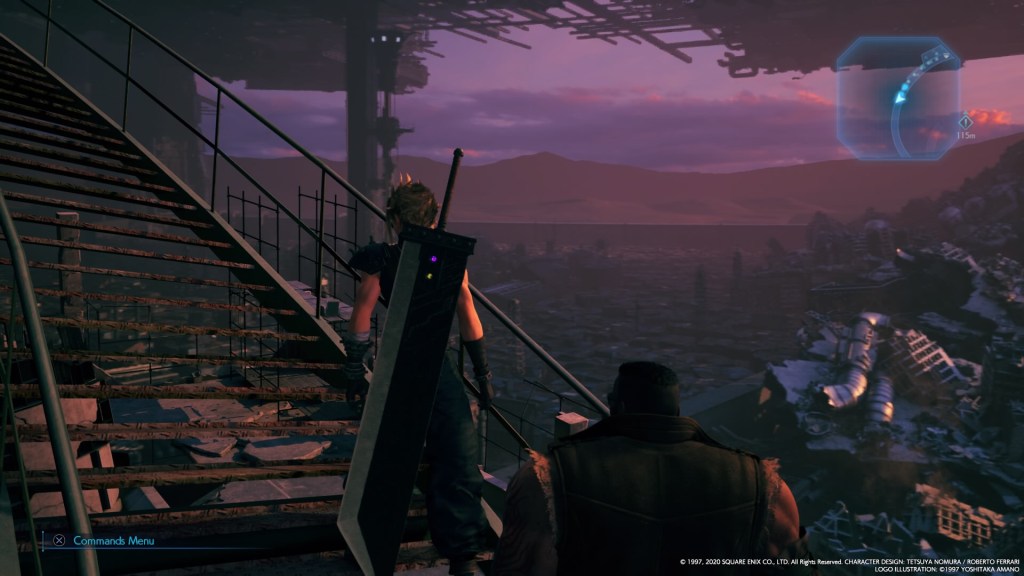
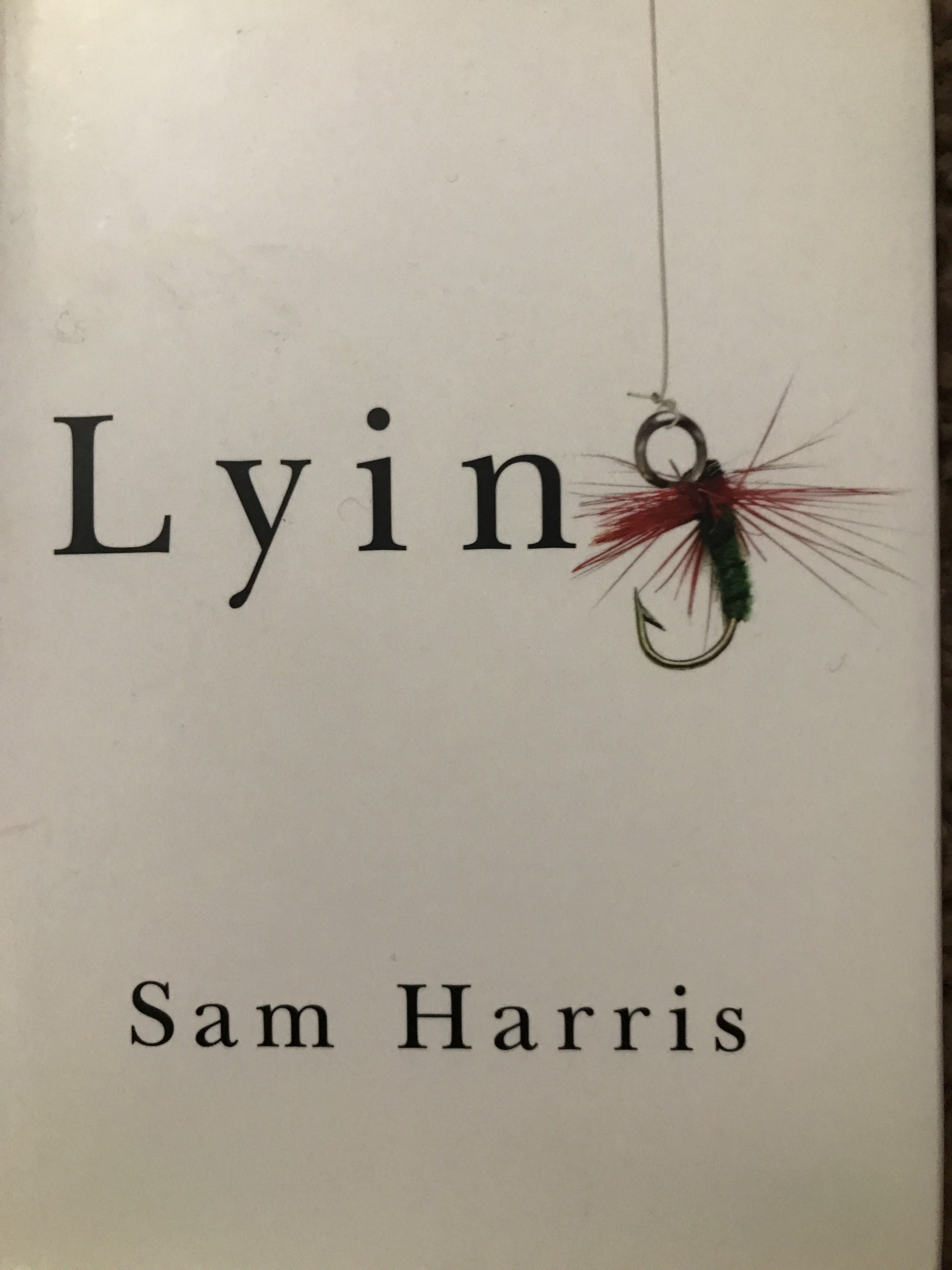


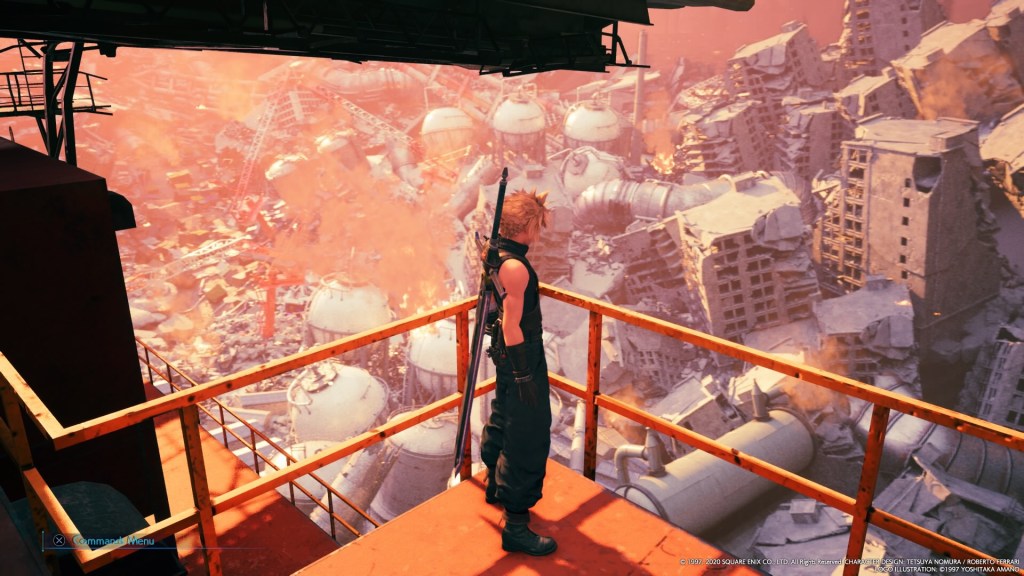


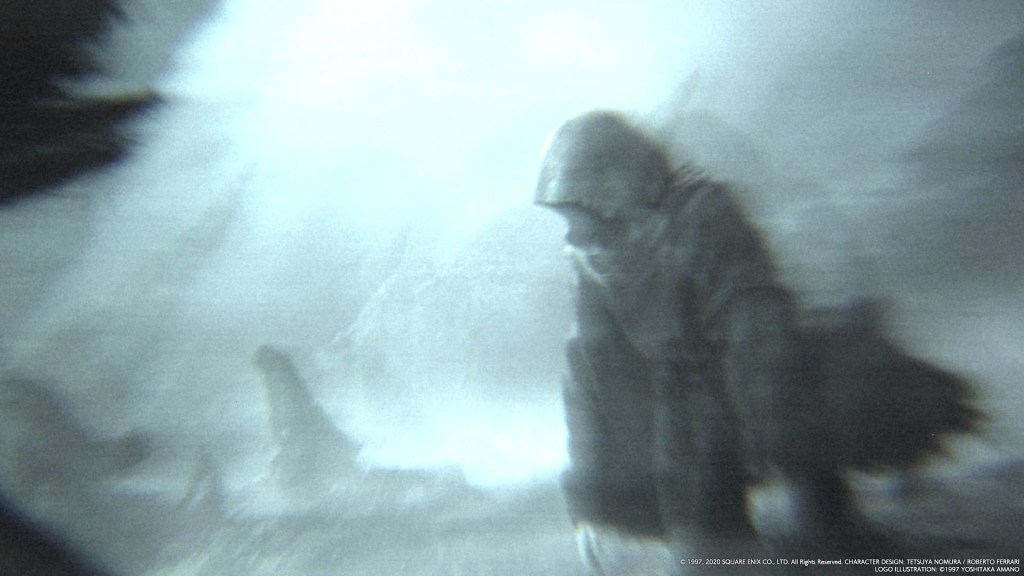







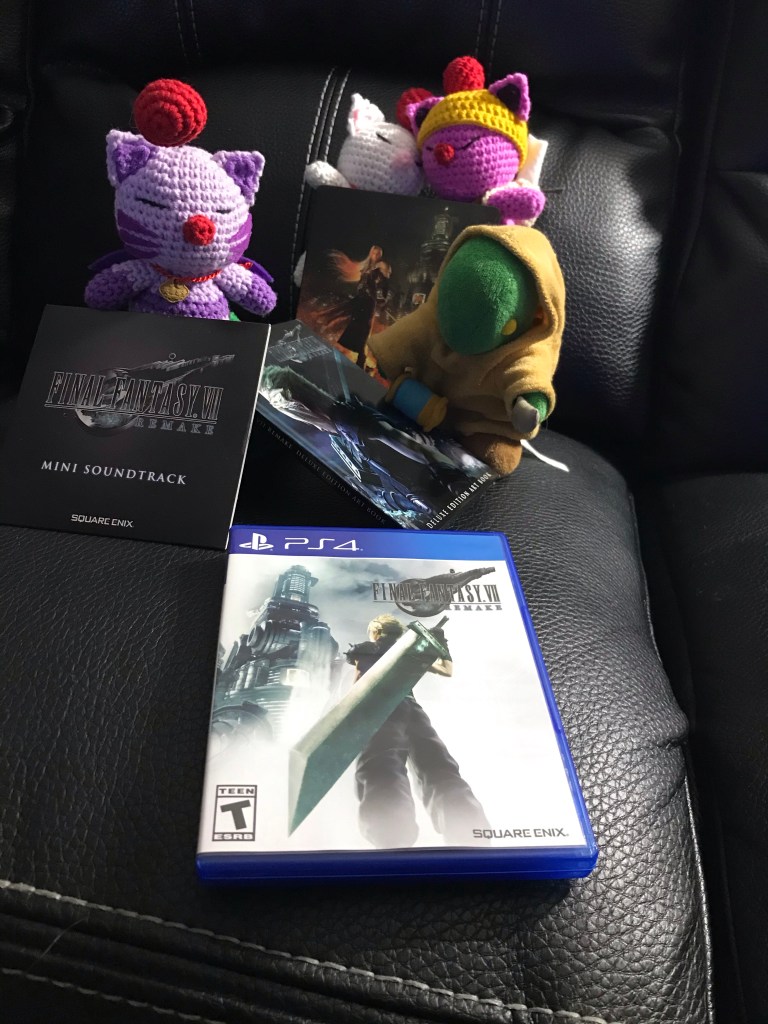


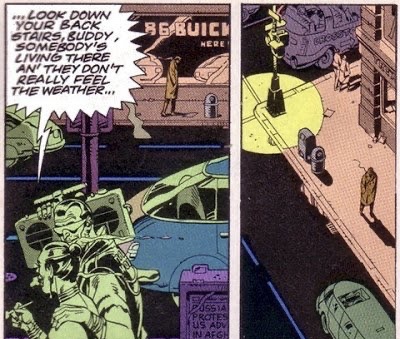



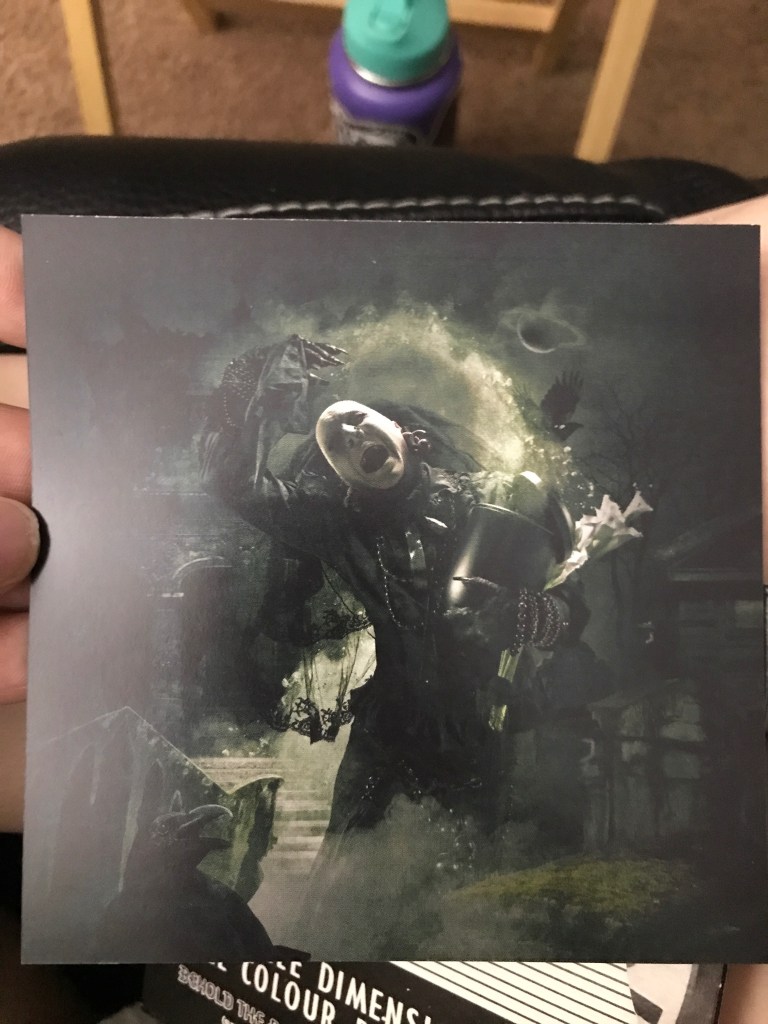

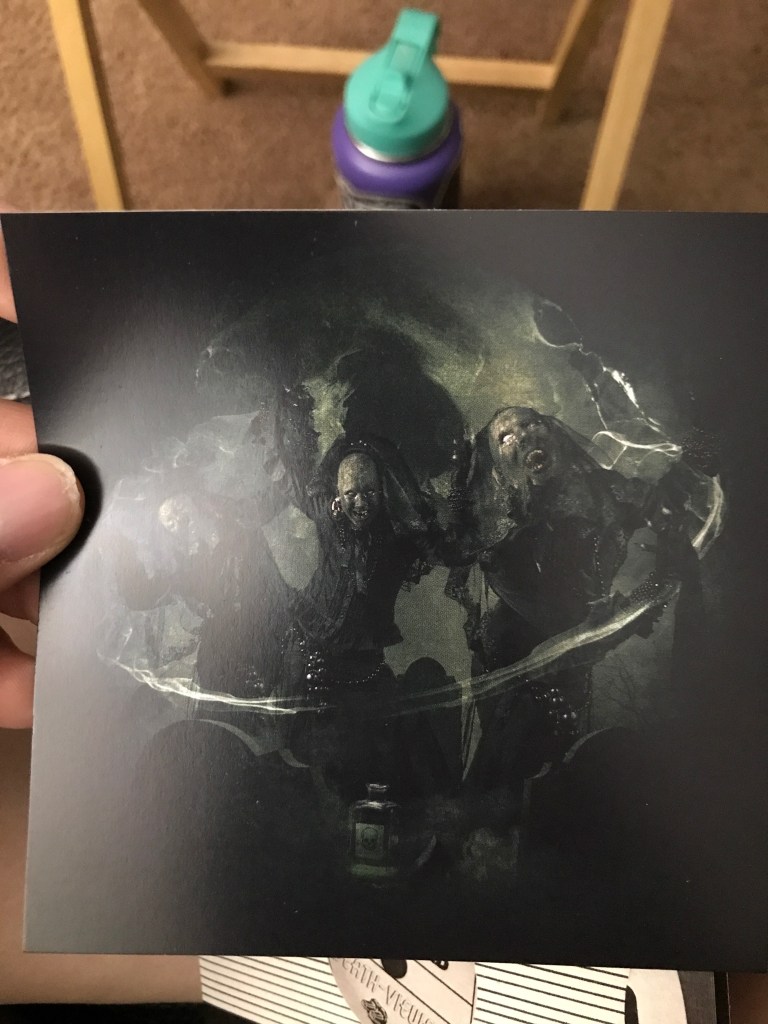
 AilixChaerea