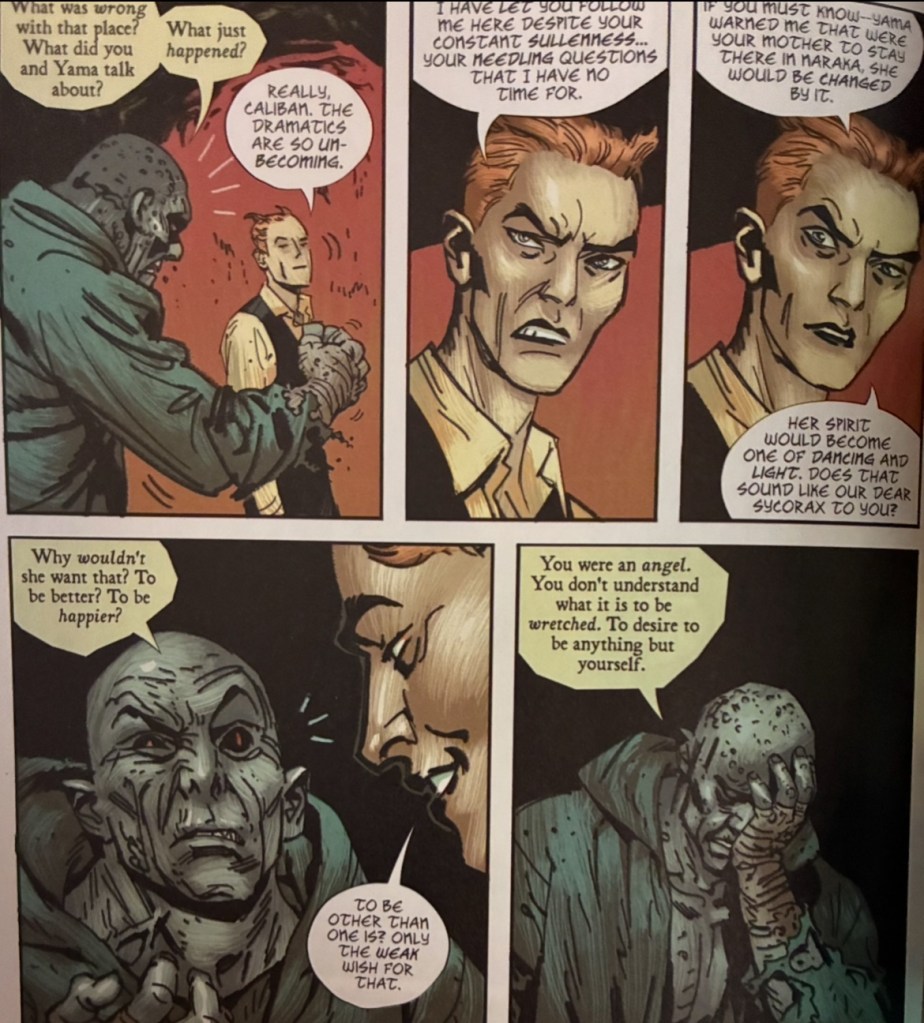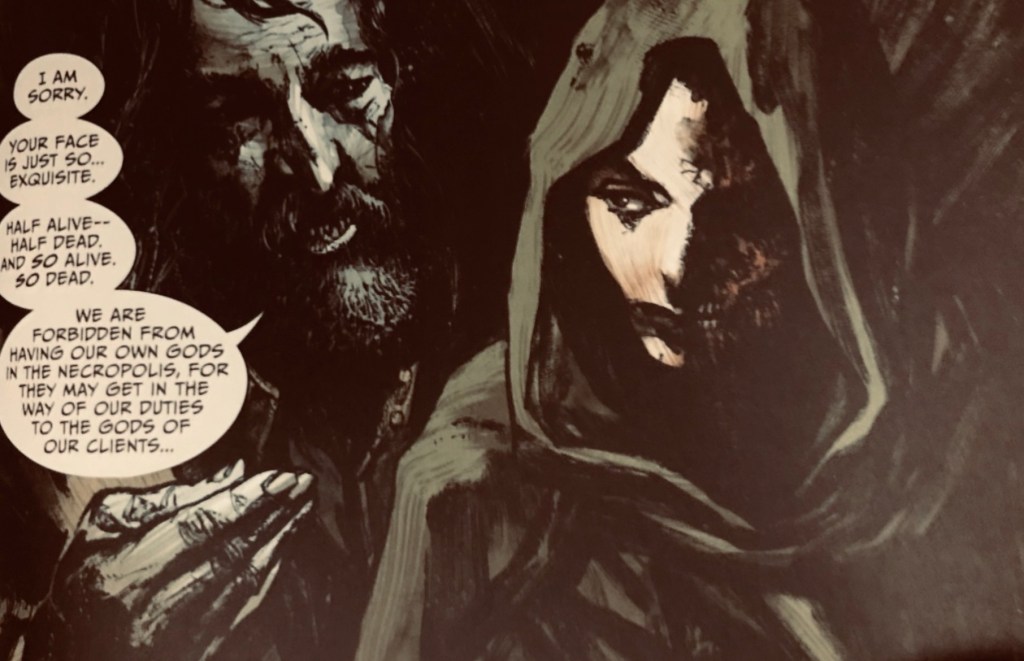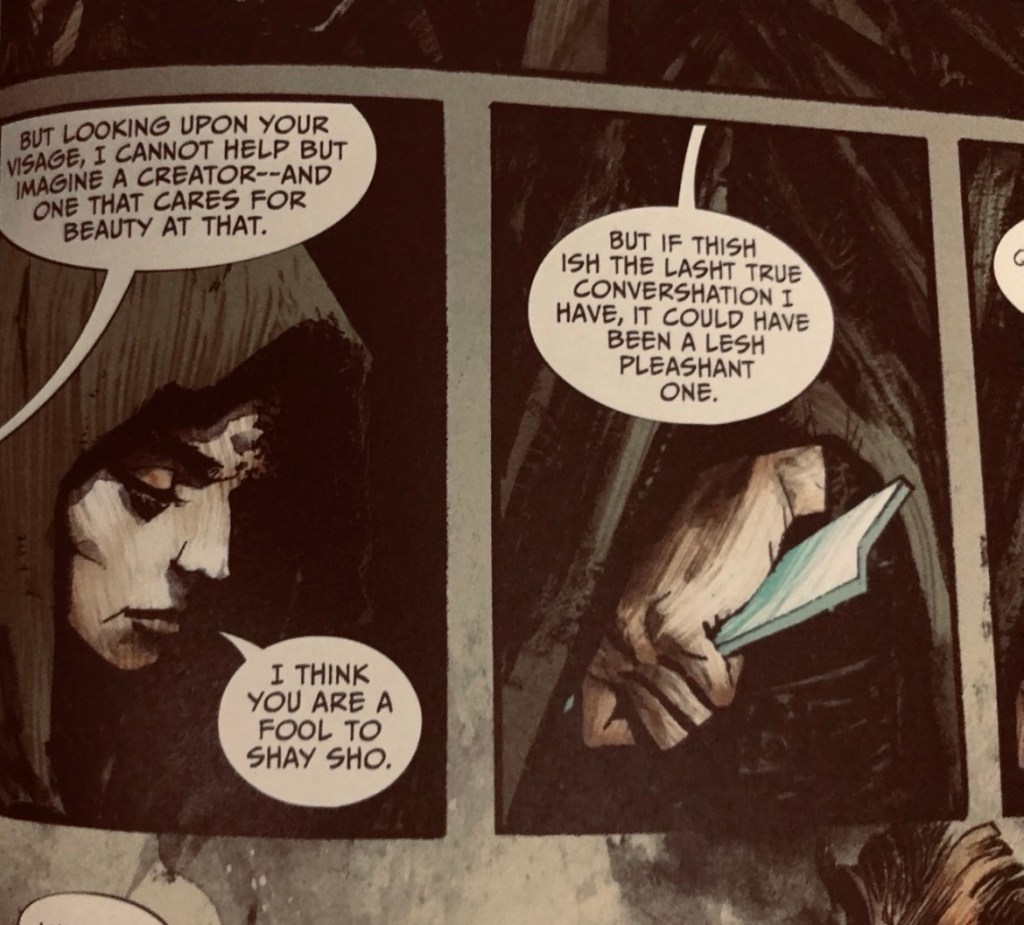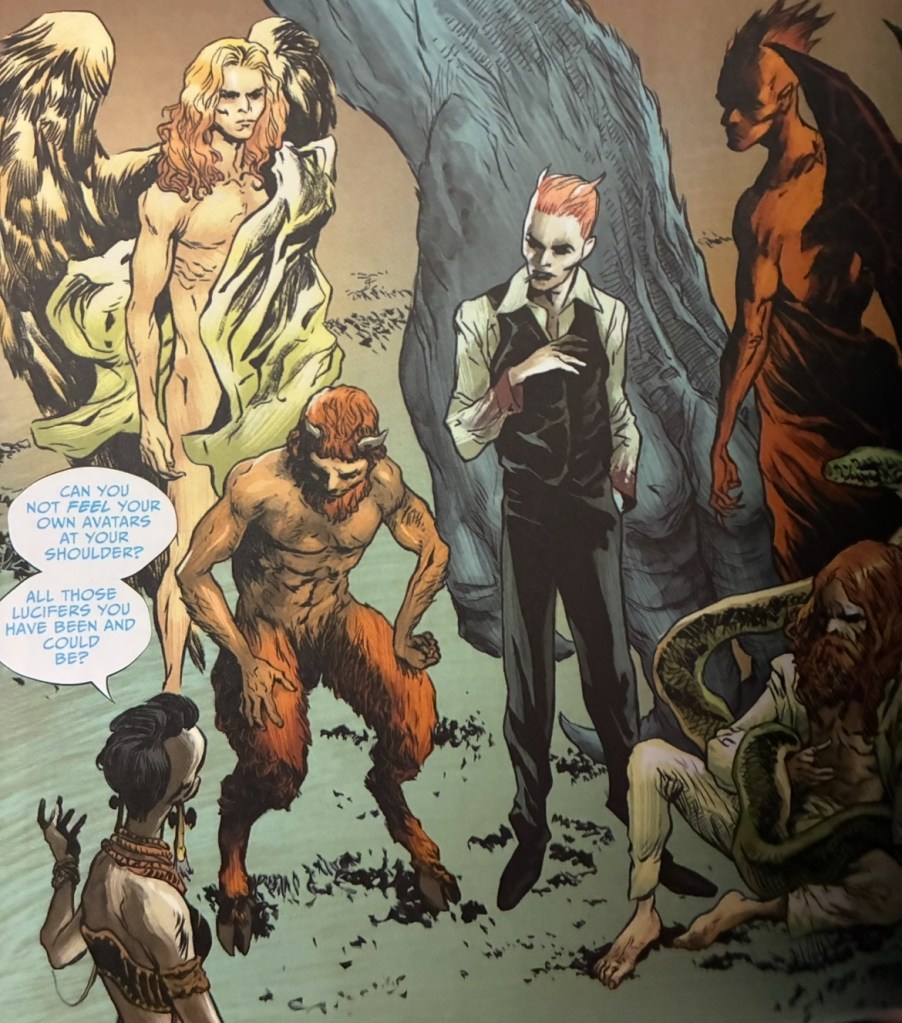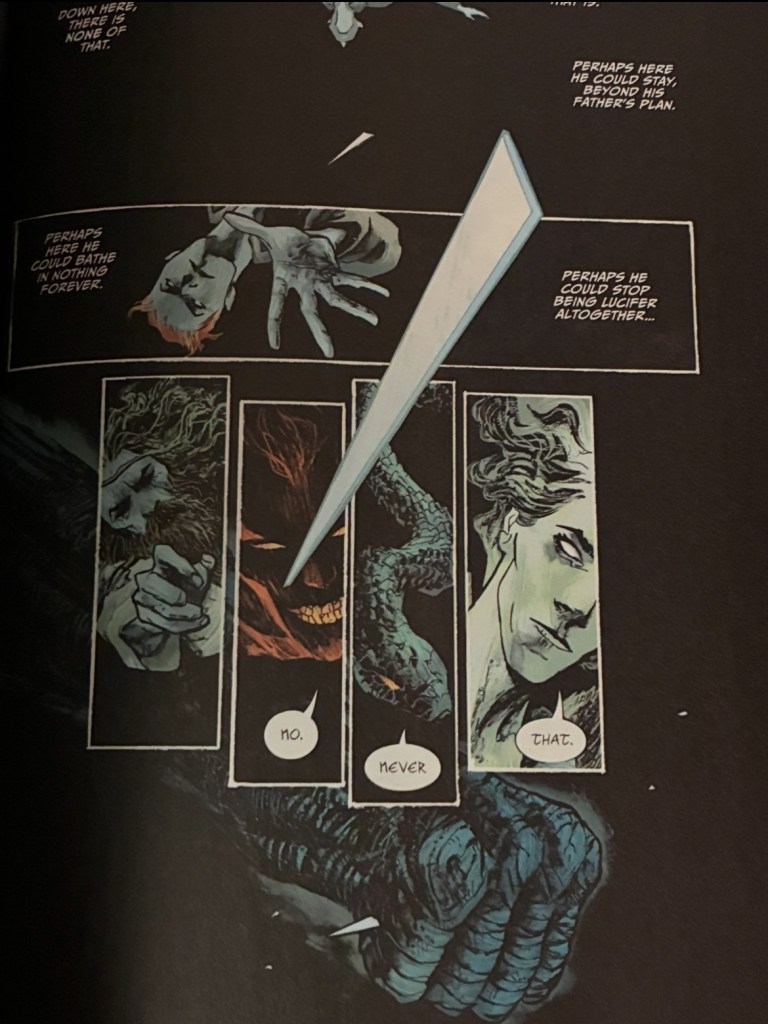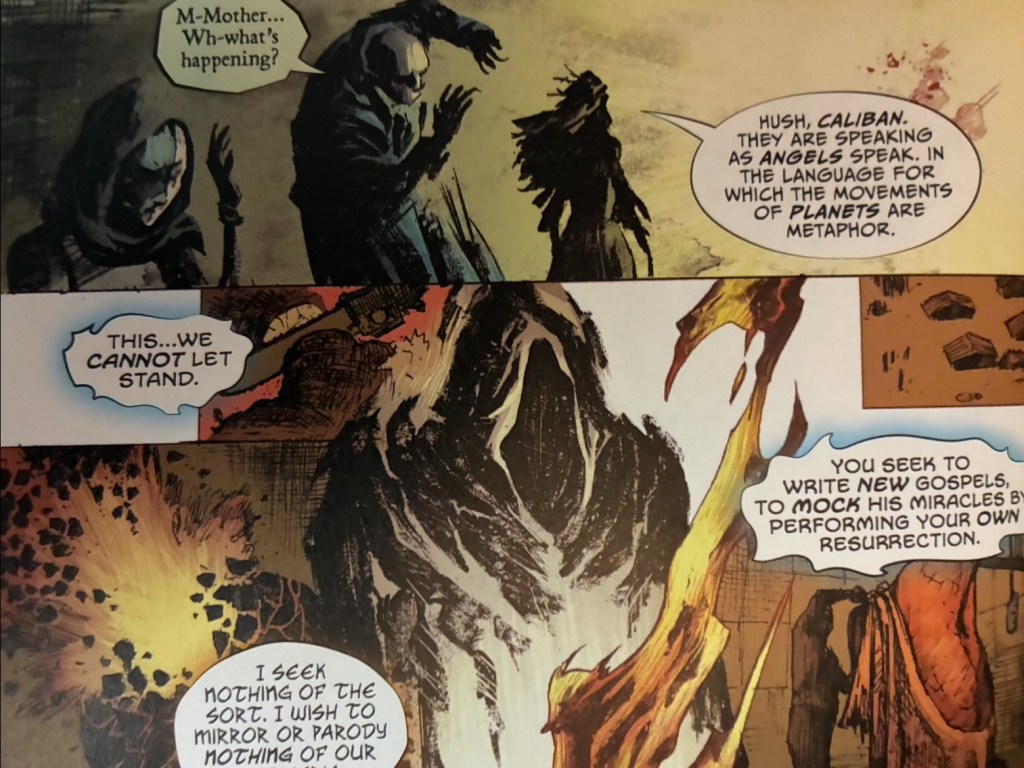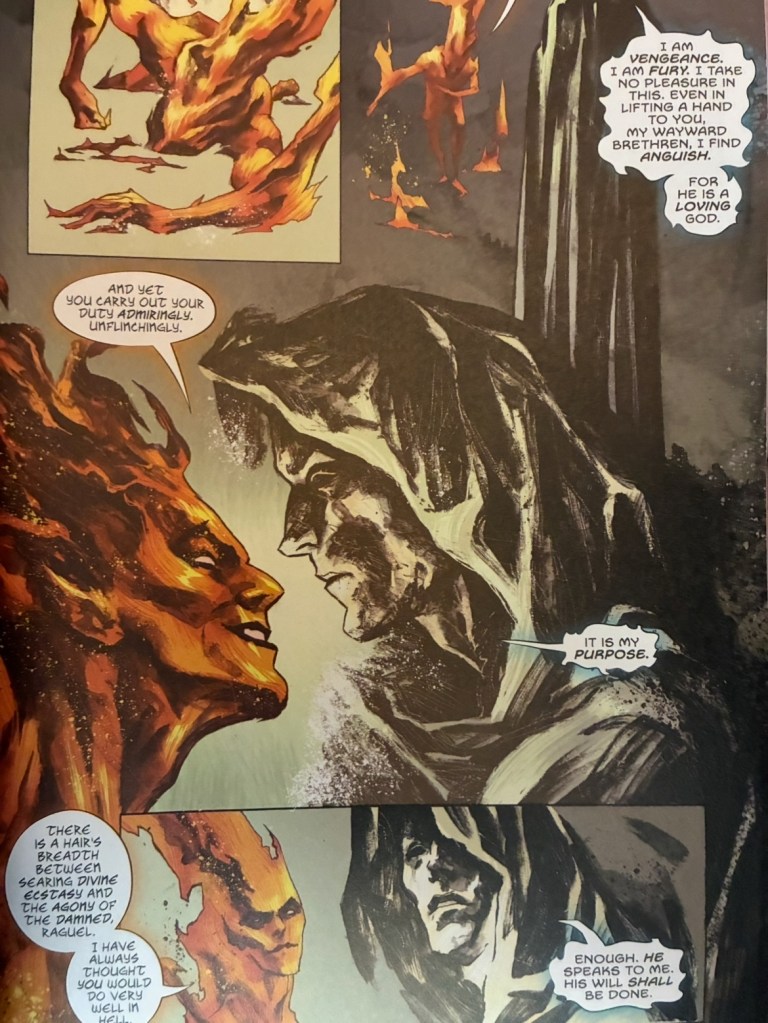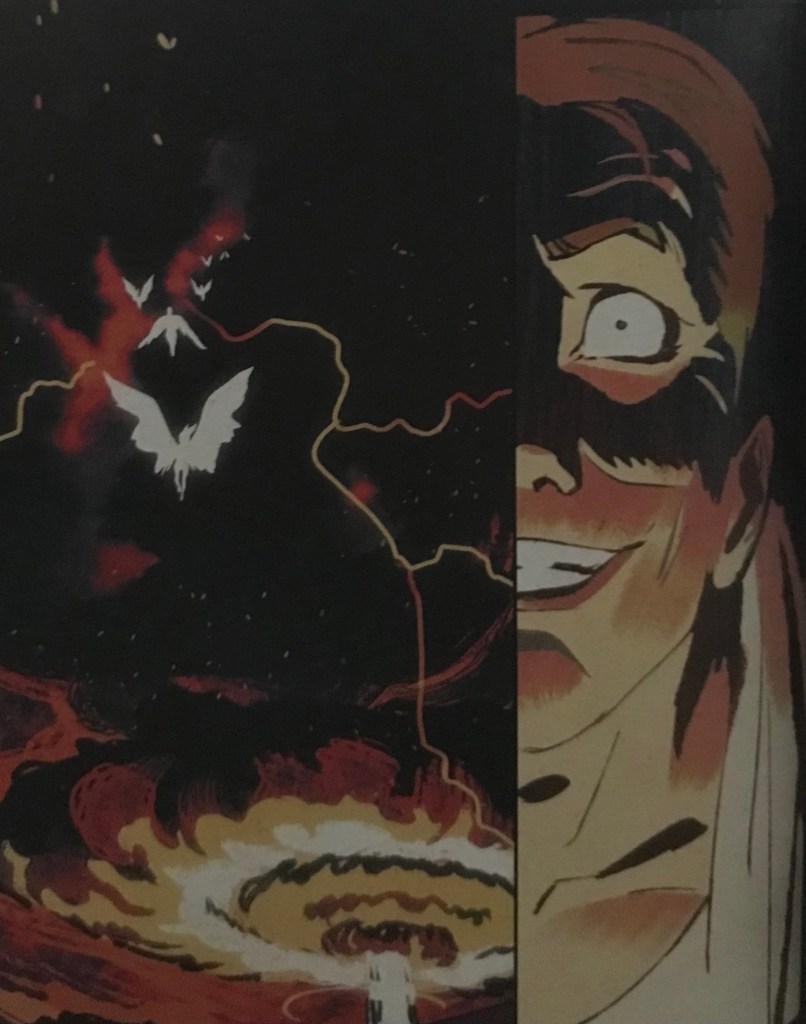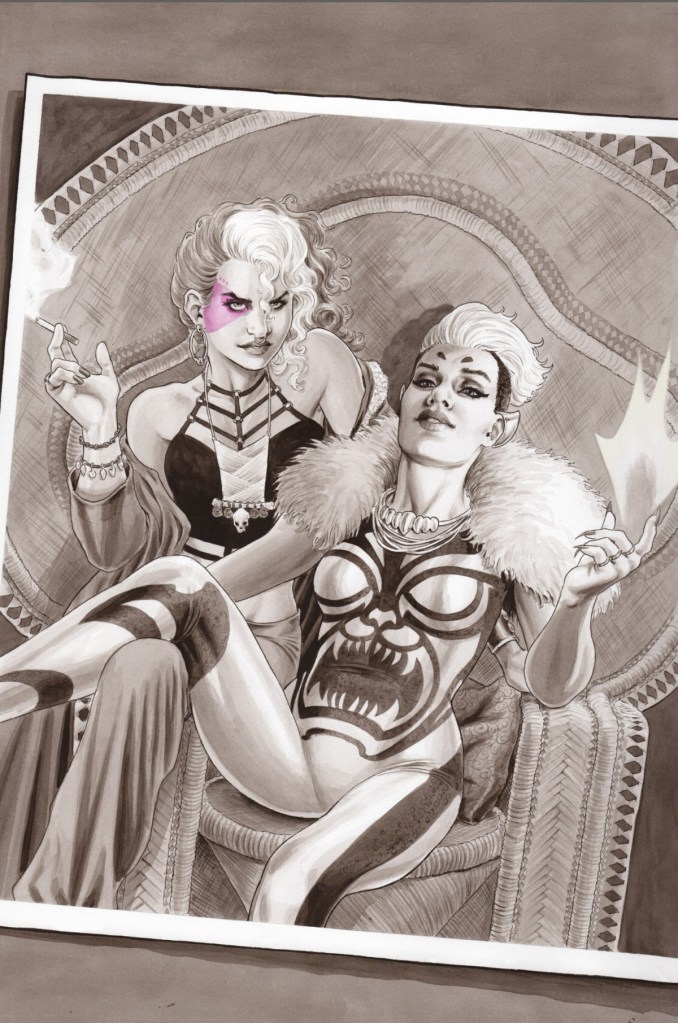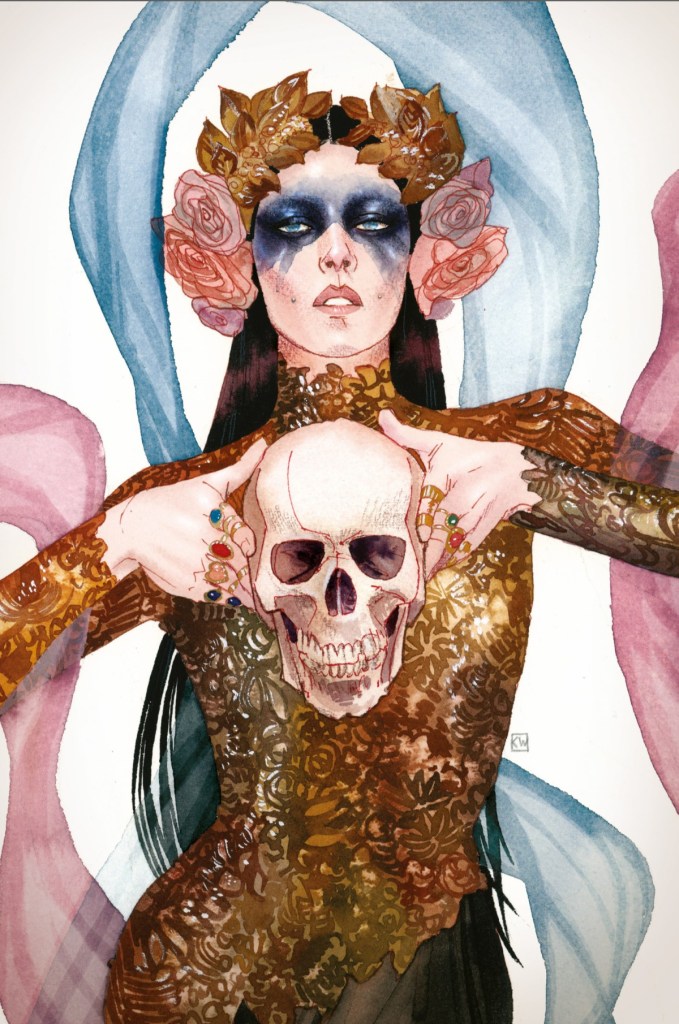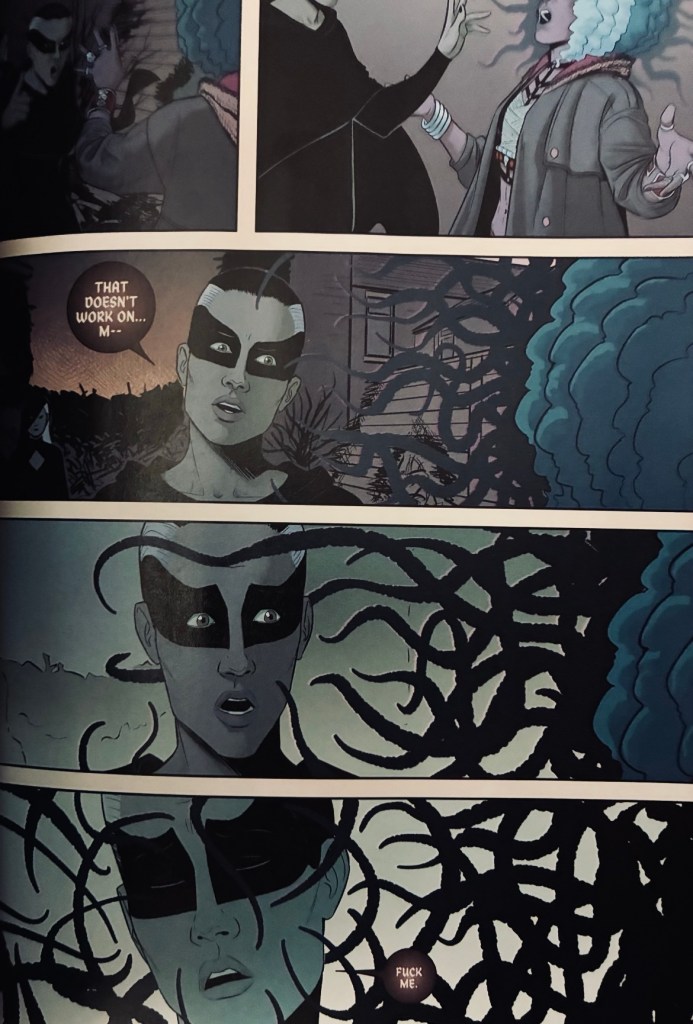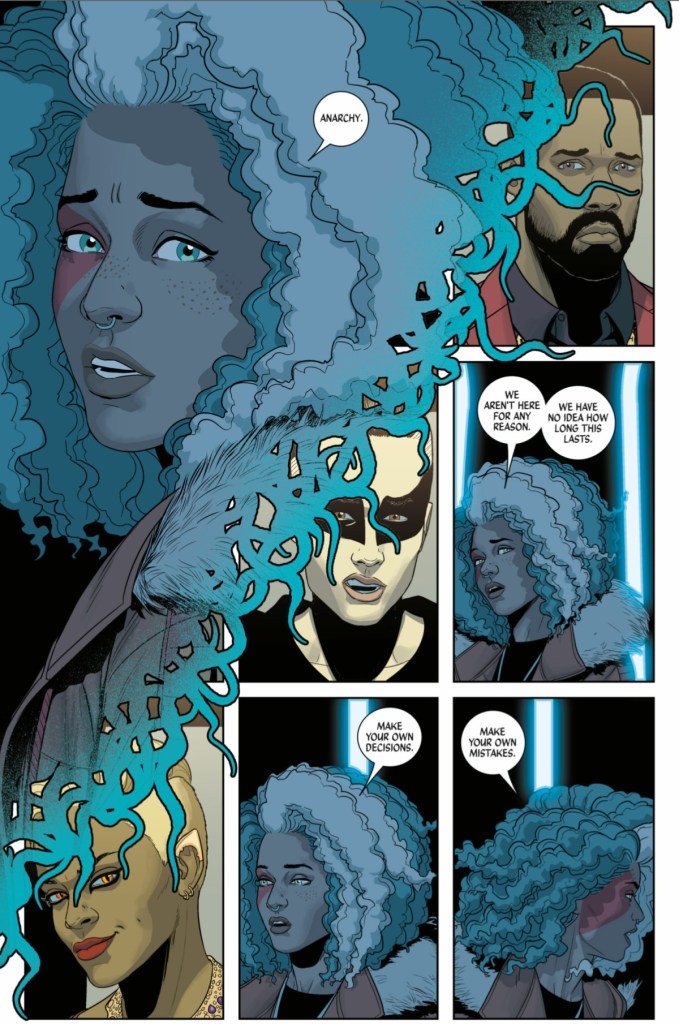
Ah Pook Is Here: the graphic lit project of William S. Burroughs and Malcolm McNeill

Content warning

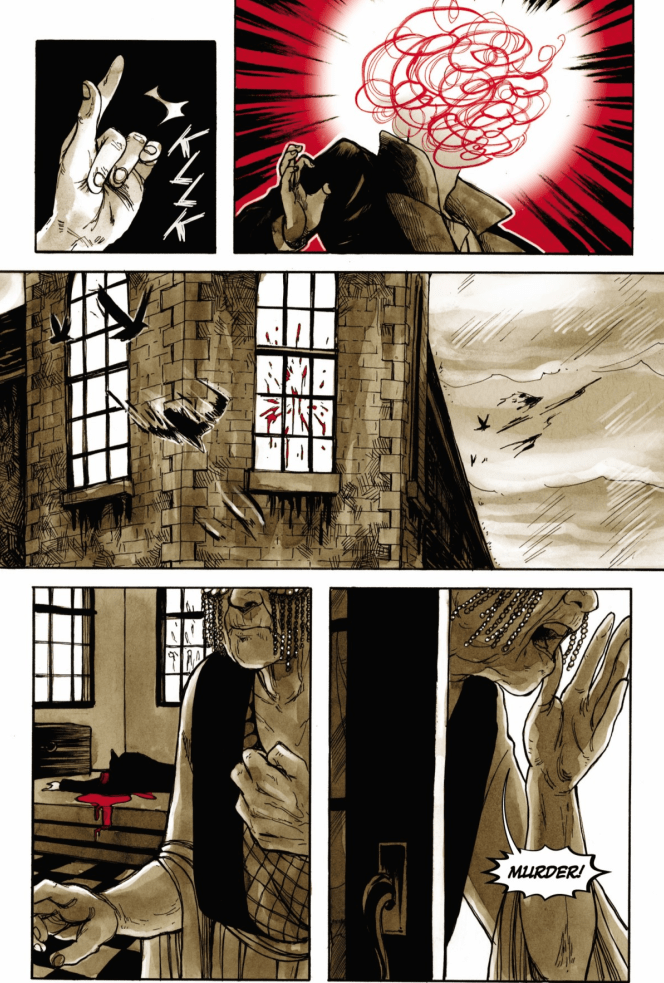
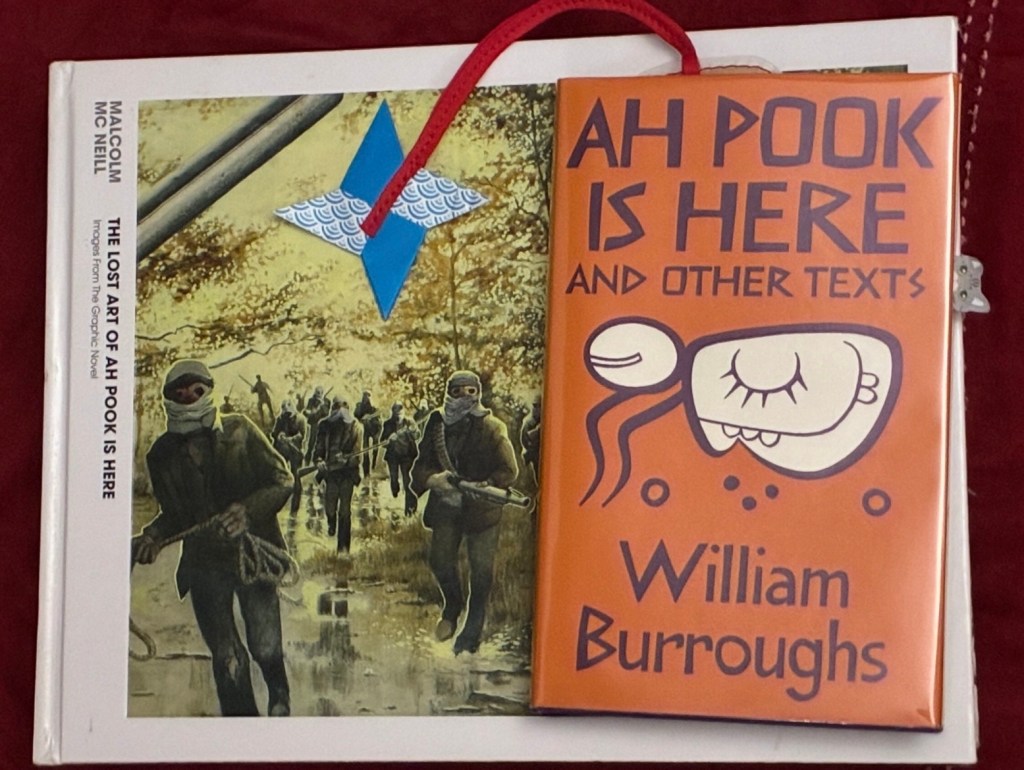
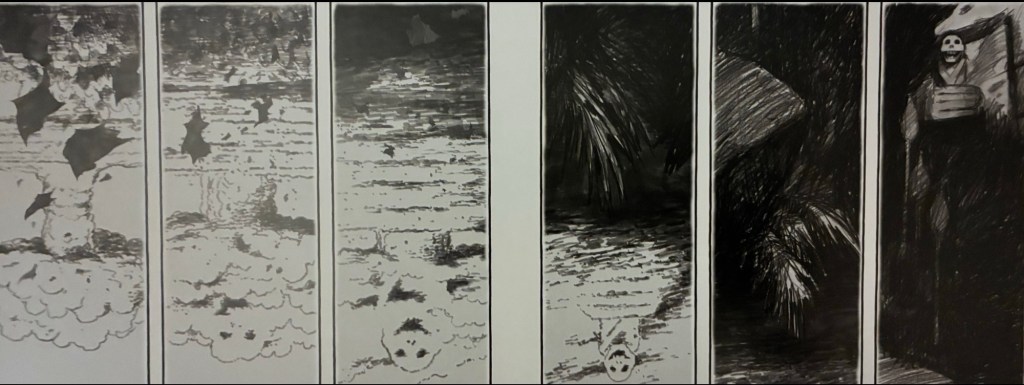
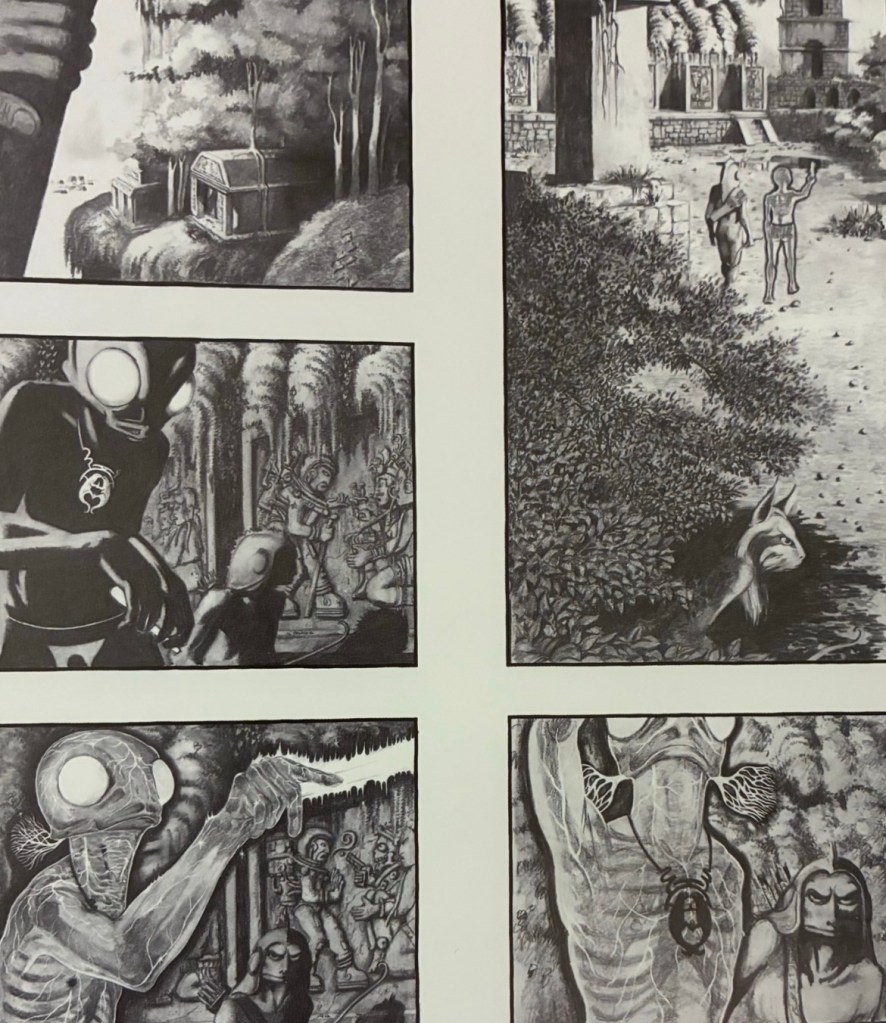
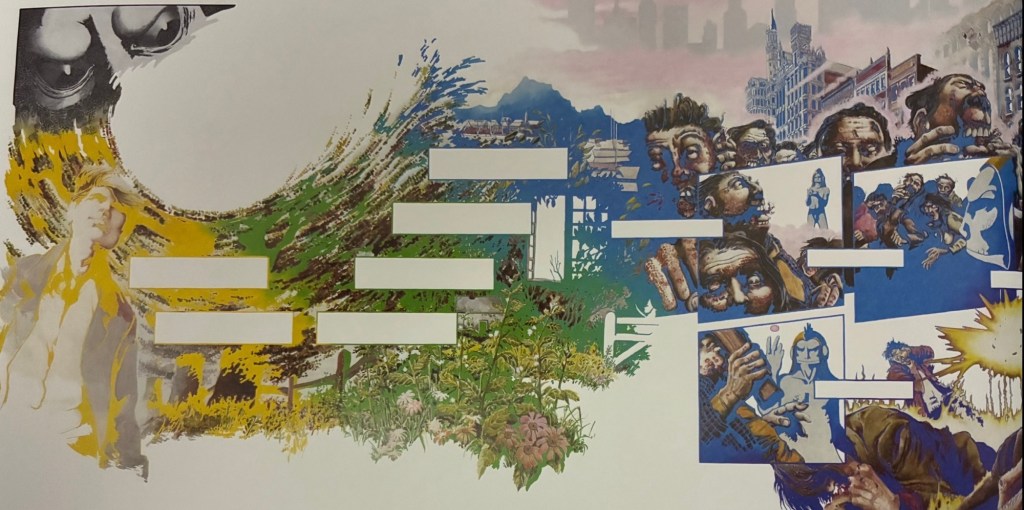
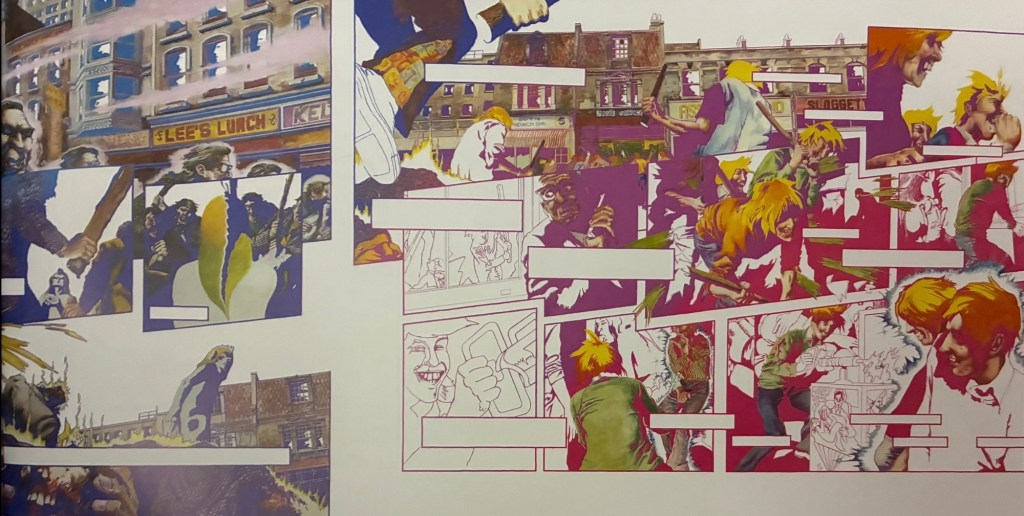
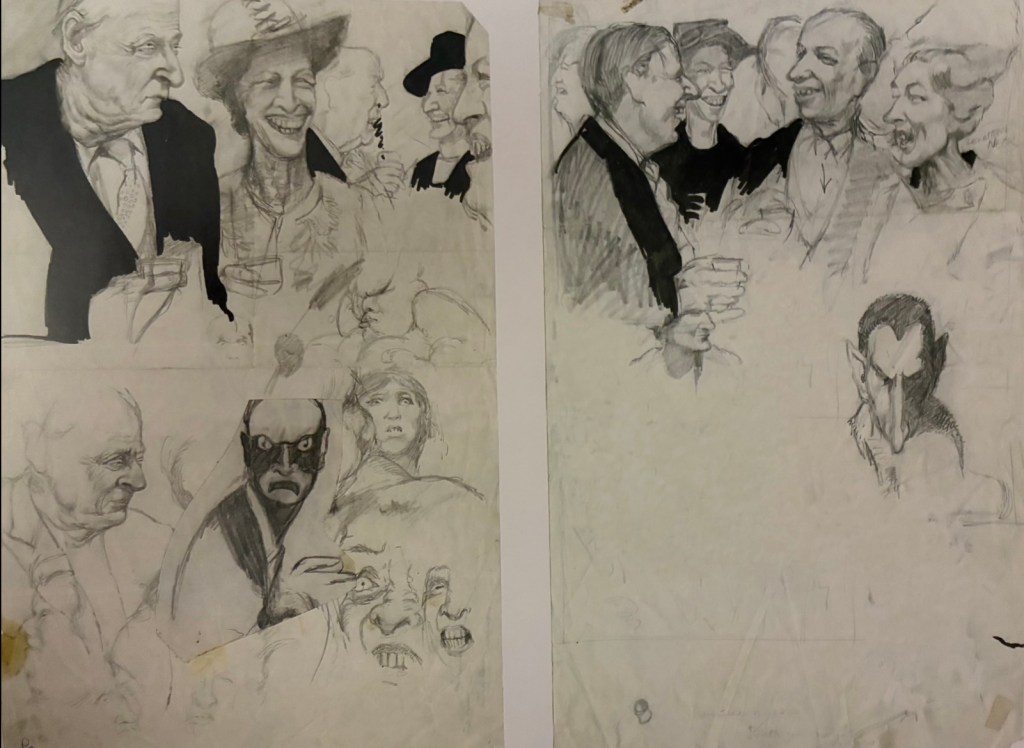
William S. Burroughs and Malcolm McNeill spent a solid chunk of the seventies working on this only to lose the interest of every prospective publisher. It was not to be a typical ‘panels and word balloons’ comic nor a prose book with accompanying illustrations. According to Burroughs, there would have been roughly a hundred pages of art with no text- thirty of which would be in full color -and around fifty pages of only text and an unspecified range of combined images and text.

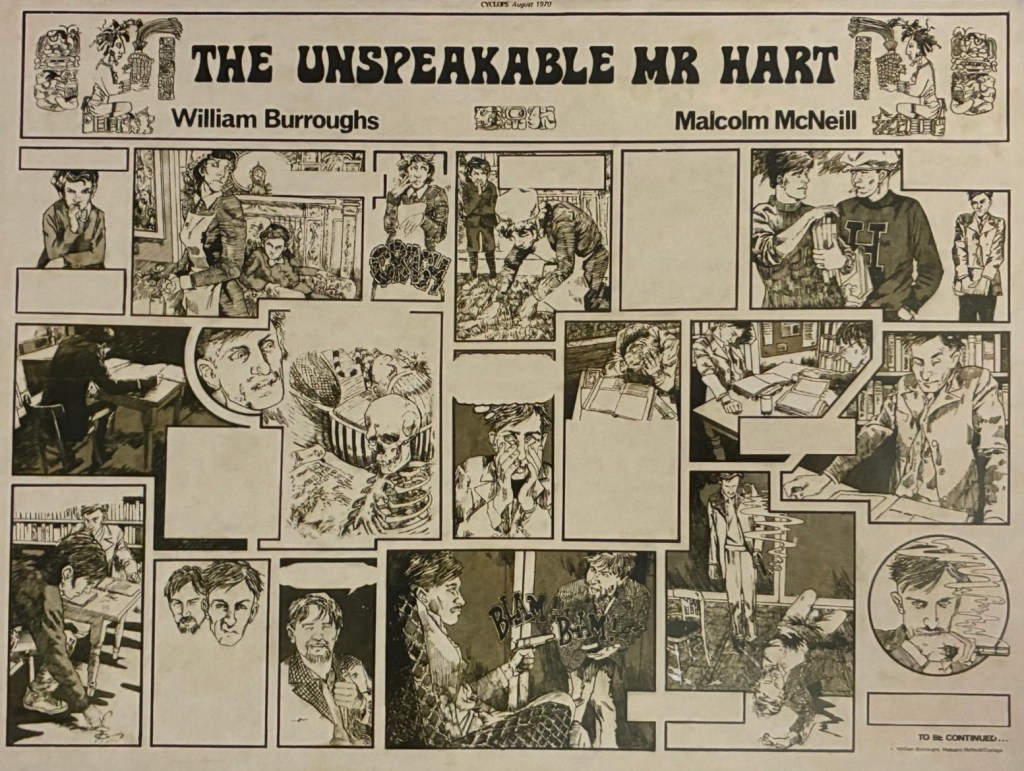
In the spring of 1970, Malcolm McNeill began publishing Cyclops: an adult comics anthology in his native England. McNeill met Burroughs when they began collaborating over mail on a comic strip called The Unspeakable Mr. Hart.

The tone of the collaboration changed once Burroughs got his first glimpse of the comic. McNeill seemed to have drawn the villain-protagonist John Stanley Hart with a surprising resemblance to Burroughs himself, with no prior knowledge of what the author looked like. After that, Burroughs insisted on an in-person meeting and the project grew.

I, at least, wonder if the Unspeakable Mr. Hart strips from Cyclops would have made it into the finished product. The art is memorable but obviously dated. If there’s anything that looks like this in modern comics, I’m not aware of it. It is vaguely reminiscent of the black-and-white drawings of Moebius from the late seventies. It also reminds me of a certain kind of black-and-white art style common in pornographic comics from the early twentieth century through (I suspect…?) the eighties. Seventies and eighties issues of Heavy Metal were full of comic strips that looked vaguely like The Unspeakable Mr. Hart. I remember watching the movie The Green Mile which featured an abusive prison guard with a fondness for so-called “Tijuana Bibles”- short pornographic comic strips from the early twentieth century, usually depicting scenes with the famous faces of the day. In the visual language of The Green Mile, that Tijuana Bible is a visual cue that this is not the present.

Maybe those art styles didn’t look quite so antiquated in the seventies…but the antiquated vibe fits the time travel themes. Especially in a story about manipulating the psychic intersection between language and time.

Ah Pook Is Here encapsulates several fixtures that date back as early as The Yage Letters and the word hoard (Naked Lunch, The Soft Machine, Dead Fingers Talk, The Ticket That Exploded and Nova Express).

In those sophomore works, the collective subconscious is gate-kept by non-corporeal outsiders. The psychological and metabolic need of addiction is a leash that humans wear when their demiurgic keepers take them out for walks on the astral plane. This is a recurring narrative through-line in the word hoard but it is also the backdrop for several of the word hoard’s most memorable uses of visual language.

One of these is the consistency of colors up and down the dimensional ladder. One of the more memorable establishing instances from The Ticket That Exploded happens in the ‘in a strange bed’ vignette. ‘In a strange bed’ begins with two characters- Lykin and Bradley -arriving on a foreign planet after the controls of their craft were seized by an outside force. Lykin surveys their surroundings:

“-A fantastic landscape of multicolored rock carved like statues of molten blue lava interspaced with stalagmites of a pearly white intensity he had never experienced in his previous explorations – The sky was like a green ocean – There were four suns on the horizon around the plateau, each sun of a different color – Blue, green, red, and one (much larger than the others) a brilliant silver -“

Lykin accepts an adaptive mutation from two humanoids in a swamp and the viewpoint character is now different- a boy called Ali, in a separate, recognizably urban, Earthling environment. All of the colors which were simultaneous in the prior section are now paired with separate, sequential dimensional planes explored by Ali. Throughout the word hoard, these dimensional color pairings remain consistent (most visibly within Nova Express).

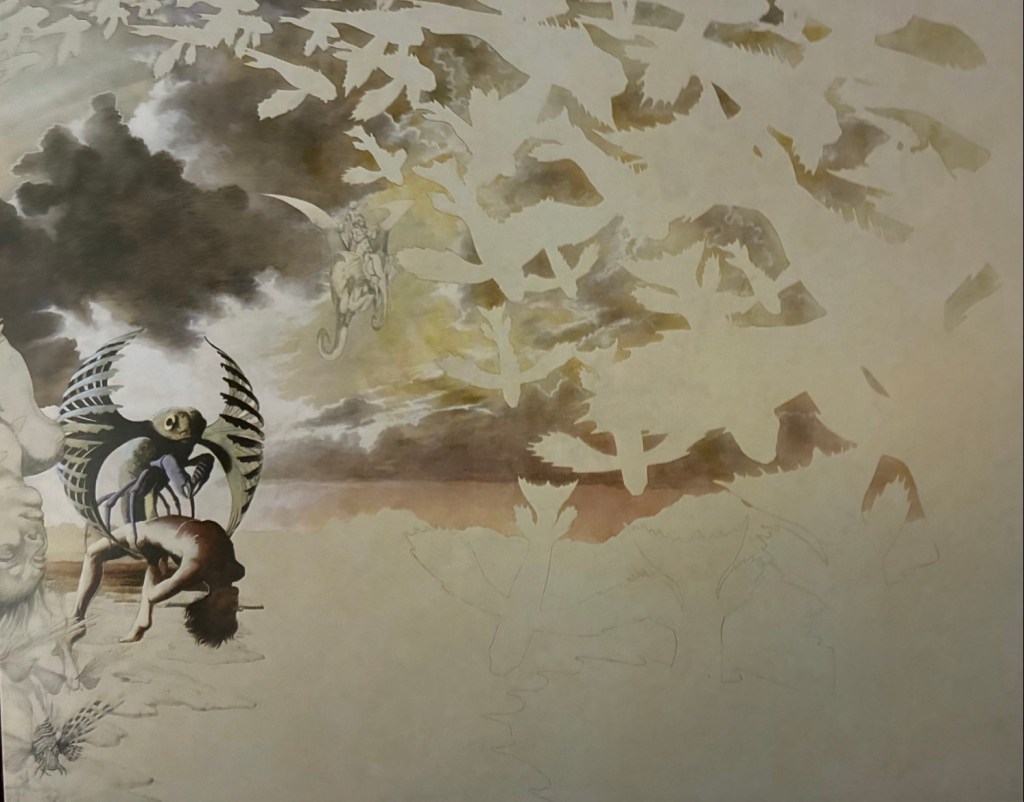
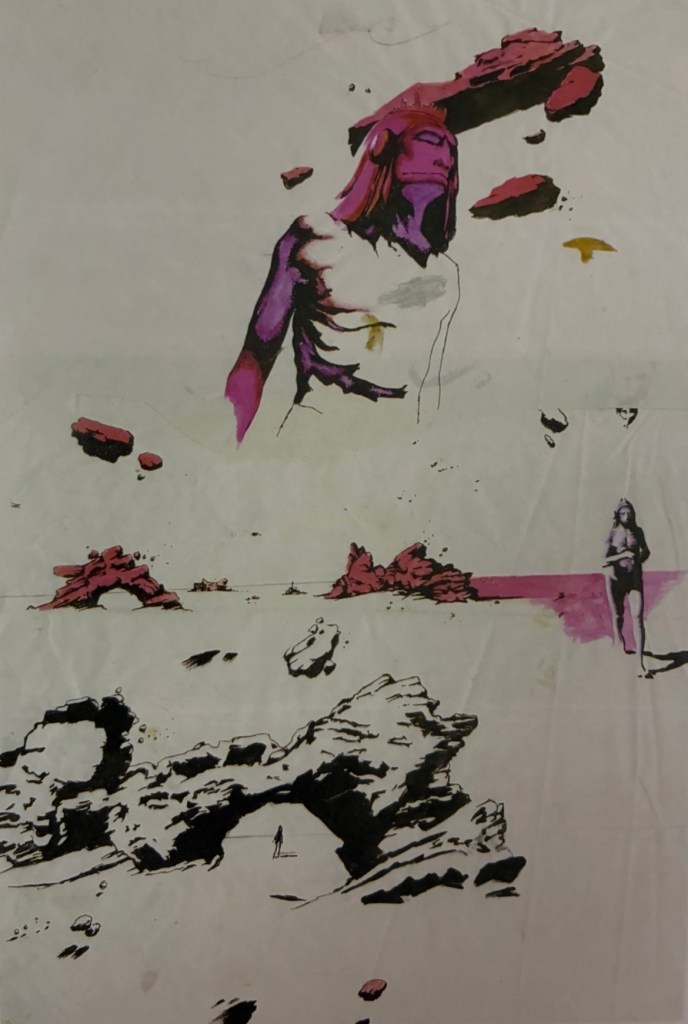
Similar uses of color and layout are evident in Malcolm McNeill’s art for Ah Pook Is Here. Many of these instances are expressed through reflections of the sky visible in water or within implied symmetry in images without reflective surfaces. This starts out fairly normal with reflections within mud puddles and large bodies of water and develop into imaginative, dream-like panoramas that spread both vertically and horizontally.

This nuance feels particularly relevant since a glimpse at this material inspired Alan Moore to write Watchmen. Moore believed Ah Pook Is Here mapped out the far boundaries of what is conceptually possible through picture-and-text storytelling. He then wanted to write his own exploration of those boundaries which eventually developed into Watchmen. Similarities between the art of Malcolm McNeill and Dave Gibbons are apparent in how horizons look throughout Watchmen, the Black Freighter comic-within-a-comic and in the alternating colors of the panels and divided halves in the chapter ‘Fearful Symmetry’ which is eventually worked into the overall comic.

In the text Burroughs wrote for Ah Pook Is Here, inside/outside color associations are established in events that immediately succeed the exploits of Mr. Hart.

Now, the core of the plot: sympathetic magic. Summoning or establishing contact through the resonance of mirroring. To modern humans, the limits of psychic energy can only be discerned through the conceptual limits of language. A belief based on external observation becomes linguistically codified and its reality after that point is most readily expressed through investment in the linguistic architecture of belief.

What follows from this point depends on Burroughs’ own idiosyncratic reading of the Mayan codices. According to Burroughs, divine concepts such as the Seed God, the young Corn God and the Death God began as observational categories of cyclical events but eventually became monoliths of belief. A monolithic belief summons its own reality. Because of the hermetic seal on literacy dividing the Mayan priesthood and the rest of the population, these symbols were only read and interpreted by people who were taught the context of the cosmology and the calendar system through which these concepts first emerged. Thousands of years of data, distilled into a condensed symbol system to be read only by people who are trained to read it. This granularity allows the priesthood to know what they are looking at but- because of the messiness of knowledge transmission -these categories become abstracted over time (however specific the data behind those abstractions may have been). This priesthood also had strict control over the symbol systems that ordinary people could regularly read and interpret and all such symbols were necessarily derived from the priesthood. The uniformity puts unanimous weight behind the factor of sympathetic magic.

Burroughs seemed to describe these things as inferences that followed his reading of the Mayan codices, rather than literal content. I’ve been an avid reader of Burroughs for much of my life and I can only explain what he thought of the Mayan codices. I can theorize as to why he thought those things but I certainly can’t speak to degrees of literal accuracy or inaccuracy.

In any event- Mr. Hart makes the same connections and resolves to use the symbol system of the Mayan codices to control and neutralize death itself. Death itself is a condensed concept / symbol because death necessarily entails the amount of time behind the existence of things it acts on. Death, in this paradigm, has no face without contact via identification. A startled face beholding the end. The repetition of symbols associated with the deity Ah Pook in response to Mr. Hart’s studies and machinations are one of our major visual themes in both the treatment within Ah Pook Is Here and other texts and The Lost Art of Ah Pook Is Here by McNeill.

Teeth and eyes come up a lot. While studying the Dresden Codex, Mr. Hart “glimpses the death formula. Across the table a gawky youth drops his glasses on the floor. One lens is broken.”

Mr. Hart kills his friend and companion, Clinch Smith, to maintain control over his discoveries. He then decides to play it safe and simply wipe out the entire Smith family. A younger brother named Guy flees to South America where he “joins Audrey Carsons in a remote finca in the Andes.

Audrey Carsons: Eeries ghostly rotten vulnerable reckless he possesses at the same time the cold intelligence of Mr. Hart. He is Hart’s alter ego and nemesis.

Guy Smith: He is the buck-toothed Mayan Death God before the face was broken and twisted by altered pressure, features wrenched out of focus, body emaciated by distant hungers. A face where time has never been.

Old Sarge: Has the close-cropped iron-gray hair and ruddy complexion of a regular army man. There is also a suggestion of the Polar Star God in his appearance.”

Earlier, after John Hart shot Clinch and then asked nobody in particular “‘How did this happen?’

Ghost voice of Clinch Smith: ‘Death asked to be paid in kind, John.'”

Sure enough, Clinch’s younger brother Guy becomes a partial avatar of the Mayan Death God.

Audrey Carsons is “Hart’s alter ego and nemesis.” Remember how McNeill drew Mr. Hart with an uncanny resemblance to Burroughs, sight-unseen?

In other letters and conversations, Burroughs said that Kim Carsons, the main character of The Place of Dead Roads which he wrote later, was the closest thing he ever wrote to a character that represented himself and his aspirations. If Audrey is a forerunner of Kim and Malcolm McNeill actually did unknowingly draw Burroughs’ face onto Mr. Hart…that would be some rich synchronicity.

It is just as likely, though, that McNeill’s rendering of Hart was simply an uncanny coincidence which planted a seed in the mind of Burroughs.

This is one of the things that makes me wonder about the shadow cast by Ah Pook Is Here over Burroughs’ latter-day trilogy Cities of the Red Night, The Place of Dead Roads and The Western Lands…not to mention earlier work like The Wild Boys and Port of Saints. Old Sarge is one of the first characters introduced in Port of Saints. Five novels, at least, between the late seventies and the early nineties, were influenced by Ah Pook Is Here or derived from it (we could, if we wanted, split hairs about The Wild Boys and Port of Saints, since Burroughs said later that they would have made more sense if they were published as a single novel).

A preoccupation with the Mayan codices and their alleged insights into timeline manipulation were present in his work going back to The Soft Machine. Related concepts were detailed in Naked Lunch but The Soft Machine contained the first specific references (as far as I can tell). The Soft Machine also marks the first explicit mention of the possibility of things from other timelines (diseases and other forms of life, weather phenomena, etc.) punching through into ours in ‘Pretend an interest’. The very last reference to this in Burroughs’ bibliography was in Ghost of Chance (“I will loose on them the blood of Christ!”).

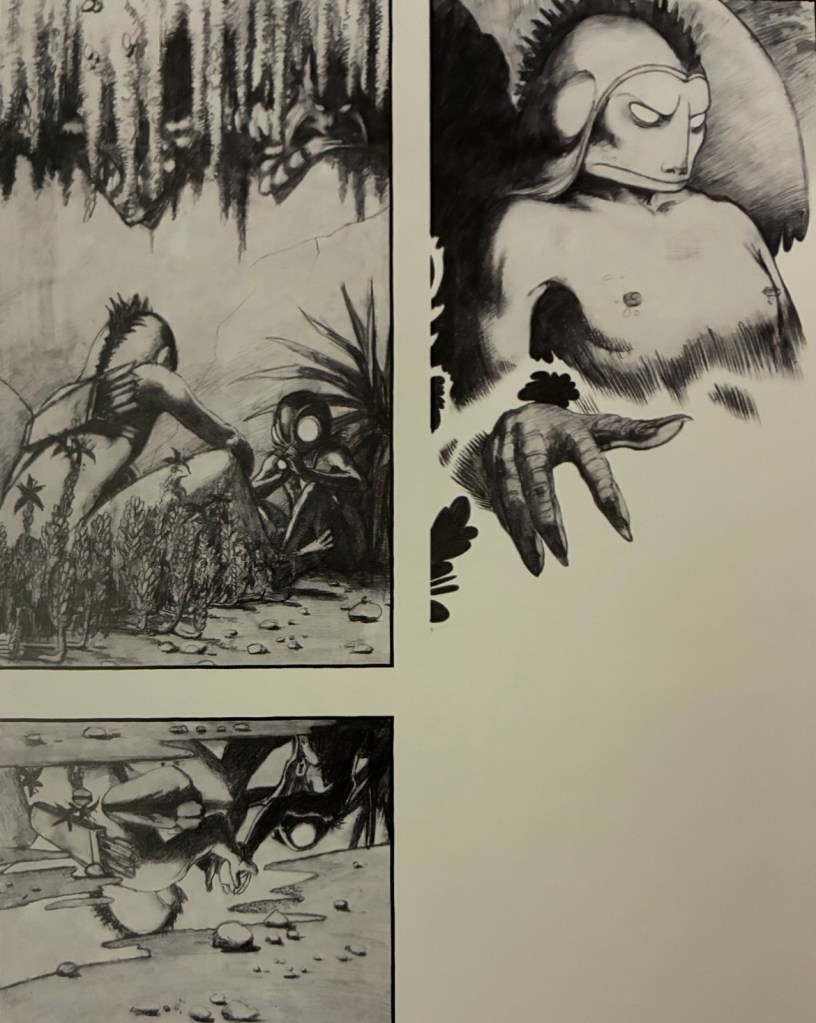
The story treatment by Burroughs and the images of McNeill begin to line up more specifically after Mr. Hart is gone from the center of the narrative. An “iguana boy” called Cumhu often occupies the foreground after that point. Like the resonances between Lykin and Ali in The Ticket That Exploded, Cumhu’s visionary journey sends ripples through adjacent timelines, usually in the vicinity of other emanations of his own soul.

The vignettes detailing the travels of Cumhu and his cohort (other humanoids such as Jimmy the Shrew and various other-timeline versions of Audrey and Guy) sometimes alternate with the version of Guy in the timeline we last saw him in, who is engaged in similar astral travel. Like many psychic visionary testimonials, there is mention of being shut out, as though your brain can make phone calls to other planes but- if no one picks up the phone -you’re just kind of stuck waiting. Guy enters a familiar but empty estate where he “hardly expects Audrey Carsons to be there.” Sure enough, Audrey is gone, as though the ‘phone call’ with the location denoted by the finca imagery is now over with.

The works of Burroughs furnishes other possibilities, of course. Usually, when this happens in Burroughs, it signifies the foreclosure of a timeline; a moment in which someone realizes that they survived a timeline edit. What that means is that the circumstances that shaped you are now gone from the past but the consequences remain in your perspective, such as in ‘Hauser and O’Brien’ at the end of Naked Lunch or at the beginning of Dead Fingers Talk.

After Cumhu steals the timeline manipulation texts from his father, he is assailed by “two pot-bellied green guards” whom he promptly shoots full of arrows. Later, in Cities of the Red Night, Burroughs would write of Venusian combatants called the Green Guard. “Genetic eunuchs: pot-bellied and strong.” Cities of the Red Night also features characters called Audrey Carsons, Clinch Todd and a later arrival called Guy.

Given the importance with ancient linguistic constructs invested with the psychic energy of belief, I suspect the blank-verse fragments in Burroughs’ treatment represent markers on a temporal map, accessed through associative resonance with whoever hears them. Since these sections are derived from earlier text within Ah Pook Is Here, the original placement and meaning is clearly meant to inform the cut-up / fold-in meaning; creating an effect comparable to associatively-spliced film.

Cracks in the surface of space-time above temporal fault lines appear to be a factor in how avatars of deities manifest through currently living humans. Deities are timeless beings. When their timelessness is forced to intersect with the third dimension, it makes sense that their personalities would simply “gather” around corresponding three-dimensional occasions. No divine avatar mentioned in Ah Pook Is Here (or anywhere else in Burroughs) was specifically born to be that avatar. Anyone could be an avatar depending on circumstance. It follows that avatars such as Guy Smith and Old Sarge were occasioned by the timeline fuckery of Mr. Hart. Guy Smith appears to have embodied Ah Pook / Ah Puch as a direct consequence of his brother’s murder.

Oh hey- another name listed for Ah Pook in the notes republished in The Lost Art of Ah Pook Is Here is The Undoer. What’s one of the key experiences written about by Burroughs? Surviving timeline edits. Realizing that the past occasions for your present self no longer exist. In other words: the realization that a fundamental part of your existence has been undone. Both forceful influence and undoing can proliferate on the same associative, linguistic basis.

Ripples through other timelines soon accumulate and effect the timeline of origin and Mr. Hart is back at the center of things, doing his best to fight back which serves only as engagement bait for his opposition throughout the space-time continuum. He does not fare well in the ensuing timeline shuffles. His proxies are haunted by shadow-people-like entities called Black Captains, which causes him to drum up racist fervor at “American First” rallies (I shit you not: this was in a story treatment for a comic from the late seventies. Check out Ah Pook Is Here and other texts if the rare book prices aren’t too scary).

The proposed narrative ends with a scene reminiscent of the early chapters of Cities of the Red Night

“Red brick buildings and a blue canal where the Mary Celeste floats at anchor. The boys, with sea bags and costumes of 19th century seamen, walk up the gang plank. The Garden is a red glow of ruined cities in the distance. The sails are raised and the anchor hoisted. Young Guy plays taps as the sun fades and blue twilight settles. The boat is moving. The boys wave from the rigging. An 1890 reporter rushes up.

‘What about Mr. Hart?

Audrey is in the crow’s nest with a telescope. He points with his left hand.

Mr. Hart’s deserted and ruined mansion, graffiti on the walls.

AH POOK WAS HERE

Here lived a stupid vulgar son of a bitch who

thought he could hire DEATH as a company cop.”

Cities of the Red Night and The Place of Dead Roads both revolve around the sudden editing and the sudden foreclosure of timelines. The Western Lands may feel like a quieter read since there are less radically imaginative and immersive settings. Much of The Western Lands feels like a ‘creative non-fiction’ approach to the same material.

‘Creative non-fiction’ is a phrase that usually describes the subjective gray areas in things like autobiographies and memoirs in which personal subjectivity takes the foreground. The content of a brain is most readily known to others through personal testimony. We all have a personal point of view. We know others have them largely through inductive reasoning from our own experiences. Personal thoughts and reactions happen but- in the context of something like a memoir -they have to be taken on faith. Many of these ideas were real and deadly serious to Burroughs himself. While The Soft Machine may mark his first explicit comments on timelines and the Mayan codices, they intersect with other ideas which go back further in his work. Burroughs was also fond of the painter Bryon Gysin’s remarks about how painting was decades ahead of writing. Many of Burroughs most daring literary experiments depend on treating literature and linguistic constructs like three-dimensional objects: something that can be turned around, looked at (and perhaps entered) from various angles. After the death of Gysin, Burroughs threw himself into painting (his reverence for Gysin was such that he dared not paint while Gysin was alive). He gave David Cronenberg his blessing for adapting Naked Lunch but declined to participate in it. Before then, Burroughs attempted several other breakthroughs into visual mediums without success and Ah Pook Is Here was likely his most ambitious and full-hearted effort.

Let’s read ‘The Wicked + The Divine’ (part 1)

Spoiler warnings for ‘The Faust Act’, ‘Fandemonium’ and ‘Commercial Suicide’

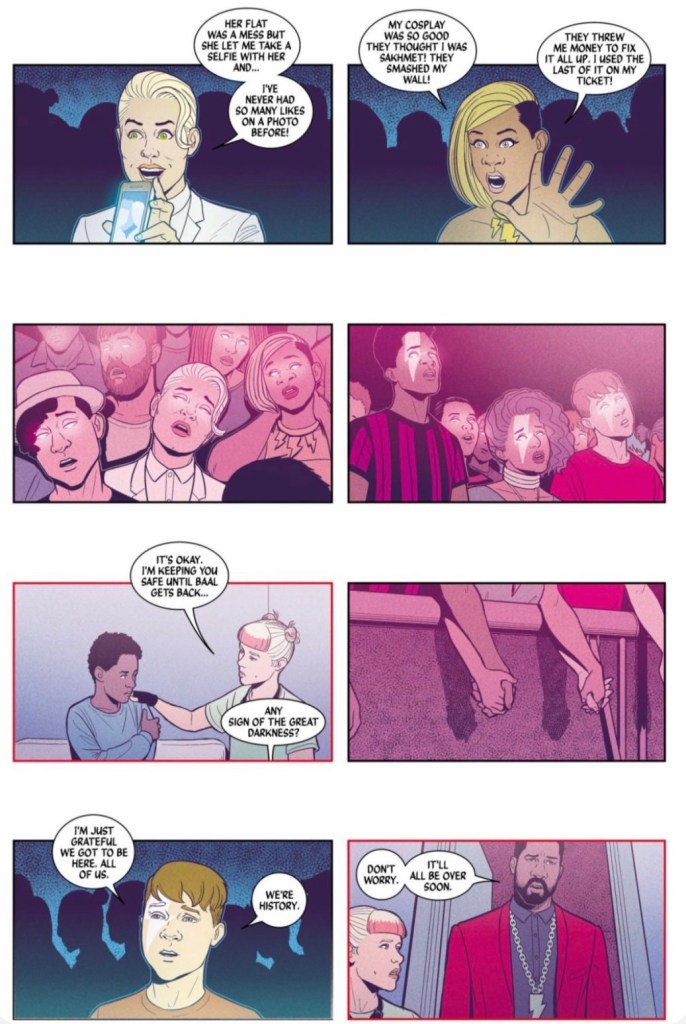
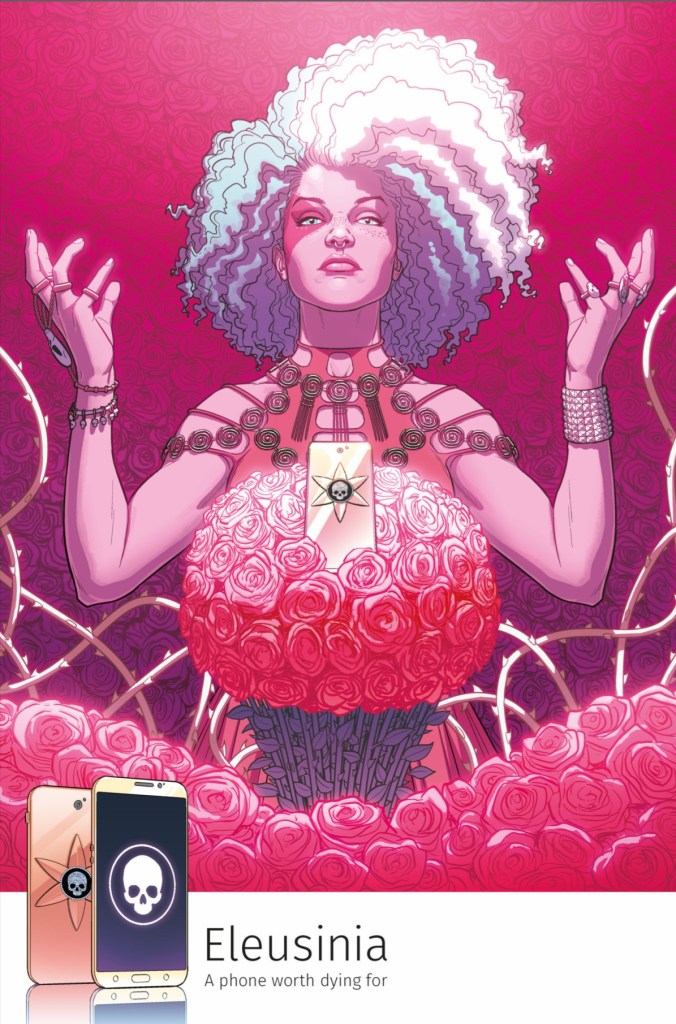
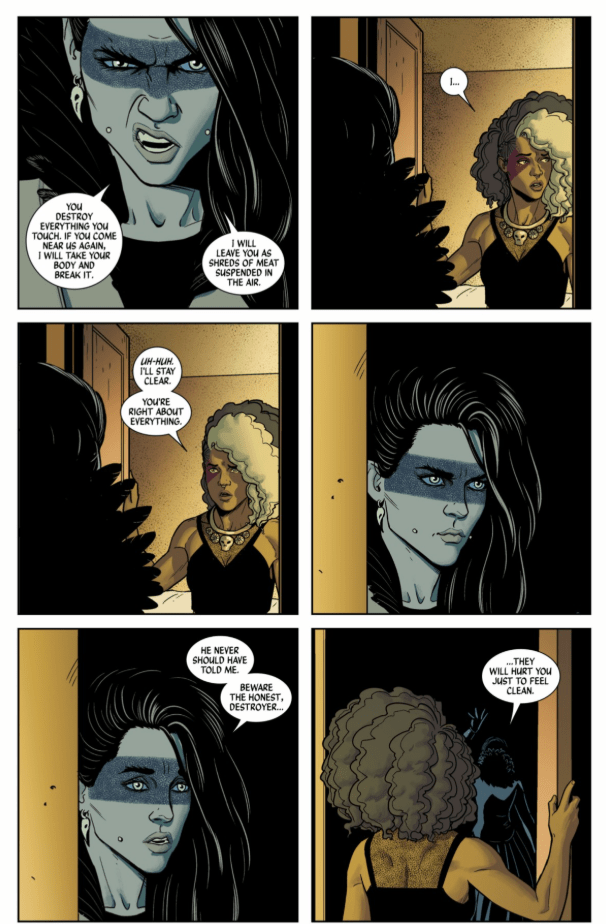
The Wicked + The Divine makes an interesting first impression. Like Watchmen, the succession of individual stories in the foreground has progressively bigger implications for the world in takes place in. Por exemplo-

Not every deity is included in every version of the recurrence.

Every ninety years, you see, twelve deities will seize a mortal avatar in which they will exist for two years before dying. Perhaps more accurately, the twelve will surface from below a living person’s identity. Such a person will realize that their life has been a straight arrow leading to that moment and they typically experience this as the emergence of their one true self.

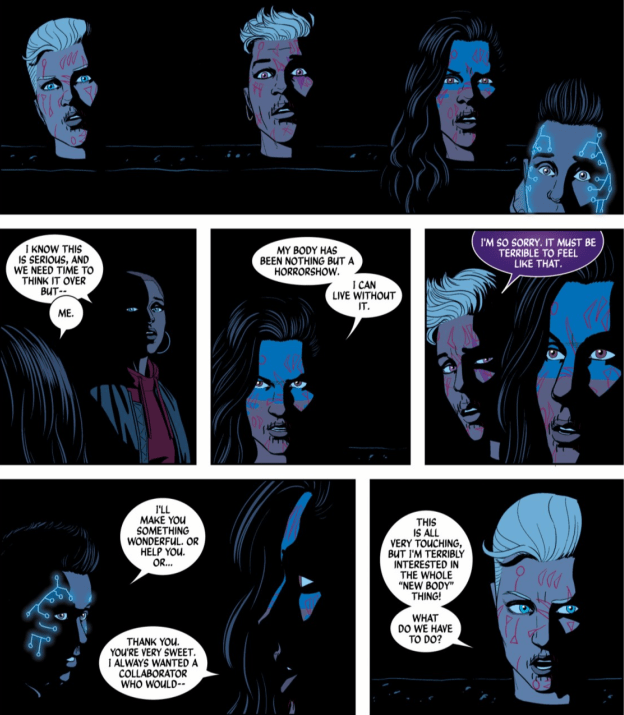
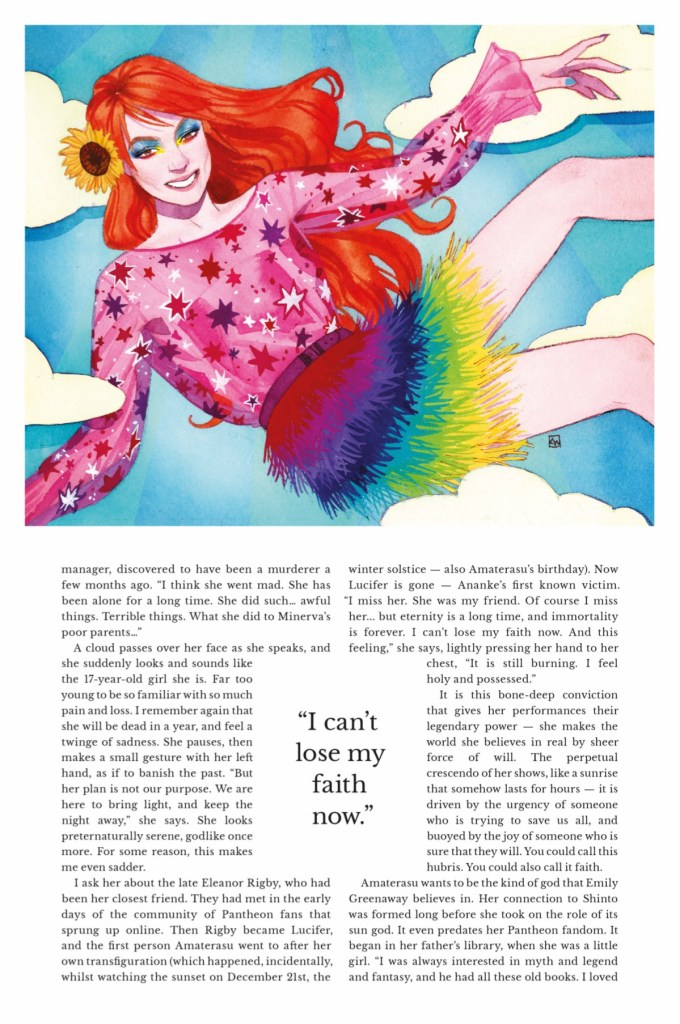
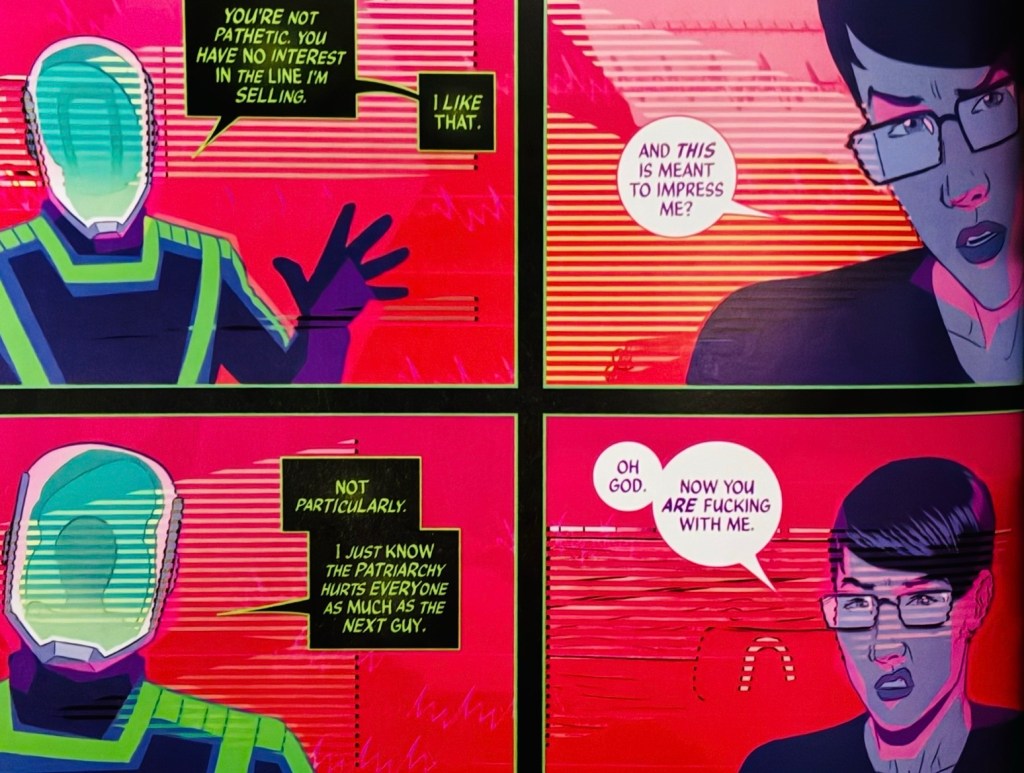
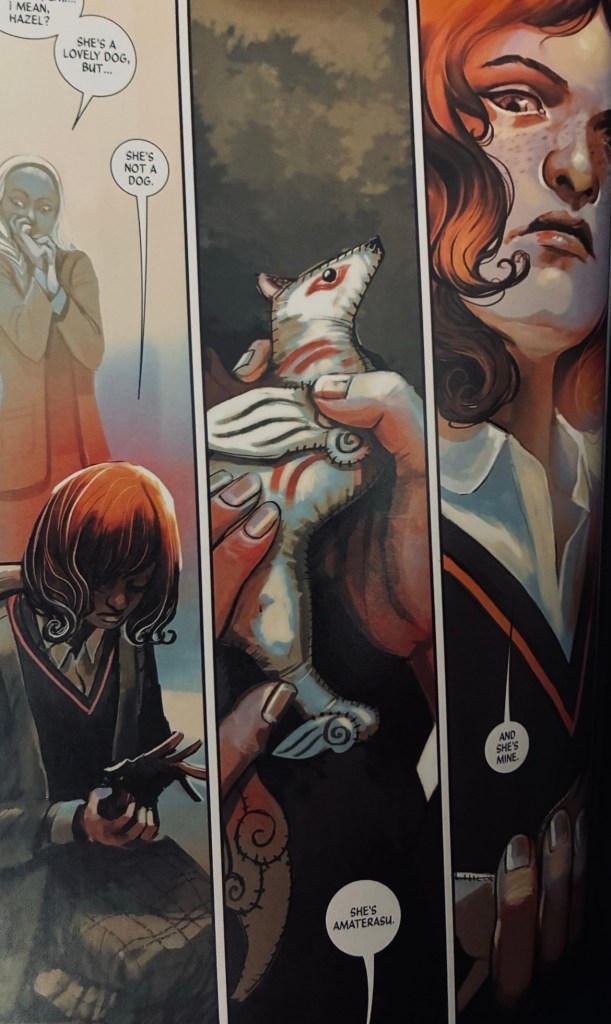
To be sure, the recurrence has regulars. Ananke, Baal, Minerva, the Morrigan, Amaterasu and a few others have been present for nearly all of the story thus far. Susanoo-no-Mikoto, the Japanese storm god, was briefly present in the beginning but (as of the end of volume three) never again. The present rendering of Odin is (so far) constantly wearing a human-scale, Daft Punk-like mech suit. Odin is also a passive, willing cat’s paw for Ananke which requires that he not be known well by anyone but Ananke (he’s also morally and emotionally bankrupt which is a happy accident under the circumstances).

His rapport with Ananke the matriarch, combined with the mech suit…makes me wonder if his life is prolonged without any participation in the recurrence (he says, in ‘Fandemonium’, that he would trade his two years for Luci’s months but who knows if that can be trusted). Ananke wouldn’t want him getting too close to anyone, after all, especially if the rest of the Pantheon are potential targets. If the suit is technology than that could have wonky world-building consequences…which may be on-brand. So far, we have no idea what the historical timeline looks like even if the subject matter tempts assumptions. You can approach The Wicked + The Divine with no knowledge of mythology and- so long as you’re willing to read closely and carefully -be okay.

Most people who pick this up, though, will likely have some familiarity with the subject matter. Which is, itself, incorporated into the backdrop. Contextual recognition is funny, though. As of the end of ‘Commercial Suicide’, we don’t know what the ancient world even looked like in this story, even though it’s easy to slide into assuming that these characters must have had some cumulative background going back to the dawn of humanity (at least) to the present. So far, though, no such thing has actually been spelled out.

There’s probably no reason to be that corrosively skeptical, right? Just because contextual knowledge puts you at ease does not make it definitionally wrong. The hope of confirmation or denial of context makes things exciting, though. Maybe I’ve been reading too many hyper-subjective comics for too long but I get excited when second and third parties within the story confirm things. While speaking with the media, Ananke implies that there is an institutional relationship between the Pantheon and nation-states.

So the Pantheon is not hermetically distinct from the “rest of the world”. It operates within it. At the beginning of ‘The Faust Act’, Cassandra the journalist approaches Amaterasu as if the Pantheon must be a bunch of deluded, dipshit humans. Her words and behavior, later on, reveal that this must have been a ruse. Even if she never believed that they are “gods” in the sense that most people mean it, she still understood from the begining that something supernatural is at work.

Cassandra, btw, gets really interesting really quick. She gets shafted by the implicit narrative sympathies of a few different scenes in book one. That, alone, ends up making her really mysterious. Then, as time passes, we see that Cassandra’s experience with the divinities is far deeper than it looked. She knows that they are supernatural beings whom goverments defer to and she’s unafraid of them. Kind of a Constantine vibe.

Cassandra’s constant narrative sidelining in ‘The Faust Act’ stands out, especially among all the other characters for whom strength is being seen and embodied. She is one of two characters (beside Laura, the apparent protagonist) who are perpetually outside looking in. Laura wants to join the Pantheon; Cassandra doesn’t. Because Cassandra is more willing to get her hands dirty, though, she seems to fall into the Pantheon’s orbit faster.

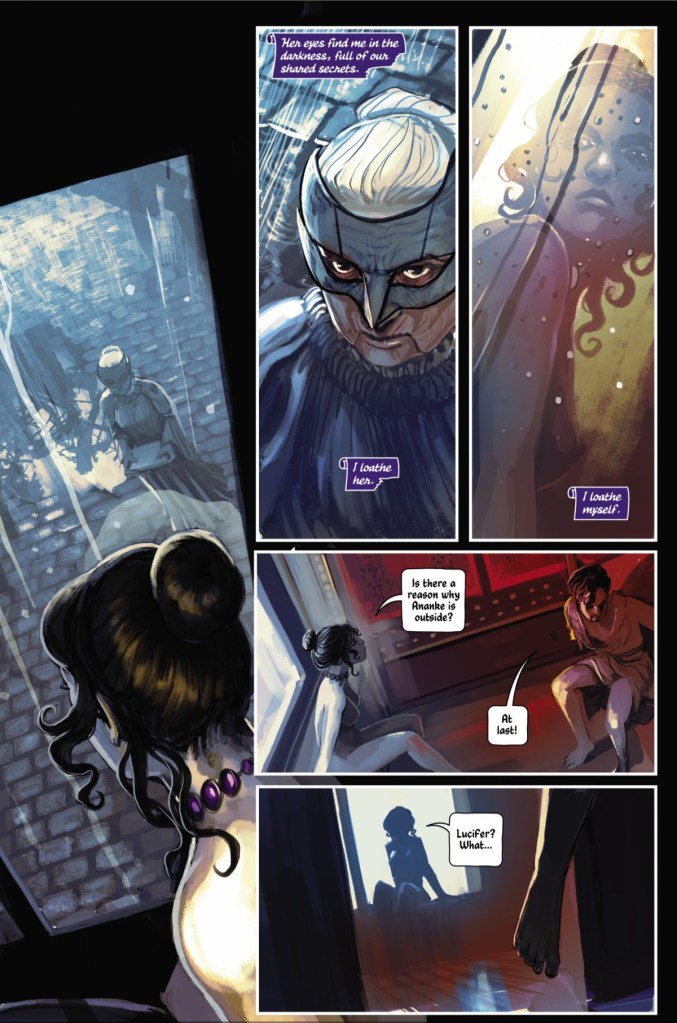
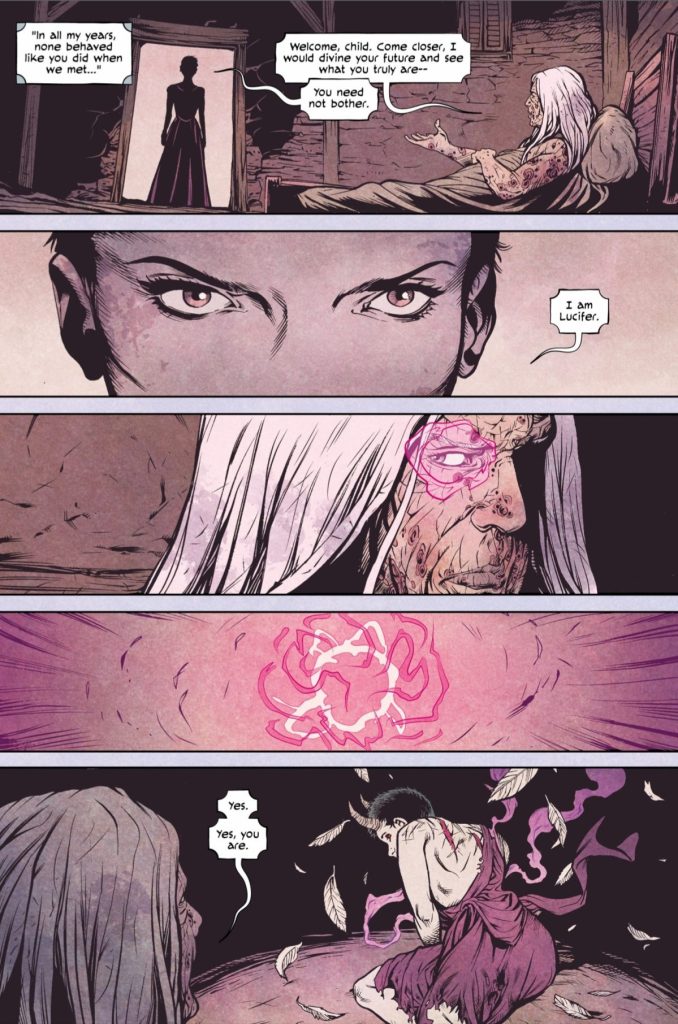
Oh, those groups of twelve that reincarnate every ninety years? They are permitted up to two years per cycle; dying early is definitely a thing. When Cassandra awakens as Urdr of the Norns in ‘Fandemonium’, it lines up with the looming deaths of Inanna and Tara, as if an absence is being filled. After Lucifer’s death, Laura briefly manages to conjure fire with a snap of the fingers and eventually awakens as Persephone. Three gods die early, two more emerge and Ananke is always present but never counted among the twelve.

Ananke appeared to kill Persephone as soon as she manifested but the first page of ‘Rising Action’ has a diagram of all fourteen deities that we’ve seen so far. Lucifer, Inanna and Tara are colored over in red and Persephone’s image is not.

The way in which some characters appear to come and go from the twelve feels important. It even echoes the ways in which character interactions happen consistently through euphemism, literal description and withheld contact. We’re probably getting way too close to the ‘real life analogues’ to be taken seriously but…the Pantheon seems to represent the highest echelon of power through embodiment and attention. However elevated the Pantheon may be in the mind of someone like Laura, it is not the end of the game: it is the one true game board and- while many rules are spelled out -just as many rules need to be discovered through practice. What the Pantheon represents, to most people, is unanimous: ultimate power and indulgence beyond which calculation doesn’t matter. That means all calculations behind that line happen in a kind of void. In that void, it is best to take everything with a grain of salt. No rule book, after all.

Which brings me back to how skillfully The Wicked + The Divine uses expectation. The familiar connotations of many of these names (Inanna, Lucifer, Odin, etc.) create the illusion of a logical starting point. Sort of like “Oh look, it’s this character and now they’re like this.”

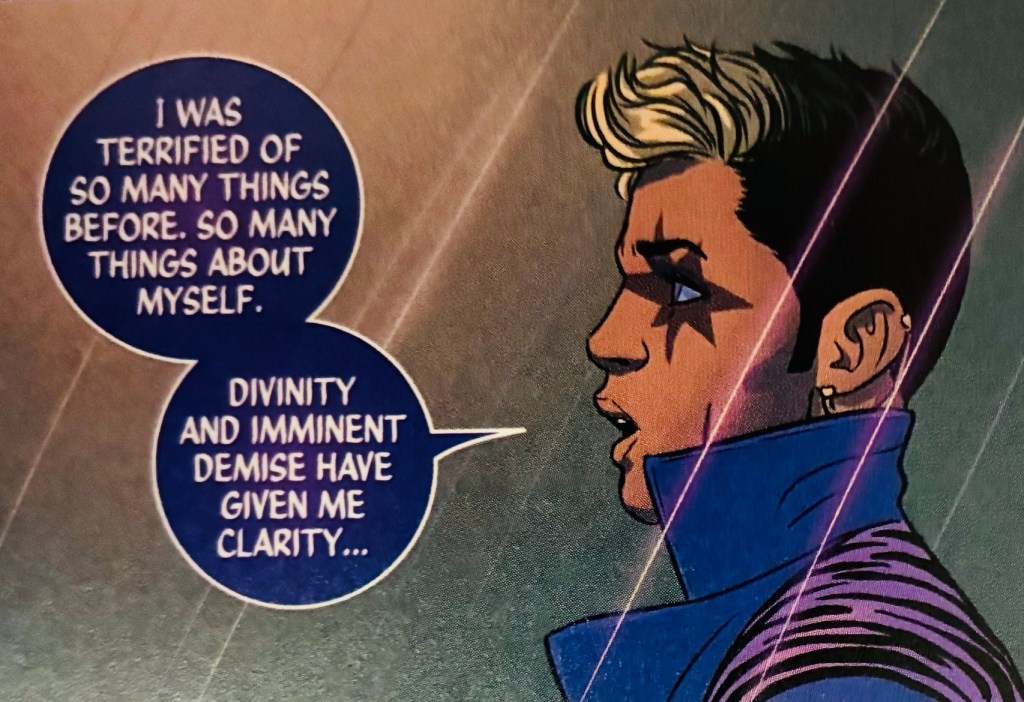
Once I learned how precarious that line of thought was, every other apparent reference stood out. The actual mythology of Inanna plays a subtle but inescapable role in my main non-blog writing project. Then, during Inanna’s first appearance in this comic, there is a star design over one of his eyes, which reminded me of the star from Bowie’s Blackstar album. There’s a brick on this site about that one and its thematic treatment of ceremonial sacrifice. A friend who is more visually attentive than I pointed out several of the celebrity musician character designs. Turns out I was way off on a few of them. The way Amaterasu interacts with other people and how other people treat her made me think of Grimes, at first. Kate Bush is a better match, though. Odin has an obvious Daft Punk thing. Lucifer and Tara are immediately evocative (to me, anyway) of associative groups of celebrities rather than specific ones. Lucifer and Tara are celebrities that put everyone’s teeth on edge: one of them thrives on animosity and Tara brings it out in other people no matter what she does or says.

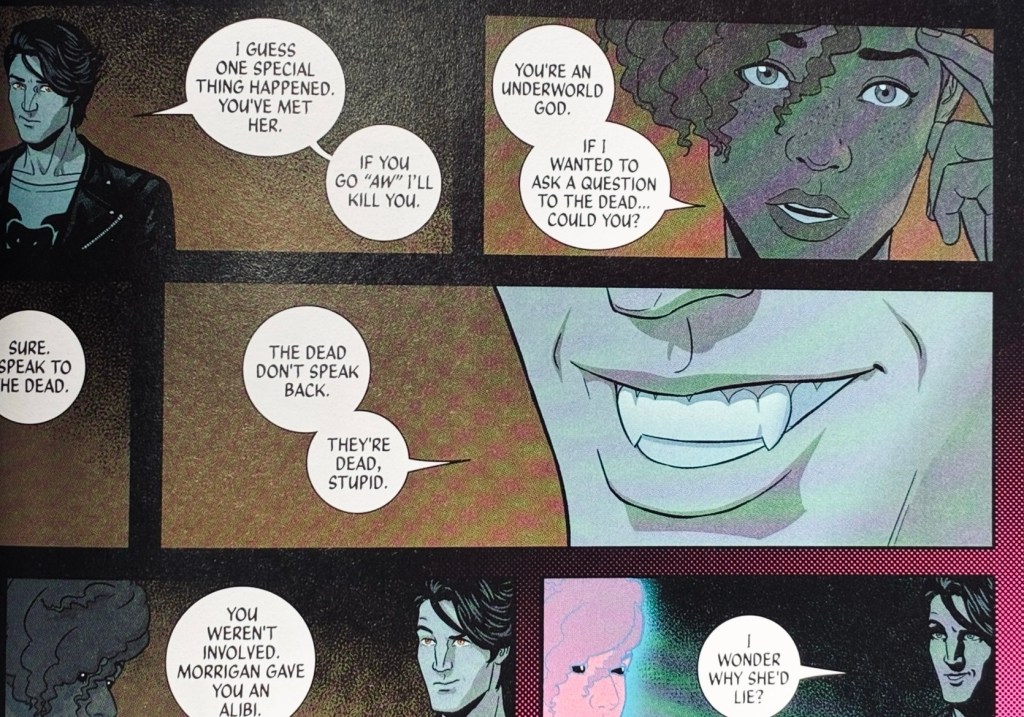
Speaking of Tara- her associated references don’t work on the same level as anyone else’s. Other people can’t even agree on what deity she represents or if she is somehow an original one. Baphomet is a recent emergence, after all.

Inanna’s actual appearance and diction is more reminiscent of Prince. Prince diction is not the same as Bowie diction. An anal person could spiral out from that. No, the Prince/Bowie stuff are just references; this is Inanna. Inanna is just a reference; this is actually an original character. The visual nods to famous musicians are just a thematic expression of the analogues with the cult of celebrity; don’t overthink it. The analogues with the cult of celebrity are modern lead-ins to timeless subject matter; don’t overthink it.

That cycle can easily cause someone to over-correct in the other direction: every visual and textual reference is REAL and immediately relevant. The dialogue between characters expresses itself in tiers of language, including exclusion. Perpetual dialogue that weaves in and out of language sews the seeds of a collective subconscious cosmology.

More to come, obviously

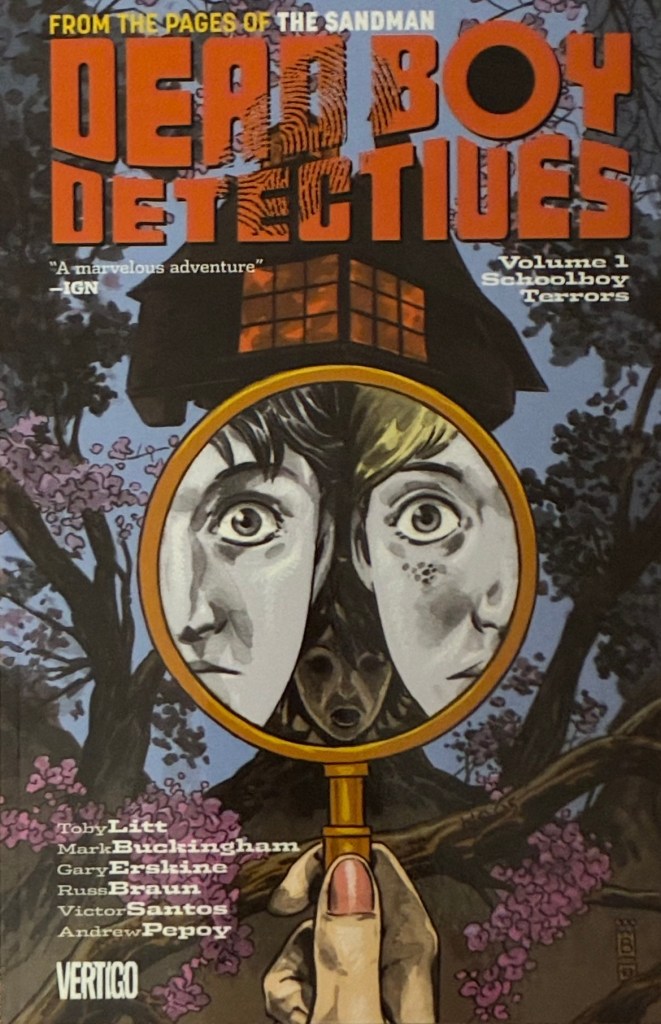
Dead Boy Detectives, volume one: Schoolboy Terrors (comic review)

light spoilers

Since these comics were released in 2013, there is necessarily a bit of a tone shift if you first met Edwin Paine and Charles Rowland in the ‘Season Of Mists’ Sandman arc. There were also a number of distinct limited run series between ‘Season Of Mists’ and ‘Schoolboy Terrors’, which shouldn’t trip you up too much if you just assume ‘stuff happened’ in the intervening decades. Since I read the 2024 Sandman Universe Dead Boy Detectives story and saw the only season of the Netflix show before this, it was neat to see the “origin story” of Crystal Palace.

Things begin (pretty much) in the treehouse office of the detective agency. A clairvoyant toddler loses her ghost cat and Edwin’s notes are instantly evocative of the client and the payment from the Sandman Universe story:

“CASE Number 42

Clients: Maggie Rosendale and her little sister Libby.

Payment: TBC

Request: Find Libby’s cat, Twinkle.

Further note: Please, PLEASE find Twinkle!

Twinkle is a cat.

Twinkle is a very special cat.”

In the SU story, the majority of the plot is far-removed from the chatty little boy who initially contracted them at the price of a “shiny card of MAGIC made of FOIL!” (They were “informed that it was VERY rare.”) Basically, the kid wants to know where his neighborhood friend went. Once they find her, the actual story begins.

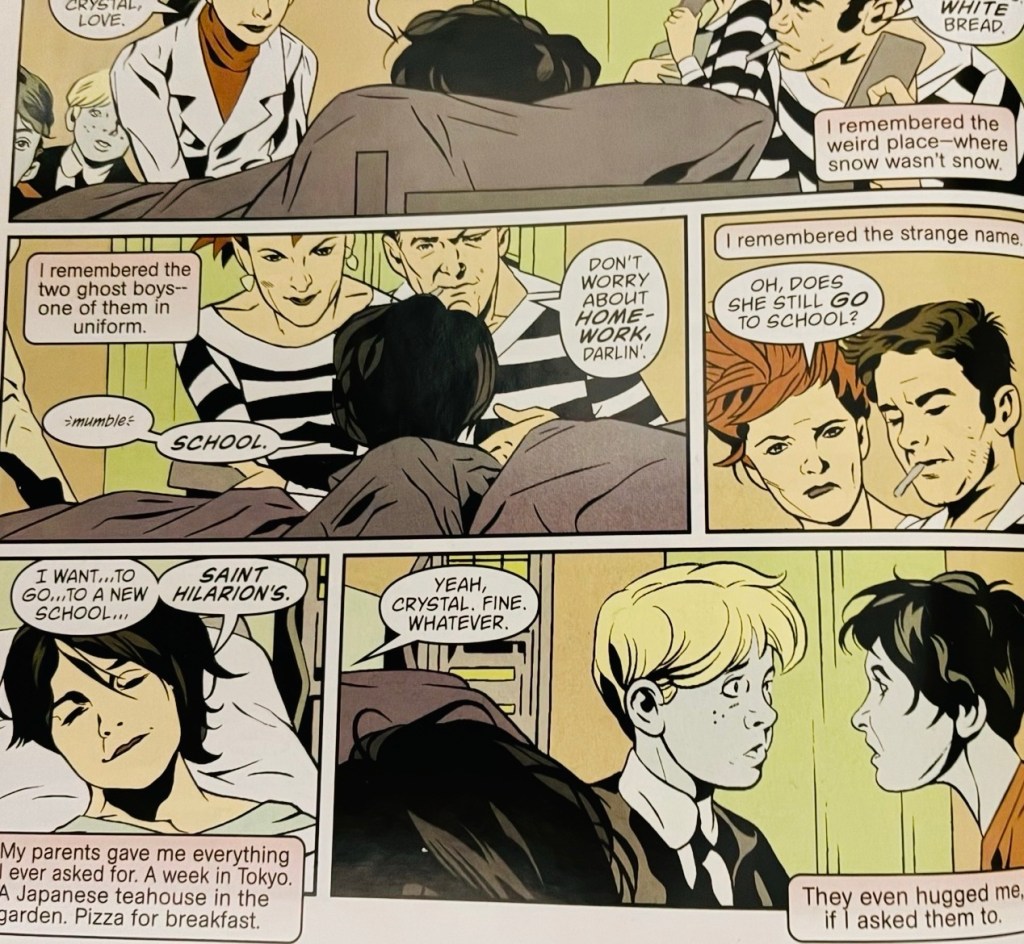
In ‘Schoolboy Terrors’, the client relationship largely comes through in where the dead boys decide to set up shop. By the end of volume one, the detective agency exists in a Japanese teahouse in a tree; a gift for Crystal Palace from her erratic, famous, absentee parents. It is decent plot-economy but the efficiency is quietly morbid. Charles and Edwin know how unstable Crystal’s home life is but Charles, Edwin and Crystal are still obviously kids- no matter what their chronological ages are. The reaction to the teahouse is therefore kid-like: it’s like a tiny furnished apartment with video games and an internet connection. It is simply ‘cool’. Crystal, meanwhile, gets two live-in ghost friends, which is also ‘cool’. At the same time, the reader can’t help but notice that the only reason the detective agency has a fancy new office and a third (living) detective is because Crystal hasn’t had a friend her own age in forever and her family is never present.

A Sandman reader will also notice that the ‘Schoolboy Terrors’ arc doubles as both Crystal’s portrayed origin story and a retrospective origin story for Edwin and Charles.

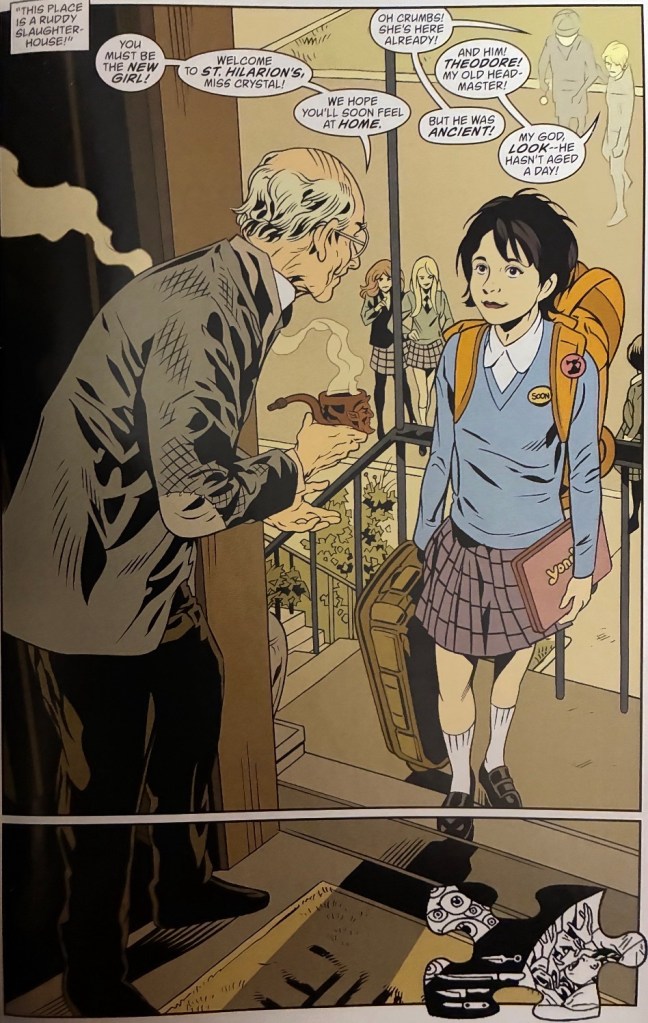
As it happens, Crystal asks her parents to enroll her at Saint Hilarion’s- the very school where Charles and Edwin were killed. The Netflix show did its own version in its final episode and it’s perfectly consistant with the show. While we don’t get a ton of flashbacks to the ‘Season Of Mists’ stuff, there are a few. There is also a great moment with Despair of the Endless.

I think I like the ‘Schoolboy Terrors’ version better, though. We actually get “on screen” appearances from the 1916 Headmaster Parkinson and the bullies Cheeseman, Skinner and Barrow- not to mention Headmaster Theodore, from Charles’ lifetime (very old and possessed by Parkinson). Since these ghosts returned to the site of their deaths after being turned out of Hell, they’ve maintained certain relationships with the authors of their misery.

(Note: ‘Schoolboy Terrors’ places Edwin’s death and the lifetimes of Cheeseman and Headmaster Parkinson in 1916. In the Sandman story ‘Season Of Mists’, the date is 1915. Not necessarily important; I just couldn’t help but notice)

Portraying Crystal’s online gaming in pictures and word balloons was a neat touch, especially given the relevance of psychic constructs and the other planes they can lead to. Speaking of that: the last story of volume one (issues five and six) connects Edwin’s memories of Hell with the psychic domain of cats. Issues five and six also feature the ghost roads, which I had hoped would appear in the Netlflix series. It even seems to lead into potential future stories. Without spoiling too much- Edwin, Charles, Crystal and two other ghosts need a last-minute escape route. Charles and Edwin can normally travel through the ghost roads instantaneously (“sqwooshing”) with little awareness of the disintegrating, conglomerating souls of which they are made. In the last story in volume one, they are forced to beg for passage, offering to carry messages and investigate things for the ghosts that let them through. Not quite as cool as the ghost roads and the kumanthongs in the SU story but a nice touch nonetheless.

Reading Requiem: Vampire Knight (part 2)

Content warning

Four volumes in, we know that realms analogous to different planets in a solar system exist in Resurrection. Yet going from planet to planet does not necessarily entail regional departure. At a glance, each named location in Resurrection potentially has its own version of interstellar space. This also seems to be the medium through which different vessels pass. To travel from Necropolis to Lemuria may be equivelant to entering a different galaxy.

As Rebecca intimated in volume one, different transmigrants end up in different places in Resurrection. Rebecca herself went to Lemuria, where we see both variable weather and daylight. Unlike the vampires of Necropolis, who see Resurrection as a shot at eternal life, a vampire hunter in Lemuria looks forward to ending their stint and transmigrating elsewhere. Often, they are assigned a specific vampire or group of them, whose deaths will allow them to trasmigrate beyond Resurrection. Because they look forward to a next step, they have no interest in establishing permanent settlements like the vampires or establishing new, Resurrection-based identities. Lemurians frequently discuss their human lives and bond with other dead people over their shared humanity, which raises questions about the ghouls.

Like vampires, ghouls have settled territory in Resurrection and intend to hold on to it, perhaps explaining in part why the ghoul pirates are historical enemies of Necropolis. Ghouls intend to settle down as permanently as vampires, without the crafting of a secondary identity. They swap stories of their human lives and bond over them, like the Lemurians, but ghouls mostly dwell on how injustices suffered in life made them what they are. Constantly refreshing their anger and bitterness from their human lives seems to give them a parallel edge to the vampires. If combat, to Necropolitan vampires, represents a carnal indulgence- a battlefield packed with victims with new Resurrection bodies circulating perfectly edible blood -then for ghouls it is a cathartic indulgence. Vampires simply enjoy drinking blood and holding on to their territory. Combat has the easy mental access of pleasure-seeking. For ghouls, it has the easy mental access of releasing long-suppressed rage.

When extra-dimensional rifts open in Resurrection, many are happy comb through the Earthling wreckage for technology and then destroy the remaining evidence. Necropolis has a whole professional caste dedicated to this called Archeologists, who understand this as both a duty and a natural law: Resurrection has a backward time flow. There is probably some truth to this, since vampires appear to age backward (unless they die in battle or suffer intrigues at home, in which case their soul may be either annihilated or go back to Earth, potentially to arrive in Resurrection again, like our main character). Cryptos, after all, is a creepy little ancient baby that reminds me of Garlic Jr. from Dragon Ball Z. Vampires worry about suffering the “senility” of becoming a teenager, child or infant again. Another sign that Resurrection stands beside the Earthly time flow is the spectrum of weapons which Necropolis has hoarded and reverse engineered: everything from far-future lasers to firearms to swords and maces.

Despite the ubiquitous fear of growing young and the visibility and power of Cryptos…it’s hard not to wonder about the whole truth. Early in volume one, Otto tells Heinrich that the fragments of Earth that show up through the dimensional rifts are “uncreated” by the backward time flow. That, at least, appears to be a lie, since the duties of the Archeologists include burying all traces of the fragments of Earth from different eras and timelines after looting them. If not a strict lie, than a cultural / institutional construct, since the disappearance of the Earth fragments is enforced.

Then…in the company of a recently transmigrated vampire, Otto says that the same cosmic tide that causes these rifts will also attract demons and dragons all over Resurrection. These cosmic tide / wave events require everyone to barricade themselves and wait it out.

Just like vampires, vampire hunters and ghouls…this usage of ‘demons’ and ‘dragons’ has specific in-world meaning. They are manifestations of negative emotions from sentient beings. Demons and dragons serve beings we’ve heard about a few times but have heard nothing specific about until now: the gods of Limbo. Otto explains further that the gods of Limbo are extra-dimensional beings that cannot be perceived from the third dimension. From the dimensional vantage point of Resurrection, they are some of the most deadly beings in that universe.

Parallels with the collective subconscious emerge and an insinuation that Resurrection is directly adjacent. Close enough for the puncture of one to two barriers to make all the difference. We’ve encountered other claims about the cosmology, though, such as the backward time flow. One wonders how much of the apparent ‘collective subconscious’ is organic and how much may be either misunderstood or institutionally enforced. There seem to be ordinary gaps between perception and understanding, as in real science.

The possibility of a timeline of these discoveries is intriguing: on one hand, Resurrection clearly exists outside of the time flow that contains the three-dimensional point of view. The diversity of the relics taken by the Archeologists indicate that Resurrection is, in fact, independent of any timeline or era. Yet institutional behavior and the intrigues and vendettas of the Necropolitan court tell us that Resurrection must have its own, subjective timeline.

Once upon a time, when the soul called Thurim had only just transmigrated from a lifetime as Heinrich Barbarossa, the vampire Nero annoyed him with his music. Nero took offense, challenged him to a duel and got his right arm chopped off. Since Nero ranked higher in the court, Barbarossa Thurim was tortured to the point of apparent obliteration by Nero. When the soul of Barbarossa returns as Heinrich Requiem, who became an SS officer and died on the Eastern Front during an attempted rape…memories start returning. Heinrich Requiem realizes it is essential that neither Nero nor Dracula ever learn that he carries the soul of Thurim.

Like the relative differences in progress between institutions in Resurrection, the existence of these vendettas also prove that Resurrection has its own hermetically-sealed time flow (whichever direction it goes in).

During the second half of volume four, Heinrich Requiem experiences his first conflict between duty and conviction. When Requiem was a living Nazi, he hid a Jewish lover in his personal estate. This woman was Rebecca. Eventually, Requiem himself is the one who rats her out to the Gestapo: he simply became a Nazi of conviction after a while.

Yet he is still dwelling on Rebecca’s memory and punishing himself for it just before dying on the Eastern Front. He mourns for the death and destruction he caused but cannot resist renewing his damnation when he encounters a Russian woman who happens to resemble Rebecca. As his soul descends to Hell for the second time, all illusions flee from him: all he ever did was take victims for his own benefit. He is a soul-deep predator and he refuses to look his after-death destiny in the face without accepting that fact. That acceptance made him a vampire in Resurrection (reminder: vampires are souls who were aware of their evil and are unrepentant).

Rebecca, having been dead for some time, is now a Lemurian vampire hunter. She tells him, telepathically, that if he kills his first vampire companion (Otto), then he can leave Resurrection with her when her time comes. He cannot bring himself to do this and once again they are separated by his inequity. All done already, in the past, never to be negotiated with.

Otto informs him that this is the healthy path for a vampire: the destruction of human identity and the establishment of an infernal one. The destruction of one’s mortal self is equated with the authenticity and credibility of their vampiric self. Part of this is black opium, harvested from a world in Resurrection called Atlantis. Black opium is used, by every vampire, to keep memories and feelings from their human lifetimes permenantly suppressed.

After Atlantis is surrounded by anti-Necropolis partisans who destroy their black opium stockpiles, Dracula is forced to consider other options. As a temporary stop gap measure, he launches a victim raid on Lemuria to soften the blow with more blood to go around. We are soon in the company of Rebecca and a new Lemurian flame: Sean, who lived and died in a different era. Rebecca and Sean get the jump on a company of vampires and- as Sean is running a massive sword through one of them -says “Let’s see how well his (Dracula’s) vampires fight without opium to help them forget their crimes.”

The regular use of the black opium is a genuine preference for most vampires and maybe most of them do it for the reason Otto said. Yet like the time flow, one wonders if there are other factors beyond the obvious. That early instance of Sean butchering a vampire implies that the black opium has another role that is more functional and less indulgent. I wonder if the whole taboo around suppressing and replacing human identity was engineered specifically to control vampires in the best way possible: leashing them with their own desire.

Throughout all this: Heinrich and Otto are two peas in a pod. Neither one seems to have a closer friend in Necropolis than each other. They even knew each other as humans: both were SS officers. Otto seems to be taking Heinrich in hand as simply a “younger vampire”…yet if their identities are meant to be wholly separate from your human self…maintaining human relationships (even ones that pushed you further toward evil) sounds iffy.

I’m doing my usual thing where I go through a comic / book / video game / whatever at my own pace and post as things occur to me. I like figuring things out and even the twists and turns of misunderstanding have their charm. I get that there’s online lore sources I could easily check this against. From where things stand now, though…it would not surprise me if Otto recognized Thurim for who he was, immediately. In that event, all he would have to do to ingratiate himself to the Necropolitan court would be to hand the soul of Thurim over to Nero and Dracula. What Otto may be doing is maintaining a private confidence between himself and Heinrich, in which one can express disloyal thoughts under the guise of one not knowing any better and the other correcting him. Otto is, by his own standards, undermining Heinrich’s vampire identity while creating a personal channel through which Heinrich may “leak” revealing information to him.

At the end of book four, Heinrich flees Necropolis with Rebecca, who was taken captive after the Lemurian raid. If Otto was surveiling and undermining Heinrich, his success or failure may soon be apparent.

The Queen of the Damned comic reaction

Eighties glam rock Lestat

Spoiler warning

While the absence of Lestat as the narrator makes things less immersive than the Vampire Lestat comic…the original Queen of the Damned easily translates into pictures and word balloons, what with the number and diversity of characters, events connected by vast distances and vampires breaking cover. Anyone looking for a straight-laced adaptation would have little to complain about. To the best of my memory of the book…I think every single scene made it into the comic with varying (but admissible) degrees of faithfullness.

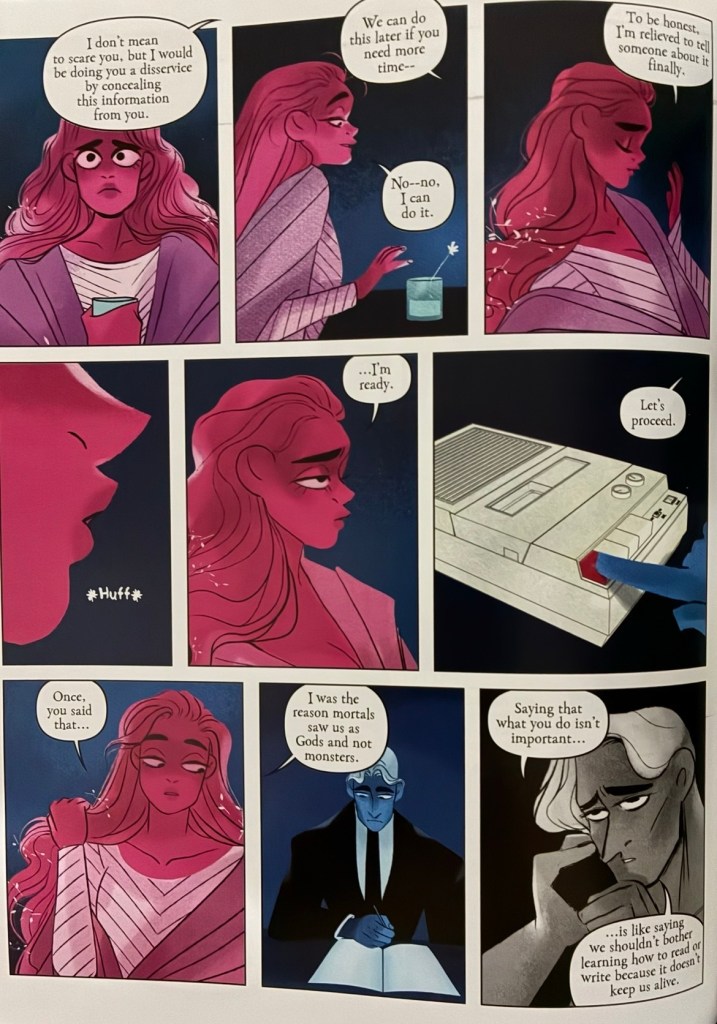
The art is neat to. A few scenes, like Maharet visiting Jesse in the hospital, almost remind me of Dave McKean, who would have been a rising star in comics at the time. The scene below reminds me of McKean’s art in Neil Gaiman’s Black Orchid, which felt equidistant between genre-savvy comic art and photo-realism. And, of course, a ton of shadows and pale lighting (most of Black Orchid happened at night to).

The degree of realism also roots us in the present of the book- 1984. I was a little surprised by Armand’s twentieth century presentation, here. My impression of Armand (as depicted in the books) was of someone who is recognizably non-binary, erring slightly toward femininity.

This is where the diminished immersion became a bit more clear to me. When I first read The Queen of the Damned, the relationship between Armand and Daniel was one of the sweetest and most engaging parts of the whole book. That was probably when he started to become one of my favorite characters.

Armand, on the lower right, in the white shirt. Admissible but I don’t think I ever imagined him with hair like that

One thing they could have done was spend more time in the early stages of the rapport, when it was at its most chaotic. The restaurant encounter- when Armand orders literally everything on the menu because he wanted to order for Daniel but didn’t know what he liked -should be its own scene. It’s depicted here but I would have liked to have spent more time in that moment. It also would have been nice to see more of the early, late-night visitations, when Armand surprises him at one in the morning because he wants to talk about the book he saw on Daniel’s nightstand. Or shaking Daniel awake because he wants to talk history and philosophy. Spending more time in the early, uncomfortable stages would have made the tender moments hit harder. To be fair; all of those moments are depicted in the comic but only briefly.

Not endemic to the comic but Anne Rice in general: a lot of her vampire-human relationships are more interesting for not having the moral framing of recent stories. There’s a huge market out there for people who love morally inoffensive vampires. Anne Rice never made any bones, whatsoever, about vampires being non-human beings with non-human perspectives. If Armand and Daniel are an example of the encounter ending (relatively) well then The Tale of the Body Thief shows us both the delicious and horrific possibilities. A happy ending is possible but it can end a million other ways to.

I wonder if Stephanie Meyer would have triggered the backlash she did if she was less eager to make Edward Cullen morally white. I never read Twilight but I saw parts of the movie and it seemed so determined to make Edward cuddly that his predatory, vampiric behavior was just…a bald inconsistency. So when he started doing predatory things to Bella, it smacked of hypocrisy and Meyer’s determination not to acknowledge that darkness raises the spectre of actual, sublimated misogyny.

This was also neat. I really liked the Stan Rice poetry that Anne used as epigraphs so often. The Cannibal poem is the only Stan Rice epigraph here but its usage establishes a nice, solitary and emotional beat before we see Lestat in the arms of Akasha for the first time.

Only eleven of these comics were commercially released before Innovation Comics went under but the twelfth surfaced online last summer.

As of this writing, the portrayal of the final confrontation is the most faithful out of any adaptation (fingers crossed for some later season of the AMC show?).

The Queen of the Damned film didn’t even make an effort. Just a giant vampire brawl.

See…the confrontation in the novel was a debate. Not a single vampire can resist Akasha on their own so they spend most of their energy trying to talk her out of reducing the male population by ninety-percent and assuming autocratic control over the globe. No film studio at the time was going to portray a supervillain that specifically targets men.

What gets lost in translation are the moral stakes. When Lestat wakes up in the twentieth century, he is delighted by the rise of secular humanism and at least some progress being made in gender equality. Those were things he never would have anticipated happening during his human lifetime. He saw humanity begin- however awkwardly -to graduate from the world he once took for granted. This theme reappears when he finds Marius, who believes that the Enlightenment was the greastest step forward the west had taken thus far.

Confronting Akasha was the first time that we got to see this optimism challenged. Marius had some of his most glorious lines in that battle. To paraphrase: humanity has fucked up a lot in both the ancient and modern world. But look at the new ground that was broken in the twentieth century. Do we really want to take humanity’s destiny from them just as they’re starting to peck out of the shell?

The dignity of humanity versus the belief that humans are stupid and helpless and need a stern parent to keep them in line. Yes it’s a debate. Yes a debate is people talking. But it was one of the best scenes Anne Rice ever wrote. No it is not Helm’s Deep but it is a climactic fantasy battle.

The comic keeps it concise: most of the lines are spoken by Akasha, Maharet and Marius. Objectively, you can’t complain. I missed Louis’s appearance, though. In the book he is silent for most of the debate and then butts in assertively. Louis was the weakest vampire present and Lestat was shitting bricks because he thought Akasha was going to incinerate him on principle. Akasha herself appreciates his bravery even if she’s not convinced by him.

That’s my one note for the ending and I guess its more of a nitpick. Otherwise: wonderful comic

Among the portrayals of the Children of the Millennia, Pandora matched my mental image the closest

On issue 12:

https://www.comicartfans.com/galleryroom.asp?gsub=241532

Waking Hours: The Dreaming, volume 4

Art and colors by Javier Rodriguez

Spoiler warning

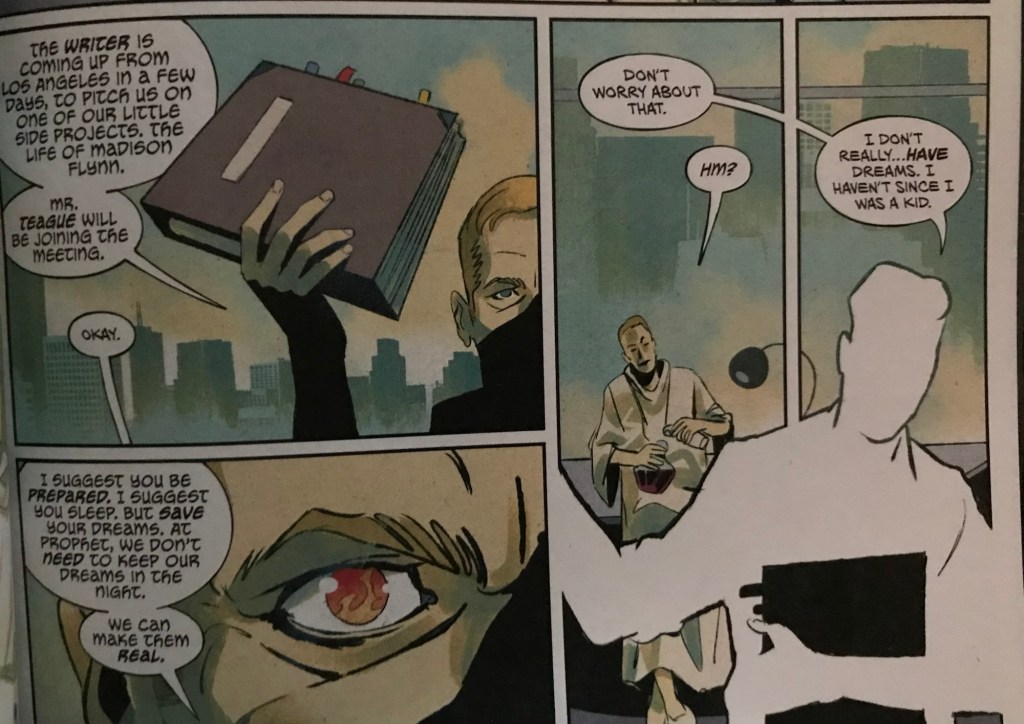
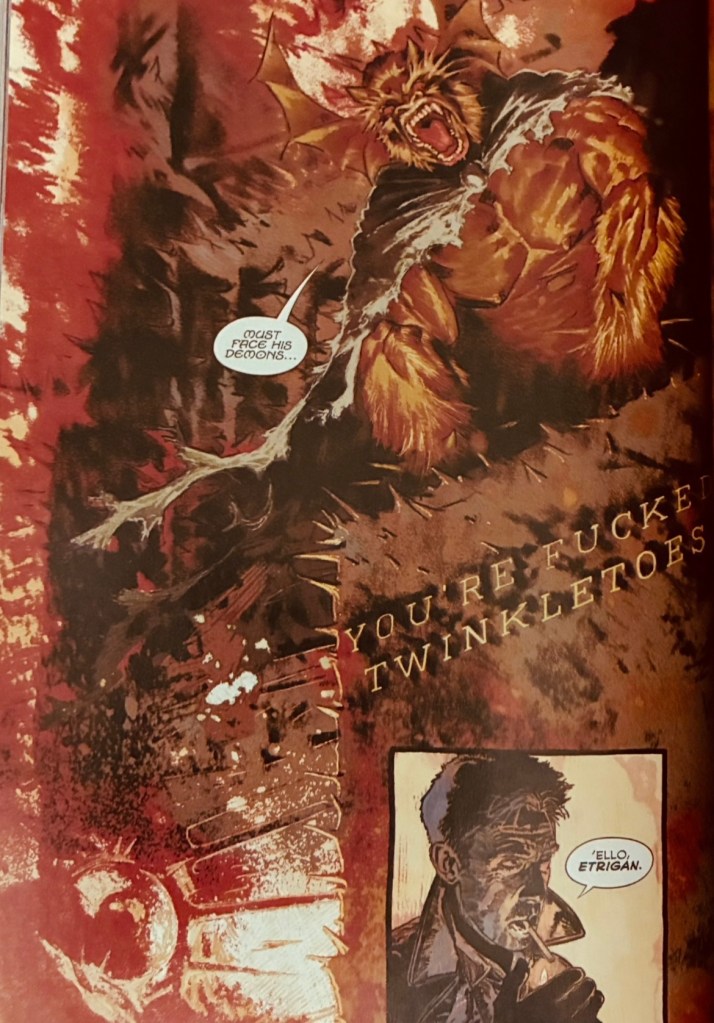
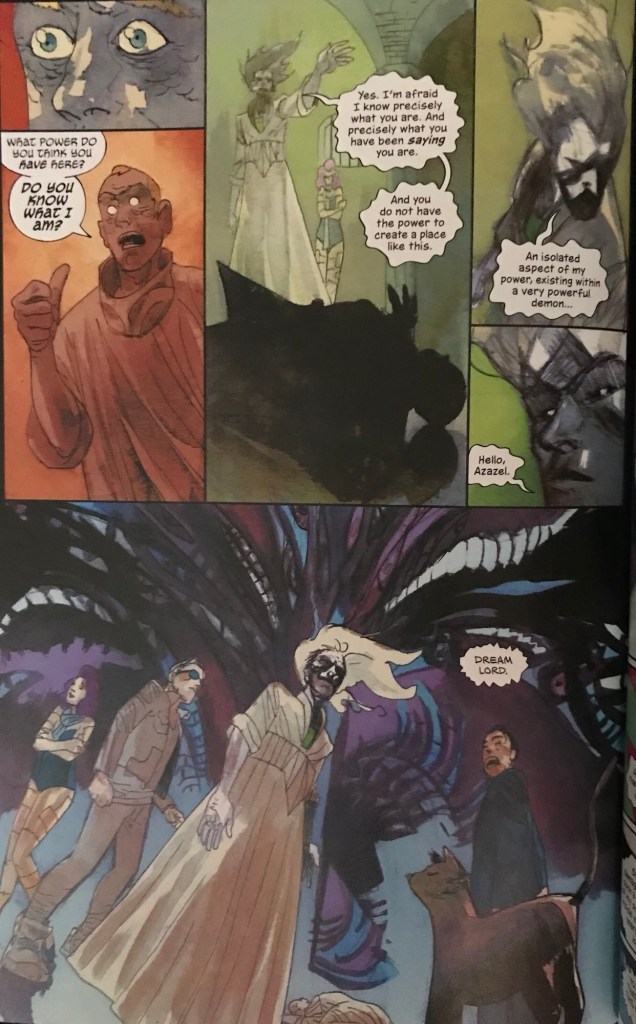
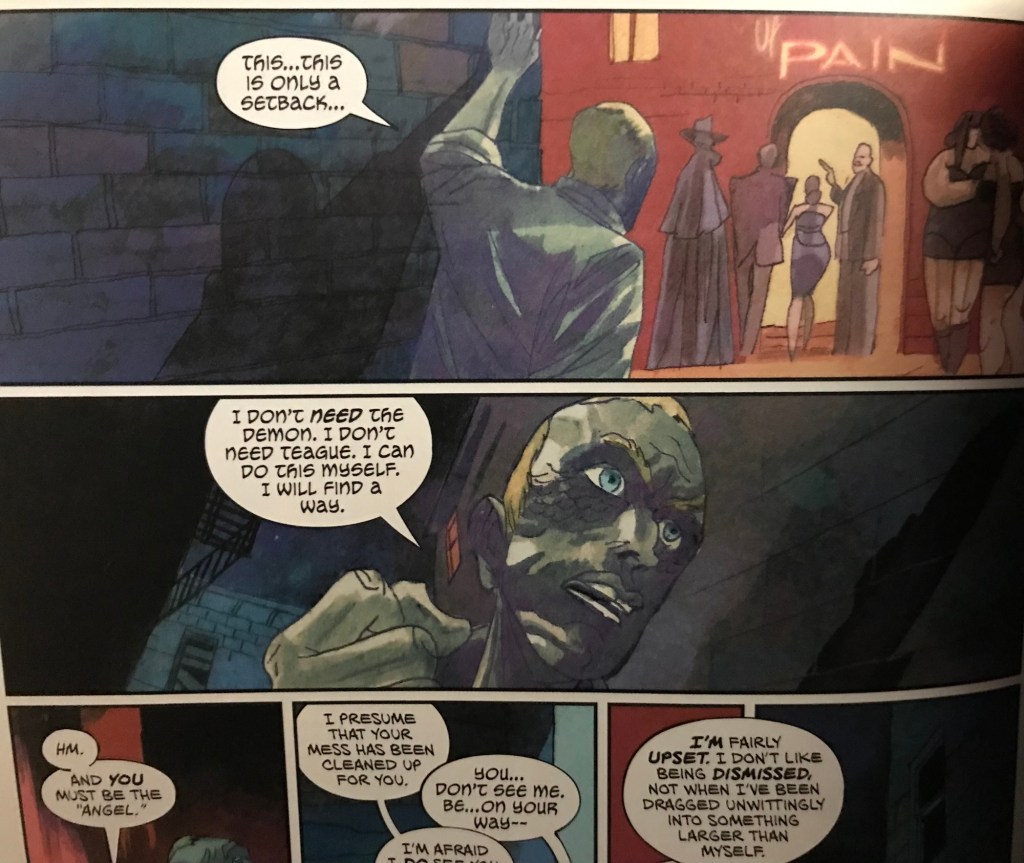
Judging from where things went with Nightmare Country, I wonder if G. Willow Wilson was working on a related concept in ‘Waking Hours’. Volume four of The Dreaming came out roughly at the same time as the first two Sandman Universe Hellblazer arcs and I think all of those were out by the time Nightmare Country ramped up. As Nightmare Country has Madison Flynn and the Corinthian, the fourth book of The Dreaming has Heather After and Ruin. Also like Nightmare Country, the main human and the main nightmare have a dynamic that ropes in other more short-lived events.

A Shakespeare scholar called Lindy Morris dreams something at the wrong place at the wrong time.

Ruin is a nightmare who escaped from Dream’s quarantine/prison chest with the help of Dora (remember her? The Night-Hag from the first three arcs? She’s now something of a mover-&-shaker at the World’s End inn). Why? Because he fell in love with the first human he tried to hunt on the astral plane. So after escaping, he breaks into the waking world using Lindy’s recurring Shakespeare dreams as an entry point.

Thing is, crossing dimensional boundaries in both a tangible and autonomous state requires serious magical investment. Ruin pulls it off because he accidently shifted Lindy’s tangible body into the world of her recurring dream.

Our main human character, Heather After, is a magician with the mind of puissant gambler; undaunted by the need to put some skin in the game to get things going. She was mentored by John Constantine though, so maybe that’s to be expected (Constantine’s quite the magical educator, isn’t he? First Timothy Hunter then Heather After).

I love the ‘Promethea’ vibes in this picture. ‘Intermezzo, Part Two’ cover art by Nick Robles

What’s more: she’s handled the transactional nature of sacrifice well in the past. Arguably.

She once attempted a summoning for what she described as a “nice, chill little fire spirit with the intelligence of a goldfish”. Instead she snagged the cherub Jophiel who promptly threatens her in his flaming, lion-headed, multi-winged form. She lets him go when asked and earns a tiny bit of good will.

Around that same time, Jophiel was attempting an astral dialogue with a young Catholic seminarian called Benedict, who had the potential to become the next Pope. Jophiel is channeling various visions and whatnot which- due to Benedict’s human nature -must occur in the theater of dreams. That means that it’s occuring within the Dreaming. Because of this, other dream-kind have enviornomental access which is how Ruin found him and well…you know how Ruin fell in love with his first human victim?

Once Ruin got involved, Jophiel’s intended visions got derailed and Benedict dropped out of seminary. Jophiel is subsequently punished for his failure with temperory banishment to Earth.

The overlooked nail that catches on the sweater is a recurring plot device in this story. Once Ruin makes it to the waking world, he looks for the only person he knows there: Jophiel, who hates him and immediately tries to drop him off on Heather’s doorstep.

Heather hopes to rescue Lindy through an indirect, adjacent entrance to the Dreaming: Faerie. She combs through the ether for a being that’s closer to Faerie than they are and hooks Robin Goodfellow. Being rather less of a negotiator than Jophiel, the Puck swears vengeance for the temporary abduction. Heather, Ruin and Jophiel dodge his immediate wrath but he keeps his word anyway.

In the meantime, we are alternating with Lindy’s advantures in her dream construct. The Lindy arc succeeds as its own story but Sandman readers will wonder about the role of William Shakespeare. Especially since the SU Lucifer also riffed on the in-uinverse relevance of Shakespeare. It essentially depicts the in-universe events that shaped the idea that Dream imparted to Shakespeare, later to become The Tempest.

While we don’t get the kind of detailed flashbacks that SU Lucifer had, Shakespeare’s prior Sandman involvement comes through. Lindy becomes convinced that her dream will end if she solves an ongoing argument in her inescapable dream-house: she’s trapped with a bunch of different Shakespeares who are all convinced they’re the one that derived from the real, historical author. Details from the ‘Midsummer Night’s Dream’ vignette within Dream Country provide a random memory that one of the Shakespeares lets slip. This blurt gives Lindy an early, vital hint.

Like I said, it works fine as its own story. There is another possible association, though: Shakespeare is, potentially, the only one who spoke with Morpheus about the angst that drove him to suicide.

Daniel, the current incarnation of Dream, feels the stirrings of Morpheus-era memories.

Speaking of those: Heather After is the granddaughter of Roderick Burgess- the guy who trapped Dream for eighty years during the early twentieth century. In fact- unless I’m missing something -it seriously looks like Heather is John Dee’s bio-daughter. Like, Doctor Destiny, from ‘Preludes & Nocturnes’; the Justice League villain who tried to claim Morpheus’s Ruby.

We aren’t given the exact details of her origin; save that she grew up in the lap of the Cripps family, whose magical heritage is at least as potent as the Burgesses, considering how a lawyered-up meeting goes between them during the reading of Ethel Cripps’ will.

On her deathbed, Ethel told Heather that she has no reason to be dependant on the Burgess family. Judging how Heather takes this information, I wonder about the kind of relationship the two of them had. Heather is a transwoman and it looks as if Ethel was the only one in the family who accepted her when she first came out. The chosen family dynamic is not spelled out in so many words but Heather’s reaction to Ethel’s death is telling. Ethel appears to have been the only adult that defaulted to her chosen name. She barefaces her way into the will reading, claiming to just want some of her grandmother’s personal effects to remember her by. Heather swipes a grimoire and casts a barrier spell behind her on the way out, leaving the Burgess and Cripps lawyers panicking and slinging spells at each other.

I did say she had a history of successfully managing risk.

Coulda did better with the Puck, though. If you piss off one fairy then it pays to have either fairy allies or negotiation leverage with other fairies. She manages to persuade Auberon to help her out but only in exchange for a favor.

Nuala has deposed Auberon and Titania and they want their throne back. Auberon does, anyway. Titania would like it back but spends most of her time as one of Nuala’s cringing courtiers.

It’s tempting to wonder about the tension that was growing between Nuala and Titania during ‘The Kindly Ones’; buried romantic or sexual jealousy over Morpheus. The Netflix miniseries brought some of that closer to the surface but it was evident in the original comic as well.

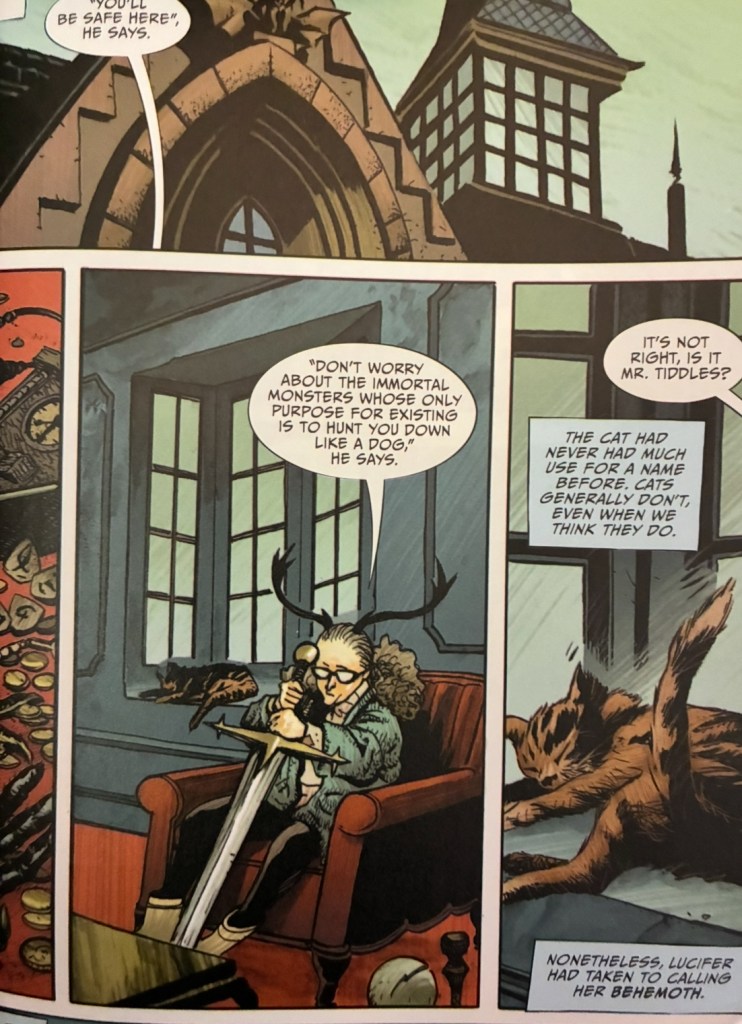
I also couldn’t help wondering about Cluracan’s nemesis: the being he created by bumping into some raw creative energy in Dream’s castle. Off the top of my head, I think he eventually refers to himself as either the White Stag, the Wild Hunt or possibly both at different times. I wonder how relevant the second moniker is, since other beings use that name in the third SU Lucifer book. I’d be surprised if Cluracan’s nemesis was the same Wild Hunt that Lucifer crossed paths with. The Wild Hunt in SU Lucifer is an ancient and ineffible cohort, almost reminiscent of the Kindly Ones themselves…whereas Cluracan’s nemesis is relatively young. To say nothing of the possibility that the shape-shifter filled the void of the Hunted God, which Lucifer previously believed to be annihilated.

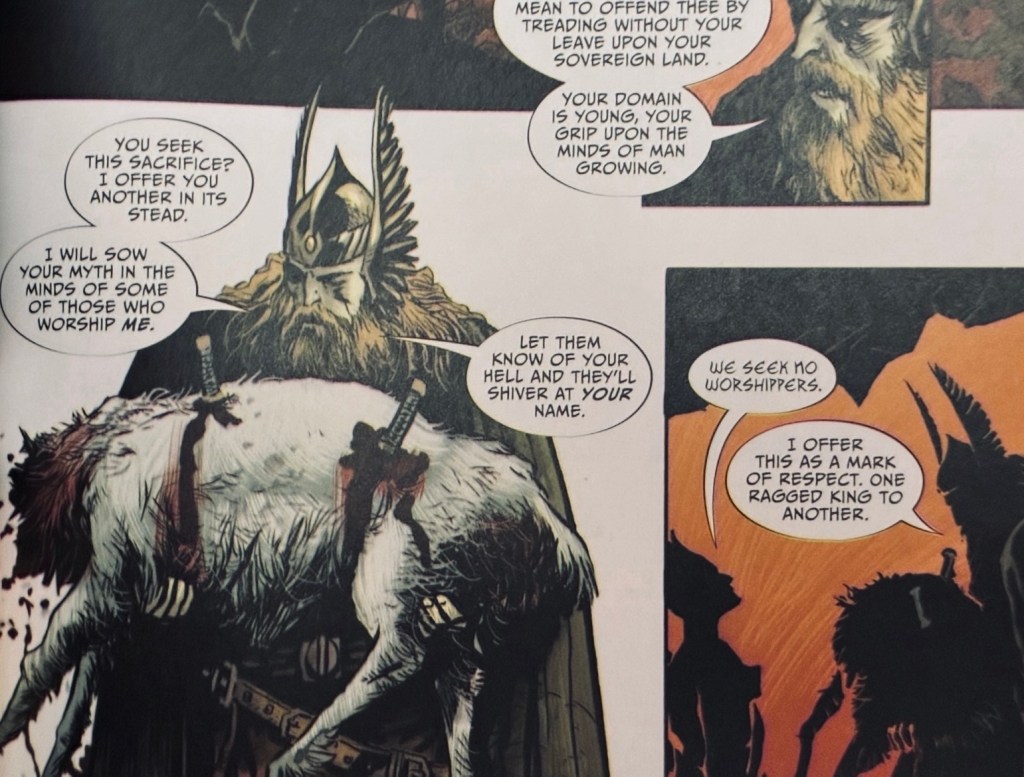
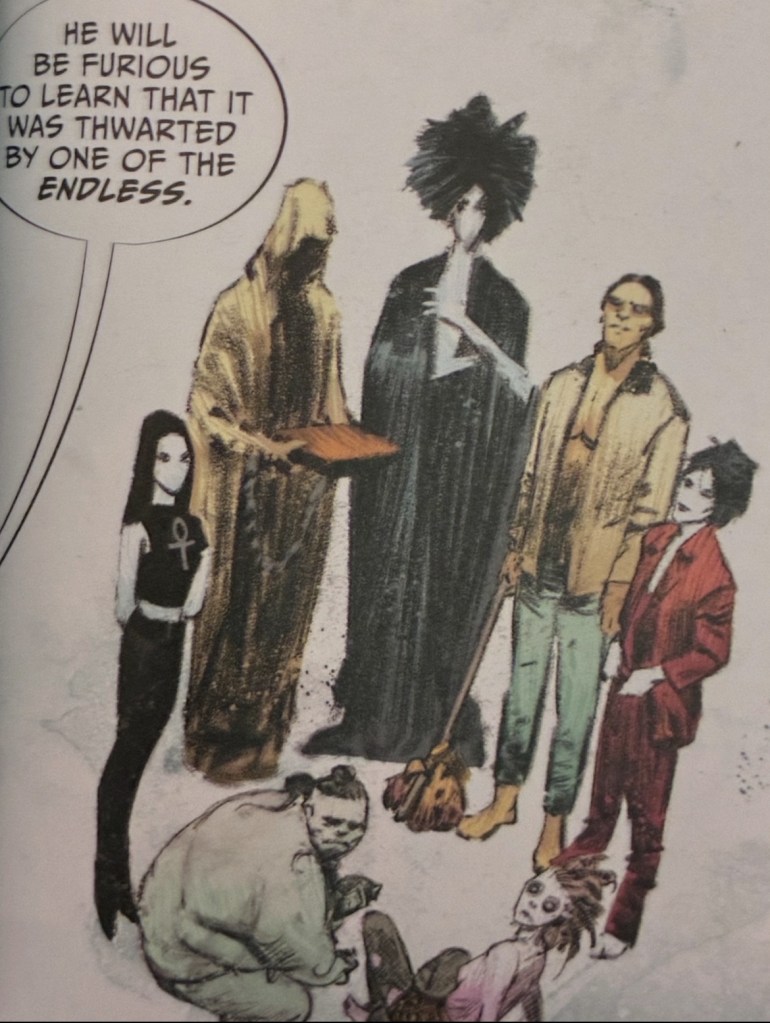
(I hear that the first run of The Dreaming snipped that loose end but I can’t help being attached to the theory that Cluracan’s nemesis somehow went on to become the Hunted God in SU Lucifer. In ‘The Wild Hunt’, Odin says that Lucifer’s doom was set in motion by one of the Endless)

Anyway, Cluracan’s shape-shifting nemesis gives Nuala almost as much shit as Titania does in ‘The Kindly Ones’. He appears in the shape of Cluracan to threaten Nuala and gloat over her during ‘The Wake’.

We do get Nuala’s version of things eventually but it’s rather short and not very specific. She makes no mention of any party external to herself, Auberon and Titania except the Unseelie. From the context offered here, the Unseelie were always present in Faerie but never rose to the level of visibility as the Seelie characters.

As for the ‘Waking Hours’ characters, everything that has happened so far either dates back to Heather accidentally summoning Jophiel or accidentally summoning Robin Goodfellow. I don’t recall any specific reason to think that Heather’s summoning of Jophiel played a part in Jophiel’s failure to guide Benedict but it feels plausible. In any event, Jophiel blames Ruin exclusively.

I mean, she seemed to accidentally summon Jophiel shortly before Ruin showed up? And Jophiel being who he is, I don’t think he’d be civil and friendly with Heather if he thought she had anything to do with it.

Even if that one is open and shut, though…none of the second half of ‘Waking Hours’ would have happened if Heather had not snagged Robin Goodfellow at the beginning.

There is nothing to be immediately deduced from this just now…except for Dream’s belief that a nightmare (Ruin) wandering different planes “has brought old evils to the waking world.” When he examines the hospital room where the curse from Puck’s blade grew out of control, he says “(t)here is a coalescing in this place…the spiral of time doubling back upon itself…warning us that that which has happened before will happen again”.

We have also known, since the beginning of ‘Waking Hours’, that a descendant of Roderick Burgess is involved. Dream has only lately figured that out which he probably took for confirmation. Since Dream attributes all this to a nightmare outside of the Dreaming, his suspicions probably run closer to Jophiel’s.

It is also evident when Dream decides to take Ruin back to the Dreaming. He sees the localized effects of a localized cause. This part is also interesting because Dream shifts from distant observer to direct participant. His position- relative to the other characters -becomes antagonistic. Possible foreshadowing of later developments in Hellblazer and Nightmare Country (perhaps going as far back as House of Whispers)?

In all fairness…Dream’s role in the later Sandman Universe comics has been closer to strict neutrality rather than antagonism but- considering how ‘The Glass House’ ended -that shade of gray is going darker. His behavior in ‘Dead in America’ also stands out in contrast to Morpheus. Morpheus was a stickler for the rules and had zero compassion for those on the losing side of them…but he didn’t exactly relish flexing on his enemies like Daniel does.

I wonder if ‘Waking Hours’ was the early turning of this corner. I wouldn’t be surprised if the third volume of Nightmare Country sees Dream getting even more cozy on the dark side.

The Vampire Lestat (comic review)

Kudos to my friend Tibbie X for letting me take these off her hands

This is a straight-laced, faithful adaptation. Which does not guarantee success. Worst case scenario (with comics, anyway) is a kind of paraphrasing or summary that is accompanied by pictures rather than taking place within them.

This comic prioritizes the novel’s first person narration and therefore takes heavily from the actual text of the book. To their credit, it looks like Perozich and Gross only wanted to draw the book. Allowances for context between mediums were made but, whenever possible, the text will consist mostly of Anne Rice herself, as Lestat’s internal voice or the various characters.

At the same time, it is not a complete reprint of the book. The first person narration is therefore scaled back whenever the immersion is served better by a purely visual sequence. This is a small thing but it’s a good sign. It says that Perozich and Gross don’t feel like the comic medium is an awkward obstacle that they have to work around rather than with. As good as it is here, though, it wasn’t the visual pacing that won me over.

This is one of the pages that convinced me that Faye Perozich and Daerick Gross were capable of adapting Anne Rice. Or, at least, of conveying one of her vital nuances.

Spoilers ahead, fyi.

There are a few different reasons why The Vampire Lestat is an important lynch pin in The Vampire Chronicles. One of them is that many of the metaphysical basics are established. This includes all the vampiric cryptobiology details as well as other world-building precedents.

The turning of Lestat’s mother is one of these moments. It states explicitly what the relationship dynamics in Interview With The Vampire said implicitly. Transforming into a vampire divests one of the incidentals of human society and makes them relatable as pure individuals.

Or starkly unrelatable and hostile to each other. But when two vampires connect, they connect simply as one soul to another. As he transforms his mother, Lestat feels the baggage of a lifetime of mother-son dynamics fall away and sees Gabrielle for who she truly is, irrespective of her role as a mother or a wife. Ironically, this spiritual nakedness causes new relational roles- that of lovers.

The turning of Nicolas was particularly well done. Earlier, with Gabrielle, the divestment of all human societal roles caused the formation of new roles. For Nicolas, that was exactly what he couldn’t bear.

For comparison, consider how different things were even a short time ago. The panels above depict Lestat’s first reunion with Nicolas after he was transformed by Magnus. Yes, Lestat is a young vampire internally-narrating how living, non-prey humans look. But in the panel with the hug, Lestat feels “a little convulsion of terror”. He’s not hungry because he just fed; he just gorged himself to look more human. One wonders if he was afraid of revealing his otherworldly nature, “and then there was only Nicolas, and I didn’t care.”

The ineffability of such a moment lends credence to the post-vampire awakening, as if there really is a divine spark that shines brightest without the trappings of mortal life.

Once Nicolas is turned, though, he discovers the opposite.

The ineffable sweetness of that reunion only happened because of the love between Nicolas and Lestat as young mortal men. Without that context, the abstraction slowly becomes too much for Nicolas. Gabrielle, meanwhile, luxuriates in the freedom.

None of this is spelled out in as many words; it just unfolds. This, like so much, benefits from the structure of the story.

First, Lestat addresses the reader. In this address, Lestat is in a sustained flashback dialogue with both Gabrielle and Nicolas. Later, the narrative conversation happens between Lestat and Armand who is later replaced with Marius. It ends with a more open and chaotic vignette in the present, like the source material.

The episodic nature of comic releases also worked out for the best. It enables the book to directly foreground things like the tales of Armand and Marius. The usage of color is more stark and contrasting in these stories than in the events set in the narrative “present” of Lestat’s early years in France and Egypt. Armand’s story regularly contrasts bright and dark colors. Marius’s nested stories have eras of vivid colors not typically seen elsewhere. A long, dark blue section is succeeded by purple and black. Both are eventually replaced with vibrant white, orange and yellow. Obviously this is playing on the dramatic immersion in someone’s internal world, with whole chunks of time recalled with distinct and sequential meaning, colored by emotion.

It feels thematically relevant that Marius’s tale in Egypt was- for many vampires -the most eye-catching part of Lestat’s book, music and music videos. With half-formed thoughts of Nicki in the back of his mind, Lestat acts on an impulse to play the violin for Akasha. Akasha offers her blood and Enkil attacks him, yet neither of Those Who Must Be Kept shift out of their white, statue-like torpor. Lestat is now a direct participant in Marius’s tale of the vampiric parents.

The stories of Armand and Marius are colored by the emotions of their narrators yet- because of the meta-narrative in the year 1984 -these stark contrasts add credibility to the reactions of the modern vampires.

When I first read The Vampire Lestat, all of these moments were equally foregrounded for me. Those parts of the story shaped my belief that- no matter what genre people put Anne Rice into -she is fundamentally a fantasy novelist. What is the tale of Akasha and Enkil but a fantasy plot point, framed by world history?

There is a certain kind of reader, though, that will never stop thinking of a digression from the narrative present as non-story material. A visual, episodic medium is an ideal way of making these digressions take up their own space. Lestat’s meta-narrative conversations with Nicolas and Gabrielle happened on a similar basis; it’s just less obvious because those three characters knew each other as both humans and vampires.

What is exemplified in those two earlier pages with Gabrielle (“During all this misery…” & “Hunters of the Savage Garden”) is Lestat’s mental narration contrasted with brief visual digressions. Both of them contain panel arrangements that suggest different events are being referenced. They look like they contain samples of a longer chunk of time but they’re just extremely stark perspectives within the same moment. The “Hunters of the Savage Garden” page shows Lestat and Gabrielle (post-vampire) talking as they leave Magnus’s castle for the night. They are briefly talking on two sides of a metal grate in alternating panels. The starkest contrast with the overall color scheme is the starscape behind Gabrielle when she says “I want to feed.” Nuances like that are tiny but- in a story that’s mostly framed by dialogue -they go a long way toward establishing a balance between the visual nature of comics and the whole ‘neverending interview’ structure.

The Sandman Universe: Locke & Key

Spoiler warning

The SU Locke & Key only lasted for three issues…but they tell a neat little one-shot. It would make a good animated short film about the twins John and Mary Locke and their brother Ian.

It’s interesting to see the post-WWI Roderick Burgess again, with Morpheus in his basement.

One thing a longtime Sandman reader will recognize: metaphysical timelessness. Dream-kind like Fiddler’s Green and Corinthian were not made in the three-dimensional world. The angels of the Silver City and Lucifer are even further from the third dimension.

Another thing that stands out to OG Sandman readers: the third act explains where Lucifer’s key to Hell came from.

Basically, Mary Locke made it with her cousin Chamberlain’s locksmithing kit and forge. She made it specifically to rescue her twin, who lied about his age so he could enlist as a teenager, later to die in WWI and end up in Hell (sounds like a ‘Sleep of the Just’ subplot).

It was made in the forge of universal keys to break the permanence of Hell. In both the Silver City and Hell, all time is simultaneous and an angel manages to place it around the neck of Lucifer before his fall.

Mary Locke, meanwhile, only made her own key to Hell because she heard the gates of Hell were locked. And why wouldn’t she? Lucifer had it when he fell, after all.

Yes it’s paradoxical. I don’t know if this is meant to tie in to the Overture world-building, with the Gemworld and multiple timelines interacting with each other but it would fit in with it.

Unless the “first draft” of the universe had time loops written in from the beginning. That nuance could also leave room for the Gemworld. It also reminds me of some themes from the SU Lucifer (he’s in this as well, looking like nineties Bowie at the turn of the century, roughly eighty years before he looked like late-sixties Bowie in ‘A Hope in Hell’). Lucifer is always himself and nothing else: perhaps because God made him before discovering time loop editing.

I don’t think the ending would have the same pathos if it wasn’t for the first act, though (marked ‘issue 0’ on the cover).

That vignette concerns Ian, who died in childhood. The Locke family patriarch decided to house his soul in a pocket dimension, with other recently deceased family members, inside the moon. Without any broader context from Locke & Key, this could be an ephemeral state, the Locke family ghosts could be “squatting” between worlds or both.

In any event, the shelter seems to depend on its obscurity. The only reason the moon-door held against Lucifer was probably because Mary still had her key. Shortly after seeing Jack home, Mary hears that a pair of angels named Duma and Remiel would like a word. She journeys to the Silver City, followed by Fiddler’s Green, and hands over the key to Hell when asked; just in time for a certain moment in a certain timeless, recurring war of the angels (speaking of SU Lucifer).

Lucifer was only thwarted at the moon-door by a technicality. A technicality that disappeared as soon as Remiel and Duma asked for it. The rescue of Jack is all the sweeter for it being a series of gambles which could easily have failed. The winches and ropes and pulleys behind the moon add a bit of turn of the century romance. A vague association with the silent film A Trip to the Moon, perhaps.

More on House of Whispers

Warning of sweeping spoilers for both the original Sandman and the newer Sandman Universe comics

Morpheus had black word balloons and wavy white letters. Daniel has white word balloons and wavy black letters. Ananse also has white word balloons with wavy black letters. Morpheus had a unique, subjective avatar for each person who interacts with him. Have all the avatars of Dream shifted from Morpheus to Daniel…? Considering Daniel’s role in the fourth Dreaming volume and ‘Dead in America’, there may be some relevance to his overall character arc.

Granted, Daniel/Dream is absent from the Dreaming at that point in the SU chronology. We know, for sure, that Dream takes whatever shape is best depending on who he’s talking to. But what if a bunch of people see the same shape and compare notes? How many myths could spring up in world history, from that? Perhaps Ananse and other storytelling tricksters like him?

If dream-kind deities could spring from this, then maybe a few of Dream’s personal avatars have become less personal and more cultural. Maybe some of them- in their current state -would not necessarily disappear with Dream but continue to reflect and channel him.

The legacy of Morpheus’s psychic infrastructure under Daniel (to say nothing of third parties) is a major plot point in ‘Dead in America’.

Morpheus may not have been a humanitarian but his intensity and seriousness seemed to grow with his closeness to humanity. In ‘Three Septembers and a January’, Morpheus initially looks down on Despair, Desire and Delirium over their wager on Joshua Norton’s soul. It is beneath their dignity, beside their duties and affects innocent people. Despair browbeats Morpheus/Dream into joining them by comparing him to Destruction. Morpheus/Dream wins the game in the end, simply by using Joshua’s dreams to empower him against the others.

I don’t think Daniel/Dream would have the same reactions. Perhaps not even the same strategy.

I was nervous about Daniel when the first volumes of the reboot of The Dreaming came out. It looked as if Daniel was just stepping into the same romantic and emotional rut as his predeccesor. But what if it was more of a recapitulation period? Daniel has a brief and stormy love affair with Ivy Walker which causes him to leave the Dreaming and the whole drama with Judge Gallows and Wan unfolds in his absence.

Then Daniel returns. We still don’t know everything that happened between him and Ivy. What if the relationship had a firm, decisive ending, with no looking back? Perhaps Daniel completely “shook off” his Morpheus baggage after that.

Morpheus grew more stern as he drew closer to humanity. Daniel does not seem stern. Daniel smiles and his smile troubles John Constantine. Both Nightmare Country and the fourth volume of the rebooted Dreaming show Daniel in a more mercurial light. In ‘Dead in America’, Constantine barely manages to talk Daniel down from completely wiping the Kindly Ones from existence (Constantine, as usual, had his own reasons).

If Ananse started out as an aspect of Dream, which then changed when Dream himself did…then maybe Ananse’s eagerness to claim and devour could tell us something about Daniel.

The Sandman Universe: House of Whispers

From House of Whispers – Watching the Watchers

(Spoiler warning, obvs)

I’ve taken forever to review this part of the Sandman Universe run for two reasons. The first is that I wanted to reread them all, from beginning to end, before doing so, rather than the truncated reaction posts I sometimes do. The second reason is that the story told in the House of Whispers trilogy feels extremely personal to me. While I have no African heritage, I did grow up practicing an ethnically-inherited spirituality. I still do.

This personal resonance also drew my attention to how Neil Gaiman has handled concepts common in both The Sandman and American Gods. I remember, when American Gods the novel was published, the curious lack of dream-kind avatars of currently-practiced religions. Like, where are all the Yawehs and Jesuses and Satans and angels (distinct from Lucifer and the Silver City) that are dream-kind, animated by belief? Emanations of celebrity worship were mentioned in the novel, like Marilyn Monroe and Micky Mouse. Then there’s the modern-day abstractions like Technology and Media and World.

To illustrate this point a bit: The Satanic Verses by Salman Rushdie could easily exist in the world of American Gods…except, you know, occuring mostly in Bombay and Britain, with dream-kind expressions of Arabic and Islamic concepts. Which was enough for a nation-state to sic a million theocratic would-be assassins on him.

The TV adaptation (of American Gods) addressed a few of these oversights. Still, though: you wonder just how busy a fictional universe with these rules would be if every prevalent belief you can think of was accounted for, with zero threats aimed at the author?

The Power Divided

Survivors from antique pantheons are where the action is at in a lot of these stories, yet the internal consistency requires that there be dream-kind that are currently worshipped. House of Whispers not only pulls this off but beings like Erzulie Freda and Ananse feel natural alongside other familiar faces like the Corinthian, Mazikeen and Papa Midnite.

See above

There is also an intersting timelessness in the perspective of the loa characters that reminds me a lot of how Mike Carey characterized Lucifer (speaking of- House of Whispers is co-authored between Nalo Hopkinson and Dan Watters, the latter of whom authored the Sandman Universe Lucifer). Erzulie Freda, her relatives and her husbands hit rock bottom fast, lash out fast and move on fast. Erzulie Freda is also the only character in the world of The Sandman whom we are allowed to follow into annhilation other than Morpheus himself. In Overture, non-existence is a torpor that Morpheus gets shaken out of by Destiny (which may have been possible simply because the multiverse was deteriorating). In House of Whispers, Erzulie Freda experiences personal annhilation as an infuriating, painful problem that needs to be solved.

Both of them get out of it in similar ways. Morpheus gets summoned back into existence by Destiny, who points out a ship, made of dreams, offering escape to those whose worlds are crumbling.

Remember that boat from Sandman: Overture? Made of dream-substance, created by Despair’s twin? This is from Watching the Watchers, btw

Erzulie, meanwhile, relies on the faith of a small handful of believers. Even after her subjective point of view is wiped out and all knowledge of her vanishes from the waking world, there is still at least one worshipper left: Alter Boi. Alter Bois workings enables Erzulie to manifest once more as Marinette of the Dry Bones.

Ananse

This happens in book two, ‘Ananse’, which was when I realized this was one of the best stories in the Sandman Universe run. The appearance of Marinette got me right in the pathos but there’s just as much awesome craft bells and whistles. The Sandman Universe comics haven’t really been big on the anthology books (such as ‘Dream Country’, ‘Fables and Reflections’ and ‘World’s End’ from the original Sandman). Out of the few anthologies that have appeared in the Sandman Universe run, ‘Ananse’ is easily the best. I put it on the same level as ‘World’s End’ or ‘The Wake’.

‘Ananse’ begins with Shakpana (the loa that presides over disease) in the waking world, following up on plot threads from ‘The Power Divided’. These chapters alternate with a nightmare that the Corinthian is torturing a dreamer with. For awhile, it’s not altogether clear that this person is dreaming and it is way too tempting to think that Shakpana’s psychic disease from ‘The Power Divided’ has gone completely ape shit and unstoppable.

Specifically: bloodshot, terrified, bulging human eyes have spontaineously appeared on animals. There is a wave of veganism, which rebounds when people realize that the eyes, with their concentrated agony, are delicious. This dreamer, who is likely an environmentalist in her waking life, is horrified to see that vegetarianism is now redefined as those who eat normal animal meat minus the eyeballs. Later, everyone realizes that eyes taken from humans taste better than any others. Restaurateurs come to the conclusion that the people have spoken: if society in general loves to eat human eyeballs, who are they to say no? The ethical Overton window shifts a little more and vegetarianism now includes people who eat animal eyes but abstain from human eyes.

The Shakpana chapters are so blinkered that you can’t help wondering if the eyeball restaurants are literally springing up everywhere. We only know that this is a dream when the Swan Prince, at the behest of Erzulie, tracks down the Corinthian.

In ‘The Power Divided’, the loa Agwe (one of Erzulie’s husbands) becomes trapped in the House of Whispers, slowly but surely blending with the vessel itself. Ananse may be able to extract Agwe but he is famously mercurial. In the absence of any other options, though, she rolls the dice. The Swan Prince happens to know that the Corinthian has something of a friendship with Ananse and catches the mouth-eyed gent mid-nightmare.

The Swan Prince sheepishly approaches the Corinthian and informs him that “Mistress Erzulie would like a word.”

Corinthian: “What? I’m nothing but a humble nightmare– and a GOD seeks my help? This I have to –ahem– see.”

Swan Prince: “I must say, that was an amazing nightmare you were pestering that woman with.”

Corinthian: *cheekily grins* “Lord Dream destroyed the last Corinthian for his lack of imagination. I’ve been working on my own.”

I love that exchange. The Swan Prince seems intimidated but also earnestly appreciative. Come to think of it, I don’t know if the Swan Prince had any speaking roles in the original Sandman. Off the top of my head, I can only remember one or two background appearances, usually in the company of the white rabbit from Alice’s Adventures in Wonderland. I think, in ‘The Kindly Ones’, they’re briefly visible sneaking around a staircase. The white rabbit also showed up in ‘Empty Shells’, book two of the Dreaming reboot.

Ananse

Once the Corinthian brings the House of Whispers to Ananse, negotiations develop into a storytelling contest between Ananse and Erzulie.

Like ‘World’s End’, there are a succession of self-contained stories until the final chapter of the wider frame story becomes the final vignette. A disagreement about the rules of the contest pushes Ananse over the edge and he moves in for the kill. Erzulie disappears from the minds of humanity except for the devout Alter Boi, whom had previously served Erzule as her willing horse (one who consents to carry a loa in their body- from what I could find online, such a person is typically called a chwal).

The Power Divided

Alter Boi, in hir grief, recreates the sacrificial working from January first, 1804 in Haiti, that preceded the Battle of Vertières: the slave revolt that won Haiti her independence. The only slave revolt in recorded history known to have led to the founding of a nation.

First, there is only Alter Boi. Then a few of Alter Boi’s house mates. Not unlike the bones of a religion…and bones are more than enough.

The Power Divided. Uncle Monday is both an alligator and a crocodile, which I find evocative of the location of Cécile Fatiman’s 1804 working: Bwa Kayiman, meaning alligator forest.

So. What is left of Erzulie, in Ananse’s web, after her flesh and her spirit are picked clean? Her bones, newly infused with a burnt offering. Her bones begin to stir with the fury of the vanquished and the hapless.

It’s powerful poetry but it also ties back into the timeless simplicity of the loas- and perhaps all beings whose existence does not occur on mortal terms. It even reminds me of a fundamental reality of the Endless, spelled out in ‘Brief Lives’: an Endless embodies both their purpose and its reflection. Even the Corinthian, musing on the prospect of claiming the House of Whispers for himself, echoes this.
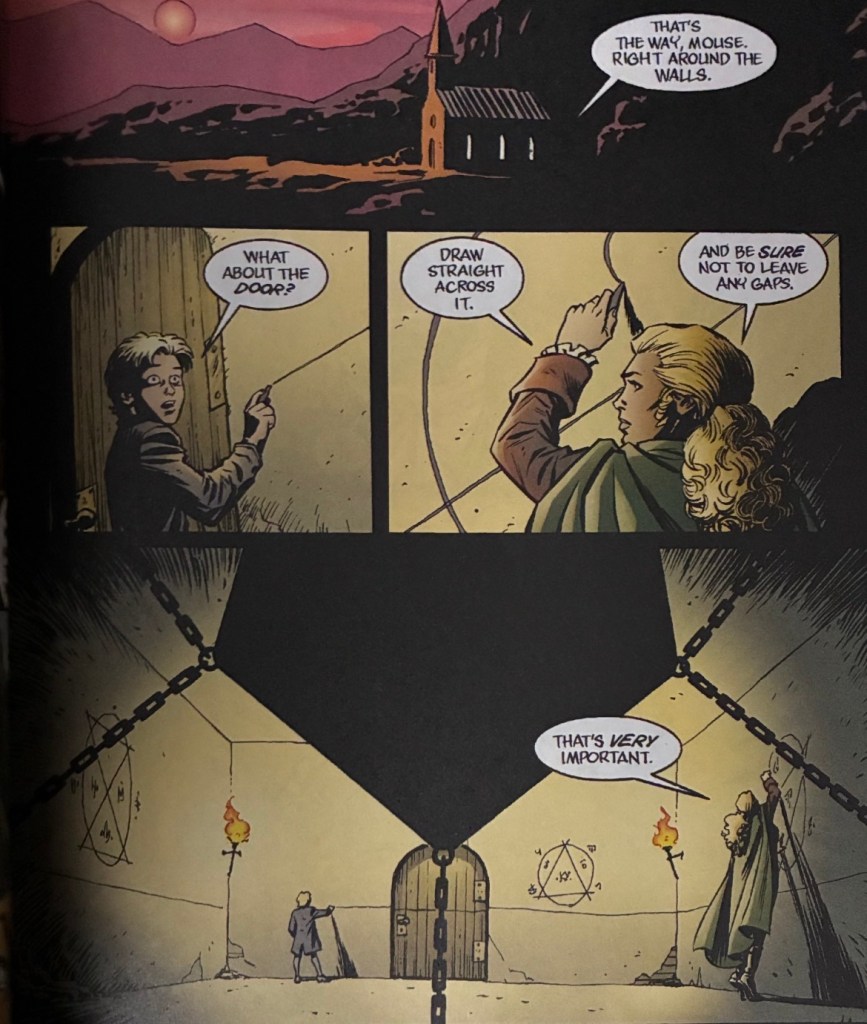
Ananse

In all the decades I’ve been reading and rereading Sandman comics, it never occurred to me to look into the linguistic roots of the Corinthian’s name. I figured there was probably something to find there but dream-kind exist according to dream-logic: an explicable cause is not necessarily called for. I finally got around to it, though: one meaning derives from the New Testament epistles, in which the people of Corinth are described as sinful and impulsive. Another possible meaning of corinthian is athletic rigor. The Corinthian does what he wants, whenever he wants and he’s a perfectionist about it. This even sheds some light on the function Morpheus originally envisioned for him: a dark mirror of humanity. Did he not recently craft a nightmare in which ordinary appetites drive people to devour each other’s eyes?

Like all Sandman stories- both original and post-2019 -subjectivity is central. Alienation, of course, puts one directly in touch with subjectivity. Not unlike how Despair crafted the House of Whispers from dreams or Desire used dreams to craft hir own ship in hir brother’s absence. Book one, ‘The Power Divided’, begins with Shakpana’s journal of imaginary diseases going missing in Lucien’s library and ending up in the hands of children, playing a game of telephone. A game of telephone changes a little with each repetition yet this one leaves a uniform mark on each participant: the removal of their soul.

The Power Divided

Just so you know, I’m going to get a little personal here.

In my experience, spiritual events can be perceived on a level close to mental and emotional ones. Getting swept up in something like pain can deafen you to the music you are dancing to. The kind of personal inventory that can reveal these things can also reveal spiritual events within yourself.
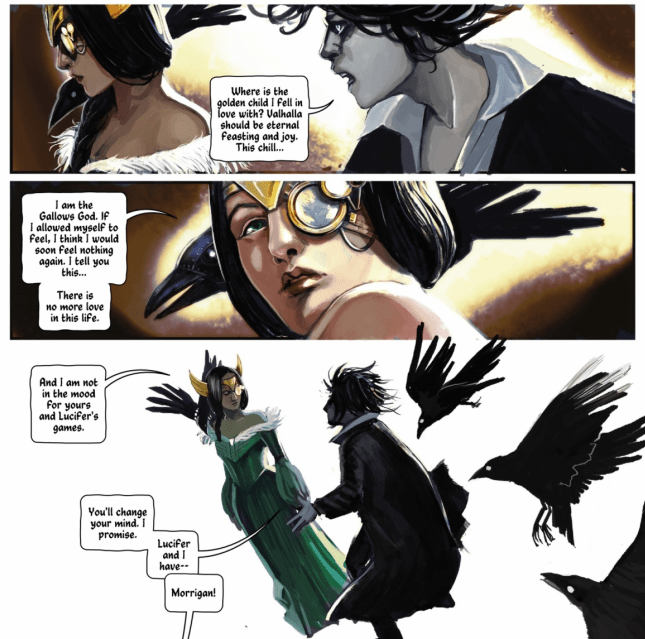
While Shakpana is walking around in an escaped convict, he encounters a coat-rack supporting a bunch of bottles. Each one contains a soul killed by Madame LaLaurie- a real, historical serial killer who tortured and murdered her slaves. The convict, having been spiritually aroused by Shakpana, hears their wailing and is unaffected. Like a lot of people, he caught the soul-removal plague. He says he hears the ugly but can’t feel the ugly. This is the kind of personal inventory I was talking about. Simply asking yourself what you are feeling and why. Discrepencies point straight toward things that bear investigating.

Watching the Watchers

Before wrapping this up, I have to mention Papa Midnite, who gets roped into the story by Aesop. In D&D terms, a sorcerer is someone who is born with supernatural powers. A wizard or a witch is someone who acquired them through study and application. John Constantine is a wizard. He relies purely on deduction and prior experience and the patterns he recognizes. This means that he is also usually one push away from total disaster.

Papa Midnite- born Linton, with the difference sometimes split with Linton Minuit -is also a wizard. he exists on the same precarious basis as Constantine but he has also been doing it longer than him. Hundreds of years longer. Also like Constantine, Linton Minuit is dogged by the wrath of those he has wronged in the past. I don’t know if the story of his sister was ever fully told in Hellblazer but it is absolutely central to what happens to him in ‘Watching the Watchers’.

Linton Minuit brings a mercurial counterpoint to the timeless simplicity of the loa characters. There was a time when he was tortured by his immortality and wanted to lift the curse that caused it…until Ananse got him burned at the stake.

See, he cheated some early American anti-slavery guerillas with a fake immortality concoction, leaving them to die in battle. At the moment of their demise, they cursed Linton: he would never be free to die so long as “whites…own(ed) the Earth”.

He of course can’t die but he can burn and regenerate. This is never spelled out in so many words but the insinuation is that this experience- in addition to creating a vendetta with Ananse -cured him of his yearning for death. Remaining corporeal is then both a game and a motivator, which causes a succession of different attitudes toward the curse that made him immortal and the debt on his soul. His debt could be a purpose but his grudge against Ananse has a way of making the idea of purpose a little academic. Immediately after the curse, he wanted to end white supremacy. A plan along those lines was what brought him into contact with Kwaku Ananse. After suffering Ananse’s treachery, he cracks a little more.

His sister Luna, meanwhile, plans to avenge her own murder. Papa Midnite says that he killed his sister to spare her the same fate as him. I detected a vague implication that the curse of the dying freedom fighters was somehow on Linton Minuit’s bloodline…but Nalo Hopkinson used a third person omniscient voice during the prior narration. She referred to Linton in the third person singular “him”. In that omniscient moment, the narration limits the curse to him alone.

Could Linton Minuit (while smoking weed with Aesop with a bong made from his sister’s skull) have been referring to something else? The ambiguity begs questions. I haven’t read any Hellblazer that wasn’t part of the Sandman Universe run but- from what I’ve gathered -his sister’s skull usually represents a magical focus, offering (as she does in ‘Watching the Watchers’) access to other planes. So Linton had a definite functional role for her, after her death. Self-interest muddies the waters even more. To say nothing, of course, of the fact that Luna was affianced to one of the freedom fighters.

Nalo Hopkinson on creating Papa Midnite’s backstory:

https://www.nalohopkinson.com/house-of-whispers-vol-three

Aand here’s some stuff that occurred to me, regarding both Ananse and Daniel